
The Gallipoli campaign War, also known as ”The Battle of Gallipoli”, started on 19 February 1915 and ended on 9 January 1916. The Gallipoli campaign, which took place during the First World War, was fought in two stages as sea and land wars. The Gallipoli campaign, which ended with the victory of the Ottoman Empire against England and France, is one of the most important events in Turkish and world history.
In Turkey we call this campaign the Çanakkale Wars, Çanakkale Savaşları, after the town on the Dardanelles. The victory is Çanakkale Zaferi, the Çanakkale Victory: first the win at sea on March 18, then the win on land, until the Allied troops left in January 1916.
The purpose of the Gallipoli campaign pushing the Ottoman Empire out of the first world war. If the Sultan in Istanbul is captured, it would be possible for Russia to strengthen and gain an important advantage over Germany and Austria. Delivering military and logistical aid to Russia through the strait of Gallipoli was an important matter. Moreover, according to the plans, this advantage will significantly decrease the course of the first world war, as it will also reduce German pressure on France.
Outline of the Gallipoli Battle
Sea Wars, the first part of the Çanakkale Wars, started on February 19, 1915. British and French navies started bombardment. The major attack started on March 18, 1915. However, this first naval attack resulted in an unexpected defeat for the British and the French, thanks to both the accurate cannon shots of the Ottoman army and the mines laid in the straits by the Nusret Mine Ship.
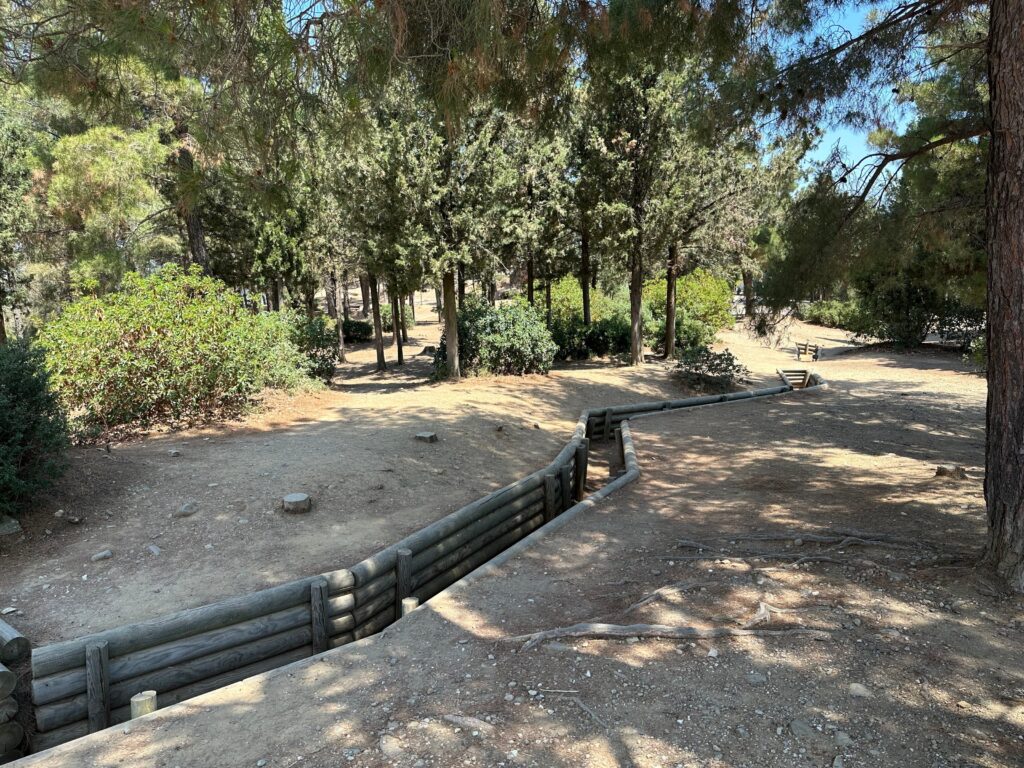
This defeat was not enough to discourage the Allied army. Troops were brought from the British colonial territory and mostly formed by the ANZACs (The Australian and New Zealand Army Corps) took action on land on April 25, 1915. An intense trench war started for months in Çanakkale. The war took much longer than expected. Attackers and defenders lost hundreds of thousands of soldiers. The continuation of the war has become very difficult for the Entente states. Entente leaders could not get what they wanted from this war and had to retreat in 1916. The Canakkale Wars resulted in the victory of the Ottoman army.
Legacies of The Battle of Gallipoli

Rise of Mustafa Kemal Atatürk
Perhaps the most important result of the victory is the rise of Mustafa Kemal Atatürk. The founder of our republic, the leader of the Turkish Revolution and the leader of the National War against the occupiers, Mustafa Kemal gained great charisma in the eyes of fellow soldiers and the Turkish people thank to his success in the Battle of Canakkale. He became famous as “The Man Who Saved Istanbul”.
The Bolshevik Revolution
Another important result of the Canakkale Victory was the Allies’ inability to reach Russia through the straits. Thus, the internal turmoil in Russia increased gradually and the Bolshevik Revolution broke out and Russia got out of the war.
Australia and New Zealand Emergence as Independent States
Countries of Australia and New Zealand today refers the Gallipoli campaing as “baptism of fire”. Both nations lost thousands of young man during the war. The emergence of a unique national identity following the war occurred in the both countries.
Churchill Gets Demoted
Churchill was demoted from First Lord of the Admiralty as a direct result of the great losses Allies had received in Gallipoli Campaign.
Dawn Rite in Gallipoli
The Çanakkale Wars has significant meanings for the grandchildren of ANZACs. The Battle of Canakkale is considered the beginning of the national consciousness of Australia and New Zealand. April 25 is known as a national day called “Anzac Day” in these countries. Australians and New Zealanders come to Anzac Cove in Çanakkale and hold a ceremony called “Dawn Rite” or ‘’Gallipoli Anzac Day Service’’.
The Gallipoli Battlefield Today
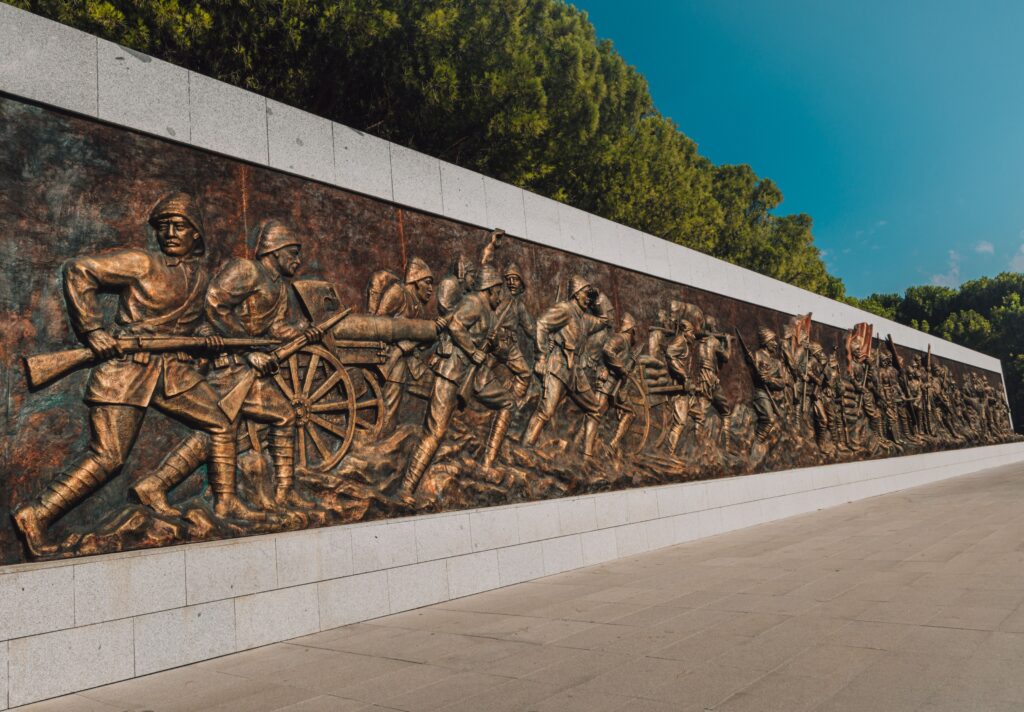
Today the battlefield is the Gallipoli Peninsula Historical Site, an open-air museum of more than 33,000 hectares, protected since 1973. Soldiers of the First World War from Turkey, Britain, France, Australia and New Zealand are remembered there, each in their own cemeteries and monuments.
In the south, at Morto Bay, stands the Çanakkale Martyrs’ Memorial, four tall pillars with a stone slab on top. It is 41.7 meters high, opened in 1960, and you can see it from ships passing the strait.
In the north, around Anzac Cove, many Australian and New Zealand families know the names Lone Pine and Chunuk Bair. At Cape Helles, the Helles Memorial remembers British and other Commonwealth soldiers, and the French have their own memorial and cemetery nearby.
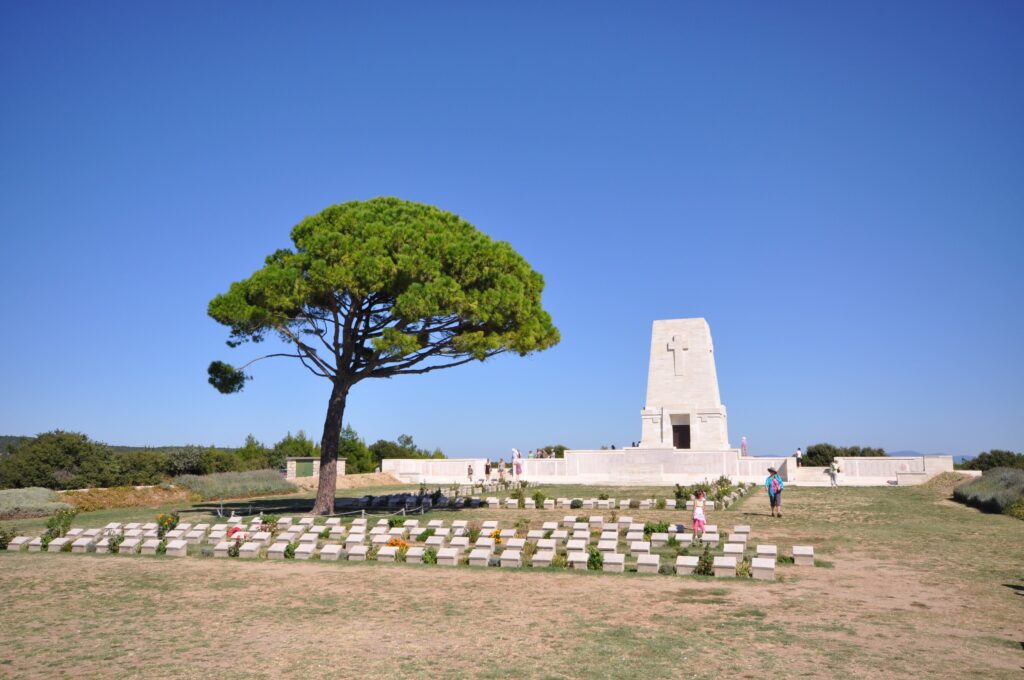
From Çanakkale, take car ferry across the Dardanelles to Eceabat, the nearest town to the battlefield sites. The places are far from each other, so most visitors go with a car or a guide and keep one full day for it.
Frequently Asked Questions
What is Çanakkale Victory and Martyrs’ Day?
It is the day Turkey remembers the Çanakkale Victory, every March 18. There are special ceremonies for the soldiers who fell, and many visitors come to Çanakkale around that day.
Where is Gallipoli located?
Gallipoli is a long, narrow peninsula in the European part of Turkey, between the Aegean Sea and the Dardanelles. Çanakkale lies across the strait, on the Asian side, and it is the base for Troy too.
Tours to Gallipoli and ANZAC Cove

It is a very emotional experience to see trenches and war zones of Gallipoli. Knowing this beautiful landscape was the main setting of one of the worst atrocities in human history is shocking. I recommend visiting the war museum in Gallipoli to see bullets which were welded by crashing against each other. This can give you an idea about the intensity of the war. You can always write to me if you have questions about Gallipoli and the First World war. You can hire a professional licensed tour guide to Gallipoli by contacting me. I believe Canakkale is a place you should see with a tour guide. See you soon, Hasan Gülday.