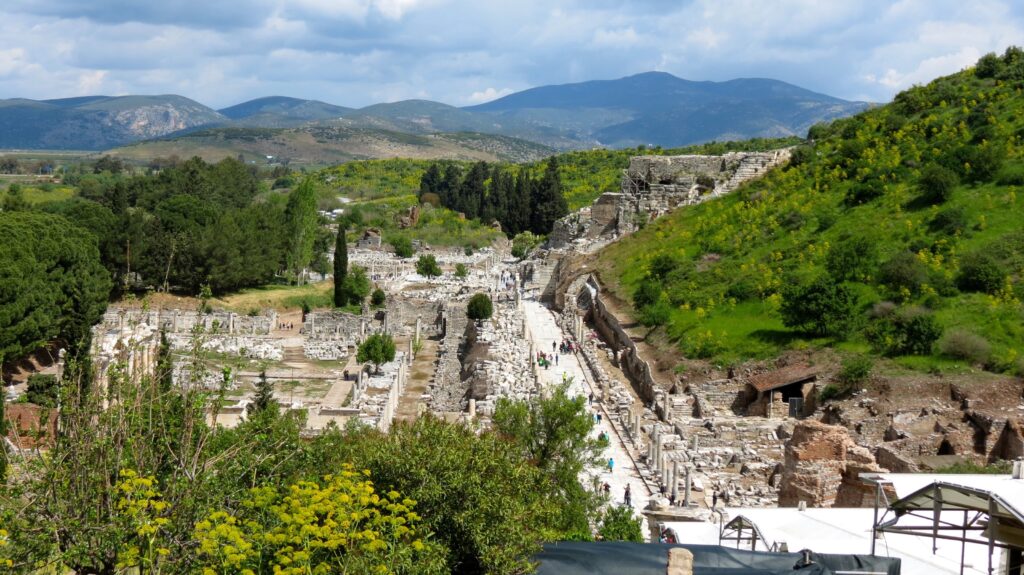
Magic in ancient Ephesus was part of everyday life, like elsewhere in Asia Minor. People wore amulets for luck and protection, asked priests and oracles about the future, and some scratched curses on thin sheets of lead. The Bible even mentions magic books in Ephesus worth fifty thousand pieces of silver (Acts 19:19).
Some mysterious spells that have survived even to our day are known as Ephesia Grammata. These words, which even the ancient Greeks had trouble deciphering, were found engraved in many places, including the temple of Artemis in Ephesus.

These words, which appear to have magical powers when spoken aloud, had to be pronounced flawlessly in order to work. The religion of the ancient Greeks inevitably included magic, as its roots were in mythology. Besides the supernatural powers of the gods, Ancient Greece was full of extraordinary creatures, forest, nymphs and demigods. In Greek mythology, magic could function independently of religion – even gods were sometimes influenced by magic.

In ancient times, priests had a special place in Anatolia. It was believed that people could consult the gods through the priests, the most famous of which was the priestess in the temple of Artemis in Ephesus and the oracle in the temple of Apollo in Didyma.

While rituals such as sacrifice flesh reading or fortune-telling from the flight of birds were among the official state practices in ancient Ephesus, laws came later in the Christian era of Asia Minor prohibited magic and witchcraft. According to the law, the punishment for magic was to be crucified or thrown into wild animals. The wizard’s punishment was to be burned to death, and those caught with spell books were exiled to the islands.
Magic in Ancient Ephesus in the Bible
Acts 19 tells the Bible story of magic in Ephesus. Paul was healing the sick, and many believers came and confessed what they had done. Those who had practiced magic brought their books together and burned them in front of everyone. I also tell this in my post on the burning of the books on magic in Ephesus.
Seeing the Story of Acts 19 in Ephesus Today
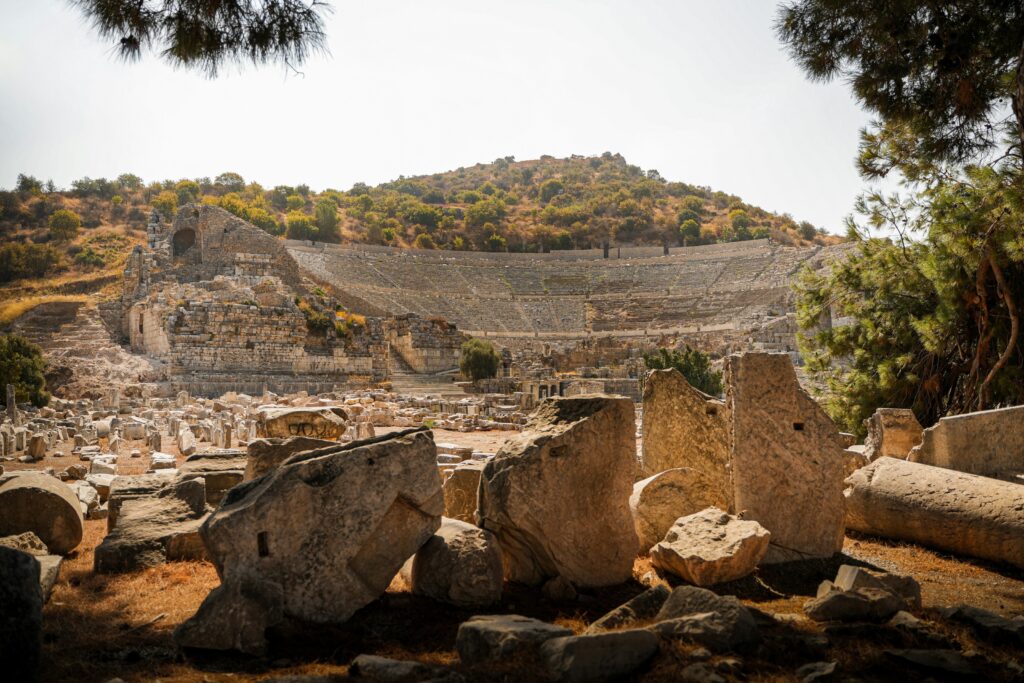
Acts 19 goes on in the Great Theater of Ephesus, which you can still visit. When the riot of the silversmiths began, the crowd rushed into the theater (Acts 19:29). I tell more in my post on the Great Theater of Ephesus and the riot of Acts 19.
The Ephesus Museum in Selçuk keeps famous statue of Artemis, its best-known exhibit.
Frequently Asked Questions
What is the ancient Greek word for magic?
Mageia, from magos, the Greek form of a Persian word for a priest of the Magi. Our word magic comes from it. The King James Bible calls the spells of Ephesus “curious arts” in Acts 19:19.
What is a curse tablet?
A very thin sheet of lead with a curse scratched on it in tiny letters. It was rolled up or pierced with nails, then buried in a grave or thrown into a well.
Who was Maximus the magician of Ephesus?
A philosopher who taught in Ephesus around 350. The future emperor Julian studied the magic arts with him and later made him an adviser. Maximus was executed in 372. More in my post on Maximus the Magician from Ephesus.



1 comment