

My lovely country, Turkey, had numerous names throughout history. Every civilization lived here such as Hittites, Greeks, Persians, Romans, Goths, Byzantines and Turks had their ways of naming this land. Anatolia and Turkey might be the most commonly used names today but there was another name which was very well known all around the world about two millennia ago.
The name was ”Asia Minor” which was given by the Roman Empire. Romans named the western Anatolia Asia Province and used Asia Minor was a wider name they used for the whole Anatolian Peninsula. Originally there was a Roman province named Asia, which was in Asia Minor or in Anatolia. Eventually, about two thousand years ago, Roman citizens started to call Asia for the whole provinces on their east, so the peninsula Asia was renamed as Asia Minor or little Asia.
Asia Minor is another name for Anatolia, the peninsula that makes up most of today’s Turkey. So where is Asia Minor in the Bible? The New Testament calls its western part simply “Asia”, a Roman province with Ephesus as its leading city, and it names other regions there too, like Galatia, Cappadocia and Cilicia.
Asia Minor is surrounded by the Black Sea, the Aegean Sea and the Mediterranean Sea. The whole land can be called a plateau. Asia Minor has several climates. The west and south coasts have warm, rainy winters and hot, dry summers. The north coast is colder and more rainy. Elevation is very high at inland parts and eastern parts of Asia Minor which makes them cold and dry.

Asia Minor played a significant role in the Roman Empire since it was located in the crossroads of Roman Trade also by hosting city of Troy which was regarded as a holy city by Roman Emperors. Maybe the greatest effect that Asia Minor had on the Roman Empire was becoming home for early Christian saints such as Apostle Paul and Saint John the Evangelist. Also, the famous seven churches of Revelation mentioned in the Holy Bible are located in Asia Minor.
Bible Cities of Asia Minor and Their Names Today
Most cities of Acts and Revelation are still on Turkish map. More about Paul’s stops is in Cities Visited by Apostle Paul in Asia Minor.
- Tarsus (Acts 21:39), Paul’s hometown, is still Tarsus, in Mersin Province.
- Antioch in Pisidia (Acts 13) lies nearby the town of Yalvaç in Isparta Province.
- Iconium (Acts 14) is Konya, and Lystra is a short drive south of it.
- Perga (Acts 13:13) is near Aksu, close to Antalya.
- Ephesus (Acts 19) stands beside Selçuk in İzmir Province.
- Troas (Acts 16:8) is near Ezine in Çanakkale Province, Miletus (Acts 20:17) at Balat in Aydın Province.
- Colossae and Laodicea are near Denizli, and Hierapolis is Pamukkale.
- The other churches of Revelation are Smyrna (İzmir), Pergamon (Bergama), Thyatira (Akhisar), Sardis (Sart) and Philadelphia (Alaşehir). See the Seven Churches today.
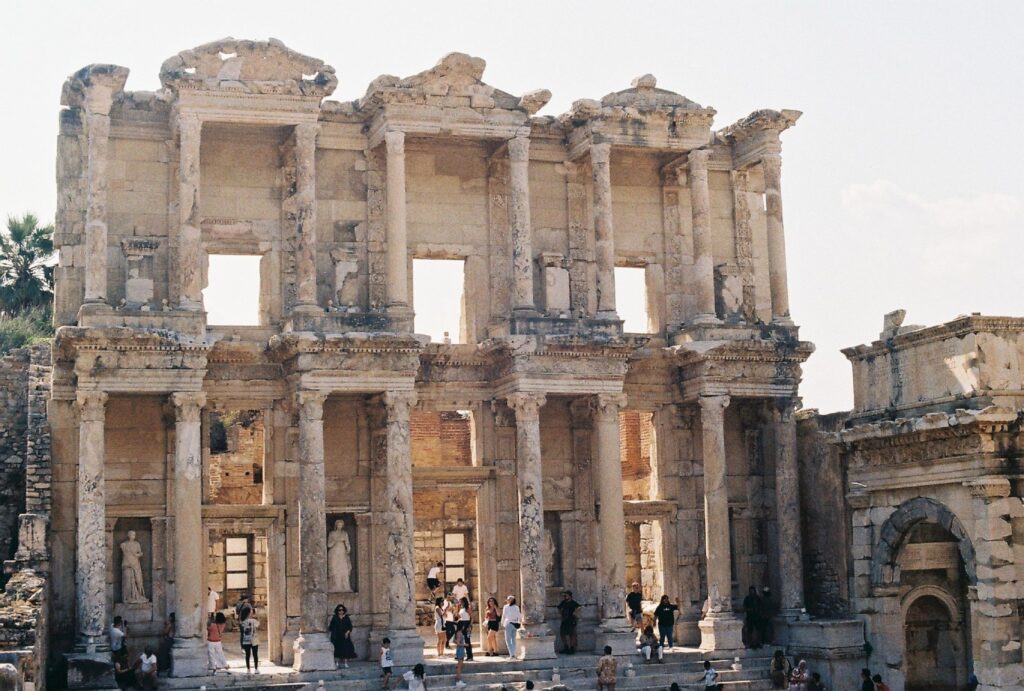
Little Asia still has a great cultural variety even today thanks to being located not just in between Asian and European Continents also being located in between western and eastern cultures.

Let’s have a look at the names and details of the Roman provinces of Asia Minor.
- Bithynia and Pontus
- The Roman province of Asia
- Roman Province of Cappadocia
- Roman Province of Galatia
- Roman Syria
- Lycia et Pamphylia
- Roman province of Mesopotamia
- Roman Province of Thracia
- Roman Armenia
- Cilicia
Frequently Asked Questions
What country is Asia Minor today?
Asia Minor, or Anatolia, is the Asian part of Turkey, a peninsula between the Black Sea, the Aegean and the Mediterranean.
Which books of the Bible were written to Asia Minor?
Galatians, Ephesians, Colossians, Philemon and Revelation all went to places in Asia Minor, and 1 Peter to Christians across the region.
Which cities of Asia Minor did Paul visit on his first journey?
Paul and Barnabas sailed from Cyprus to Perga, then preached in Antioch in Pisidia, Iconium, Lystra and Derbe (Acts 13 and 14).
Tour Guide in Asia Minor
Asia Minor is a treasure waiting to be discovered. Contact me to learn more on Asia Minor and to hire a tour guide in Asia Minor or Turkey. See you soon, Hasan Gülday.


1 comment