Located at the eastern entrance of Ephesus, the Magnesia Gate is one of the two main points of entry to Ephesus City. The gate was built as part of the city’s defense system and was an impressive structure. You could enter the city through the Magnesia Gate and step into the enchanting city of Ephesus. Magnesia Gate (Upper Gate) was at the eastern gate of the city walls around the city, the entrance gate of the city on the Way to the House of Virgin Mary today.

Magnesia and Ephesus, two important cities of the ancient period, played important roles in the region, especially during the Hellenistic and Roman periods. The best example of the close relations between the two cities is that one of the two gates that provide access to Ephesus is called “Magnesia Gate”.

Magnesia Gate was built in 300 BC, and later, during the reign of Emperor Vespasianus (59-79 AD). Later the gate was renovated in a monumental appearance as an entrance with three separate arches. The road leading from this gate reaches the ancient city of Magnesia, 30 kilometers southeast of Ephesus, on the one hand, and circumnavigates the Panayır ( Pion ) Mountain on the other.
Parts of this old road between Ephesus and Magnesia can still be followed today. An inscription found in Naipli village of Germencik tells that workers from Amyzon, a small city of Caria, built a part of the road. West of Naipli the road was cut into the bedrock for about 1 kilometer along the foot of the hills, and from there it went on through Çamlık village, close to the line of today’s highway.
Travelers on this road passed the two-story bridge of the Pollio Aqueduct a few kilometers before the city, with its building inscription readable from the road. The two cities were close friends too. They even made homonoia agreements with each other, and homonoia means concord in Greek.
Pilgrims Walking From Ephesus to the Temple of Artemis
Believers of the goddess Artemis, who later called Diana during the Roman Era, came to Ephesus Ancient City for pilgrimage. Most of the pilgrims arrived to city via the port and walked to the upper agora to start their walk to the Temple of Artemis. They left the city, Magnesia Gate. They were entering back to Ephesus via this gate after completing their pilgrimage services.
Stoa of Damianus on the Sacred Way
The Stoa of Damianus was a marble roofed walkway which the rich Ephesian sophist Titus Flavius Damianus built along the Sacred Way from the Magnesia Gate to the Temple of Artemis, so pilgrims could walk to the temple even on rainy days.
Damianus was a famous teacher of public speaking and one of the richest men of the city. When the Roman army came back from its victory over the Parthians in the 160s AD, he hosted the soldiers in Ephesus and gave out grain for thirteen months. He also built a huge banquet hall at the Temple of Artemis.
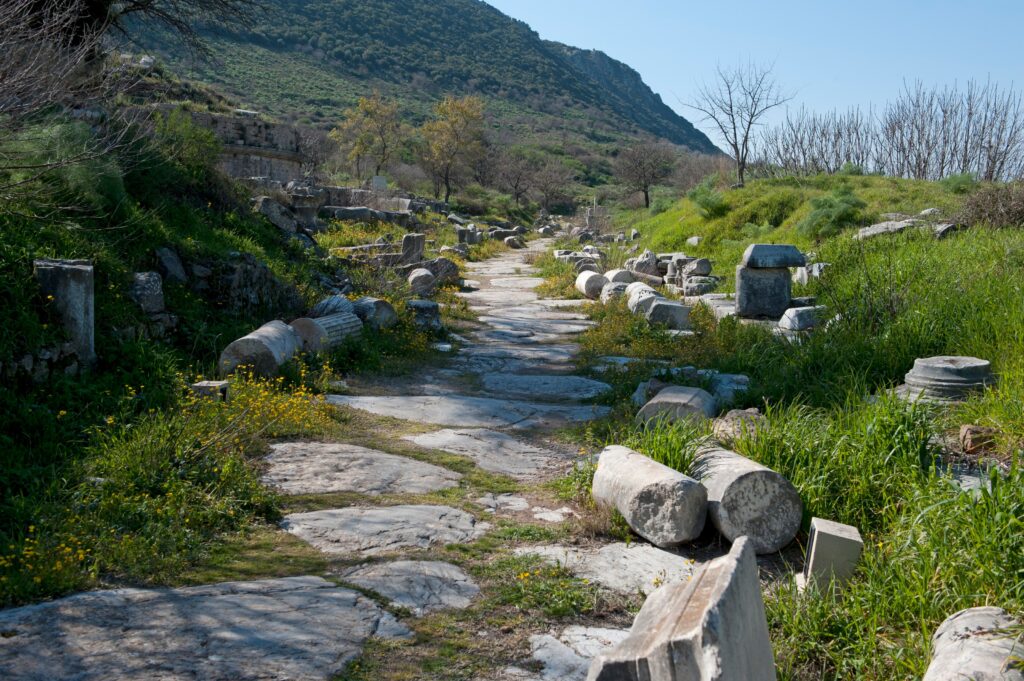
He dedicated the stoa to his wife Vedia Phaedrina. Her father was the rich Ephesian who built Vedius Gymnasium. In later centuries the road and the area in front of the Magnesia Gate turned into a cemetery, and many graves were dug along the stoa.
Most Ephesus tours start at the Upper Gate, close to the Magnesia Gate. Before we walk down into the city, I like to tell my guests about the pilgrims and the rainy days of Damianus.
Hire Tour Guide for Ephesus
Ephesus offers many wonders still being excavated, like the Gate of Magnesia. There are many more excavated monuments such as the library of Celsus, Terrace Houses of Ephesus and many more. Contact me to hire a professional tour guide for Ephesus Ancient City and to learn more about Ephesus. See you soon, Hasan!



1 comment