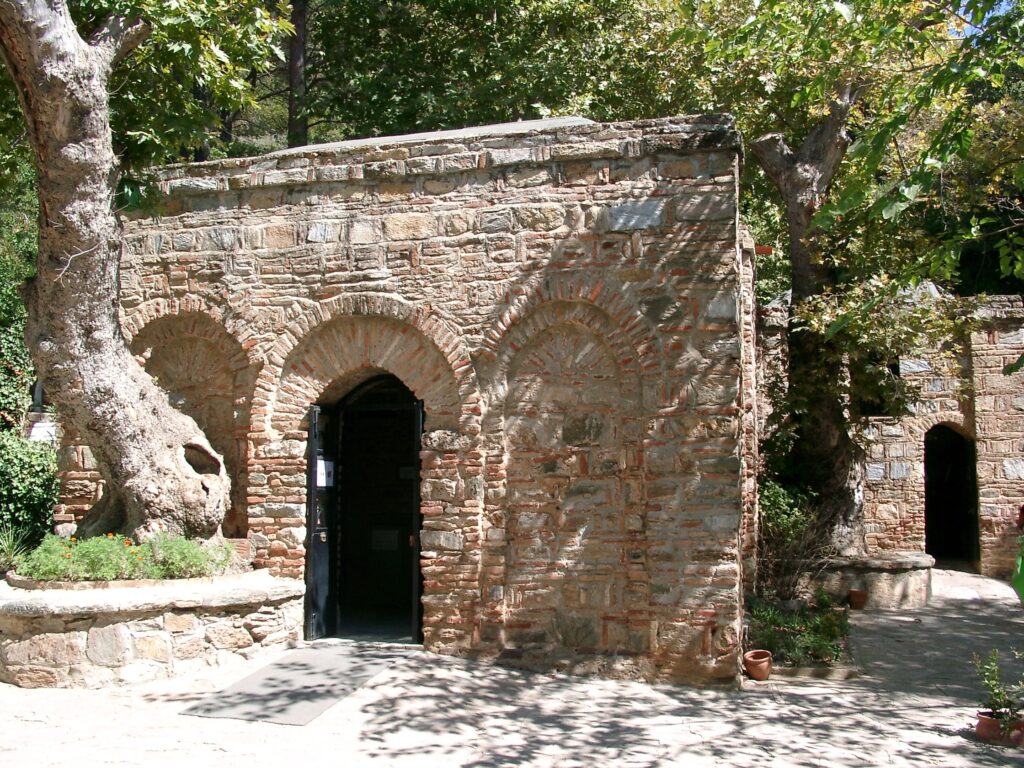
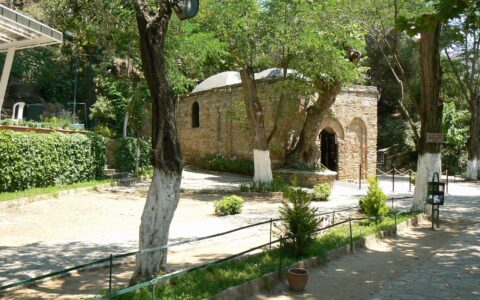
The House of Virgin Mary, Meryem Ana Evi in Turkish, is a little stone chapel high on Bülbüldağı (Mount Koressos), about 7 km from Selçuk and just above Ephesus Ancient City. Tradition says Mary, the mother of Jesus, lived here with Saint John during the last years of her life. Priests found the ruin in 1881 and 1891 by following a German nun’s visions, and today it is a place of prayer for both Christians and Muslims.
Believers from all around the world visit the House of Virgin Mary nearby Ephesus to pray and have spiritual moments. Jesus Christ was crucified when he was 33 years old in Jerusalem. As we know Jesus wanted Saint John the Evangelist to take care of the Virgin Mary after he leaves our world. We believe Saint John left Jerusalem and came to Ephesus after the departure of Jesus Christ. We believe that St. John took the Virgin Mary to Ephesus for several reasons.
- Ephesus back then was the capital of Asia Minor state and the second biggest city of the Roman Empire.
- Ephesus had a multicultural and multi-religious society. Nobody would target them because of their differences because many citizens of Ephesus already belonged to different factions.
- There was a big Jewish community in Ephesus that could host them for some time.
- Ease of access to Ephesus city.
In high season I am up on this mountain with my guests several times a week. Whatever my guests believe about old traditions, the place works on them. They arrive curious and they leave moved. Let’s have a look at the story of its discovery, the things you will see on the mountain and the other Christian sites of Selçuk which go well with it.

Anne Catherine Emmerich and her visions
House of Virgin Mary was found thanks to the visions of Anne Catherine Emmerich (1774–1824). Ms. Emmerick was bounded to her bed for twelve years because of her sickness. She was seeing visions about Mary and Jesus continuously. She explained her visions and people took her seriously when they realized how realistically detailed visions were.
Clemens Brentano, a German author, heard about Anne Catherine Emmerich and decided to listen to her. Later Mr. Brentano decided to write down all her visions and turned them into a book called ‘’The Dolorous Passion of Our Lord Jesus Christ’’. Later another book called ‘’The Life of the Blessed Virgin Mary’’ by Anna Katharina Emmerick was published.
The book about Mary came out in Munich in 1852, after both Emmerich and Brentano had died. In it she describes a stone house on a hill south of Ephesus, about three and a half hours on foot from the city, with a spring nearby. She had never been to Ephesus, and in her time the ancient city was not excavated yet. Pope John Paul II beatified her on October 3, 2004. I wrote more about her life in my article on Anne Catherine Emmerich.
How was the house found?

The first man who went looking for the house was a French priest, Abbé Julien Gouyet. On October 18, 1881, with the book of Emmerich as his guide, he found a small ruined stone building on the mountain above Ephesus, with a view down to the Aegean Sea. He was sure this was Mary’s house, but few people took his report seriously.
Ten years later, Sister Marie de Mandat-Grancey of the Daughters of Charity urged two Lazarist missionaries of Smyrna, today’s İzmir, to check the place again. They were Father Eugène Poulin and Father Henri Jung, and they also carried the book of Emmerich with them.
On the 27th of July two priests living in Izmir decided to look for the House of Virgin Mary after reading the mentioned books. They looked around Ephesus ancient city for two days and just before they decided to give up they came across a spring which looked like the one described by Anne Catherine Emmerich. Later they discovered a house in ruins next to the spring. Comparing the words of Emmerich in the books and the surrounding area, they decided this is the right spot.
Their search ended on July 29, 1891. The Greek Orthodox people of Şirince, a village up in the hills behind Selçuk, already knew this roofless ruin. They called it Panaya Kapulu, the Doorway to the Virgin.
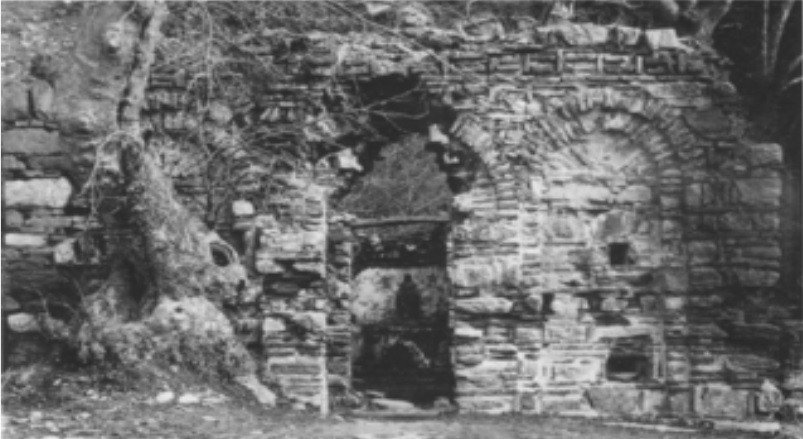
The Catholic Church later named Sister Marie de Mandat-Grancey the Foundress of Mary’s House. She looked after the house and the land around it until her death in 1915, she is remembered there till today.
When did the House of Virgin Mary become a pilgrimage center?
We have the records of the first Christians organizing pilgrimage walks to the house from 1897. These people were the local Greek Orthodox Christians from the nearby Sirince village. The original house which was discovered recently was in ruins and it was reconstructed between 1898 and 1902 as a chapel by the same people. Today The American Society of Ephesus supports the House and nuns living next to it.
The biggest day of the year here is August 15, the feast of the Dormition and the Assumption of Mary. A Mass has been held at the house on that day every year since the visit of Pope Paul VI in 1967, and the whole mountain fills with pilgrims. I tell the story of this feast in my article on the Ascension of the Virgin Mary on the 15th of August.
Popes and the House of Virgin Mary
- Pope Leo XIII visited Virgin Mary during his pilgrimage in 1896. He blessed the house which gives a certain credibility to the House of Virgin Mary
- In 1912, Pius X mentioned Virgin Mary’s temporary housing nearby Ephesus.
- Pope Pius XII officially declared the House of Virgin Mary as a holy site and place of pilgrimage.
- Pope John XXIII sent a special candle to the House of St. Mary for the Feast of the Presentation of the Lord. These type of candles are donated only to important Marian shrines.
- Pope Paul VI visited the house in July 1967.
- Pope John Paul II visited the house in 1979
- The last Pope to visit the house of Virgin Mary was Pope Benedict XVI, when he had a four-day visit to Turkey in 2006.
Pope Pius XII did this in 1951, one year after he defined the dogma of the Assumption of Mary, and Pope John XXIII later made the status of Holy Place permanent.
Pope Paul VI came on July 26, 1967, and Pope John Paul II on November 30, 1979, just over a year after the start of his pontificate. Pope Benedict XVI celebrated Mass in front of the house on November 29, 2006. I put their visits together in a short article on the Popes in Ephesus.
Things to do at the House of Virgin Mary today
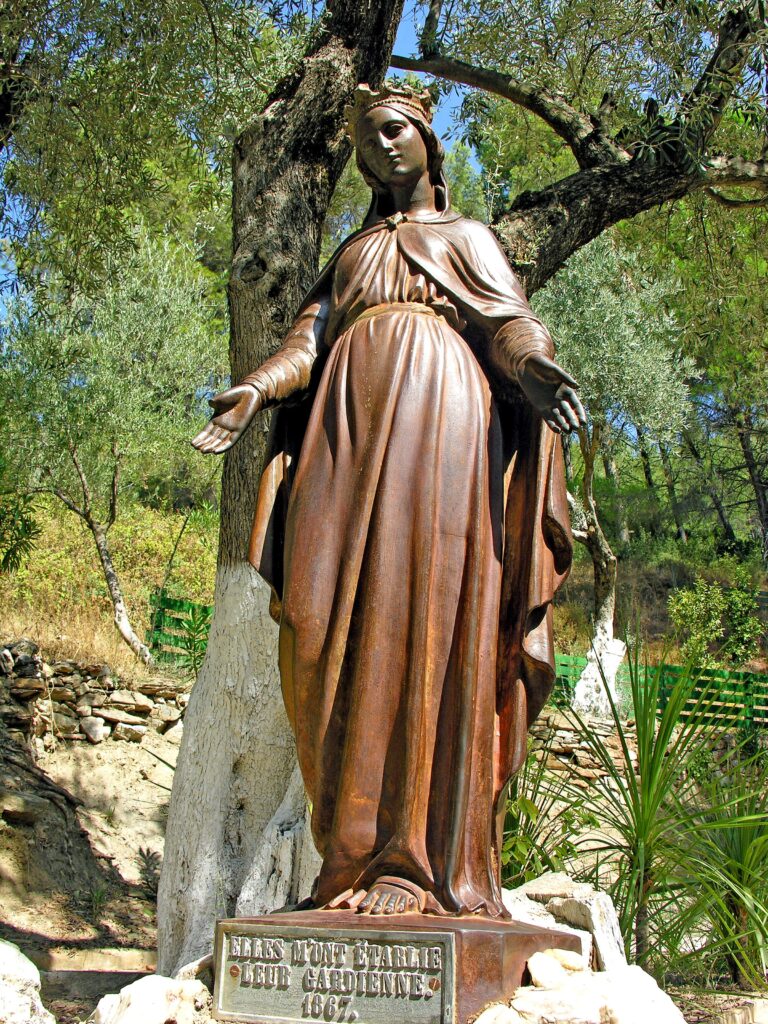
There are olive trees planted on both sides of the path leading to the house. These trees were planted in the last years of the 1800s by the Lazarites priests. An amazing statue of the Virgin Mary was presented by Christians of Izmir (Smyrna) and this statue is placed on this path too.
Today a restored house stands on the same spot. House of Virgin is single-roomed, a classic house style of its period. Foundations and the support walls of the house are originals. Parts of the walls and the roof was built during the restoration.
Inside, you enter one large room with the altar and a statue of Mary in the center. A smaller room opens on the right side, and tradition says this was the room where Mary slept. Look at the walls from outside too: a red painted line shows where the old stones end and the restoration begins.
There are several relics in the house that were brought by popes. There is a lantern next to the altar which was presented by Pope Paul the fourth. House of Mary in Ephesus hosts a fresco of Mother Mary made by the Russian – French artist Ratislas Loukine in1978. There are candles provided in the house. You light them on special platforms when you exit the house. Taking photos, speaking and candle lighting are forbidden in the house.
You will see a stairway on your left after you leave the House of the Virgin Mary. There is only one way possible to follow. Go downstairs and you will be welcomed by three drinking fountains built on a spring. This water is believed to be blessed by the Virgin Mary. I strongly recommend you to take an empty bottle with you before you visit this sight. You can fill bottles with this holly water and bring it back to your county. It can be a great gift for your friends.
Some even claim that the first fountain is for luck, the second fountain is for health and the third fountain is for money. I advise mixing them :D.
The spring rises under the house itself. An old Marian tradition says its water once ran in a small channel from the room where Mary slept down to the place of today’s fountains. Many pilgrims believe the water heals the sick or helps a couple to have a child. I collected the healing stories people tell about the house in my article Miracles at the House of Virgin Mary in Ephesus.
There is a big wall covered with thousands of white paper pieces after three fountains. This is a middle eastern tradition which is followed in Turkey too. We believe you can communicate with Mother Mary by writing your wish on a piece of paper and putting them on this wall. It is similar to the tradition of Wailing Wall in Jerusalem, Israel.

Pilgrims tie their wishes on paper or on small pieces of cloth, and the wall is never empty. I wrote a separate article about making a wish at the Virgin Mary’s House, with my own feelings about this wall.

You will be on your way back after making your wishes at the wishing wall and you will come across a keyhole-shaped cistern. This cistern is rumored to be a baptizing pool but there is no physical or archeological evidence confirming it so far.
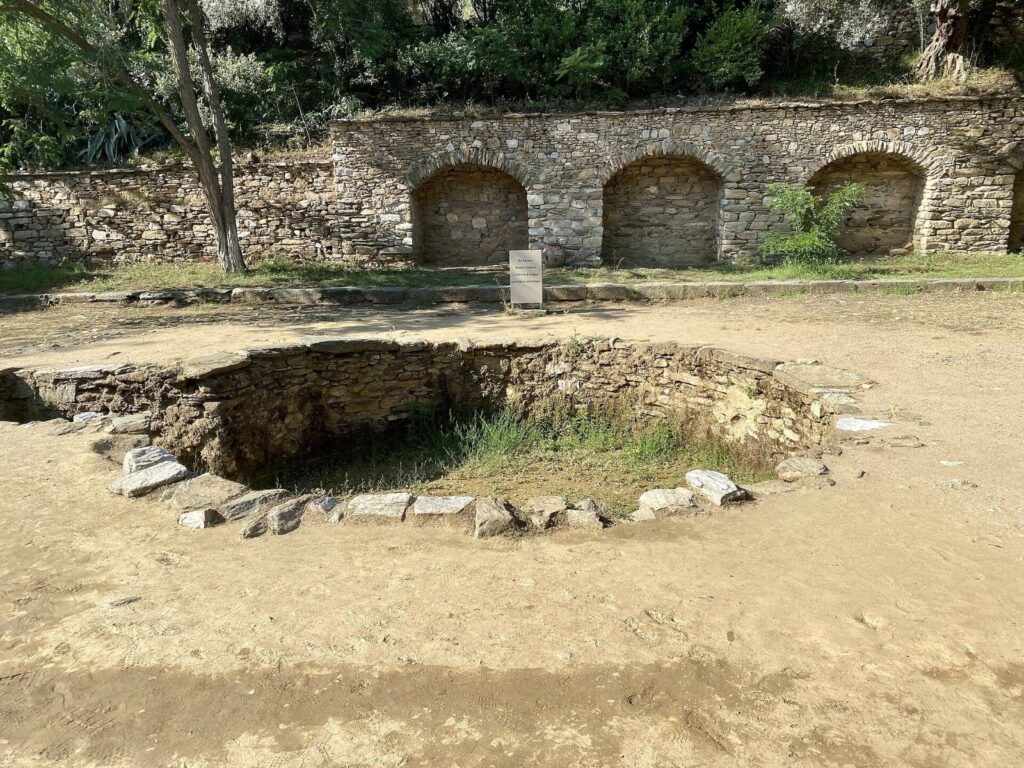
The pool came to light in 1964, and archaeologists see it as a water reservoir from Middle Ages.
Please don’t forget to stop at the church gift store on the way back. You can get blessed water from the springs, rosaries and many more souvenirs about the House of the Virgin Mary. A priest who serves in the House of Mary Church blesses all the rosaries in this store. Anything from here can be a great gift for friends and family back at home.
I love to stop at the House of Virgin Mary when I have tours in the Ephesus area. It is not just a regular attraction in Ephesus. House is a spiritual and emotional center in the Ephesus area. I saw people from all religions and ethnicities having peaceful time here.

Muslims at the House of Virgin Mary
By the way, Turks call her Meryem Ana, which means Mother Mary. Mary is one of the most honored figures in Islam. The 19th surah of the Quran carries her name, Surah Maryam, and she is the only woman whom the Quran mentions by name. In Surah Al Imran (3:42) the angels tell Mary that God has chosen her, made her pure and raised her above all the women of the worlds.
For this reason the house is a place of prayer for Muslims as well as Christians. I often see Turkish families lighting candles and tying their wishes on the wall next to Christian pilgrims from all over the world. Nobody asks anybody about their religion here.
Pope Benedict XVI spoke about this in his homily at the house in 2006. He said Mary is “loved and venerated also by Muslims” and prayed from Ephesus for peace between peoples. For me, this is one of the most beautiful things about the house: one small hill which belongs to two faiths.
How to Visit the House of Virgin Mary
The house stands on Bülbüldağı, about 7 km from Selçuk. The road to it climbs through the pine forest and passes close to the Upper Gate of Ephesus Ancient City. Most Ephesus tours begin at the Upper Gate and finish down at the Lower Gate, so it is easy to visit the house first and then begin your walk. My article Ephesus Upper Gate or Lower Gate explains the difference between the two entrances.
Please keep it in mind that this is a place of prayer. I recommend my guests to cover shoulders and knees and to keep their voices low near the chapel. You can find my general tips in what to wear during your Ephesus tour.
Mass is celebrated at the house regularly. I listed the masses and the special feast days in my article Mass at the House of Virgin Mary nearby Ephesus. Service times change from season to season, so please check the official website of the shrine before you plan your day around a Mass.
Official Webpage of the House of Virgin Mary
House of Virgin Mary on Turkish Archaeological News
Allow about one hour for the visit, and more if you want to attend Mass or sit quietly in the chapel. Mornings are usually calmer than the middle of the day. August 15 is the busiest day of the whole year.
Other Christian Sites in Selçuk
The House of Virgin Mary is only one part of the Christian story of Ephesus. Most of my guests combine it with a few other places, all within a short drive.
On Ayasuluk Hill, in the middle of Selçuk, you find the ruins of the Basilica of Saint John. Emperor Justinian raised it in the 6th century above the grave which tradition gives to John, the same apostle who took Mary into his home. Seeing the house and the tomb in the same day connects the two stories.
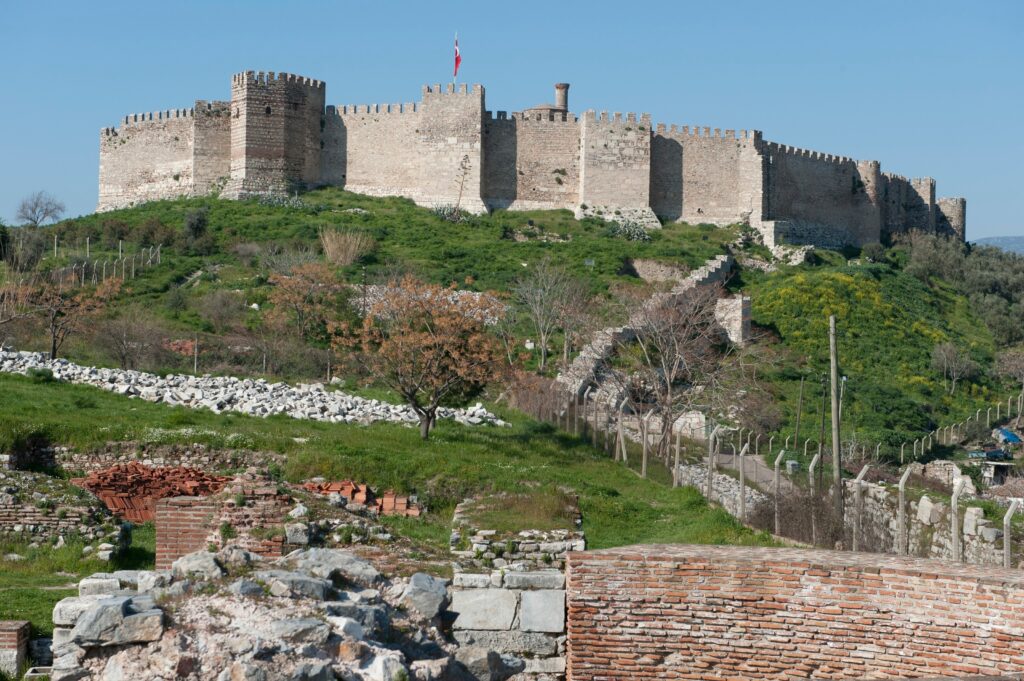
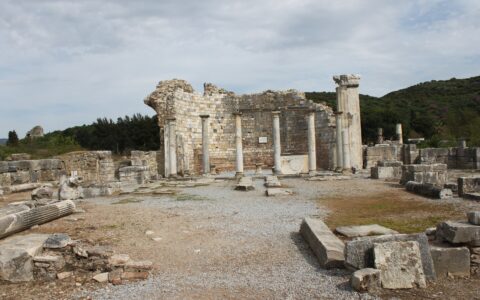
The Ayasuluk Fortress right above the basilica is open to visitors, and the Isa Bey Mosque of 1375 is just below the hill. Down in Ephesus Ancient City, close to the old harbor, the ruined Church of Mary is the place where the bishops declared Mary Theotokos, the Mother of God, in 431. My article on the Council of Ephesus of 431 tells that story.
The Cave of Seven Sleepers is on Mount Pion, the other hill of Ephesus. At the last report its inside was closed, but you can see the church and the graves from outside. The Grotto of Saint Paul is on the same mountain as the house, and it is closed to visitors. On a very hot or rainy day, the Ephesus Museum in Selçuk is a good addition.
A comfortable day looks like this: the House of Virgin Mary in the morning, Ephesus Ancient City from the Upper Gate down to the harbor, lunch in Selçuk and the Basilica of Saint John in the afternoon.
Frequently Asked Questions
How long did Mother Mary live after Jesus?
Virgin Mary lived 11 years after Jesus was gone.
Where did the Virgin Mary live in Turkey?
Virgin Mary lived in Ephesus, Turkey. Today Ephesus is in Selcuk district of Izmir City in Turkey.
Who took the Virgin Mary to Ephesus?
It was Saint John the Evangelist who took Virgin Mary to Ephesus.
Did Virgin Mary really live in Ephesus?
When Jesus saw his mother while he was on the cross, and the disciple whom he loved standing nearby, he said to her, “Woman, here is your son,” and to the disciple, “Here is your mother.” Saint John the Evangelist took Virgin Mary into his home.” According to a tradition recorded by Irenaeus and Eusebius of Caesarea, John later came to Ephesus where he worked. It is assumed that he brought Virgin Mary with him as his adopted mother. This fact shows that Mary also lived in Ephesus with John.
How long did blessed mother stay in Ephesus?
She lived in Ephesus for three years and headed back to Jerusalem.
Where is Mother Mary now?
Her burial is at the Church of the Sepulchre of Saint Mary in Kidron Valley nearby Mount of Olives.
Where is the House of Virgin Mary?
It is on Bülbüldağı, the ancient Mount Koressos, about 7 km from Selçuk in İzmir province. The road leaves from near the Upper Gate of Ephesus Ancient City and climbs through the pine forest to the parking area of the shrine.
Can you drink the holy water at the House of Virgin Mary?
Yes. Below the house, three fountains bring water from a spring under the shrine. Visitors drink from them, and many fill a small bottle to take home, because they believe the water is blessed.
Hire a Tour Guide to See the House of Virgin Mary in Ephesus
House is open seven days a week and all year round. The entrance fee is 400 Turkish Lira. There is free ticket for children below 6. Contact your tour guide to learn more about the House of Virgin Mary at Ephesus. You can always write to me for hiring a professional licensed Turkish tour guide to visit House of Virgin Mary.
I live in Kuşadası, nearby Ephesus, and I work as a nationally licensed Turkish tour guide. My day guiding covers Ephesus, İzmir and Pamukkale, and a visit to the House of Virgin Mary fits easily into our day in Ephesus. Have a look at my guiding rates and guiding areas, or write to me if you want to hire me as your licensed guide.
I hope we will see each other one day on the mountain of the House of Virgin Mary, and we will light a candle together. See you soon, Hasan Gülday.

6 comments