According to this fountain’s inscription, Gaius Laecanius Bassus, from the governors of the Province of Asia ordered the contruction of Gaius Laecanius Bassus Fountain in Ephesus. It was built in between years 75 and 80. Gaius Laecanius Bassus Fountain is located at the intersection of the road from the south of Agora and the road from Domitian Square, in the ancient city of Ephesus.

Gaius Laecanius Bassus Fountain
in Ephesus
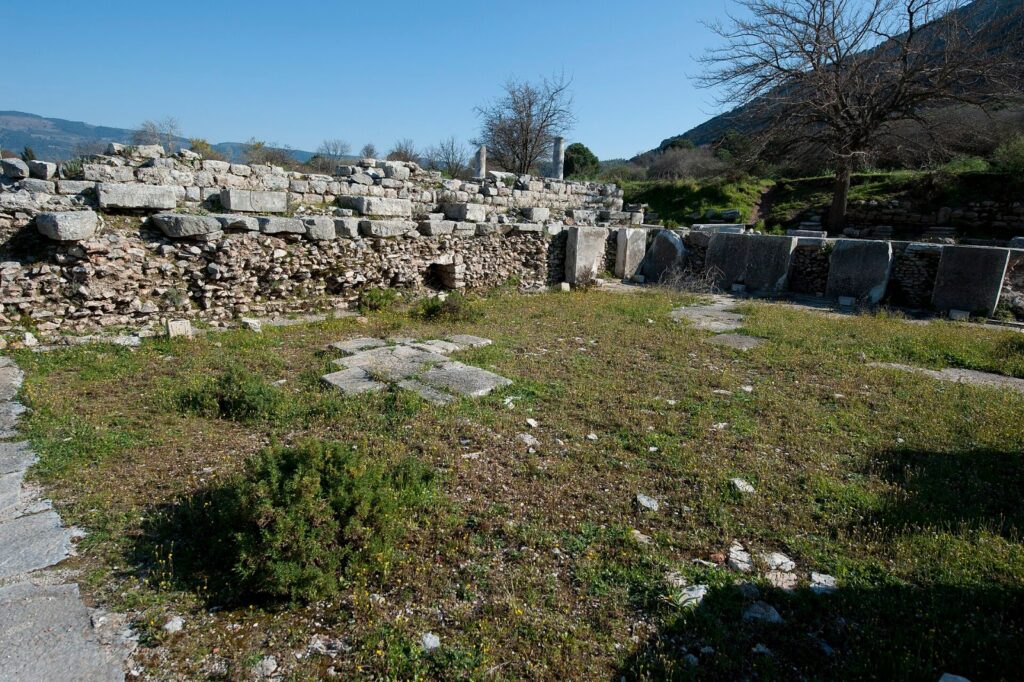
The fountain of Gaius Laecanius Bassus in Ephesus was made of white marble, with a courtyard in the middle, two-storied columns on three sides and two pools in front of them. A large triangular pediment covers the entire facade appearance. The height from the floor to the courtyard reaches up to 9 meters. Columns on the facade are lined up in pairs. There were 20 columns on the front and 14 columns on the sides. We understood how the fountain looked like from the traces of the sculptures in the niches behind the columns.
Triton, Nymphe and Muse statues from the sculptures found here are exhibited in the “Ephesus Museum Fountain Findings Hall” today.
Who Was Gaius Laecanius Bassus?
Gaius Laecanius Bassus was a Roman senator who governed the province of Asia around 80 AD, in the same years when this fountain was built in Ephesus. Asia was one of most prestigious provinces of the Roman Empire, and a governor kept the job for one year.
The city of Ephesus honored him with an inscription, and that is why the fountain carries his name. I wrote a short post about the man too, Gaius Laecanius Bassus of Ephesus.
Where Is the Laecanius Bassus Fountain in Ephesus?
The Laecanius Bassus Fountain stands in the southwest corner of the State Agora, a short walk down from the Upper Gate, where most tours start. You pass it early in the walk, not far from the Temple of Domitian.
Today you see only the low walls and the floor of courtyard. The columns are gone, so it is easy to walk past without noticing. That is why I like to stop here and describe the building before we move on.
Which Statues Decorated the Fountain?
The front of the fountain was full of water gods and sea creatures. Two river gods stood in the middle of the facade, and around them were Tritons, who are half man and half fish, sea nymphs and sea horses.
Six of the statues were made as water spouts, so the water ran out of the sculptures into the pool. About 80 percent of the sculptures have survived, which is why the museum in Selçuk has so many pieces to show.
The fountain worked for hundreds of years and was still in use in the 6th or 7th century AD. Its water came through the aqueducts of Ephesus.
Frequently Asked Questions
Who built the Laecanius Bassus Fountain?
It was built in the years around 80 AD, while Gaius Laecanius Bassus was governor of Asia. The people of Ephesus honored him with an inscription, and his name stayed with the fountain.
What is a nymphaeum?
A nymphaeum was a monument to the nymphs, the water spirits of the old stories. In Roman cities it became a big public fountain with a decorated front wall and statues, built to bring water to the people. The Laecanius Bassus Fountain was one of them.
Where are the statues from the Laecanius Bassus Fountain now?
Many of them are in the Ephesus Museum in Selçuk, a short drive from the ruins, in the hall for fountain finds. Opening days change, so please check before you go.
Tour Guide to Ephesus
Gaius Laecanius Bassus Fountain is one of the hidden gems of Ephesus. Contact me to learn more about Ephesus Ancient City and for booking tour guide for Ephesus, Turkey. See you soon, Hasan Gülday.



1 comment