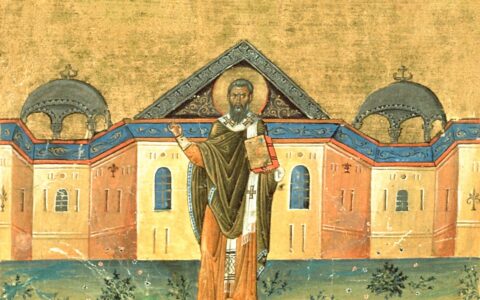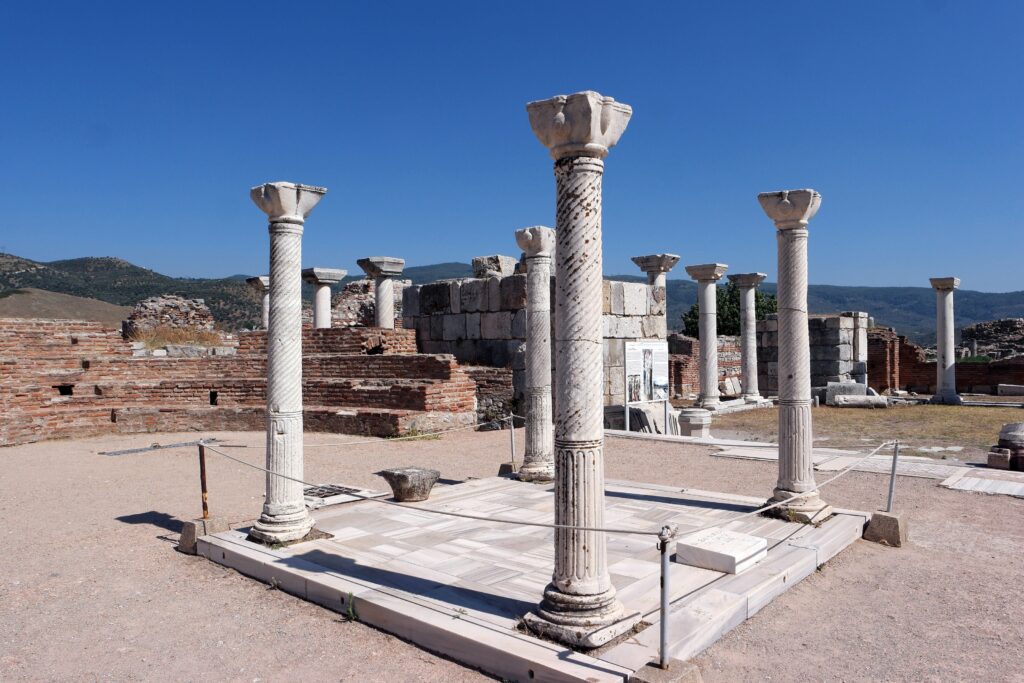
Saint John the Evangelist was John, the son of Zebedee, a fisherman from Galilee who became one of the twelve apostles and one of the three closest disciples of Jesus. According to Christian tradition, he later lived in Ephesus, was exiled to the island of Patmos under Emperor Domitian, wrote the Book of Revelation there and came back to Ephesus for his last years. The Basilica of Saint John in Selçuk stands over his traditional tomb.
Of the twelve apostles, the one whose long life is most closely tied to my own city is John. His tomb is on a hill in Selçuk which I drive past most mornings on my way to work. Let’s have a look at his story: where he came from, how he ended up on a small Greek island, and why the whole story comes back here, to my home. I will tell it the way I tell it to my guests on the bus.
Roots of Saint John the Evangelist
Saint John the Evangelist was from Bethsaida, a poor village in Galilee. He was the son of Salome, daughter of Joseph, who was the betrothed of the Virgin Mary, and the fisherman Zebedee. Joseph had four sons from his first marriage: James, Yoses, Judah and Simon, and three daughters: Esther, Marta, and Salome. Jesus himself was also the uncle of St. John, as he was a kind of brother to Solome who was the mother of St. John.

His father Zebedee was a fisherman, and probably a fairly successful one. Gospel of Mark says that he had hired servants on his boat (Mark 1:20). So the family had its own boat, its own nets and its own small business on the Sea of Galilee. In this boat John grew up with his brother James, smelling the lake all day long.
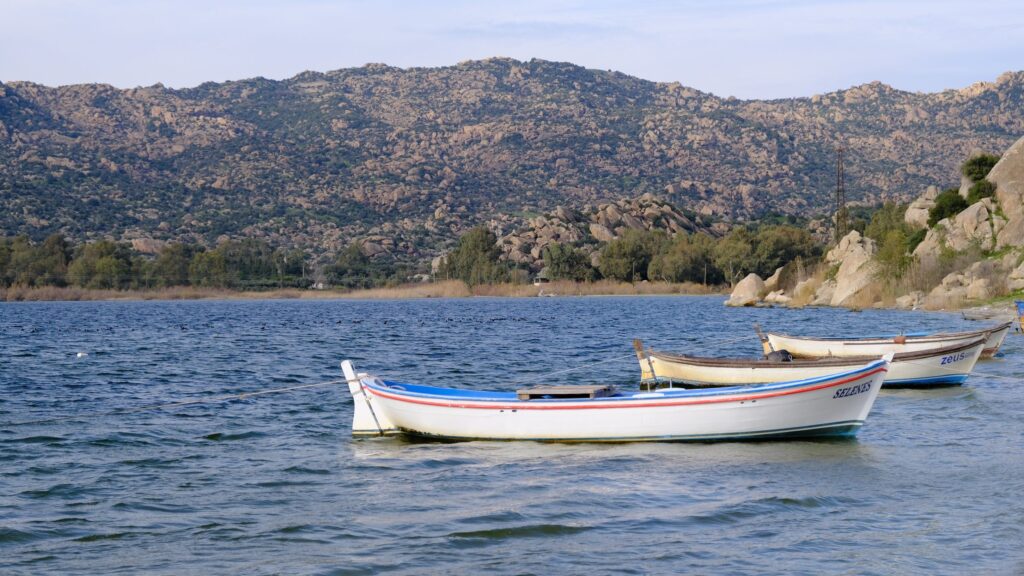
Every time I read about the Sea of Galilee in the Gospels, I think of Lake Bafa, south of my home, where I am sometimes taking my guests for a quiet lunch after Priene and Miletus. The same small fishing boats, the same grilled fish in the village restaurants and the same hot sun bouncing off the water at midday. I think the boy John had a very similar life on his lake.
While John and his brother Jacob were helping their father with fishing by the sea of Galilee, Jesus called on them to follow him and become fishermen who would catch men. They too immediately gave up everything to follow him and his heavenly teaching. John’s love for pureness and piety was higher than others, he was worthy of the title of “pure”, and his fervent love of Christ and the perfect life made him, among others, the “beloved apostle” making him known as ‘’Saint John the Beloved’’.
However, I don’t think the scene at the lake was their very first meeting with Jesus. The Gospel of John tells of two disciples of John the Baptist who followed Jesus. One of them was Andrew, and many readers believe that the other one, who is not named, was John himself (John 1:35-40). So the calling at the lake was the moment of full decision.
This makes the story more human. They knew this man, they had heard him teach, and they had probably talked about him at home with their father. When the moment came, they left the boat. The boys followed Jesus, and their father stayed with the boat.
Time of Saint John the Evangelist with Jesus Christ
He was one of the three closest people to climb Mount Tabor with Jesus Christ (others were Peter, James, John). John saw the sacred shine in Christ’s body and heard the voice coming from the clouds: “This is my dear Son, I am pleased with him. Listen to him! ” (Matthew 17: 5). It was John whom Jesus wanted to sit on his right hand in His Kingdom, who was enthusiastic with his love (Matthew 20:21).
Peter, James and John were also the only disciples whom Jesus took with him when he raised the daughter of Jairus (Mark 5:37). On the night of his arrest, he took the same three further with him into the garden of Gethsemane (Mark 14:33). These three were the inner circle of the twelve.
At the last supper, the Jesus made Saint John the Evangelist to sit beside Himself, who rested his head on his beloved Lord’s chest (John 13:23). When the Jews arrested Jesus, St. John followed him to the high priest’s palace (John 18:15). When the Jesus was crucified he alone remained at the foot of the cross with the Virgin Mary.
By the way, in the Gospel which carries his name, John never calls himself by name. He calls himself “the disciple whom Jesus loved” (John 13:23, 21:20). Christian tradition, since Irenaeus in the 2nd century, reads this phrase as John speaking about himself. It does not sound proud to me. It sounds like an old man in Ephesus remembering with wonder that he, of all people, had been so close to the Master.
Tradition also says that John was the youngest of the twelve. In many paintings of the Last Supper, he is the young, beardless disciple leaning on Jesus. Whether or not the painters were right, they keep an old memory: this was the boy of the group.
Crucified Jesus saw John standing, he said to Virgin Mary: “Woman, here is your son!” and to John: “Here is your mother!”. From that moment on, John took the Virgin Mary into his own home and later headed to Asia Minor ending their journey in Ephesus, Turkey (John 19:27).
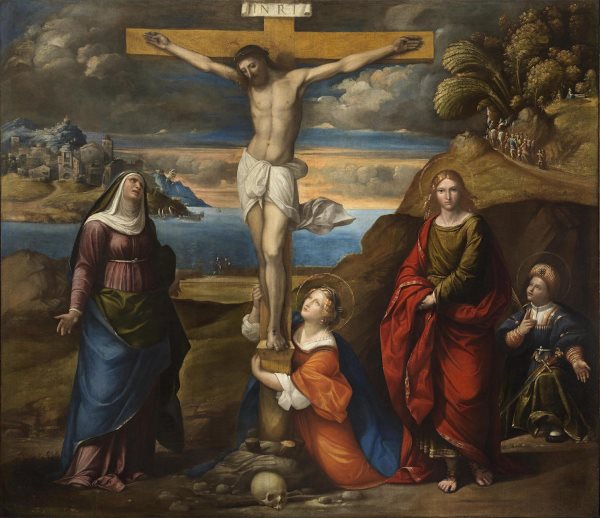
The Gospel does not say where this home was. But from that hour, the care of the mother of Jesus was John’s own responsibility, and he carried it for the rest of her life. This is the root of the tradition which brings the Virgin Mary to my region, to the House of Virgin Mary nearby Ephesus.
At the time of the resurrection, Saint John the Beloved was the first to come to the tomb of Jesus. He was the first to bend down and see the linen cloths lying around (John 20: 5-6). He saw Christ after his resurrection, and when Christ breathed the Holy Spirit to them to preach the Bible to the world, he was there with the others (John 20:22).
Saint John was also present at the Jesus’s ascension to heaven. Saint John the Beloved remained with Mother Mary after the other disciples were gone, accompanying the Virgin Mary and served her until her death.
Saint John the Evangelist in Jerusalem
The Book of Acts shows John in Jerusalem in the first years of the church, almost always together with Peter. They went up to the temple together, where a lame man was healed (Acts 3:1-8). They were arrested and questioned together (Acts 4:1-21), and the apostles sent them together to the new believers in Samaria (Acts 8:14).
Apostle Paul names James the brother of the Lord, Cephas (Peter) and John as the “pillars” of the church in Jerusalem (Galatians 2:9). His own brother James was the first of the twelve apostles to die as a martyr. King Herod Agrippa I had him killed with the sword around AD 44 (Acts 12:1-2). The family of Zebedee had given two sons to Jesus, and now only John was left.
Saint John the Evangelist Travels to Ephesus
When all disciples decided to travel around the pagan Roman Empire and spread the words of Christ, John decided to head for Asia Minor (Anatolia). Saint John and his companion Prochorus had a hard journey which took them fourty days to reach Asia Minor. They headed for Ephesus which was the capital of the Roman province of Asia. John performed several miracles in Anatolia.
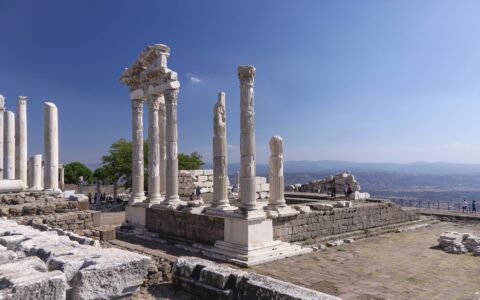
See – Saint John the Evangelist in Asia Minor and Saint John the Evangelist in Ephesus
Why Ephesus? There are a few good reasons. Apostle Paul had already taught here for about three years and left a church behind him (Acts 20:31). The city had a strong Jewish community too (Acts 18:19, 19:8). And it was the great Greek-speaking port of the province, open to the whole Mediterranean.
The Bible itself does not say that John lived in Ephesus. The clearest early witness is Irenaeus of Lyon, writing in the late 2nd century. He says that John published his Gospel while he was living at Ephesus. As a boy, Irenaeus had heard Polycarp of Smyrna speak about his own time with John.
Polycrates, bishop of Ephesus around AD 190, also named John among the great Christians of Asia in his letter to the bishop of Rome. Some modern scholars are skeptical about this tradition, others defend it. For my own part, after a life spent in this region, I find it convincing. If you want my opinion, John was here.
Saint John and the Churches of Asia
In Ephesus, John became the elder of the churches of Asia. According to Irenaeus, Papias of Hierapolis was a hearer of John (Against Heresies 5.33.4). He also writes that the church of Ephesus had John among them until the times of Emperor Trajan, who ruled from AD 98 to 117 (Against Heresies 3.3.4).
John also traveled. Clement of Alexandria, writing around AD 200, tells that after his return from Patmos, John went out from Ephesus to the nearby cities, to appoint bishops and to set whole churches in order (quoted by Eusebius, Church History 3.23).
The Acts of John, an apocryphal book whose stories began to circulate in the 2nd century, adds many miracles in Ephesus and in the cities around it. We cannot trust every word of it. However, it remembers a basic fact: John was the link between the churches of Asia. When he wrote the letters to the Seven Churches of Revelation, he was writing to churches he probably knew in person.
John’s Exile to Patmos by Emperor Domitian
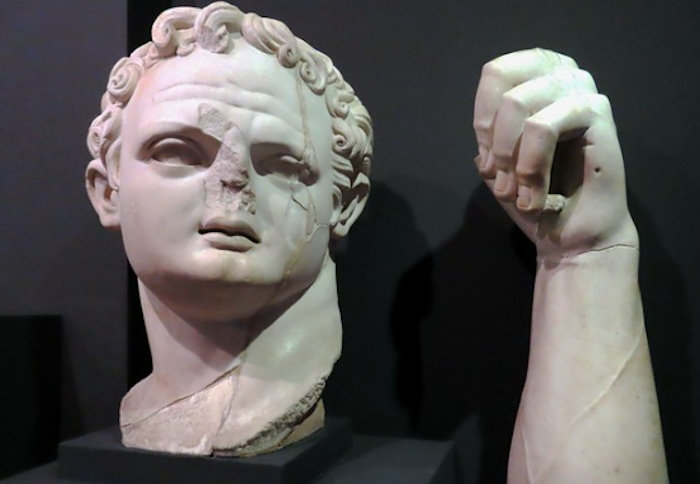
Emperor Domitian heard of John’s fame and arranged a meeting with him. The Apostle’s belief claiming the Messiah is stronger than any earthly power angered Emperor Domitian greatly, and he exiled Saint John from Ephesus to Patmos Island in the Aegean Sea in hopes of lessening his influence (Revelation 1:9).
During the journey, Prohorus and John showed God’s compassion by healing the dysentery of the soldiers accompanying them. As soon as the saint arrived at the island of Patmos, he saved Myron’s son, Apollonides, one of the notables of that region, from an evil spirit. This miracle happened with a word of John, who brought Myron’s household to faith and baptism in Christ; Shortly after, the governor of the island was also baptized. John slowly converted Patmos into a Christian land.
This happened in the last years of Emperor Domitian, who ruled until AD 96. Irenaeus writes that John saw his Revelation “towards the end of Domitian’s reign” (Against Heresies 5.30.3), so most writers date the exile to around AD 95.
In Asia the worship of the emperors was already strong. In Ephesus, the Temple of the Sebastoi, built for the emperors of Domitian’s family, was dedicated in AD 89/90. Christians who refused to honor the emperor as a god felt this pressure more every year. How wide the persecution under Domitian really was is still debated. I think it was real but uneven.
Tertullian, writing around AD 200, adds another story: in Rome, John was plunged into boiling oil and came out unhurt, and then he was sent to his island exile (Prescription Against Heretics 36). Under Roman law, this kind of punishment was called relegatio in insulam, banishment to an island. I explain how it worked in my article on how John wrote Revelation in exile on Patmos.
Patmos and the Cave of the Apocalypse
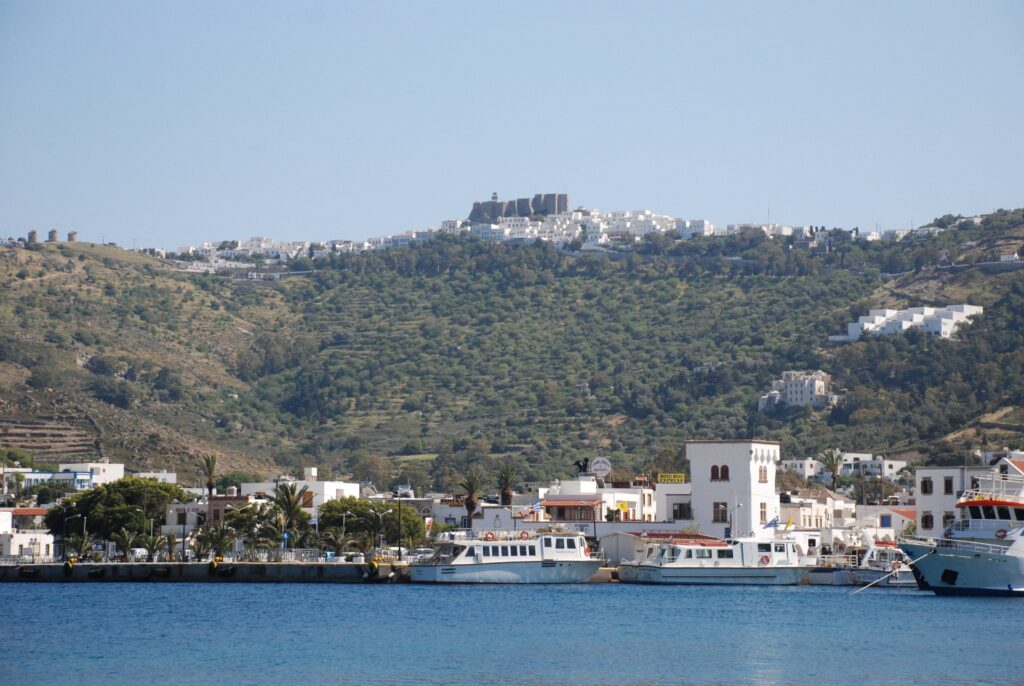
Patmos is a small, rocky Greek island in the Aegean Sea, south-west of Ephesus. The cave where tradition says John saw his vision is about halfway up the hill, on the road between the harbor of Skala and the town of Chora. Since 1999, the cave, the Monastery of Saint John the Theologian and the old town of Chora have been a UNESCO World Heritage Site.
I have stood on Patmos myself, twice. A chapel is built inside the cave, with low rock ceilings, and the smell of beeswax and incense stays in your clothes for the rest of the day. Above the place where John’s head is said to have rested, there is a crack in the rock, and tradition explains it as the place from where the voice came.
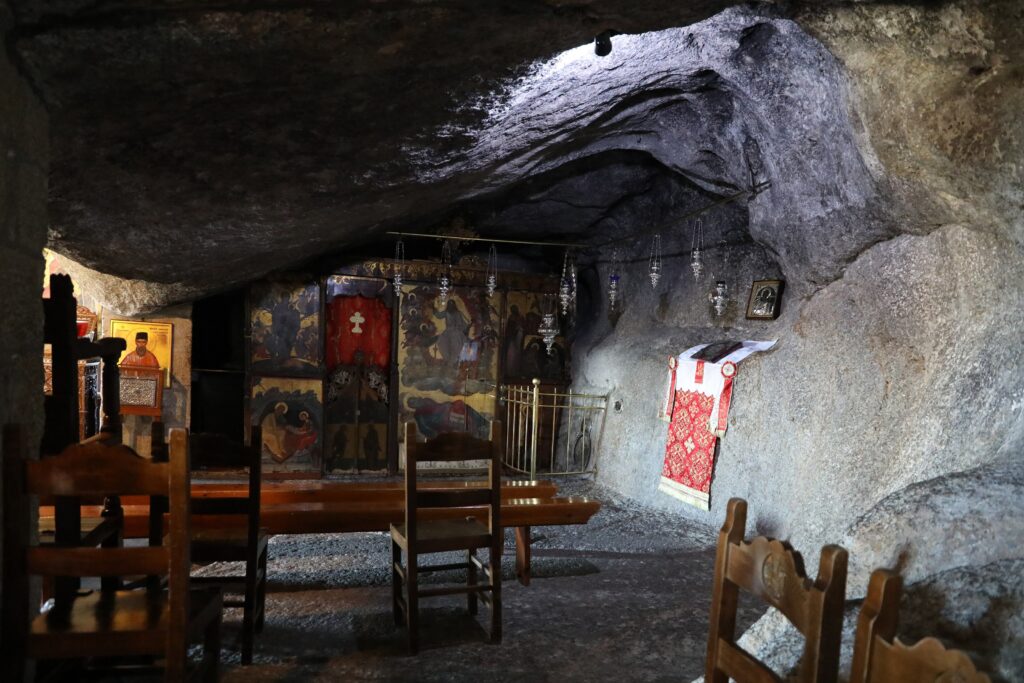
You stand there, you put your hand on the cold stone, and even if you are skeptical, you understand why pilgrims have come to this place for so many centuries.
If you want to visit Patmos yourself, I will be honest with you: it is not the easiest trip from Selçuk. In the summer season, small ferries sail from Kuşadası to the island. If the wind picks up in the afternoon, your stomach will know about it, so bring a light jacket even in July. The wind on the deck is colder than people expect. But it is worth the discomfort.
Book of Revelation Gets Written
Picture an old man sitting at the mouth of a cave on a Greek island. He has seen Jesus crucified. He has lost his brother. He has lived through the destruction of Jerusalem in AD 70, and he has watched two generations of Christians grow up around him in Ephesus. Now, far from his church, he has nothing left except his memory and his faith. So he writes.
John wrote the New Testament known as Revelation while he was exiled in Patmos Island. John said he saw Jesus in flesh, “his face was like the sun shining with all his might” in the likeness of a young man. To encourage John “who fell at his feet like a dead”, Jesus said:
”Do not be afraid! I am the first and the last. I am the alive. I was dead, but here I am alive for eternity. I have the key to death and the realm of the dead. Therefore, write down what you have seen, what is happening now, and what will happen next ” (Revelation 1: 1-19)

Then in the following verses John was shown what would happen at the end of the world: the gathering of the power of sin, the coming of the Antichrist, his war against the believers, and his final struggle against Christ, and finally, Christ’s sending him, the devil, and his demons to hell for eternity.
He has also been given the power to see the violent upheavals that will take place in the world ahead, the fiery end of all, and the final victory of man, the resurrection of all, and the final judgment.
Letters of Christ to Seven Churches of Apocalypse
Also in a moment of revelation Jesus told to Saint John to write the letters to Seven Churches of Asia or also known as the Seven Churches of the Revelation.
“Write on a scroll what you see and send it to the seven churches: to Ephesus, Smyrna, Pergamum, Thyatira, Sardis, Philadelphia and Laodicea.” (Revelation 1:11)

As we understand these letters were written by John’s hand but the one commanding that hand was Jesus Christ himself. Letters to Seven Churches hold a great importance since they were written by the Christ himself.
The first of the seven letters goes to my own city (Revelation 2:1-7). I wrote about it in The Letter to the Church of Ephesus in Revelation.
Return of Saint John to Ephesus and His Passing
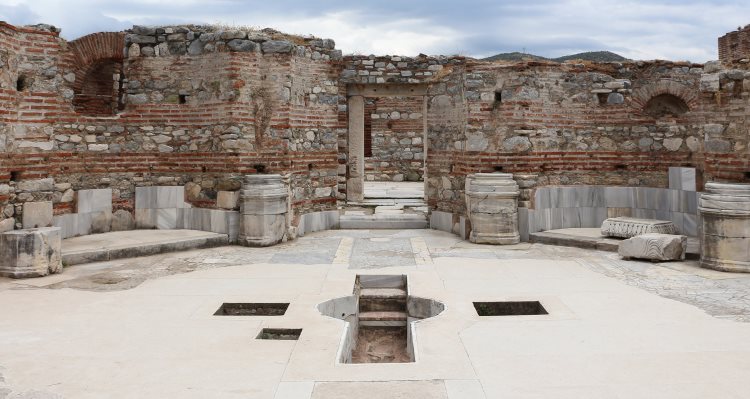
After the demise of Emperor Domitian, many unjustly victims who were banished like Saint John were allowed to return to their homes. John the beloved was one of them. Saint John returned to Ephesus to spend the rest of his days in peace, bringing many to faith. He spent several years in Ephesus. It is commonly believed that Saint John the Evangelist ascended to heaven from where Saint John’s Basilica stands today.
Eusebius of Caesarea tells the same in his Church History (3.20). After Domitian’s death in AD 96, the Roman Senate cancelled his honors, the people he had unjustly banished went back home, and John returned from the island to Ephesus. The new emperor was Nerva, whose short reign brought relief to the Christians.
See – Saint John’s Basilica nearby Ephesus
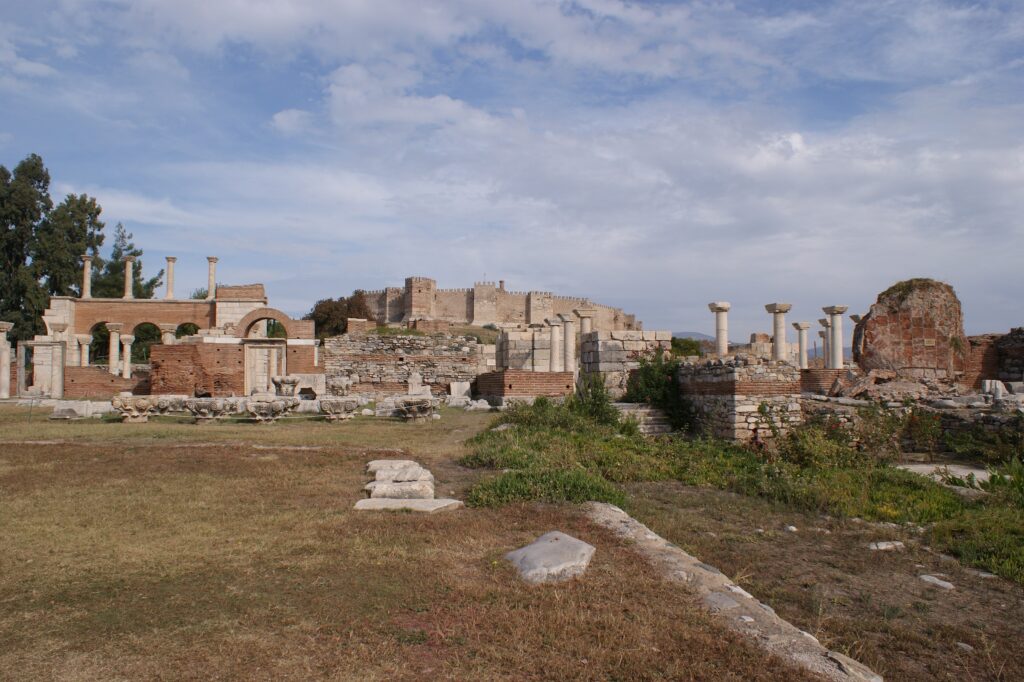
The Basilica of Saint John stands on Ayasuluk Hill in Selçuk. The first building on the site was a mausoleum which was also used as a church. In the 6th century, Emperor Justinian built the great basilica whose ruins we walk through today. Above it rises the Ayasuluk Fortress, which is open to visitors too.
Frequently Asked Questions
Is John the Apostle the same as John the Evangelist?
Christian tradition says yes. Since the 2nd century, Irenaeus and other early writers have identified John the son of Zebedee with John the Evangelist, who wrote the fourth Gospel, with the disciple whom Jesus loved, and with John of Patmos, who wrote the Book of Revelation. Some scholars, ancient and modern, have doubted parts of this, but the churches of Asia remembered him as one man.
What is Saint John the Evangelist known for?
He is known as the beloved disciple of Jesus, the disciple who stood at the cross and took the Virgin Mary into his home, and the traditional author of the Gospel of John, three letters and the Book of Revelation. In Turkey he is remembered above all in Ephesus, where the Basilica of Saint John stands on Ayasuluk Hill in Selçuk.
How did John the Apostle die?
Tradition says that John was the only one of the twelve apostles who did not die as a martyr. He passed away in Ephesus as a very old man, around AD 100, in the time of Emperor Trajan. It is commonly believed that he ascended to heaven from the place where the Basilica of Saint John stands today.
Did John the Apostle survive boiling oil?
According to Tertullian, writing around AD 200, John was plunged into boiling oil in Rome and came out unhurt, and after that he was sent into exile on an island. This is a tradition, not a story from the Bible. I tell it in more detail in my article on Saint John the Evangelist in Asia Minor.
Hire Biblical Tour Guide in Turkey
Saint John the Evangelist is one of the most important figures that I always mention in my tours. He is important not only for the Biblical tours in Turkey also to understand the workings and life of the first century Roman Empire.
I am a nationally licensed Turkish tour guide, and Ephesus is my main work area. With my Christian guests, I try to add the Basilica of Saint John on Ayasuluk Hill into our day in Ephesus. You can check my guiding rates and guiding areas, or write to me to hire me as your licensed guide for Ephesus and the Seven Churches of Revelation.
I hope we will walk together on Ayasuluk Hill one day. Contact me to learn more about Saint John the Evangelist. You can hire Seven Churches of Asia Minor tour guide service, Biblical Ephesus tour guide service and Biblical Sights in Turkey tour guide service with professional licensed Turkish Biblical tour guide. See you soon, Hasan Gülday.