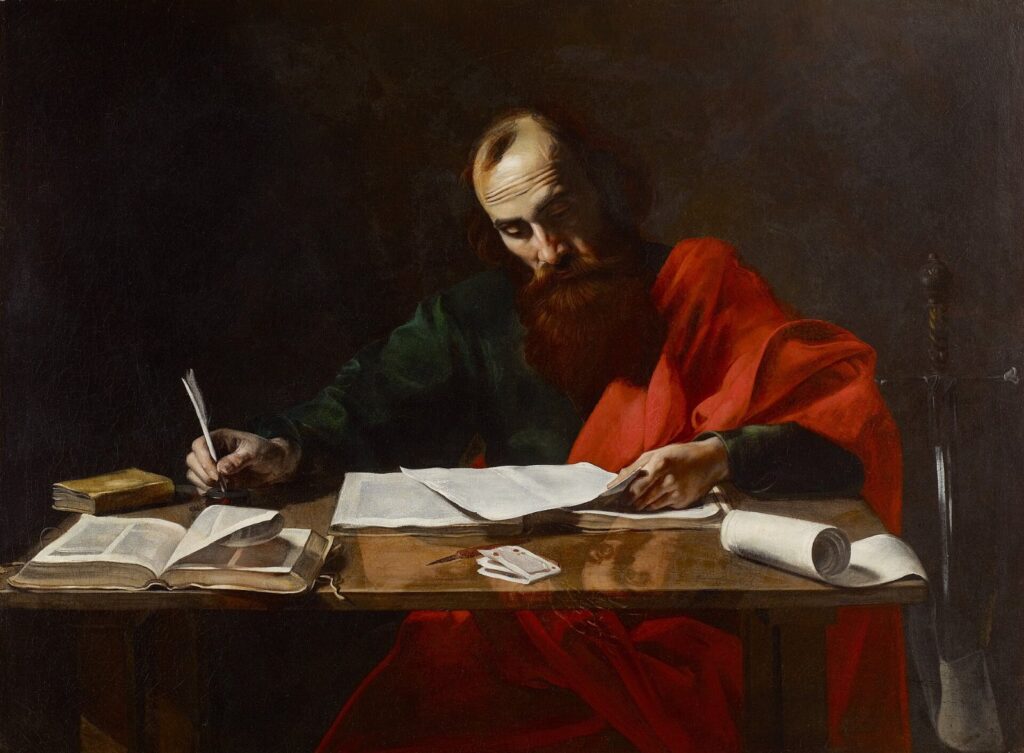
The letters of Paul most connected to Turkey are seven: Galatians, First Corinthians, Ephesians, Colossians, Philemon, and First and Second Timothy. Four of them went to churches and people in Asia Minor, the two letters to Timothy went to Paul’s helper in Ephesus, and First Corinthians was written in Ephesus. That is seven of the twenty-seven books of the New Testament.
Paul taught in his letters that Christians were freed from sin through Jesus’ death and resurrection. When he arrived in Jerusalem in 57 AD, he got involved in many debates over his rejection of Jewish traditions. He was arrested and held in a prison in Caesarea for two years. Since he could claim as a Roman citizen, he was eventually released. He spent his remaining years writing and serving to the earliest churches.
For me this is not a small detail. The communities Paul wrote to lived in cities which I can drive to in a single day from my home nearby Ephesus. When Paul wrote “to the saints which are at Ephesus” or “unto the churches of Galatia”, he was writing to real people in real towns, and their stones are still in the ground.
Let’s have a look at the seven letters of Paul with the strongest connection to Turkey, in the rough order in which they were written:
- Galatians, to the churches of Galatia in central Anatolia
- First Corinthians, written in Ephesus
- Ephesians, to the church of Ephesus
- Colossians, to the church of Colossae nearby Laodicea
- Philemon, to a Christian of Colossae
- First Timothy, to Timothy in Ephesus
- Second Timothy, the last letter of Paul, to Timothy

Letter to the Galatians
We can assume that letter to the Galatians was written in very early stages of Christianity since the letter explains how to convert Gentiles into Christians. Many Bible experts of our time agrees that this letter was written by Paul. Letter to the Galatians was written sometime in between the year 50 and 60.
There were several Churches founded by Paul in Galatia such as Antioch of Pisidia, Iconium, Lystra and Derbe Churches. Letter to Galatians shows a great facade of Christianity in equality stating ”all of you are one in Christ Jesus”.

Paul had founded these churches with Barnabas on his first missionary journey (Acts 13 and 14). Some scholars think that the letter went instead to the Galatians in the northern part of the province. You can read more about this region in my article on the Roman Province of Galatia.
The problem in these churches was simple and serious. Some Christians were telling the Gentile believers that they had to be circumcised and keep the whole Law of Moses. Paul answers with fire: “if ye be circumcised, Christ shall profit you nothing” (Galatians 5:2).
In the first two chapters, Paul tells the story of his own calling. Then he gives one of the most important teachings of all his letters: “a man is not justified by the works of the law, but by the faith of Jesus Christ” (Galatians 2:16). Centuries later, Martin Luther built his teaching of justification by faith largely on this letter, and that teaching became the center of the Lutheran Reformation.
By the way, Paul often had a helper who wrote his letters down. In Romans, the writer even greets the readers himself: “I Tertius, who wrote this epistle” (Romans 16:22). At the end of Galatians, Paul takes the pen in his own hand: “Ye see how large a letter I have written unto you with mine own hand” (Galatians 6:11).
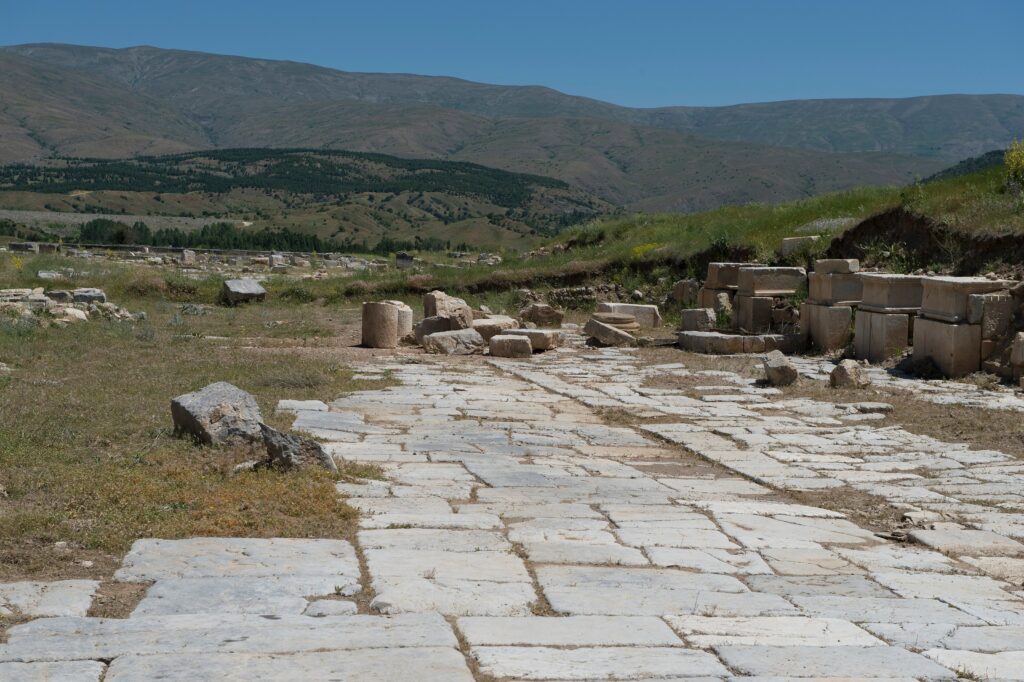
Either way, every church which received this letter was on what is Turkish soil today. Antioch of Pisidia lies just outside Yalvaç in Isparta Province, Iconium is the city of Konya, Lystra is near the village of Hatunsaray south of Konya, and Derbe is a mound northeast of Karaman. This road is a route I have driven many times with my guests.
First Letter to the Corinthians
First Corinthians went to Greece, but it was written in my region. Paul wrote it in Ephesus in the mid-50s AD, during his long stay in the city on his third missionary journey. He says it himself near the end: “But I will tarry at Ephesus until Pentecost. For a great door and effectual is opened unto me, and there are many adversaries” (1 Corinthians 16:8-9).
The church in Corinth had written to Paul with questions (1 Corinthians 7:1), and he had heard reports about other problems too. He answers them one by one in sixteen chapters: divisions in the church, immorality, lawsuits between believers, marriage, food offered to idols, worship and the resurrection.
Some of the most famous pages of Paul are in this letter. Chapter 11 gives the Lord’s Supper as Paul received it, chapter 13 is the great chapter on love, and chapter 15 is his long teaching on the resurrection of the dead. In the same chapter he writes that he “fought with beasts at Ephesus” (1 Corinthians 15:32).
Letter is full of people from Ephesus too. Paul sends greetings from “the churches of Asia” and from Aquila and Priscilla, “with the church that is in their house” (1 Corinthians 16:19). Read more about Aquila and Priscilla in Ephesus. He also writes about Apollos, who had taught in Ephesus before he went to Corinth (Acts 18:24-27, 1 Corinthians 16:12).
According to Acts, in these years Paul was “disputing daily in the school of one Tyrannus” for two years, so that all of Asia heard the word (Acts 19:9-10). I tell this story in Paul’s Second Visit to Asia Minor and Ephesian Years and Apostle Paul in Ephesus.
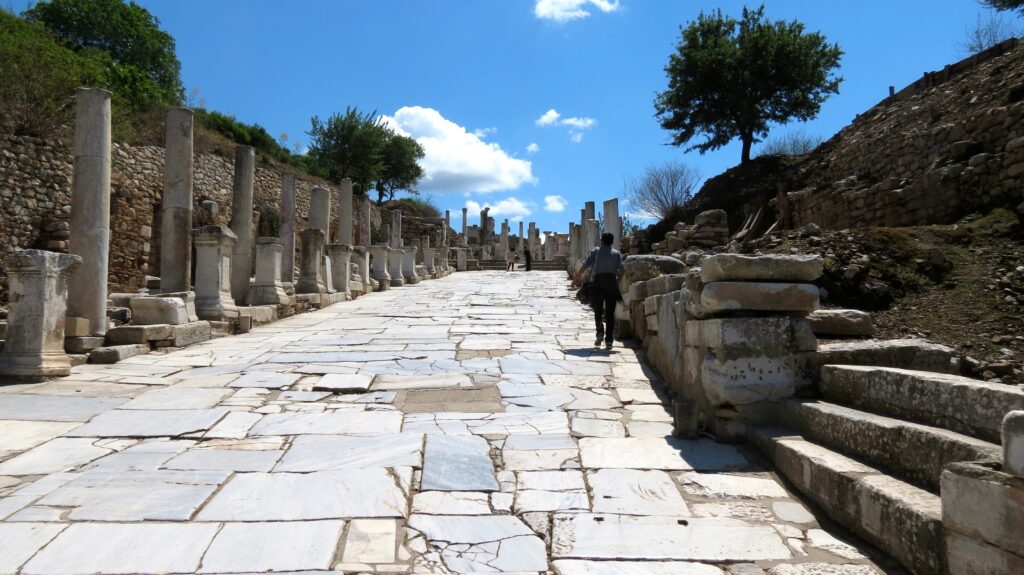
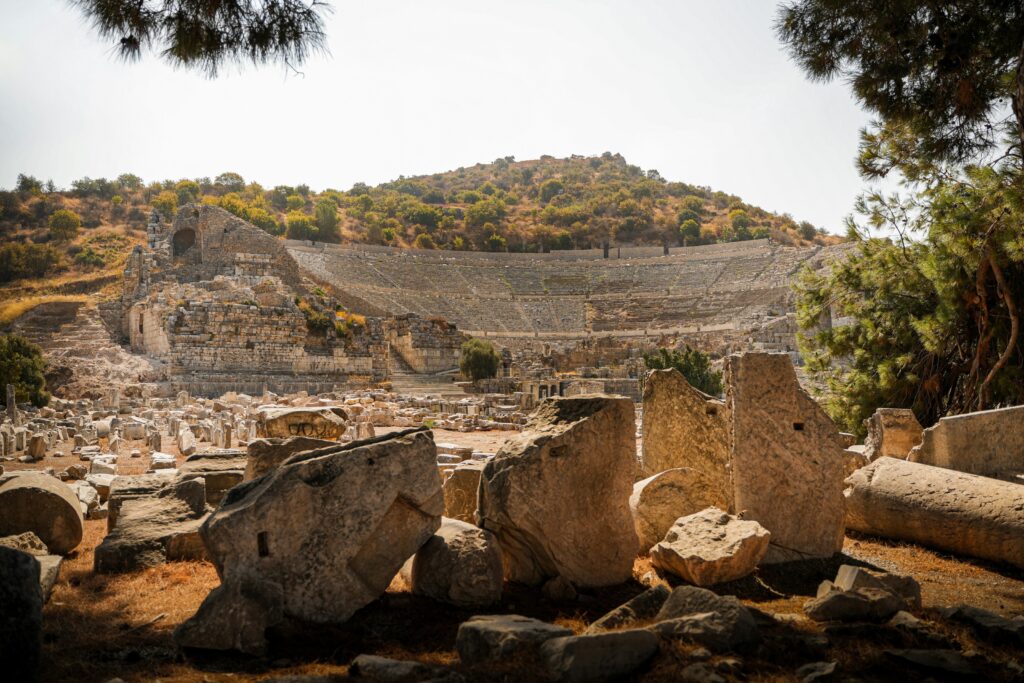
Everybody who walks down Curetes Street or sits in the Great Theater of Ephesus today is in the city where this letter was written. I like to remind my guests of this when we walk down from the Upper Gate.
Letter to the Ephesians
Apostle Paul wrote his letter to the Ephesians while he was prisoner in Rome around the year 62. Paul visited Ephesus twice and spent three years of his life in Ephesus city. Ephesus was very well known by Paul. Ephesus was a multicultural church which mainly consisted of Jewish and Hellenistic origins. Paul encourages believers of Ephesus Church submitting to one another making them equals in the church.
In the letter Paul calls himself “the prisoner of Jesus Christ for you Gentiles” (Ephesians 3:1). Its big subjects are Christ as “the head over all things to the church” (Ephesians 1:22), the unity of Jews and Gentiles in one body, the life of the church and the Christian household. Tychicus, “a beloved brother and faithful minister in the Lord”, carried it to Asia (Ephesians 6:21-22).
Some modern scholars think that a disciple of Paul wrote it a little later, and the question is still debated. By the way, the words “in Ephesus” in the first verse are missing in some of the oldest manuscripts, so the letter may have been read in other churches of Asia too.
For me the connection is simple: this is the book of the New Testament with the name of Ephesus on it. I wrote more about it in my article on the Epistle to the Ephesians.
The Library of Celsus, which my guests photograph today, did not exist yet. It was started about fifty years later, in the 110s. However, the first people who heard this letter read aloud in a house church lived in the same city and walked the same hillside between the theater and the harbor.
Letter to the Colossians
Congregation at Colossae was located on the east of Ephesus nearby Laodicea in Asia Minor. Apostle Epaphras founded the church in Colossae. We believe Paul wrote the letter to Colossians while he was prisoner in Rome at the year 62. Colossae was in the same region with the famous Seven Churches of the Revelation and this letter to them was surely read by the nearby Laodicea and Hierapolis Churches.
Tychicus carried this letter too, and with him traveled Onesimus, “a faithful and beloved brother, who is one of you” (Colossians 4:7-9). This is the same Onesimus of the letter to Philemon. Colossae lay about 15 kilometers southeast of Laodicea in the Lycus Valley.
The Colossians had learned the gospel from Epaphras (Colossians 1:7), a man of their own town. Paul says that Epaphras prayed hard for them, “and them that are in Laodicea, and them in Hierapolis” (Colossians 4:12-13). The three churches of the Lycus Valley were close neighbors, and the letter asks to be read in Laodicea too (Colossians 4:16).
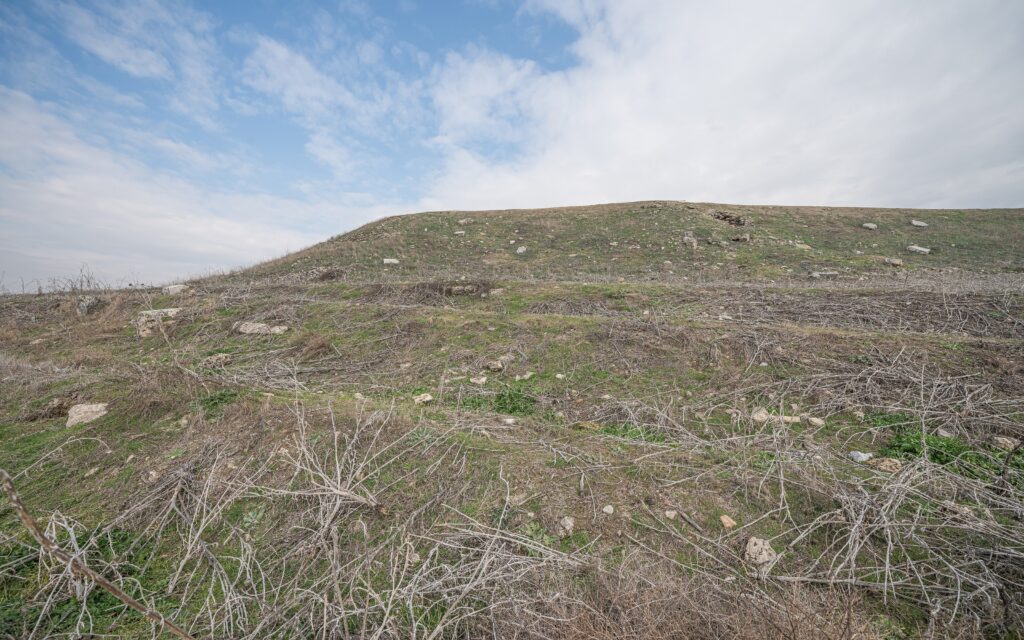
The letter answers some kind of mixed teaching in Colossae, with rules about food and holy days and the “worshipping of angels” (Colossians 2:16-18). Paul’s answer is the supremacy of Christ, “the image of the invisible God, the firstborn of all creation” (Colossians 1:15, WEB). This hymn in Colossians 1:15-20 is one of the highest passages of the New Testament.
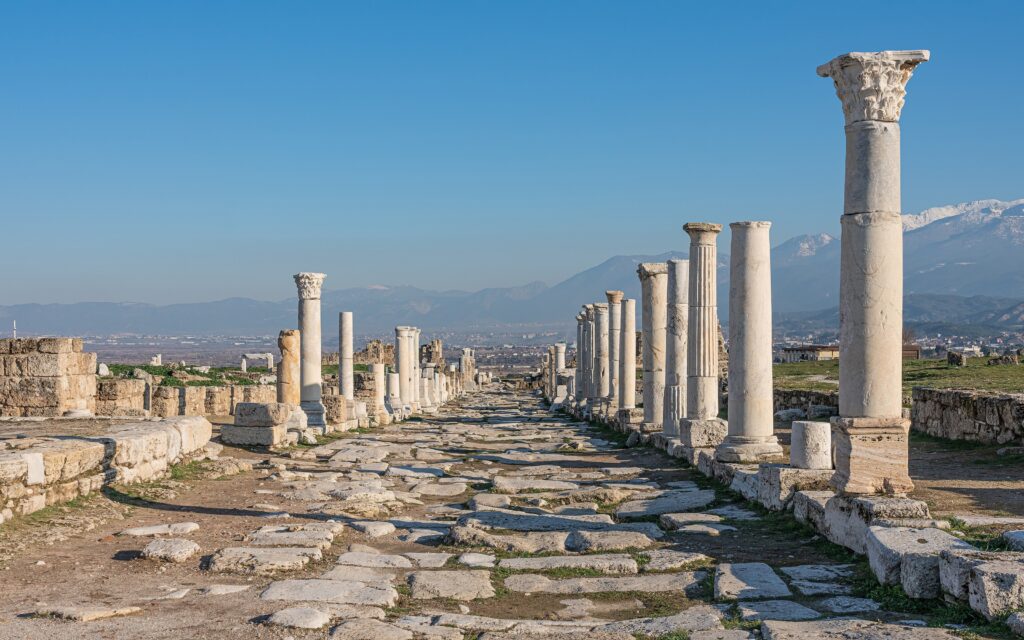
Colossae today is a mound in the fields about 3 kilometers north of Honaz in Denizli Province. For a long time nobody dug there. Pamukkale University started a survey in 2021, and the first systematic excavation began only in 2025. Laodicea, which received the letter too, is a big excavated site nearby Denizli and open to visitors.
Letter to Philemon
Apostle Paul’s letter to Philemon is regarded as one of the shortest of his works. Letter has only 335 words. Philemon was a wealth man of the city Colossae, and he met Paul in a house church. Apostle Paul says that we are all unconditionally precious to God so any person should be careful with anyone like God loving his children.
Philemon is a short and personal letter, but it is not only for one man. Paul writes “unto Philemon our dearly beloved, and fellowlabourer, And to our beloved Apphia, and Archippus our fellowsoldier, and to the church in thy house” (Philemon 1:1-2). Apphia was probably the wife of Philemon.
The letter is about Onesimus, a slave who had run away from his master Philemon. Somehow he found Paul in prison and became a Christian: “my son Onesimus, whom I have begotten in my bonds” (Philemon 1:10). Now Paul sends him back and asks Philemon to receive him “Not now as a servant, but above a servant, a brother beloved” (Philemon 1:16).
Paul even writes: “If he hath wronged thee, or oweth thee ought, put that on mine account” (Philemon 1:18). The letter does not abolish slavery, but it is warm, diplomatic and even a little playful. You can read about the slaves of this land in my article on slavery in Anatolia during antiquity.
Eastern Orthodox tradition says that Philemon, Apphia, Archippus and Onesimus died as martyrs at Colossae in the time of Emperor Nero. So this small letter was first read aloud in a house in the Lycus Valley, near the same mound which we see today.

First Letter to Timothy
First Timothy is one of the three Pastoral Letters, written to Timothy, the young helper of Paul. Paul reminds him: “I besought thee to abide still at Ephesus, when I went into Macedonia, that thou mightest charge some that they teach no other doctrine” (1 Timothy 1:3). So Timothy was leading the church of Ephesus when this letter came.
Many modern scholars think that the Pastoral Letters were written later by a disciple of Paul, because their words and their church questions are different from his other letters. The traditional view says that Paul wrote them himself in his last years.
The letter is practical. It deals about the qualities of bishops and deacons, false teachers, worship, widows, elders and the right use of wealth. You can read it as a small handbook for the church of Ephesus.
One line in it is very personal: “Drink no longer water, but use a little wine for thy stomach’s sake and thine often infirmities” (1 Timothy 5:23). Here Paul is not only a teacher, he is a friend who worries about the health of a younger man.
Tradition says that Timothy stayed in Ephesus as its bishop. According to the later Acts of Timothy, around AD 97 he tried to stop a pagan procession, the festival called Katagogia, and the angry crowd struck him down with clubs and stones.
Second Letter to Timothy
If the traditional view is right, Second Timothy is the last letter Paul ever wrote. He writes from prison in Rome and knows that his death is near: “For I am now ready to be offered, and the time of my departure is at hand. I have fought a good fight, I have finished my course, I have kept the faith” (2 Timothy 4:6-7).
Many of the most quoted lines of Paul are in this short letter, such as “All scripture is given by inspiration of God” (2 Timothy 3:16). It is a lonely letter too: “all they which are in Asia be turned away from me” (2 Timothy 1:15), and “Only Luke is with me” (2 Timothy 4:11).
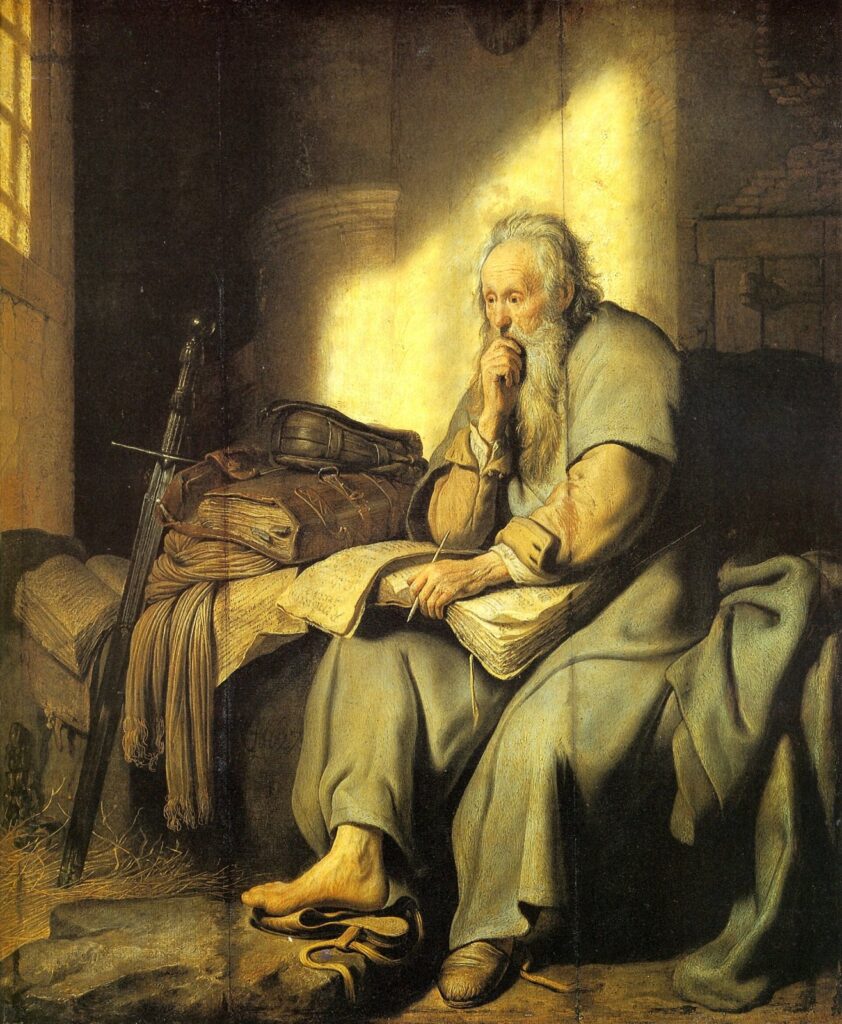
Most readers believe that Timothy was still in Ephesus. Paul greets Prisca and Aquila and the household of Onesiphorus (2 Timothy 4:19), and he reminds Timothy of the many ways Onesiphorus helped him “at Ephesus” (2 Timothy 1:18). He also writes “Tychicus have I sent to Ephesus” (2 Timothy 4:12).
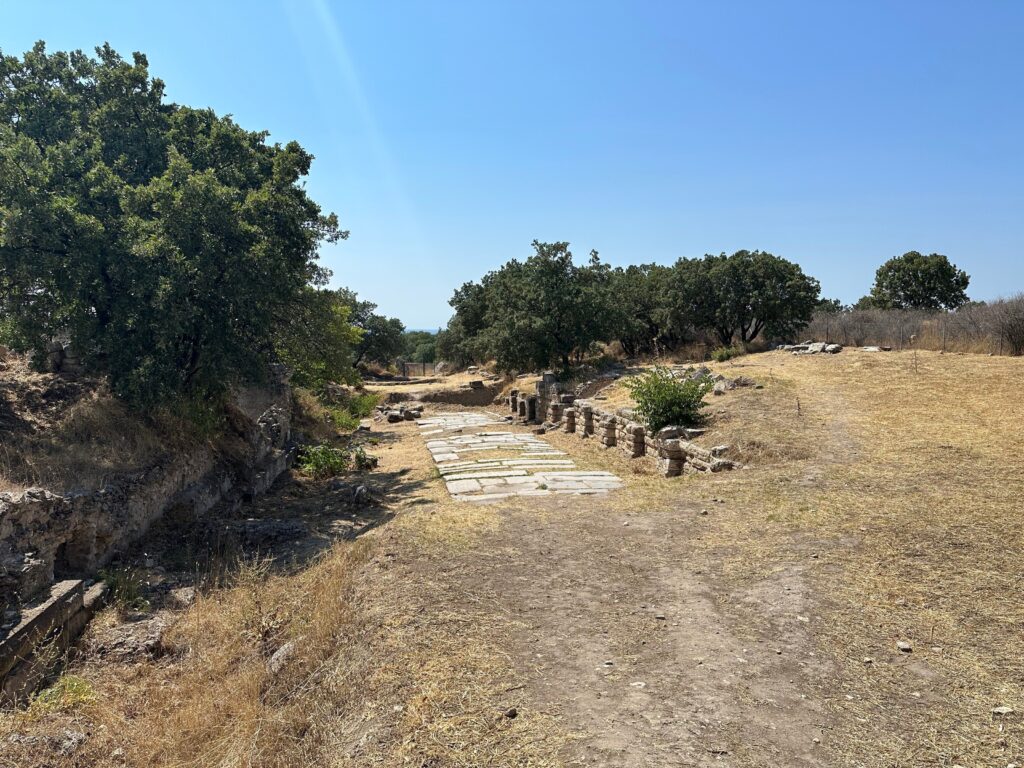
For me, the most human detail is a small request: “The cloke that I left at Troas with Carpus, when thou comest, bring with thee, and the books, but especially the parchments” (2 Timothy 4:13). He also writes that he left his friend Trophimus “at Miletum sick” (2 Timothy 4:20). Read more about Apostle Paul in Miletus.
So even in a Roman prison, the last thoughts of Paul traveled to the cities of my country: Ephesus, Troas on the Aegean coast and Miletus.
Lost Letters of Paul to Asia Minor
Lost Letter of Paul to Ephesians
As Apostle Paul mentioned in Ephesians 3:3–4, there was an earlier letter written to Ephesians which got lost in time.
Lost Letter of Paul to Laodiceans
Paul the Apostle referenced an earlier letter written to Laodiceans at Colossians 4:16.
Reading the Letters of Paul in Turkey
Seven letters, and most of their cities are within a day’s drive of my home. The churches that received them lived in stone cities which you can still visit, and the letters traveled with named couriers like Tychicus and Onesimus along Roman roads.
I am not a biblical scholar, I am a tour guide who reads carefully. Still, reading these letters in the place of their first readers changes how they read. A line like “put on charity, which is the bond of perfectness” (Colossians 3:14) sounds different when you stand on the mound of Colossae and look at the empty plain.
If you want to follow the whole story, see my articles on the cities visited by Apostle Paul in Asia Minor and on the Seven Churches of Revelation.
Frequently Asked Questions
How many letters did Paul write to the churches?
The New Testament has thirteen letters of Paul. Nine are addressed to churches: Romans, First and Second Corinthians, Galatians, Ephesians, Philippians, Colossians, and First and Second Thessalonians. Four are addressed to people: First and Second Timothy, Titus and Philemon. Most scholars accept seven of them as written by Paul himself, among them Galatians, First Corinthians and Philemon.
Did Paul write the letters to the seven churches of Revelation?
No. The seven letters to the churches of Asia in Revelation 2 and 3 are part of the vision of John on Patmos, written decades after Paul. However, two of those cities appear in Paul’s letters too: Ephesus received the Letter to the Ephesians, and Laodicea was asked to read the Letter to the Colossians (Colossians 4:16).
Why did Paul write letters to the churches?
Paul founded churches and then moved on, or he sat in prison, so letters were his way to keep teaching them. He answered their questions (1 Corinthians 7:1), corrected problems, encouraged them and sent news and greetings. The churches read his letters aloud and passed them on to each other.
Who delivered Paul’s letters to the churches?
Trusted helpers carried them. Tychicus carried the Letter to the Ephesians and the Letter to the Colossians (Ephesians 6:21, Colossians 4:7), and Onesimus traveled with him back to Colossae (Colossians 4:9).
Hire a Biblical Tour Guide in Turkey
I am a nationally licensed Turkish tour guide. My daily guiding area is Ephesus, İzmir and Pamukkale, so Ephesus, Laodicea and Hierapolis are part of my regular work. For the cities of Galatia, my national license lets me join you as your personal guide on a longer journey through Turkey. You can check my guiding rates and guiding areas.
If you would like to read the letters of Paul at the places where they were first heard, I will be happy to help you as your guide. I hope we will read them together one day in Ephesus.
Turkey is a heaven when it comes to early Christianity and Churches. I proudly guided tours around Turkey with congregations coming from many countries. I will be happy to host you and show you the best biblical spots around Asia Minor. Contact me to hire a biblical tour guide in Turkey for trips such as Seven Churches of Revelation, Foot Steps of Apostle Paul, Biblical Ephesus and many more. See you soon, Hasan Gülday.