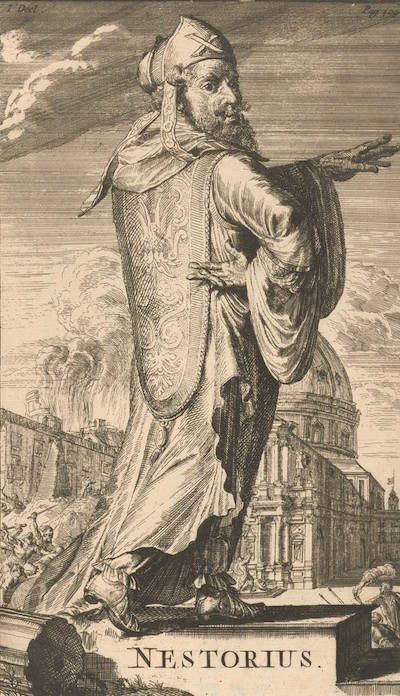
Nestorius was the patriarch of Constantinople whose teaching was condemned at the Council of Ephesus in 431 — making him one of the most famous figures on the losing side of an early Christian debate, and giving his name to a movement that still echoes today.
The heart of the dispute was a single word. Nestorius objected to calling the Virgin Mary “Theotokos,” the Mother of God, preferring “Mother of Christ,” because he wished to keep a clear distinction between the divine and the human natures of Jesus. To his opponents, led by Cyril of Alexandria, this seemed to divide Christ into two separate persons, and at Ephesus the assembled bishops sided firmly against him.
Nestorius was condemned, deposed, and eventually exiled to Egypt, where he died. Yet his name lived on: the so-called Nestorian Church, or Church of the East, carried a form of his Christ-centred theology far across Asia, as far as India and China. History, as I often remind my guests, is rarely as simple as victory and defeat.
Who Was Nestorius of Constantinople?
Nestorius of Constantinople was a monk and preacher from Antioch, born around 386 in Germanicia (today’s Kahramanmaraş in southern Turkey), who became the patriarch of Constantinople in 428. Emperor Theodosius II chose him for his sermons.
Before that he lived in monastery near the walls of Antioch. In the capital he was a stranger, and within about a year he was preaching against the word Theotokos.
What Did Nestorius Teach About Mary?
Nestorius taught that Mary gave birth to Jesus Christ in his human nature, so he preferred to call her Christotokos, the Christ-bearer, and he feared that Theotokos could mix God and man together. However, he said that people could still use the word Theotokos if they explained it in the right way.
His critics answered that Jesus is one person, so his mother is the mother of God, and they feared that his words came close to two persons in one body. Nestorius said many times that he never taught two Christs. Both sides wanted to protect Christ, only with different words.
Today the Assyrian Church of the East honors Nestorius as a saint, but it says the name Nestorian does not describe its faith. In 1994 it signed a common declaration with the Catholic Church, and both agreed that their different titles for Mary, Mother of Christ and Mother of God, are right.
What Happened to Nestorius at the Council of Ephesus?
Nestorius refused to come to the first session of the Council of Ephesus on June 22, 431, so the bishops under Cyril deposed him without hearing him. He said it was opening too early, before the bishops of Antioch had arrived.
The bishops sent men to him three times, and three times he said no. It is told that the notice of his deposition was fixed to his door and called him the new Judas. The rest of the story is in my post on the Council of Ephesus of 431.
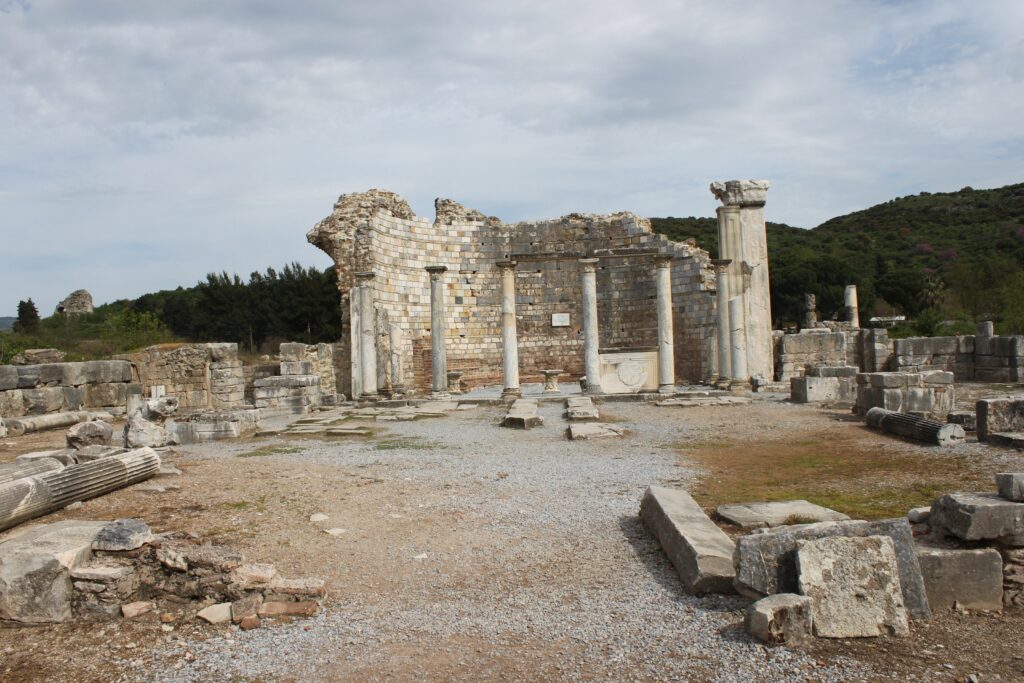
The session was held in the Church of Mary in Ephesus, the great church beside the old harbor. The bishops placed the book of the Gospels on a throne in the middle of the church, as a sign that Christ himself was with them. Memnon, the bishop of Ephesus, was their host, and his story is in my post on Memnon of Ephesus.
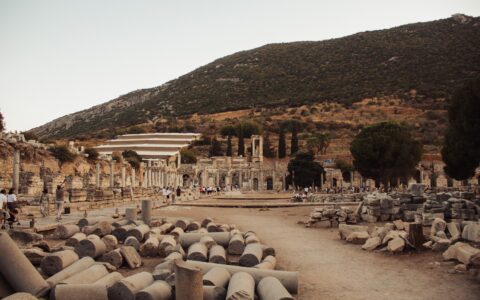
Today you can enter into the ruins inside Ephesus Ancient City, nearby the Lower Gate, and see the apse and some columns still standing. When I bring my guests there, I tell both sides of the story.
What Happened to Nestorius After the Council?
Nestorius went back to his old monastery near Antioch after the council, and in 435 Emperor Theodosius II sent him to the Great Oasis, far away in the Egyptian desert. He died in exile in Upper Egypt around 451.
Desert raiders attacked the monastery there, he was hurt in one of the raids. In exile he wrote a long book to defend himself, called the Bazaar of Heracleides, which we know today only from a Syriac copy.
Frequently Asked Questions
Was Nestorius a heretic?
The Council of Ephesus condemned his teaching in 431, and most churches still follow that verdict and call it a heresy. The Assyrian Church of the East honors him as a saint and says he was misunderstood, so the answer depends on which church you ask.
How did Nestorius die?
Nestorius died in exile in Upper Egypt around 451, not long after the Council of Chalcedon. Desert raiders had hurt him in the Great Oasis earlier, and he spent his last years far from Constantinople and Ephesus.
What is Nestorianism?
Nestorianism is the name for the teaching that Christ is two persons, one divine and one human. Nestorius himself said he did not teach this, and the Church of the East says the name does not describe its faith.
Standing in the ruins where the Council of Ephesus met, it is easy to forget that these were real, passionate human beings wrestling with the deepest of questions. To explore this history with a licensed guide, find me at toursaroundturkey.com.



2 comments