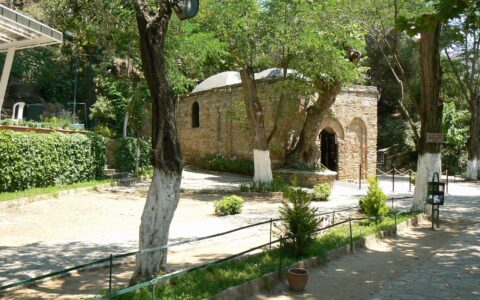
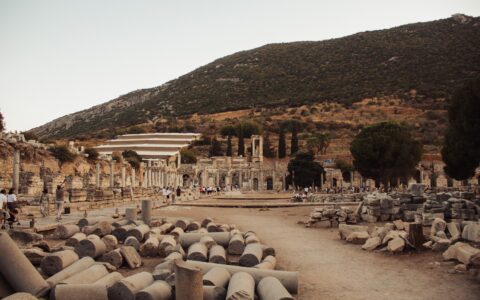
6th of May is considered the birthday of the Ephesian goddess Artemis, and festivals were held in her name. The festival for Artemis during the month of May was, in mass, the largest and most important tourism movement in the ancient world.
The Artemis Ephesia festival was the yearly celebration of the city goddess of Ephesus. It was so important that the Ephesians named a whole month after her, the month of Artemision, and people came from far away to take part.
Pilgrims, Sacrifices and the Statue of Artemis

The representatives of the Roman and Greek city-states used to attend this festival with the best gifts that they could find and chose for Artemis. This festival was also a pilgrimage for those who believed in the Artemis Cult and later named Diana Cult. Thousands of pilgrims who came for both entertainment and worship contributed to the economy of Ephesus in a way we could not imagine.
Thousands of oxen, sheep and various animals were sacrificed in the name of the goddess Artemis \ Diana, accompanied by prayers on the altar of the temple. Incense and animal fat were traditionally burned during this time. These ceremonies, which were accompanied by a great feast, would come to an end with the shouts and prayers of visitors from all over. On the way back to their homes, they bought the gold and silver statues of the goddess from the stalls in the Ephesus Agora and take them to their homes. These were the most sought-after gifts. Ephesus Goldsmiths Guild would earn a lot of money from this business. These statues are mentioned in the Bible in the Riot of the Ephesian Silver Smiths.
The Artemis Statue, which is in the Ephesus Museum today, in the Temple of Artemis nearby Ephesus was wrapped in golden leaves and bathed in the waters of the Aegean Sea. The statue was brought back to the Temple of Artemis by going around the Panayır Mountain and passing through Ephesus, accompanied by priests and believers.
What Happened at the Artemis Ephesia Festival?
At the festival of Artemis the city held a procession, banquets and sacrifices, and there were games too. People knew it as the Artemisia and the Ephesia, and the Greeks even called it a famous contest.
Let’s have a look at one decree we know well. In the 160s AD a Roman governor approved a decree of the Ephesians, and it made the whole month of Artemision holy. All the days were holidays and no business was done, so everybody could join the festival.
Why Is 6th of May the Birthday of Artemis?
The Greeks counted the sixth day of the month Thargelion as the birthday of Artemis. The seventh day was for her brother Apollo. That month falls around May and June, many people keep 6th of May for her today. The old calendars followed the moon, so the real day moved a little every year.
The Ephesians told the story in their own way. They said Artemis and Apollo were not born on the island of Delos, but in a sacred grove called Ortygia nearby the city. A yearly gathering with banquets and secret sacrifices was held in that grove. No wonder people called her Artemis of the Ephesians.
Where Did the Artemis Procession Go in Ephesus?
The procession went from the Temple of Artemis in through the Magnesia Gate to the theater, and then out through the Koressian Gate and back to the temple. We know this route from a long inscription of about AD 104.
A rich Roman named Vibius Salutaris paid for gold and silver statues of Artemis and other figures. On festival days, at assemblies and at the games, the statues were carried from her temple and set up in the theater. The young men of Ephesus, who were in military training, took them over at the gate. It was a round of about 7 kilometers, probably an hour and a half of walking.
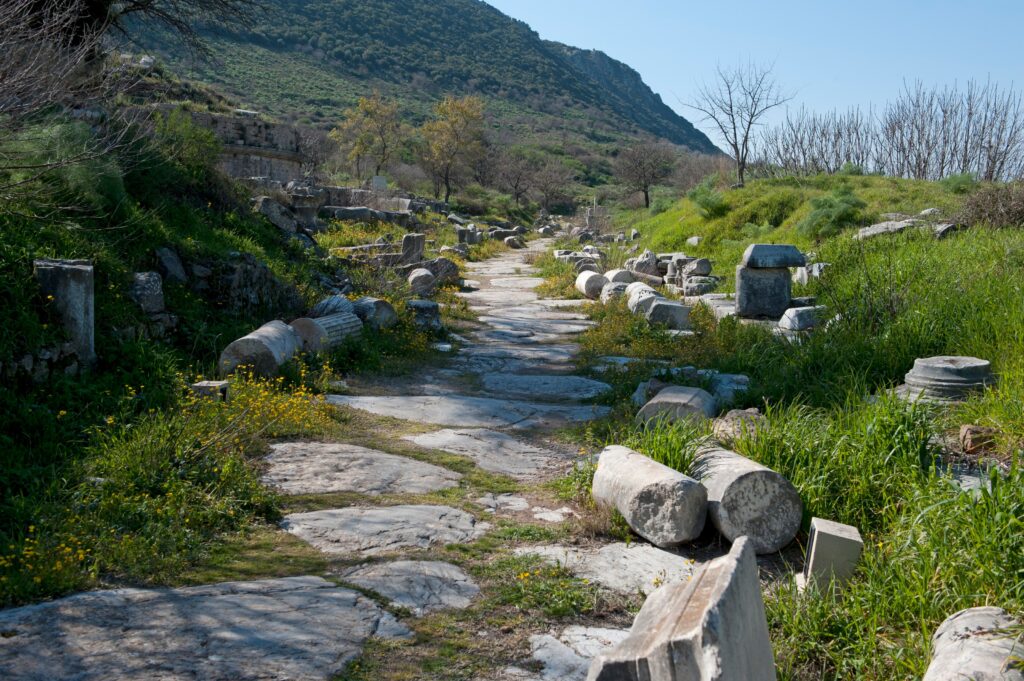
The Magnesia Gate is the Upper Gate of Ephesus, where most tours start today. A road from this gate goes around Panayır Mountain to the Temple of Artemis. When I walk down from the Upper Gate with my guests, we start at the very place where the procession came into the city.
Festival Calendar of Artemis in Ephesus
The festival of Artemis was not one day in Ephesus. The city had a whole year of dates for her: the great Artemisia in her own month, her birthday on the 6th of Thargelion, the processions with the Salutaris statues, and the games. Here is the Ephesian festival year in one table:
| Festival | When | What happened |
|---|---|---|
| Artemisia, the great festival of Artemis | The month of Artemision, in spring; from the 160s AD every day of the month was a holiday | Procession from the temple, sacrifices, banquets and contests, with visitors from all of Asia |
| Birthday of Artemis | 6th of Thargelion, around May and June; many keep 6th of May today | Banquets of the young men in the grove of Ortygia and the secret rites of the Curetes |
| Day of Artemis | The 6th of every month, with the 7th for her twin Apollo | A small monthly birthday of the goddess, as in other Greek cities |
| Salutaris processions | From AD 104, at the assemblies, on holy days and at the games | Gold and silver statues of Artemis carried from her temple to the theater and back, the 7 kilometer round I describe above |
| Games | The Ephesia, and from AD 79 the Balbillea; later also games named for the emperors | Athletes, musicians and actors competed in the stadium and the theater |
By the way, Artemision was her month, but her day came back twelve times a year. In Greek cities the sixth day of every month belonged to Artemis and the seventh to Apollo, so the 6th of Thargelion was simply biggest of her monthly birthdays. If you are in Selçuk on the 6th of any month, you can say happy birthday to the Lady of Ephesus in the museum, as we do on the 6th of May.
The Balbillea were games that Emperor Vespasian allowed the city to hold in honor of his astrologer Balbillus, and they went on into the 3rd century. The secret rites of the birthday belonged to the Curetes, the priests of the Prytaneion, whose names you can still read on the columns of the town hall of Ephesus.
Frequently Asked Questions
How was Artemis worshipped in Ephesus?
People worshipped Artemis with a yearly festival, with sacrifices and with prayers at her temple. They also left gifts there and took home small statues of the goddess. For the Ephesians she was the protector of their city.
When was the Artemis festival held in Ephesus?
It belonged to the month of Artemision, which was named after the goddess. Many people mark 6th of May as her birthday. The ancient calendars followed the moon, so the exact days moved a little from year to year.
Where is the Temple of Artemis today?
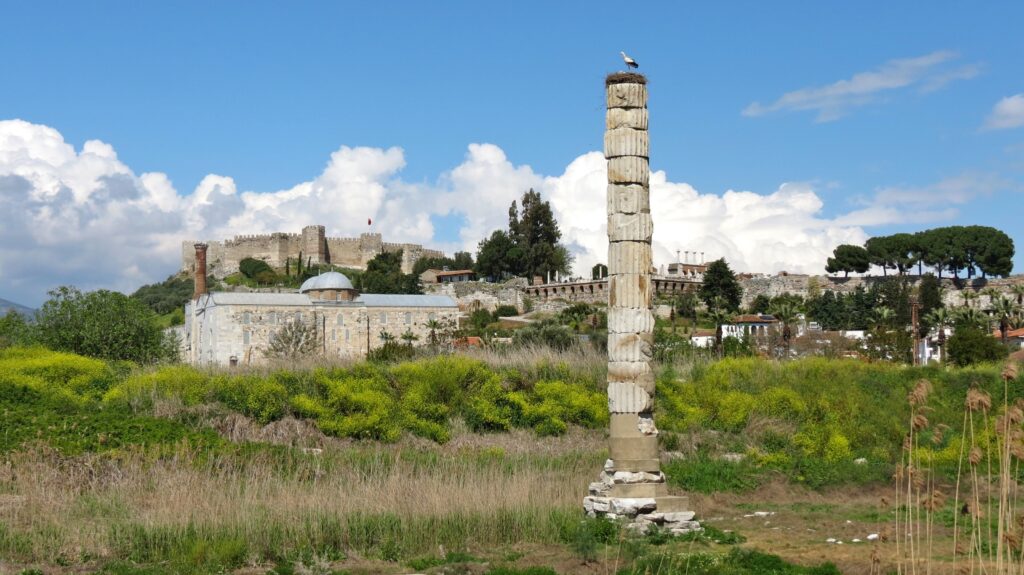
The Temple of Artemis stood outside the Ephesus Ancient City, in Selçuk at foot of Ayasuluk Hill. Today only one rebuilt column and some foundation stones are left. Most of the stones were taken for other buildings long ago.
When was Artemis’s birthday celebrated in Ephesus?
On the 6th day of the month Thargelion, which fell around May and June. The Ephesians celebrated it in the sacred grove of Ortygia nearby the city, where they said she was born. In the Greek calendar the 6th of every month was her day too. Today many of us keep 6th of May.