Via Egnatia had the length of 1100 km (685 Miles). Ancient road Via Egnatia used to connect the capital of the Eastern Roman Empire Byzantium, later Constantinople and Istanbul to the Western Roman Empire’s capital which was the city of Rome.
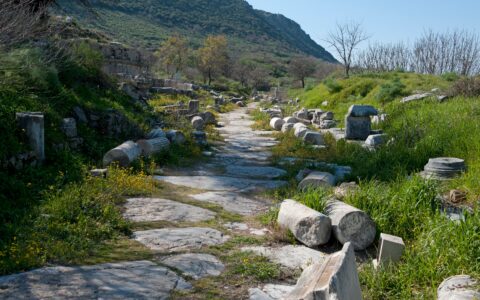
The Via Egnatia was a Roman road built in the 2nd century BC. It started at Dyrrachium, today’s Durrës in Albania, and ran east through Macedonia and Thrace to Byzantium, now Istanbul. Its last stretch lay in European Turkey, and it was one of Rome’s main links with the East.
| Built | 2nd century BC, ordered by Gnaeus Egnatius |
|---|---|
| Starts at | Dyrrachium, today’s Durrës |
| Ends at | Byzantium, today’s Istanbul |
| On the way | Thessalonica, Philippi and Kypsela |
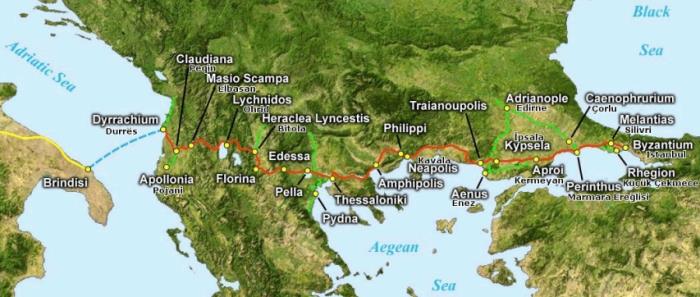
Apostle Paul used Via Egnatia when he travelled from Philippi to Thessaloniki as it is mentioned in Acts 16-17. Legendary Roman emperor and generals of the Roman Empire such as Pompey, Claudius, Octavian, Hadrian and Trajan walked on Via Egnatia when they marched on to Asia Minor.
Via Egnatia in Turkish Thrace
In Turkey the Via Egnatia ran through Thrace, the European part of the country. Road crossed the Evros River, called Meriç in Turkish, near today’s İpsala. From there it went on through Marmara Ereğlisi, Silivri and Küçükçekmece to Byzantium, the oldest of the historical names of Istanbul. I wrote the short story of this province in my post on the Roman province of Thracia.
Philippi on the Via Egnatia
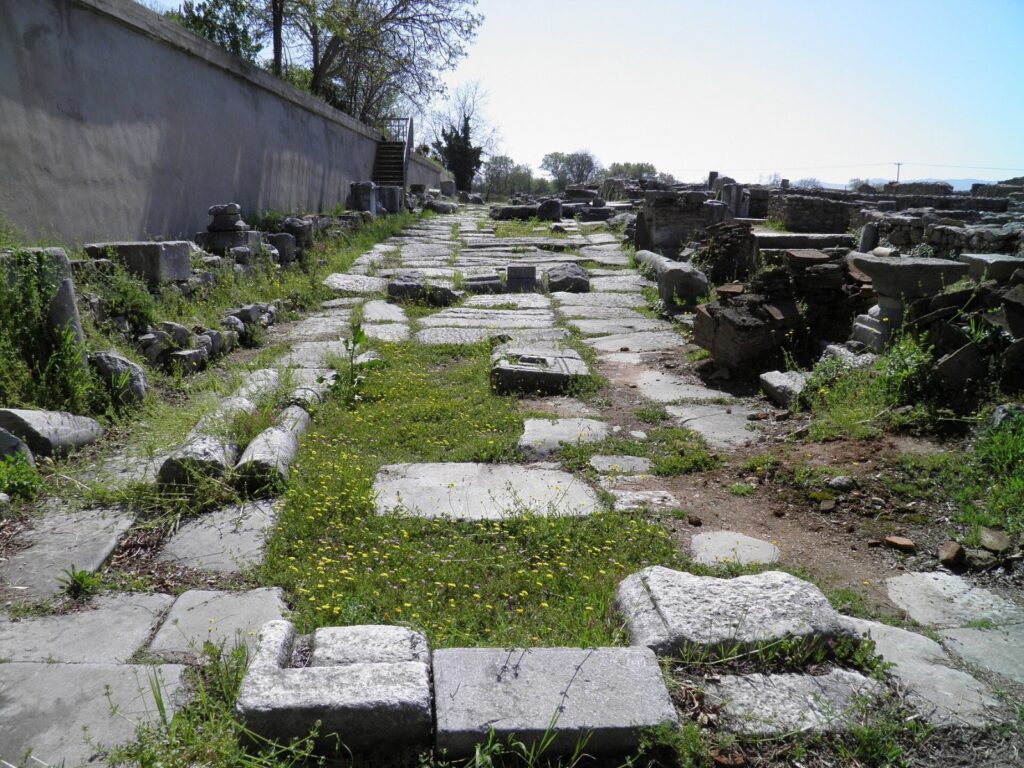
Philippi stood right on the road. The Romans laid out its forum on both sides of it, and you can still see a paved piece of the Via Egnatia among the ruins. Paul landed at Neapolis, today’s Kavala, and went on to Philippi (Acts 16:11-12).
Lydia, a seller of purple cloth from Thyatira, nearby today’s Akhisar in Turkey, was baptized there (Acts 16:14-15). I tell more about her in my post on Mary, Thecla and Lydia.
Frequently Asked Questions
Who built the Via Egnatia?
Gnaeus Egnatius, the Roman proconsul of Macedonia, ordered it built, and the road took his name. The exact year is not known, but it was in the 2nd century BC. Later emperors such as Trajan repaired it.
Does the Via Egnatia still exist?
Parts of it do. A paved stretch is visible inside the ruins of Philippi in Greece, and a modern highway called Egnatia Odos runs parallel to the old road between Thessaloniki and the Turkish border.