Dinocrates the Architect of the second Artemis Temple was born on the island of Rhodes in the fourth century BC. He became an architect and later he became the technical adviser for Alexander the Great. The greatest of his works was the plan of the city Alexandria.
Dinocrates of Rhodes was a Greek architect and adviser to Alexander the Great. The old writers link his name with four big projects: the street plan of Alexandria, a giant statue idea for Mount Athos, the funeral pyre of Hephaestion, and the rebuilt Temple of Artemis at Ephesus after Herostratus burned the older temple.
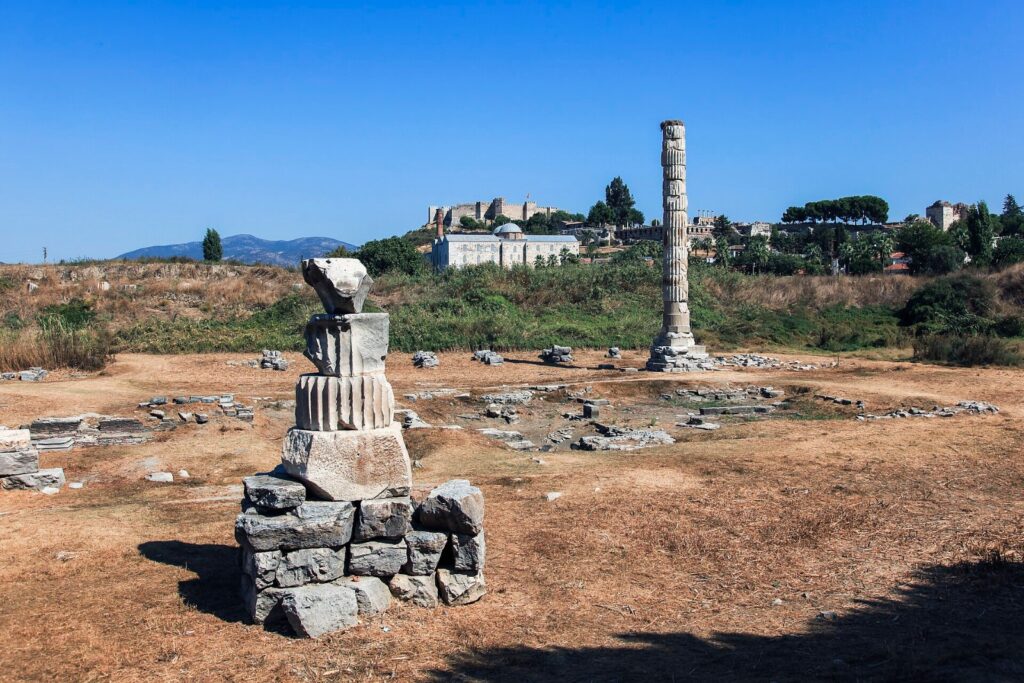
Dinocrates stopped in Ephesus with Alexander the Great and heard the story of the burning of the famous Artemis Temple. Dinocrates contributed in the design and the construction of the second Temple of Artemis in Ephesus.

Why Did the Ephesians Rebuild the Temple of Artemis?
The Ephesians rebuilt the Temple of Artemis because a man called Herostratus burned it down in 356 BC. They raised the new temple on the same holy ground, and the ancient world counted it among the Seven Wonders. The old story says the fire started on the night Alexander the Great was born.
Alexander came to Ephesus in 334 BC and offered to pay for the new temple, if his name was written on it. The Ephesians refused very politely. They answered that it is not right for one god to give a gift to another god. So they paid for everything by themselves, and many people even gave their own jewelry.
Who Was the Architect of the Rebuilt Temple of Artemis?
Old accounts do not agree on who the architect was. Some name Dinocrates, and his name is also written Deinocrates, or even Cheirocrates in one old text. The rebuilding took many years, so probably more than one architect worked on it. A big building like this was never work of one man.
The earlier temple had other builders, Chersiphron and Metagenes. You can read the whole story of the building in my post about the Temple of Artemis in Ephesus.
How Did Dinocrates Plan the City of Alexandria?
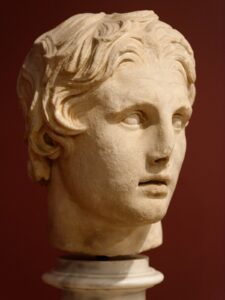
Alexander the Great founded Alexandria in Egypt in 331 BC, and Dinocrates drew the plan of the city with long straight streets that cross each other at right angles.
The old story goes that the builders had no chalk to mark the plan on the ground, so they used barley flour. Then birds of every kind came and ate all of it. Alexander was worried, but his fortune tellers said it was a good sign. The city would feed people from many nations.
What Was the Mount Athos Plan of Dinocrates?
Dinocrates wanted to carve Mount Athos in northern Greece into a giant statue of a man. In his left hand the man would hold a whole city, and in the right hand a big bowl to collect the rivers of the mountain and pour them into the sea.
It is said that Dinocrates the architect came to the court of Alexander in a very strange way. His body was rubbed with oil, he wore a crown of poplar leaves, a lion skin on his shoulder and a club in his hand, like Hercules. Everybody stared at him.
Alexander liked the idea but asked one simple question. Who will feed the people of this city? Dinocrates had to say that all the food must come by sea. Alexander refused the plan, a city needs fields around it. He kept the architect with him though, and took him to Egypt.
Dinocrates and the Funeral Pyre of Hephaestion
Dinocrates also designed the huge funeral pyre built in Babylon for Hephaestion, the closest friend of Alexander, who died in 324 BC. In one old text the architect is called Stasicrates, one more form of his name.
The old writers describe square tower about 60 meters high, built in levels and decorated with gold. Ships with golden prows stood on the first level, then came torches, eagles, lions and bulls, and on top there were statues of sirens. They were hollow inside, so a choir could hide there and sing a lament.
Frequently Asked Questions
Who designed the Temple of Artemis at Ephesus?
Chersiphron and Metagenes designed the earlier temple. For the temple rebuilt after the fire of 356 BC, the old accounts name Dinocrates, also written Deinocrates or Cheirocrates, and probably more than one architect worked on it.
Who planned the city of Alexandria in Egypt?
Dinocrates of Rhodes is named as the planner of Alexandria, which Alexander the Great founded in 331 BC. His plan used long straight streets that crossed at right angles, and the city grew into one of the biggest cities of the ancient world.
Was Mount Athos ever carved into a statue?
No. Alexander refused the idea, because a city on the mountain could not be fed from the land around it. Mount Athos stayed as nature made it, and today it is known for its Orthodox monasteries.
What does the name Dinocrates mean?
In Greek the name is Deinokrates, from deinos, “mighty” or “fearsome”, and kratos, “strength”. So it means something like “mighty in strength”. Many Greek names end in -krates, for example Socrates and Hippocrates.



1 comment