by Heracleides the Sculptor
from Ephesus
Heracleides the Sculptor from Ephesus left the world known statue of Ares which is shown today in the Louvre Museum in Paris. The names of Heracleides and Agasias who was his father are inscribed on the famous Ares statue.
Agasias of Ephesus and the Borghese Gladiator
Agasias, son of Dositheus, was another sculptor from Ephesus, and he signed one of the most famous statues in the Louvre, the Borghese Gladiator. This marble warrior was made around 100 BC and it is about 2 meters tall.
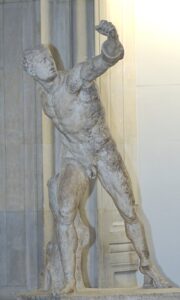
His signature is carved on the support of the statue, in Greek: “Agasias son of Dositheus, the Ephesian, made it.” Was he the same Agasias who was the father of Heracleides the sculptor? Nobody can say it for sure. There was even one more Ephesian sculptor with this name, Agasias son of Menophilus, so the name seems to be popular among the artists of our city.
The statue was found before 1611 at Anzio, south of Rome, in the ruins of a seaside palace of Emperor Nero. For almost two centuries it stood in the Villa Borghese in Rome. In 1807 Camillo Borghese was pushed to sell it to his brother-in-law Napoleon, and this is how it went to the Louvre.
By the way, he is not a gladiator at all. The name came from a wrong restoration. He is a warrior fighting against an enemy on horseback, that is why he raises his arm and looks up. In the 18th century he was one of the most copied ancient statues and sculptors used him to learn the right proportions of the human body.