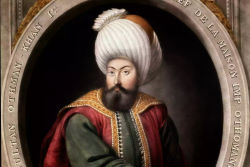
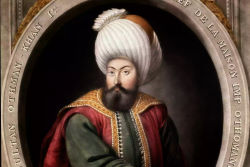
The Ottoman Empire was ruled by 36 sultans in order, from Osman I, who founded the dynasty around 1299, to Mehmed VI, deposed in 1922 — one unbroken male line spanning more than six centuries. The first sultan, Osman I, began as the ruler of a small principality near today’s Bursa.. Ottoman state grew into a regional power in the 1400s. Ottomans became an Empire and world power in the 1500s. Sultans moved their capital city several times during history. Ottoman capital cities were Söğüt (1299–1326), Bursa (1326–1365), Edirne (1365–1453), and finally Istanbul — the city once called Constantinople (1453–1922).
All 36 Ottoman Sultans in Order (with Reign Dates)
- Osman I — c. 1299–1324
- Orhan — 1324–1360
- Murad I — 1360–1389
- Bayezid I — 1389–1402
- Mehmed I — 1413–1421
- Murad II — 1421–1444 and 1446–1451 (ruled twice)
- Mehmed II, the Conqueror — 1444–1446 and 1451–1481 (ruled twice)
- Bayezid II — 1481–1512
- Selim I — 1512–1520
- Süleyman I, the Magnificent — 1520–1566
- Selim II — 1566–1574
- Murad III — 1574–1595
- Mehmed III — 1595–1603
- Ahmed I — 1603–1617
- Mustafa I — 1617–1618 and 1622–1623 (ruled twice)
- Osman II — 1618–1622
- Murad IV — 1623–1640
- İbrahim — 1640–1648
- Mehmed IV — 1648–1687
- Süleyman II — 1687–1691
- Ahmed II — 1691–1695
- Mustafa II — 1695–1703
- Ahmed III — 1703–1730
- Mahmud I — 1730–1754
- Osman III — 1754–1757
- Mustafa III — 1757–1774
- Abdülhamid I — 1774–1789
- Selim III — 1789–1807
- Mustafa IV — 1807–1808
- Mahmud II — 1808–1839
- Abdülmecid I — 1839–1861
- Abdülaziz — 1861–1876
- Murad V — 1876
- Abdülhamid II — 1876–1909
- Mehmed V — 1909–1918
- Mehmed VI — 1918–1922
Reign dates follow Encyclopaedia Britannica; Osman I’s accession is traditionally dated c. 1299–1300. The gap between 1402 and 1413 is the Ottoman Interregnum, when the sons of Bayezid I fought for the throne.
Famous Ottoman Sultans
Three sultans come up more than any others when I guide guests through Istanbul. Mehmed II, the Conqueror, took Constantinople in 1453 at just 21 years old, ended the Byzantine Empire, and made the city his capital. Suleiman the Magnificent had the longest reign of all — 46 years, from 1520 to 1566 — and ruled the empire at its absolute peak, when Ottoman armies reached the gates of Vienna and the great architect Sinan filled Istanbul with masterpieces. And Abdulhamid II, who reigned from 1876 to 1909, was the last sultan to rule with absolute power; the sultans who came after him were constitutional figureheads while the empire moved toward its end. If you remember only three names from the list above, make it these three.
Life and Succession in Ottoman Dynasty

Ottoman princes were born in the Ottoman harem of their fathers. There could be only one Sultan at a time. Every male born into the Ottoman dynasty had the right to become Sultan. There was bloodshed and tragedy when a new Sultan had to be throned. The survival of the fittest was the main idea in Ottoman succession. Fratricide was common and mostly one prince executed all his brothers till he becomes the only one with the right to sit on the Ottoman throne.
Ottoman Caliphate
The last Sunni Islamic caliphate was the Ottoman royal family. Ottoman sultans gained caliphal power in 1517, after Selim I united most of the Islamic world under Ottoman rule and took control of the most important Muslim cities. These cities included Mecca — the destination of the Hajj pilgrimage every able Muslim is expected to make — and Medina, the city of the Prophet. The caliphal position of the Ottoman sultans was revoked by the new Turkish Republic in 1924.
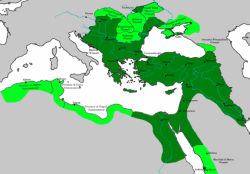
Which countries were ruled by the Ottoman Dynasty?

Ottoman dynasty ruled many countries of the world for a long time. These countries were Turkey, Greece, Bulgaria, Egypt, Hungary, Macedonia, Romania, Jordan, Palestine, Lebanon, Syria, Arabia, parts of North Africa.
What happened to Ottoman Dynasty?
The Ottoman Empire and the Ottoman dynasty officially ended in 1922, when the Turkish Grand National Assembly abolished the sultanate; the last sultan, Mehmed VI, went into exile aboard a British warship two weeks later. Turkey declared itself a republic in 1923, and the Ottoman dynasty passed from politics into history.

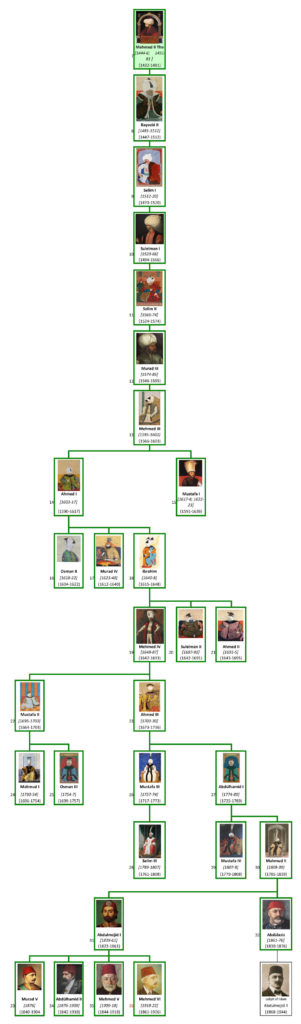
The Ottoman Family Tree
This family tree traces all 36 sultans back to Osman I — a single male line across more than six centuries.
Osman I c. 1300–24
Orhan 1324–60
Murad I 1360–89
Bayezid I 1389–1402
Mehmed I 1413–21
Murad II 1421–44
Mehmed II 1444–46
Murad II (second reign) 1446–51
Mehmed II (second reign) 1451–81
Bayezid II 1481–1512
Selim I 1512–20
Süleyman I 1520–66
Selim II 1566–74
Murad III 1574–95
Mehmed III 1595–1603
Ahmed I 1603–17
Mustafa I 1617–18
Osman II 1618–22
Mustafa I (second reign) 1622–23
Murad IV 1623–40
İbrahim 1640–48
Mehmed IV 1648–87
Süleyman II 1687–91
Ahmed II 1691–95
Mustafa II 1695–1703
Ahmed III 1703–30
Mahmud I 1730–54
Osman III 1754–57
Mustafa III 1757–74
Abdülhamid I 1774–89
Selim III 1789–1807
Mustafa IV 1807–08
Mahmud II 1808–39
Abdülmecid I 1839–61
Abdülaziz 1861–76
Murad V 1876
Abdülhamid II 1876–1909
Mehmed V 1909–18
Mehmed VI 1918–22*
Visiting Istanbul is the best way of learning more about the Ottoman Dynasty. Istanbul hosts royal palaces of Ottomans such as Topkapi Palace, Harem in Topkapi, Dolmabahce Palace, and many more. Contact me or hire a professional Turkish tour guide in Istanbul to learn more about Ottomans. See you soon, Hasan Gülday.
Frequently Asked Questions
How many Ottoman sultans were there?
There were 36 Ottoman sultans between roughly 1299 and 1922. The line began with Osman I, who founded the dynasty near Bursa, and ended with Mehmed VI. Three sultans — Murad II, Mehmed II and Mustafa I — ruled twice, but the dynasty still counts 36 rulers.
Who was the last Ottoman sultan?
Mehmed VI was the last Ottoman sultan, reigning from 1918 to 1922. The Turkish Grand National Assembly abolished the sultanate in 1922, and he went into exile aboard a British warship; Turkey declared itself a republic in 1923, and the Ottoman caliphate was formally abolished in 1924.
Were the Ottoman sultans caliphs?
Yes — from 1517, after Selim I united most of the Islamic world and took control of Mecca and Medina, Ottoman sultans also held the title of caliph. They were the last Sunni caliphate; the new Turkish Republic revoked the title in 1924.


1 comment