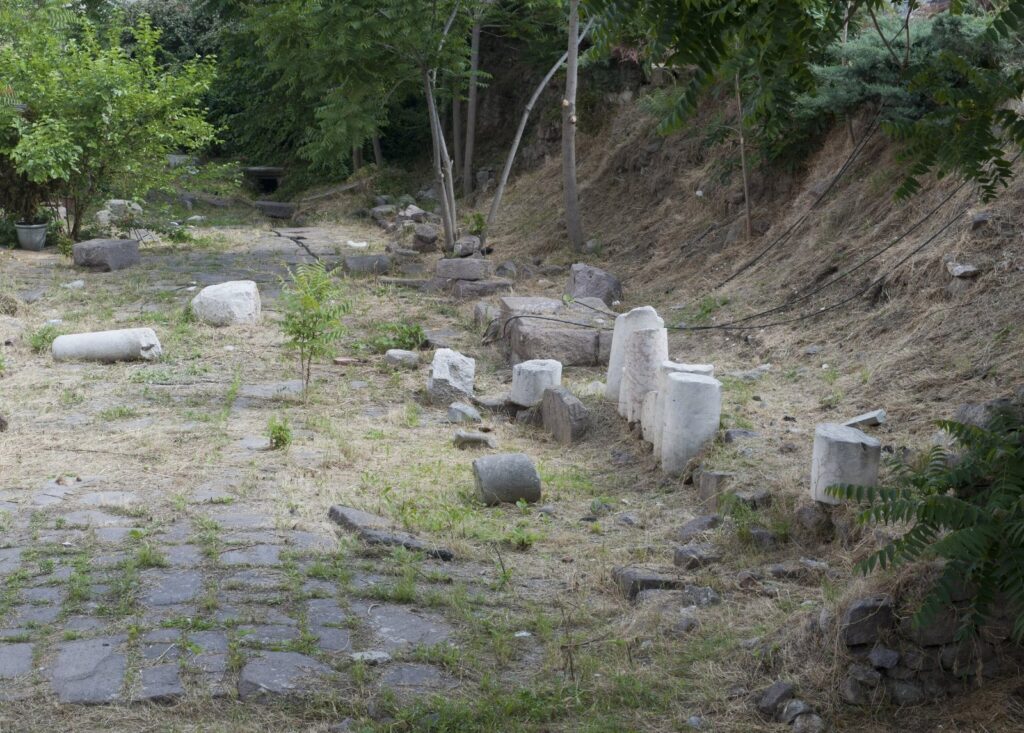
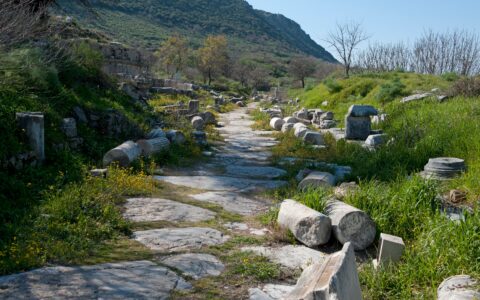
The Roman road in Ankara lies in Ulus, the old center of the city, where Roman Ancyra stood. It is a paved street about 2,000 years old, probably part of a long avenue with columns. Close by are the Roman Baths, the Temple of Augustus and the Column of Julian.
| Where | Ulus, the old center of Ankara |
|---|---|
| Roman name | Ancyra, capital of Galatia |
| Found | 1995, with larger digs in 2007 |
| Close by | Roman Baths, Temple of Augustus, Column of Julian |
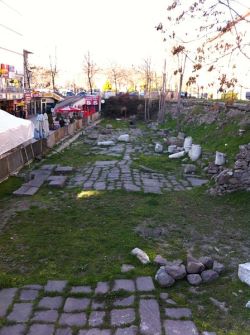
Roman Road in Ankara was discovered in 1995 during excavations in the Turkish capital city of Ankara. Greater excavations were made in 2007 and some surprising artifacts were found. A Greek style Hermes statue, probably used as a milestone, was found. Baked ceramics from the 1st century bc, a broken female statue of the late Roman era but the most unexpectedly a lot of smoking pipes of the Ottoman era were unearthed. Archeologists claim there was an Ottoman tea house in the area that’s why people dropped their old smoking pipes here.
Near the Roman Road in Ankara
Let’s have a look at what is around it. The Roman Baths stand on Çankırı Street and are now open-air museum. A columned street once ran from the baths toward the Temple of Augustus, and most of it still lies under the modern city.
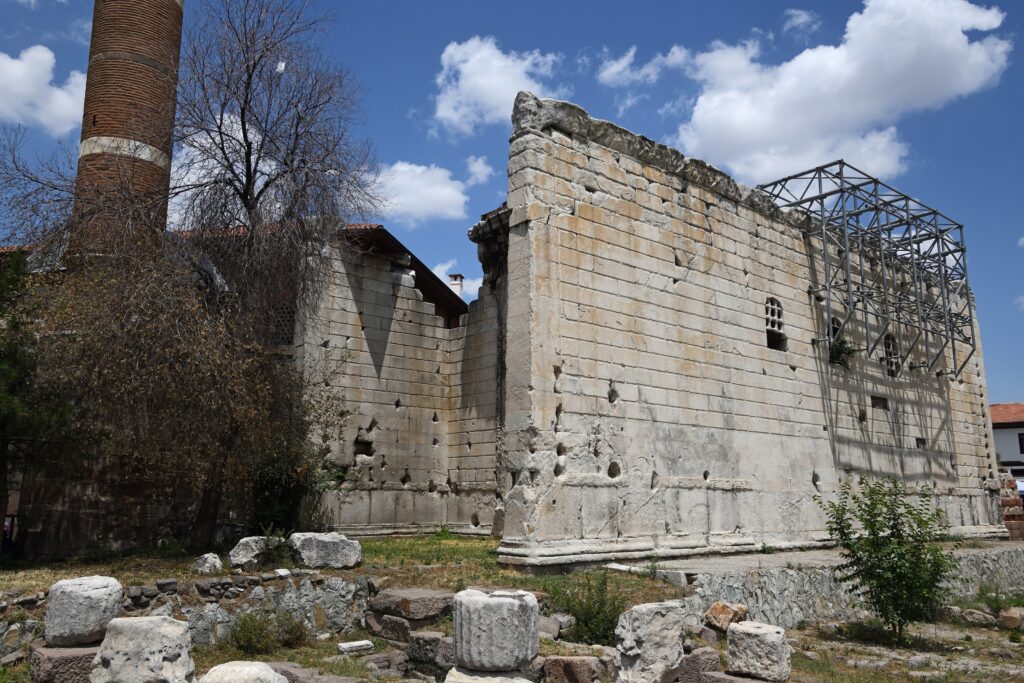
The Temple of Augustus and Rome is a short walk away. In Byzantine times it became a church, and in the 1420s the Hacı Bayram Mosque was built against its corner.
The Column of Julian stands nearby the Governorship building. I wrote about Emperor Augustus and the Roman province of Galatia too, and about other Roman roads in Asia Minor.
Frequently Asked Questions
What is the Res Gestae in Ankara?
It is a long list of the deeds of Emperor Augustus, cut into the walls of his temple in Latin and Greek after he died in AD 14. It is the most complete copy that survives.
When were the Roman Baths of Ankara built?
In the time of Emperor Caracalla, in the early 3rd century AD. Today you can walk among the rows of small brick pillars that once held up the floors of the hot rooms.
Why was the Column of Julian built?
It is believed to mark a visit of Emperor Julian to Ancyra, around AD 362. The column is about 15 meters tall and has no inscription, so the story rests on tradition.


1 comment