John the Evangelist in Asia Minor is mostly the story of Ephesus. Tradition says John led the churches of the province from there, was sent to Patmos by Emperor Domitian around AD 95, and came back to Ephesus, where he died as a very old man around AD 100.

Saint John the Evangelist spent a significant amount of time in the land of Asia Minor what is called Anatolia or Turkey today. He performed several miracles and had many stories in Asia Minor. Let’s have a look at some of them.
Resurrection of Cleopatra and Lycomedes
John and his companions left Miletus and heaeded for Ephesus. A powerful Magistrate (Judge) from Ephesus named Lycomedes intercepted them and asked them if they are coming from Miletus.

Lycomedes said that God had spoken to him in his dream, and he was ordered by the God to find Saint John the Evangelist for healing his sick wife Cleopatra. Unfortunately already Cleopatra was dead for seven days and Lycomedes thought it was too late.
John said to Lycomedes to take him home, and he would still do the God’s will. Lycomedes could not believe what he hears, but he still took John to his home. John said to Lycomedes to believe in his miracle to happen but Lycomedes could not resist his wife’s demise and died out of sadness.
When locals arrived home to see Lycomedes and his wife Cleopatra, John recited a Biblical passage.
”Ask and it will be given to you; seek and you will find; knock and the door will be opened to you. For everyone who asks receives; the one who seeks finds;r and to the one who knocks, the door will be opened.”
Matthew 7:7–8
Following quoting Matthew 7:7–8 Lycomedes and his wife Cleopatra were resurrected. Pagan believers who witnessed this miracle converted into Christianity immediately.
Banishing of Saint John by the Emperor Domitian
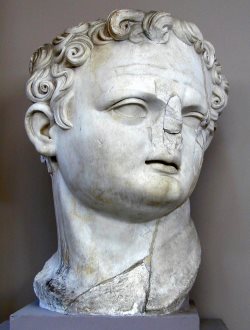
Emperor Domitian was worried by Saint John’s rising influence in Ephesus. He ordered his arrest. Later John was taken to Rome as a prisoner. Saint John was sentenced to death by being boiled which was one of the harshest punishments.
A big cauldron of boiling oil was prepared and John was thrown in it. But by the god’s protection, nothing happened to John. Following this miracle Emperor Domitian decided to banish Saint John to Patmos Island on the Aegean Sea.
Where Can You Follow Saint John in Turkey Today?
To follow Saint John in Turkey today, start in Selçuk and Ephesus, then go south to Miletus and on to the other six cities of Revelation. The most important stop is the Basilica of Saint John on Ayasuluk Hill, where tradition places his tomb.
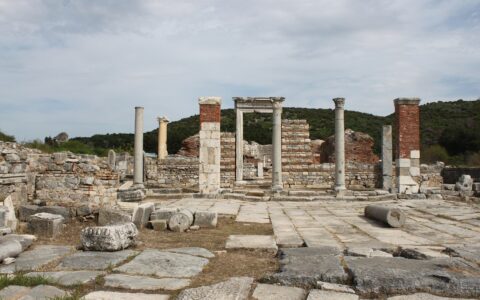
The story in this post begins at Miletus, the old harbor city south of Ephesus. Its ruins are in Aydın Province, nearby the village of Balat, and the big theater is still standing there. Paul called the elders of Ephesus to meet him at Miletus (Acts 20:17-38), so the city is part of the Ephesus story anyway.
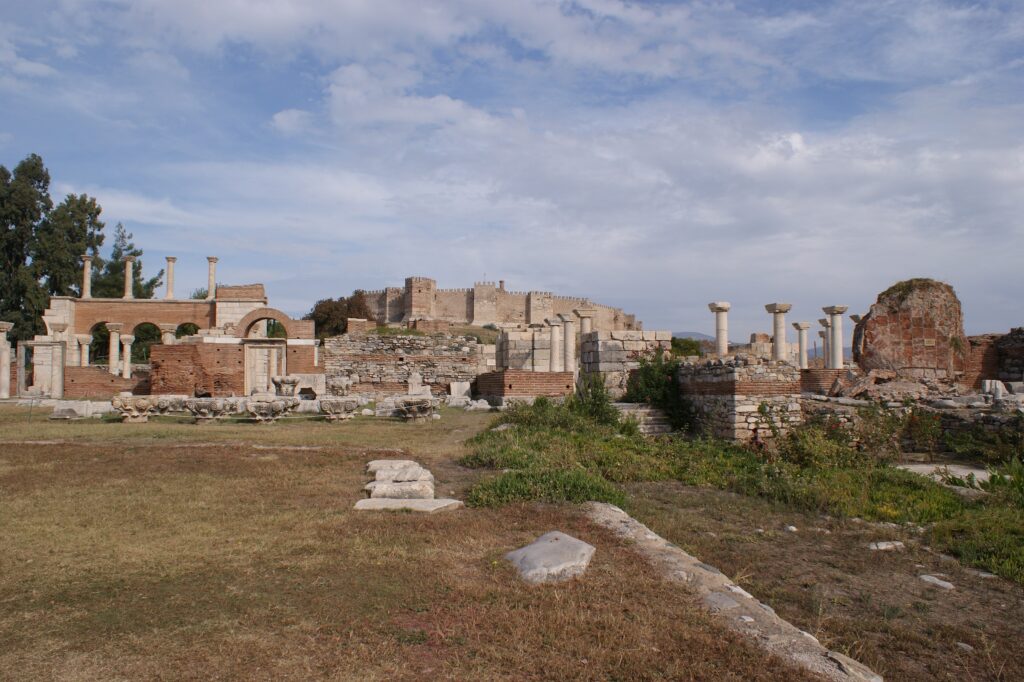
The Basilica of Saint John is in the middle of Selçuk, about 3.5 km (2 miles) from ruins of Ephesus, just below the Ayasuluk Fortress. The big church is in ruins today, but the tomb is still marked with four marble columns. You can read the whole story in my post on the Basilica of Saint John and the tomb of Saint John.
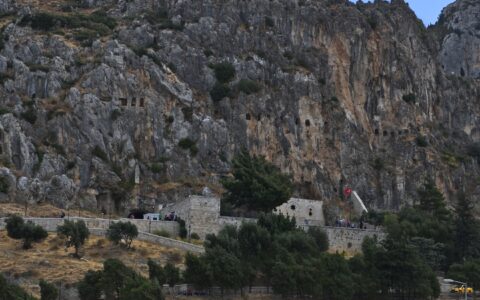
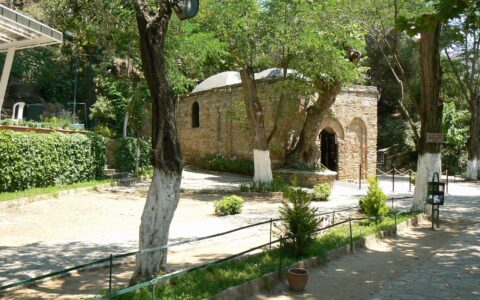
John also leads you to the Virgin Mary. Jesus gave his mother to John at the cross (John 19:26-27), and tradition says John brought her to Ephesus. The House of the Virgin Mary stands on Nightingale Mountain, a short drive from Selçuk. By the way, we call it Meryemana in Turkey.
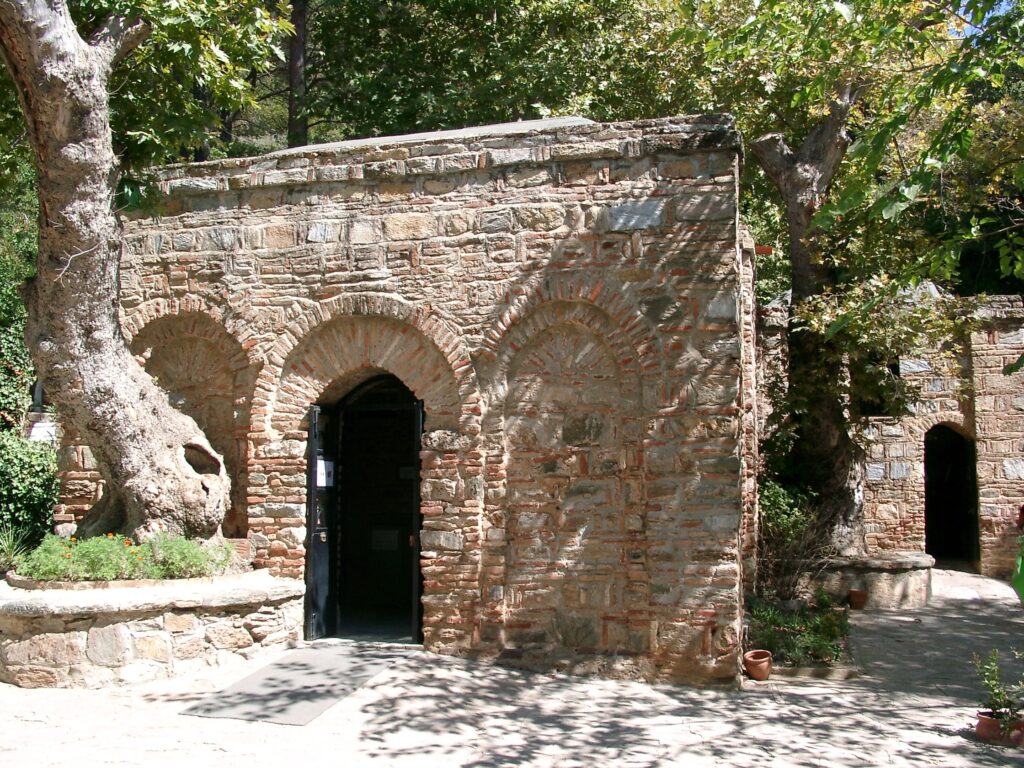
The Catholic Church has never said that the house really was hers, but pilgrims of many faiths enter into the chapel to pray and to tie their wishes to the wall. My post on the House of Virgin Mary in Ephesus tells how the house was found.
Then look at the map of Revelation. Ephesus is only the first city on John’s list (Revelation 1:11). The others are Smyrna in İzmir, Pergamon in Bergama, Thyatira in Akhisar, Sardis nearby Salihli, Philadelphia in Alaşehir and Laodicea nearby Denizli. They are all in western Turkey, the order of the road is in my post How the Letters Travelled Between the Seven Churches.
Patmos is the one place on John’s road that you cannot reach by land. It is a Greek island today, across the Aegean Sea from Turkey. I wrote about the exile, the cave and the writing of the book in How John Wrote Revelation in Exile on Patmos.
Frequently Asked Questions
Why did Emperor Domitian send Saint John to Patmos?
In the story above, Domitian feared John’s growing influence in Ephesus and banished him. John himself writes that he was on Patmos “for the word of God, and for the testimony of Jesus Christ” (Revelation 1:9). Most writers place this around AD 95.
Is the story of Lycomedes and Cleopatra in the Bible?
No. It comes from the Acts of John, an early Christian book that began to circulate in the 2nd century and never became part of the New Testament. It is a tradition of Ephesus, and I tell more about such stories in Miracles in Asia Minor During the Apostolic Age.
Which places in Turkey are connected with Saint John?
Start with the Basilica of Saint John and the House of the Virgin Mary in Selçuk, and the ruins of Ephesus. Then add Miletus, where the old story begins, and the other six cities of Revelation, such as Smyrna and Pergamon.
Hire a Tour Guide to See Saint John the Evangelist’s Legacy in Asia Minor
Planning to visit Turkey any day soon? Don’t skip places visited by Saint John in Turkey during your trip. We can explore Asia Minor together and see the real location where stories of Saint John the Evangelist in Anatolia took place in real life. Contact me to book a professional licensed Biblical tour guide in Asia Minor. See you soon, Hasan Gülday.