Bees and deer are depicted on many of the coins of Ephesus. The bee is closely identified with Ephesus and has become the symbol of Ephesus. The deer, on the other hand, was inspired by the deer, which is the symbol of Artemis in mythology, the temple of Artemis is located in Ephesus. For this reason, almost all the coins of Ephesus have a deer motif and some have a bee motif. Let’s take a look at the Great Stories Behind Ephesus Coins!
The earliest record of the bee symbol in Ephesus dates back to the sixth century BC. At that time, Ephesus was a small but strategically important city. Parallel to the importance of the city, the bee symbol became widespread in the art, architecture, and coinage of Ephesus.

According to mythology, Melissa was a nymph who lived in the forest of Ephesus and was known for her beauty and kindness. One day, when the god Apollo pursued her, Melissa prayed to Artemis for protection. Artemis transformed her into a bee, and thus she escaped Apollo’s pursuit. From that day on, Melissa became known as the protector of bees and was depicted on the coins and artifacts of Ephesus.

One of the most famous examples is the bee symbol found on Ephesus coins. On these coins, a stylized bee appears in a dotted circle, often in combination with other symbols like the goddess Artemis or the Lydian lion. These coins were minted from the 6th century BC to the 1st century AD and show the continued presence of the bee in the culture of Ephesus.
Lead Tokens of Ephesus
Lead tokens, called tesserae, were small coin-like pieces of lead which Ephesians used as tickets, vouchers and invitations. Most of them are stamped on one side only. They were used most in Ephesus in the 2nd and 3rd centuries AD, and in hard times they even worked as small change.
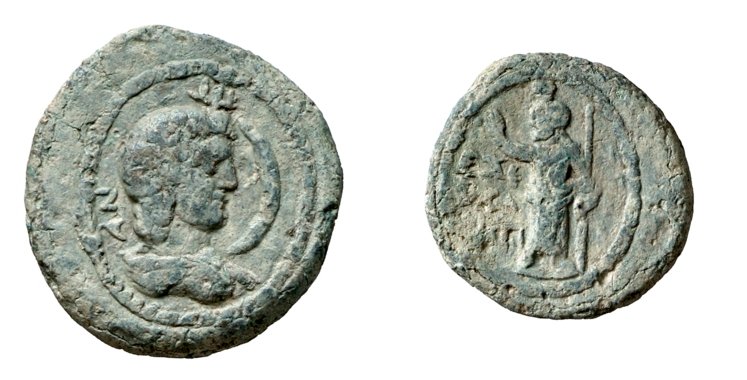
Their pictures look like the pictures on Ephesus coins. There are bees, deer, dolphins, fish, crabs, wheat ears, amphoras and ships, and also gods and the boar hunt of Androklos, the legendary founder of Ephesus. So the bee and the deer of Artemis were not only on the money, they were on the tickets too.
Tokens with wheat ears were probably used to collect grain from the city stores. Tokens with a theater mask were probably theater tickets. Some of them carry a second small stamp of Artemis, which shows the same ticket was stamped again and used over and over.
Emperors also handed out tokens to the people as gifts on special days. So far, lead tokens like these are known in Anatolia mainly from Ephesus, a good sign of how big and busy this capital was. For me, they are the most human pieces among the Ephesus coins, because they show us people going to the theater and waiting for their grain.


Hire Ephesus Tour Guide
Ephesus Museum offers a great collection of coins from whole excavations of Ephesus Ancient City. Contact me to learn more on Ephesian coins and to book a professional tour guide for Ephesus, Turkey. See you soon, Hasan Gülday.