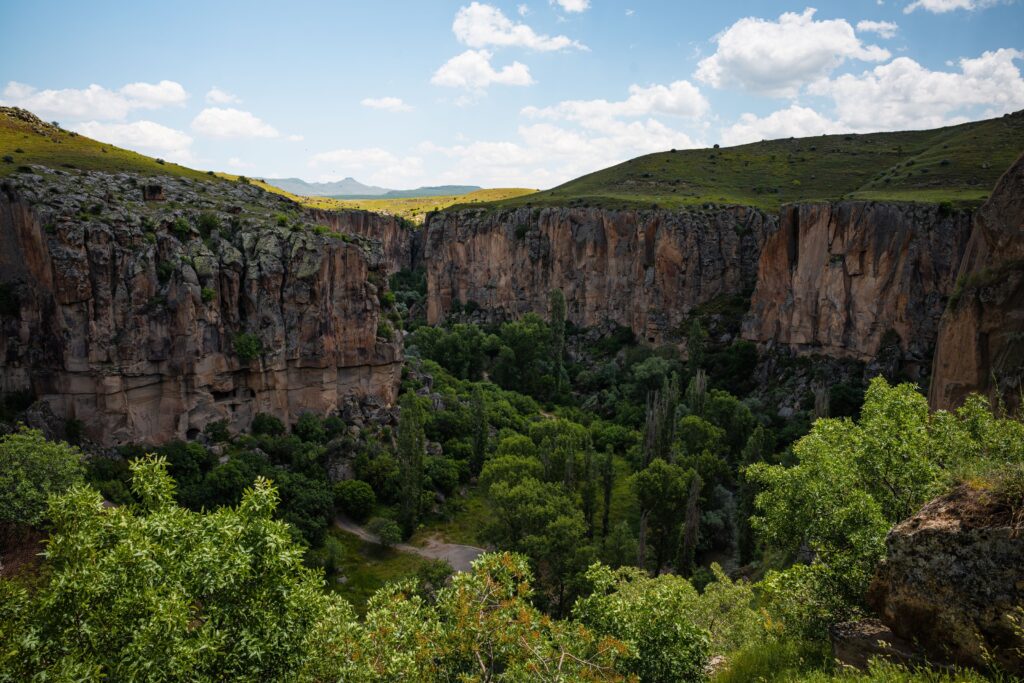
The top biblical sites in Cappadocia and Central Anatolia are the Göreme Open Air Museum, the Ihlara Valley, Eski Gümüşler Monastery, the underground cities of Derinkuyu and Kaymaklı, and Paul’s cities of Iconium, Lystra and Derbe. Only the last three are named in Acts (13:51 to 14:23). Cappadocia itself is named in Acts 2:9 and 1 Peter 1:1.
Add Tours Around Turkey as a preferred source on Google
Central Anatolia is the middle of Turkey. I guide in Ephesus, İzmir and Pamukkale but I travel into this region with my guests as their licensed guide on longer journeys. By the way, we write Cappadocia as Kapadokya in Turkish. Let’s have a look at the seven sites one by one.
Rock Churches of Cappadocia
1. Göreme Open Air Museum. This group of rock-cut churches and monk rooms is near Göreme in Nevşehir Province. It belongs to Göreme National Park and the Rock Sites of Cappadocia, a UNESCO site since 1985. The churches date from the 10th to the early 13th century. Look for the Dark Church, where the Last Supper and the Crucifixion are painted. Very little light enters, and that helped keep the colors strong.
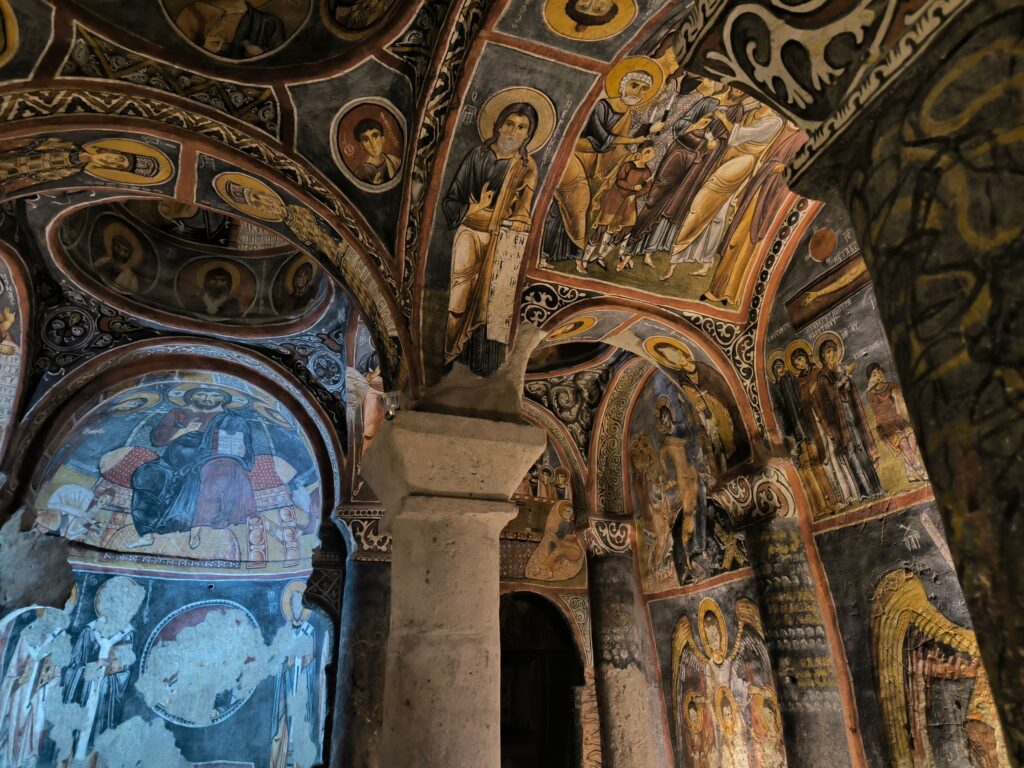
2. Ihlara Valley. This canyon in Aksaray Province is about 15 kilometers long, and the Melendiz River runs through it. Byzantine monks cut churches into the cliffs from the 7th century, and about 50 are known. The Hyacinth Church has frescoes of the Apostle Paul, and it also shows Emperor Constantine VII with his wife. A staircase of almost 400 steps goes down into the canyon at Ihlara village.
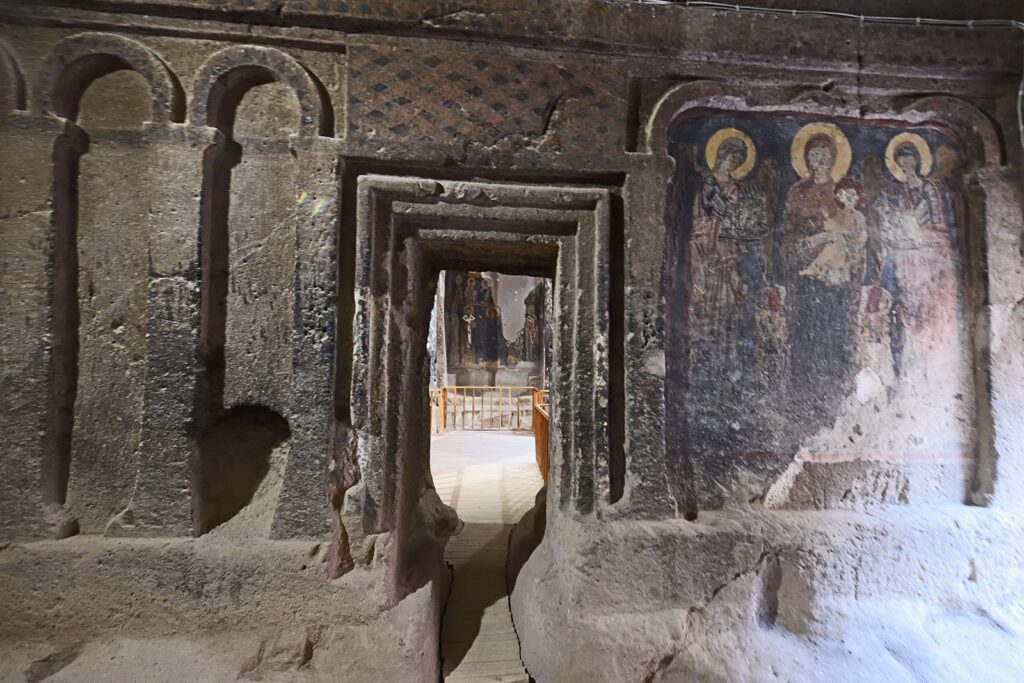
3. Eski Gümüşler Monastery. This rock-cut monastery lies nearby Niğde, about 10 kilometers to the northeast. It was rediscovered in 1962 and then restored. In the main apse, the lowest band of paintings shows Basil the Great and the two Gregories, the Cappadocian Fathers. Many people talk about a “Smiling Madonna” here, but the smile most likely comes from a careless restoration.
Underground Cities of Cappadocia
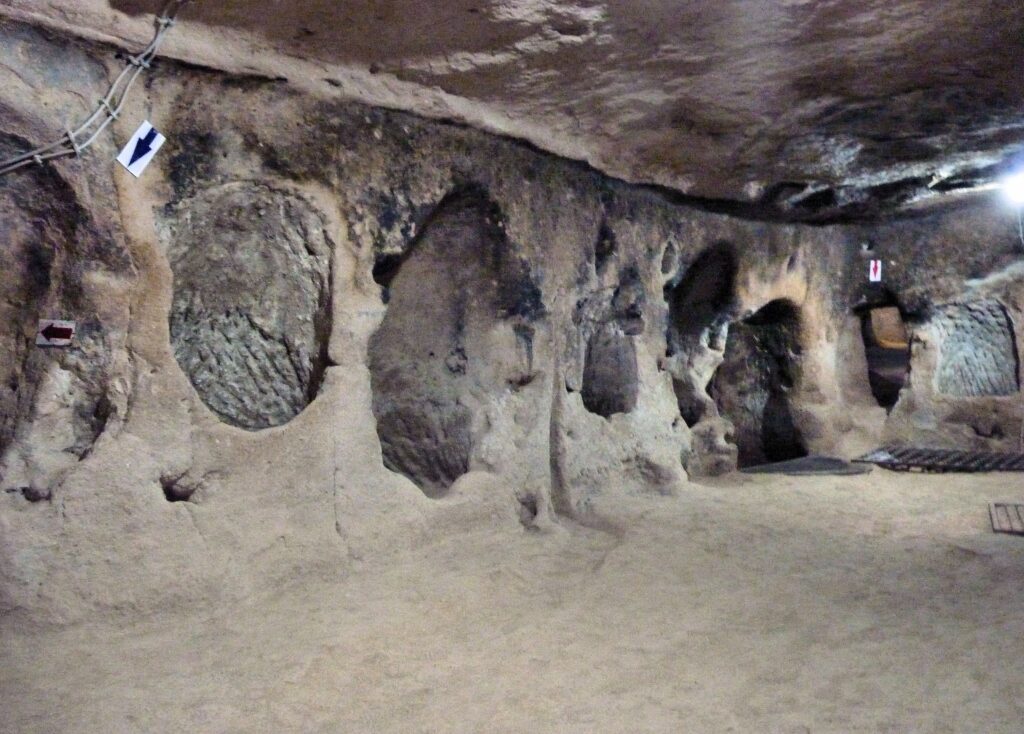
4. Derinkuyu. Derinkuyu goes about 85 meters deep, and it is largest excavated underground city in Turkey. Up to 20,000 people could shelter there with their animals. Christians widened it during the Arab-Byzantine wars, roughly from 780 to 1180. Big round stone doors could be rolled shut from inside, and a church lies on a lower level. The city was found again in 1963.
5. Kaymaklı. Kaymaklı is about 19 kilometers from Nevşehir. Four floors are open to visitors, and the tunnels are lower and narrower than in Derinkuyu. A church on the second floor has two apses, and a baptismal font stands infront of them. UNESCO counts both underground cities as part of the same World Heritage Site as Göreme.
Iconium, Lystra and Derbe in the Bible
6. Iconium (Konya). Paul and Barnabas preached in the synagogue here, and “a great multitude both of Jews and of Greeks believed” (Acts 14:1, WEB). After a plot to stone them they left for Lystra and Derbe, and later they came back to strengthen the disciples (Acts 14:21).
The Acts of Paul and Thecla, a text outside the Bible, makes Saint Thecla a daughter of Iconium. Konya is big city today, and the Roman hall of its Archaeological Museum is a good place to meet Roman Iconium.
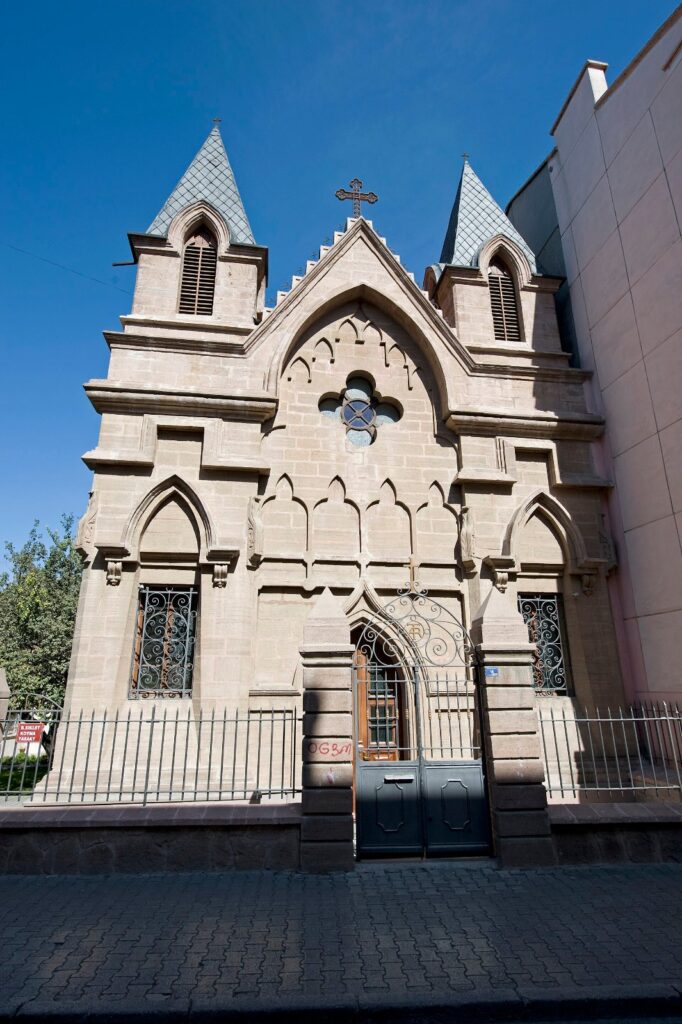
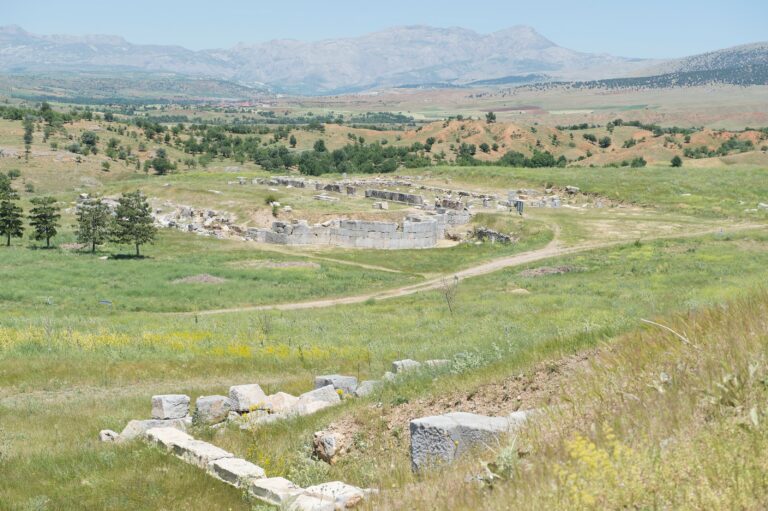
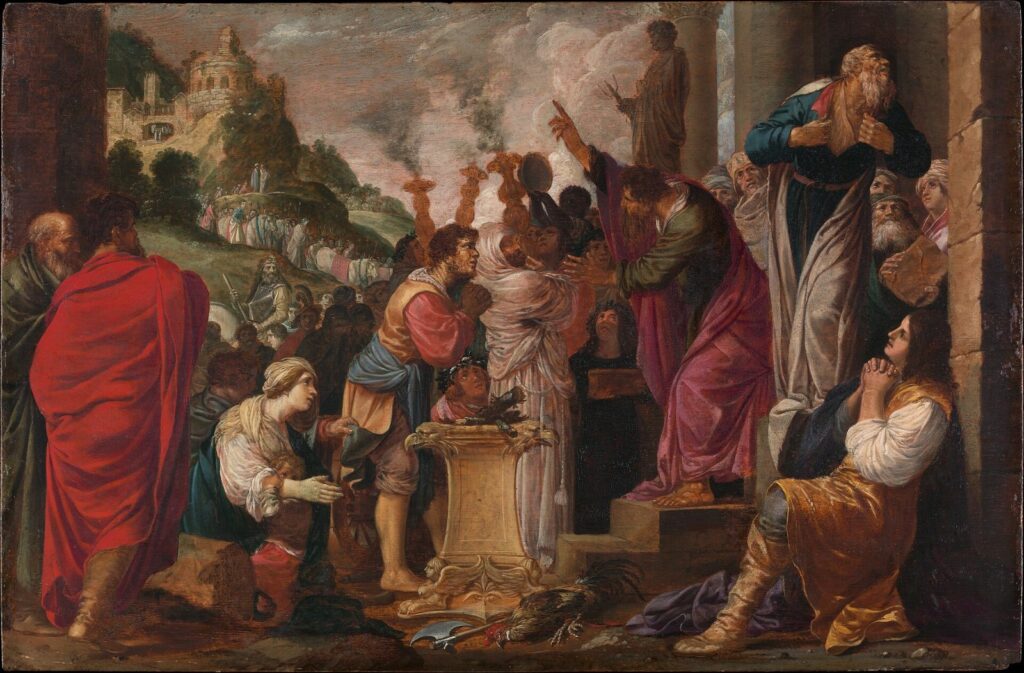
7. Lystra and Derbe. At Lystra Paul healed a man lame from birth, the crowd called Barnabas Zeus and Paul Hermes, and later Paul was stoned (Acts 14:8-20). Timothy joined Paul from this area (Acts 16:1-3). Lystra is believed to lie at a mound near Hatunsaray, south of Konya, because of a Latin inscription found there in 1885. Excavations began in 2024.
Derbe was the last city of the first journey, where Paul and Barnabas “made many disciples” (Acts 14:20-21, WEB). The best candidate is Kerti Höyük, a mound about 24 kilometers northeast of Karaman, near the village of Ekinözü. A second-century inscription found in 1956 points there, but scholars still debate it.
Visiting the Biblical Sites in Cappadocia and Central Anatolia
Antioch in Pisidia, where Paul preached before he came to Iconium (Acts 13:14), is in Isparta Province, in the Mediterranean Region, so it is not one of these seven. Kayseri, the old Caesarea, was the capital of the Roman province of Cappadocia. My articles on the Roman Province of Cappadocia and 10 Interesting Facts About Cappadocia tell more.
Cappadocia and Konya are several hours apart by road, I plan them on separate days. Spring and autumn are the best seasons, because Central Anatolia has hot, dry summers and cold, snowy winters. For Paul’s wider journeys, read Cities Visited by Apostle Paul in Asia Minor and Apostle Paul in Turkey. If this is your first Christian trip in Turkey, start with my Guide to Christian Turkey for First-Time Visitors.
Frequently Asked Questions
Where is Cappadocia in the Bible?
Cappadocia was a Roman province in the middle of Asia Minor, in today’s Central Anatolia. The Bible names it twice: people from Cappadocia heard the apostles at Pentecost (Acts 2:9), and Peter wrote to believers living there (1 Peter 1:1). Acts does not say that Paul visited it.
Who lived in the caves in Cappadocia?
Hermit monks began to live in cells cut into the rock in the 4th century, following the teaching of Basil the Great, according to UNESCO. Later whole Christian villages moved into the rock and underground to shelter from raiders.
Where are Lystra and Derbe today?
Lystra is placed at a mound near Hatunsaray in Konya Province, and Derbe at Kerti Höyük in Karaman Province. Both identifications rest on Roman inscriptions and are not fully certain, and Derbe’s is still debated.
Hire Biblical Tour Guide in Central Anatolia
Central Anatolia is outside my day guiding area, which is Ephesus, İzmir and Pamukkale. My national license lets me join you there as your personal guide on a longer journey. You can see my guiding rates and guiding areas or write to me through the contact page to ask about dates. I hope we will see these biblical sites together. See you soon, Hasan Gülday.