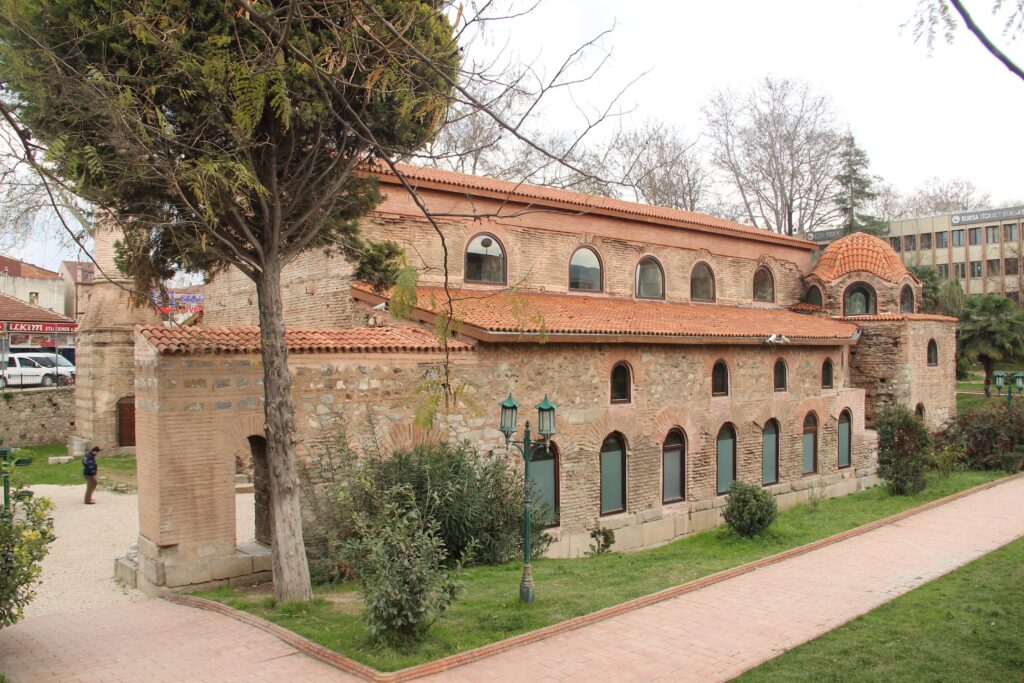
What to see in Iznik for Christian history? The main sites are the Hagia Sophia, where the council of 787 met, the Roman walls and gates, the ruins of the Church of the Koimesis, the Roman theater and the lakeside Basilica of Saint Neophytos. The first council, in 325, met in a palace that is lost, but the town and the lake are still here.
Add Tours Around Turkey as a preferred source on Google
Iznik is ancient Nicaea, a small town in the old region of Bithynia at the eastern end of a big lake. You drive in past market stalls and tea houses, and you are on the ground where Emperor Constantine called the first ecumenical council.
I think Iznik is one of the most under-visited places in Turkey for Christian travelers, and I say that with some frustration, because every time I bring a group here they are astonished that they have not heard more about it. Let’s have a look at the sites.
The Two Councils of Nicaea
In 325 Emperor Constantine called the bishops of the Christian world to Nicaea to settle the quarrel over the teaching of Arius. Eusebius of Caesarea, who was there, counted more than 250 bishops, and tradition says 318. They agreed on a creed, twenty canons and two rules for the date of Easter. Eusebius places the main assembly in the central building of the imperial palace, and that palace has not survived.
The second council met in 787. Empress Irene and Patriarch Tarasios gathered about 350 members in the Hagia Sophia of Iznik, and the council restored the veneration of icons. Churches today recite the longer creed of 381, and the Council of Ephesus of 431 later confirmed the creed of Nicaea. Since the room of 325 is lost, the sites below are the town that surrounded both councils.
Hagia Sophia of Iznik
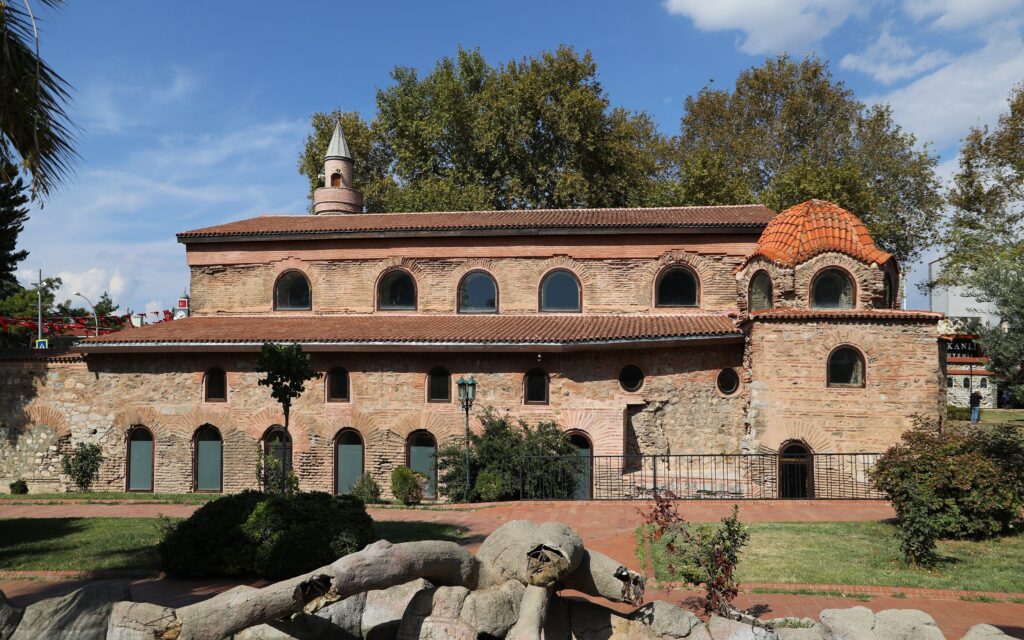
The Hagia Sophia of Iznik stands in middle of the old town. The Second Council of Nicaea opened in this church on September 24, 787, and it ended the first period of Byzantine iconoclasm. The earthquake of 1065 ruined the older church, and the building you see today is largely the rebuilding after it.
Orhan took the town in 1331, and the church became the Orhan Mosque. After a restoration that began in 2007, it opened again for prayer in 2011. By the way, the name is the same as in Istanbul, Holy Wisdom.
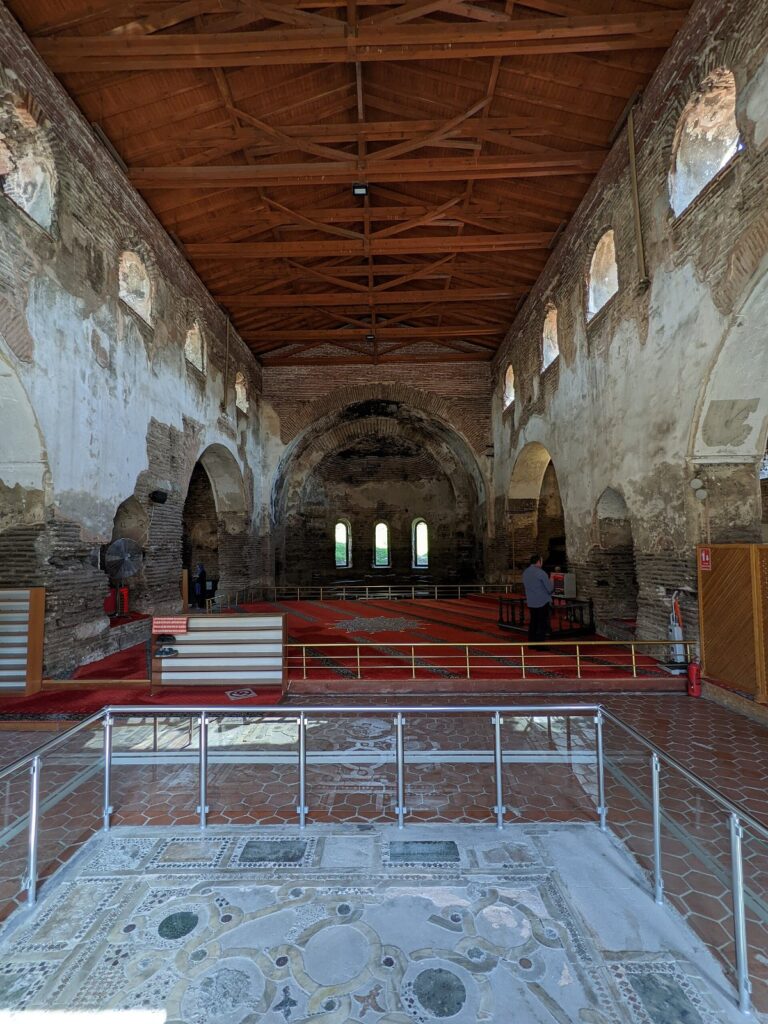
Inside, the Ministry of Culture and Tourism lists colored floor mosaics and the semicircular steps where the clergy sat, both uncovered in repairs of 1935 and 1953, and a fresco of Christ on the wall of a burial chamber. I recommend my guests to ask in the spot which of these can be seen. Please keep it in mind that this is a working Mosque, so dress modestly and check the prayer times.
Basilica of Saint Neophytos
At the edge of the lake lie the ruins of the Basilica of Saint Neophytos. Neophytos was a Christian of Nicaea who was killed by Roman soldiers in 303, in the persecution under Diocletian, which I describe in my article on the persecution of early Christians in Asia Minor. A basilica was built on the lake shore in the late 4th century, where he died.
Aerial photographs showed the ruins under shallow water in 2014. An earthquake, most likely in 740, sank the church, and falling water has since left the ruins at the shore. Archaeologists of Bursa Uludağ University have worked here since 2015.
On Friday, November 28, 2025, Pope Leo XIV and around 27 other Christian leaders held an ecumenical prayer near the excavations for the 1,700th anniversary of the first council. Patriarch Bartholomew, who had called the leaders together, gave the introductory remarks.
You may hear that the council of 325 met in this church. That is only a theory, Eusebius, who took part, places the assembly in the palace. Reports before the papal visit spoke of opening the site to visitors with a welcome center, so please check the current arrangements before you go.
Church of the Koimesis
The Church of the Koimesis, the Dormition of the Virgin Mary, was the principal church of Nicaea, and it is believed to have belonged to the monastery of Hyakinthos. It was probably built in the 7th or 8th century. Its mosaics showed the Virgin and Child in the apse and the empty throne with angels on the arch of the sanctuary.
It was only church of the town that was never turned into a mosque. However, it was destroyed in the early 20th century, and only the lower parts of some walls remain. The mosaics survive in old photographs, which Oskar Wulff and Theodor Schmit studied. Today you see a ruin, not a church.
City Walls and Gates of Iznik
The walls are the most visible link to the old city. The Ministry of Culture and Tourism gives the circuit as about 4,970 meters, with walls 10 to 13 meters high, 114 towers and four main gates. The first walls go back to Hellenistic times, and the Romans and Byzantines added to them.
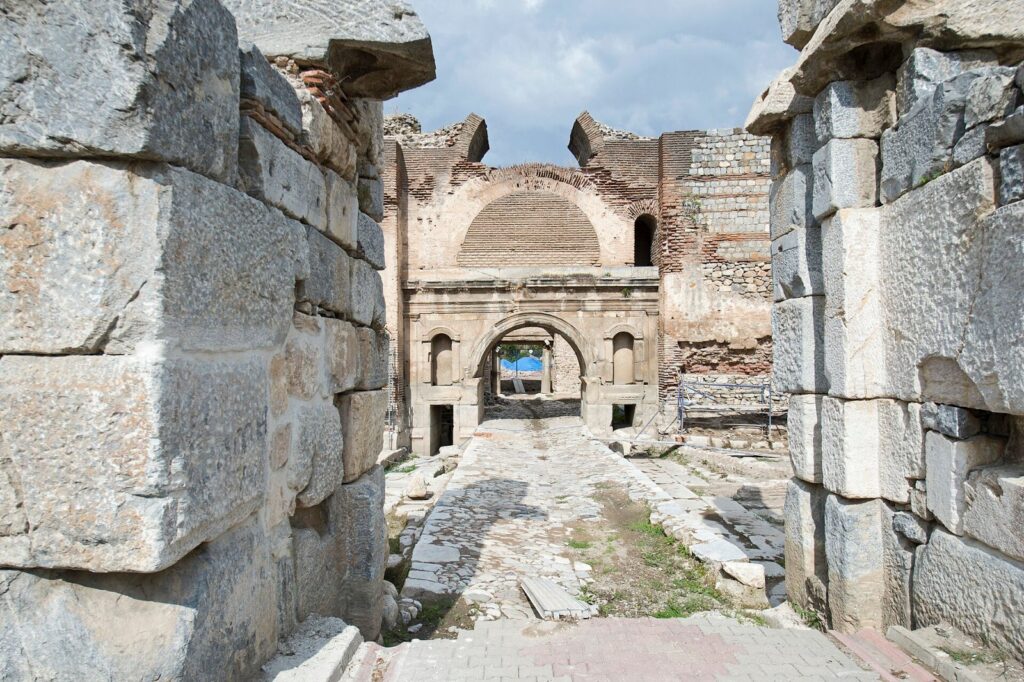
The Istanbul Gate in the north is really three gates in a row, with an oval courtyard between the outer and the inner ones. The Lefke Gate in the east is very similar. An inscription at the Lefke Gate names Emperor Hadrian, who visited Nicaea in 123 AD after an earthquake, so this gate stood long before the bishops came in 325. You can read about him in my article on Emperor Hadrian.
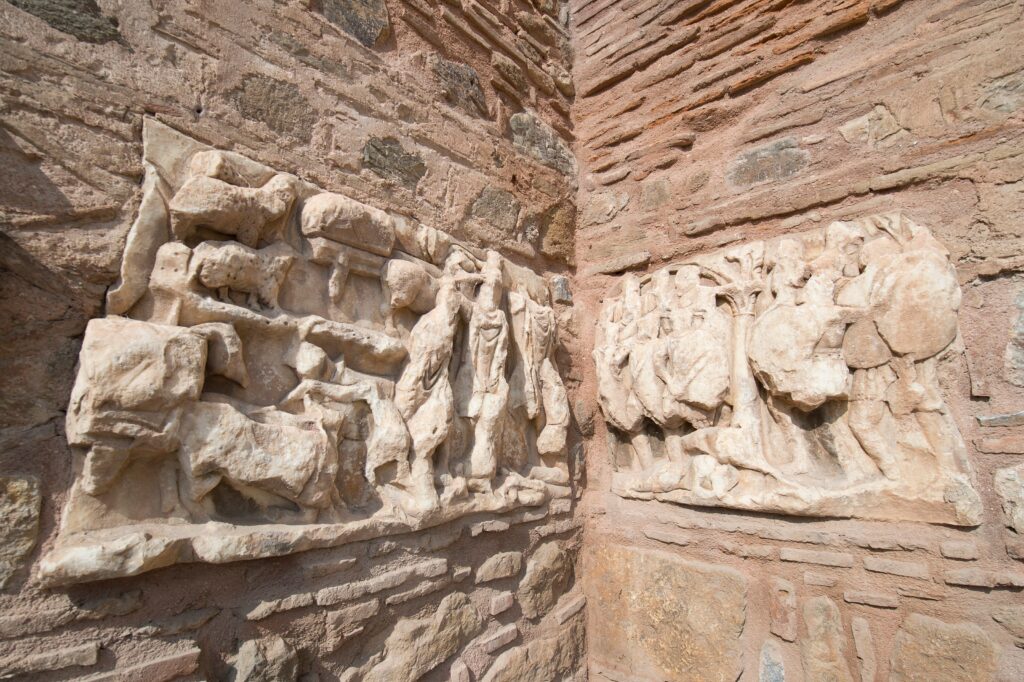
Roman reliefs from older buildings are set into the wall beside the Lefke Gate. The Yenişehir Gate in the south is partly preserved but nothing is left of the Lake Gate in the west. Enough of the walls survives to make a pleasant walking route, and I suggest to take your time here.
Roman Theater of Iznik
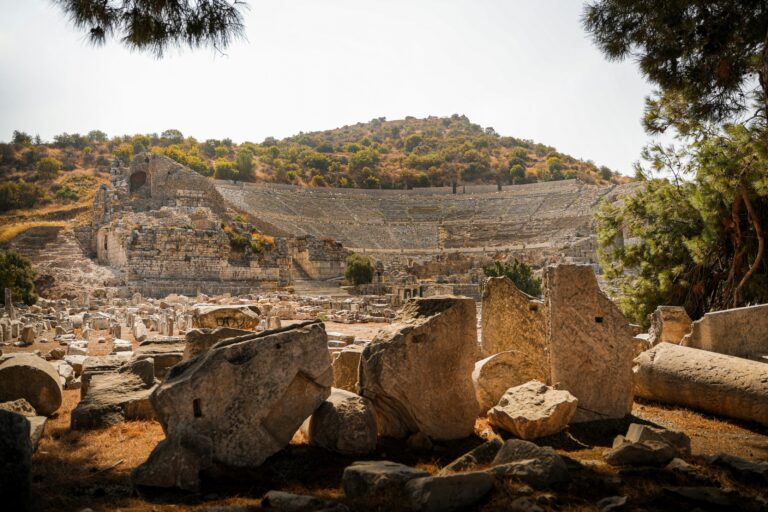
The Roman theater lies in the southwest of the town. It was built on flat ground, not on hillside, with its seats on vaults, and it held about 10,000 spectators. Pliny the Younger, the Roman governor of Bithynia, tells us that the building was still under construction in the days of Trajan. Turkish archaeologists are still excavating it today.
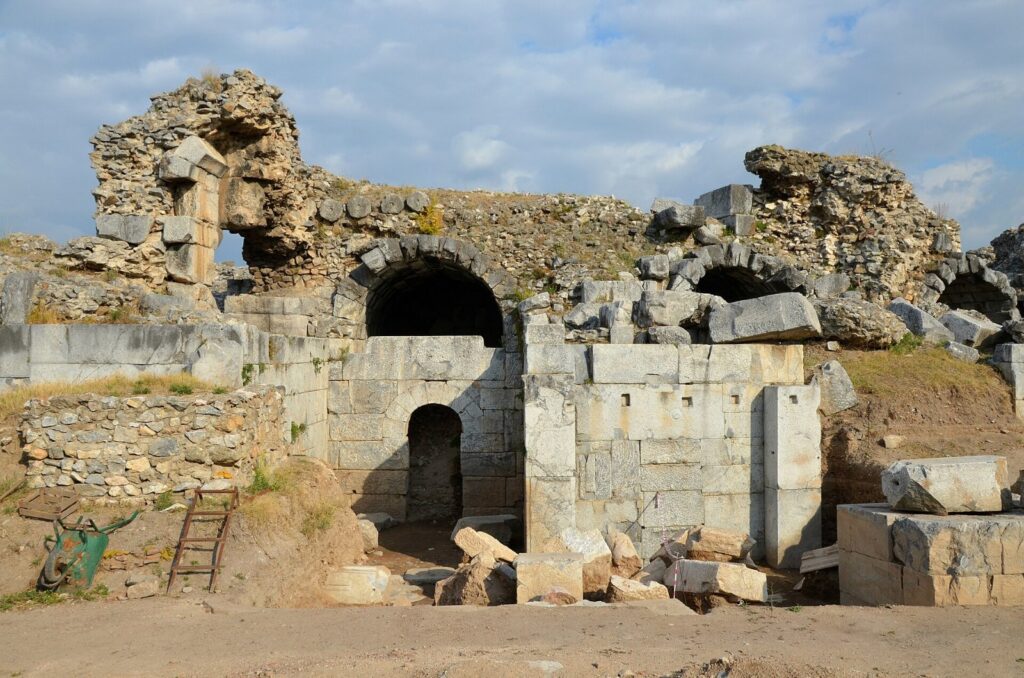
The theater also has a Christian chapter too. In the 4th century, when Christianity became dominant in the region, it was used for religious purposes. A fresco of Mary and Jesus and other Christian symbols were painted on the side walls of the orchestra, and in the 12th century two churches were built on the old cemetery area. I tell the wider story in my article on how Asia Minor turned from pagan to Christian.
The Good Shepherd Tomb
The newest Christian find in Iznik is underground. In the 2025 excavation campaing, archaeologists at the Hisardere necropolis uncovered a chamber tomb, a hypogeum, with painted walls. On the north wall, behind the funerary couch where the dead were laid, Jesus appears as the Good Shepherd, young and beardless, with a goat on his shoulders. Nothing inside the tomb dates it but similar tombs nearby point to the 3rd century.
The archaeologist Gülşen Kutbay told the Associated Press that it may be the only example of its kind in Anatolia. The excavation has the scientific coordination of Prof. Aygün Ekin Meriç of Dokuz Eylül University. During the papal visit, President Erdoğan gave Pope Leo XIV a tile painting of the fresco.
The tomb is an active excavation, and press reports say the area is guarded day and night, so do not plan on entering it. The Iznik Museum, described next, shows a replica of a chamber tomb of this kind.
Iznik Museum and Nilüfer Hatun Imaret
The Iznik Museum opened in a new building on January 14, 2023. It shows about 1,500 objects from the Neolithic period to the Ottoman era, and the sarcophagi attract the most attention. It also has a replica of a chamber tomb, a burial type of the Iznik area, because the original cannot be moved. Please check the opening hours before you go.
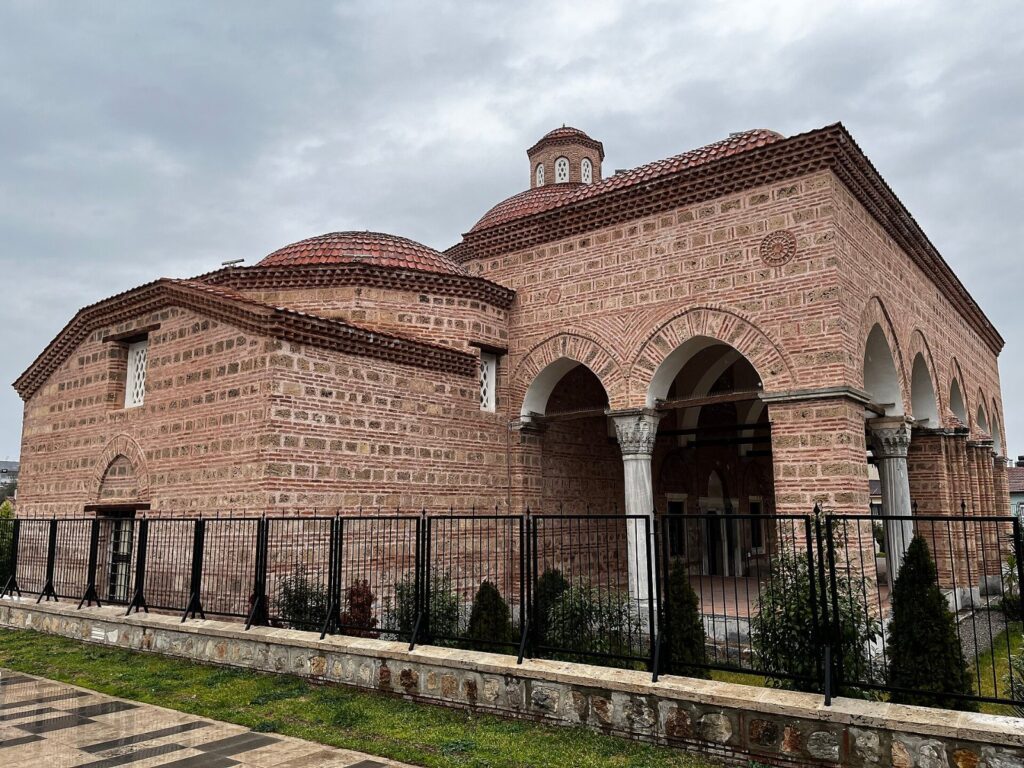
The old Nilüfer Hatun Imaret keeps the Museum of Turkish and Islamic Works. Murad I built it in 1388 in memory of his mother, and an imaret is a charitable soup kitchen. By the way, Nilüfer means water lily in Turkish.
Nilüfer Hatun herself links the Christian and Ottoman stories of Iznik. She was of Greek origin, and she became a Muslim when she entered the household of Orhan. Later tales made her a Byzantine princess, but historians treat those tales as legend.
Lake Iznik
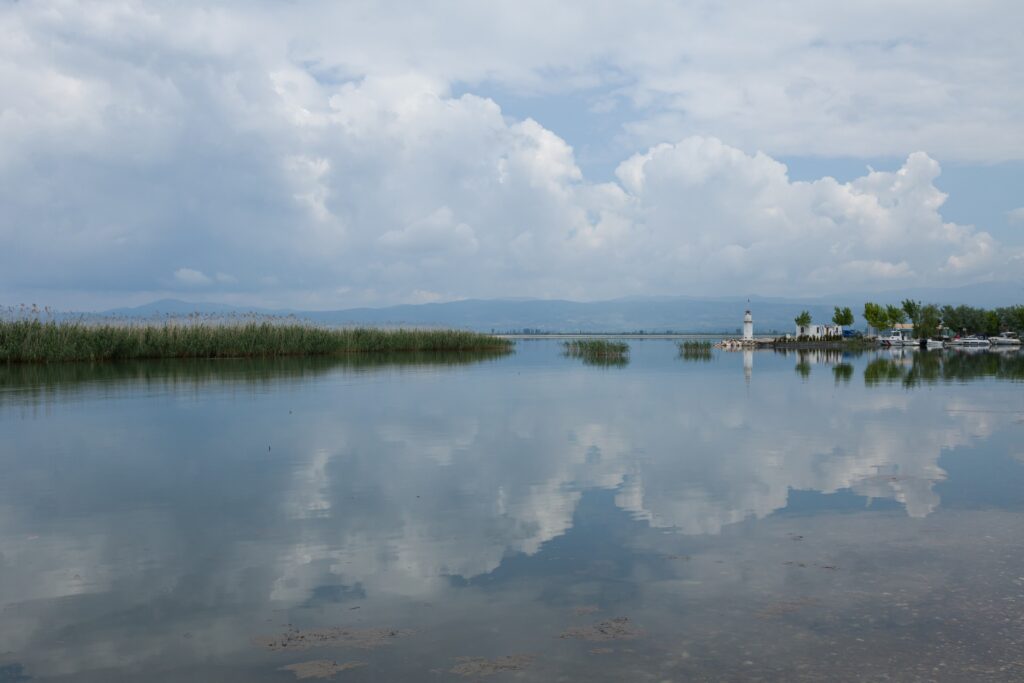
Lake Iznik was called Ascania in ancient times. It is the fifth largest lake in Turkey and the largest in the Marmara Region. It is not a Christian site but the west wall of Nicaea rose from its water, and the bishops of 325 came to a town on this shore. Sitting at the lake in the evening, with the walls behind you, is one of the quietest moments of the trip.
What to See in Iznik in One Day
Iznik is in Bursa Province, about 80 kilometers by road from Bursa. It is roughly 200 kilometers by road from Istanbul, because the road goes around the Gulf of Izmit. The sites are small and close to each other, so I recommend my guests to give Iznik a full day, not just for the church sites, also for the walls and the lake. The town has been on Turkey’s UNESCO Tentative List since 2014.
Iznik is also the town of the famous tiles. Its workshops began making fine pottery and tiles in the 15th century, and many of the mosques that the architect Sinan designed in Istanbul are decorated with them. For a wider plan, see my guide to Christian Turkey for first-time visitors and my list of sacred attractions and routes in Turkey, which has Iznik too.
Frequently Asked Questions
Is Iznik the same as Nicaea?
Yes. Iznik is the modern town on the site of ancient Nicaea, and its name comes from the Greek Nikaia. Both councils of Nicaea, in 325 and 787, belong to this town.
Where is Iznik, Turkey?
Iznik lies at the eastern end of Lake Iznik in Bursa Province, about 80 kilometers by road from Bursa. It is about 90 kilometers southeast of Istanbul as the crow flies, but around 200 kilometers by road.
Is there a Hagia Sophia in Iznik?
Yes. It is a Byzantine church where the Second Council of Nicaea met in 787. It became a mosque in 1331 and opened again for prayer in 2011 after a restoration, so dress modestly and check the prayer times.
What can you see in Iznik from the Council of Nicaea?
The room of 325 in the imperial palace is lost. You can see the Hagia Sophia of the council of 787, the Roman walls and gates of Nicaea, and the lakeside basilica where Christian leaders prayed in 2025.
Hire Biblical Tour Guide in Turkey
I’m a nationally licensed Turkish tour guide based in Kuşadası, nearby Ephesus, and I have been guiding since 2008. My day guiding is in Ephesus, İzmir and Pamukkale, so Iznik is outside my day guiding.
My license is valid all over Turkey. For Iznik, I can join you as your personal guide on a longer journey, while you arrange your transport and hotels yourself or through a licensed travel agency. See my guiding rates and guiding areas or write to me through my contact page.
I hope we will walk together to the Lefke Gate and sit by the lake after that. You can always write to me with your questions about the Christian sites in Iznik. See you soon, Hasan Gülday.