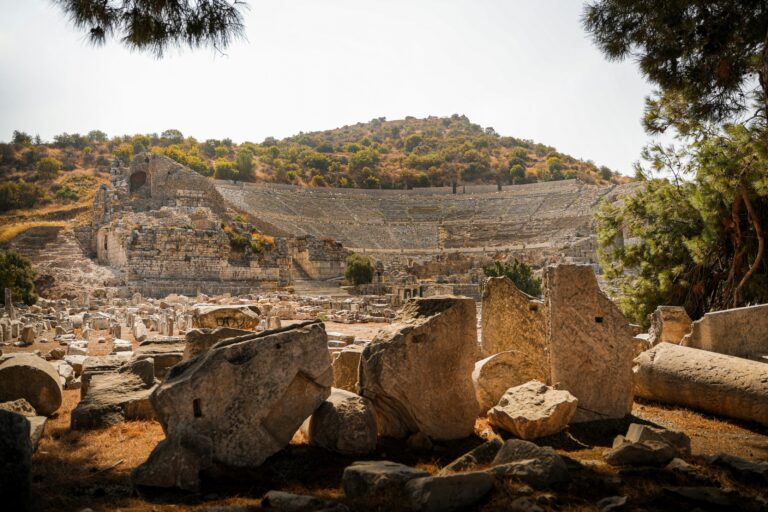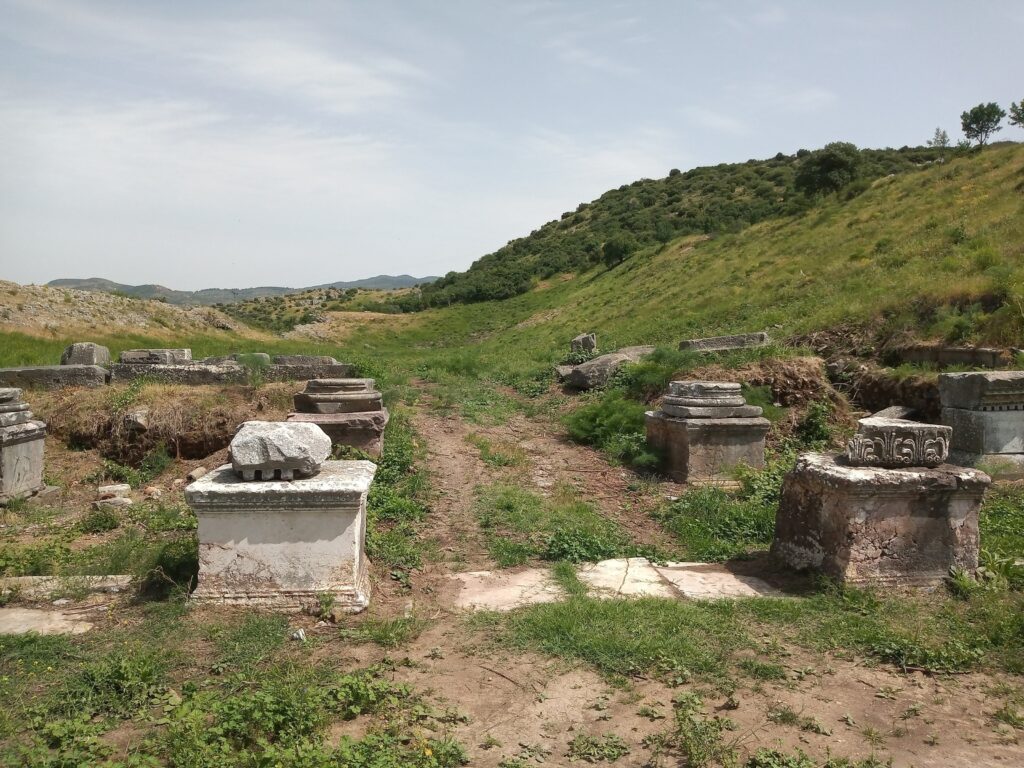
The Stadium of Ephesus was a horseshoe-shaped race track about 230 meters long, built against the foot of Panayır Hill on the north side of the city. It began in the Hellenistic period and was rebuilt under Emperor Nero (AD 54 to 68). Today it is mostly unexcavated, and it is closed to visitors.
Add Tours Around Turkey as a preferred source on Google
Ephesus hosts a big variety of public buildings, and the stadium is the one that most of my guests never see, because it is not on the visitor route. Let’s have a look at where it lies, how it was built and what happened inside it.
Where Is the Stadium of Ephesus?
The stadium lies at the north-west foot of Panayır Hill, next to the Vedius Gymnasium. It is not on the normal walking route from the Upper Gate to the Lower Gate, so most visitors never walk there.
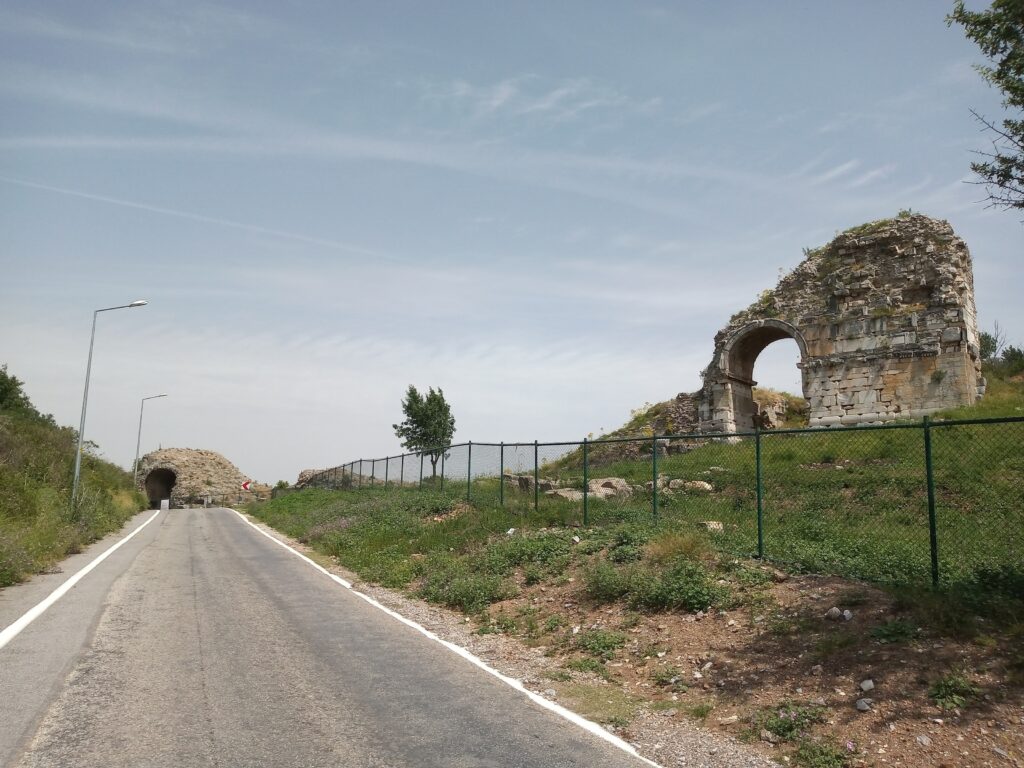
The road to the Cave of the Seven Sleepers starts nearby, and the hill above is Panayır Mountain. A fence stands infront of the ruins.
History of the Stadium of Ephesus
The first stadium was built in the Hellenistic period, and Emperor Nero had it enlarged and rebuilt. An inscription on the south retaining wall names the donors: a rich Ephesian called Stertinius Orpex, his wife and their daughter.
The seats of south side were cut out of the hillside rock. On the north side there was no slope, so the builders raised the seats on stone vaults, and some of these vaults still stand. The track had its round end in the east and the main entrance in the west.
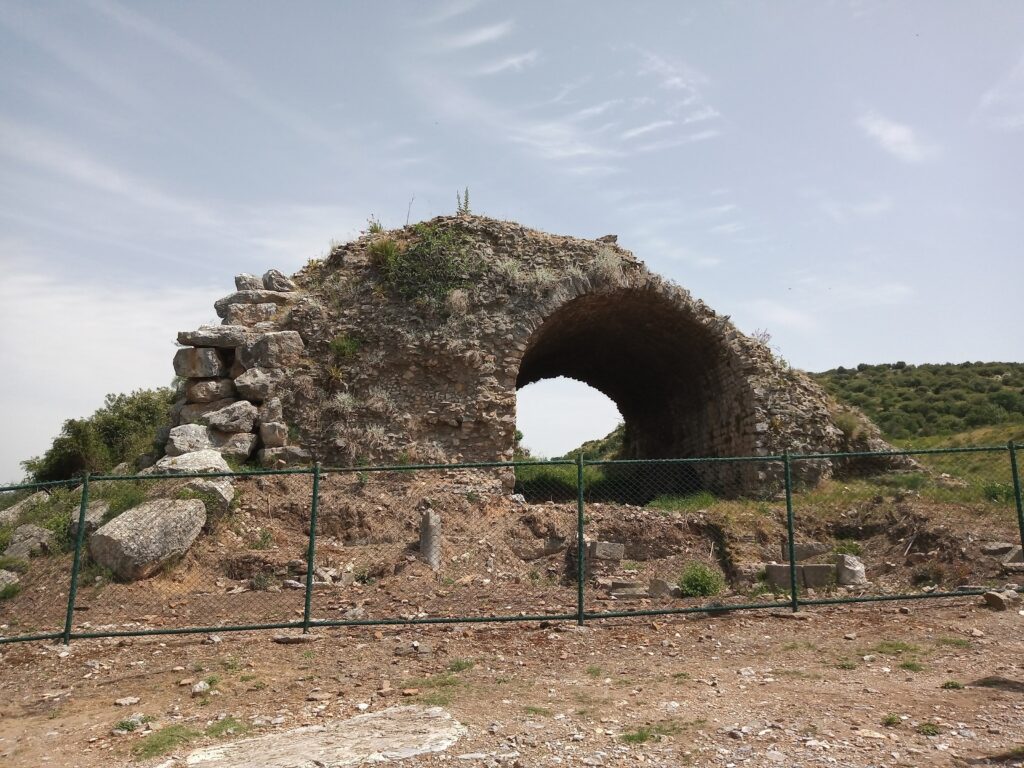
A strong earthquake in AD 262 hit Ephesus. The stadium got a monumental west gate in the late 3rd century, with a double row of columns and the look of a triumphal arch, and it was rebuilt again in the 4th century.
The stadium in short:
- Shape: horseshoe, with the round end in the east
- Size: about 230 meters long and 30 meters wide
- Built: Hellenistic period, enlarged under Nero
- West gate: late 3rd century AD
- Last big rebuilding: 4th century AD
- Today: partly excavated, not restored, closed to visitors
Gladiators and Animal Shows
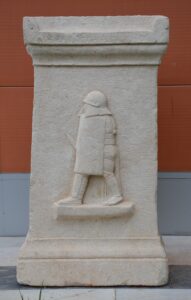
In late Roman times the round east end of the stadium was walled off and turned into an arena for gladiator fights and animal shows. The new arena was roughly 50 by 40 meters, and small rooms that could be locked were built beside it, probably cages for wild animals.
The gladiators of Ephesus have their own stories, and I wrote about them in my articles on the gladiators of Ephesus and on the bones that showed what they ate.
After the Romans: Churches and Reused Stone
After antiquity the stadium became a quarry and a place for churches. Many seat blocks were carried up to Ayasuluk Hill and reused in the walls of the Fortress and in the Basilica of Saint John, and churches were built inside the old ruins.
The Ayasuluk Fortress above Selçuk is open to visitors, and its walls contain a lot of reused Roman stone. The track itself went out of use, it became farmland.
Digging in the 1990s cleared the west end and strengthened the seat vaults, and then the work stopped. Most of the stadium is still under soil and bushes.
If you want to see a stadium that still shows its seats, I recommend the stadium of Magnesia on the Maeander, about 30 kilometers from Ephesus.
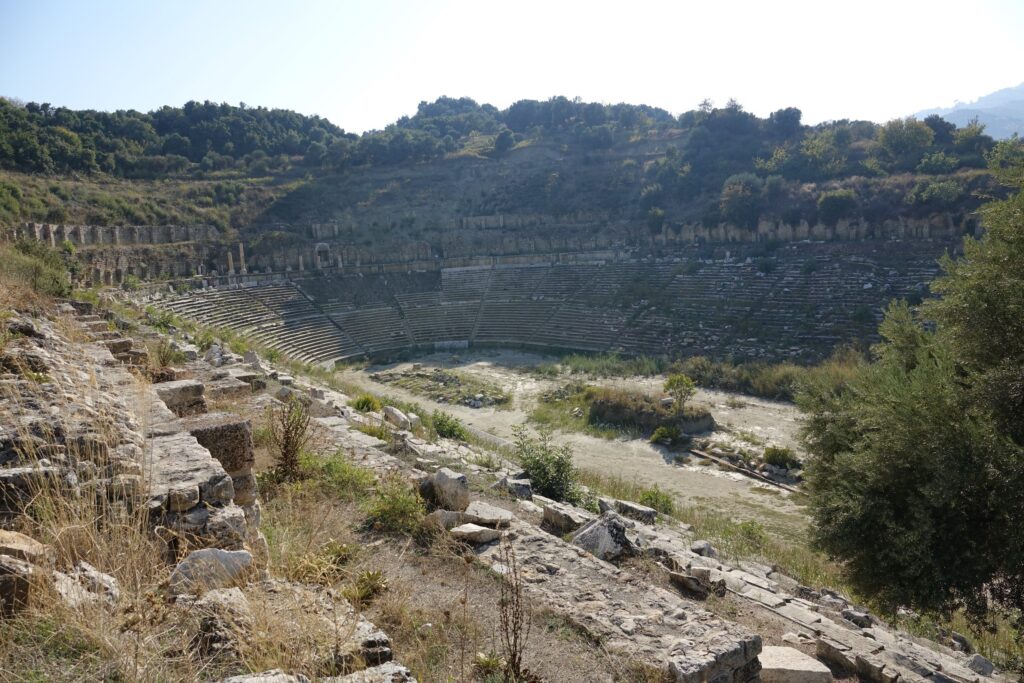
Can You Visit the Stadium of Ephesus?
No, the stadium at Ephesus is closed to visitors, and it has not been restored. You cannot enter into the stadium, and from outside the fence you see only the arched gate at the west end.
For now, the best place to feel the shows of Ephesus is the Great Theater. I hope the stadium will be opened one day, and I will be happy to tell its story to my guests on the spot.
Frequently Asked Questions
How big was the Stadium of Ephesus?
The Ephesus stadium was about 230 meters long and 30 meters wide. Nobody can give a safe seating capacity, because most of the stadium is still buried and only the west end was dug, so I prefer not to guess.
Can you visit the stadium in Ephesus?
No. The stadium is closed to visitors and it is not on the normal route. You can see only the arched west gate from outside the fence.
Did gladiators fight in the Stadium of Ephesus?
Yes, in late Roman times. The round east end was walled off to make an arena of about 50 by 40 meters for gladiator fights and animal shows. Before that the stadium was used for races and athletic games.
Hire Ephesus Tour Guide
I’m a nationally licensed Turkish tour guide based in Kuşadası, nearby Ephesus. My day guiding is in Ephesus, İzmir and Pamukkale, and I tell my guests the stories of the stadium, the theater and the marble streets while we walk.
You can see my guiding rates and guiding areas, or write to me through my contact page to ask about my availability.
I hope we will walk through Ephesus together, and talk about the stadium under Panayır Hill on the way. You can always write to me with your questions about the ruins of Ephesus. See you soon, Hasan Gülday.