The water use regulations of Laodicea are a Roman law of 114 AD, carved on a marble block in front of the Trajan fountain. They protect the city’s drinking water from theft, pollution and damaged pipes. Laodicea lies near Denizli and Pamukkale in western Turkey, and its church is one of the Seven Churches of Revelation.
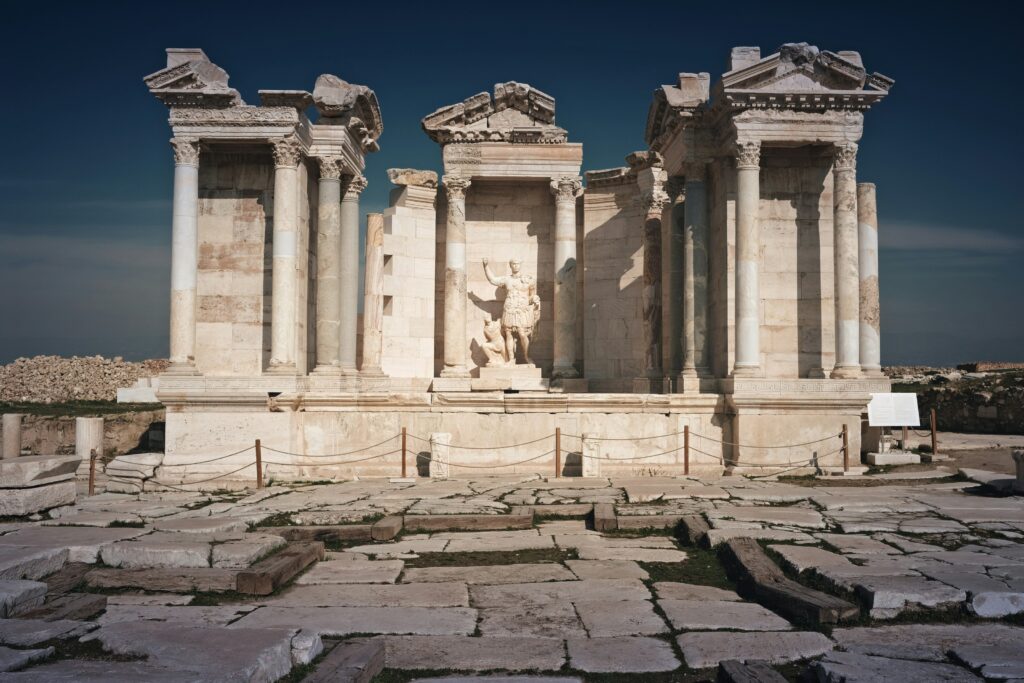
During the excavations carried out in the Ancient City of Laodicea nearby Hierapolis (Pamukkale), a fountain built in the name of Emperor Trajan and a marble block on which the rules for the use of water were scribed were unearthed.

The water sharing law consisting of 30 lines written on a marble block in front of the fountain and fountain made in the name of Emperor Trajan is well-preserved.

In 114, the Laodicea Council prepared this law and then submitted it to the proconsul in Ephesus for approval, and the proconsul approved the water law on behalf of the emperor. The law contains very severe penalties for issues such as pollution of water, damage to waterways or reopening of pipes that have been sealed with lead.

“Nobody can remove or distribute the water in city fountains or pipes under any pretext. It is for the prohibition of the retention of the water coming to the city or the prohibition of changing the road and the allocation of the use of water for the public benefit. Whoever steals the city’s water for his own personal use or damages the water system, he has to pay 5 thousand dinars to the emperor’s treasury.”
From the 2000 Years of Old Water Use Regulations found in Laodicea
Why Water Use Regulations Mattered in Laodicea
Laodicea was rich from wool and banking, but money could not make water. The city had no strong spring of its own, so its water supply came by an aqueduct from the springs in the south. When a whole city depends on one long pipe, a thief or broken channel hurts everybody. No wonder the law was so strict. Earthquakes shook the valley many times, and one of them probably brought the aqueduct down in the end.
Water also colors a famous line of Revelation 3:16. Hierapolis, about 10 kilometers to the north, had hot springs, and Colossae was known for cold, fresh water. The water of Laodicea probably arrived lukewarm, and many people link the “lukewarm” church of the letter to it. Not everyone agrees, but it is a good story to hear on the spot. I tell it in full in my post about Laodicea and its lukewarm church.
Frequently Asked Questions
What do the water use regulations of Laodicea say?
They forbid taking, redirecting or polluting the water that came to the city, and they forbid damaging the pipes or reopening pipes sealed with lead. Anyone who stole city water for himself paid a heavy fine to the emperor’s treasury.
Who approved the water law of Laodicea?
The Laodicea council prepared it in 114 and sent it to the Roman proconsul in Ephesus. He approved it on behalf of the emperor, so the rule carried the authority of Rome and not only of the city.
How did the water system of Laodicea cross the valley?
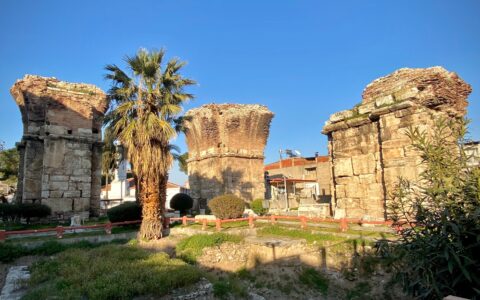
Instead of tall arches, the last part of the aqueduct was a siphon: pressurized stone pipes that went down into the valley and up again to the city. Lime from the hard water built up inside them over time.