Of the seven cities of the Apocalypse, Smyrna is the only one which never died.
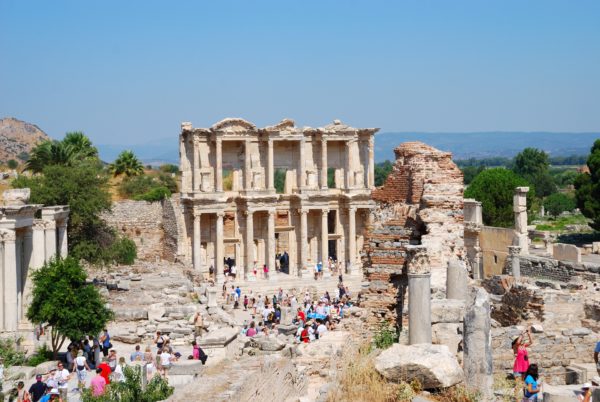
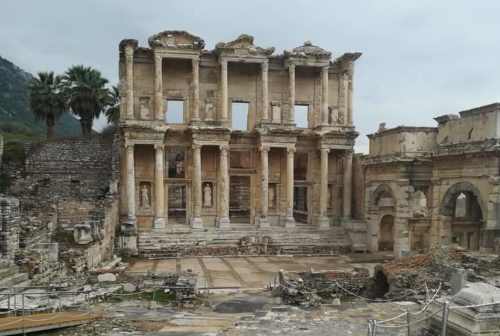
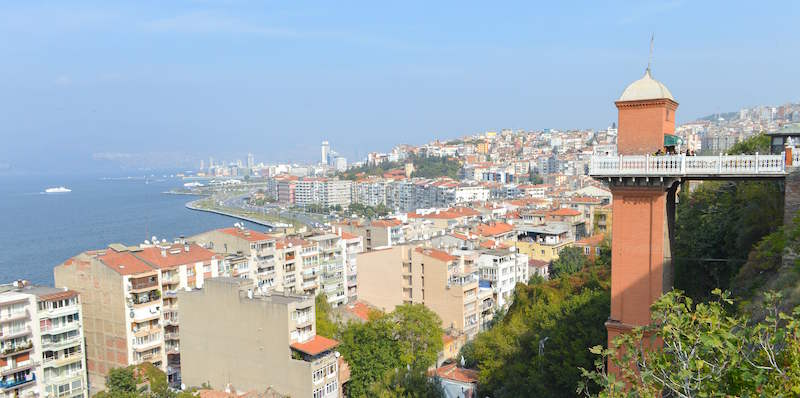
Think about this. Ephesus was abandoned. Pergamon shrank to a small mountain village. Sardis became a pile of stones. Thyatira disappeared under modern Akhisar. Philadelphia and Laodicea became ruins. But Smyrna kept going, and going, and going until the current date. Today it is the third largest city in Turkey, with more than four million people, and we call it İzmir which is the town that I was luckily born in!
This is part of the meaning of the letter that Christ sends to its church. Be faithful unto death, and I will give thee a crown of life. Smyrna is the city of life. It is also, as I will explain, the city of death and resurrection. It is the most paradoxical of the seven.

An Ancient and Stubborn City
Smyrna’s story begins, like Ephesus, in the early Bronze Age. The first settlement was on a low mound at Bayraklı, on the north side of the modern bay. There you can still see the foundations of a small archaic Greek city which already in 700 BC was producing some of the oldest Greek poetry. According to one tradition, Homer himself was born here. The Smyrnaeans believed this very firmly. They built a small monument to him, called the Homerion, which they kept in their main agora. Whether the tradition is true historically, we cannot say. But the local pride was real.


In 600 BC, the Lydian king Alyattes destroyed the old Smyrna. For about three centuries, the place was almost empty. Then around 300 BC, after the death of Alexander the Great, his successor Antigonus and later Lysimachus, who we know from Ephesus too, refounded the city on a new site, this time on the slopes of Mount Pagos, which today is the hill of Kadifekale, the Velvet Castle, in the centre of modern İzmir. This refoundation is what the local Greek tradition called the resurrection of Smyrna. The city had died, the city had risen.
This is not a small detail when we read the letter, written almost four centuries later, which speaks of the first and the last, which was dead, and is alive. The Smyrnaeans had a city which was, in their own civic memory, dead-and-alive.
The Most Beautiful City of Asia
Strabo, the Greek geographer who lived in the late first century BC, calls Smyrna the most beautiful of all the cities of Asia. The reason was the planning. The new Hellenistic city had been laid out with straight streets, paved with stone, climbing up the slope of the mountain in a regular pattern. The buildings were made of bright limestone and white marble. The harbour was perfectly sheltered. The acropolis on top of Mount Pagos crowned the whole composition.


There was a phrase that the local citizens loved to use about their own city. Stephanos Smyrnaion, the Crown of Smyrna. The chain of public buildings on the upper terraces of the city, viewed from the harbour, looked like a crown around the head of the mountain. Coins minted in Smyrna often show this image.
When you read the letter to the Christians of Smyrna, with its promise of the crown of life, you have to remember the actual visual reality of the city. The Christians of Smyrna were being told: forget the local crown of marble buildings. There is another crown waiting for you. Stephanos, in Greek, is the same word.

Roman Smyrna
Under Rome, Smyrna became one of the proudest cities of the empire. It was a neokoros, a temple-warden city, allowed to host an imperial temple. In 26 AD, when several cities were competing for the right to build the temple of Tiberius, Smyrna won the competition over a long list of rivals. Tacitus reports this competition in detail in his Annals. The Smyrnaeans had supported Rome already in the second century BC, when the city had built a temple to the goddess Roma — the very first such temple known in the Greek world. Their loyalty paid off.
This is one of the things which made the Christian community’s situation in Smyrna so difficult. The city had a deep, public, official commitment to the imperial cult. Refusing to participate was not just a private religious choice. It was a public insult to the civic identity. To say I will not burn incense to the genius of Caesar was, in Smyrna, almost like saying I do not love this city. The pressure on the small Christian community was therefore unusually intense.
The Jewish Community


The Jewish community of Smyrna was old and well-established. Some of these Jewish citizens were apparently quite wealthy and well connected to the Roman authorities.
The letter to the church of Smyrna includes the painful phrase the synagogue of Satan, of those who say they are Jews and are not, but do lie. As I have explained in other articles, this phrase has been very badly misunderstood throughout history, and has been used as a tool of antisemitism for centuries. This is a misuse.
The early Christian community of Smyrna was itself almost entirely Jewish in its origin.
The phrase refers to a specific local conflict in which some members of the local synagogue were denouncing the Christians to the Roman authorities. It is a pastoral comfort to a small persecuted community, not a theological judgement on the Jewish people. We will look at it more carefully in the article on the letter itself.
Polycarp
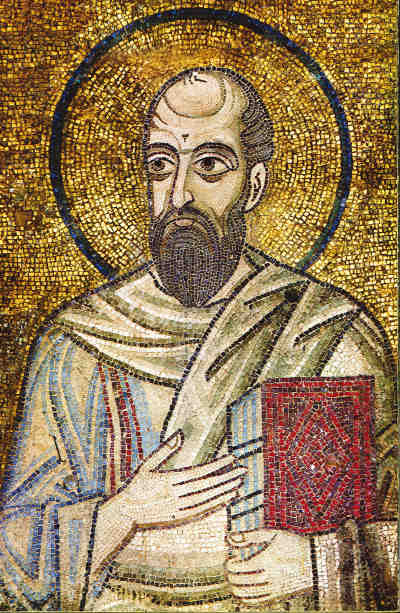
You cannot speak about Christian Smyrna without speaking about Polycarp.

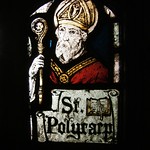
Polycarp was the bishop of Smyrna in the first half of the second century. According to Irenaeus, who knew him personally as a young man, Polycarp had been a disciple of John the apostle himself. So when John was sent to Patmos in 95 AD, Polycarp was perhaps a young man of around 25, already part of the Smyrnaean Christian community, listening at the feet of the old apostle. The letter to the church of Smyrna in Revelation may very well have been read aloud, in its first reception, in the presence of the young Polycarp.
Polycarp lived to be very old. In 156 AD, when he was about 86 years old, he was arrested in Smyrna during a wave of persecution. The story of his martyrdom is preserved in a beautiful early Christian text, The Martyrdom of Polycarp. He was offered the chance to save his life by burning incense to Caesar. He refused with the famous sentence: Eighty and six years have I served him, and he hath done me no wrong. How then can I blaspheme my king who saved me? He was burned alive in the stadium of Smyrna.
The promise of the letter, be faithful unto death, and I will give thee a crown of life, was, in Polycarp’s case, very literal.
What You Can See Today
Modern İzmir is a busy port city. The ancient Smyrna is mostly under the modern streets. But there is one place where you can really stand inside it. This is the agora of Smyrna, the Smyrna Agorası, in the Namazgâh district near the bazaar. The agora dates from the 2nd century AD and was rebuilt by Marcus Aurelius after a major earthquake. The basilica with its triple row of columns is still standing.

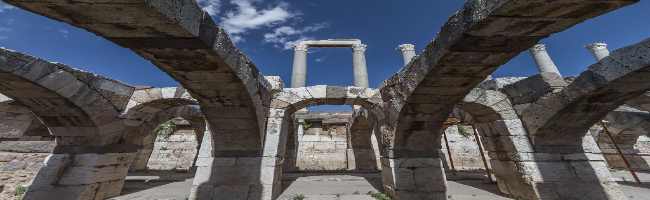
When I bring my groups here, I always tell them that this is a place where the early Christians of Smyrna almost certainly walked. The agora was the public square. Polycarp may have crossed it on his way to the stadium. The young Christians who first received the letter from Patmos, those who in 95 AD heard the words behold, the devil shall cast some of you into prison, knew this place very well.
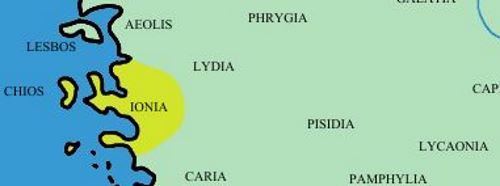
The hill above, Kadifekale, is the ancient Mount Pagos. From the top you have one of the great views of the eastern Mediterranean. The bay opens out below, the city stretches around it like a horseshoe, the modern harbour is full of ships, and on a clear day you can see the islands of Lesbos and Chios in the distance. The wind on Kadifekale is almost always blowing. There is a small tea house up there where I sometimes take my groups for a glass of black tea after the climb. Çay molası, we say in Turkish, the tea break. Even in serious historical work, there is always time for a tea break.
Practical advice for the self touring visitors: Kadifekale and the agora can both be reached by taxi from any hotel in the centre of İzmir, but the traffic in this city is famously bad, especially on weekday mornings. Plan your visits for the late morning or the early afternoon.
The Stadium and the Open Question
Polycarp was burned in the stadium of Smyrna. Where exactly is this stadium?
Honestly, this question is not fully resolved. There are remains of an ancient stadium on the slopes of Mount Pagos, but they are very fragmentary, and they are partially under modern buildings. Some scholars have proposed different locations.

The bishop of Smyrna who was burned alive for his faith — we do not know exactly where he died. The site is somewhere under modern İzmir, between the bazaar and the hill. People walk over it every day without knowing.
I leave this question open here, because I think it is more honest than to pretend we have a clear answer. There are some things in the history of Smyrna which the centuries have erased. The faith of Polycarp is not one of them. But the location of his death, in detail, is.
Contact a Biblical Tour Guide for Smyrna Biblical Tour
The Christians of Smyrna in 95 AD were a small group in a confident pagan city. They had to keep their faith quietly, in their own houses, in their own circles, while around them the great civic worship of the emperors continued without pause. They were small, they were poor, they were persecuted. And yet, of all the seven churches of Asia, the one whose city is still alive today is theirs.


The cities that bullied them are dust. The city that persecuted them, the city that burned their bishop, that city is still standing, still breathing, still smelling of the sea.
Contact me to learn more about Izmir, which is also known as Smyrna. We can explore the streets of Kemeraltı, Agora and many other locations together. See you soon in Izmir! Hasan Gülday.