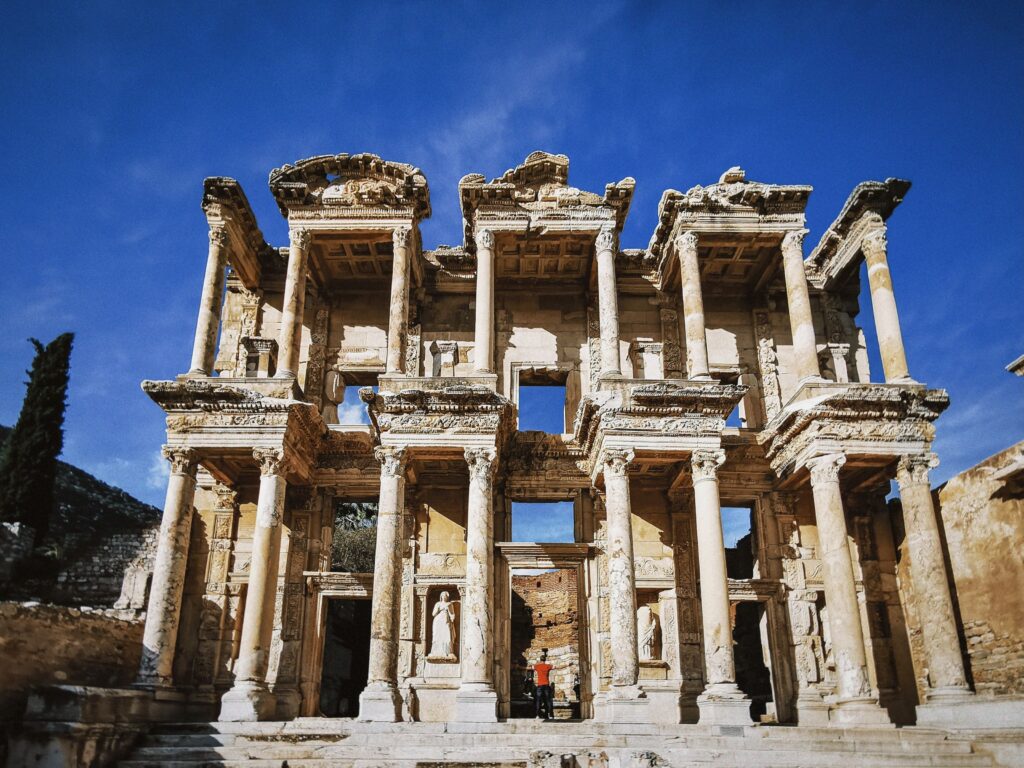
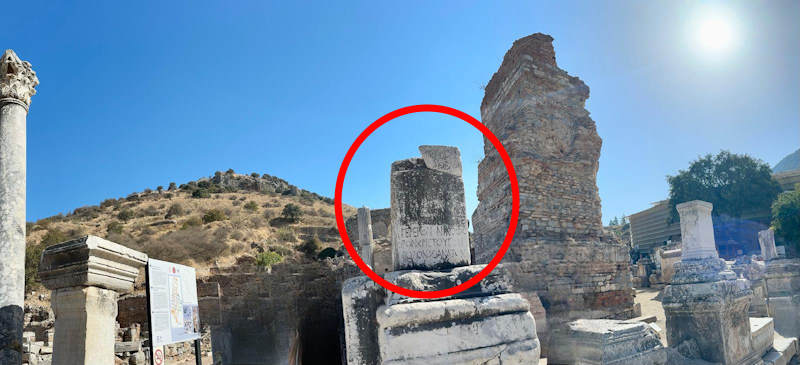
The early Christian inscription in Ephesus is a Greek text on a stone block, set up by Demeas of Ephesus, who took down a statue of Artemis by the Library of Celsus. Its words are translated as “Eternal symbol of Victory of Christ”, and Christians raised it where the pagans once gathered.
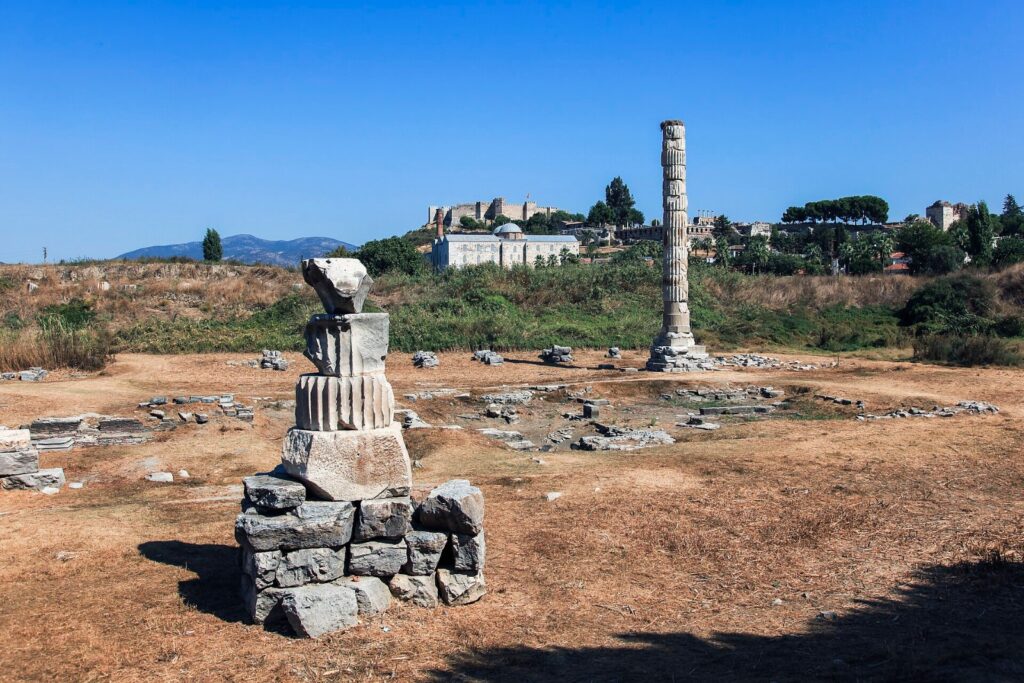
Ephesus started its life as a city which dedicated itself to Artemis, the goddess of nature and more. Also, Ephesus hosted the Temple of Artemis, which was considered as one of the seven wonders of the ancient world. Temple of Artemis was one of the biggest and the most appreciated monuments of the Greek and Roman eras.
Ephesus still hosted many other religions and cultures besides the Greek and Roman cults. The most important of these were Hebrew community of Ephesus who had synagogues and Egyptian community of Ephesus who had the Temple of Isis in Ephesus. Even though they had their clashes time to time, these communities co-existed in Ephesus.
Christianity Arrives in Ephesus
Christianity was the last religion to arrive to Ephesus during the golden era of Ephesus. When the early Christian disciples and apostles such as Saint John the Evangelist, Apostle Paul and Timothy. Many of them were persecuted and even martyred like Timothy and Seven Sleepers who declared their faith in Christ even if it meant death for them.

The rulers of Ephesus and the Roman Empire pushed people into belief of Pagan gods. Rulers of the Roman Empire used Pagan religion to control the people of Ephesus. Merchants such as the silversmiths of Ephesus, the most famous of whom was Demetrius, used the Pagan religion to make profit since they were the suppliers of the famous Artemis \ Diana Temple. As you can understand, rich and elite of Ephesians were benefiting the old belief and the underprivileged people of Ephesus were suffering.
Christianity was a shaking the foundations of the old establishment in Ephesus and the Roman Empire. Ephesus was one of the first cities in the empire where people in mass started to convert into Christianity. Ephesus and its surrounding regions were in religious and politic turmoil because of clashes between Christians and the believers or beneficiaries of Pagan gods. This battle ended with the triumph of Christians.


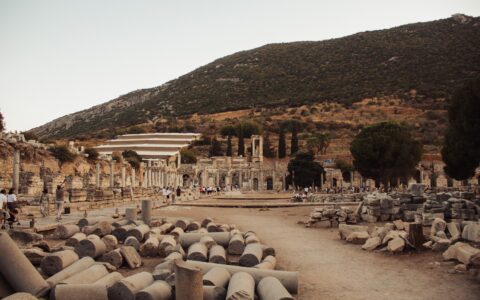
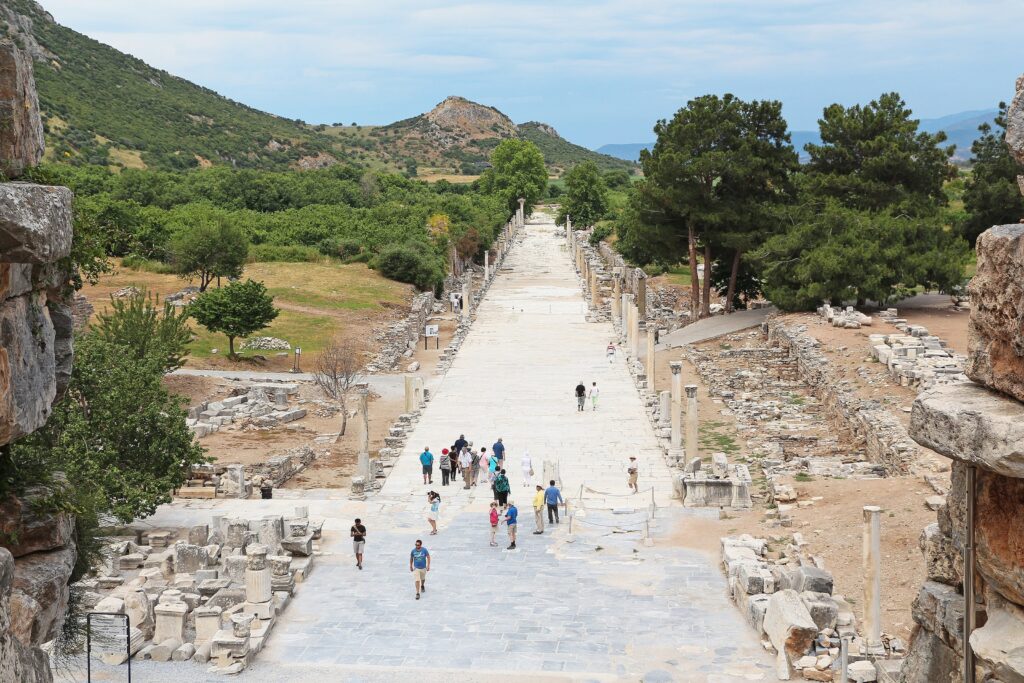
There was a monument dedicated to the goddess Artemis by the Celsus Library of Ephesus. This monument was the gathering spot before the procession to the temple. Pagans used to make their sacrifices, prepare gifts for the goddess Artemis, and started their walk to the temple with torchlights in their hands. This was the spot where Timothy was martyred, and many more Christians were persecuted.
The Early Christian Inscription in Ephesus
After the years of persecutions and executions which ultimately followed by their victory, Christians of Ephesus wanted to raise a monument to remember their triumph over the hardships they had to endure over the years. What could be a better place to build this monument where the meeting spot of the old oppressors used to be.
I love to stop during my Ephesus tours at the inscription belonging to early Christian era of Ephesus and point out this amazing monument. It is known that this monument was erected by Demeas of Ephesus, who stood against the Artemis Demon and destroyed the previously standing Artemis statue in this spot. It says on this monument ”Nikoforos Hristos Simbolon Atanaton” which translates into modern English as ”Eternal symbol of Victory of Christ”.
Frequently Asked Questions
What does Nikoforos Hristos Simbolon Atanaton mean?
Nikoforos means victory-bringing, Hristos is Christ, simbolon is symbol and atanaton means deathless. Together the Greek words say “Eternal symbol of Victory of Christ”, the line I read to my guests at the monument.
Can you still see the Demeas inscription in Ephesus?
Yes. It is part of the open-air site, by the Library of Celsus, and easy to walk past without noticing. I stop there with my guests and read Greek letters together.
Did Demeas destroy the Temple of Artemis in Ephesus?
No. The inscription speaks about a statue of Artemis, not the great temple, whose one rebuilt column stands at the edge of today’s Selçuk. The temple has its own story in my post on the Temple of Artemis.

Hire Biblical Tour Guide for Ephesus
Ephesus has many more details from the early Christian era. This monument is just one of them. Come to Ephesus yourself to discover more hidden treasures of Ephesus. Contact me to learn more about Ephesus and to hire a professional, Biblical, licensed tour guide for Ephesus, Turkey. See you soon, Hasan Gülday