Ephesus vs Alexandria compares two harbor cities of the ancient world, each with one of the Seven Wonders. Alexandria, founded by Alexander the Great in 331 BC, was the capital of Egypt, with the Lighthouse and the great Library. Ephesus, in today’s Turkey, was the capital of the Roman province of Asia, with the Temple of Artemis. I compare Alexandria from the 3rd century BC to the 2nd century AD and Ephesus in the 1st and 2nd centuries AD.
Add Tours Around Turkey as a preferred source on Google
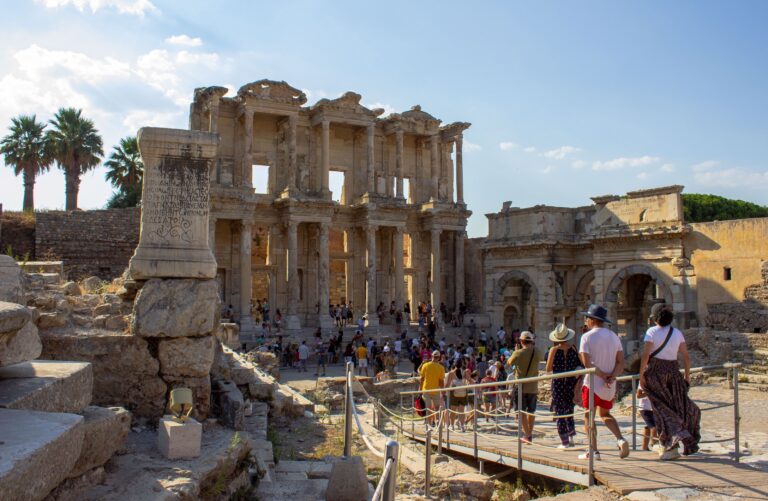
My guests often ask me one question in front of the Library of Celsus: how did it compare with the Library of Alexandria? Let’s have a look at them side by side.
Ephesus vs Alexandria at a Glance
Here are the two cities at their peak.
| Topic | Ephesus | Alexandria |
|---|---|---|
| Country today | Turkey, near Selçuk | Egypt |
| Peak era compared | 1st to 2nd century AD | 3rd century BC to 2nd century AD |
| Founded | Ionian Greeks; moved by Lysimachus about 290 BC | Alexander the Great, 331 BC |
| Setting | River mouth on the Aegean | Mediterranean coast beside Pharos island |
| Harbors | One river harbor, now silted | Two sea harbors |
| Rank | Capital of the province of Asia | Capital of Egypt |
| Wonder | Temple of Artemis | Lighthouse of Alexandria |
| Library | Library of Celsus | Library of Alexandria |
Founding, Harbors and Rank
Alexander the Great founded Alexandria in 331 BC on coast of Egypt, beside the small island of Pharos. A causeway called the Heptastadion, more than 1,200 meters long, joined the island to the city. It made two harbors: the Great Harbor on the east side and the Eunostos harbor on the west.
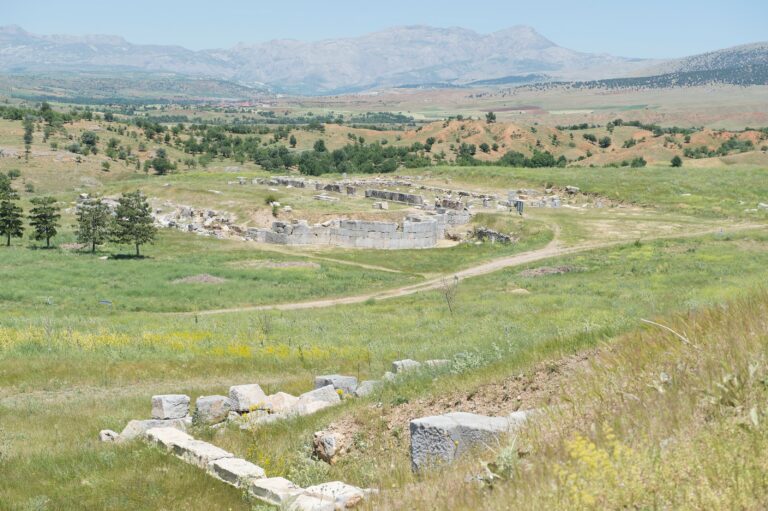
Ephesus is much older. Ionian Greeks lived here from about the 10th century BC, it is believed. Around 290 BC Lysimachus, one of Alexander’s generals, moved the city into the valley where the ruins stand today, and for a short time he named it Arsinoeia after his wife Arsinoe, a princess of Egypt. Its harbor sat at the mouth of the Cayster River, which kept filling it with silt.
By the way, we call the two hills in both sides of that valley Panayır Dağı and Bülbül Dağı in Turkish. The second one means the Nightingale Mountain. Today the old harbor of Ephesus lies about 5 kilometers inland, behind the fields.
Alexandria was the royal city of the Ptolemies and then of Roman Egypt, for centuries second only to Rome. Ephesus was capital of the Roman province of Asia from the time of Augustus. The Ptolemies of Egypt even ruled Ephesus for about half a century until 197 BC, and Cleopatra spent a winter here, as I tell in the tale of Cleopatra in Ephesus.
The Two Wonders: Lighthouse and Temple of Artemis
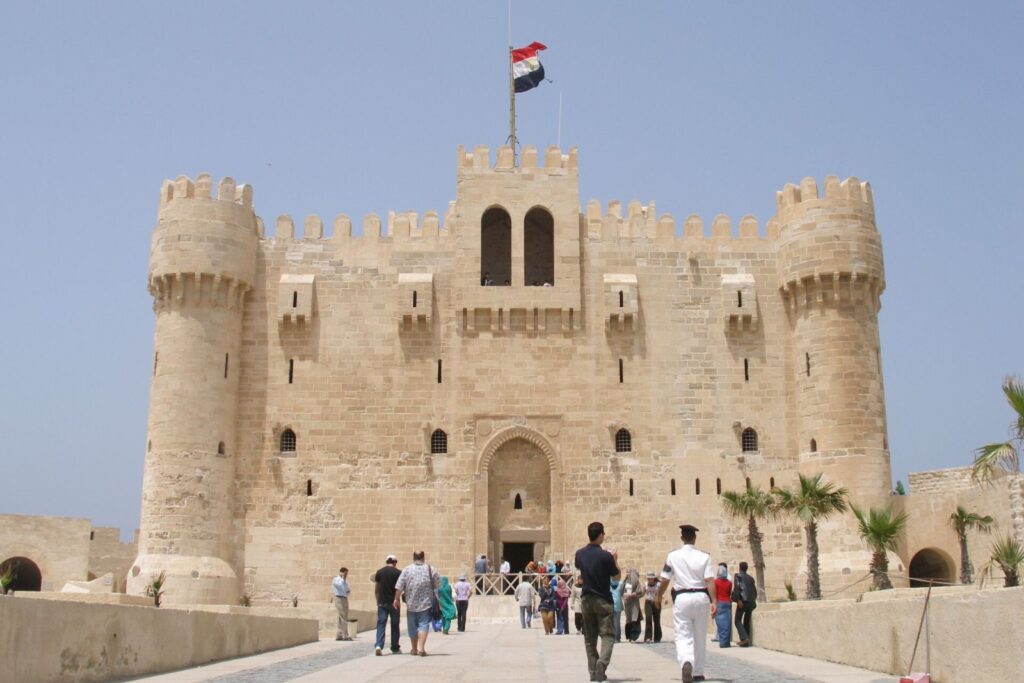
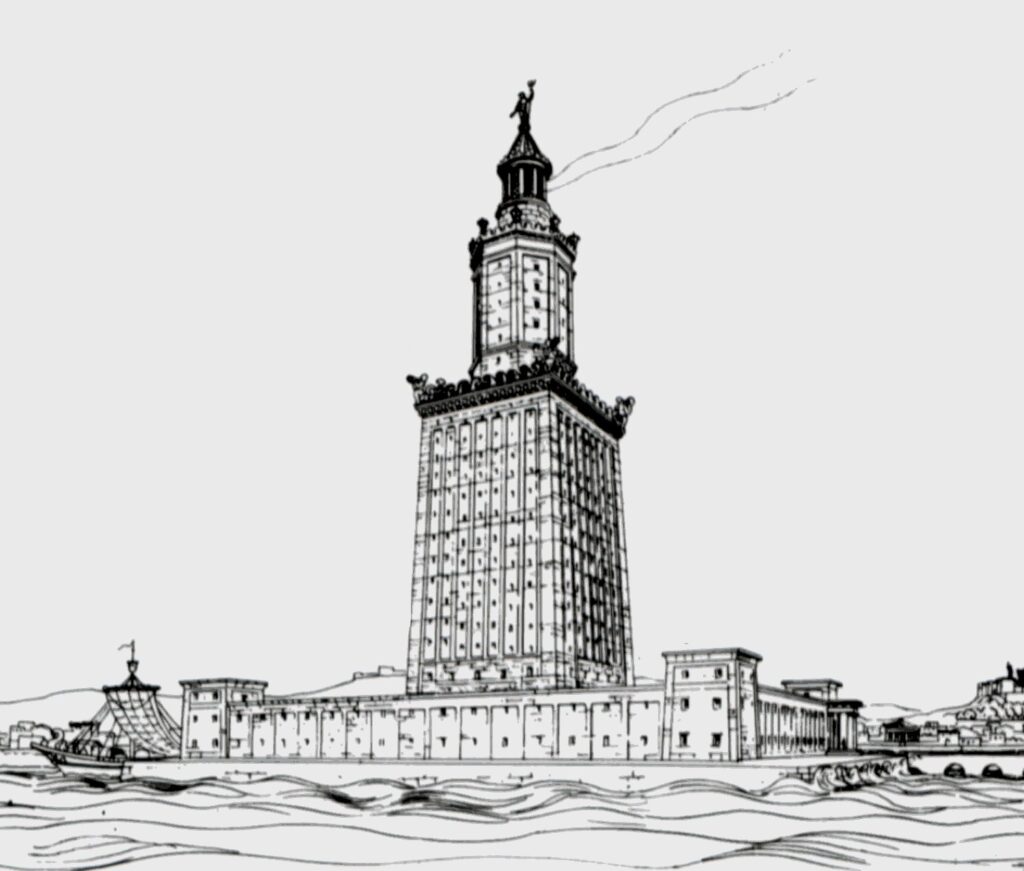
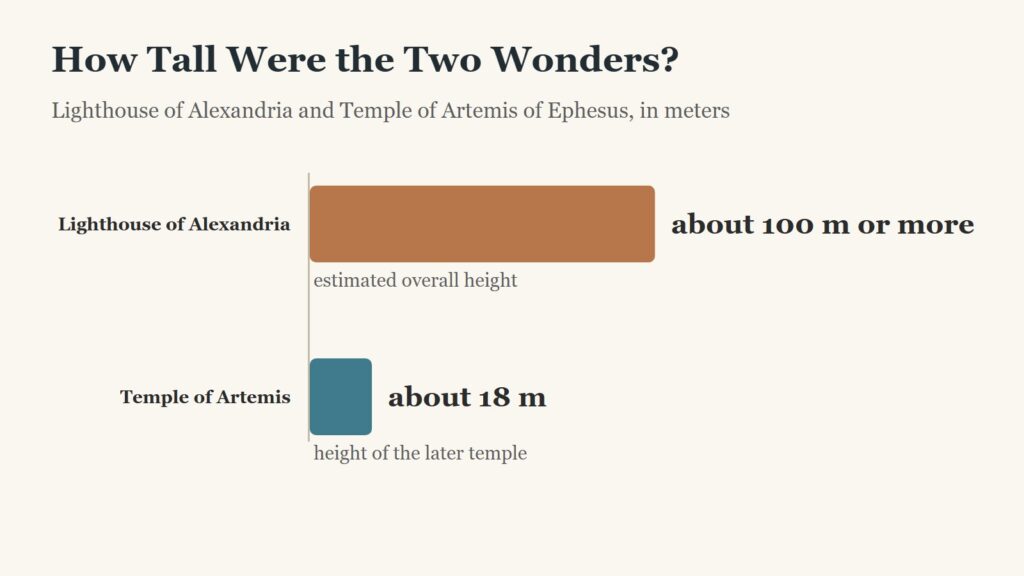
The Lighthouse of Alexandria, the Pharos, was built under Ptolemy II, between about 280 and 247 BC. It was at least 100 meters tall, it is believed, and a fire burned at its top to guide the ships at night. Earthquakes damaged it between AD 956 and 1303, and in 1477 to 1479 the Citadel of Qaitbay was built on its site.
The Temple of Artemis stood outside Ephesus, near today’s Selçuk. The later temple was about 137 meters long and 69 meters wide, about 18 meters high, with about 127 columns. Both buildings were on the list of the Seven Wonders.
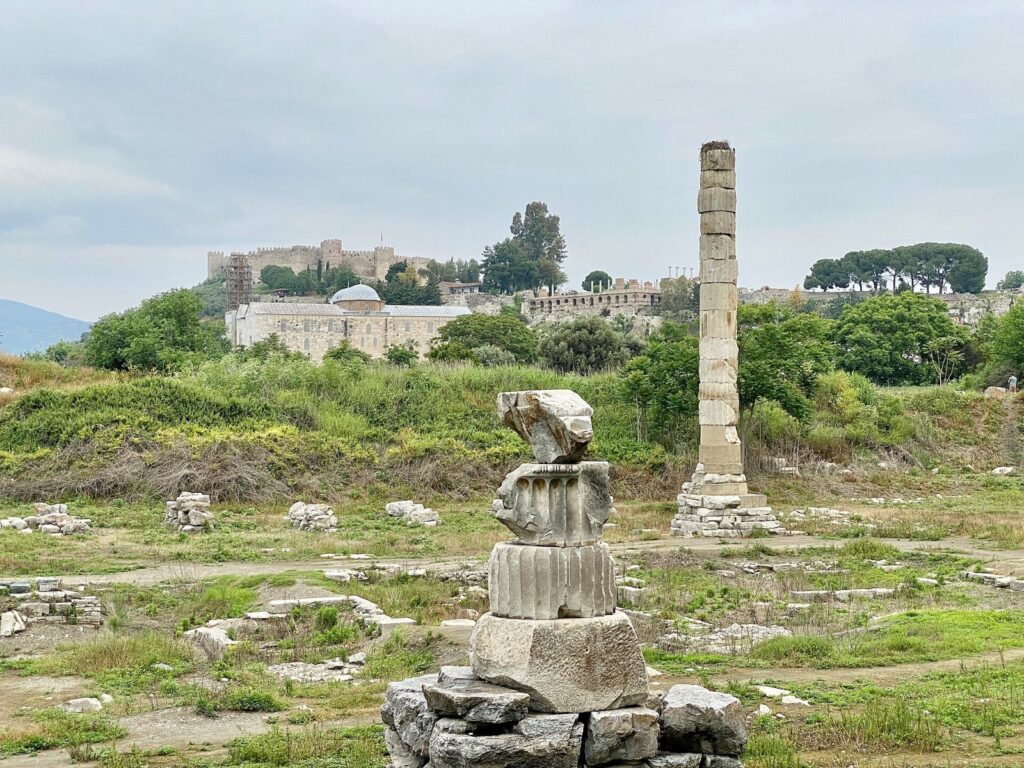
The two wonders were made for different jobs. The Lighthouse was tall and narrow, a guide for sailors. The temple was low and very wide, also a house for the goddess and a bank too. I always ask my guests to imagine about 127 columns in this marshy field.
Libraries and Learning
The Library of Alexandria was part of the Mouseion, probably built under Ptolemy II. Nobody knows how many scrolls it held; old stories give anything from tens of thousands to hundreds of thousands. Euclid worked in Alexandria around 300 BC, Eratosthenes, the head of the library, measured the size of the Earth, and much later Hypatia taught there.
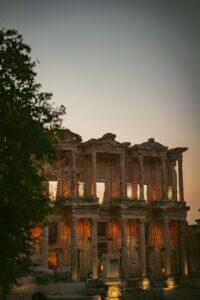
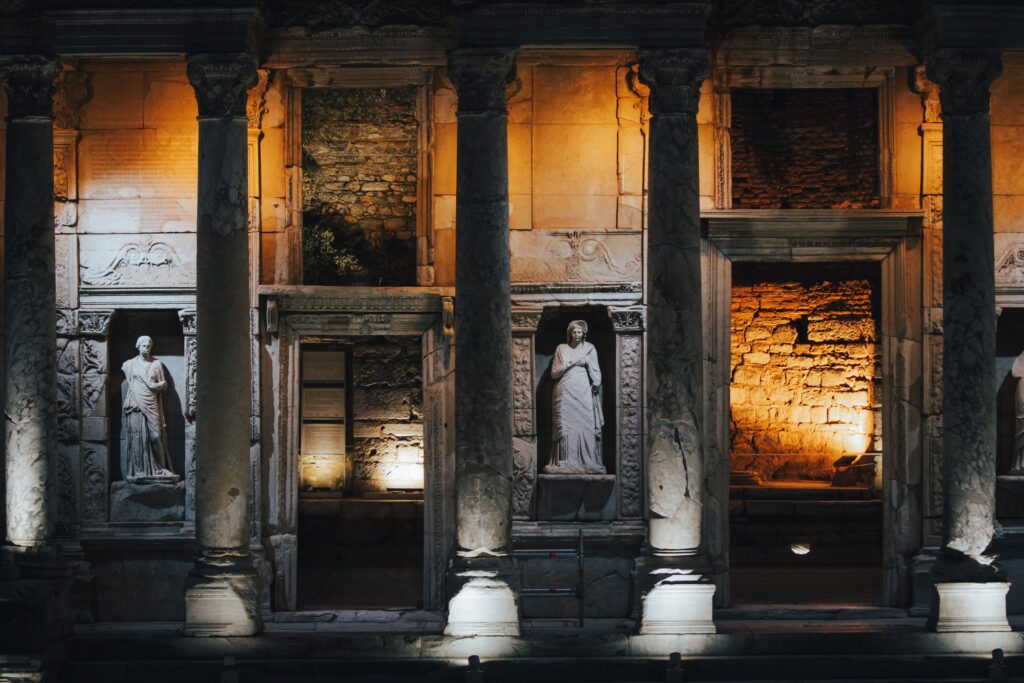
The Library of Celsus in Ephesus was built in the early 2nd century AD by Aquila for his father Tiberius Julius Celsus Polemaeanus. It is said to have held about 12,000 scrolls, and it is called the third library of the Greco-Roman world after Alexandria and Pergamon.
Ephesus had its own learned people. The philosopher Heraclitus lived here around 500 BC. In Roman times Ephesus gave two famous doctors, Rufus and Soranus. Soranus was born in Ephesus and practiced in Alexandria and then in Rome, so two cities shared one of their best doctors.
| At the peak | Ephesus | Alexandria |
|---|---|---|
| Library | Celsus, about 12,000 scrolls, it is said | Mouseion library, count unknown |
| Thinkers | Heraclitus (earlier) | Euclid, Eratosthenes, Claudius Ptolemy |
| Doctors | Rufus, Soranus | Soranus practiced here |
| Main gods | Artemis of Ephesus | Serapis and Isis |
| Trade | Port of the province of Asia | Egyptian grain and papyrus |
| Main street | Marble streets like Curetes Street | The wide Canopic Way |
| Water | Several aqueducts | Canal from the Nile |
Gods, Trade and City Life
Alexandria had Serapis, a Greek and Egyptian god made popular by Ptolemy I, and the goddess Isis. Ephesus had Artemis of Ephesus, the goddess of the city. The Egyptian gods had a temple in Ephesus too, and you can read about the Isis Temple in Ephesus.
Trade made both cities rich, Alexandria sent Egyptian grain to Rome in big ships, and papyrus all over the Mediterranean. Ephesus was the port of the province of Asia, where goods of the inland valleys reached the sea, as you see in the trade routes and partners of Ephesus.
Alexandria and Ephesus in the Bible
The Bible joins the two cities with one man. “A certain Jew named Apollos, born at Alexandria, an eloquent man, and mighty in the scriptures, came to Ephesus” (Acts 18:24). Aquila and Priscilla taught him the way of God more perfectly (Acts 18:26), and then he went on to Corinth (Acts 19:1), as I tell in Apollos in Ephesus.
On his way to Rome, Paul sailed on “a ship of Alexandria sailing into Italy” (Acts 27:6), and the crew later threw its wheat into the sea (Acts 27:38). After Malta he left on another ship of Alexandria, whose sign was Castor and Pollux (Acts 28:11). You can follow that trip in Paul’s voyage to Rome.
Tradition says Mark founded the church of Alexandria. Centuries later the two churches met in Ephesus: at the Council of Ephesus in AD 431, Bishop Cyril of Alexandria presided over the meeting. Alexandrians also appear in the synagogue that disputed with Stephen (Acts 6:9).
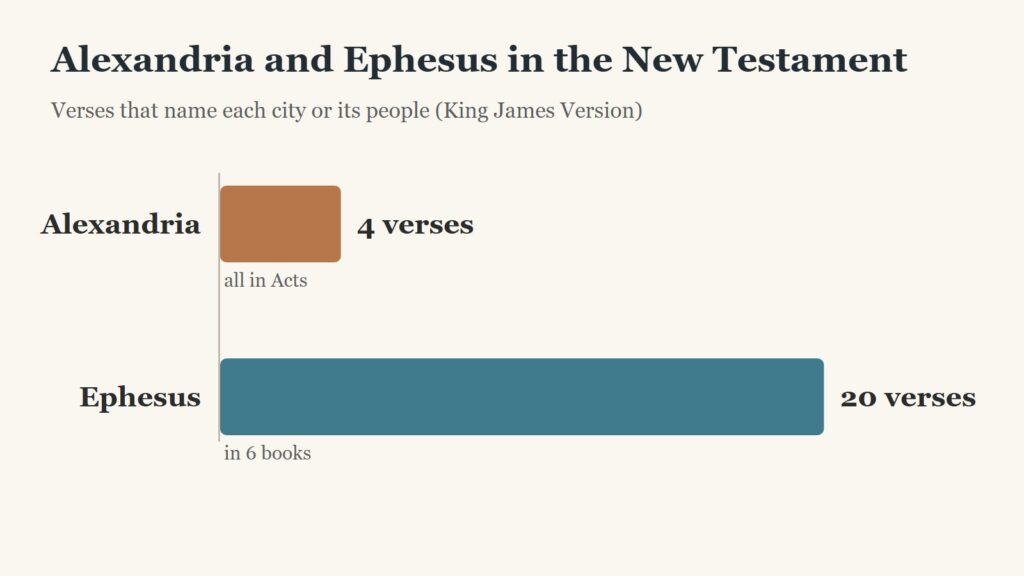
When I count the names in the New Testament (King James Version), Alexandria or the Alexandrians appear in 4 verses, all in Acts. Ephesus or the Ephesians appear in 20 verses in six books: Acts, 1 Corinthians, Ephesians, 1 and 2 Timothy and Revelation.
Visiting Ephesus and Alexandria Today
In AD 365 a great tsunami hit Alexandria, and parts of its royal quarter later sank into the sea. Ephesus slowly lost its harbor to the river silt, and in Middle Ages life moved up to Ayasuluk Hill in Selçuk.
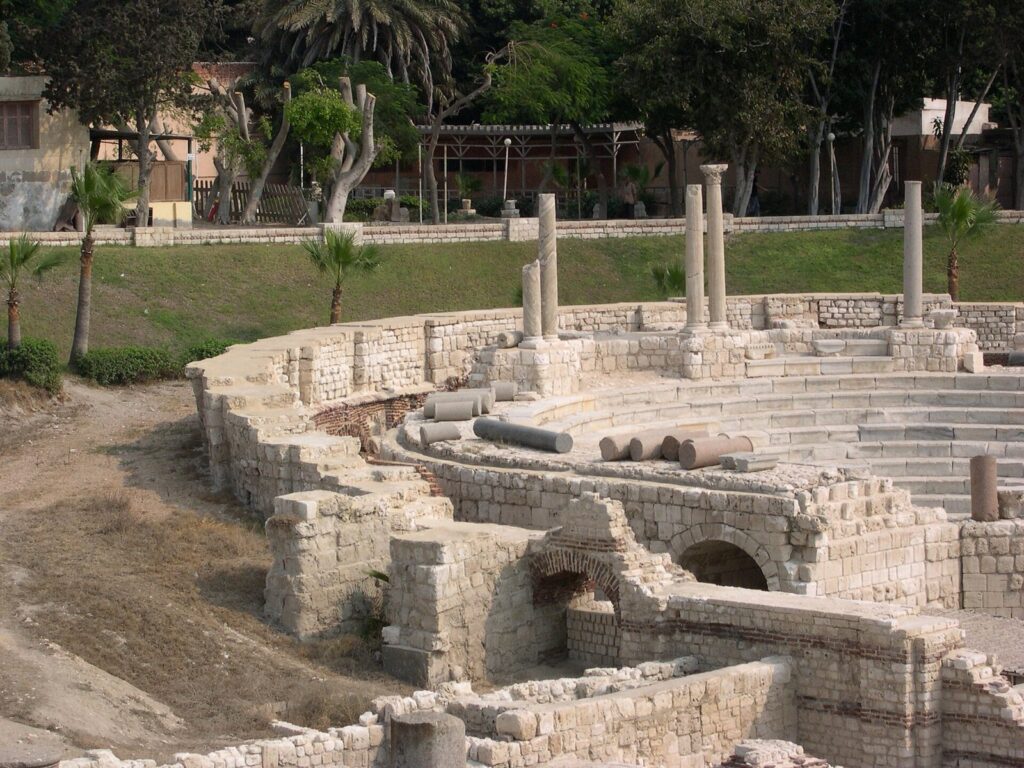
In Alexandria visitors see the Citadel of Qaitbay, Pompey’s Pillar at the old Serapeum, the small Roman theater of Kom el-Dikka and the catacombs of Kom el-Shoqafa.
Ephesus has been on the UNESCO World Heritage List since 2015. Most visits start at the Upper Gate and walk down Curetes Street to the Library of Celsus and the Great Theater, which held about 24,000 people, it is believed. My Corinth vs Ephesus article compares Ephesus with another city of Paul.
| Visiting today | Ephesus | Alexandria |
|---|---|---|
| City today | Ruins beside Selçuk | Large modern port city |
| Wonder site | One column of the Temple of Artemis | Citadel of Qaitbay on the Lighthouse site |
| Library | Rebuilt facade of Celsus | Modern Bibliotheca Alexandrina (2002) |
| Theater | Great Theater | Kom el-Dikka theater |
| Christian site | Basilica of Saint John | Saint Mark’s Cathedral |
Frequently Asked Questions
How far is Ephesus from Alexandria?
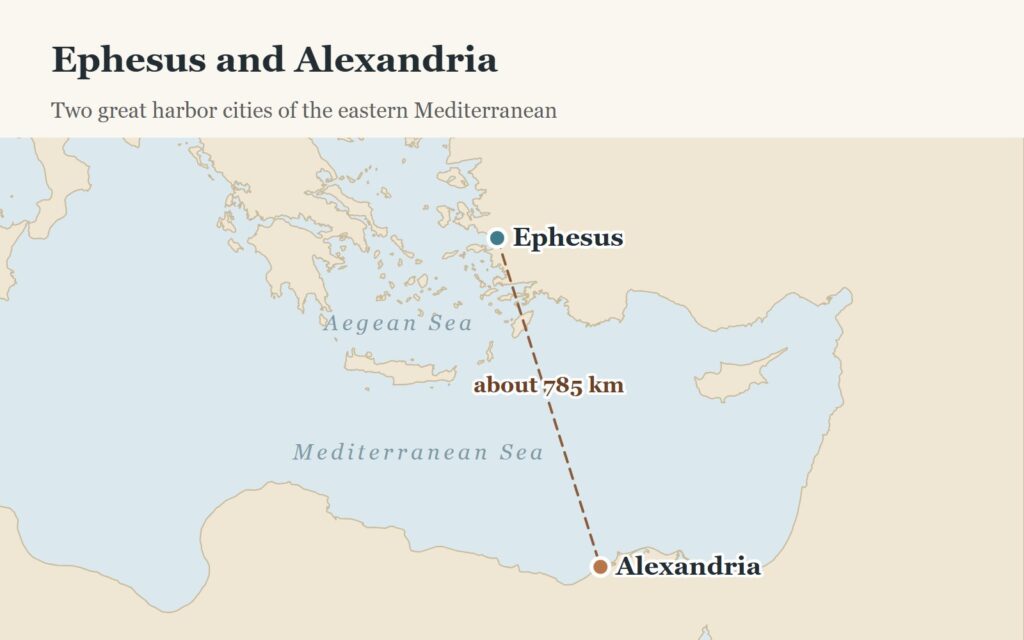
About 785 kilometers (about 490 miles) in a straight line, across the eastern Mediterranean. In ancient times people made the trip by ship.
Which is older, Ephesus or Alexandria?
Ephesus is older by many centuries. Ionian Greeks lived there from about the 10th century BC, it is believed, while Alexandria was founded in 331 BC. The Ephesus you walk today, however, was laid out after Lysimachus moved the city around 290 BC.
Was Alexandria bigger and more important than Ephesus?
Alexandria ranked higher. It was a royal capital and for centuries second only to Rome, with the largest library of its time. Ephesus was the capital of the rich province of Asia, and its Temple of Artemis was as famous as the Lighthouse.
Hire Ephesus Tour Guide
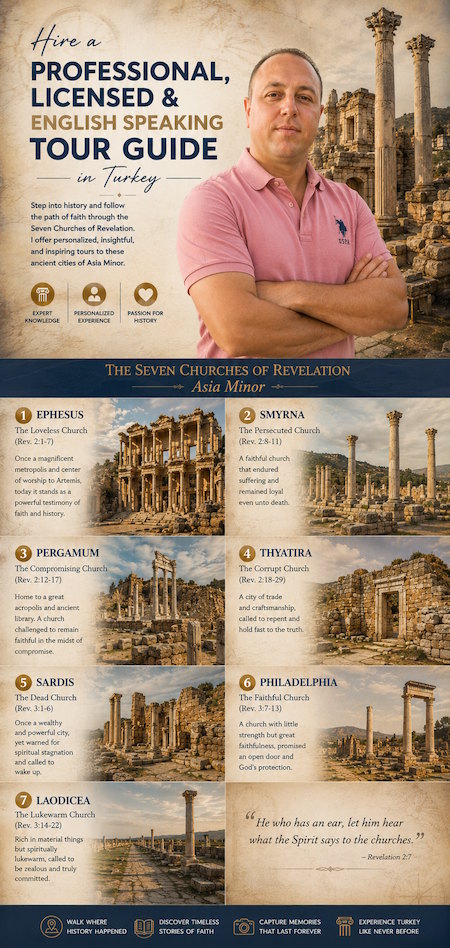
I am a nationally licensed Turkish tour guide based in Kuşadası, nearby Ephesus. My day guiding is in Ephesus, İzmir and Pamukkale, and on a longer journey my national license lets me join you as your personal guide in other regions of Turkey.
You can see my guiding rates and guiding areas, or write to me through my contact page to ask about my availability.
I hope we will stand together in front of the Library of Celsus one day. Write to me with your questions about Ephesus and its sister cities. See you soon, Hasan Gülday.