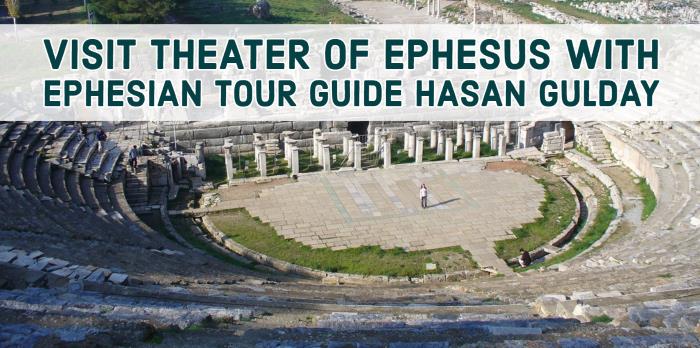
Ephesus theater acoustics work because of three things: seats that curve around the speaker, a steep slope that lets the voice travel over the heads of the crowd, and a tall stage building that sent the sound back to the audience. Together they carried an actor’s voice to the last row.
It is known that ancient theaters such as Ephesus Ancient Theater were often designed with acoustics in mind. The strategic placement of seats, the curvature of the seating area, and the materials used all play a role in sound projection. Ephesus theater was constructed during the Hellenistic period and is built primarily of marble, which contributes to its durability and aesthetic appeal.
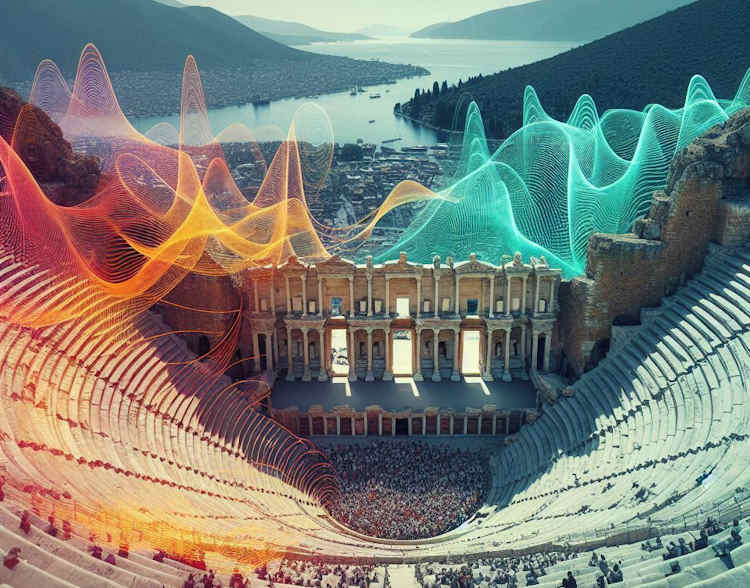
The Ephesus Antique Theatre, built into the slope of Mount Pion, features a semicircular seating area that enhances sound projection towards the audience. Constructed primarily from marble, the theater’s materials effectively reflect sound, allowing even the faintest sounds to be heard clearly.
How Does the Ephesus Theater Carry Sound?
The steep seating arrangement ensures that sound travels upwards, enabling spectators in the top rows to hear performances just as well as those closer to the stage. Additionally, the stage was designed to reflect sound back to the audience, and the three-story stage added during the Roman period further improved this effect. Remarkably, the theater’s open-air structure does not significantly compromise its acoustics, thanks to its thoughtful architectural design.
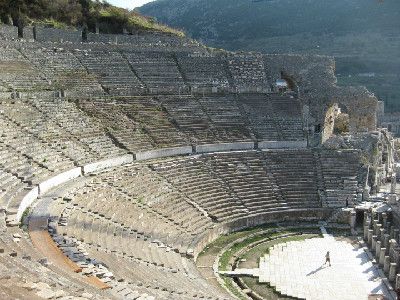
Let’s have a look at the three helpers one by one. First is the shape. Like other Greek and Roman theaters, the one in Ephesus has a seating area, called cavea, which curves around the orchestra, the flat floor at the bottom in front of the stage. So most of the audience sits in front of the speaker and fairly close to him, and every row looks straight at the stage.
Second is the slope. The theater is cut into hillside of Mount Pion, and the seats rise in three tiers with walkways between them. The higher you go, the steeper the rows become. This matters because a crowd soaks up much of the sound which travels flat across it, but when the seats rise like stairs the voice passes over the heads of the people in front. The builders probably learned this from experience, not from physics.
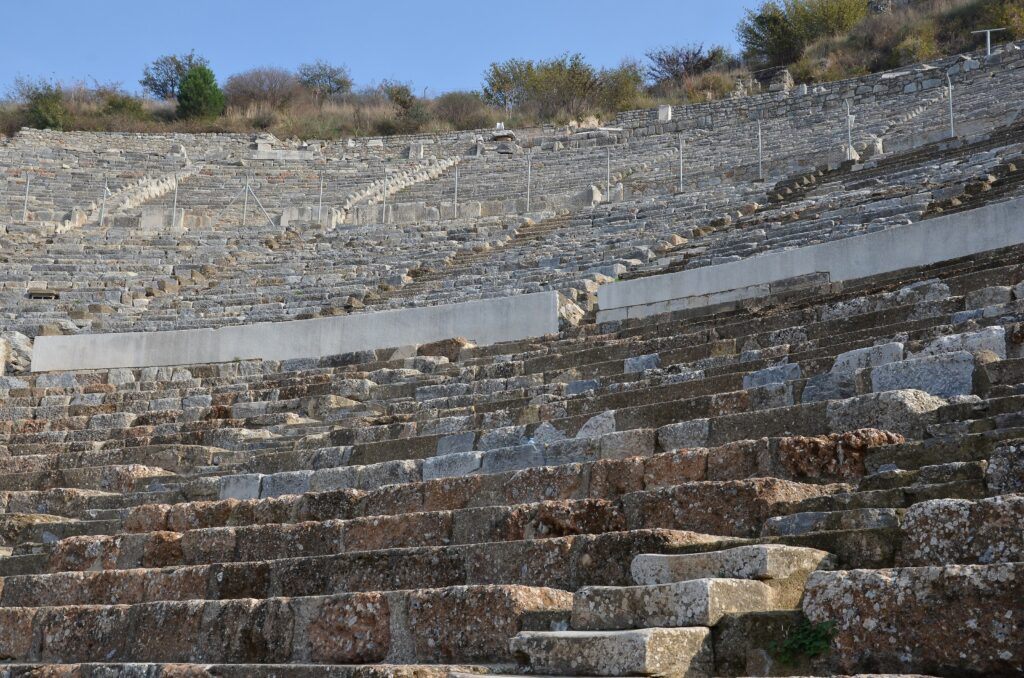
Third is the stage building, the tall wall behind the actors. A voice thrown backward hit this wall and came forward again to the seats, a bit like cupping your hands around your mouth. The orchestra was paved by marble slabs in Roman times too, so the floor also sent sound up to the rows. Today only a part of the stage building is left, so the effect is probably weaker now than it was then.

Ephesus Ancient Theater is famous for their exceptional acoustics, allowing even a hand clap to be heard in the back rows. This is largely due to the use of limestone and the specific geometry of the seating. The combination of its marble construction and tiered seating would have contributed to an effective acoustic environment for performances held in this magnificent venue.
The exceptional acoustics of the Ephesus Antique Theatre offer numerous benefits that enhance the overall listening experience for audiences. This remarkable design allows listeners to clearly hear every nuance of a performance, from the subtle harmonies of a choir to the intricate details of a solo instrument.
Its natural amplification properties mean that minimal amplification is required, preserving the purity and authenticity of the sound. Moreover, the theater’s acoustics are versatile enough to accommodate a wide range of musical genres and performances, making it an ideal venue for everything from classical concerts to modern rock shows.
A Simple Sound Test in the Theater
A simple sound test needs only two people: one speaks in a normal voice at the bottom of the theater, and the other listens from the highest seats which are open that day. Then you swap places. Please do not shout, because the point is to hear how far an ordinary voice goes.
After that, try the clap. Stand in the middle of the orchestra if it is open to visitors, clap once and ask your friend in the upper rows if they heard it. I recommend my guests to try this early in the morning or late in the afternoon, when the theater is quieter and the stones are not hot.
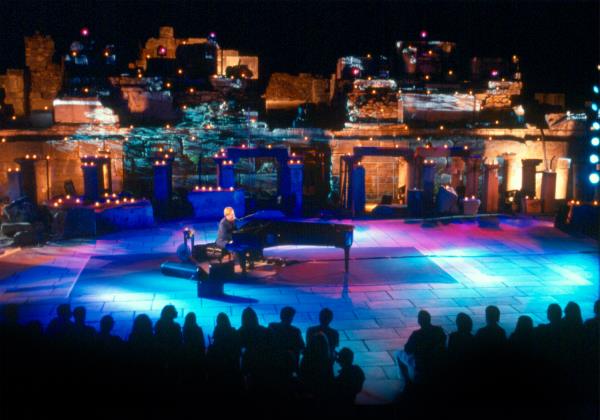
Please keep it in mind that restoration work goes on in Ephesus from time to time, so the parts of the theater which are open can change. Follow the ropes and the guards. Concerts are held here only at certain events. The Ephesus Opera and Ballet Festival in summer is one, and the Ray Charles concert of 1987 was another.
If you want the history of the building, the Acts 19 riot and the concerts, read my post on the Great Theater of Ephesus.
Frequently Asked Questions
Why does the Ephesus theater have such good acoustics?
Three things work together: the curved seating around the orchestra, the steep slope with its rising rows, and the tall stage building behind the actors. Hard stone and marble surfaces help too, because they reflect sound instead of soaking it up.
Where can I test the acoustics in the Ephesus theater?
Ask a friend to speak in a normal voice from the orchestra while you sit in the upper rows, then swap. Which parts are open can change because of restoration work, so follow the ropes and the guards.
Are concerts held in the Ephesus theater today?
Only at certain events, like the Ephesus Opera and Ballet Festival in summer. On normal visiting day there is no concert, so check the festival dates before you plan a trip around one.
Hire An Ephesian Tour Guide and Test Acoustics Yourself!
The magnificence of Ephesus Grand Theater can be only understood when you see it with your own eyes! Contact me to hire tour guide for Ephesus Ancient City and experience it with a professional tour guide. See you soon, Hasan Gülday.



1 comment