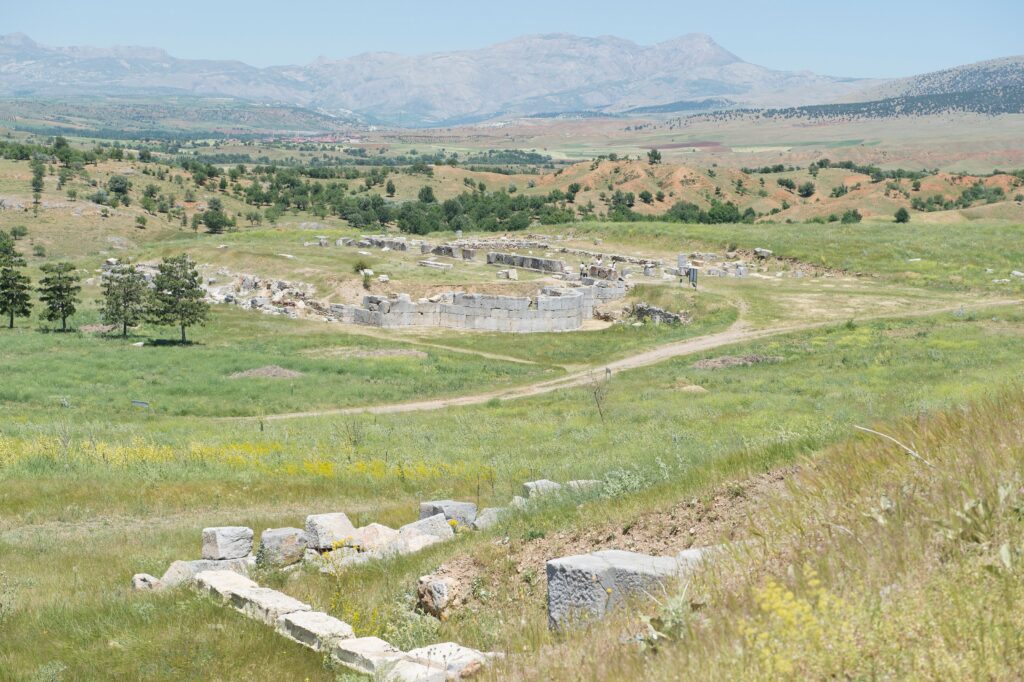
Antioch in Pisidia was a Roman colony in the highlands of Asia Minor, and its ruins lie about one kilometer northeast of the town of Yalvaç in Isparta Province, Turkey. Paul and Barnabas came here on their first journey, and here Paul gave the first sermon of his that Acts records in full (Acts 13:16-41). Today you can see the Augustus temple platform and a large early church.
Add Tours Around Turkey as a preferred source on Google
Many cities of the old world were called Antioch. The most famous one is Antioch on the Orontes, today’s Antakya, where the disciples were first called Christians (Acts 11:26). This article is about a different one, Pisidian Antioch, a small city on a high plateau. Let’s have a look at its history, the sermon of Paul and what is left of the city.
History of Antioch in Pisidia
The Seleucid kings founded the city in the 3rd century BC, probably as a base against the Galatians. The geographer Strabo writes that Magnetans from the Maeander River settled here, and that the city had priesthood of the god Men. Ancient writers add the name of Pisidia to tell it apart from the other Antiochs.
In 25 BC Galatia became a Roman province, and soon Augustus made Antioch a Roman colony called Colonia Caesarea. Roman veterans settled here, and the city got an Augustus temple at its highest point. That was the city Paul found.
Paul’s Sermon in Antioch in Pisidia
Paul and Barnabas came from Perga on the first journey, in the late 40s AD. Acts says they “came to Antioch of Pisidia” and went into the synagogue on the Sabbath (Acts 13:14, WEB). Today the Saint Paul Trail, a hiking route of about 500 kilometers, links Perge with Yalvaç.
After the reading of the law and the prophets, the leaders of the synagogue invited them to speak, and Paul stood up (Acts 13:15-16). He told the history of Israel from Egypt to King David. Then he said that Jesus is the promised son of David, spoke of his death and resurrection and quoted the Psalms. He ended with forgiveness of sins through Jesus (Acts 13:38).
The first reaction was warm. Many Jews and devout converts followed Paul and Barnabas after the service, and people asked to hear more in the next Sabbath (Acts 13:42-43).
Paul Turns to the Gentiles
On the next Sabbath almost the whole city came to hear Paul (Acts 13:44). Some Jews saw the crowds and were filled with jealousy, and they contradicted him. Then Paul and Barnabas answered, “behold, we turn to the Gentiles” (Acts 13:46, WEB).
This was not the first time that non-Jews heard the message. Peter had already met Cornelius (Acts 10), and Paul had spoken with the proconsul Sergius Paulus on Cyprus (Acts 13:7). But here, in a Roman colony, he said it openly in front of the synagogue.
The word spread through the region, but the Jews stirred up prominent women and the chief men of the city, and Paul and Barnabas were thrown out (Acts 13:49-50). They went on to Iconium. On the way back they returned to Antioch, strengthened the disciples and appointed elders (Acts 14:21-23). You can find the other cities of his journeys in my post on the cities visited by Apostle Paul in Asia Minor.
Ruins of Antioch in Pisidia Today
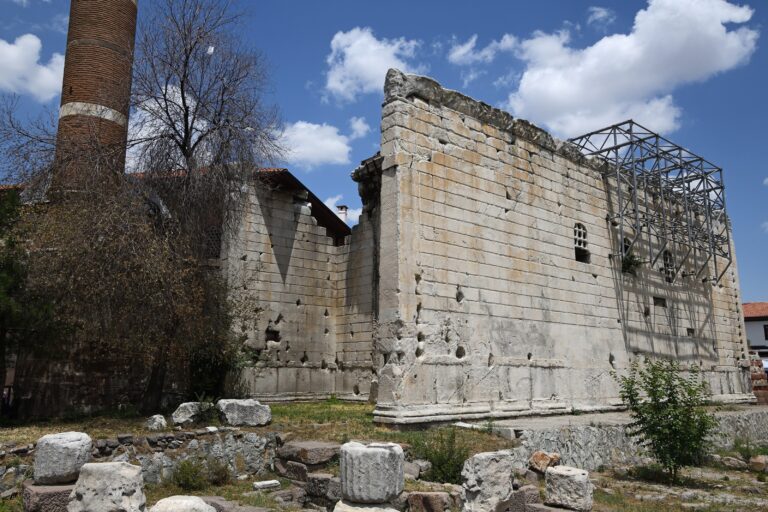
The best-known ruin is the platform of the Augustus temple, cut into the highest point of the city. In front of it, excavators found pieces of the Res Gestae, Augustus’s own account of his life, written in Latin. Only three copies of this text are known. The others are in Ankara and in Apollonia, today’s Uluborlu.
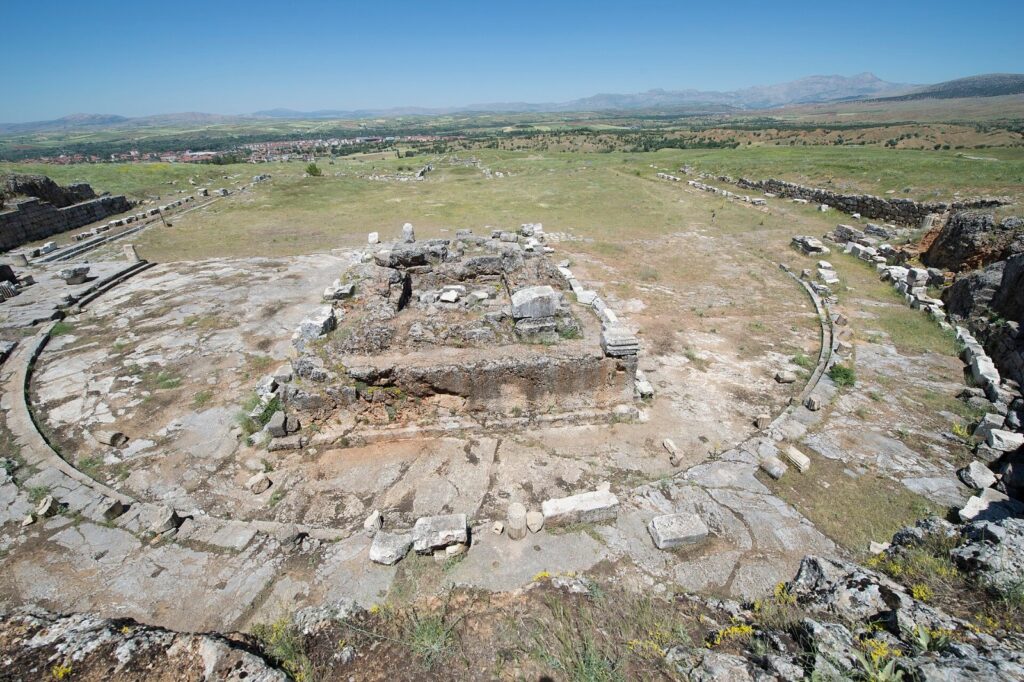
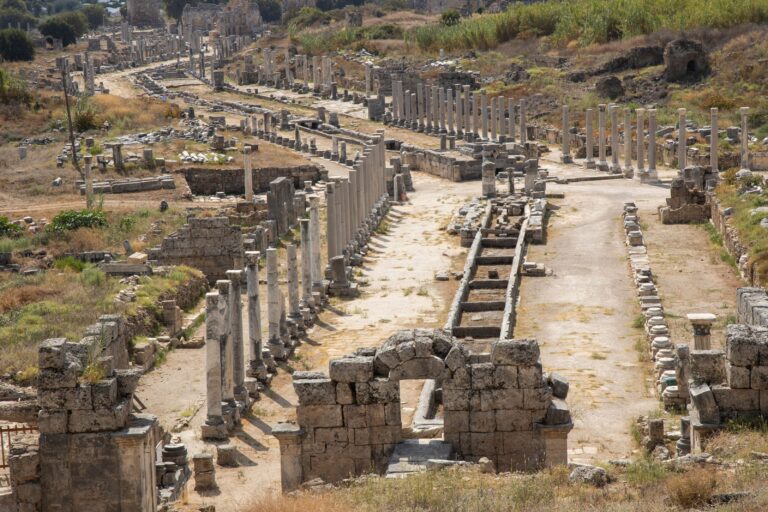
In 1914 excavators found about 60 pieces of the inscription, and in 1924 a University of Michigan team found about 200 more. The small Yalvaç Museum in town shows the text, and it also has a hall for Saint Paul too. Other ruins here are the theater, a nymphaeum (fountain building), baths and the aqueduct that brought water from the mountains.
The Church of Saint Paul is a large basilica of the 4th century, it is about 70 meters long. A mosaic there names a bishop Optimus, probably the one who took part in the Council of Constantinople in 381. Tradition says the church stands over the synagogue of Paul’s sermon, but nobody has proved it. Scholars are not even sure that the church was named for Paul, so please keep it in mind as a tradition.
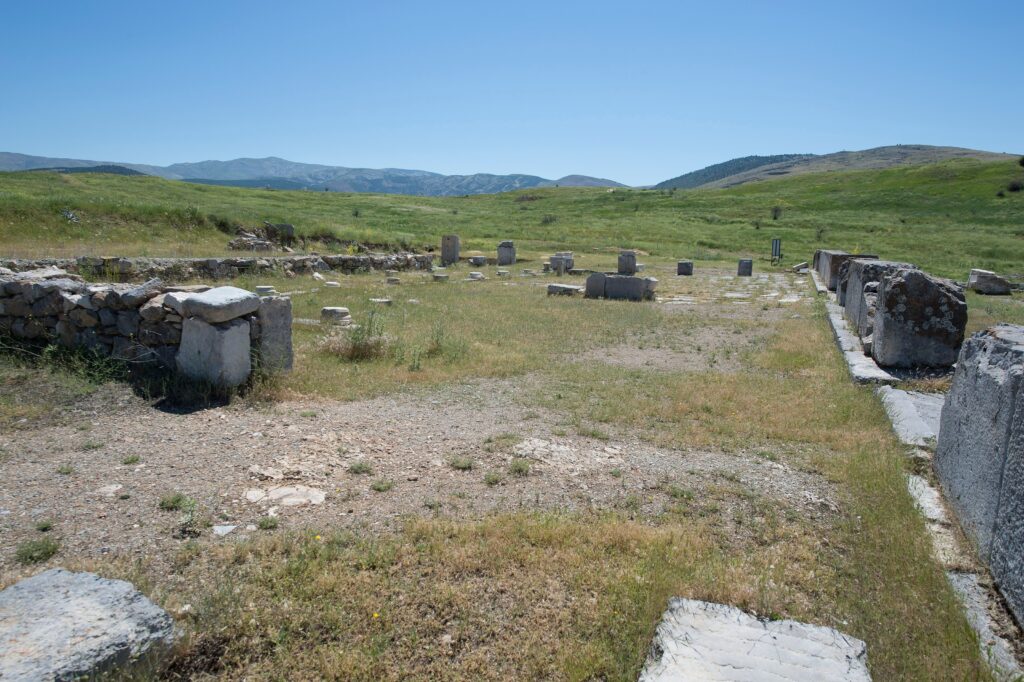
Excavations began here in the early 1900s, and Süleyman Demirel University has dug here since 2008. Only about 5 percent of the 67-hectare city center has been uncovered so far.
Visiting Antioch in Pisidia
Yalvaç lies at about 1,150 meters, so Spring and Autumn are the best seasons, and the winters are cold. Half a day is enough for the ruins and the museum. When I first visited, I was a little disappointed after Ephesus Ancient City, because the ruins are partial and the signs are few. But I came to like this place. It does not perform for tourists. It is just laying there on its plateau, with the wind in the dry grass.
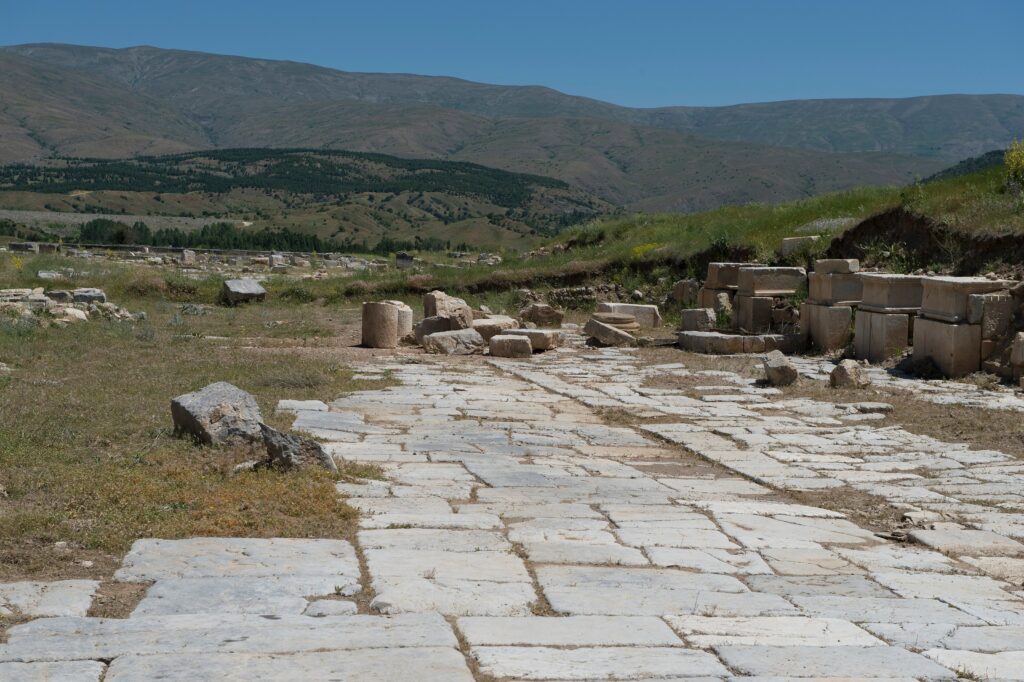
When I join my guests here, I read Acts 13 aloud near the temple platform. Then we walk on the old paving of the Tiberia Platea, the street that led to the Augustus sanctuary. Its first paving dates from the years 25 to 50 AD, so Paul could have walked on the same stones. I always think about this.
Frequently Asked Questions
Where is Antioch in Pisidia today?
The ruins lie about one kilometer northeast of the town of Yalvaç in Isparta Province, in the Lakes District of Turkey. The old city stood on a hill that belongs to the Sultan Mountains, at more than 1,100 meters above sea level.
Is Pisidian Antioch the same as Antioch in Syria?
No. Antioch in Syria is Antioch on the Orontes, today’s Antakya in Hatay Province in the south of Turkey. Paul and Barnabas began their first journey there (Acts 13:1-4), and they reached Antioch in Pisidia later, on the high plateau far to the northwest.
What did Paul say in Antioch in Pisidia?
Paul retold the history of Israel from Egypt to King David, said that Jesus is the promised descendant of David, and spoke of his death and resurrection. He offered forgiveness of sins through Jesus (Acts 13:16-41). On the next Sabbath he told the opposing Jews that he would turn to the Gentiles (Acts 13:46).
Hire Biblical Tour Guide in Turkey
I’m a nationally licensed Turkish tour guide based in Kuşadası, nearby Ephesus. My day guiding is in Ephesus, İzmir and Pamukkale. Yalvaç is far from there, but on longer journeys my national license lets me join my guests as their personal guide. You can see my guiding rates and guiding areas, or write to me through my contact page to ask about my availability.
I hope we will read Acts 13 together one day on the plateau of Antioch in Pisidia. You can always write to me if you need to learn more about Apostle Paul in Turkey. See you soon, Hasan Gülday.