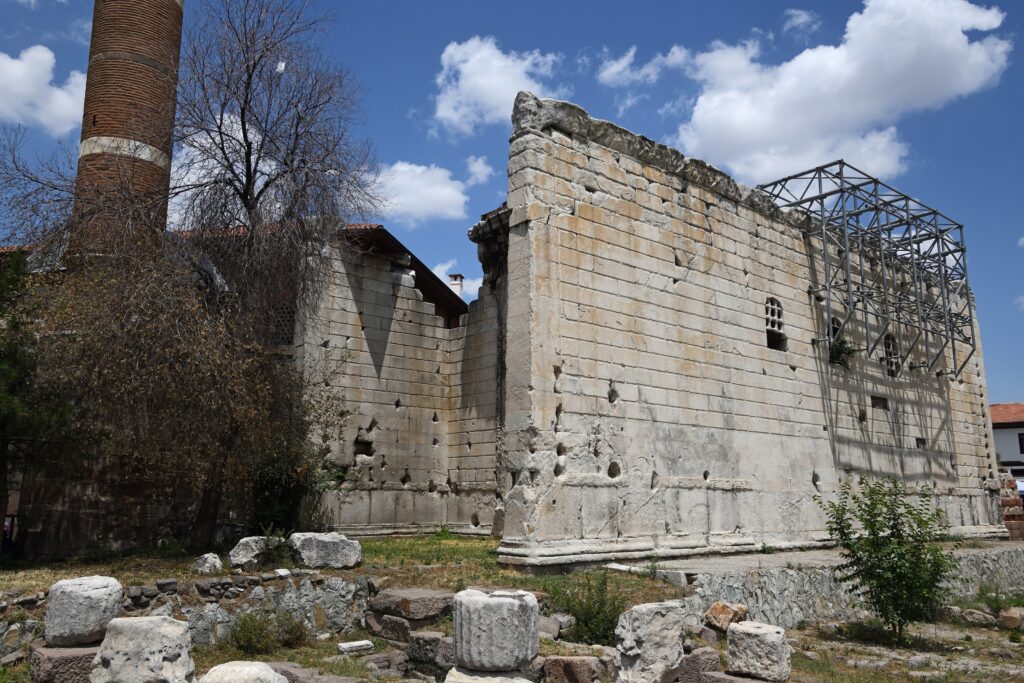
Ankara is not the first city that comes to mind for Christian history in Turkey, and I understand that. Still, Ankara is ancient Ancyra, the capital of the Roman province of Galatia. Its Christian sites include the Temple of Augustus and Rome, which became a church, the ruined Church of Saint Clement, the citadel walls and the Roman Baths, and there are active churches in Ankara today too.
Add Tours Around Turkey as a preferred source on Google
Most visitors know the modern capital for Atatürk and his mausoleum, Anıtkabir. Pope Leo XIV went there on his first day in Turkey, November 27, 2025, at the start of his first journey abroad as pope. Behind the modern city is a much older one of martyrs, bishops and church councils. Let’s have a look at what Christian Ancyra left behind.
Ancyra, Capital of Roman Galatia
The Galatians were Celts who settled in central Anatolia in the 3rd century BC, and Ancyra became the seat of one of their tribes, the Tectosages. In 25 BC Emperor Augustus turned their kingdom into the Roman province of Galatia, and Ancyra became its capital. Part of a Roman road was also found in the city, which I described in my article on the Roman road in Ankara.
Is Ankara in the Bible?
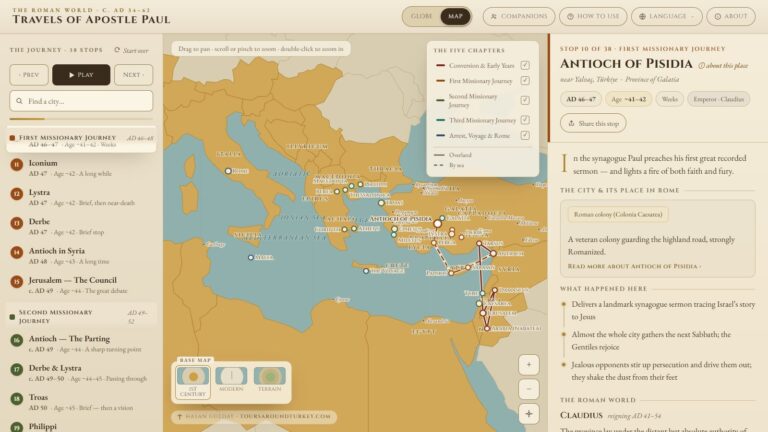
The names Ankara and Ancyra do not appear in the Bible, but Galatia does. Paul went “throughout Phrygia and the region of Galatia” on his second journey (Acts 16:6, KJV) and through “all the country of Galatia and Phrygia” on his third (Acts 18:23, KJV). The First Letter of Peter is also written to Christians in Galatia (1 Peter 1:1).
Then there is Paul’s letter. “O foolish Galatians, who hath bewitched you” (Galatians 3:1, KJV) is a phrase that only makes sense if Paul knew these people himself. He reminds them that he first preached to them “through infirmity of the flesh” (Galatians 4:13, KJV). I tell the story of this letter in my article on the letters of Paul tied to the cities of Asia Minor.
However, where these Galatians lived is debated. Some scholars place them to the old Celtic north, in Ancyra, Pessinus and Tavium. Others place them in the southern cities Paul founded on his first journey, such as Antioch of Pisidia, Iconium, Lystra and Derbe. No ancient source puts Paul in Ancyra itself, but if the north Galatian theory is right, he may have preached here.
Martyrs and Bishops of Christian Ancyra
Christianity took root early in Ancyra, and the city paid for it. In the Great Persecution under Emperor Diocletian, in the early 4th century, Bishop Clement of Ancyra was killed togehter with his disciple Agathangelus. Saint Theodotus, an innkeeper, buried seven Christian women who had been drowned for their faith and was executed around 303. Scholars say their written Acts are more legend than history, but the persecution of early Christians in Asia Minor was real enough.
Ancyra also gave the church strong bishops. Marcellus of Ancyra attended the Council of Nicaea in 325 and fought the Arians, but his own teaching about the kingdom of the Son was attacked, and he was deposed in 336. The words “whose kingdom shall have no end”, added to the creed in 381, are often said to answer him.
A later bishop, Theodotus of Ancyra, took part in the Council of Ephesus of 431 and sided with Cyril of Alexandria against Nestorius. So the story of Christian Ankara reaches all the way to my own Ephesus.
The Councils of Ancyra in 314 and 358
Ancyra hosted two church councils. First council met around 314, after the persecution had ended and about eleven years before the Council of Nicaea. Its main question was how to treat the lapsed, Christians who had given in and sacrificed to the gods. Nine of its 25 canons deal with them, and the others cover clergy discipline, marriage, church property and abortion.
The second council met in 358 under Bishop Basil of Ancyra, during the long fight over Arianism. Basil’s party taught that the Son is like the Father in substance, a formula Emperor Constantius II accepted only for a short time. Basil was sent into exile in 360.
Temple of Augustus and Rome
The most famous monument of Ankara is the Temple of Augustus and Rome in Ulus, built around the time Galatia became a Roman province. After the emperor died in AD 14, his own record of his deeds, the Res Gestae Divi Augusti, was carved into its walls in Latin and in Greek. Bronze original in Rome is lost, so the Ankara copy is called the Queen of Inscriptions.
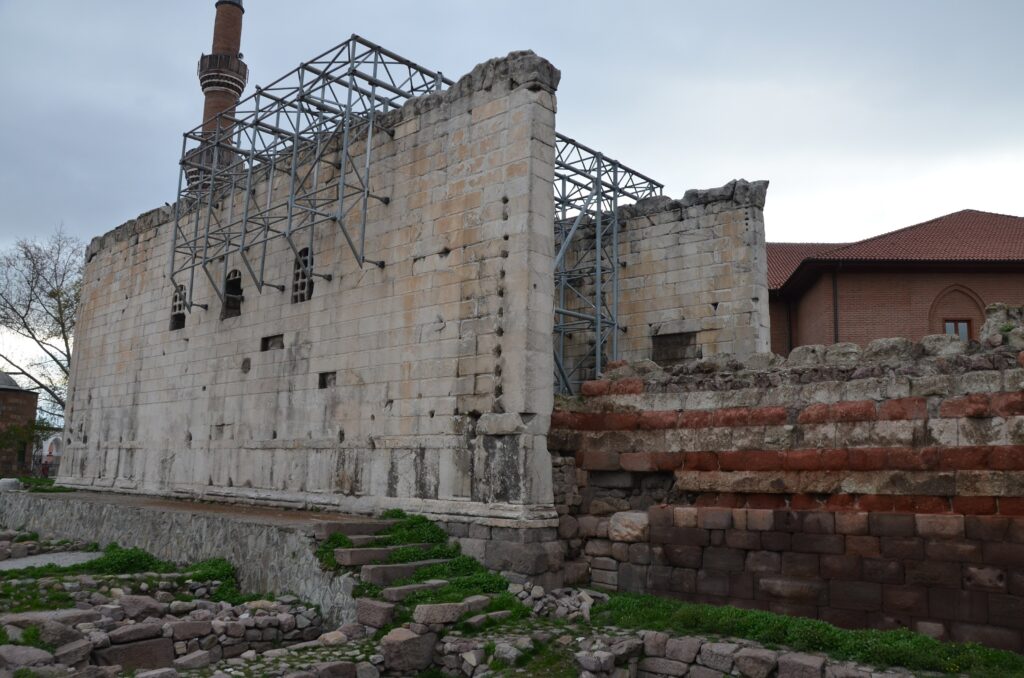
For Christians the temple tells a second story, because the Byzantines turned it into a church. They leveled the floor of the cella, removed its back wall, added an apse and opened three large windows in the southeast wall. The Turkish Ministry of Culture dates this to the early 6th century, while some scholars place it later.
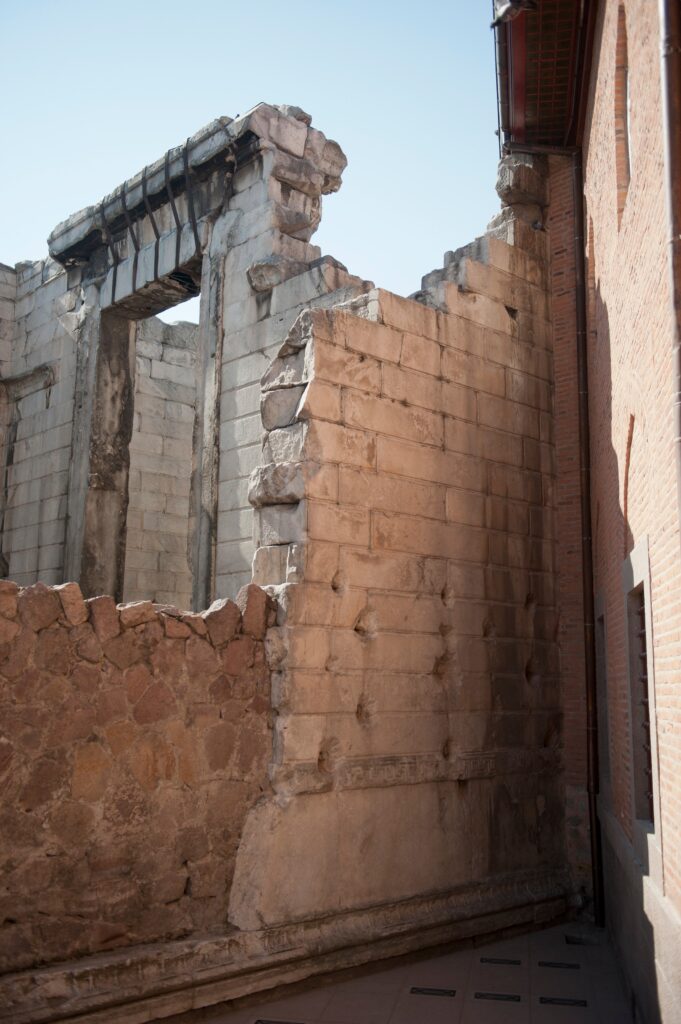
In 1427 and 1428 the Hacı Bayram Mosque was built against the temple’s northwest corner, so in one spot you see a temple of the emperor cult, a Byzantine church and a living mosque. Only the side walls and the marble doorway stand, and the city added steel supports to the leaning walls in 2010. I recommend my guests to look for the Greek text on the outer wall. My article on Emperor Augustus tells his story.
Church of Saint Clement in Ulus
The Church of Saint Clement, named for the martyred bishop, is the only Byzantine church building left in Ankara. A 2014 study at Middle East Technical University dates it to around 859, though older estimates range from the 5th to the 9th century. Only one inner wall and a few marble blocks survive, one of them carved with a Latin cross.
The ruin hides behind office buildings between Denizciler Caddesi and Çıkrıkçılar Yokuşu in Ulus. In 2016 Hürriyet Daily News reported that it was close to disappearing, and that visitors needed permission from the office owners and had to climb a fire escape. It is not an easy visit, but it is a real church of Byzantine Ancyra.
Ankara Citadel
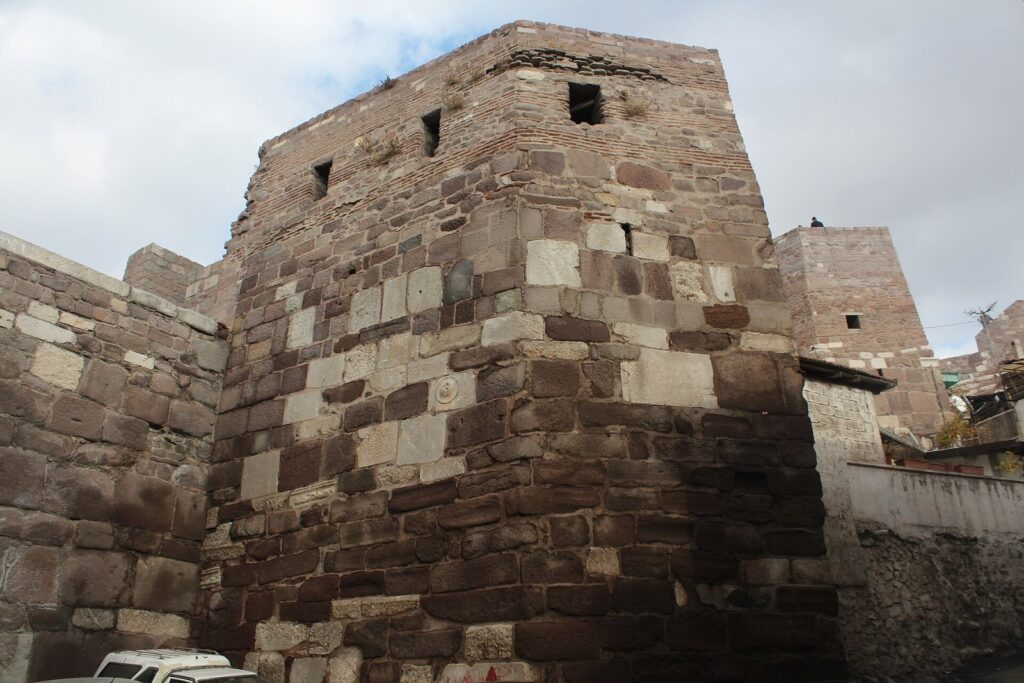
The citadel on the hill above old Ankara is mostly Byzantine. Its walls go back to about the 7th century, and an inscription names Emperor Michael III, who restored them in 859. Walking up through old neighborhood inside the walls is one of the most atmospheric walks in the city.
Look closely to the stones. The Byzantine builders reused Roman blocks, altars, herms and pieces of sarcophagi. On one reused block from the 1st century, which honored a man named Axius, a chi-rho, the monogram of Christ, was carved later. Crosses were also carved near the arrow slits, small signs that these walls protected a Christian city.
Roman Baths of Ankara
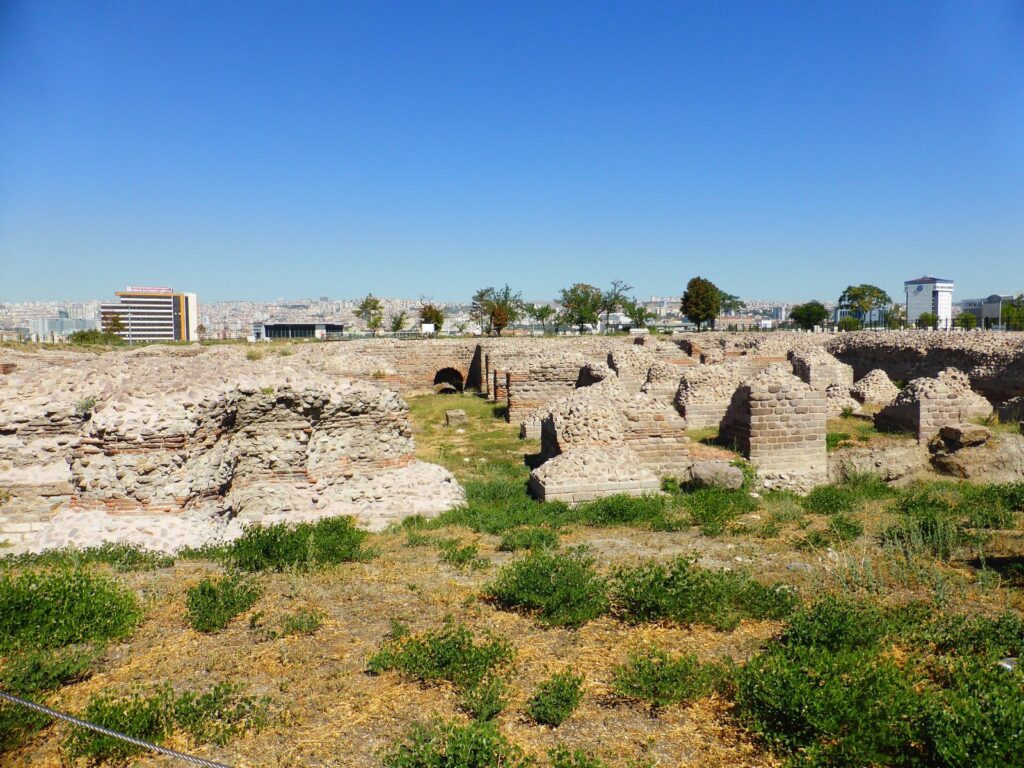
The Roman Baths stand on Çankırı Caddesi in Ulus. Coins found in the excavations date them to the reign of Caracalla, 212 to 217 AD, and they stayed in use for about 500 years. The warm and hot rooms are unusually large, probably because of Ankara’s cold Winters.
The baths were a great public place of the Roman city, the kind of place the early Christians of Ancyra had to learn to live with. In the palaestra, the old exercise court, tomb stelae mostly from the Roman and Byzantine periods are laying in the south wing. The site is an open-air museum, open every day.
Museum of Anatolian Civilizations
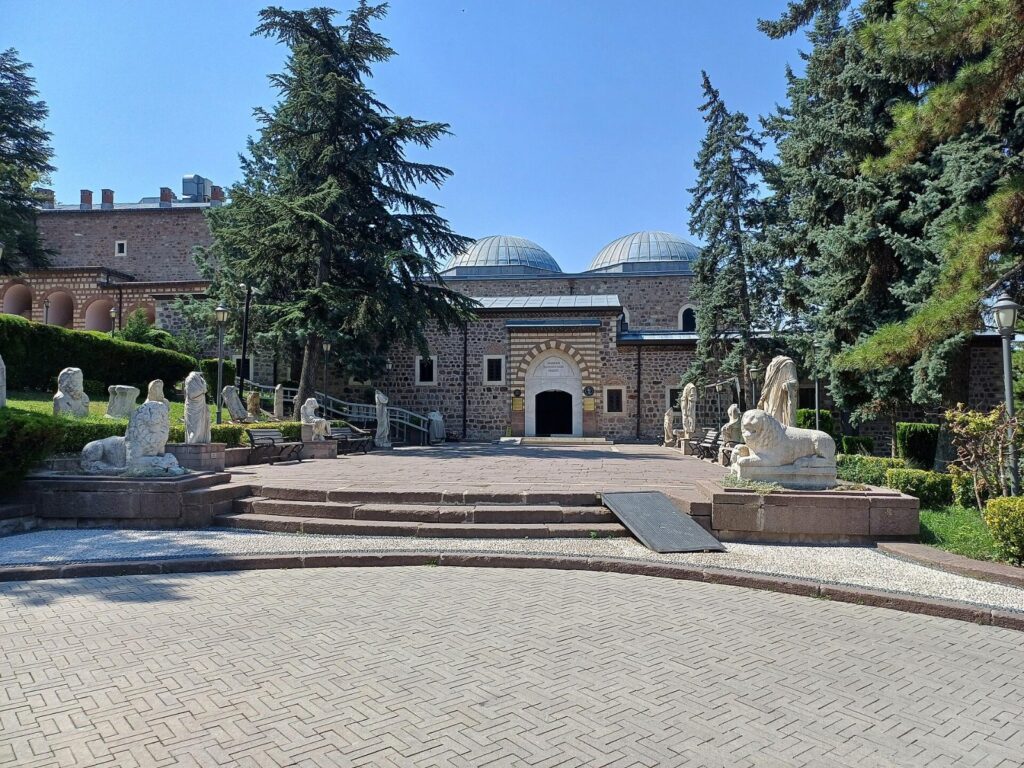
The Museum of Anatolian Civilizations is one of the finest museums in Turkey. It sits on the south side of the citadel, in two 15th-century Ottoman buildings, the Mahmut Paşa covered bazaar and the Kurşunlu Han, and in 1997 it was named European Museum of the Year. Its upper hall covers Anatolia from the Paleolithic to the Urartians, including the Phrygians of Gordion.
For the Christian traveler the lower floor matters most, because the Classical Hall and the Ankara Hall show the Roman and Byzantine city. Please keep it in mind that, according to the Ministry of Culture, both halls are closed for repairs from September 14, 2026, to March 2, 2027.
Churches in Ankara Today
Ankara was a Christian city for many centuries. Today the churches you can visit are few and small.
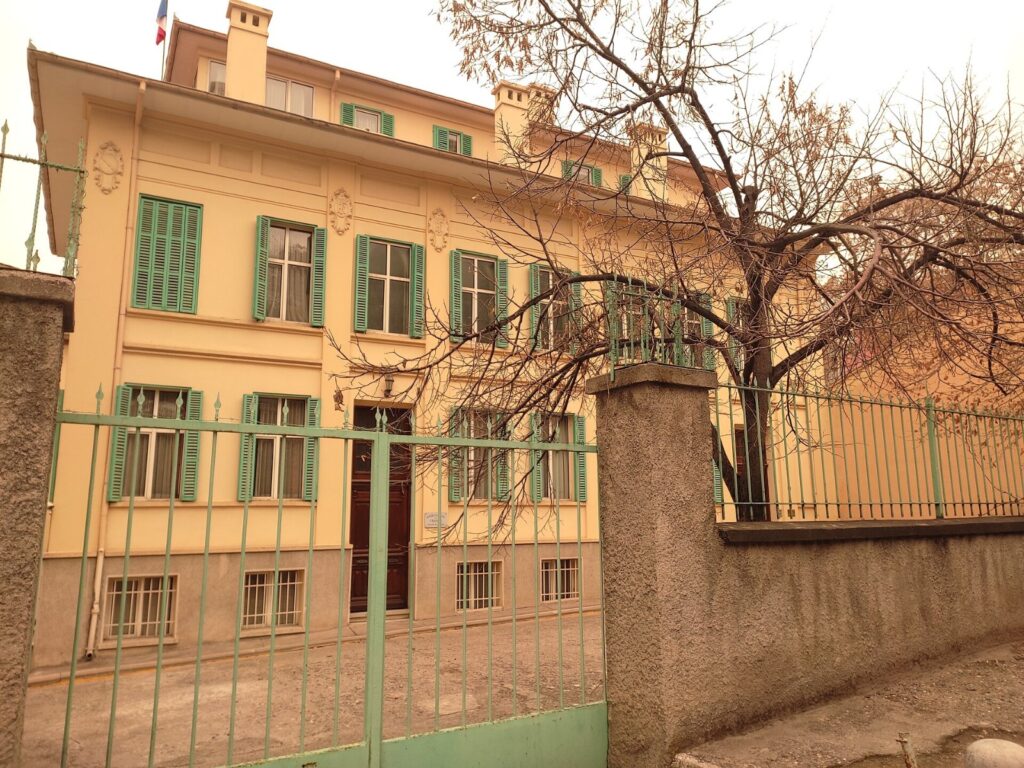
The Catholic Church of Saint Theresa is on Kardeşler Sokak in Ulus, where the French College of Saint Clement stood until the great Ankara fire of 1917. The present building dates from 1928. Restored in 2002, it has mosaics by the French artist Hervé Vital inspired by the churches of Cappadocia. The only other Catholic place of worship in Ankara is at the embassy of the Holy See.
The Anglican Church of Saint Nicolas is inside the British Embassy compound in Çankaya, with a service in English every Sunday at 10:30. Because of embassy security, first-time visitors must email a copy of their passport at least five working days before. It is a living congregation for the visitor who wants to worship rather than simply observe. Several Protestant congregations also meet in the city.
Frequently Asked Questions
Are there churches in Ankara?
Yes. The Catholic Church of Saint Theresa in Ulus and the Anglican Church of Saint Nicolas in the British Embassy compound hold regular services, and Protestant congregations meet too. The ruined Church of Saint Clement is the city’s only Byzantine church building.
Is Ankara in the Bible?
Not by name. Ankara is ancient Ancyra, the capital of Roman Galatia, and Galatia appears in Acts 16:6, Acts 18:23, 1 Peter 1:1 and Paul’s Letter to the Galatians. Scholars still debate whether Paul’s Galatians lived in the north around Ancyra or in the southern cities of the province.
What was the Council of Ancyra?
It was a synod of bishops held in Ancyra around 314, about eleven years before Nicaea. Its 25 canons deal mostly with Christians who had lapsed during the persecution. A second council met there in 358.
Where is Galatia in modern-day Turkey?
Galatia was in central Anatolia, around today’s Ankara. The Roman province of Galatia, created in 25 BC with Ancyra as its capital, also took in southern cities such as Antioch of Pisidia, Iconium, today’s Konya, and Lystra.
Hire Biblical Tour Guide in Turkey
I’m a nationally licensed Turkish tour guide based in Kuşadası, nearby Ephesus. My day guiding is in Ephesus, İzmir and Pamukkale. Ankara is far from my home, but my license is valid all over Turkey, so I can join you as your personal guide in Ankara on a longer journey, while you arrange your transport and hotels yourself or through a licensed travel agency.
See my guiding rates and guiding areas or write to me through my contact page.
I hope we will stand together one day in front of the Res Gestae, or in the quiet church of Saint Theresa. Every one of these places has layers, and layers are always better with someone who knows where to look. You can always write to me with your questions about the churches in Ankara and its Christian past. See you soon, Hasan Gülday.