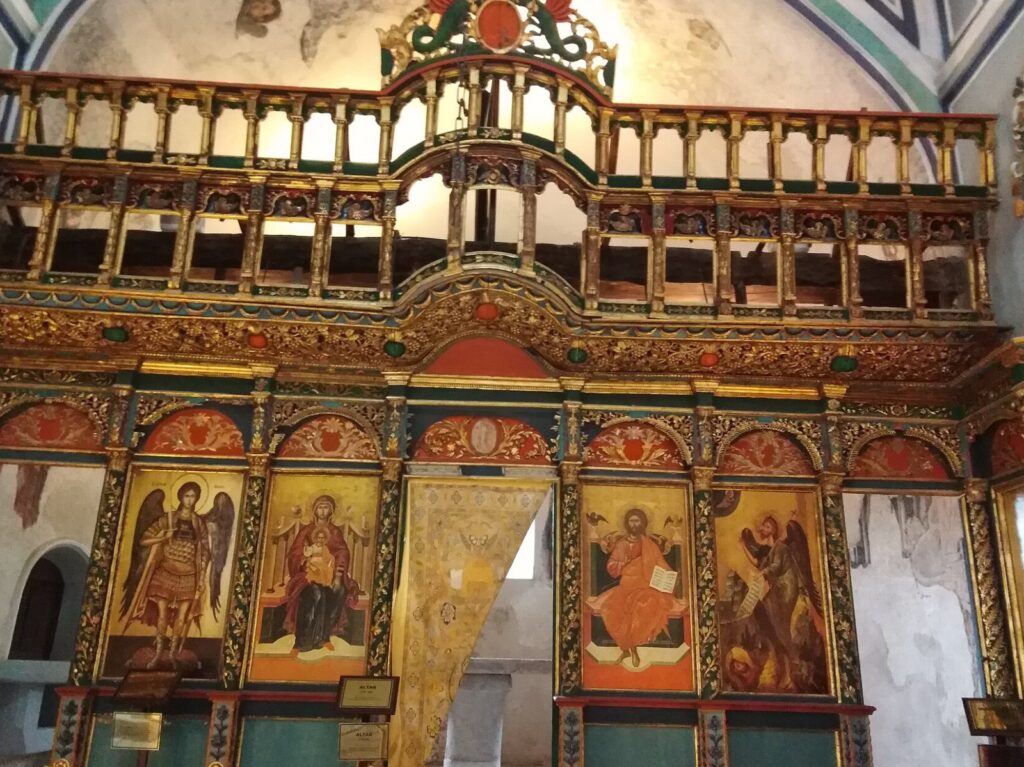
Konya is ancient Iconium, the city where Paul and Barnabas preached on their first journey and where the legend of Thecla begins. The main Christian sites in Konya today are the Catholic Church of Saint Paul, the church of Saint Helena in Sille, the Konya Archaeological Museum and Alaeddin Hill, with Lystra, Kilistra and Derbe out on the plains. Let’s have a look at each one.
Add Tours Around Turkey as a preferred source on Google
Most visitors come to Konya for Rumi and the whirling dervishes and I describe the Mevlana Museum too, briefly and with respect. Under the Romans, Iconium, Lystra and Derbe lay in the south of the Roman province of Galatia. The Christian story here is older than the Seljuk one, so I start with the Bible.
Iconium in the Bible
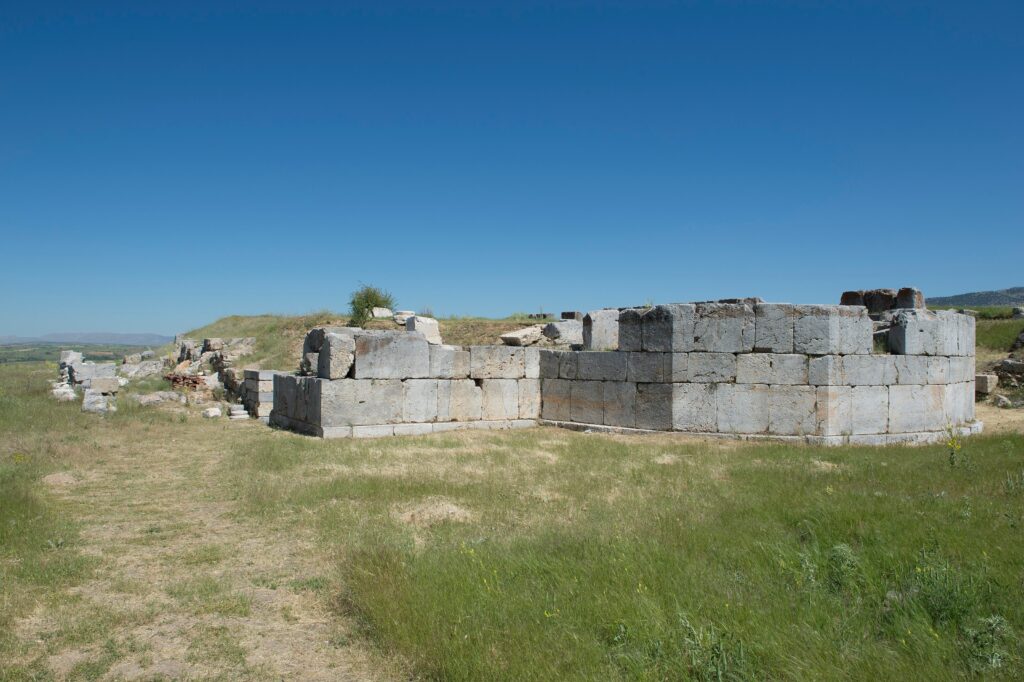
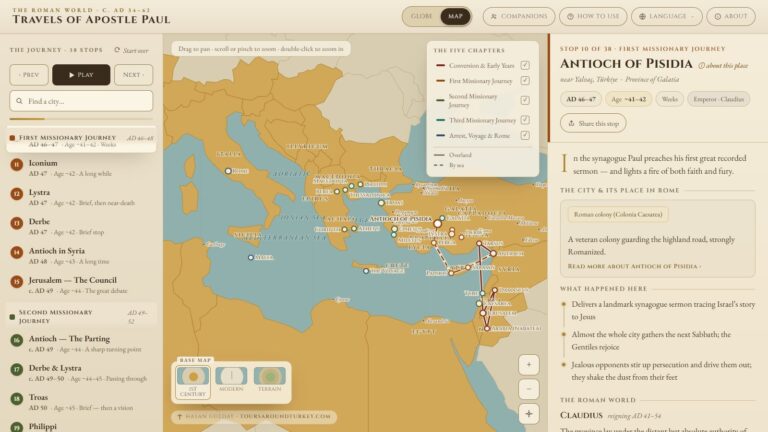
Paul and Barnabas came to Iconium from Antioch of Pisidia, where they had been thrown out of the city. Acts 13:51 says they “shook off the dust of their feet against them, and came to Iconium” (WEB). In the synagogue they spoke so well that “a great multitude both of Jews and of Greeks believed” (Acts 14:1, WEB), and they stayed a long time.
However, the city was divided. Some sided with the Jews and some with the apostles, and when a plot to mistreat and stone them became known, Paul and Barnabas left for Lystra and Derbe (Acts 14:2-6). Jews from Antioch and Iconium followed them to Lystra. On the way back, Paul and Barnabas returned to Iconium to strengthen the disciples and appoint elders (Acts 14:21-23).
Paul passed through again on his second journey, and at Lystra he took Timothy with him, because the believers of Lystra and Iconium both spoke well of him (Acts 16:1-5). Years later Paul remembered what he suffered at Antioch, Iconium and Lystra (2 Timothy 3:11). My articles on Paul’s second visit to Asia Minor and the cities visited by Apostle Paul give the wider map.
Thecla of Iconium
The Acts of Paul and Thecla, written near the end of the 2nd century, begins in Iconium. It is not Scripture, and most scholars treat it as legend. Engaged to a man named Thamyris, the young Thecla listens to Paul from her window for three days, because he preaches in the house next door. She breaks her engagement, and her mother and fiancé drag Paul before the governor.
Paul is whipped and driven out, and Thecla is sentenced to burn, but a storm puts out the fire. She follows Paul, survives more trials in Antioch, and finally settles near Seleucia, today’s Silifke. Her cave shrine there, Aya Tekla, became a great pilgrimmage place.
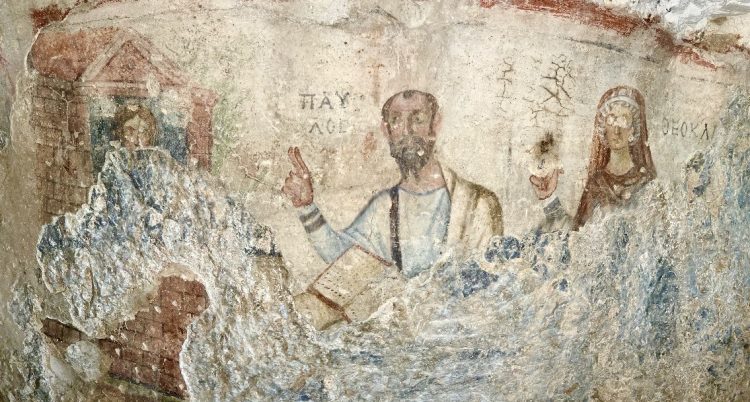
Thecla was honored in Iconium too, and the Saint Paul Church in Konya also remembers her. I tell her whole story in my article on early Christian women. A fresco of Paul and Thecla is known from the Grotto of Paul in Ephesus, but that grotto is closed to visitors today, so please read my grotto article instead.
Christian Sites in Konya City
Most Christian sites in Konya city are small and quiet. I start with Alaeddin Hill, then the Saint Paul Church and the museum. Sille comes after them, because it is laying outside the city.
Alaeddin Hill in Konya
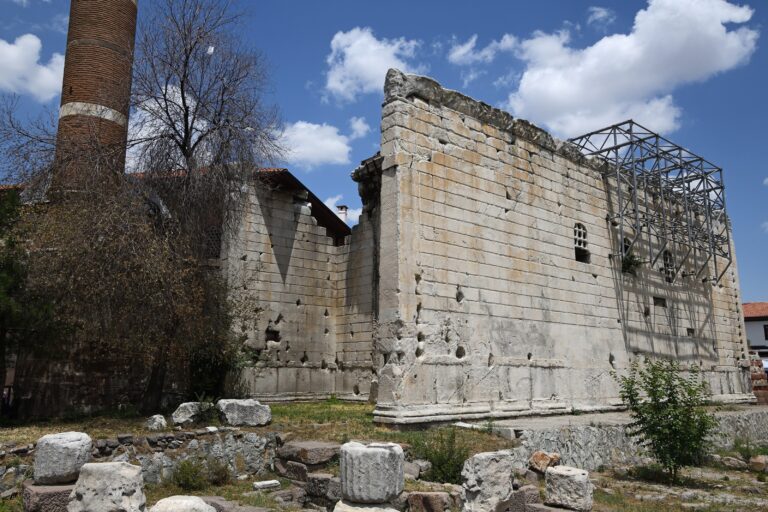
Alaeddin Hill is the mound in the middle of modern Konya, and the ancient acropolis of Iconium stood nearby it. Today it carries the Alâeddin Mosque, the great mosque of the Seljuk sultans, begun in 1155. The Acts do not say where the synagogue stood, and nobody can point to it today.
However, Christian layers are visible. The eastern wing of the mosque rests on re-used Byzantine columns and capitals, and some scholars think it was built on a former Christian basilica. Until the 1920s the Byzantine church of Saint Amphilochius, a 4th-century bishop of Iconium, also stood on the hill, and the Turks called it Eflatun Mescidi, the mosque of Plato. Please dress modestly in the mosque.
Saint Paul Church in Konya
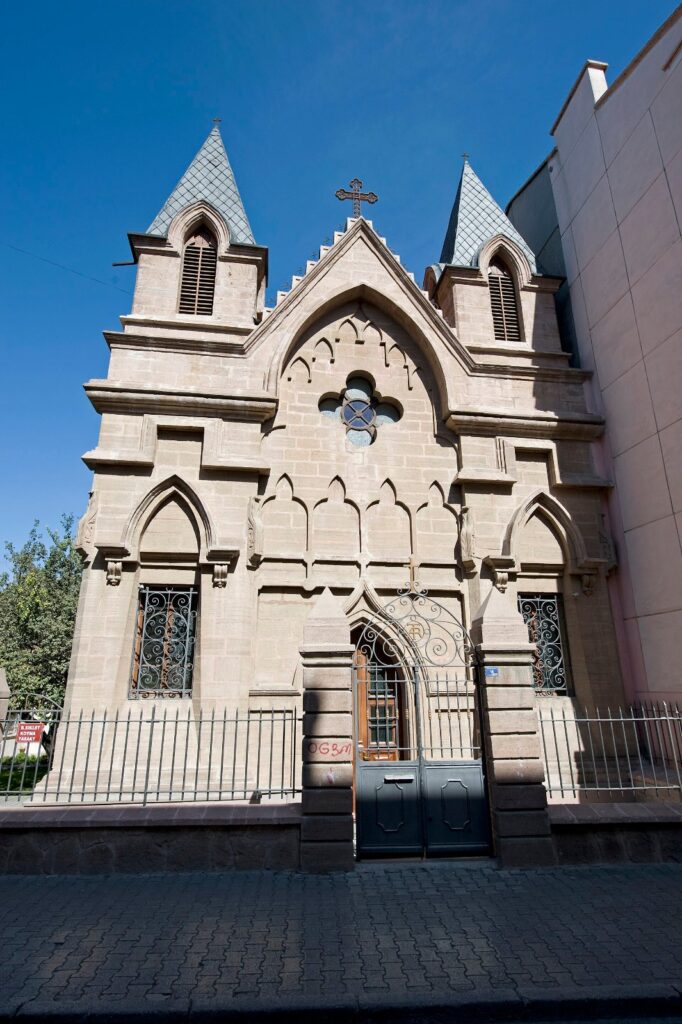
The Catholic Church of Saint Paul stands in the Meram district, southeast of Alaeddin Hill. French Assumptionist priests built it in 1910 for the families of French technicians working at Konya, in a Gothic style with two small bell towers. It was restored in 1963, and it is usually called the last active church building in the city.
A Latin line at the dome of the apse says that God has chosen Saint Paul, and the church also remembers Thecla and Timothy. The parish is small, please write ahead before you visit and do not simply knock on the door. This is a living church, not a museum.
Konya Archaeological Museum
The Konya Archaeological Museum on Sahip Ata Street has been in its present building since 1962, and it runs from the Neolithic finds of Çatalhöyük to the Byzantine period. The Roman hall shows the Iconium of Paul’s time, with sarcophagi from the city’s necropolis. The famous marble sarcophagus carved with the labors of Herakles is pagan, so do not look for Christian symbols on it.
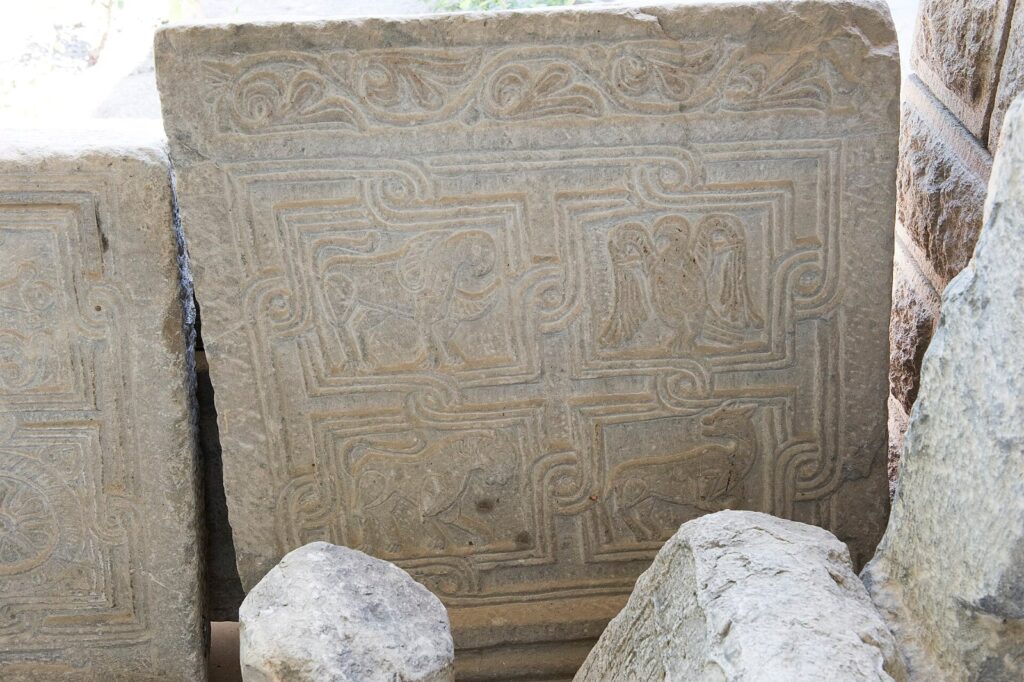
Byzantine section has a church floor mosaic of the 6th century, about 6.3 by 3.5 meters, from Tatköy near Sille, and bronze crosses and door knockers. In the garden, inscriptions name Iconium, Lystra and Derbe, among them the Latin inscription that J. R. S. Sterrett found at Lystra in the 1880s, which showed where the city was. Please control the opening days first.
Sille and the Church of Saint Helena
First of all, Sille is a village quarter about 7 kilometers northwest of the center of Konya, in a deep, narrow valley. The Ministry of Culture and Tourism calls it one of the first centers of early Christianity and a stopping place on the pilgrim road between Istanbul and Jerusalem.
Greek-speaking Orthodox Christians lived in Sille for centuries, and they wrote Turkish in Greek letters, a script called Karamanlıca. They left in the population exchange between Greece and Turkey in 1923 and 1924. Their best-known building is the church of Saint Helena, called Aya Elena or Aya Elenia.
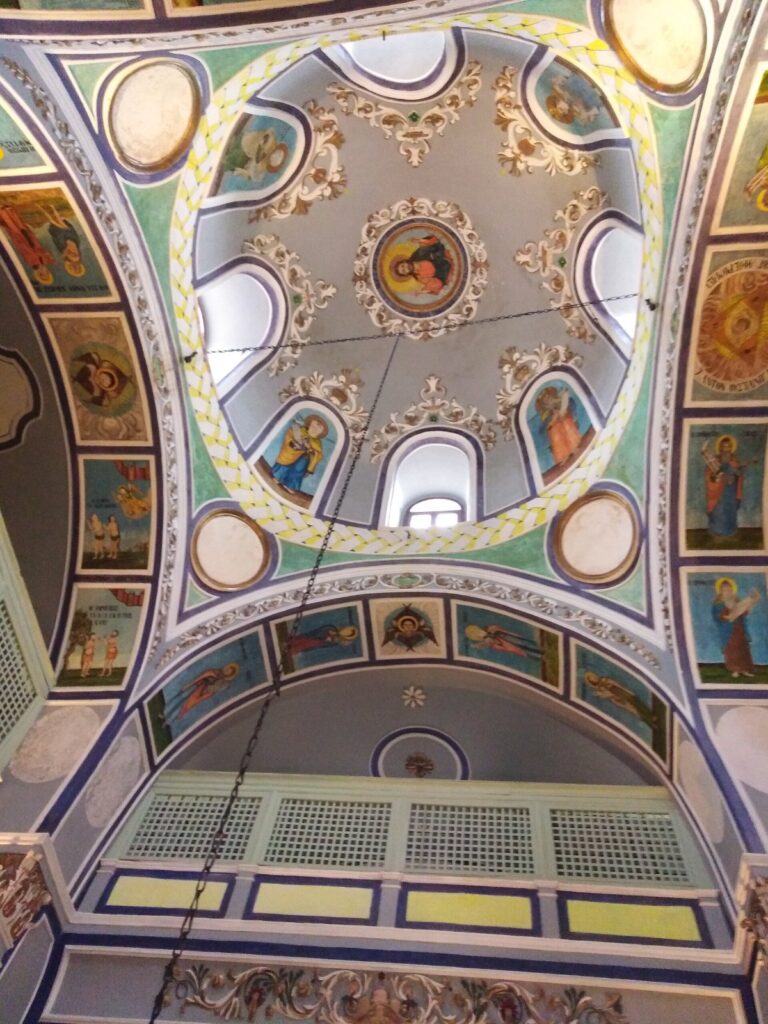
Tradition says that Helena, the mother of Constantine, stopped here around 327 on her way to Jerusalem and asked for a church. Scholars think this date is too early and the building you see is mostly from the 19th century. An inscription above the door of the nave, in Turkish written with Greek letters, records a repair in 1833 under Sultan Mahmud II.
Inside, a high dome with Christ Pantokrator crowns a cross-shaped plan and the walls carry frescoes of the four evangelists, the twelve apostles, Constantine and Helena. Today the church is a museum and open to visitors. I recommend my guests to look up first, to the dome, before they look at anything else.
Lystra and Hatunsaray
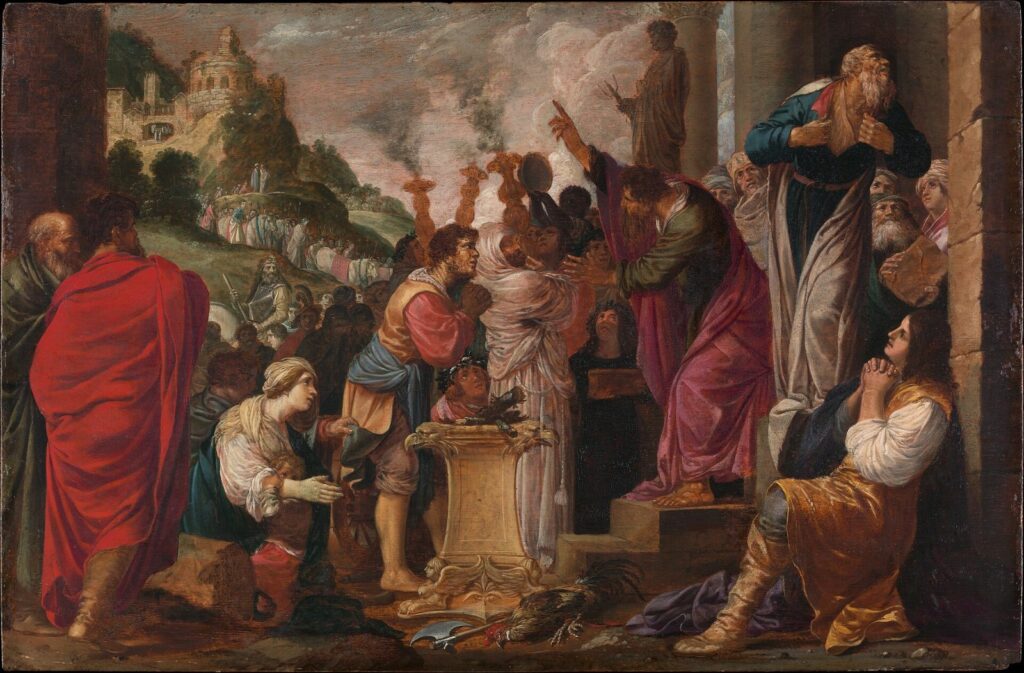
Lystra is where Paul healed a man who had been lame from birth (Acts 14:8-10). The crowd shouted in the Lycaonian language that the gods had come down, and they called Barnabas Zeus and Paul Hermes. Paul and Barnabas answered that they were only men.
Then Jews from Antioch and Iconium won the crowd over, and they “stoned Paul, and dragged him out of the city, supposing that he was dead” (Acts 14:19, WEB). Paul got up and went back into the city. Lystra was also the home of Timothy, whose mother Eunice and grandmother Lois were believers (2 Timothy 1:5), and tradition makes him the first bishop of Ephesus.
Lystra lies roughly 35 kilometers southwest of Konya, near the village of Hatunsaray, on an eastern branch of the Via Sebaste from Iconium. The ancient city is a mound called Zoldura, about 30 meters high and 300 meters across, and the Romans made it a colony under Augustus.
Honestly, there is little to see. A 2026 survey in the Journal of Palmette recorded wall traces, a ruined church of the 5th or 6th century and a basilica at nearby Bediroğlu. In addition, I recommend my guests to read Acts 14 on the mound and to see the Lystra inscription in the museum afterwards.
Kilistra Rock-Cut Town
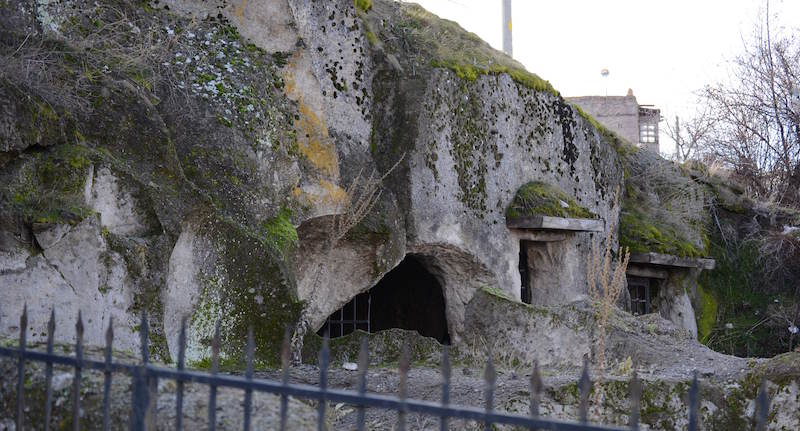
Kilistra is a different place from Paul’s Lystra, and visitors often mix them up. It lies in the village of Gökyurt, also in the Meram district, about 45 to 55 kilometers from Konya and roughly 15 kilometers from Lystra. Local authorities describe a Byzantine settlement of the 6th to 13th centuries, cut into soft volcanic rock in five locations, a little like Cappadocia.
It also has churches, chapels, monasteries, cisterns, wine presses and watchtowers too, and it lies on the old Royal Road, the Via Sebaste, whose paving stones are still in place as you arrive from Hatunsaray. Excavation work continues, and the Ministry calls the site a visiting place for Christian pilgrims. Wear sturdy shoes, because the paths and rock rooms are uneven.
Derbe Near Karaman
Derbe was the farthest point of Paul’s first journey. After Lystra, Paul and Barnabas went on to Derbe. “When they had preached the Good News to that city, and had made many disciples”, they returned to Lystra, Iconium and Antioch (Acts 14:20-21, WEB).
The site is a mound called Kerti Hüyük, about 24 kilometers northeast of the city of Karaman, near the village of Ekinözü. In 1956 the archaeologist Michael Ballance used an inscription of 157 AD to place Derbe there, and it is the most likely site, although some scholars disagree. There is only a mound in farmland, more than 90 kilometers southeast of Konya in a straight line.
Mevlana Museum in Konya
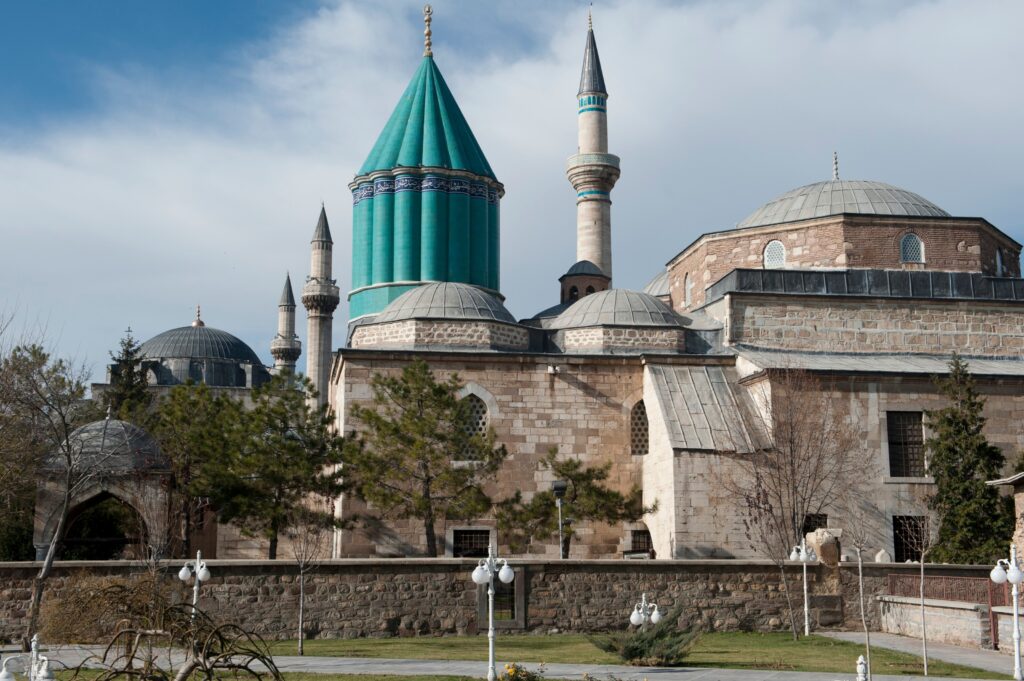
The Mevlana Museum is not a Christian site. It holds the tomb of Jalal ad-Din Rumi, the Sufi poet known in Turkey as Mevlana, who died in 1273, and it began as the lodge of the Mevlevi order, the whirling dervishes. The turquoise dome is the symbol of Konya. For many Muslims it is still a place of prayer, so I ask my guests not just to dress modestly also to speak quietly.
Visiting Konya
Konya sits on central plateau, far from the Aegean coast where I live. A sensible plan is the city sites and Sille on one day, Lystra and Kilistra on a second half day, and Derbe as a separate trip toward Karaman. My articles on Apostle Paul in Turkey and the letters of Paul put these cities into the bigger story.
Frequently Asked Questions
Does Iconium still exist?
Yes. Iconium is modern Konya, in central Turkey. The Romans called it Claudiconium for a time, and the Seljuk sultans later made it their capital.
Where is Lystra and how far is it from Iconium?
Lystra is roughly 35 kilometers southwest of Konya, near the village of Hatunsaray. Derbe is much farther, more than 90 kilometers southeast of Konya in a straight line, near Karaman.
Is there a Catholic church in Konya?
Yes. The Catholic Church of Saint Paul in the Meram district was built in 1910 and is usually called the last active church building in Konya. It is a small parish, so write ahead before you visit.
Can you visit the church of Saint Helena in Sille?
Yes. The Aya Elena church in Sille is a museum and open to visitors, about 7 kilometers from the center of Konya. Please check the opening hours before you go.
Hire Biblical Tour Guide in Turkey
I’m a nationally licensed Turkish tour guide based in Kuşadası, nearby Ephesus, and I have been guiding since 2008. My day guiding is in Ephesus, İzmir and Pamukkale. Konya is far from my home, but my license is valid all over Turkey, so I can join you as your personal guide on a longer journey, while you arrange your transport and hotels yourself or through a licensed travel agency.
See my guiding rates and guiding areas or write to me through my contact page.
I hope we will stand together one day under the dome of Aya Elena in Sille, or on the mound of Lystra with Acts 14 in our hands. Every one of these places has layers, and layers are always better with someone who knows where to look. You can always write to me with your questions about the Christian sites in Konya. See you soon, Hasan Gülday.