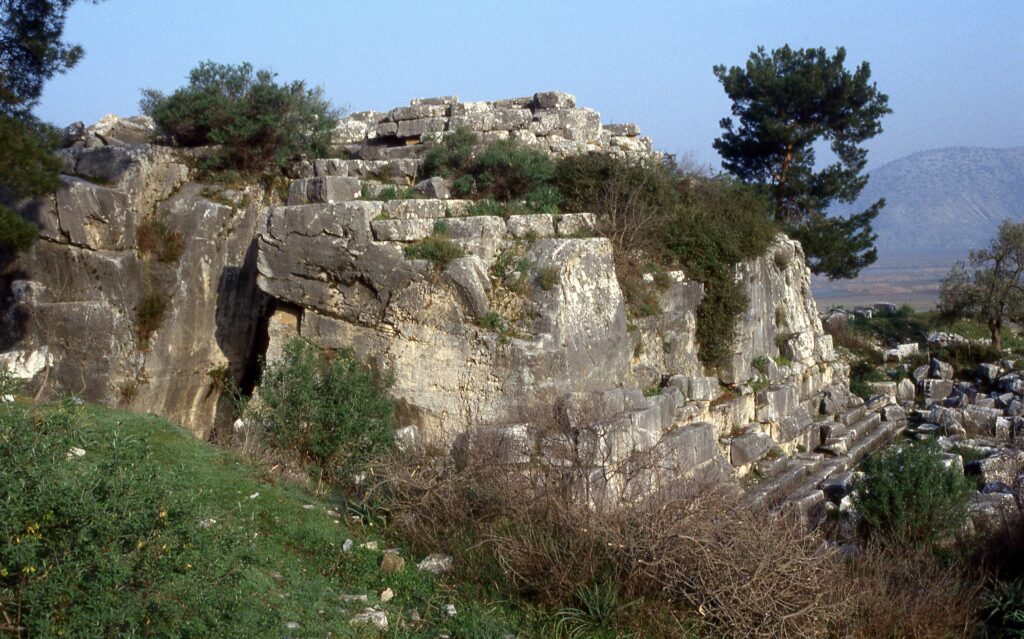
The Belevi Mausoleum is a huge Hellenistic tomb about 14 kilometers from Selçuk, near the village of Belevi. Its base was cut from the rock of a hill and measures about 30 meters on each side, which makes it the second largest tomb in Anatolia after the Mausoleum at Halicarnassus. It is believed to be the tomb of King Antiochus II, who died in 246 BC.
Most guests know Ephesus for its Roman streets and temples, but the countryside around the city hides older monuments too, and this mausoleum near Ephesus is the biggest of them. Let’s have a look at where it lies, who was probably buried in it and what is left today.
Where Is the Belevi Mausoleum?
The mausoleum stands on open hillside a few kilometers east of the village of Belevi, in İzmir province. Belevi lies on the road between Selçuk and İzmir, 11 kilometers from Selçuk, so the tomb is about 14 kilometers from the town. In ancient times this land was probably in the borders of Ephesus.

Who Was Buried in the Belevi Mausoleum?
Nobody knows for sure, because no inscription names the owner. It is believed that the tomb of Antiochus II Theos is here. He was a Seleucid king who died suddenly in 246 BC, and some say that his first wife Laodice had him poisoned.
However, the tomb was probably not built for him. It is believed that the work began around 300 BC for Lysimachus, a general of Alexander the Great who moved Ephesus to its new place and built the city wall along the ridge above it.
He was killed in battle in 281 BC and was buried far away in Thrace, so the unfinished tomb stayed empty. Some people give an even earlier date and another owner, so I take all the names with care.
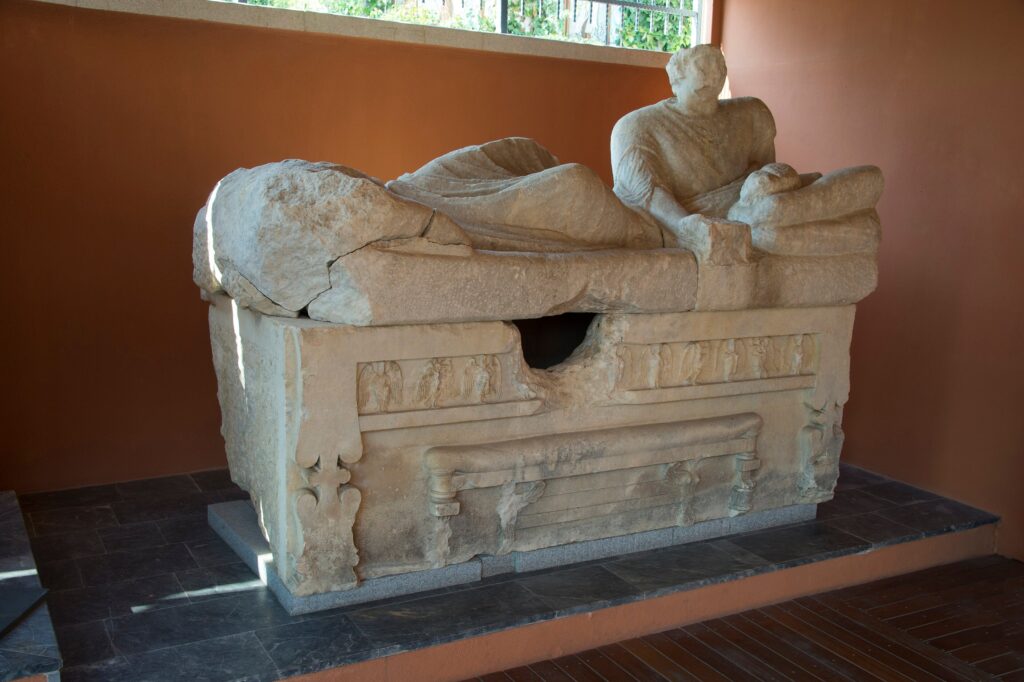
In the burial chamber stood one large marble sarcophagus. A man reclines on its lid like a guest at a banquet, and winged Sirens run along the side. The sarcophagus was never finished, and today you can see it in the Ephesus Museum in Selçuk.
What Did the Belevi Mausoleum Look Like?
It was a tall square tomb with two stories. The builders cut a block of about 30 meters on each side out of the hill, faced it with marble and put a Doric frieze at the top. On this base stood a hall with Corinthian columns and probably a stepped pyramid roof. Pairs of winged lions faced big stone vases around the roof, and horses stood at the corners.
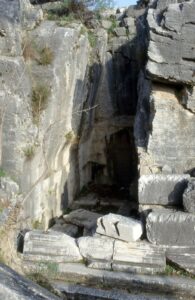
The burial chamber was hidden. It was cut into the rock at the back of the base, and the marble wall covered the way in, so nobody could see it from outside. A servant statue that looks Persian and the winged lions show that Greek and Persian taste are mixed here.
If the tomb had been finished, it would probably reach about 35 meters, but the work stopped before the roof was done, nobody finished it later. Only the Mausoleum at Halicarnassus in Bodrum was bigger in Anatolia, and it gave every mausoleum its name.
The mausoleum in short:
- Place: east of the village of Belevi, about 14 kilometers from Selçuk
- Base: about 30 by 30 meters, cut from the rock of the hill
- Height: about 35 meters if it had been finished
- Date: begun around 300 BC and never finished
- Owner: not known for sure, probably Antiochus II Theos
The Belevi Tumulus Nearby
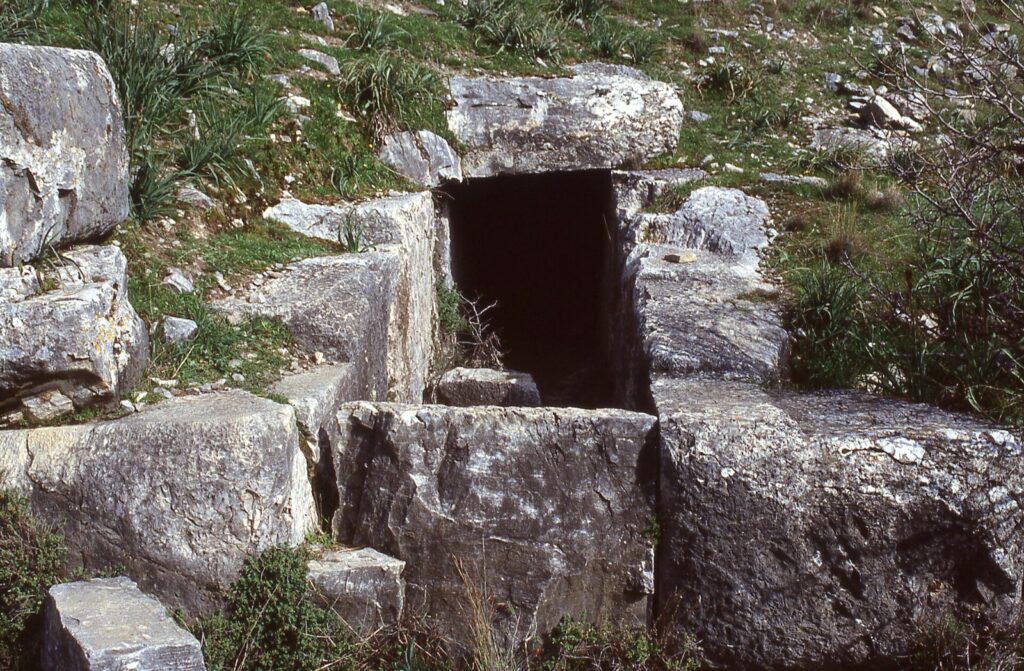
The Belevi Tumulus is a burial Mound on a hill close to the mausoleum. The builders shaped the top of the hill into a mound and ran a wall of big stone blocks around it, and the wall still stands 3 or 4 meters high in places.
A stone-lined tunnel about 18 meters long on the south side leads to two grave chambers, one behind the other. The inner chamber has a corbel vault, which means the stones were laid in steps until they met at the top. Nobody found an inscription or a burial, so we do not know who lay here. It is believed to be from the 4th century BC, and it may be even older than the mausoleum.
Can You Visit the Belevi Mausoleum Today?
Yes, you can see it, but it is not a developed site like Ephesus. The ruin stands in open land with a fence around it, and there is also an information board in Turkish, English and German too. Wear good shoes, because many fallen blocks lie around the base.
The best pieces of the tomb are in museums. Besides the sarcophagus in Selçuk, some of the winged lions and ceiling blocks are in the Ephesus Museum and in the İzmir Archaeological Museum, and I tell about the first one in my article on the Ephesus Archeological Museum.
I recommend to see the sarcophagus first, and then the tomb on the hill makes more sense. For the time before the Romans, read my article on Roman Ephesus and Hellenistic Ephesus.
Frequently Asked Questions
Who was buried in the Belevi Mausoleum?
It is believed that King Antiochus II Theos, who died in 246 BC, was buried there. The tomb was probably started around 300 BC for Lysimachus, and no inscription names the owner, so nobody can be sure.
Where is the Belevi Mausoleum?
The Belevi tomb stands on a hillside a few kilometers east of the village of Belevi in İzmir province. It is about 14 kilometers from Selçuk, on the road toward İzmir.
How big is the Belevi Mausoleum?
Its base is about 30 meters on each side, and the finished tomb would probably have been about 35 meters high. It is the second largest tomb in Anatolia, after the Mausoleum at Halicarnassus.
Hire Ephesus Tour Guide
I’m a nationally licensed Turkish tour guide based in Kuşadası, nearby Ephesus. My day guiding is in Ephesus, İzmir and Pamukkale, and Belevi lies in İzmir province, so you can ask me to add this quiet stop to your day.
You can see my guiding rates and guiding areas, or write to me through my contact page to ask about my availability.
I hope we will see each other in Ephesus and in the hills around it. You can always write to me with your questions about the ancient sites nearby Selçuk. See you soon, Hasan Gülday.