Turkey keeps the graves of many early Christian saints. Seven of the best-known saints buried in Turkey, or first buried here, are Apostle John in Selçuk, Apostle Philip in Hierapolis, Saint Nicholas in Demre, Saint Timothy in Ephesus, Saint Polycarp in İzmir, the Seven Sleepers near Ephesus and the Forty Martyrs of Sebaste in Sivas. You can still visit a place connected with each of them.
Not every tomb still holds its saint, and some cannot be located at all. Over the centuries relics were carried to Constantinople, Bari, Venice, Marseille and Rome. For each tomb I explain what is there today, what we really know and what is only tradition, and what you see as a visitor. For their life stories I link my longer articles.
Why Tombs Matter to Christians
Honoring the graves of the holy dead is one of the oldest Christian habits. The Martyrdom of Polycarp, written by the church of Smyrna soon after his death in 155 or 156 AD, tells how the believers took up his bones, “more valuable than precious stones”, and “laid them in a suitable place”. There they hoped to gather every year on the day of his martyrdom.
That is where the Christian pilgrimage to tombs begins. Anatolia, today’s Turkey, was home to many of the first Christian communities, so it holds an unusual number of these graves. Many were emptied later, when relics were carried away to honor them, to protect them or simply to own them. Still, the places are here. Let’s have a look at the seven, roughly from west to east.
1. The Tomb of Apostle John in Selçuk
Early tradition says that Apostle John spent his last years in Ephesus and died there of old age, the only one of the Twelve who was not martyred. Irenaeus wrote that John stayed with the church of Ephesus “until the times of Trajan”. Around 190 AD Polycrates, the bishop of Ephesus, wrote in a letter that John “fell asleep at Ephesus”.
His grave on Ayasuluk Hill, above today’s Selçuk, became a pilgrimage site. First building over it was a small mausoleum that was also used as a church. In the 4th century a basilica replaced it, and in the 6th century Emperor Justinian built the great domed, cross-shaped Basilica of Saint John over the tomb.
The tomb lay in a crypt with several rooms, right beneath the altar. Medieval pilgrims believed that John was only sleeping below, and that his breath made the dust over his grave rise. Every year on May 8, during an all-night feast, they collected this holy dust and carried it home in small flasks. The Gospel itself mentions a saying among the brethren “that that disciple should not die” (John 21:23, KJV), although Jesus never said so.
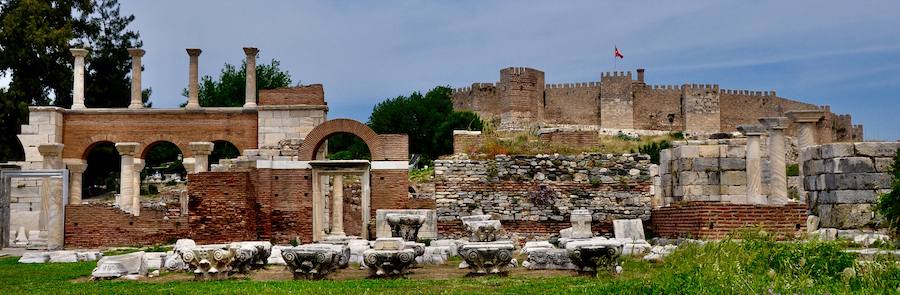
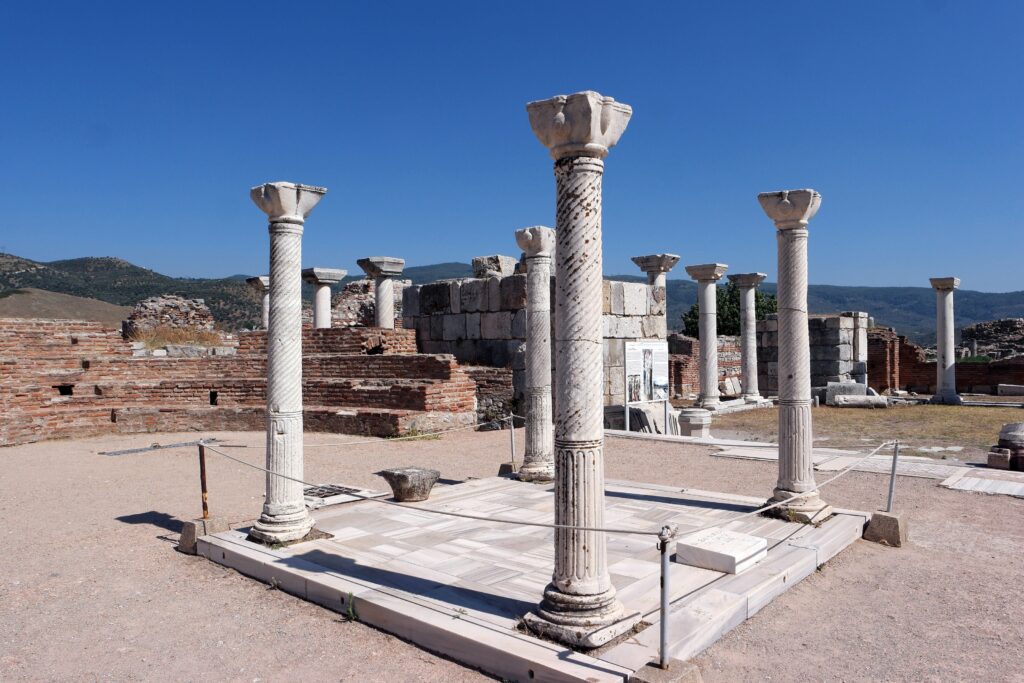
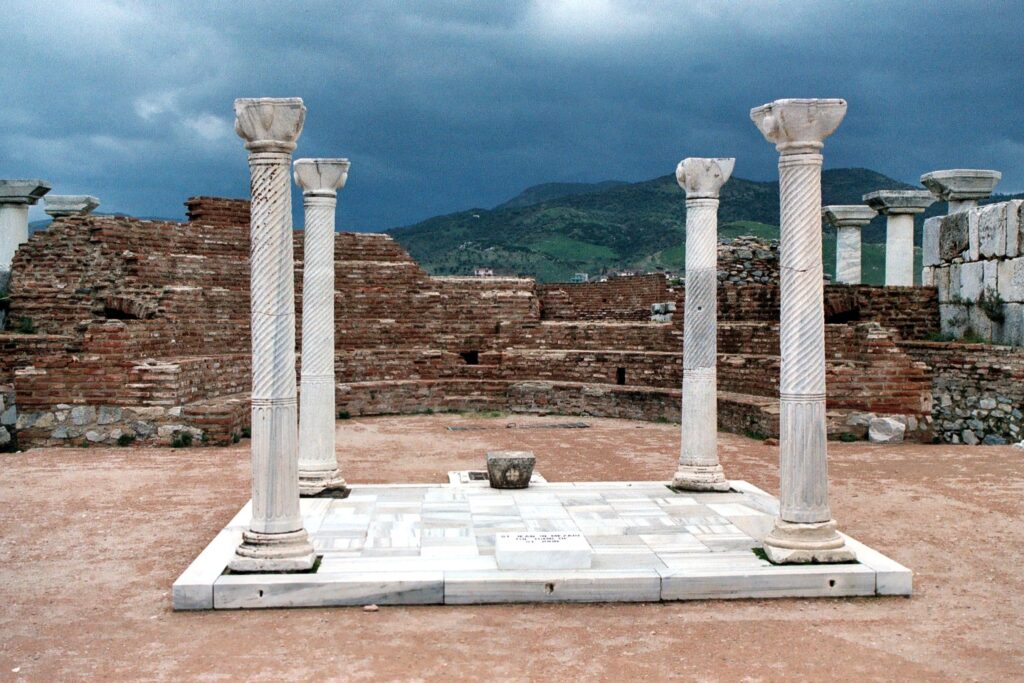
What you see today is a ruin, but a very readable one. A marble platform with four columns marks the place of the altar and the tomb of Saint John beneath it. Large octagonal baptistery is on the north side, and the re-erected columns show the size of the building. The basilica is next to the İsa Bey Mosque, just below the Ayasuluk Fortress, which is also open to visitors too.
I find this place more moving every time I visit. My article Saint John the Evangelist from Galilee to Patmos and Ephesus tells his whole life, and Ayasuluk Hill nearby Ephesus tells the story of the hill where he rests.
2. The Tomb of Apostle Philip in Hierapolis
Hierapolis is the Roman city on top of the white travertine terraces of Pamukkale. In the same letter, Polycrates of Ephesus named “Philip, one of the twelve apostles, who fell asleep in Hierapolis”. He adds that two of Philip’s daughters were buried there with him. So by the end of the 2nd century, the city was already known as the burial place of the apostle.
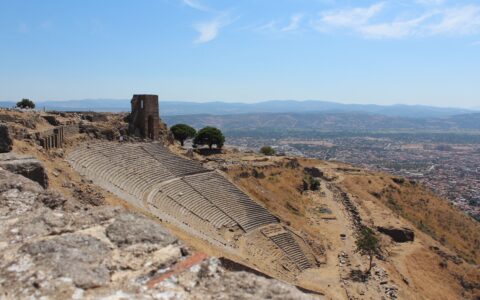
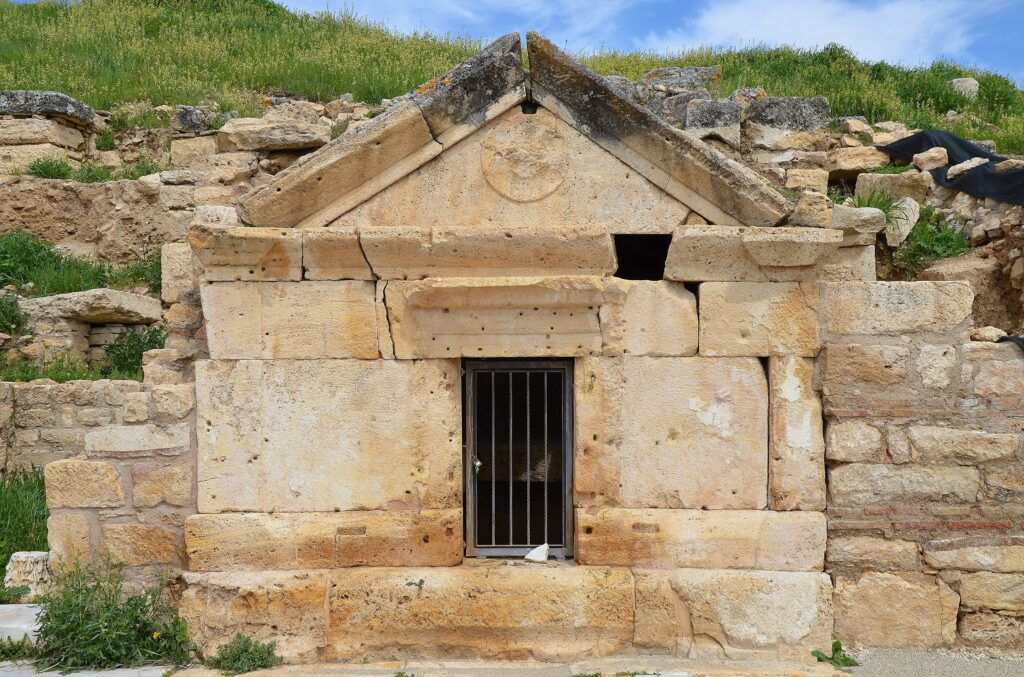
For a long time everyone looked for the tomb inside the great octagonal Martyrium on the hill above the city. Then in 2011 the Italian archaeological team led by Professor Francesco D’Andria announced that they had found it in a different spot: a 1st-century Roman tomb standing in the center of a three-aisled church, a short walk from the Martyrium.
The tomb was empty of relics. Greek prayers to Philip are carved into the walls of the tomb and the church, and marble floor was worn down from thousands of pilgrims. A 6th-century bread stamp shows Philip between a three-aisled church and the Martyrium, which supports the identification. In 2012 Patriarch Bartholomew of Constantinople celebrated the liturgy of Saint Philip in both churches.
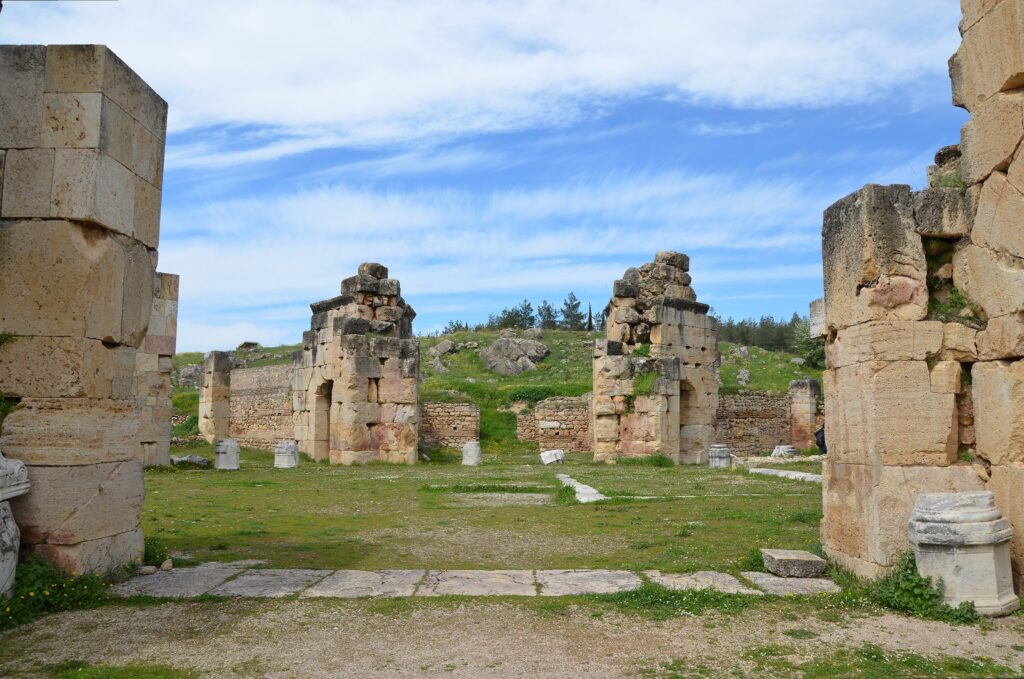
To visit, you leave the travertines and the crowds behind and walk up to the hill outside the northeastern walls of Hierapolis Ancient City. The tomb church sits on the slope just below the Martyrium, whose eight sides are still easy to follow. Relics venerated as Philip’s are kept in Rome, in the crypt of the Basilica of the Holy Apostles.
The whole story of the apostle and his shrine is in my article Martyrium of Saint Philip: Pamukkale’s Hidden Tomb. It is one of the most underrated Christian sites in Turkey.
3. The Tomb of Saint Nicholas in Demre
Saint Nicholas, the bishop of Myra whose story grew into Santa Claus, died by tradition on December 6, 343. He was buried at Myra, today’s Demre in Antalya Province. A church was later built over the place, and his remains rested in a sarcophagus there. Pilgrims believed that his bones gave off a clear, sweet-smelling liquid, which they called manna or myrrh.
In the spring of 1087, a few years after the Seljuk Turks had taken the region, sailors from Bari in southern Italy took his main bones from the sarcophagus without permission. They reached Bari on May 9, 1087, and the bones rest today in the Basilica di San Nicola. Around 1100, Venetian sailors on their way to the First Crusade took the remaining fragments to San Nicolò al Lido in Venice.
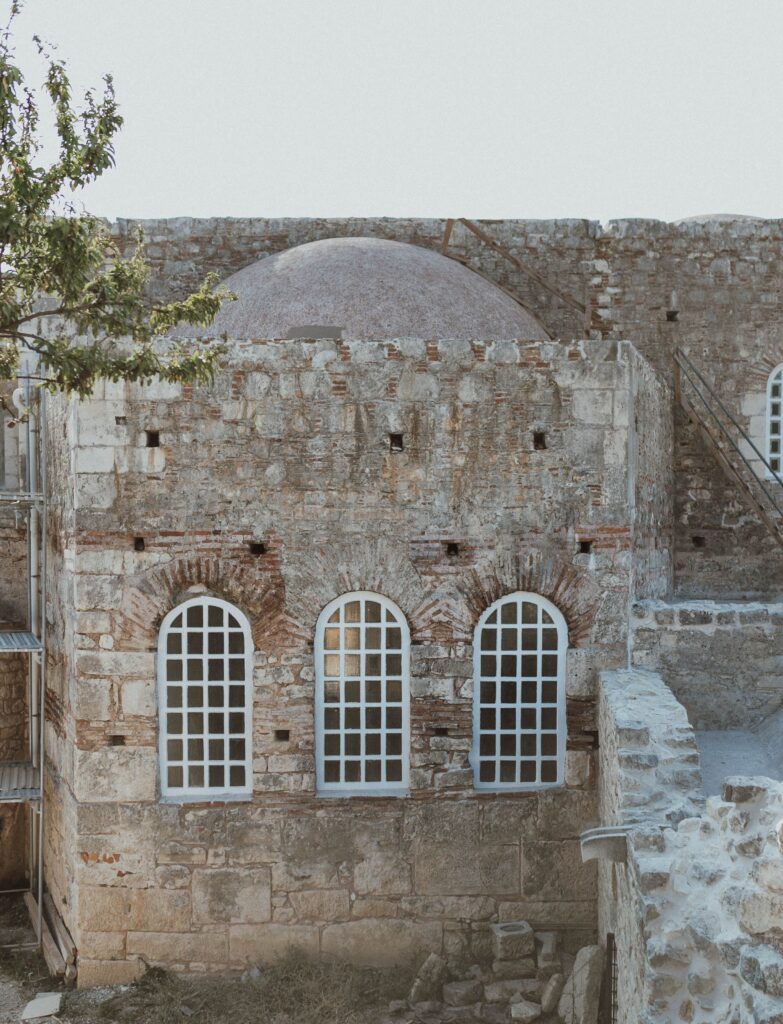
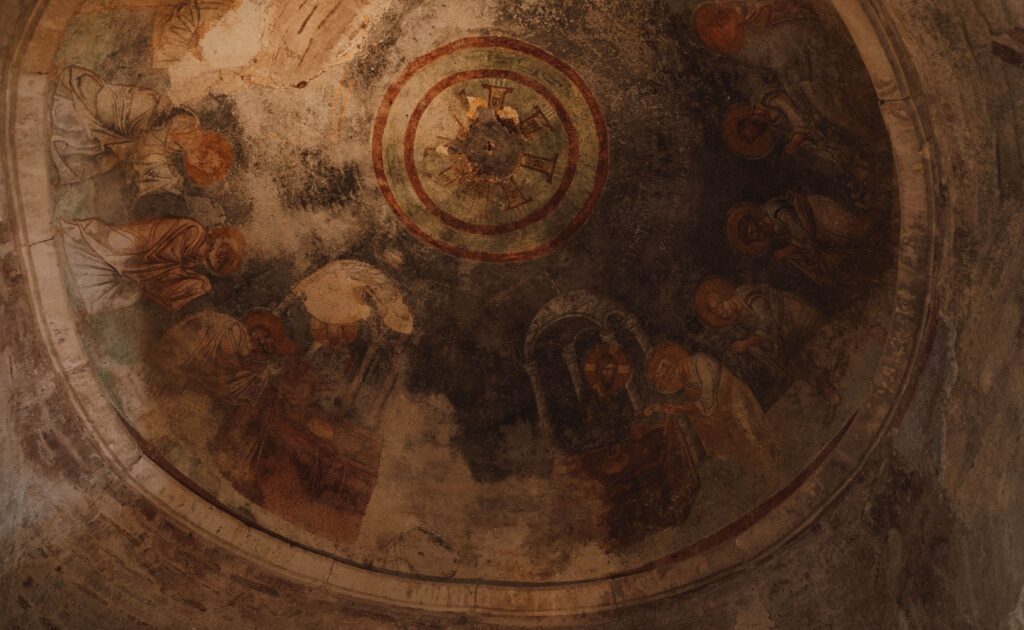
The church you visit in Demre was built around 520 AD on the foundations of the older church where Nicholas had served as bishop. Russia paid for a restoration in 1862, today it is a museum. Excavations since the late 1980s have uncovered frescoes of the saint’s life and miracles, and an opened, damaged sarcophagus that is thought to be the grave the Bari sailors emptied.
The story of the tomb of Saint Nicholas is not finished. In 2017 an Antalya monuments official claimed that an intact grave was laying under the church floor, but nobody has proven it. In 2022 the excavation reached the floor of the older church, which the head of the Antalya heritage board called the floor Nicholas himself walked on.
In December 2024 the team led by Associate Professor Ebru Fatma Fındık found a sarcophagus in its original place, inside a two-story building on the south side of the church courtyard. They say it may be connected with Nicholas, but nothing is confirmed yet. Orthodox Christians sometimes hold a liturgy in the church on December 6, his feast day.
I wrote about the church in my list of Byzantine attractions in Turkey. Apostle Paul changed ships at Myra on his way to Rome, which I tell in the seven stops on Paul’s voyage to Rome.
4. The Tomb of Saint Timothy in Ephesus
Timothy was Apostle Paul’s closest companion. Paul asked him to “abide still at Ephesus” (1 Timothy 1:3, KJV), and Eusebius calls him the first bishop of Ephesus. A later text, the Acts of Timothy, says he was killed around 97 AD when he tried to stop a pagan procession. His life is in my article on the martyrs and important figures of the Seven Churches.
Here we have to be honest. His relics were kept in Ephesus until the 4th century, but no ancient source tells us exactly where was his grave. No tomb in the ruins today has been firmly identified as his. So in Ephesus Ancient City you walk through Timothy’s city, not to his grave.
What we do know is where his relics went. In the 4th century they were carried to Constantinople and placed in the Church of the Holy Apostles, near the relics of Andrew and Luke. In the 13th century a count coming back from the Crusades seems to have taken them to Italy, and around 1239 they were buried in Termoli Cathedral.
5. The Tomb of Saint Polycarp in İzmir
Polycarp, the bishop of Smyrna, was burned in the stadium of his city in 155 or 156 AD. As we saw, his church gathered his bones and laid them “in a suitable place”. The text does not say where. Smyrna has been rebuilt many times since then, and his grave has never been found, so nobody knows today where Polycarp is buried.
Relics venerated as Polycarp’s are kept in Rome, under the main altar of the church of Sant’Ambrogio della Massima. In İzmir his memory lives in the Catholic Church of Saint Polycarp near Konak. It was first built in 1625, damaged in the earthquake of 1688 and almost ruined in the fire of 1922, and it was rebuilt in 1929.
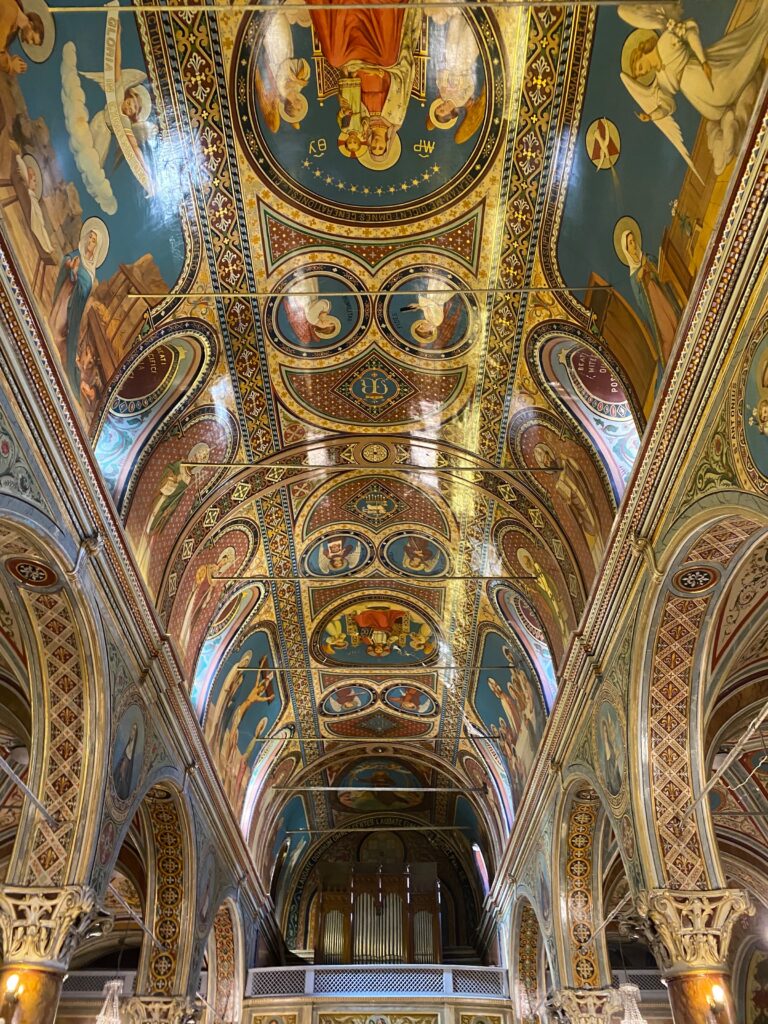
Inside, the French architect Raymond Charles Péré painted frescoes of Polycarp’s life. When I guide in İzmir, this church is the place where I and my guests remember him. It is not his grave, but it is the place where his city keeps him. You can read his full story in my article Saint Polycarp of Smyrna.
6. The Tombs of the Seven Sleepers near Ephesus
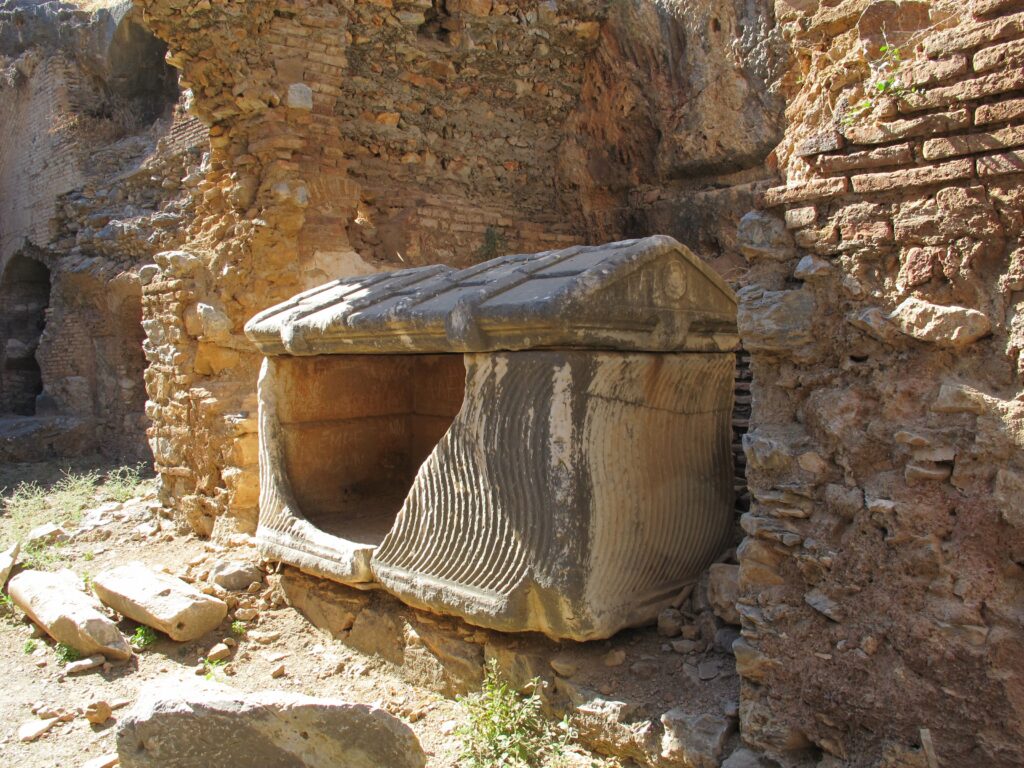
By the legend, the Seven Sleepers were young Christians of Ephesus who fell asleep in a cave during the persecution of Decius around 250 AD and woke in the reign of Theodosius II (408–450). They told the bishop their miracle and then died. My article The Cave of Seven Sleepers nearby Ephesus tells the legend in full.
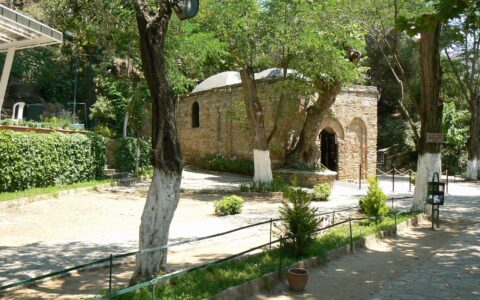
Their cult is old. They have been venerated since at least the 5th century, and a pilgrim text written between 518 and 531 already mentions a church dedicated to them at Ephesus. When the site on the slopes of Mount Pion was excavated in 1926–1928, archaeologists found church built over the grotto and several hundred graves of the 5th and 6th centuries.
Inscriptions to the Seven Sleepers were found on the walls and in the graves. These are the tombs of Christians who wanted to rest nearby the sleepers. During the Crusades, bones from these graves, identified as the Seven Sleepers, were taken to Marseille in a large stone coffin, which the Abbey of Saint Victor kept as a trophy.
Several other places claim the cave of the legend, and none of them can prove it. What you see here is the ruined church, vaulted chambers, sarcophagi and graves cut into the hillside. The inside of the cave has been closed for restoration work: Anadolu Agency reported in November 2023 that visitors could only look in from 8 to 10 meters away. I found no later news of a reopening.
7. The Forty Martyrs of Sebaste in Sivas
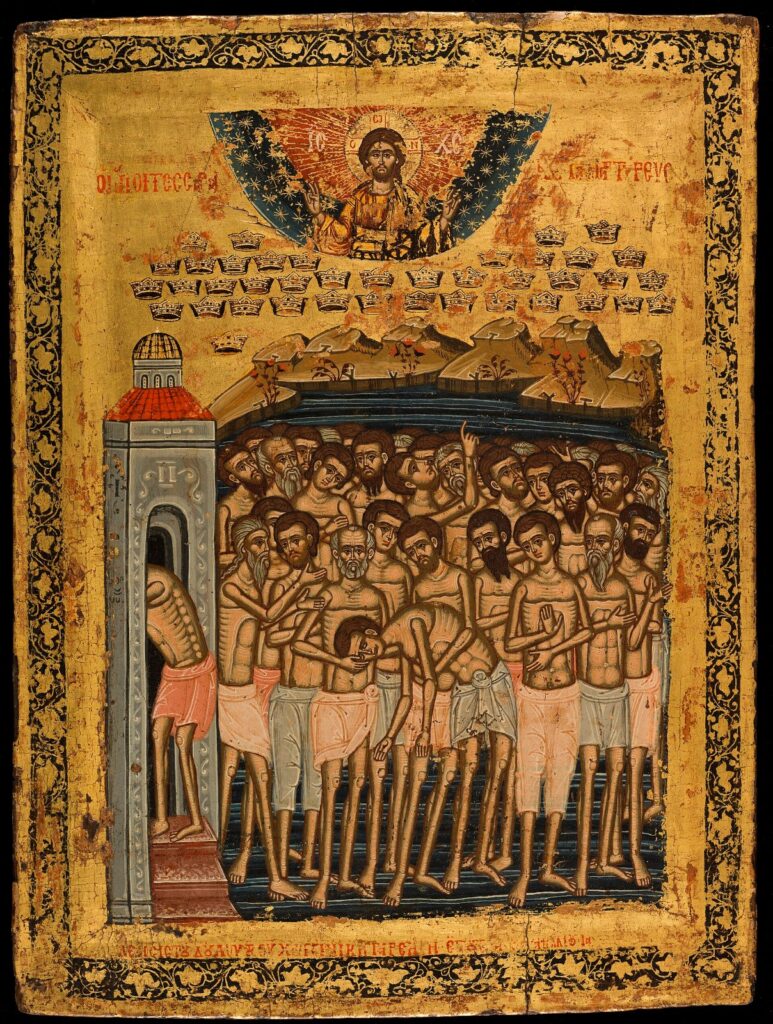
Sivas, in central Anatolia, is ancient Sebaste. In 320 AD, under Emperor Licinius, forty Christian soldiers of a Roman legion were left naked on a frozen pond near the city to die of cold. One of them gave up and ran to the warm baths on the shore. Their story is in the same article on the martyrs of the Seven Churches, and in my post on famous Christian people of Asia Minor.
There is no tomb of the Forty Martyrs to visit, because nothing was left to bury. At daybreak their bodies were burned and the ashes thrown into a river. Christians collected what they could, and the relics were shared between many cities. Basil the Great preached about them in a church built for them in Caesarea, today’s Kayseri, only fifty or sixty years after their death.
His brother Gregory of Nyssa was so devoted to them that he buried their parents beside their relics. In Orthodox icons the forty are standing in the icy water while crowns are coming down from the heaven, and the Orthodox wedding service still has a prayer that names them.
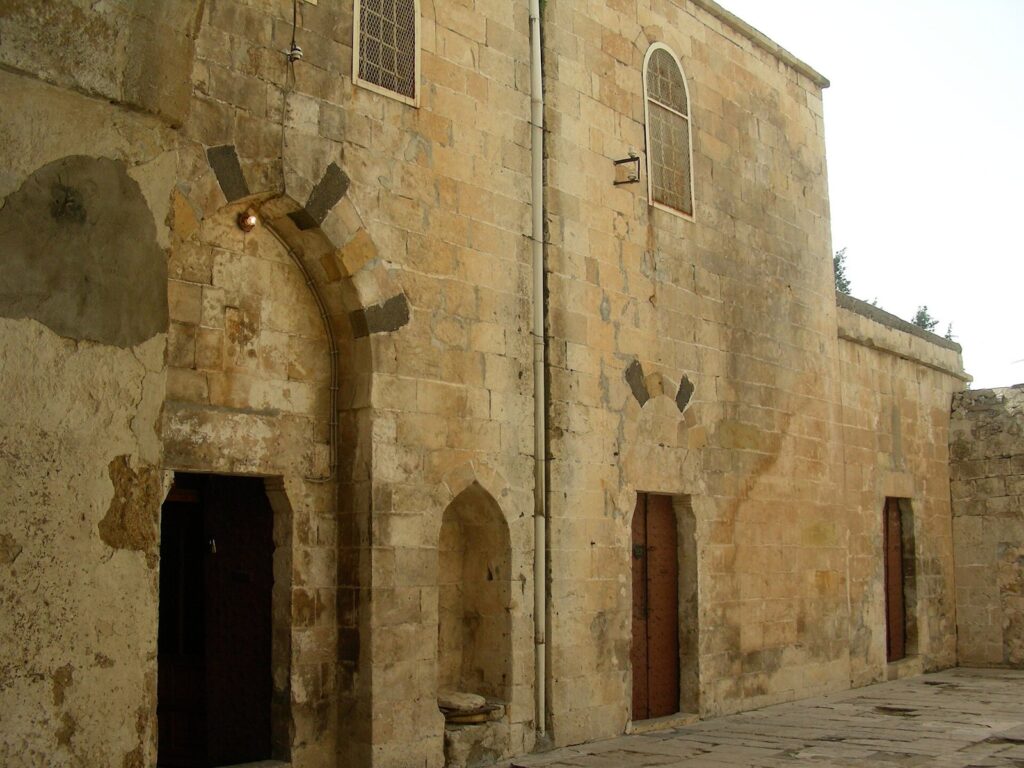
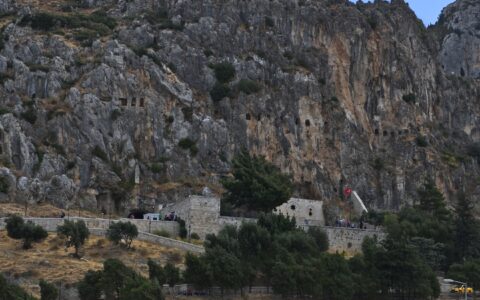
In Turkey their name also lives on in Mardin. The Syriac Orthodox Church of the Forty Martyrs, Kırklar Kilisesi in Turkish, was built in 569 as the Church of Mor Behnam, and it is still in use. In Sivas itself there is no grave and no shrine of the forty. Standing in their city and knowing the story makes the icons richer.
Visiting the Tombs of Saints Buried in Turkey
Seven tombs: two apostles of the Twelve, John and Philip; Paul’s companion Timothy; two great bishops, Polycarp and Nicholas; a legendary group, the Seven Sleepers; and a mass martyrdom of the early 4th century, the Forty Martyrs. They span Turkey from Aegean coast to central Anatolia, and from the age of the apostles to the time of Constantine.
They are not all the same kind of place. John’s and Philip’s tombs are marked and open to visitors. The first grave of Nicholas is still being studied. Timothy’s and Polycarp’s graves are lost, the Seven Sleepers are honored by tradition, and the Forty Martyrs left no grave at all. The dead of the early church are not silent. They speak through their resting places.
For a wider plan, read my guide to Christian Turkey for first-time visitors. If you want to read the oldest witness to the tombs of John and Philip yourself, Polycrates’ letter is preserved by Eusebius in his Church History, Book 5, chapter 24.
Frequently Asked Questions
Where is Saint Nicholas buried?
Saint Nicholas was buried at Myra, today’s Demre in Antalya Province. In 1087 sailors from Bari took his main bones to Italy, where they rest in the Basilica di San Nicola, and Venetians later took the remaining fragments to Venice. The church over his first grave still stands in Demre, and excavations there continue.
Where is John the Apostle buried?
Tradition places his tomb on Ayasuluk Hill in Selçuk, near Ephesus. Around 190 AD Polycrates of Ephesus wrote that John “fell asleep at Ephesus”. Emperor Justinian built the Basilica of Saint John over the tomb in the 6th century, and a marble platform with four columns marks the place today.
Where is Philip the Apostle buried?
Early tradition says Hierapolis, at Pamukkale in Denizli Province. In 2011 Italian archaeologists announced that a 1st-century tomb inside a church below the Martyrium of Saint Philip was his. The tomb was found empty, and relics venerated as Philip’s are kept in the Basilica of the Holy Apostles in Rome.
Where is Polycarp buried?
Nobody knows. The Martyrdom of Polycarp says the church of Smyrna laid his bones “in a suitable place” but does not say where, and the grave was never found. Relics venerated as his are in Rome, and the Church of Saint Polycarp in İzmir keeps his memory today.
Hire Biblical Tour Guide in Turkey
I’m a nationally licensed Turkish tour guide based in Kuşadası, nearby Ephesus. My day guiding is in Ephesus, İzmir and Pamukkale. That covers five of these seven places: the Basilica of Saint John, the city of Timothy and the Cave of the Seven Sleepers on an Ephesus day, the Church of Saint Polycarp in İzmir, and the tomb of Apostle Philip in Hierapolis.
My license is valid all over Turkey. For Demre, Sivas or Mardin, I can join you as your personal guide on a longer journey, while you arrange your transport and hotels yourself or through a licensed travel agency. See my guiding rates and guiding areas or write to me through my contact page.
I hope we will stand together at the tomb of Saint John on Ayasuluk Hill, or at Philip’s tomb above the white terraces of Pamukkale. You can always write to me with your questions about the saints buried in Turkey. See you soon, Hasan Gülday.