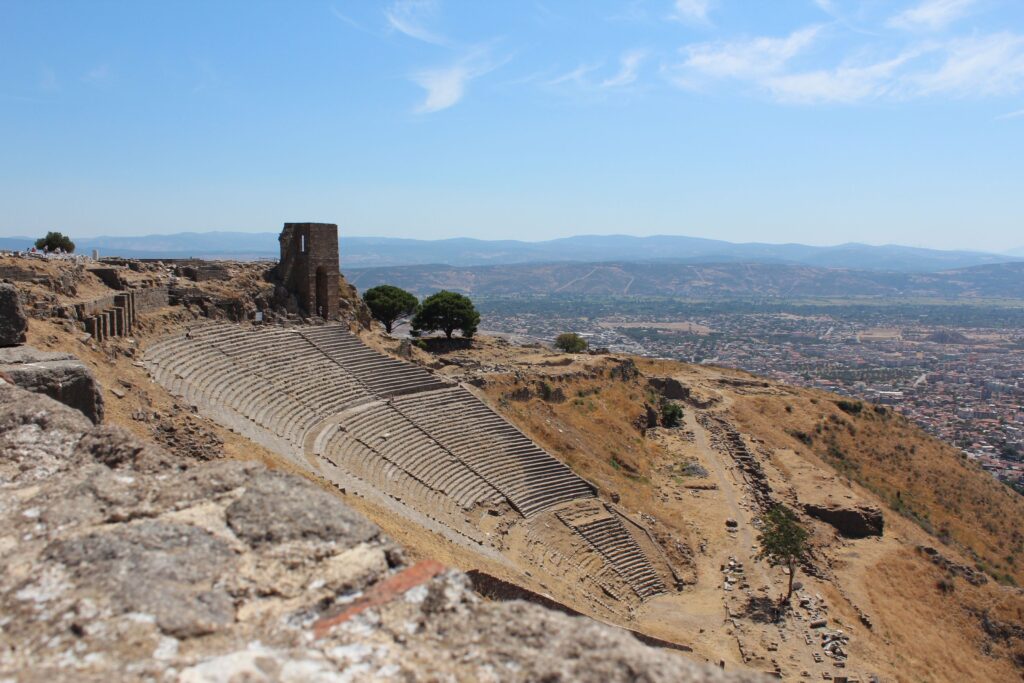
The Seven Churches of Revelation today are seven ancient sites in western Turkey. Ephesus lies by Selçuk, Smyrna under İzmir, Pergamon above Bergama, Thyatira in Akhisar, Sardis at Sart near Salihli, Philadelphia in Alaşehir and Laodicea just north of Denizli. All seven are in the provinces of İzmir, Manisa and Denizli, on a loop of about 650 kilometers of road that starts and ends in İzmir.
When my guests come to Turkey for the first time and tell me they want to follow the trail of the Seven Churches of the Apocalypse, first thing I do is open a modern map of western Turkey on the table. Then we start putting little circles on it. Where is Ephesus today? Where is Pergamon? Is Laodicea anywhere near Pamukkale?
These are the practical questions everyone asks. So this article puts the answers in one place: the modern Turkish name of each city, where it is, what you can see there today and how to visit it. It is a practical article, not a theological one. For the history and the meaning of the seven letters, read my introduction to the Seven Churches of Revelation.
Seven Churches of Revelation Today on the Map
All seven cities are in western Turkey. Ephesus, Smyrna and Pergamon are in İzmir province, Thyatira, Sardis and Philadelphia are in Manisa province, and Laodicea is in Denizli province. The letters of Revelation follow the order of a road loop, and you can still drive it today: north from Ephesus to Smyrna and Pergamon, then south and east to Thyatira, Sardis, Philadelphia and Laodicea.
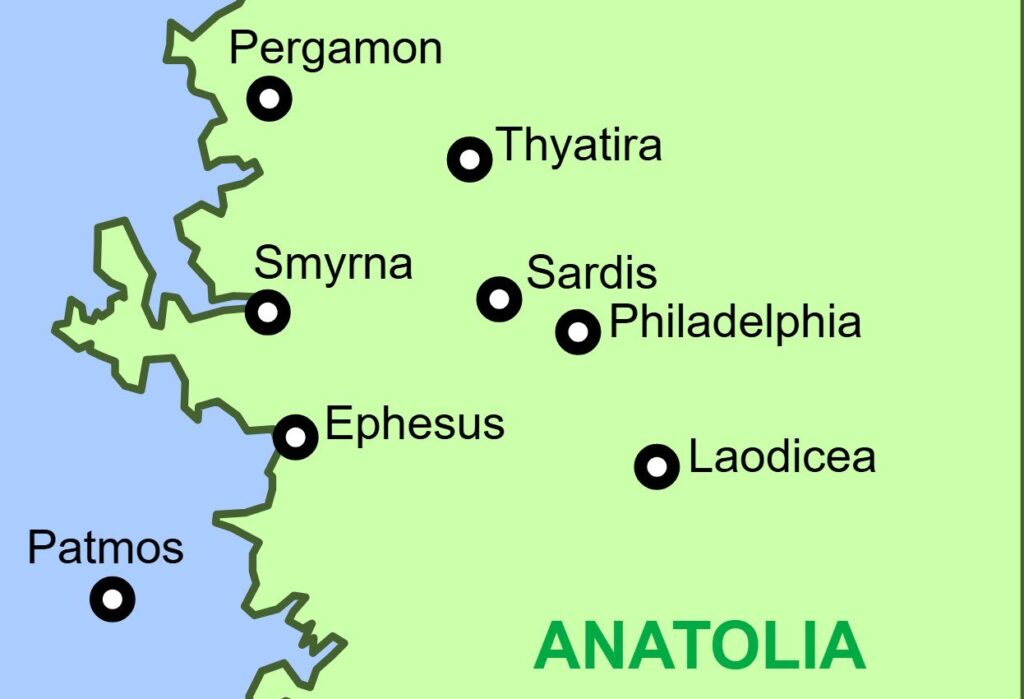
I explain that ancient route in my article on how the letters traveled between the Seven Churches. For most travelers, İzmir is the natural starting and ending point. It has an international airport, good hotels, and it sits in the middle of seven cities.
From central İzmir, Selçuk is about 75 kilometers by road, Bergama about 110, Sardis about 90 and Denizli about 230. Many travelers also like a night or two in Selçuk nearby Ephesus and in Pamukkale near Laodicea instead of one base. The road distances in this article come from the distance tables of the General Directorate of Highways (KGM), measured between town centers.
Ephesus Today in Selçuk
Ephesus is the easiest of the seven to visit. The ancient city lies just outside the town of Selçuk in İzmir province, about 75 kilometers south of central İzmir and about 70 kilometers from İzmir Airport. It is open all year and it is best preserved of the seven cities. Give it at least half a day, and a full day if you add the Christian sites of Selçuk.
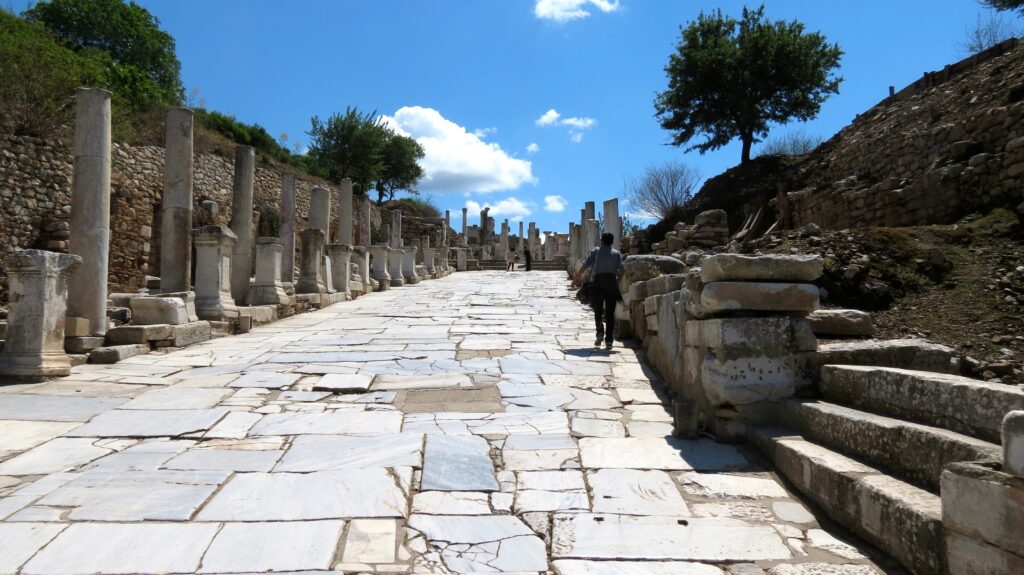
Most visits start at the Upper Gate and walk down Curetes Street to the Library of Celsus, the Great Theater and the Lower Gate. Near the Lower Gate stands the Church of Mary, where the Council of Ephesus met in 431. My article on the Upper Gate or the Lower Gate helps you choose, and the letter to the Church of Ephesus is a good reading before you go.
In Selçuk itself, the Basilica of Saint John stands on Ayasuluk Hill. Emperor Justinian built it in the 6th century over the traditional tomb of Apostle John, and you can still walk its cross-shaped plan between the marble columns. The Ayasuluk Fortress on the top of the hill is also open to visitors too, and from up there you see the town, the plain and the ruins below.
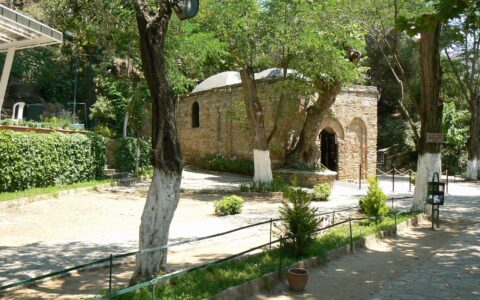
The House of the Virgin Mary stands on Bülbüldağı, Mount Koressos in antiquity, about 7 kilometers from Selçuk. According to the tradition, Mary spent her last years here in the care of Saint John. It is a small stone chapel and even my guests who are not religious find the place quietly moving.
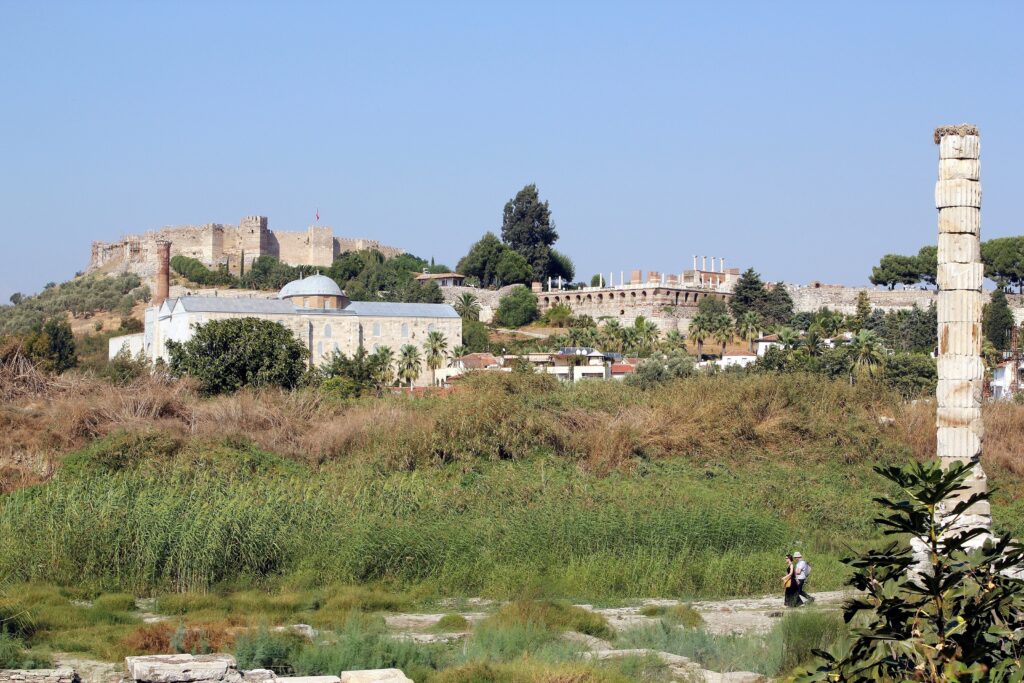
Below Ayasuluk Hill lies the site of the Temple of Artemis, one of the Seven Wonders of the Ancient World. Almost nothing remains, a single column has been put back together from fragments. Still, standing in the empty marshy field where the great temple once stood is a powerful experience in its own way.
Practical notes. Avoid July and August in Ephesus if you can, because site is very hot and very crowded. April, May and October are ideal. Bring water and a hat, and wear comfortable shoes for the uneven marble. Many of my guests have their lunch after Ephesus in Şirince, the small village in the hills above Selçuk. Please keep in mind that the Grotto of Apostle Paul is closed to visitors, so do not plan it into your day.
Smyrna Today in İzmir
Smyrna is the easiest to reach but the hardest to actually see, because the ancient city lies under the modern one. Today İzmir is the third largest city of Turkey, with about 4.5 million people in the province. The traffic is heavy, the city spreads wide around its bay and the ancient remains are scattered.
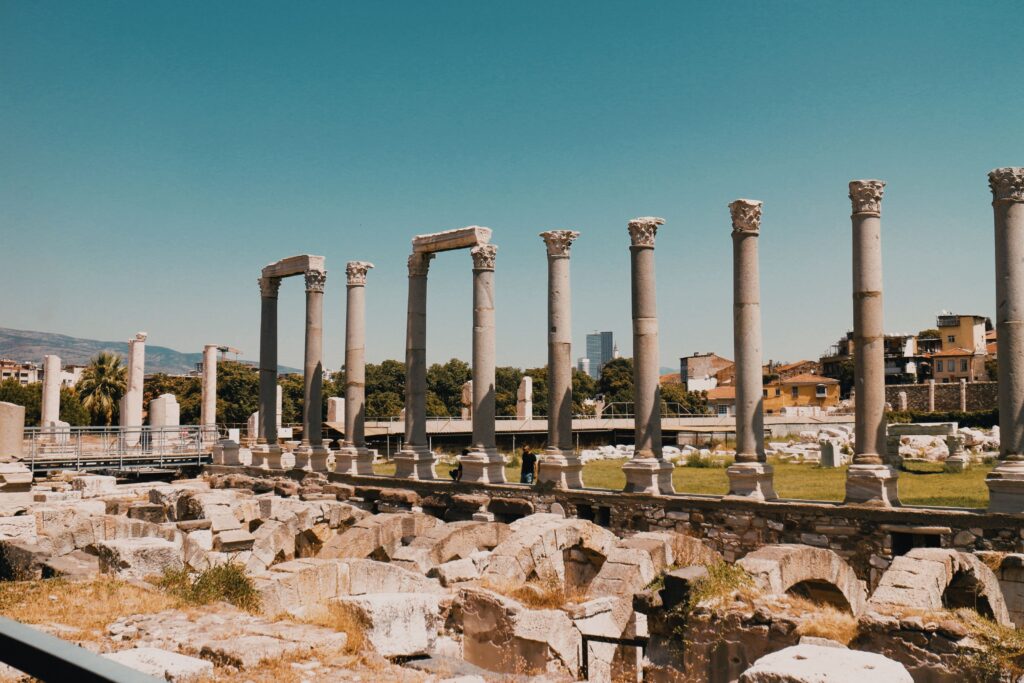
The main site is the Agora of Smyrna, in the Namazgah area next to the Kemeraltı Bazaar. It is the Roman market square that was rebuilt after the earthquake of 178 AD. You see a row of re-erected Corinthian columns, the vaulted basement of the basilica and the foundations around the square. A visitor path of about 700 meters was laid out in 2023. Allow about an hour.
Above the city rises Kadifekale, the Velvet Castle, which is ancient Mount Pagos. Smyrna was refounded on this hill in the time of Alexander the Great, although the walls you see on top today are medieval. The view over the Gulf of İzmir from up there is one of the best city views I know.
Saint Polycarp, the bishop of Smyrna, died as a martyr in the stadium of the city around 155 AD. His name lives on in the Church of Saint Polycarp, the oldest church in İzmir, first built in 1625 and rebuilt in 1929 after the great fire. My list of the Christian sites in İzmir and the Smyrna region covers it, and The Church of Smyrna tells the story of the letter.
Practical notes. Plan your visits to avoid the morning and evening rush hours. Use a taxi or hire a local guide, because the city is tiring to navigate alone if you do not speak Turkish. Allow at least half a day. The food in İzmir is excellent. The Kemeraltı Bazaar beside the agora has some of the best small restaurants in the city, especially for fresh fish and kumru, the local sandwich.
Pergamon Today in Bergama
Pergamon lies north of İzmir, about 110 kilometers by road, which takes around an hour and a half. The modern town of Bergama sits below the steep hill of the ancient acropolis.
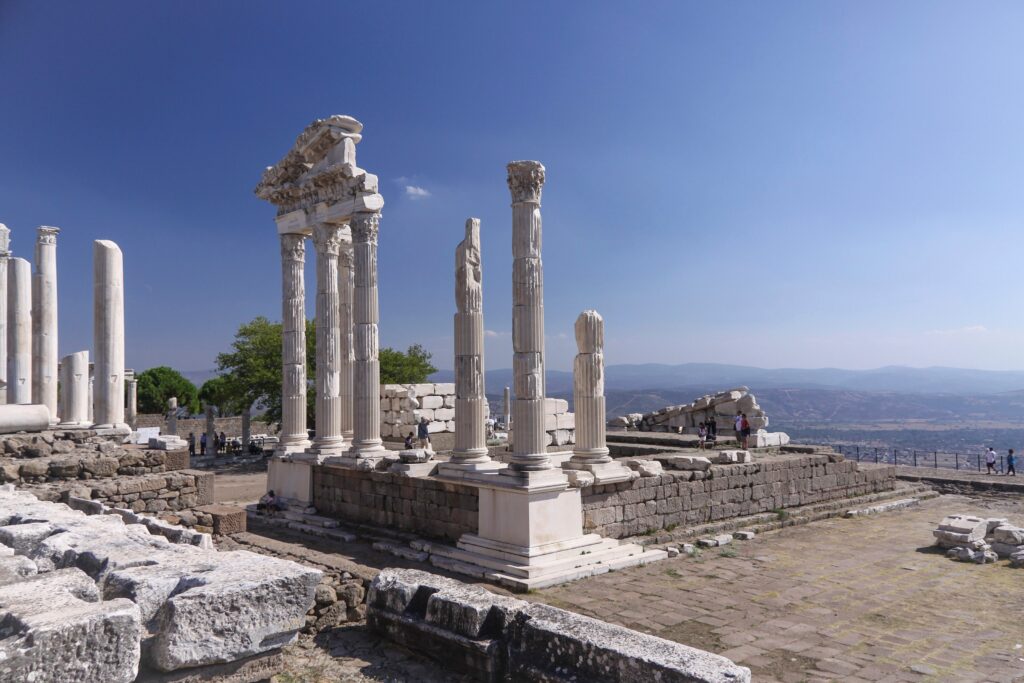
The main site is the Acropolis of Pergamon on the top of that hill, about 335 meters above sea level. A cable car takes you up from its base station in the town and saves you from the climb. Up there you see the Temple of Trajan, the steep theater, the Sanctuary of Athena, the foundations of the Great Altar, the royal palaces and the remains of the famous library. The altar itself is in Berlin today.
The second site is the Asclepion, the great healing sanctuary on the plain below the acropolis. You approach it along a colonnaded sacred way, and inside you find a small Roman theater, a round treatment building, an underground passage and the sacred spring. It is one of the most beautiful ancient sites in Turkey. Allow at least an hour, and combine it with the acropolis for a full day.
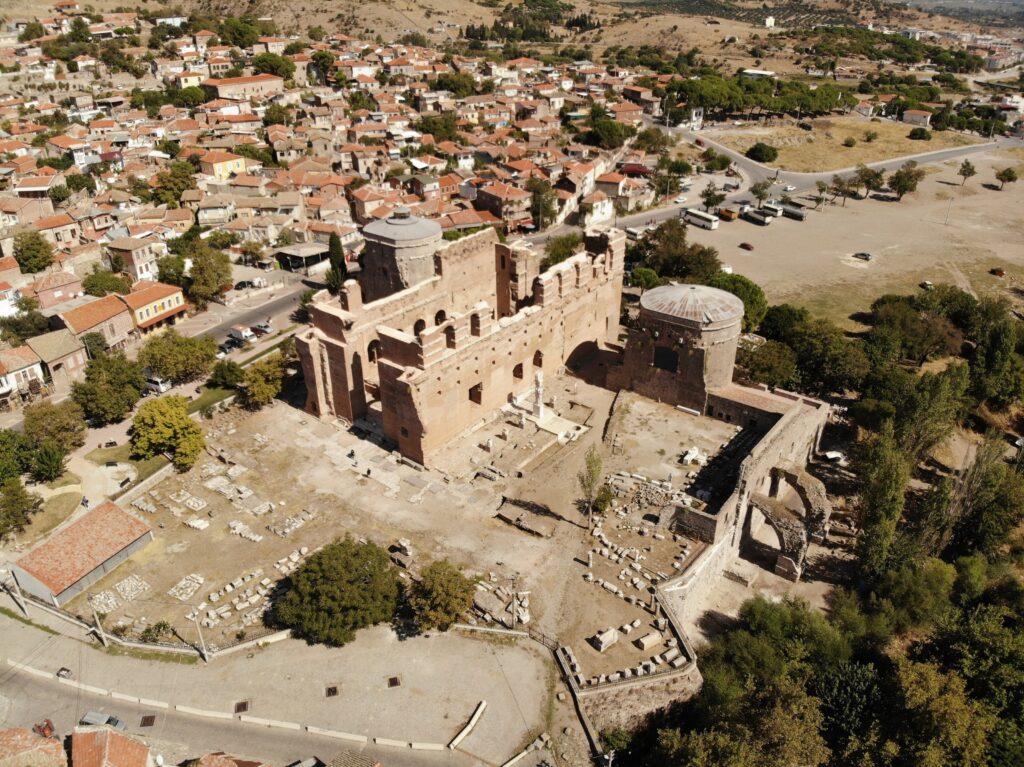
The third site is the Red Basilica, Kızıl Avlu in Turkish, in the middle of the modern town. It was built in the 2nd century AD as a temple of Egyptian gods, and in the 5th century a church was built inside its shell. Its red brick walls still rise up to 19 meters over the houses around it, and one of its round towers is used as a small mosque today.
Practical notes. Allow a full day for Bergama. Lunch in center of town is easy, and the local Bergama köfte, the meatballs of the town, are excellent. For many years I have used a small kebab restaurant near the museum. October and April are the best months. From June to September the acropolis can be very hot, and there is no shade up there. You can read more in my Pergamon Ancient City article.
Thyatira Today in Akhisar
To be honest, Thyatira is the least impressive of the seven sites archaeologically. The ancient city is buried under modern Akhisar in Manisa province, about 80 kilometers southeast of Bergama and about 90 kilometers from central İzmir. The drive from Bergama takes about an hour.
What survives is a fenced excavation in the center of the town, in the area called Tepe Mezarı. You see rows of column pedestals, brick and stone piers, column drums laying on the ground and many inscribed stones, with apartment blocks all around them. Thirty minutes is enough.

Akhisar is a busy provincial town, and it produces more olives and olive oil than any other place in Turkey. Both are of excellent quality and worth tasting.
Practical notes. Combine Thyatira with Pergamon or Sardis as a short stop, not a full day. The visit is mostly symbolic: the small excavation, the reading of the letter aloud, lunch and the drive on to the next site. The letter to Thyatira is the longest of the seven, and I tell its story in Church of Thyatira and the Longest Letter in Revelation.
Sardis Today at Sart
Sardis is one of the most beautiful of the seven sites. It lies by the village of Sart, about 10 kilometers west of Salihli in Manisa province, close to the İzmir to Ankara highway. From central İzmir it is about 90 kilometers by road, a drive of a little more than an hour.
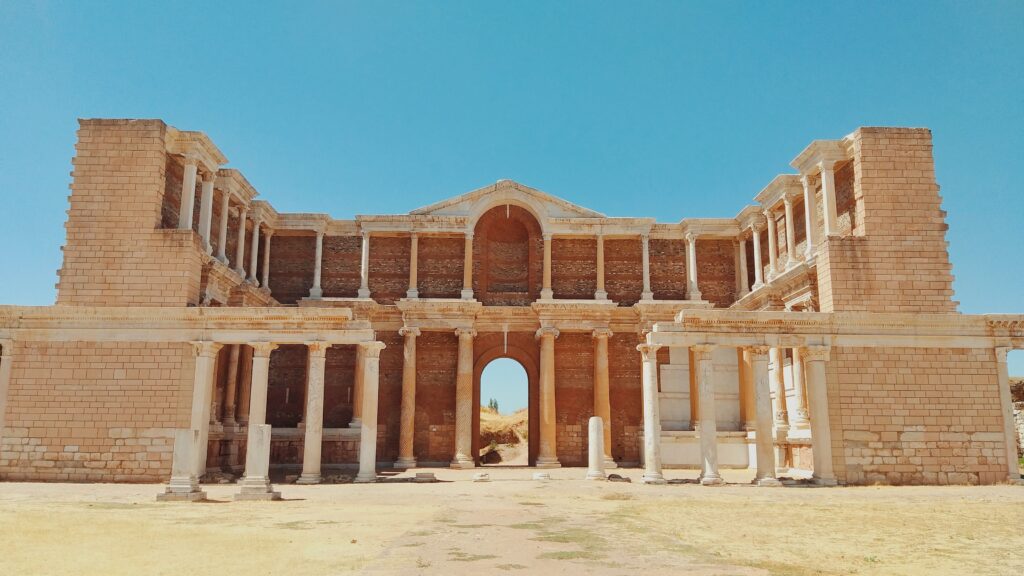
The site has two main parts. The first is the bath and gymnasium complex beside the highway, with the restored Marble Court. In the same complex is the great Synagogue of Sardis, one of the most impressive ancient synagogues ever found.
The second part, a little to the south, is the Temple of Artemis at the foot of the steep acropolis hill. Two of its great columns still stand complete, as they have since antiquity, in a beautiful country setting. Near the southeast corner of the temple you see Church M, a small Byzantine church. The acropolis above is steep, and most of visitors enjoy it from below.
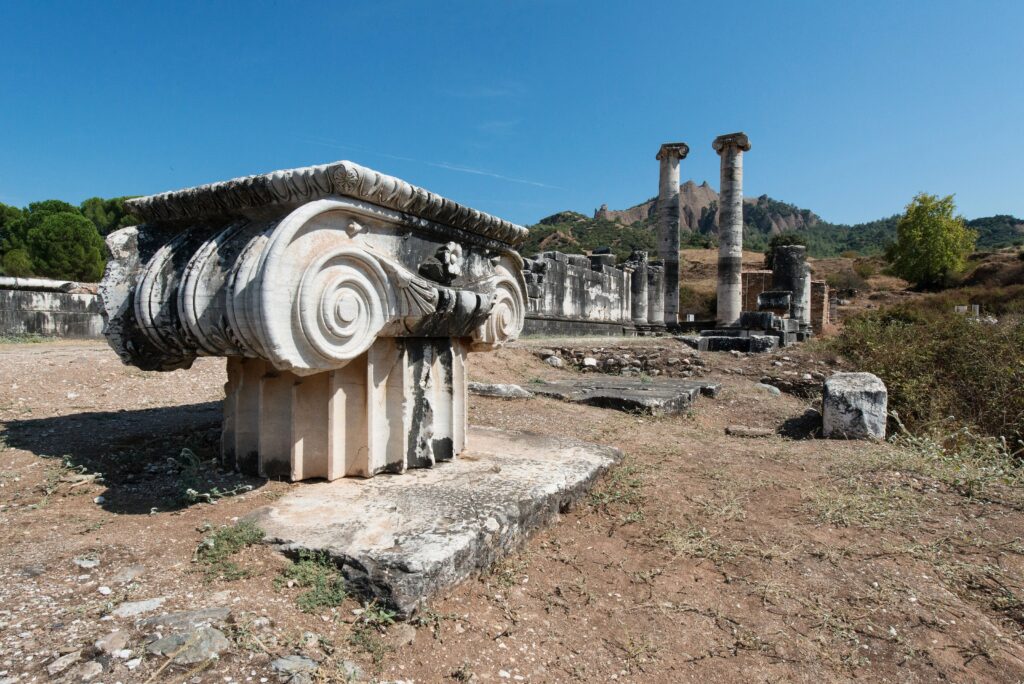
Practical notes. Allow half a day. The site has few services, and there is no proper restaurant in Sart. For lunch, drive about ten minutes to Salihli, where the local Manisa kebab is excellent. April and October are the best months. The summer is hot, and the winter is cool but pleasant. My Sardis Ancient City article tells the long story of the city.
Philadelphia Today in Alaşehir
Philadelphia is east of Sardis, about 40 kilometers from Salihli by road, so less than an hour from the ancient site. The modern town is Alaşehir in Manisa province, at the foot of Bozdağ, the ancient Mount Tmolus. Alaşehir is also on the railway line from İzmir.
The main Christian site is the Church of Saint John in the center of the town. Three of its massive brick and stone piers still stand in a small fenced garden, completely surrounded by houses and apartment blocks. The church dates from the 6th century, and the contrast between the Byzantine piers and the modern town is striking.
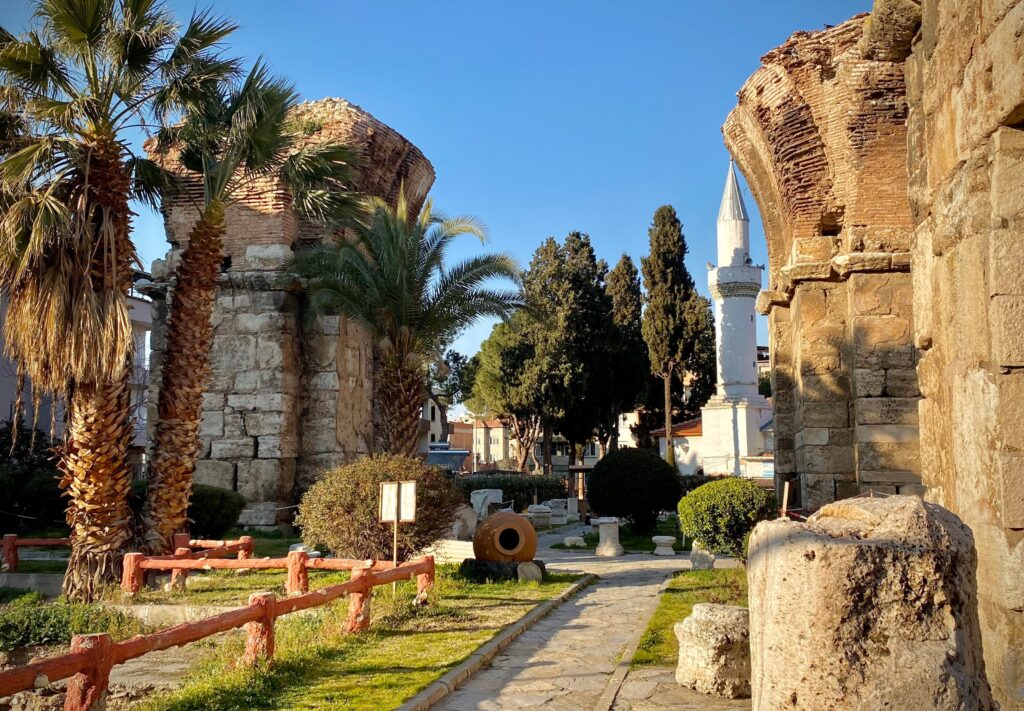
Alaşehir is famous for its seedless sultana grapes and its raisins, which you can buy on any local market. Bozdağ, the mountain above the town, is also where the gold-bearing Pactolus river rises before it runs down through Sardis.
Practical notes. Allow half a day. Alaşehir does not have big tourist facilities, but there are simple local restaurants around the central square, with good lamb dishes and homemade ayran. October is a lovely month here. Read The Church of Philadelphia for the story of the open door.
Laodicea Today near Denizli
Laodicea is in Denizli, the southernmost province of the seven. The site lies about 6 kilometers north of Denizli city, on the way to the Pamukkale travertines. From Alaşehir to Denizli it is about 95 kilometers, roughly an hour and a half.
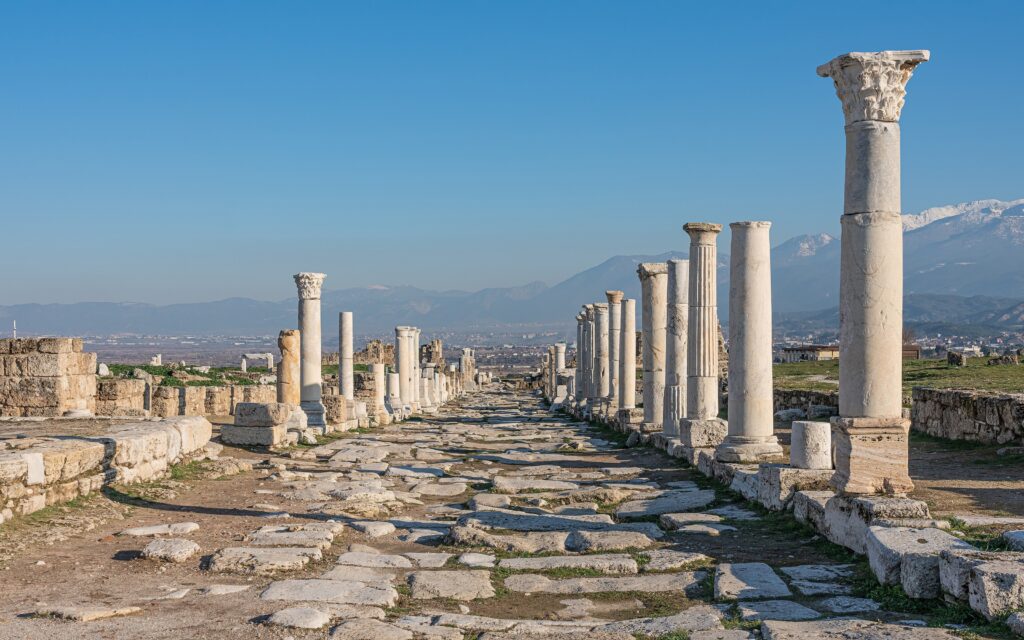
For more than twenty years, Pamukkale University has excavated and restored Laodicea, and it has become one of the most impressive open-air ancient sites in Turkey. You walk on Syria Street, the main colonnaded avenue, and see two theaters, the stadium, temples, fountains and a great church beside the colonnaded street. At the water distribution tower you can still see the thick calcium deposits that the water left behind.
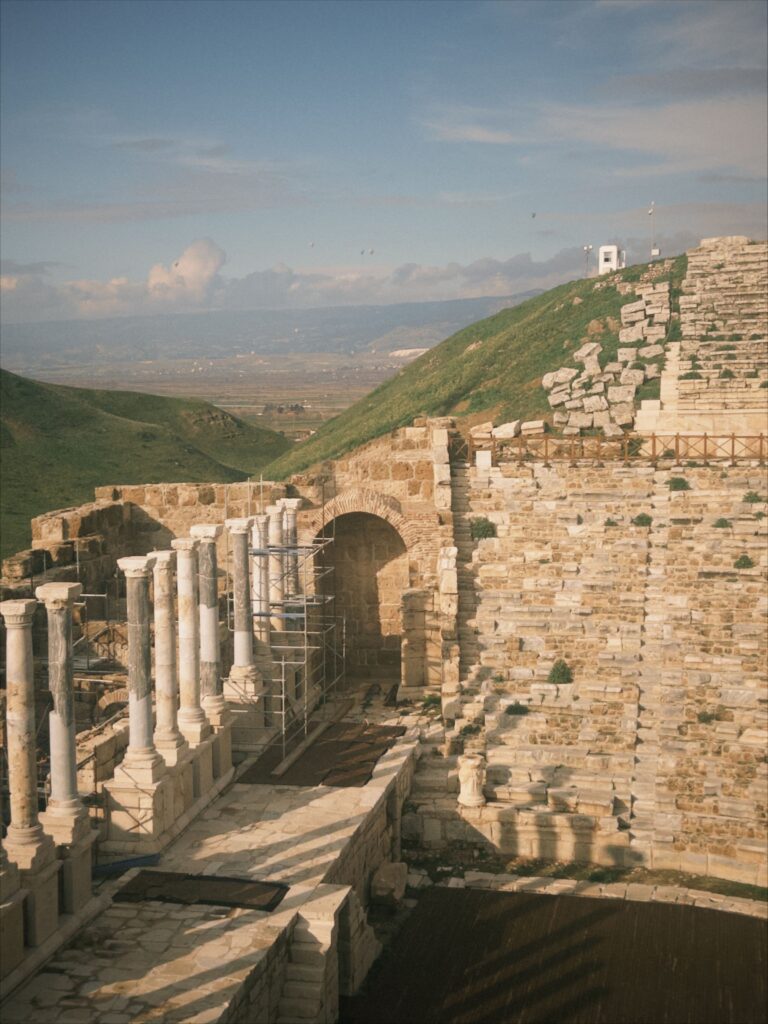
Allow at least three hours, ideally a full morning. My article on Laodicea and the lukewarm church tells you what to look for.
After Laodicea, do not miss to visit Hierapolis, about 10 kilometers to the north, on top of the white travertine terraces of Pamukkale. Apostle Paul names Hierapolis together with Laodicea in Colossians 4:13. The hot springs still flow, and the ancient city has a magnificient theater, a necropolis more than 2 kilometers long and the Martyrium of Saint Philip.
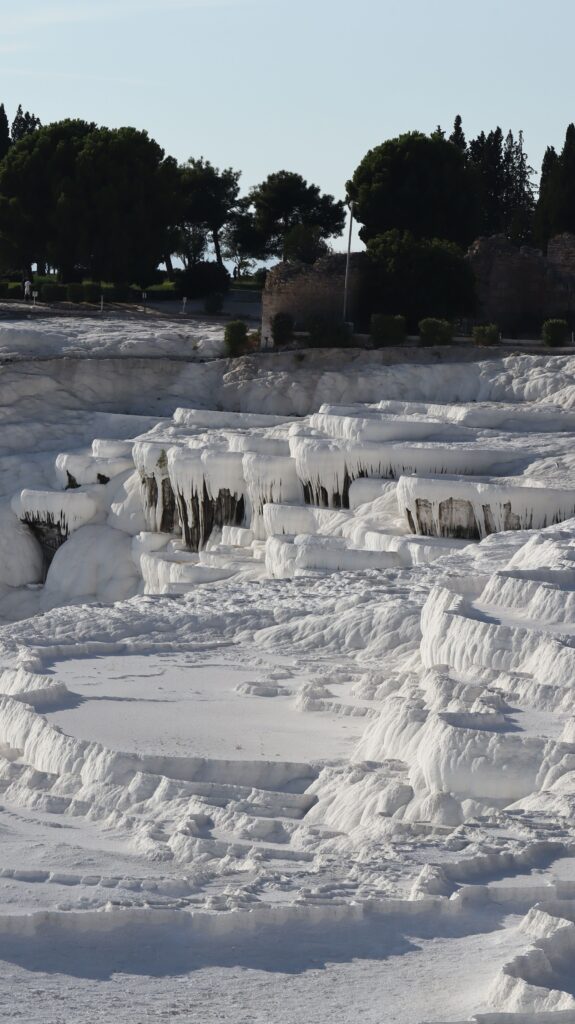
Practical notes. Allow a full day for Laodicea and Hierapolis together. The summer here is very hot, so from June to August go early in the morning or in the late afternoon. April, May and October are ideal. You must take off your shoes on the travertines. The village of Pamukkale has many small restaurants, and the local gözleme, the thin flatbread filled with cheese and herbs, is very good. More in my Hierapolis Ancient City article.
Distances Between the Seven Churches
Here are the road distances between the town centers in the order of the letters, from the KGM tables:
- Selçuk (Ephesus) to İzmir (Smyrna): 74 km
- İzmir to Bergama (Pergamon): 111 km
- Bergama to Akhisar (Thyatira): 82 km
- Akhisar to Salihli (Sardis is about 10 km west of Salihli): 67 km
- Salihli to Alaşehir (Philadelphia): 38 km
- Alaşehir to Denizli (Laodicea is just north of the city): 96 km
- Denizli back to Selçuk: 176 km
Together that is about 650 kilometers. İzmir Airport is 68 kilometers from Selçuk, and central İzmir is 231 kilometers from Denizli. Driving times depend on the traffic, but most of these legs take between one and two hours.
Road Distances From Selçuk and İzmir
Most travelers start from Selçuk or İzmir, so here are the distances from those two towns to each church site, rounded and measured between town centers.
| Church | Modern town | From Selçuk | From İzmir |
|---|---|---|---|
| Ephesus | Selçuk | just outside town | about 75 km |
| Smyrna | İzmir | about 75 km | in the city |
| Pergamon | Bergama | about 180 km | about 110 km |
| Thyatira | Akhisar | about 145 km | about 90 km |
| Sardis | Sart, near Salihli | about 125 km | about 90 km |
| Philadelphia | Alaşehir | about 175 km | about 135 km |
| Laodicea | near Denizli | about 180 km | about 230 km |
What Happened to the Seven Churches?
Most of the seven cities faded slowly, not in one day. Earthquakes, a silting river and trade moving away did the work, and three of them, Smyrna, Thyatira and Philadelphia, never emptied at all.
- Ephesus: the Cayster River filled the harbor with silt and the sea moved away, so trade left. Little by little life moved up to Ayasuluk Hill, where the church of Saint John stood. See Selçuk, the town that was once Ephesus.
- Smyrna: its harbor kept it alive through Roman and Byzantine times, and it grew into İzmir.
- Pergamon: after the earthquake of 262 AD the city lost much of its wealth, and in Byzantine times town shrank to the acropolis hill.
- Thyatira: people never left it, so the town of Akhisar covers the ancient city today.
- Sardis: it began to shrink in the 600s AD and slowly became the village of Sart.
- Philadelphia: it sits on an earthquake fault, yet it was rebuilt and was a lively Byzantine town in the 6th century, today it is Alaşehir.
- Laodicea: after many earthquakes its theater went out of use in the 600s, and in the Seljuk period its people moved to the town that became Denizli.
Suggested Itineraries for the Seven Churches
These short plans are for the Seven Churches only. You arrange your own rental car or driver and your hotels, or you ask a licensed travel agency to arrange them for you.
Two days. Do not try to see all seven. Either take the northern five, Smyrna and Pergamon on the first day with a night in Bergama, then Thyatira, Sardis and Philadelphia on the second. Or see the two best preserved cities, Ephesus on the first day and Laodicea with Hierapolis on the second.
Three days, at a brisk pace. Day 1: the Agora of Smyrna early in the morning, then Pergamon, and sleep in Bergama. Day 2: Thyatira, Sardis and Philadelphia, and sleep in Pamukkale or Denizli. Day 3: Laodicea in the morning, then drive to Selçuk and walk Ephesus in the afternoon.
Four days, at a comfortable pace. Follow the three-day plan, but give Laodicea and Hierapolis the whole of Day 3, and keep Day 4 for Ephesus, the Basilica of Saint John and the House of the Virgin Mary. This is the plan I recommend most.
With one more day, many pilgrims add Patmos, where John received the Revelation. In summer a sea bus runs from Kuşadası. Check the current timetable and bring your passport, because Patmos is in Greece. Read my article on how John wrote Revelation on Patmos.
Practical Tips for Visiting the Seven Churches
A few last small notes. Bring comfortable shoes. The marble of Ephesus, the steep paths of the Pergamon acropolis and the stone streets of Laodicea will destroy bad shoes in a single day. We say “ayağa rahat” in Turkish, comfortable on the foot. Spend your money on the shoes.
Bring a hat and water, because summer sun in Anatolia is much stronger than in northern Europe. Carry some Turkish lira in small notes for tea breaks, snacks and small purchases. Check the opening hours of each site before you go, because they change between summer and winter.
Take a Bible with you and read each letter in its own city: Ephesus in Revelation 2:1–7, Smyrna in 2:8–11, Pergamon in 2:12–17, Thyatira in 2:18–29, Sardis in 3:1–6, Philadelphia in 3:7–13 and Laodicea in 3:14–22. Hearing the words in the place where they were first read is one of the best moments of the trip.
Learn three Turkish words before you come: merhaba, hello; teşekkür ederim, thank you; and çok güzel, very beautiful. The Turkish people are warm and helpful, and they appreciate any small attempt to speak the language.
The seven cities are real places, with real markets, real people and real food. They are not just biblical references. To walk the Seven Churches today is to walk into modern Turkish life as much as into ancient Christian history. You do not just visit the past. You also meet the present, and in this country the two are always mixing.
Frequently Asked Questions
What are the seven churches of Revelation called today?
Ephesus is Efes, next to the town of Selçuk. Smyrna is İzmir, Pergamon is Bergama and Thyatira is Akhisar. Sardis is by the village of Sart near Salihli, and Philadelphia is Alaşehir. Laodicea, Laodikeia on Turkish signs, is the ancient site just north of Denizli. All seven are in western Turkey.
How far apart are the seven churches of Revelation?
In the order of the letters, it is about 40 to 110 kilometers by road from one city to the next. The shortest leg is Sardis to Philadelphia, and the longest is İzmir to Bergama. The full loop from Ephesus round to Laodicea and back to Ephesus is about 650 kilometers.
Can you visit the seven churches of Revelation?
Yes. All seven are open to visitors. Ephesus, Pergamon, Sardis, Laodicea and the Agora of Smyrna are fenced archaeological sites with opening hours, and the smaller sites of Thyatira and Philadelphia are in the middle of their towns. By car, all seven fit into three or four days from İzmir or Selçuk.
Is İzmir near Ephesus?
Yes. Selçuk, the town beside Ephesus, is 74 kilometers from central İzmir and 68 kilometers from İzmir Airport, so about an hour by car. Trains also run from İzmir to Selçuk. My article on how to get to Ephesus explains the options.
Hire Seven Churches Tour Guide in Turkey
I’m a nationally licensed Turkish tour guide based in Kuşadası, nearby Ephesus. I work as a guide only: you arrange your transport and hotels yourself or through a licensed travel agency, and you hire me as your guide. My day guiding is in Ephesus, İzmir and Pamukkale, so I can guide you at Ephesus, at Smyrna, and at Laodicea with Hierapolis.
My license is valid all over Turkey, so for Pergamon, Thyatira, Sardis and Philadelphia I can join you as your personal guide on a longer journey. You can see my guiding rates and guiding areas or write to me through my contact page with your dates and questions.
The Seven Churches of Revelation today are still waiting for you, in the middle of living Turkish towns. I hope we will see each other on the marble streets of Ephesus or under the old pillars of Philadelphia. You can always write to me with your questions about the Seven Churches. See you soon, Hasan Gülday.