The best mosaics in Turkey run from Roman house floors in Antioch and Zeugma to the gold walls of Byzantine Istanbul. Seven places show that story: the Chora Church, Hagia Sophia, the Hatay Archaeology Museum, the Great Palace Mosaic Museum, the Martyrion of Philip at Hierapolis, the Zeugma Mosaic Museum and the Church of Saint Nicholas in Demre.
Please keep it in mind that visiting conditions changed a lot in recent years. As of October 2026, the Hatay Archaeology Museum and the Great Palace Mosaic Museum are closed for repair, while Chora and Hagia Sophia are working mosques with rules for visitors. For every place below I tell you what is there today, with the date of my source.
Mosaics in Byzantine Christianity
A mosaic is a picture made of small cubes of glass, stone or marble, called tesserae. Gold glass cubes caught light of every candle, so saints and emperors seemed to shine on the walls. Byzantine church interiors were generally covered with golden mosaics, but most of them were lost to wars and conquests. What survives in Turkey is precious.
Not every mosaic on my list is Christian. Antioch and Zeugma give us Roman house floors that were laid before and beside the early church. They show the world in which Christianity grew. Let’s have a look at the seven, and I will tell you honestly what is Christian and what is not.
1. The Chora Church in Istanbul
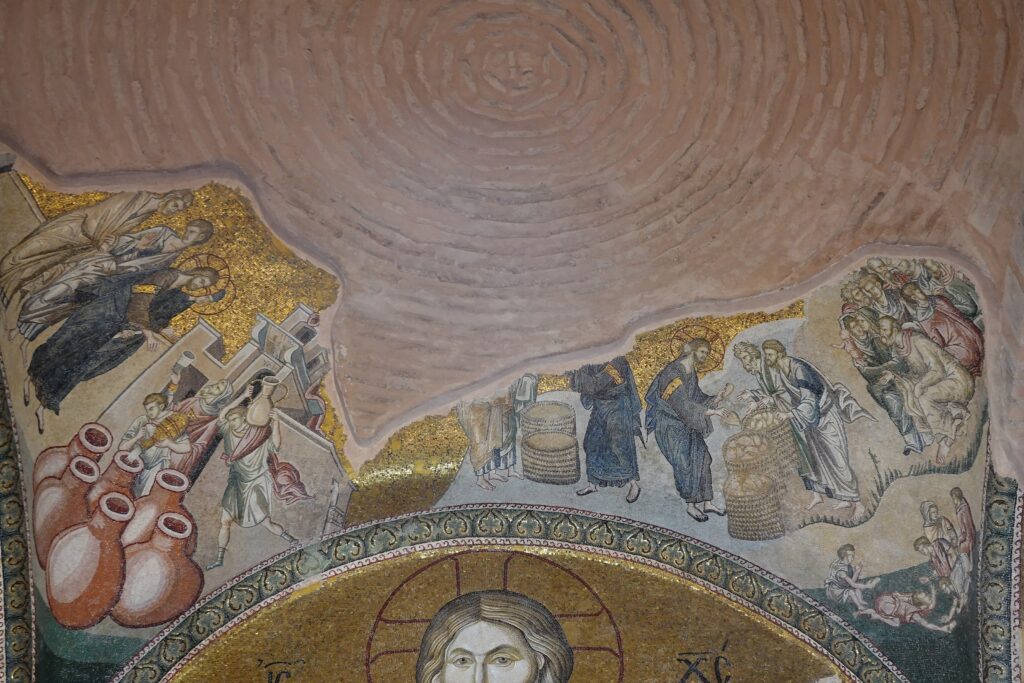
If you can only see one set of mosaics in Turkey, see these. The Church of the Holy Saviour in Chora, today called the Kariye Mosque, lies in Edirnekapı neighborhood of Istanbul’s Fatih district. Theodore Metochites, the personal adviser of Emperor Andronikos II, paid for the decoration. It was made between about 1310 and 1317, and the names of the artists are unknown.
The mosaics fill the two narthexes, the entrance halls. The outer narthex tells the childhood of Christ: the Nativity, the journey of the Magi and the flight into Egypt. The inner narthex tells the life of the Virgin Mary, from the meeting of her parents Joachim and Anne to her first seven steps and her presentation in the Temple. The faces are small, but the gestures are warm and very human.
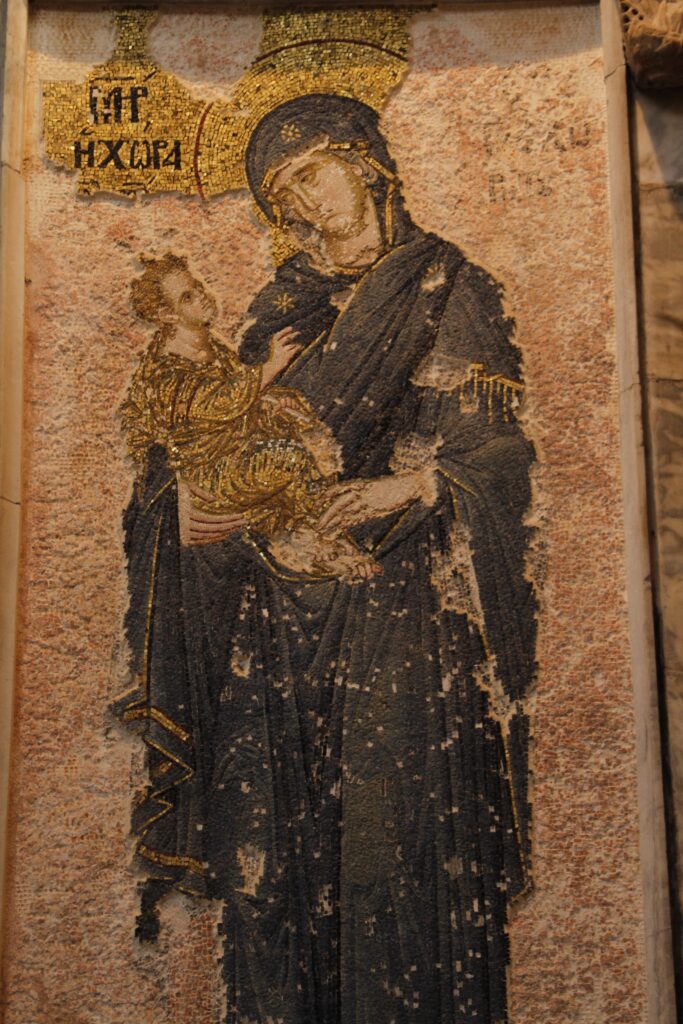
The most famous picture of Chora is not a mosaic. The Anastasis, where Christ pulls Adam and Eve out of their tombs, is a fresco in the side chapel, the parecclesion. Please look for it too. In the main hall, the naos, only three mosaics survive: the Dormition of the Virgin, Christ, and the Virgin with the Child.
Today the church is a Mosque again. A court decision in 2019 and a presidential decree in August 2020 ended its time as a museum, and after a long restoration it opened for worship on May 6, 2024.
The Art Newspaper wrote on May 10, 2024 that three images of Mary and Christ in the naos are covered with curtains during prayer times, while the mosaics and frescoes of the narthexes and the side chapel are not covered.
Foreign visitors pay 20 euros since August 19, 2024. The mosque is open for visitors six days in a week from 9:00 to 18:00. On Fridays it is only for worship, and visits stop 15 minutes before each prayer time. These rules were reported by Anadolu Agency and Daily Sabah in August 2024. I found no later change, but please check before you go.
2. Hagia Sophia in Istanbul
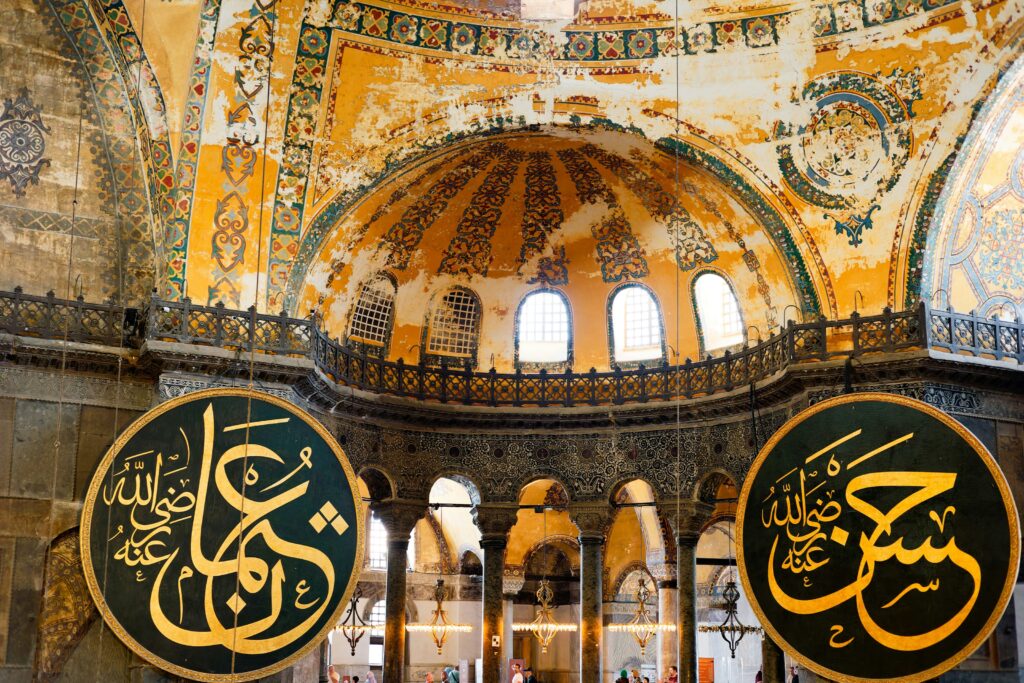
Hagia Sophia is famous for its dome, but the mosaics are as important as the architecture. Figural mosaics were condemned in the two periods of Iconoclasm, 726 to 787 and 814 to 842, and after the conquest of 1453 many were covered with plaster. The Swiss-Italian Fossati brothers uncovered some of them in 1847 to 1849, and the Byzantine Institute of America under Thomas Whittemore uncovered many more in the 1930s.
The best-preserved mosaics are in the south part of the upper gallery. The Deesis, from about 1261, shows Christ with the Virgin Mary and John the Baptist, who ask him to forgive humanity on Judgment Day. It was ordered to mark the end of 57 years of Latin Catholic use. Many scholars call it the finest mosaic of the building, and the soft, humane faces show why.
On the same wall you find two imperial panels. The Zoe mosaic of the 11th century shows Christ with Emperor Constantine IX Monomachos and Empress Zoe. The Comnenus mosaic of 1122 shows the Virgin with Emperor John II Komnenos and Empress Irene of Hungary, whose blond plaits tell her northern origin. Their son Alexios stands on the pillar next to them.
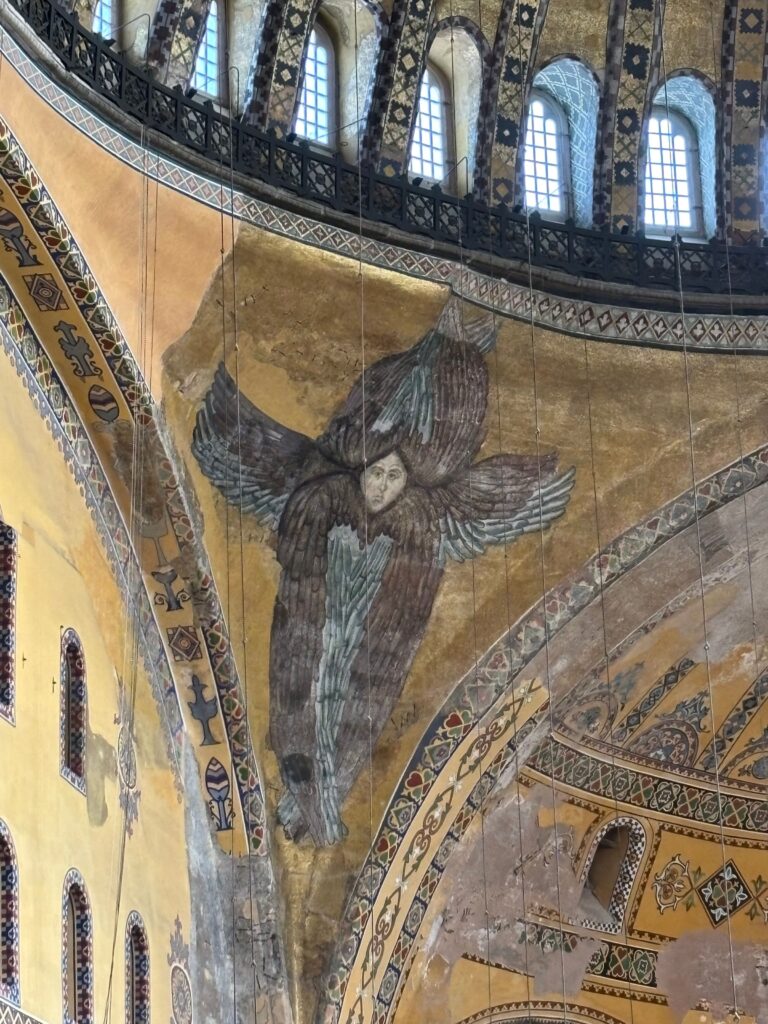
On the main floor, the apse holds the Virgin and Child on a jeweled throne. Most scholars link it to the homily that Patriarch Photios gave on March 29, 867, after Iconoclasm, but other dates have been proposed. Over the Imperial Door, Christ sits on a throne with an emperor bowing before him, made in the late 9th or early 10th century.
Hagia Sophia has been a mosque again since July 2020, since January 15, 2024 worshippers and foreign visitors have separate entrances. Foreign visitors use the ramp on the south side, go to the gallery floor and pay 25 euros, according to the Culture and Tourism Ministry as reported by Daily Sabah and Hürriyet Daily News in January 2024.
From the gallery you can look at the Byzantine mosaics, and most of ground floor is for worshippers. I found no later change of the price, but a big restoration is going on. Daily Sabah reported on July 24, 2026 that the lead covering of the main dome needs repair or replacement and that the interior mosaics are being conserved. The mosque stays open to worshippers and visitors during the work.
I also wrote about the building in my posts on the Hagia Sophia guided tour and the Hagia Sophia Mosque too.
3. The Hatay Archaeology Museum in Antakya
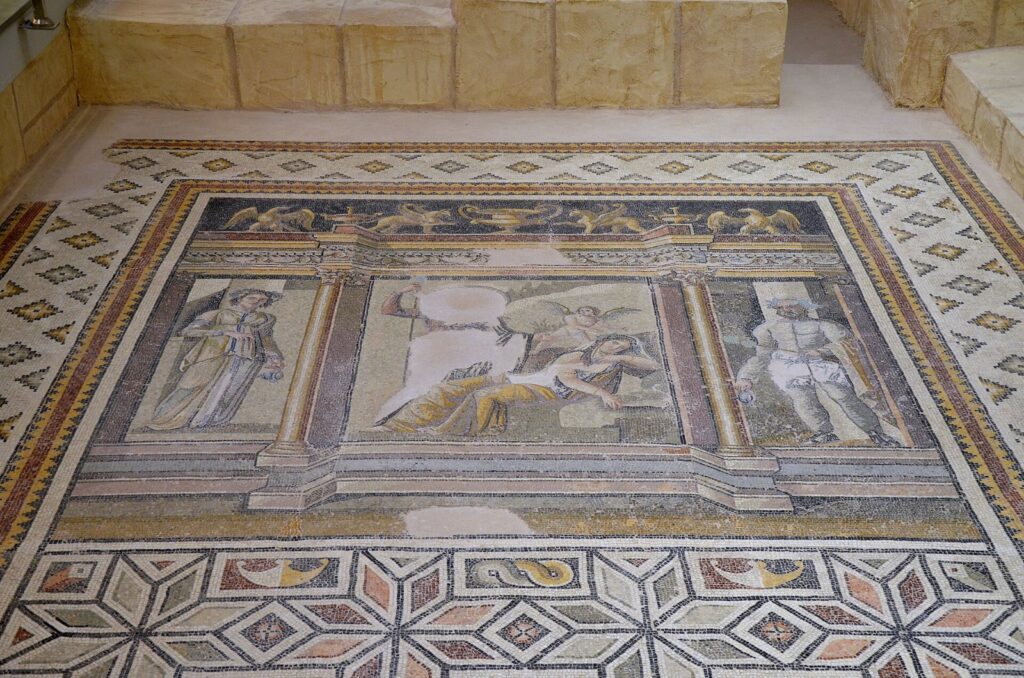
Antakya is ancient Antioch on the Orontes. The Acts of the Apostles says “the disciples were called Christians first in Antioch” (Acts 11:26, KJV), so the city matters for this list. Between 1932 and 1939 a group of American and French museums and universities dug in and around the city and found more than 300 mosaic floors. About half of them stayed in Antakya. I told the story of the city in my post on Antioch.
The floors that stayed are now in the Hatay Archaeology Museum. The Culture Ministry’s page highlights seven, among them the Abandoned Ariadne, the Yakto mosaic, the Seasons, the Birth of Venus and the Skeleton mosaic. The Ariadne floor comes from Seleucia Pieria, the harbor of Antioch, and dates to the 2nd or 3rd century.
Please be careful here. Most of these mosaics are not Christian. They show gods, hunts, banquets and daily life, and most were laid between the 2nd and 6th centuries, after the time of Paul and Barnabas. The ministry page names no Christian piece among its highlights. So you come not just for their own pictures, also for the world around the early Christians.
The museum was damaged in the earthquakes of February 2023 and is closed. Hürriyet Daily News reported on February 25, 2026 that the building is being strengthened, that about 37,000 objects are in storage, and that the museum should reopen in stages by late 2026. Please check before you plan trip around it.

One Antakya museum with a great mosaic is open: the Necmi Asfuroğlu Archaeology Museum. It reopened in June 2024 after earthquake repairs. It shows the huge floor mosaic found in 2010 during hotel construction, believed to be from the 6th century, which came through the earthquakes without damage (Hürriyet Daily News, May 22, 2026). I wrote about it in The World’s Largest Ancient Floor Mosaic in Turkey.
4. The Great Palace Mosaic Museum in Istanbul
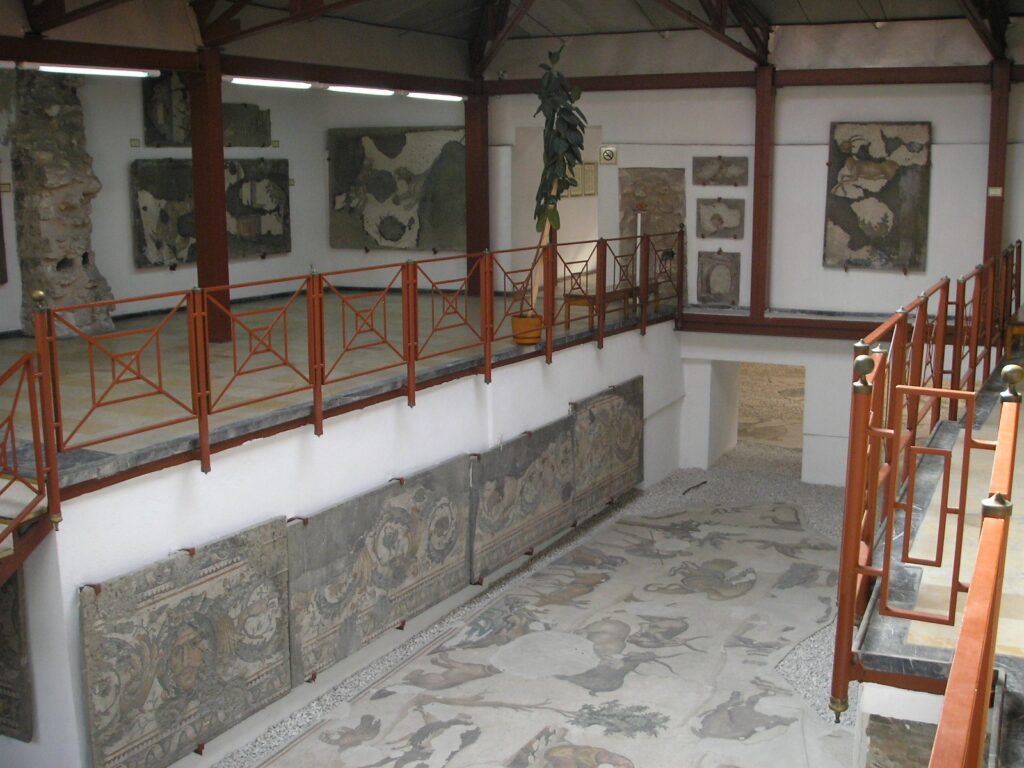
The Great Palace was the home of the Byzantine emperors, and the decoration of its courtyard needed nothing religious. The museum shows the pavement of a colonnaded courtyard in the south-western part of the palace. British archaeologists from the University of St Andrews found it in digs of 1935 to 1938 and 1951 to 1954, at the Arasta Bazaar near Sultanahmet Square.
The scenes are hunts, animals, myth and country life: a griffin eating a lizard, an elephant fighting a lion, a child herding geese and a hunter fighting a tiger. The date is still discussed. Older books say the age of Justinian in the 6th century, while the research project Byzantium 1200 puts the courtyard in the late 6th or early 7th century, maybe under Emperor Heraclius.
Why is it on a Christian list? Because the emperors who called church councils lived in a palace whose floors were not religious. The Byzantine Christian world was a whole world, political, rural and social, not only icons and saints.
The museum is closed. The Istanbul Culture and Tourism Directorate announced that it was closed to visitors on April 10, 2023 for earthquake strengthening and restoration, and Türkiye Today wrote in a piece updated on January 14, 2026 that no reopening date had been announced. I found no news of a reopening up to October 2026. See also my post on the attractions around Sultanahmet Square.
Istanbul has other Roman floors. A giant mosaic of the 2nd century was found in the Zeytinburnu district, and I wrote about it in 2nd century AD Roman Mosaic Discovered in Istanbul.
5. The Martyrion of Philip at Hierapolis
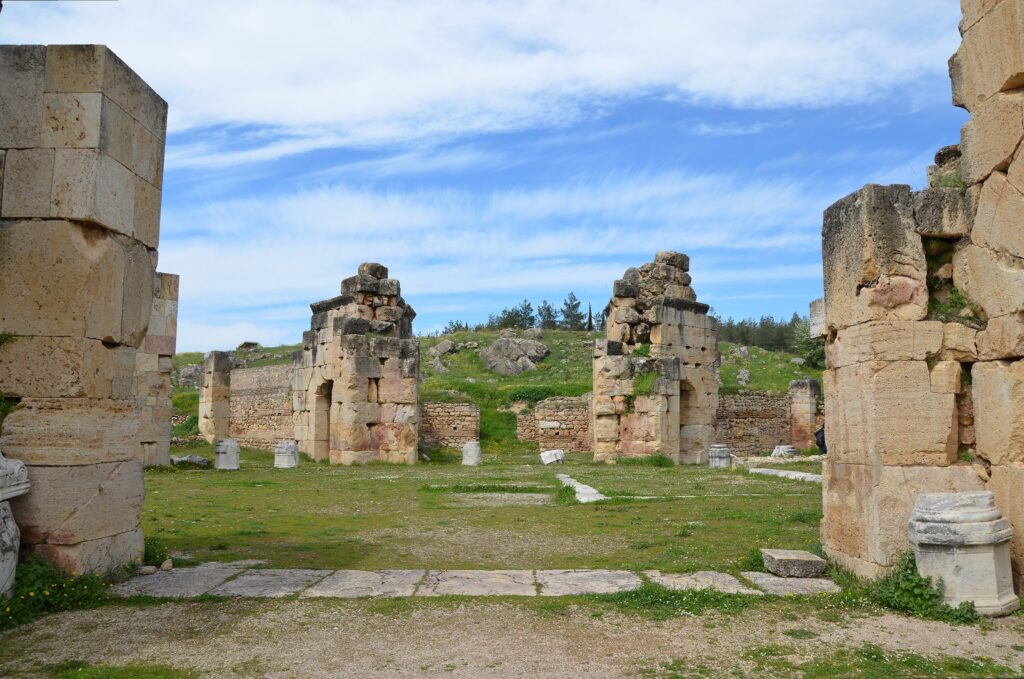
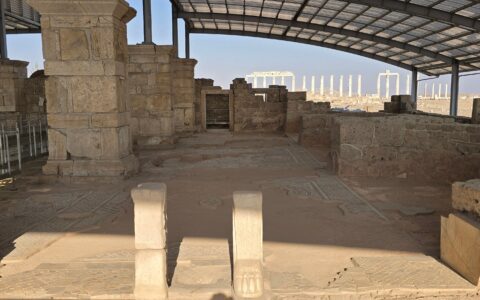
Here I have to be honest: the Martyrion of Philip is not a mosaic site. Apostle Philip is said to have been martyred at Hierapolis, today Pamukkale, and in the 5th century a great octagonal church, the Martyrion, was built on hill outside the northeastern city walls. A 2012 study of the building by Güven Gümgüm lists its pavements as opus sectile, white marble mosaic and travertine. I found no report of figural scenes.
The walls were richer. Wikipedia’s description of the building says the walls were covered with marble panels and the dome above the apse was decorated with mosaics. You visit the Martyrion for its plan, a central octagon 20 meters wide with eight rooms around it, built for pilgrims on the place where tradition says Philip died.
A real mosaic was found in the church over Philip’s tomb, a short walk from the Martyrion, where the Italian team of Francesco D’Andria announced the apostle’s tomb in 2011. In 2010 a floor mosaic was exposed at the back of the burial chamber. Illegal digging and earthquakes had damaged it badly. Conservators made a great job and lifted two panels, and in 2012 they moved them onto Aerolam panels (S. Noei, Journal of Mosaic Research, 2023).
Today the panels are laying in the warehouse of the Pamukkale museum until they can be shown at the original place. So on Philip’s hill you do not see a mosaic. You see where the first Christians honored an apostle.
Pamukkale is part of my day guiding, so this is a place I can show you. Read the whole story in my article on the Martyrium of Saint Philip and about the city in Hierapolis Ancient City.
6. The Zeugma Mosaic Museum in Gaziantep
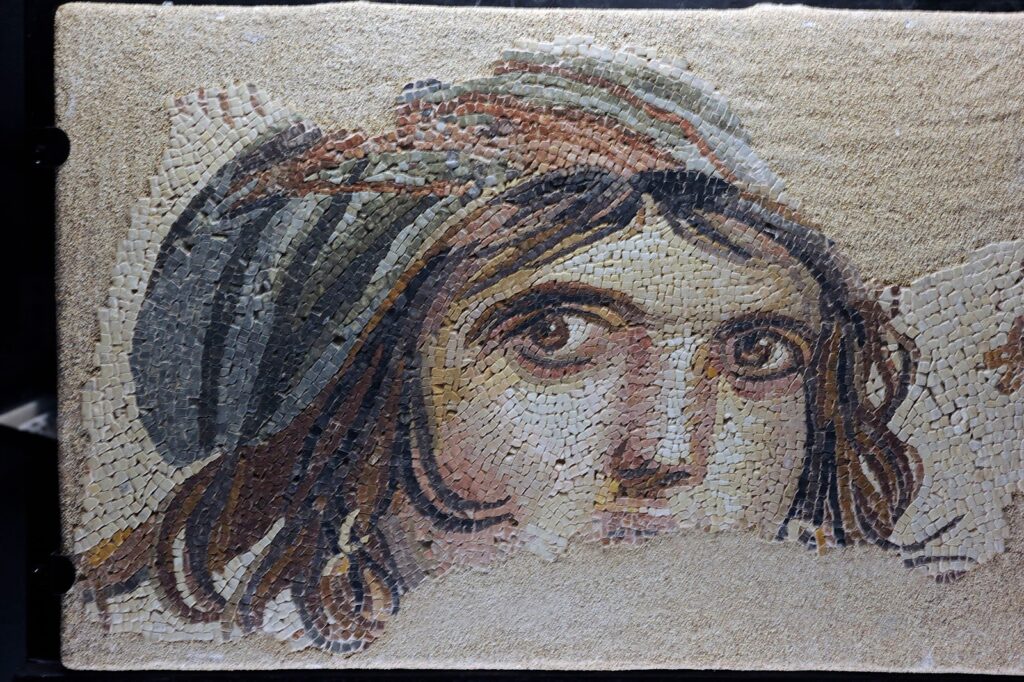
Zeugma was a Roman frontier city on the Euphrates, named for its bridge of boats. In 2000 the rising water of the Birecik Dam threatened the site. The American philanthropist David Packard gave 5 million dollars for a rescue dig, and the mosaics were saved. The Zeugma Mosaic Museum in Gaziantep opened on September 9, 2011 and is one of the largest mosaic museums in the world.
The best known piece is the Gypsy Girl, a face with wide dark eyes. Please stand infront of her for a minute and look at the eyes. Her floor was cut up by illegal diggers in the 1960s, and Turkey won back twelve panels in 2018. Daily Sabah reported on July 15, 2026 that the thirteenth panel was handed over at the museum on July 14.
Is Zeugma Christian? Only in part. Most mosaics show myth, banquets and hunts from the Roman centuries. But in late antiquity Zeugma became a diocese of the early church, and it was abandoned only in the 7th century after Persian and Arab raids. So here too we see the world before and around the church.
The museum building and its objects came through the February 2023 earthquake without damage, and it reopened in April 2023 (Wikipedia). Daily Sabah reported record crowds for 2025 in January 2026. Gaziantep is far from the Aegean, so this is place for a longer journey. I mention Zeugma in my post on the top 10 archaeological attractions of Turkey.
7. The Floors of Saint Nicholas Church in Demre
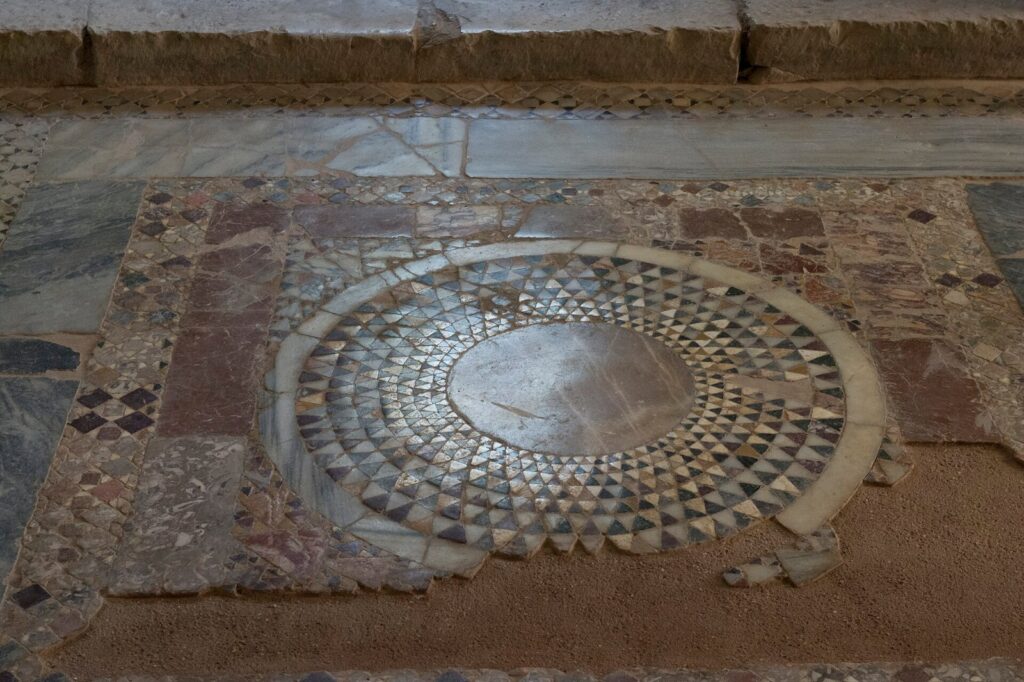
Demre is ancient Myra on Lycian coast of Antalya Province. The church of Saint Nicholas was built in 520 AD on the foundations of an older church where Nicholas had served as bishop, and Emperor Justinian helped with the rebuilding. It was used for worship until the early 1920s, when the Greek community left, and today it is the St. Nicholas Memorial Museum.
One more honest note: the famous floor of the church is mainly opus sectile, an inlay of cut colored marble that looks like a mosaic. Wikipedia describes the church as having opus sectile marble inlay floors. The photo above shows the nave, with its bands of patterned paving.
True mosaic floors exist too, in the rooms around the church. In December 2024 archaeologists led by Associate Professor Ebru Fatma Fındık reached a limestone sarcophagus 1.5 to 2 meters below the mosaic floor of a two-story annex south of the courtyard. Nobody knows yet if it has a link with Nicholas. The latest report I found, from December 2025, says archaeologists still await carbon tests.
Hürriyet Daily News reported in September 2022 that conservation of the original wall paintings and mosaics was going on during a ministry restoration. The ministry’s museum page lists the church as open every day (checked on October 17, 2026). On December 6, the feast day of Saint Nicholas, the Orthodox liturgy is sometimes celebrated there.
I wrote about the church in my list of Byzantine attractions in Turkey. Apostle Paul changed ships at Myra on his way to Rome, which I tell in the seven stops on Paul’s voyage to Rome.
Visiting the Best Mosaics in Turkey
Here is the status of the seven places in October 2026, from the sources above:
- Chora Church: a mosque; foreign visitors pay 20 euros, no visits on Fridays (August 2024).
- Hagia Sophia: a mosque; foreign visitors use the upper gallery for 25 euros (since January 15, 2024); open during the dome restoration (July 2026).
- Hatay Archaeology Museum: closed; staged reopening planned for late 2026 (February 2026).
- Great Palace Mosaic Museum: closed since April 2023; no date announced (January 2026).
- Martyrion of Philip: an open-air site; the tomb church mosaic is in storage (2023).
- Zeugma Mosaic Museum: open (January 2026).
- Saint Nicholas Church: open every day per the ministry page (October 17, 2026).
Mosaic was how the Byzantine Christian world made its teaching visible. Faces on gold walls were not decoration, they were doctrine you could see. About twelve centuries of mosaic making stand between the Roman floors of Antioch and Zeugma and the Palaiologan walls of Chora.
On the Aegean coast, the Roman mosaic floors in the Ephesus Terrace Houses show the same craft, and I describe the houses in Layout of Ephesus Terrace Houses. For a wider plan, read my guide to Christian Turkey for first-time visitors.
Frequently Asked Questions
Does Hagia Sophia still have its mosaics?
Yes. Figural mosaics survive in the upper gallery, in the apse and over the Imperial Door, most of them uncovered in the 1840s and the 1930s. Since January 15, 2024, foreign visitors pay 25 euros and use the gallery floor, where the Deesis, Zoe and Comnenus panels are. Daily Sabah reported in July 2026 that the mosaics are being conserved and the mosque stays open.
Can you visit the Chora Church mosaics?
Yes. The Chora has been a mosque again since May 6, 2024. Foreign visitors pay 20 euros and may enter six days a week from 9:00 to 18:00. On Fridays it is only for worship. The mosaics of the narthexes are not covered, but three images in the main hall are curtained at prayer times.
Is the Hatay Archaeology Museum open?
No. It was damaged in the February 2023 earthquakes, and Hürriyet Daily News reported on February 25, 2026 that a staged reopening is planned for late 2026. The Necmi Asfuroğlu Archaeology Museum in Antakya, with its huge floor mosaic, reopened in June 2024.
Is the Great Palace Mosaic Museum open?
Not at the moment. The Istanbul Culture and Tourism Directorate closed it on April 10, 2023 for earthquake strengthening and restoration. I found no announced reopening date up to October 2026, so please check the ministry’s museum page before you go.
Hire Biblical Tour Guide in Turkey
I’m a nationally licensed Turkish tour guide based in Kuşadası, nearby Ephesus. My day guiding is in Ephesus, İzmir and Pamukkale. Of these seven places, Philip’s hill at Hierapolis is the one I can show you on a day guiding, and in Ephesus I can show you Roman mosaic floors in the Terrace Houses too.
My license is valid all over Turkey. For Istanbul, Antakya, Gaziantep or Demre, I can join you as your personal guide on a longer journey, while you arrange your transport and hotels yourself or through a licensed travel agency. Because two of the museums are closed today, we choose the dates after checking the news. See my guiding rates and guiding areas or write to me through my contact page.
I hope we will stand together in front of the Deesis in Hagia Sophia, or in front of the Gypsy Girl in Gaziantep. You can always write to me with your questions about the best mosaics in Turkey. See you soon, Hasan Gülday.