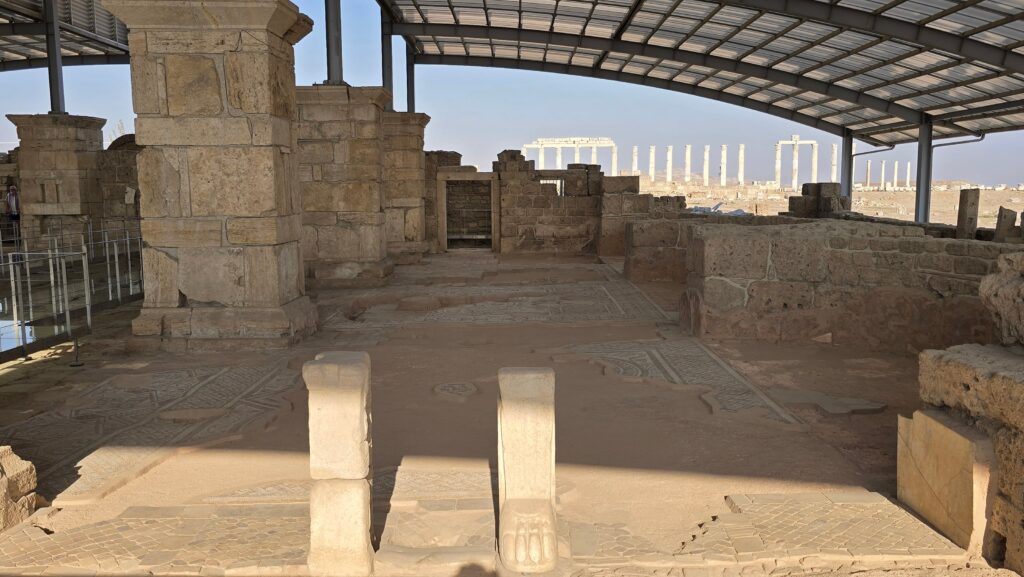
The letter to Laodicea closes the seven letters to the churches of Asia in Revelation 3:14–22. John addressed it around 95 AD to the church of Laodicea, a rich city near today’s Denizli in Turkey. It is the only letter without a single word of praise. Christ calls the church neither cold nor hot, then stands at its door and knocks, and promises the faithful a seat on his throne.
We come to the last letter of the round, and what a strange one it is. After the warm words for small Philadelphia, after the call to Sardis to wake up and the warnings to Pergamon and Thyatira, John finishes with a letter that is almost shocking at first reading. The Christians of Laodicea are told that they make Christ feel sick.
And then, in a sudden turn, the same letter ends with one of the most tender invitations in the New Testament: “Behold, I stand at the door, and knock.” It is the harshest of the seven letters and, at the same time, the most intimate one.
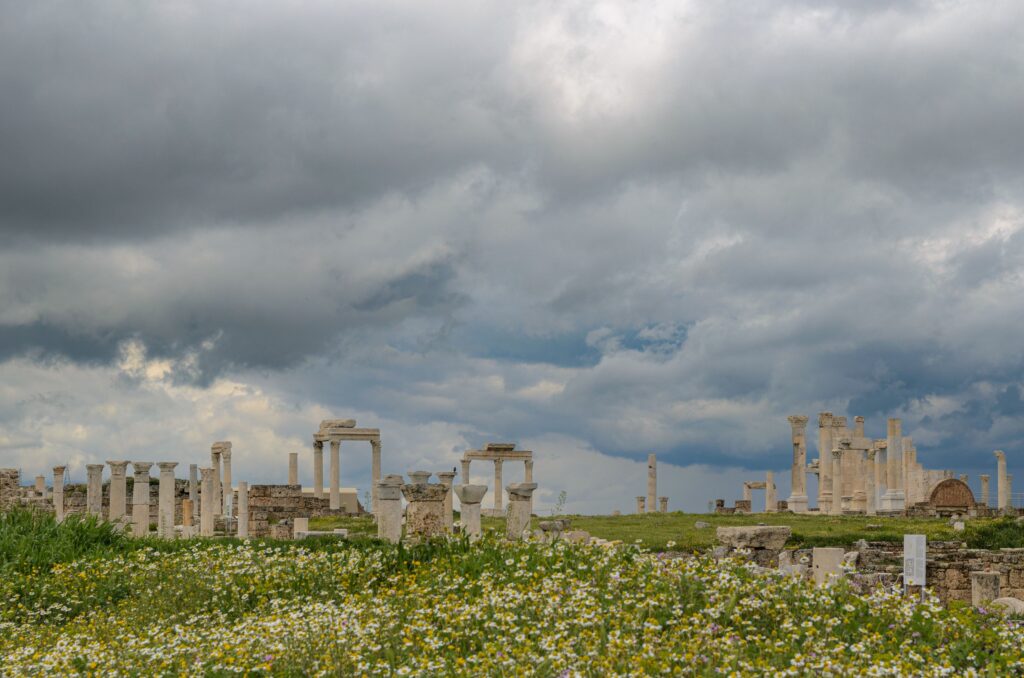
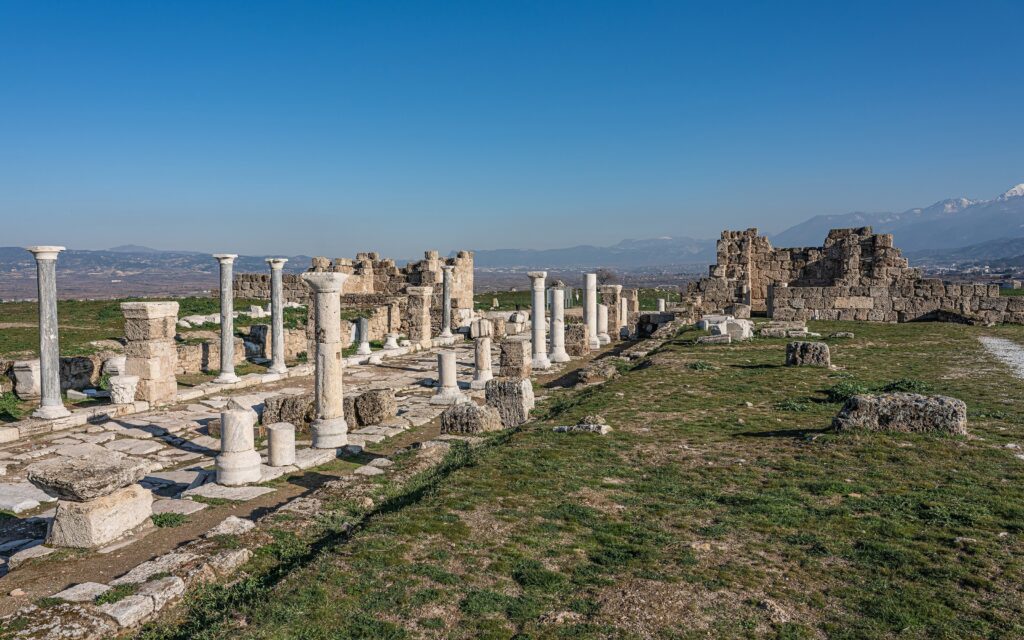
I wrote about the city itself, its bankers, its black wool, its water pipes and its ruins, in my article on Laodicea ancient city and the lukewarm church of Revelation. Here I bring in the city only where it helps to read a verse. Below I read the letter one verse after another, with the words of the King James Version.
The Address to Laodicea
“And unto the angel of the church of the Laodiceans write; These things saith the Amen, the faithful and true witness, the beginning of the creation of God” (Revelation 3:14, KJV).
In all seven letters Christ first introduces himself, and most of his titles come from the great vision of the first chapter of Revelation. Laodicea receives three titles at once: the Amen, the faithful and true witness, and the beginning of the creation of God. I think each of them was chosen with this city in mind.
The Amen and the Faithful Witness
First title is the most unusual one. Amen is a Hebrew word, and its root means to be firm, to be reliable, to be faithful. When we say amen at the end of a prayer, we are saying: this is firm, this is true. Only here is Christ himself called the Amen.
The idea is old. The prophet Isaiah speaks twice of “the God of truth” (Isaiah 65:16), and in Hebrew this is literally the God of Amen. Apostle Paul wrote to the Corinthians that “all the promises of God in him are yea, and in him Amen” (2 Corinthians 1:20). Christ is the one whose word stands.
The second title says the same thing with plain words. In the first chapter John greets the churches from “Jesus Christ, who is the faithful witness” (Revelation 1:5). Near the end of the book, the rider on the white horse is “called Faithful and True” (Revelation 19:11).
Why these titles for Laodicea? I think they fit a banking city, where everything depended on trust and on a promise to pay. To a church which had become comfortable, the first word of Christ is simple. I am firm. I am the opposite of lukewarm.
The Beginning of the Creation of God
The third title has caused long discussions in church history. The Greek word for beginning is archē. It can mean the first item in a line, but it also means origin, source and ruler. That is why the King James Version says “the beginning of the creation of God”, while the NIV translates “the ruler of God’s creation”.
In the 4th century Arius used verses like Proverbs 8:22 to argue that the Son of God was created, and some readers still take this verse in the same way. The churches which follow the Nicene Creed, which calls the Son “begotten, not made”, read archē here as the source of creation, not its first product.
The best help comes from neighbor. Colossae lay about 15 kilometers from Laodicea, and Paul’s letter to the Colossians says of Christ, “by him were all things created” (Colossians 1:16) and “who is the beginning, the firstborn from the dead” (Colossians 1:18). It is the same Greek word, archē.
And the Laodiceans knew that letter. Paul asked the Colossians to have it read “in the church of the Laodiceans” too (Colossians 4:16). So the Christians of Laodicea may have heard in this title an echo of a letter already read in their own church. I write about the lost letter of that verse in my article on the letters of Paul to the cities in Asia Minor.
Neither Cold nor Hot
“I know thy works, that thou art neither cold nor hot: I would thou wert cold or hot. So then because thou art lukewarm, and neither cold nor hot, I will spue thee out of my mouth” (Revelation 3:15–16, KJV).
This is the diagnosis, and it is the most famous image of the whole letter. Christ does not say that church is bad at one thing or another. He says that it has no temperature at all. It is neither cold nor hot.
At the site you will often hear a local explanation. Hot springs flowed at Hierapolis, today’s Pamukkale, across the valley, and Colossae was known for cold water. Laodicea brought its water from outside through stone pipes, and in this story it arrived lukewarm. Hot water heals, cold water refreshes, and lukewarm water does neither.
The older explanation is different. Hot means a devoted believer, cold means someone who never believed, and lukewarm is the one in between. Scholars still debate the water story, and I give both sides in my article on Laodicea ancient city. When we stand there, I give my guests both readings and they choose for themselves.
Verb at the end is stronger than most translations. In Greek it is emeō, to vomit, and the English medical word emetic comes from the same family. Christ is not only disappointed. He is about to throw up.
What does it mean spiritually? It is a community that refreshes nobody and heals nobody. It is comfortable and tepid. It is useful for nothing and reliable for nothing. It is just there.
I think this is the most relevant of the seven diagnoses for the Christian world of today. Most of us, most of the time, are not in spectacular danger. We are not Smyrna. We are not Pergamon. We are not even Thyatira with its compromises. We are mostly Laodicea: comfortable, self-sufficient and tepid.
The city even gave a word to English language. A Laodicean, in English, is still a lukewarm person, neither hot nor cold, and Thomas Hardy gave the title A Laodicean to one of his novels in 1881.
I Am Rich and Have Need of Nothing
“Because thou sayest, I am rich, and increased with goods, and have need of nothing; and knowest not that thou art wretched, and miserable, and poor, and blind, and naked” (Revelation 3:17, KJV).
This is one of the most piercing sentences in the Book of Revelation. The Laodicean Christians have a sentence for themselves: I am rich, and increased with goods, and have need of nothing. Christ quotes it back to them.
It sounds like the voice of the whole city. Tacitus tells us that when an earthquake struck in 60 AD, Laodicea rose again from its own resources, with no help from Rome (Annals 14.27). The Christians of the city, it seems, had absorbed the mood of their fellow citizens. They had become rich, and they spoke about it with the language of the city.
Then comes the answer: wretched, and miserable, and poor, and blind, and naked. Five words. The first two describe a person to be pitied. The Laodiceans thought that people should envy them, and Christ says that people should feel sorry for them.
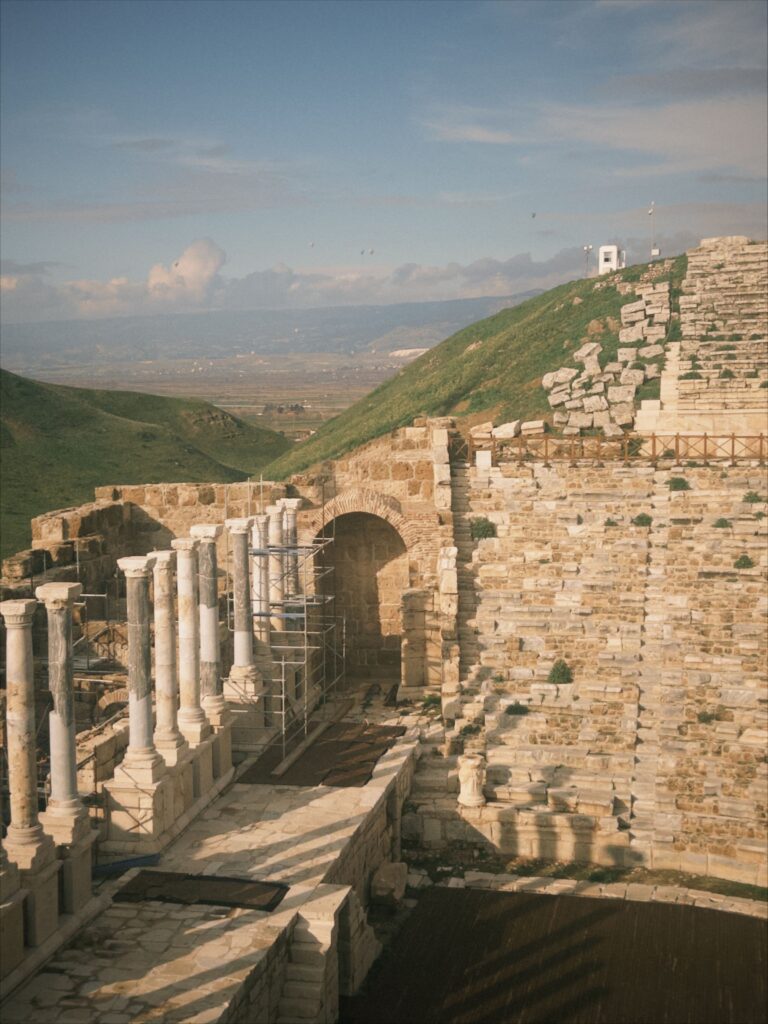
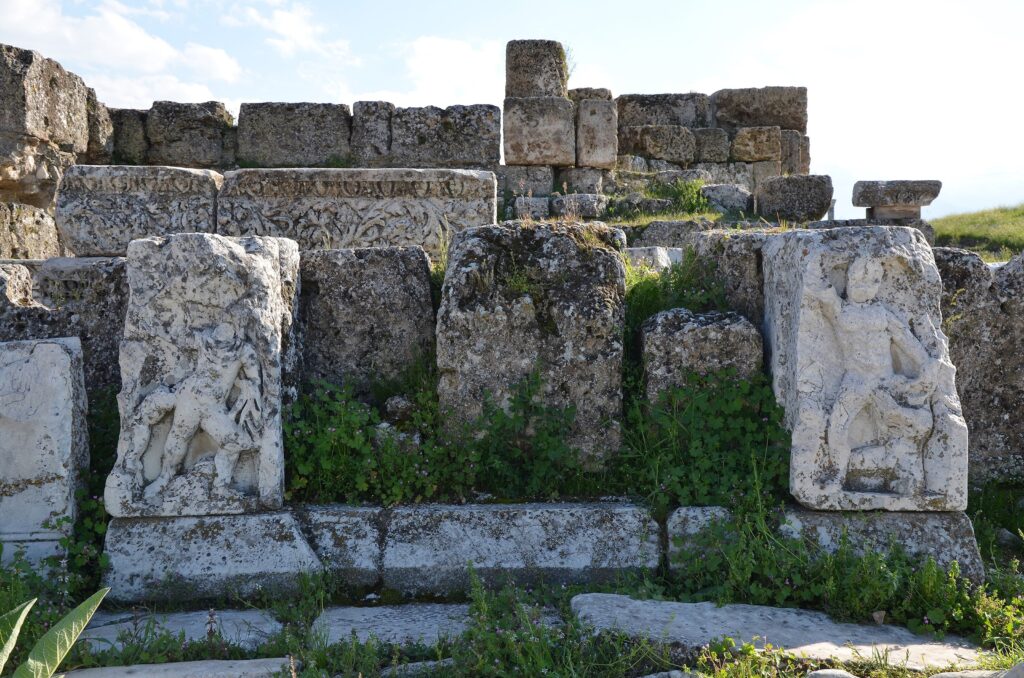
The last three words go straight to the trades of the city. Laodicea was known for banking, for its black wool and for medicine, as I explain in the article on the city. Now the bankers hear that they are poor, the wool merchants that they are naked, and a city proud of its doctors that it is blind.
Notice also the small words “and knowest not”. The worst part of the problem is not the poverty, the worst part is that they do not know about it.
Gold, White Raiment and Eye Salve
“I counsel thee to buy of me gold tried in the fire, that thou mayest be rich; and white raiment, that thou mayest be clothed, and that the shame of thy nakedness do not appear; and anoint thine eyes with eyesalve, that thou mayest see” (Revelation 3:18, KJV).
Three counsels, one for each of the last three words: poor, naked and blind. And the verb is a merchant’s verb: buy. The same verb appears in an old invitation of Isaiah: “come ye, buy, and eat; yea, come, buy wine and milk without money and without price” (Isaiah 55:1). The Laodiceans could pay for everything except this.
Gold tried in the fire. Gold is purified in fire, and the Bible often uses this picture for faith tested by trouble. Peter writes of “the trial of your faith, being much more precious than of gold that perisheth, though it be tried with fire” (1 Peter 1:7). This is the only gold which makes a person truly rich.
White raiment. Famous wool of Laodicea was black, and Christ offers white. In the Book of Revelation, white clothes belong to the faithful. In Sardis the worthy few “shall walk with me in white” (Revelation 3:4), and later the fine linen of the bride is “the righteousness of saints” (Revelation 19:8). No workshop in the city could sell this white.
Eye salve. In my article on the city I explain what we know, and what we do not know, about the famous eye remedy connected with the region. Christ offers a different medicine: anoint thine eyes, that thou mayest see. In the Gospel of John, Jesus “anointed the eyes of the blind man with the clay” (John 9:6), and the man saw.
I find this triple counsel extraordinary. Christ does not ask the Laodicean Christians to leave the city or to give up from their work. He uses their own products as pictures of what they really need. Keep working, keep selling, but know where the deeper version of your goods comes from. Buy it from me.
As Many as I Love
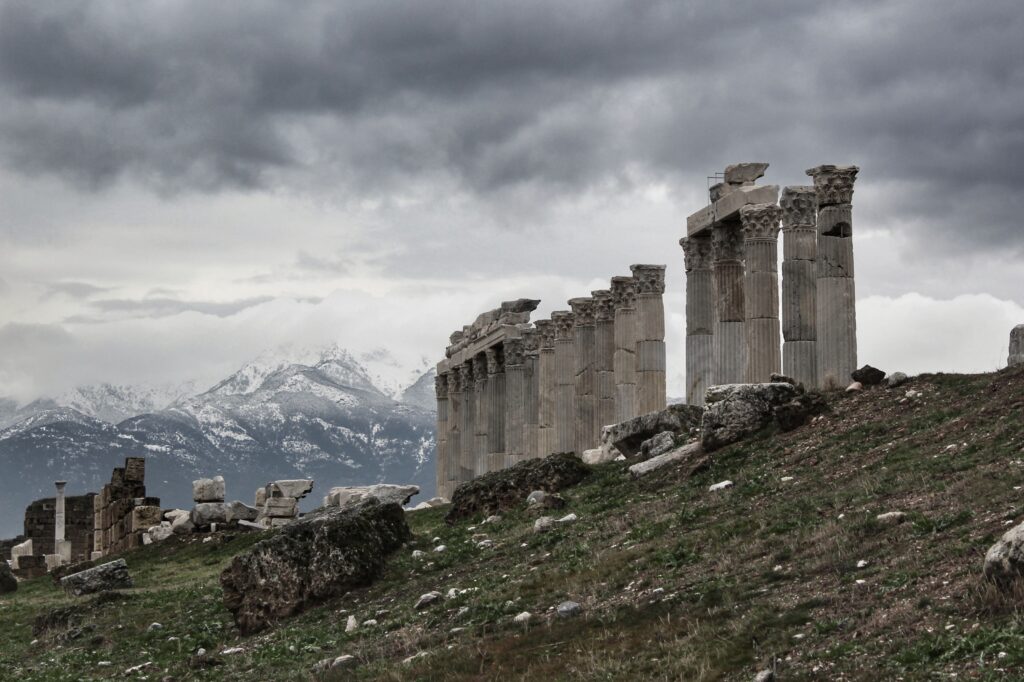
“As many as I love, I rebuke and chasten: be zealous therefore, and repent” (Revelation 3:19, KJV).
After the hard words comes a very tender sentence. The harshness was not hatred. It was love. The doctor who tells you the bitter truth about your illness is the doctor who still cares for you. The doctor who only gives you good news may be the one who has given up on you.
The sentence is not new. It comes from the Book of Proverbs: “For whom the LORD loveth he correcteth; even as a father the son in whom he delighteth” (Proverbs 3:12). The Letter to the Hebrews quotes the same verse (Hebrews 12:6). The one who rebukes here speaks as a father.
Then come two commands: be zealous, and repent. There is a small play on words in Greek. The word for hot in verse 15 is zestos, boiling, and Strong’s Greek dictionary derives the word for zeal from the same verb, zeō, to boil. The cure for a lukewarm faith is to start boiling again.
I think this verse also explains the spirit of the whole Apocalypse. The book is harsh in many places, but the harshness grows out of love. The God who is willing to say sharp things is the God who has not given up.
I Stand at the Door and Knock
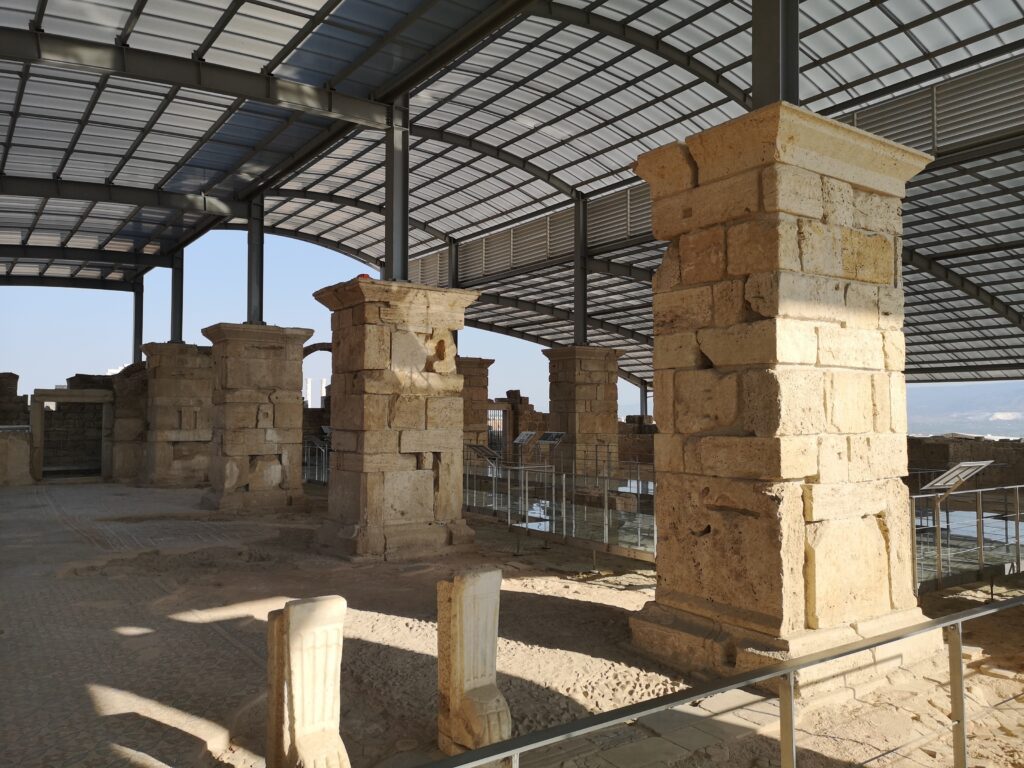
“Behold, I stand at the door, and knock: if any man hear my voice, and open the door, I will come in to him, and will sup with him, and he with me” (Revelation 3:20, KJV).
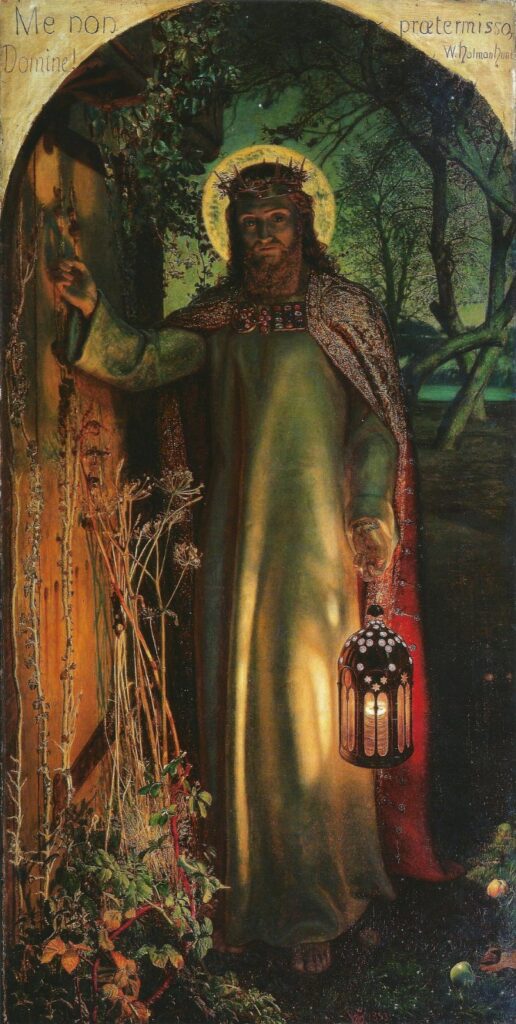
This is the most famous sentence of the seven letters. William Holman Hunt painted it between 1851 and 1854 in The Light of the World: Christ with a lantern, knocking at an overgrown door. The door in the painting has no handle, so it can only be opened from the inside.
But look at the local scene. Laodicea was the city which said, we have need of nothing. Its houses were comfortable, the dinner was served and the family was content. And Christ stands outside, knocking at the door of his own Church. In the city which thinks it has everything, he has no place at the table. I find this one of the saddest pictures in the Book of Revelation.
These words are often preached to people outside the church, and they also work well that way too. In the letter, however, they are spoken to a church. The people who must open the door are Christians.
The contrast with the letter just before is striking. To Philadelphia Christ said, “behold, I have set before thee an open door, and no man can shut it” (Revelation 3:8). There the door is open and Christ holds the key. Here the door is shut and he knocks from outside. I write about that letter in my article on the church of Philadelphia, the open door of Asia Minor.
Now the promise: if any man hear my voice. The letter turns from the whole church to “any man”, to one single person. One person may hear, even when the community does not. The Greek verb for sup is deipneō, to eat the deipnon, the main meal of the day, usually eaten in the evening.
It is not a banquet and not a public ceremony. It is quiet dinner at home, with two people at one table. Jesus used a similar picture in the Gospel of Luke. The servants wait for their master, “that when he cometh and knocketh, they may open unto him immediately”, and he will “make them to sit down to meat” and serve them himself (Luke 12:36–37).
An older echo comes from the Song of Solomon: “it is the voice of my beloved that knocketh, saying, Open to me” (Song of Solomon 5:2). This is, I think, the most tender promise in any of the seven letters. Even for the lukewarm and comfortable church, the door can still be opened. The dinner is still possible. Christ is still on the porch.
The Promise of the Throne
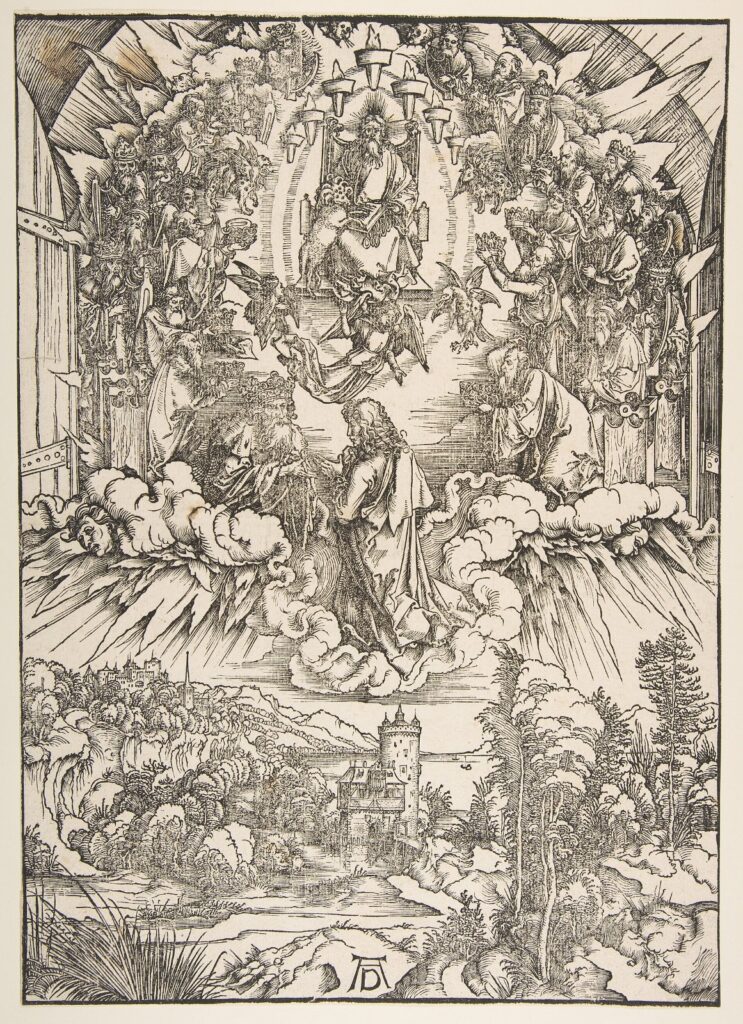
“To him that overcometh will I grant to sit with me in my throne, even as I also overcame, and am set down with my Father in his throne. He that hath an ear, let him hear what the Spirit saith unto the churches” (Revelation 3:21–22, KJV).
The seventh and last promise is the highest of all. To the faithful of Smyrna Christ promised a crown of life (Revelation 2:10), to Pergamon the hidden manna (Revelation 2:17), and to the worthy of Sardis white garments (Revelation 3:4–5). I write about two of these promises in my articles on the letter to Smyrna and the letter to Sardis.
To Laodicea he promises his own throne. It is striking that the highest promise goes to the weakest church. The deeper the disease, the higher the cure. The lukewarm Laodicean who opens the door will move from the doorstep to the throne. The reversal is enormous.
Notice also “even as I also overcame”. On the night before the cross Jesus told his disciples, “be of good cheer; I have overcome the world” (John 16:33). The believer does not overcome alone. He follows the road which Christ walked first, and he sits where Christ sat down.
The letter closes like the three letters before it, with the call after the promise: he that hath an ear, let him hear. In the first three letters this call came before the promise. Here it is heard for the seventh and last time, and the round of the letters is over.
The End of the Seven Letters
This is the last of the seven letters, and the round is complete: Ephesus, Smyrna, Pergamon, Thyatira, Sardis, Philadelphia and Laodicea. Seven cities, seven communities, seven spiritual conditions and seven messages. The order follows the road between the cities, as I explain in my article on the order of the seven churches.
Now read one more verse, and you will see something beatiful. The next chapter opens, “After this I looked, and, behold, a door was opened in heaven” (Revelation 4:1). And the next verse says, “behold, a throne was set in heaven, and one sat on the throne” (Revelation 4:2).
The letter which ended with a closed door and a promised throne is followed by an open door and the throne itself. From here the rest of the Apocalypse opens up, with the seven seals, the seven trumpets and the great visions that John saw while he was on Patmos. The seven letters were the introduction.
But before we leave the seven letters, one more word about the last image. In a comfortable and prosperous society, in 95 AD or in our own century, the most subtle danger is not persecution. It is not even false teaching. It is comfort, the slow loss of urgency.
It is a life arranged so politely that Christ is somewhere on the porch, knocking, while we have already finished dinner. And yet the seventh and harshest letter does not end with a punishment. It ends with an open invitation. That is the letter to Laodicea, and that is the end of the seven.
Frequently Asked Questions
What does the letter to Laodicea mean?
The letter to Laodicea (Revelation 3:14–22) rebukes a rich and self-satisfied church that was neither cold nor hot. Christ tells it that it is poor, blind and naked, and counsels it to buy from him gold tried in the fire, white raiment and eye salve. He still loves it, knocks at its door, and promises the overcomer a seat on his throne.
Why is Jesus called the Amen and the faithful and true witness?
Amen comes from a Hebrew root meaning firm, reliable and faithful. In Revelation 3:14 Christ uses it as his own name: he is the one whose word is sure. The faithful and true witness repeats the idea, as in Revelation 1:5, where John calls Jesus Christ “the faithful witness”.
What does “I stand at the door and knock” mean?
In Revelation 3:20 Christ stands outside the door of the church of Laodicea, which thought it needed nothing, and asks to be let in. If any person hears his voice and opens, he promises to come in and share an evening meal with him. It is an invitation to personal fellowship, addressed first to Christians.
Is the letter to Laodicea the same as Paul’s letter to the Laodiceans?
No. The letter to Laodicea in Revelation 3 was written by John. Paul mentions a different letter, “the epistle from Laodicea”, in Colossians 4:16. Most scholars think it is lost, and the short Latin “Epistle to the Laodiceans” found in some old manuscripts is generally considered a forgery.
Hire Biblical Tour Guide for Pamukkale and Laodicea
I live in Kuşadası, nearby Ephesus, and my tour guide license is a national one, valid all over Turkey. Ephesus, İzmir and Pamukkale are my daily guiding areas, and Laodicea is part of my Pamukkale days, together with Hierapolis. When you stand in the church of Laodicea, this letter needs very few explanations.
My rates and the regions I work in are listed on the guiding rates and guiding areas page. If you want to know whether I am free on your dates, just write to me through my contact page. For the whole route, read my introduction to the Seven Churches of Revelation.
I hope one day we can read the last letter together, inside the church of Laodicea. You can always contact me to ask your questions about the seven letters and their cities. See you soon, Hasan Gülday.