Did Mary live in Ephesus? Nobody can prove it, and nobody can disprove it. The Gospel of John says only that John took Mary into his home, and the early writers place John in Ephesus without naming Mary. A tradition of her last years in Ephesus grew beside an older tradition of her tomb in Jerusalem. After many years of guiding there, I believe the Ephesus tradition is a strong possibility.
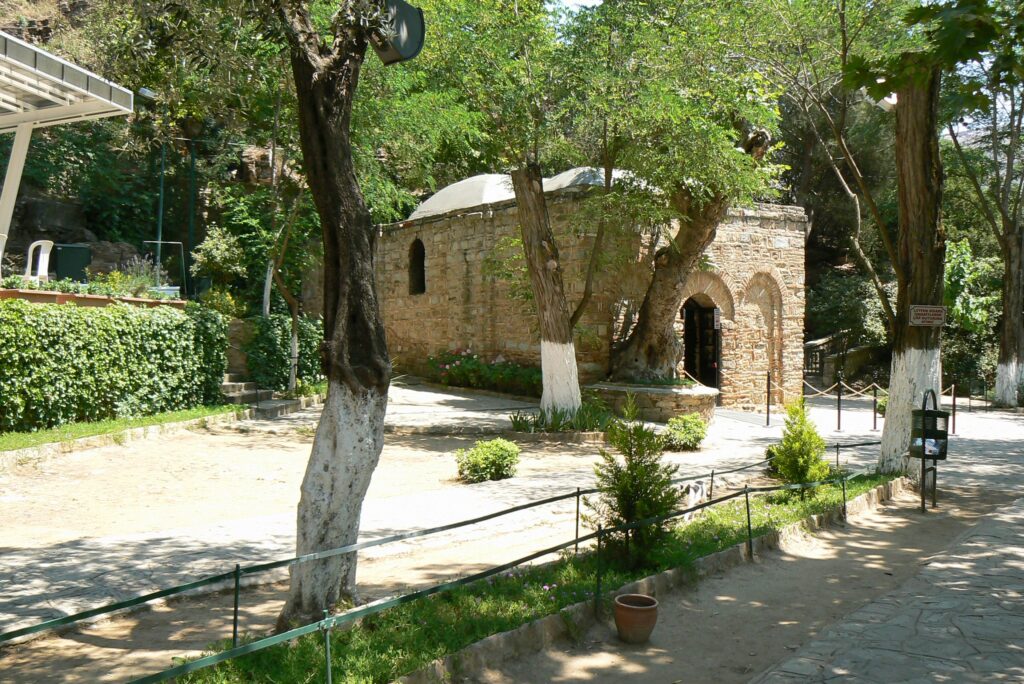
I have lost count how many times I have driven up the road to the House of the Virgin Mary on Bülbüldağı, which the ancients called Mount Koressos. Hundreds of times, in every season. In February the mountain is still wet with the night fog, in August the cicadas are deafening and in October the pine trees smell almost sweet.
Every time I walk into that small chapel, the air inside is the same: cool, a little damp, with the smell of candles and old stone. And almost every time, one of my guests asks me the same question on the way back to car. Did she really live here?
Here I want to take you through that question step by step. Where does the tradition come from, what do the Bible, the old writers and the councils say, what can the stones tell us, and what do I personally think? For the house itself, its history and how to visit it, please see my article House of Virgin Mary nearby Ephesus.
The Promise from the Cross
Story begins at the crucifixion. The Gospel of John, chapter 19, holds a small detail which is the seed of everything else:
“When Jesus therefore saw his mother, and the disciple standing by, whom he loved, he saith unto his mother, Woman, behold thy son! Then saith he to the disciple, Behold thy mother! And from that hour that disciple took her unto his own home.” (John 19:26–27, KJV)
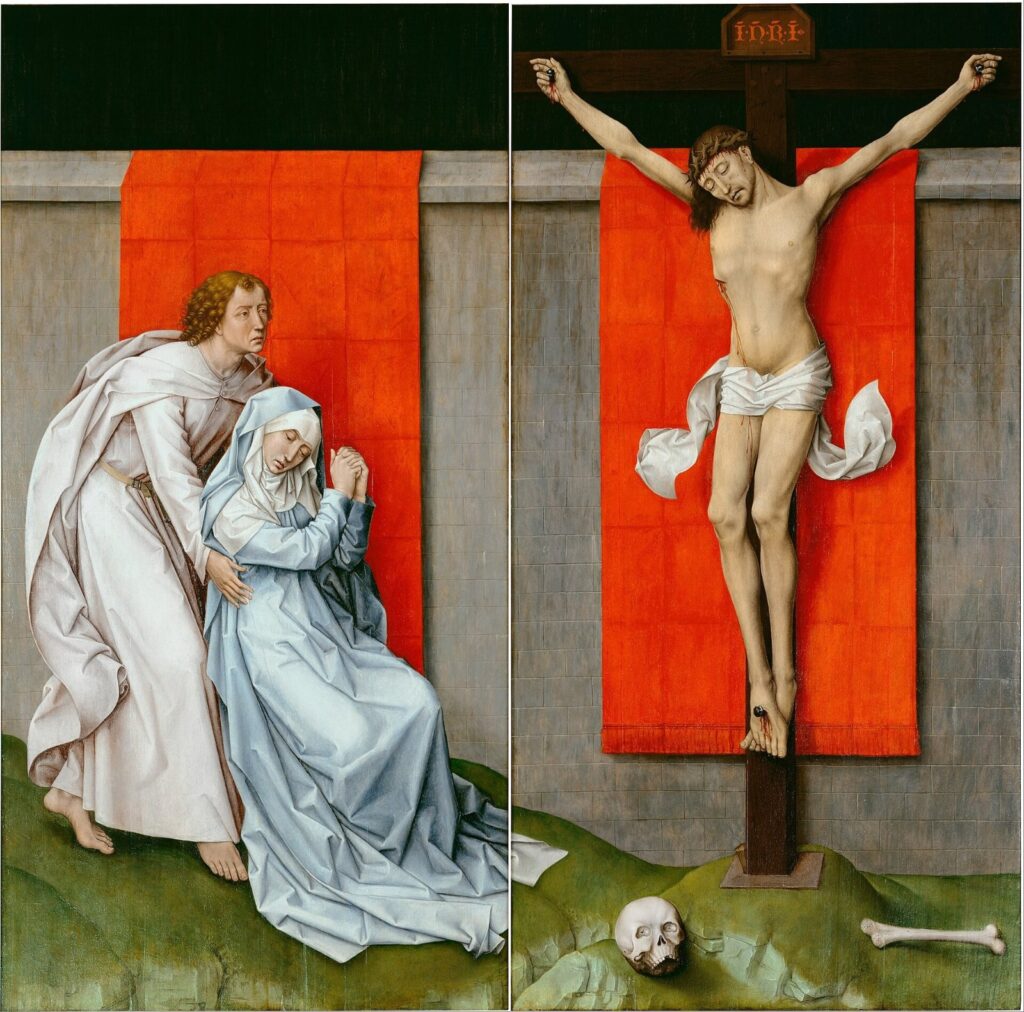
The Gospel never gives the name of the disciple whom Jesus loved. The early church identified him with John the Apostle, the son of Zebedee, and Irenaeus calls him the disciple “who also had leaned upon His breast”. “His own home” means his own household. From that day on, Mary belonged to family of John.
Everything else in the Ephesus tradition grows from this verse. Mary lived wherever John lived, and the old writers put John in Ephesus. His whole life is in my article on Saint John the Evangelist.
When Did John and Mary Come to Ephesus?
The Bible does not give a date, so we have to read between the lines. In the Book of Acts we meet John in Jerusalem after the resurrection, going up to the Temple with Peter (Acts 3) and traveling with him to Samaria (Acts 8:14). Around 44 AD, King Herod Agrippa killed John’s brother James with the sword (Acts 12:2).
Years later, Paul still found John in Jerusalem. In his letter to the Galatians (2:9) he names James, Cephas and John as the men who “seemed to be pillars” of the church there. So for good part of those early decades, John was a leader in Jerusalem, not in Asia.
Then came the war. In 70 AD the Roman army of Titus took Jerusalem and destroyed the Temple. Eusebius writes that the Christians of Jerusalem had left the city before the war and settled in Pella, a town east of the Jordan River.
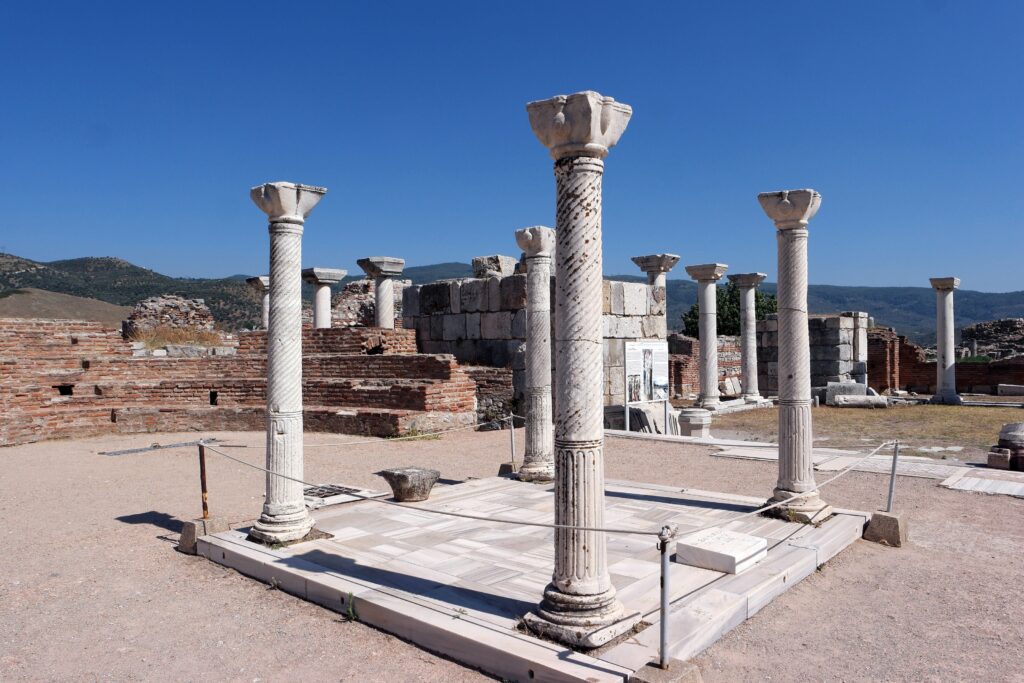
By the end of the century, the early writers agree, John lived in Ephesus. In his book Against Heresies, from about 180 AD, Irenaeus of Lyon says John wrote his Gospel while living at Ephesus and remained with the church there into the reign of Trajan. A few years later the bishop of Ephesus, Polycrates, wrote in a letter to Rome that John “fell asleep at Ephesus”.
None of these writers mentions Mary. The dates people give for her journey are later guesses. The shrine’s own website says John brought her to Ephesus four or six years after the death of Jesus. Hippolytus of Thebes, a Byzantine writer of the 7th or 8th century, says Mary lived eleven years after her son. If she came to Ephesus, she came as an old woman.
Ephesus or Jerusalem
There are two old answers for the question where Mary ended her life on earth. One says Ephesus and the other says Jerusalem, and in the written sources the Jerusalem answer is older.
In the Kidron Valley, at the foot of the Mount of Olives, Christians honor the Tomb of the Virgin Mary. Early apocryphal books about the Dormition, the “falling asleep” of Mary, place her tomb at Gethsemane. A church stood over the tomb from the 5th century, and a pilgrim from Piacenza described it around 570.
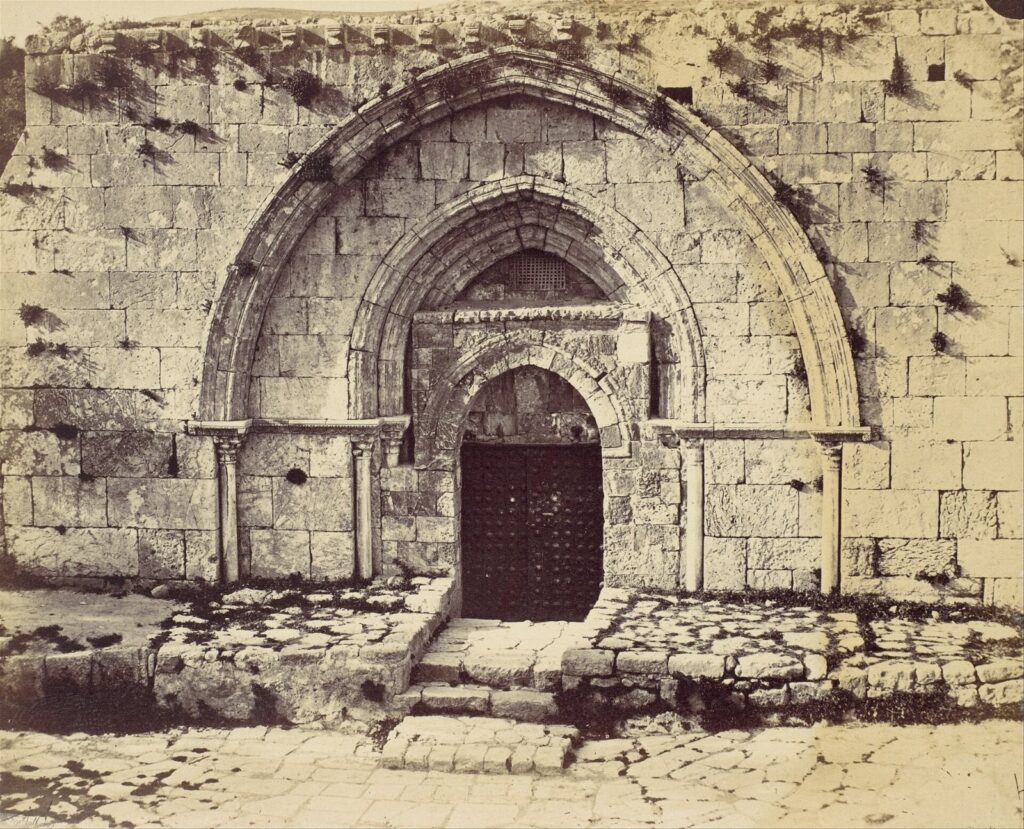
A 5th-century story tells that Bishop Juvenal of Jerusalem, at the Council of Chalcedon in 451, told Emperor Marcian and Empress Pulcheria that Mary’s tomb had been found empty on the third day. In 452 her shroud was sent to Constantinople.
Around 375, Bishop Epiphanius of Salamis already admitted that nobody knew how Mary’s life ended. He also noted that the Bible tells us John went to Asia, but nowhere says that Mary went with him. So even the first writers who discussed about the question had no clear answer.
The Ephesus answer comes into the written record much later. Syriac Christian writers of the Middle Ages, such as Dionysius bar Salibi in the 12th century, accepted that Mary spent her last years in Ephesus. In Western Europe the idea became popular only in modern times. Some Orthodox writers join both memories: Mary stayed near Ephesus for a few years, then went back to Jerusalem, where she died.
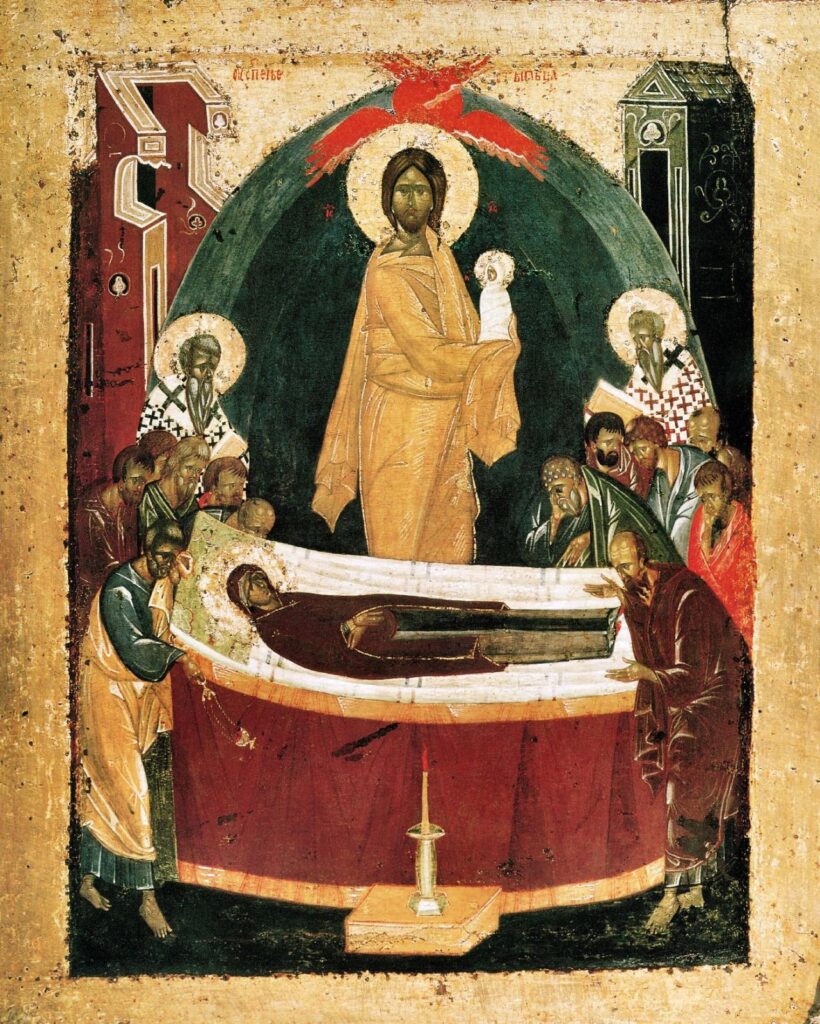
The Catholic Church has never decided between the two places. Its dogma of the Assumption, defined in 1950, teaches that at the end of her earthly life Mary was taken up body and soul into the glory of heaven, and it does not say where. Catholics celebrate the Assumption and the Orthodox the Dormition on August 15, and I wrote about the feast in my article on the Ascension of the Virgin Mary on the 15th of August.
The Council of Ephesus and Its Words
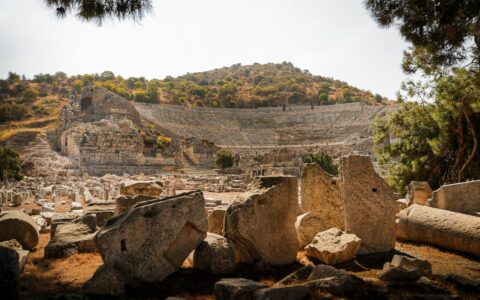
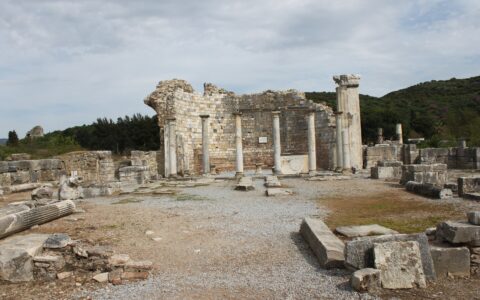
The Third Ecumenical Council opened in Ephesus on June 22, 431, in the great church which we know today as the Church of Mary. It confirmed the title Theotokos, the one who gave birth to God, for Mary, and condemned Nestorius. I told the dramatic story of that summer in my article on the Council of Ephesus of 431.
For our question, one small sentence of the council matters more than the famous decision. In a letter to the clergy and people of Constantinople, the bishops wrote that Nestorius came to the city of Ephesus “where John the Theologian and the Mother of God, the Holy Virgin…”. And there the thought stops. The sentence has no verb.
What did the bishops want to say? That John and Mary lived there? That they had churches there? Nobody can tell. The French church historian Tillemont completed the sentence with “have their tombs”, and the Catholic Encyclopedia of 1912 called his addition arbitrary. Still, it is one of the oldest texts which put John and Mary side by side in Ephesus.
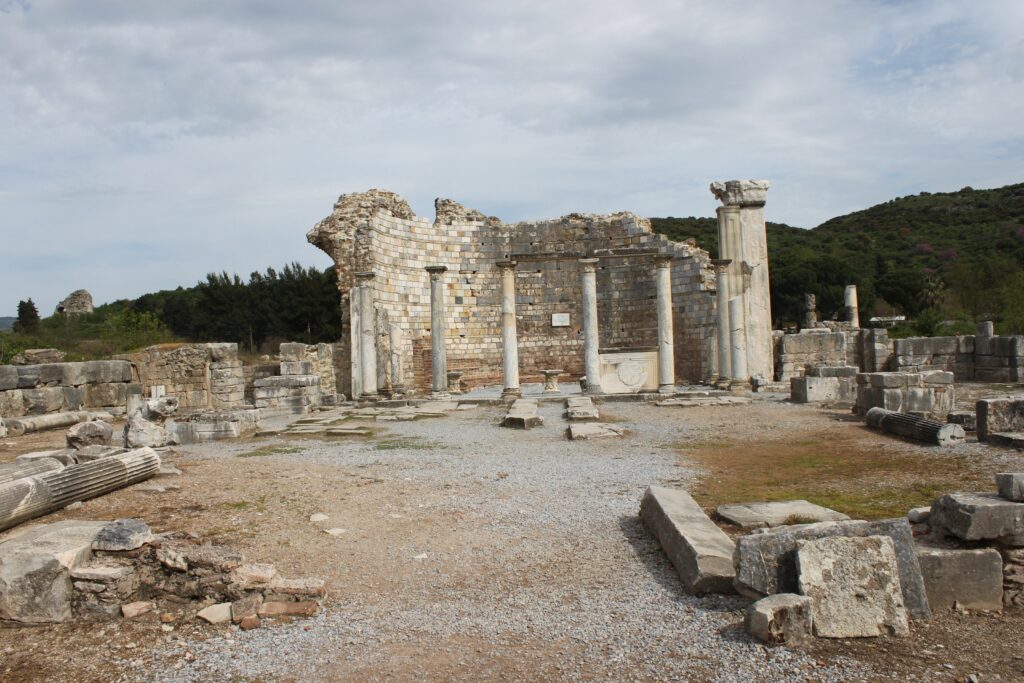
The church itself is also part of the debate too. Supporters of the tradition say a church would carry the name of Mary only in a city where she had lived. Scholars answer that the name proves nothing, and recent research even suggests the building took the name of Mary only around 500, long after the council.
What Archaeology Can and Cannot Say
What does the archaeology of the house on the mountain say? Here I have to be honest, the stories told up there are sometimes bigger than the evidence.
The archaeologists who studied the building in the first decades after 1891 dated its old parts to the Byzantine period, between the 5th and the 7th centuries. When the foundations were uncovered in 1961, a first-century date could not be proven. Between 1965 and 1967 the Italian archaeologist Adriano Prandi excavated the chapel and dated it to the 13th century, a small domed church built over an older building.
In 2003 the Austrian team of the Ephesus excavations dug two test trenches in the garden, about 80 meters west of the house. They were checking an old rumor about a hidden coffin, which they did not find. The pottery showed that a Roman house stood there, and its courtyard already existed in the 1st century BC. Graves found west of the chapel held Byzantine coins of the 7th and 8th centuries.
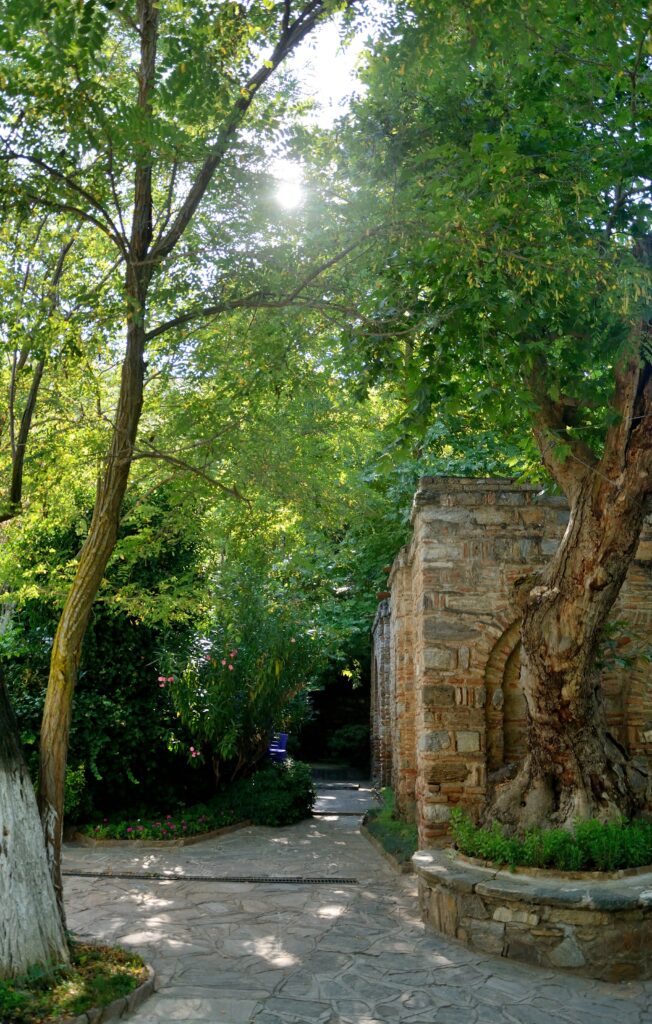
So archaeology can show that people lived on this spot in Roman times and that a chapel stood here in the Byzantine period. Archaeology cannot prove who slept in a particular bed two thousand years ago. The link with Mary depends on the tradition, not on the stones.
The Visions and the Discovery in Short
The modern story of the house is told in my article on the House of Virgin Mary, so I keep it short here. A German nun, Anne Catherine Emmerich, who had never seen Ephesus, described Mary’s last home near the city in her visions. They were published in 1852. In 1881 a French priest, Julien Gouyet, found a ruin which matched her words, and in 1891 two Lazarist priests from İzmir confirmed it.
Please keep it in mind that later experts found maps, travel books and apocryphal texts among the papers of her scribe, the poet Clemens Brentano. He may have used them to fill out her stories. So the visions alone cannot settle our question either.
What the Local Tradition Says
This is the part of the story which I find most convincing. When the Lazarist priests reached the ruin in 1891, they heard that the Orthodox Christians of Şirince, a Greek village a few kilometers east of Selçuk, had honored it for a long time. The villagers knew the ruin as Panaya Kapulu, the Door of the All-Holy, and every year on August 15, the feast of the Dormition, they climbed up to pray.
Their belief was not written in any book, no church had registered it. It passed from grandmother to grandchild in the villages. The people of Şirince believed that Mary closed her eyes right here, not in Jerusalem. In August 1897, more than two hundred Orthodox Christians from the area walked up to the newly opened chapel on their own.
This is the kind of tradition which an outsider cannot easily invent. The ruin was far up a steep mountain, it had no political importance and it brought the villagers nothing but a long walk. Historians answer that this village tradition was first written down only in the 19th century. That is true. But a tradition can be much older than the first person who writes it down.
The House Today
Today the house is a Catholic shrine, and several popes came here as pilgrims. Muslims honor Mary as the mother of the prophet Jesus, so Christians and Muslims pray there side by side. My article on the House of Virgin Mary nearby Ephesus covers the holy water, the wishing wall and my practical tips, and my article Mass at the House of Virgin Mary covers the services.
What I Personally Think
My guests have asked me many times: Hasan, do you actually believe Mary lived here? My honest answer is this. I believe the tradition is strong enough that the place deserves the deepest respect. I believe the archaeology does not contradict it and the local pilgrimage history is convincing. But I cannot give you a scientific proof.
What I can tell you is what I have seen. After hundreds of visits, in every season, the atmosphere of that small chapel does not change. The cool air, the candle smoke, the quiet line of pilgrims, women crying softly at the wall, men standing with their hats in their hands. Bir şey orada var, as we say in Turkish. Something is there.
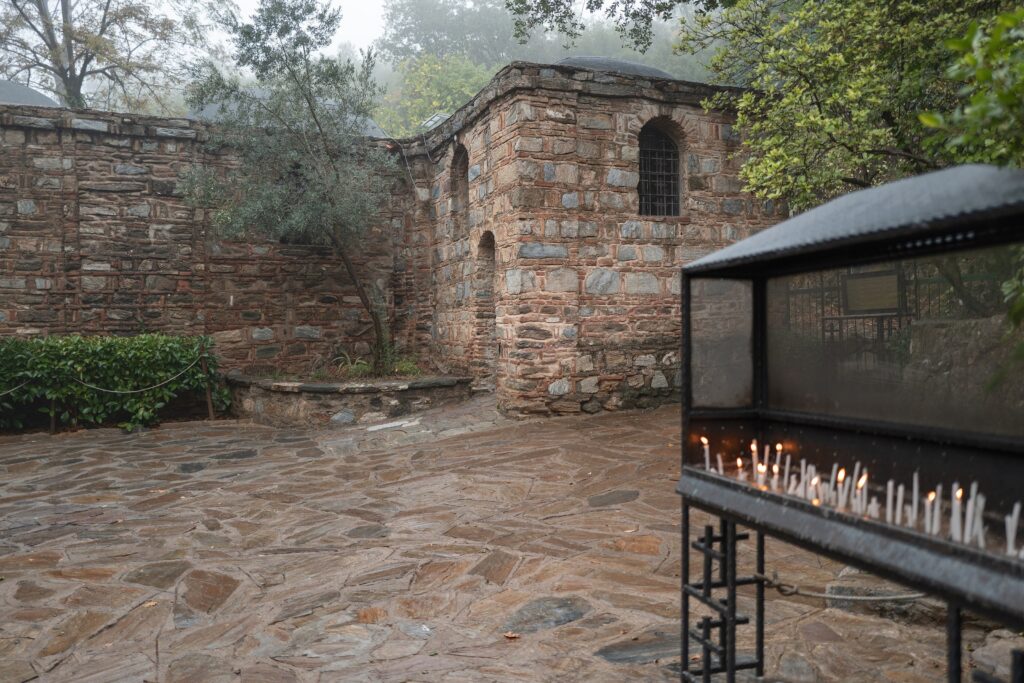
In November, when season is mostly over, you can sometimes have the chapel almost to yourself. Late in the afternoon, an old woman comes to light a candle. She crosses herself three times in the Orthodox way, kisses the icon at the entrance and walks out without a word. She is doing what her mother and her grandmother did. The chain has been broken in many places, but not completely.
Whether that something is the memory of Mary’s last years or the prayers of all the pilgrims who came after her, I leave to each visitor to decide. The hill has room for many answers.
Frequently Asked Questions
Did Mary die in Ephesus or Jerusalem?
Nobody knows for sure. The older written tradition places her death and her tomb in Jerusalem, where the Tomb of the Virgin Mary in the Kidron Valley is still honored. The Ephesus tradition, centered on the House of the Virgin Mary near Selçuk, appears in writing later. The Catholic Church has never decided between the two.
Why did Mary go to Ephesus?
Because of John, according to tradition. On the cross Jesus gave Mary to the disciple he loved, and from that hour this disciple took her into his home (John 19:27). Early Christian writers say John later lived in Ephesus, so many Christians believe Mary came there with him.
Did John the Apostle live in Ephesus?
Yes, according to the earliest writers. Irenaeus writes that John gave out his Gospel during his years in Ephesus, and Polycrates, a bishop of Ephesus, wrote around 190 AD that John died there. His traditional tomb lies in the ruined Basilica of Saint John in Selçuk.
Is Mary buried in Ephesus?
No tomb of Mary has ever been found in Ephesus. In 2003 Austrian archaeologists checked a rumor of a hidden coffin in the garden of the House of the Virgin Mary and found nothing of the kind. The tomb Christians honor as hers is in Jerusalem, and Catholic teaching says she was taken up body and soul into heaven.
Hire Biblical Tour Guide in Turkey
I am a licensed Turkish tour guide from Kuşadası. Ephesus, İzmir and Pamukkale are my day guiding areas, and in one day we can see the House of the Virgin Mary, the Church of Mary in Ephesus and the Basilica of Saint John together.
On longer journeys my national license lets me join you as your personal guide to the other Biblical sites of Turkey. My guiding rates and guiding areas page has the details, and you can write to me to hire me as your licensed guide.
I hope one day we will sit together in silence in that small chapel, and you will decide for yourself. Write to me if you want to learn more about Mary in Ephesus. See you soon, Hasan Gülday.