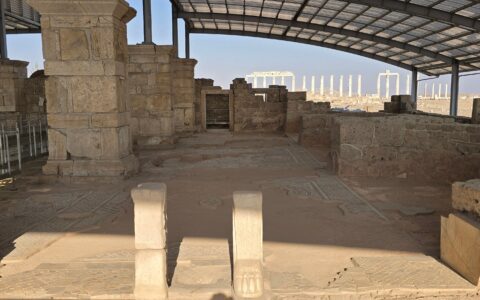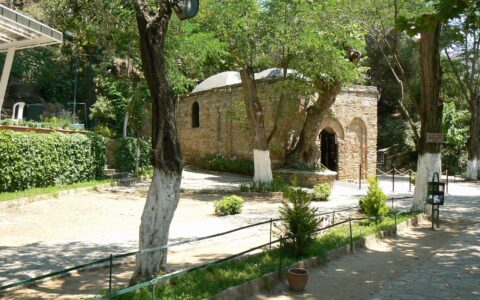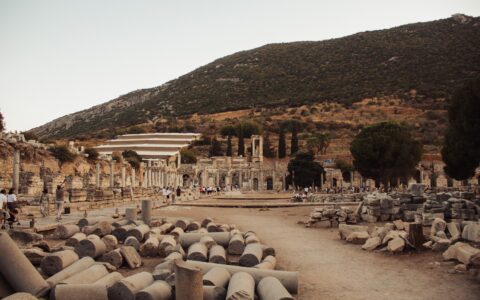
The letter to Philadelphia is the sixth of the seven letters in the Book of Revelation (Revelation 3:7–13). It was written around 95 AD to a small church in Philadelphia, today’s Alaşehir in Manisa province. Christ, who holds the key of David, sets before them an open door that no one can shut. The letter has no rebuke, only praise and promise: protection in the hour of trial, a pillar in the temple of God and a new name.
Philadelphia was small town in a trembling land. It lay in the valley of the Cogamis, a branch of the Hermus river, near Mount Tmolus. In AD 17 a great earthquake struck the cities of this region, and Emperor Tiberius freed Philadelphia from its taxes. But the ground did not calm down quickly.
The geographer Strabo, who wrote in the reign of Tiberius, says that the walls of the houses in Philadelphia cracked again and again, and that most of its people lived as farmers out in the country instead of inside the town. Keep this picture in mind. Several phrases of the letter, above all the pillar and the words “he shall go no more out”, speak directly to it.
I told the story of the city, its founding kings, its vineyards and its ruins in my article on the church of Philadelphia, the open door of Asia Minor, and years ago in Philadelphia church of the Seven Churches from Revelation. Here we go through the letter itself, verse by verse, quoting the King James Version.
No Rebuke for Philadelphia
Philadelphia and Smyrna are the only two of the seven churches that receive no rebuke at all. Ephesus had left its first love, Pergamon and Thyatira tolerated false teaching, Sardis was asleep and Laodicea was lukewarm. Philadelphia receives only encouragement, praise and promise. It is small church with a big letter.
The two faithful churches have more in common. Both of them were in conflict with people the letters call “the synagogue of Satan”, and both of them are promised a crown. I explain the first of these two letters in my article on the letter to Smyrna, and we will come back to that hard phrase below.
The Key of David
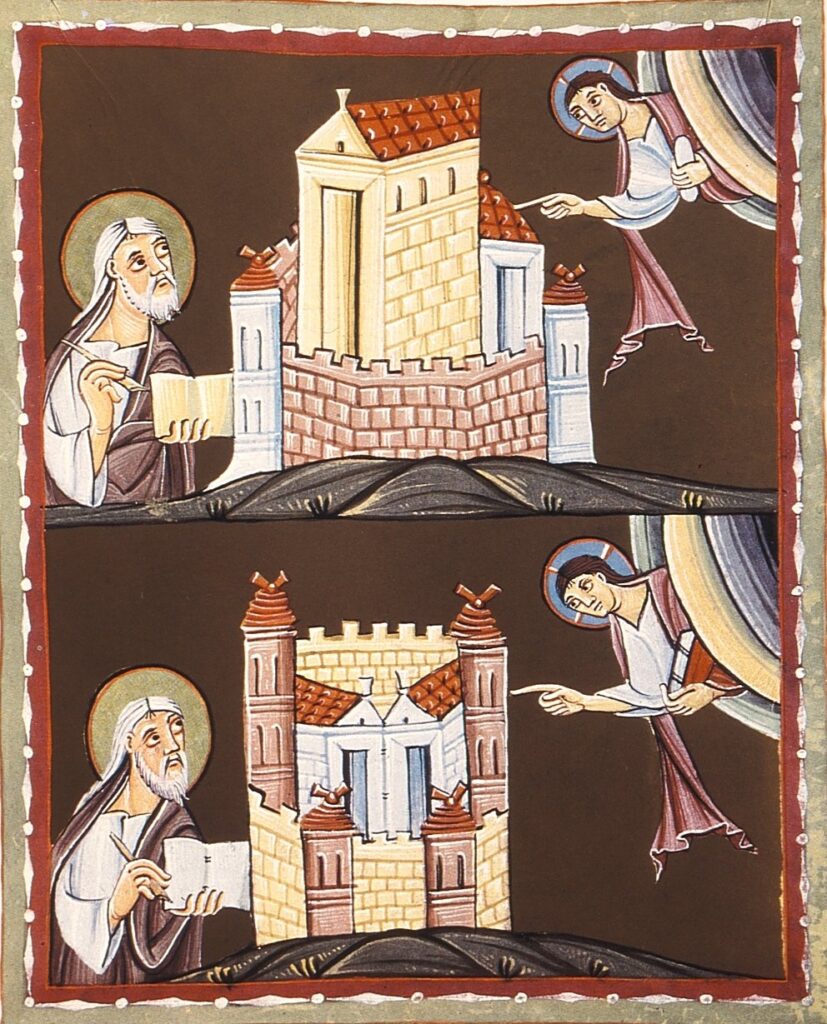
“And to the angel of the church in Philadelphia write; These things saith he that is holy, he that is true, he that hath the key of David, he that openeth, and no man shutteth; and shutteth, and no man openeth” (Revelation 3:7, KJV).
Christ introduces himself with three titles. He is holy, he is true, and he has the key of David. Holy and true belong together in Revelation: later the martyrs under the altar cry out, “How long, O Lord, holy and true” (Revelation 6:10). True here means genuine, the real one, against every false claim.
The key of David comes from the prophet Isaiah. In Isaiah 22 God removes Shebna, the steward who was over the royal house, and gives his office to Eliakim. The words are almost the same as in our letter: “the key of the house of David will I lay upon his shoulder; so he shall open, and none shall shut” (Isaiah 22:22). In the days of King Hezekiah we meet Eliakim again, “over the house” (Isaiah 36:3).
The Steward with the key was the gatekeeper of the palace. He decided who could come in to the king and who stayed outside. In the first chapter of Revelation, Christ already holds “the keys of hell and of death” (Revelation 1:18). Now he holds the key of the royal house too. Whoever he lets in, nobody can send out.
This was a strong word for Philadelphia. The Christians there were few and weak, as the next verse says openly. They were not a large and famous church like Ephesus, and not a wealthy one like Laodicea. To this small group Christ says: the master key is in my hand, not in the hands of the people who push you out.
An Open Door
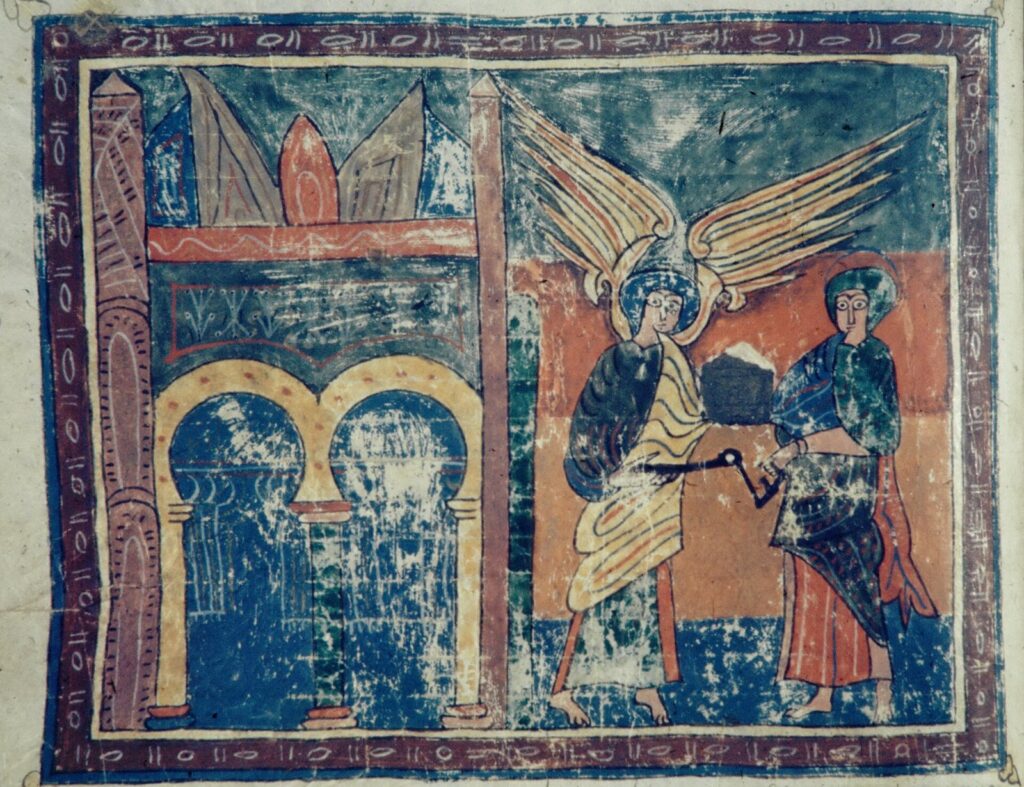
“I know thy works: behold, I have set before thee an open door, and no man can shut it: for thou hast a little strength, and hast kept my word, and hast not denied my name” (Revelation 3:8, KJV).
Notice again absence of any blame. Christ moves straight from his titles to praise. Thou hast a little strength, thou hast kept my word, thou hast not denied my name. Three short clauses, and some of the warmest words ever written about a small church.
The phrase “a little strength” is not a criticism. It is an honest description. The church of Philadelphia did not have many members, political influence or money. Perhaps it did not even have strong leaders. But it had what mattered most: the word of Christ, which it had kept, and the name of Christ, which it had not denied.
I always stop at this verse when I think on this letter. It is one of the most encouraging passages in the New Testament for any small parish or mission, for any group of believers who feel too few to make a difference. Christ tells them that it does not matter that they are few or weak. What matters is that they have kept his word.
What is the open door? For Apostle Paul an open door usually meant a chance to preach. Writing from Ephesus, he told the Corinthians, “a great door and effectual is opened unto me, and there are many adversaries” (1 Corinthians 16:9). You can read more about those years in my article on Apostle Paul in Ephesus.
Philadelphia fits this reading well. Town stood on the road from the Lydian valleys up to the high plateau of Phrygia. More than a century ago the Scottish archaeologist William Ramsay wrote that “it was a missionary city from the beginning”, founded to spread the Greek language and Greek manners into Phrygia. Its small church would now carry a different message further inland.
Other readers see a different door. At the start of the next chapter John writes, “a door was opened in heaven” (Revelation 4:1), and this letter itself ends with the New Jerusalem. In this reading the open door is the way to enter into the kingdom of God, and no council, crowd or emperor can close it. I think both readings can stand side by side.
Some fifteen years later, by the traditional dating, Bishop Ignatius of Antioch passed through Philadelphia on his way to martyrdom in Rome. In his letter to the Philadelphians he wrote of Christ, “He is the door of the Father” (To the Philadelphians 9). I wrote about him in my article on Ignatius of Antioch.
The Synagogue of Satan
“Behold, I will make them of the synagogue of Satan, which say they are Jews, and are not, but do lie; behold, I will make them to come and worship before thy feet, and to know that I have loved thee” (Revelation 3:9, KJV).
Here we meet again the painful phrase “synagogue of Satan”, which first appears in the letter to Smyrna (Revelation 2:9). We have to read it with great care. For centuries this verse has been misused against Jewish communities, and it has been quoted to excuse contempt and hatred. That was never its meaning.
The verse is not about the Jewish people as a whole. The first Christians were Jews, the apostles were Jews, and the author of Revelation writes like a Jew who knows the Hebrew prophets by heart. His sharp words belong to an argument inside one family about the name and the heritage of Israel, at a time when church and synagogue were slowly going separate ways.
The prophets of Israel used words just as hard against their own people. Isaiah opens his book by calling the leaders of Jerusalem “rulers of Sodom” (Isaiah 1:10). Language like this belongs to a quarrel among relatives. It is not a verdict on a nation, and it should never be read as one.
What exactly happened in Philadelphia? We do not know. Many readers think the small church, perhaps including Gentiles who had once worshiped with the synagogue as God-fearers, had been pushed out of the synagogue community. Some members of the local Jewish community may have denied that these believers had any right to the name of Israel. In this reading, a door had been shut against them.
A letter written some years later shows that the picture was more complicated. Ignatius warned the Philadelphians, “if any one preach the Jewish law unto you, listen not to him”, and added that it is better to hear Christian teaching from a circumcised man than Judaism from an uncircumcised one (To the Philadelphians 6). So some Gentile Christians in the town were drawn to Jewish practice themselves.
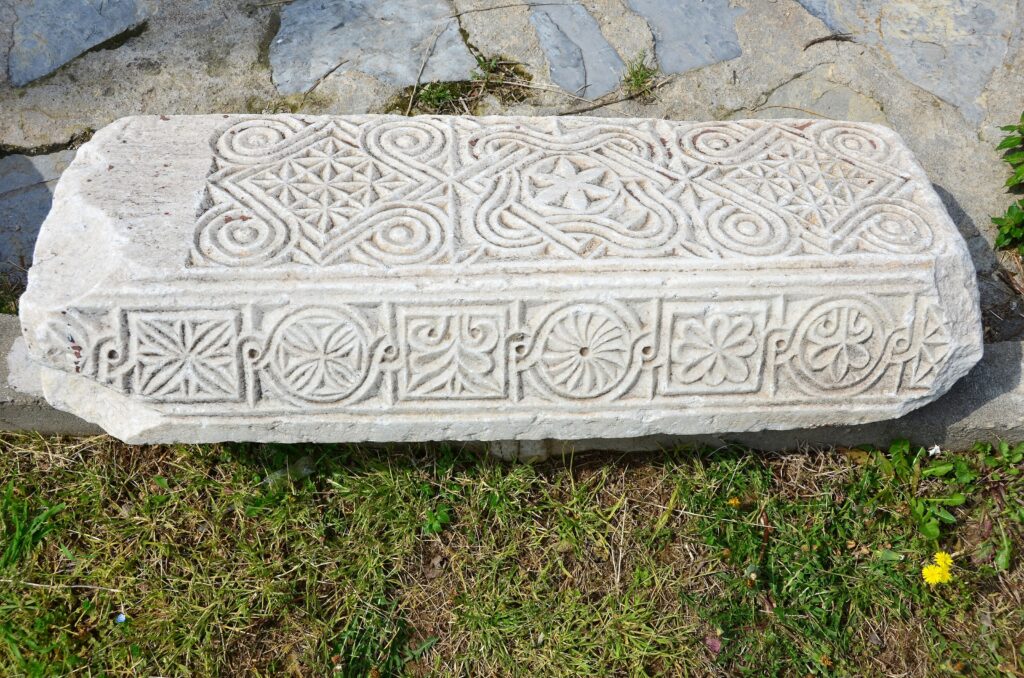
Now look at the promise. “I will make them to come and worship before thy feet” echoes Isaiah, where the nations come to Israel: “all they that despised thee shall bow themselves down at the soles of thy feet” (Isaiah 60:14). And “I have loved thee” echoes God’s words to Israel in Isaiah 43:4. The letter borrows Israel’s own scriptures to comfort a small group that felt cut off.
The goal of the promise is not humiliation. It is recognition: they will “know that I have loved thee”. It is a promise of vindication for a few faithful disciples who were rejected in their own town by people who had been their neighbors. It is pastoral comfort, not a sectarian victory, and not the triumph of one community over another.
Many churches today read the verse in this spirit. In 1965 the Second Vatican Council declared that “the Jews should not be presented as rejected or accursed by God” (Nostra Aetate 4), and it condemned antisemitism. The Jewish communities of Lydia were old and respected. Not far from Philadelphia you can still walk into the great synagogue of Sardis, in the center of that Roman city.
The Hour of Trial
“Because thou hast kept the word of my patience, I also will keep thee from the hour of temptation, which shall come upon all the world, to try them that dwell upon the earth” (Revelation 3:10, KJV).
The next promise is even larger. Because they kept “the word of my patience”, the word that calls for endurance, Christ will keep them “from the hour of temptation”. The Greek word here is peirasmos, which means testing or trial, a time of pressure that shows what a person really is.
This hour “shall come upon all the world, to try them that dwell upon the earth”. In Revelation, the people who dwell on the earth are usually the world that stands against God. The martyrs we met above use the same words when they ask God how long until he judges “them that dwell on the earth” (Revelation 6:10).
What is this hour of trial? Christians have read it in different ways. Some connect it with the pressure on the churches in the time of Emperor Domitian, when Revelation was written, which I describe in my article on the persecution of early Christians in Asia Minor. Others see a future, worldwide tribulation at the end of time. Others read it as the long story of testing between the first century and the return of Christ.
Readers also argue on the little words “keep thee from”. Do they mean that the faithful will be taken out before the trial, or protected while it happens? The same Greek expression appears in the prayer of Jesus: “I pray not that thou shouldest take them out of the world, but that thou shouldest keep them from the evil” (John 17:15).
Honestly, I do not think the question can be fully settled, and I will not pretend to settle it here. Whatever the exact meaning, the principle of the verse is clear. The small church that kept the word of Christ with patience will be kept by Christ in the time of the great testing.
Hold Fast and Keep Your Crown
“Behold, I come quickly: hold that fast which thou hast, that no man take thy crown” (Revelation 3:11, KJV).
The encouragment is followed by a very short and practical command: hold fast. The Philadelphians have already done well. They kept the word, they did not deny the name and they also endured rejection too. Now they only need to keep doing what they are doing. Do not let go, do not relax, do not lose heart. Hold that fast which thou hast.
The crown here is the stephanos, the same word as the “crown of life” promised to Smyrna (Revelation 2:10). It was the wreath of the victorious athlete, not the golden crown of a king. Philadelphia knew this wreath well. A bronze coin struck in the city under Emperor Caligula names a local magistrate, Hermogenes, with the title Olympic victor (Roman Provincial Coinage I 3023).
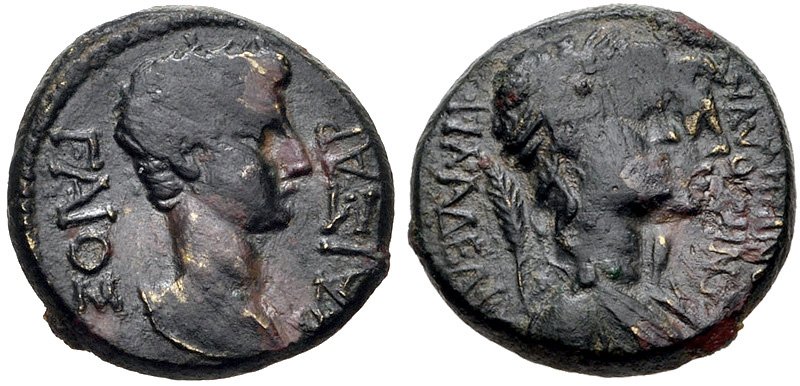
A wreath is won at the end of the race, and a runner can still lose it before the finish line. That is the warning in “that no man take thy crown”. Even a faithful church has not finished its race until the very end.
Some Christians of Philadelphia did reach that finish line. The account of the martyrdom of Polycarp of Smyrna, from the middle of the second century, says he was the twelfth to die in Smyrna, “reckoning those also of Philadelphia”, and calls his reward “the crown of immortality” (Martyrdom of Polycarp 19). I tell his story in my article on Saint Polycarp of Smyrna.
A Pillar in the Temple of My God
“Him that overcometh will I make a pillar in the temple of my God, and he shall go no more out” (Revelation 3:12, KJV).
The promise to the overcomer in Philadelphia is one of the richest in the whole Apocalypse. It has three layered images, the pillar, the names and the city, and each of them carries a special meaning for this town.
Let’s have a look at the pillar first, and remember the earthquakes. After the disaster of AD 17 the tremors went on, and Strabo writes: “Incessantly the walls of the houses are cracked”. Every building of Philadelphia was at risk, its temples too, and a column could fall at any moment. To people who lived with this fear, Christ promises a pillar that will never fall, in a temple that will never shake.
The Bible gives the image more depth. Solomon’s temple had two great bronze pillars at its porch, named Jachin and Boaz (1 Kings 7:21). Apostle Paul calls James, Cephas and John the men “who seemed to be pillars” of the church in Jerusalem (Galatians 2:9). A pillar carries weight, it stays in its place.
There is also a beautiful paradox. When John finally sees the New Jerusalem, he writes: “I saw no temple therein: for the Lord God Almighty and the Lamb are the temple of it” (Revelation 21:22). So the pillar of Philadelphia does not stand in building of stone. It stands in the presence of God himself.
Then comes “he shall go no more out”. Strabo says that most Philadelphians lived out in the countryside instead of inside the town. In an earthquake town, running out from the house was a familiar fear. Christ promises a home that never has to be left. The pillar does not need to step out, because this temple does not tremble.
The New Name and the New Jerusalem
“And I will write upon him the name of my God, and the name of the city of my God, which is new Jerusalem, which cometh down out of heaven from my God: and I will write upon him my new name” (Revelation 3:12, KJV).
Philadelphia knew a lot about new names. After the earthquake the grateful city honored the imperial family, and for a short time under Caligula and Claudius it used the name Neocaesarea, the new city of Caesar. Under Vespasian it called itself Flavia, after his Flavian dynasty. Each new name was sign of thanks, and of dependence on an imperial benefactor.
Christ gives a different new name. Not the name of an emperor but “the name of my God”. Not the name of a Roman town but the name of “new Jerusalem, which cometh down out of heaven”. In the last chapter of book the promise returns: “his name shall be in their foreheads” (Revelation 22:4).
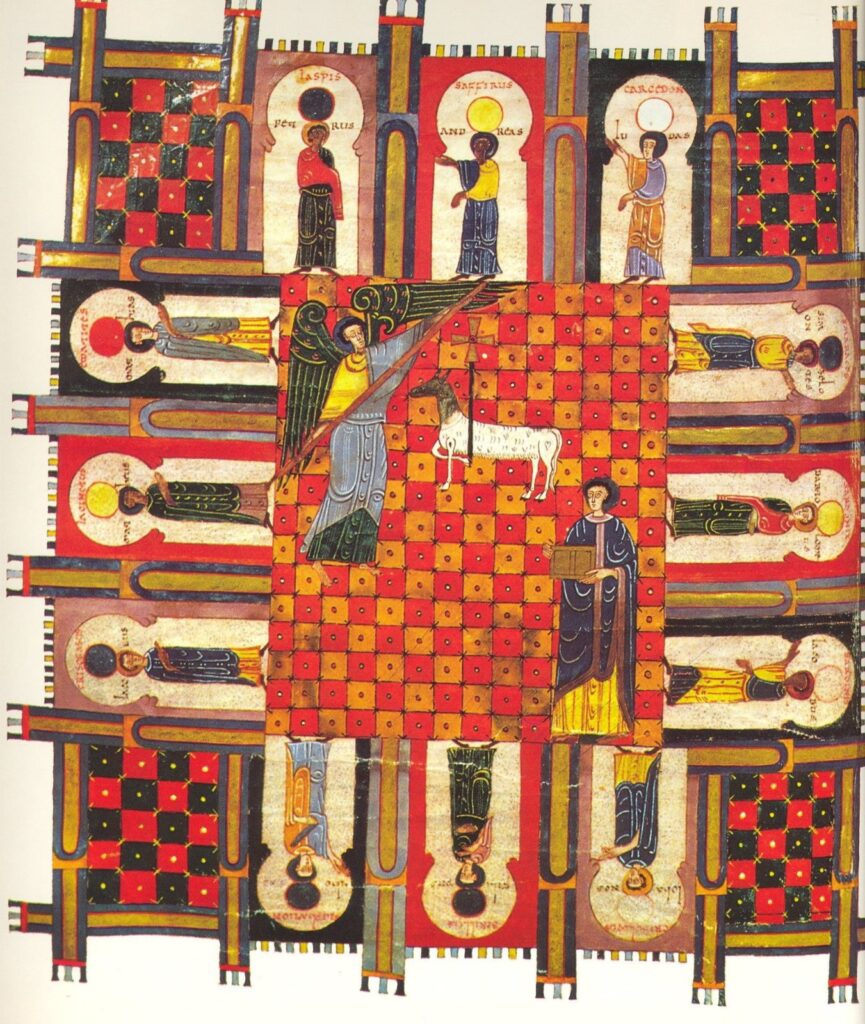
And then “my new name”. In Revelation 19:12 the rider on the white horse has “a name written, that no man knew, but he himself”. Isaiah had promised Zion, “thou shalt be called by a new name, which the mouth of the LORD shall name” (Isaiah 62:2).
In the Bible a name is an identity. The faithful Philadelphian will no longer wear the names of Roman benefactors. He will carry the name of God, of the heavenly city and of Christ, a name that does not depend on the gift of any emperor.
He That Hath an Ear
“He that hath an ear, let him hear what the Spirit saith unto the churches” (Revelation 3:13, KJV).
The letter ends with the same call as the others. As in the letter to Sardis, the call comes after the promise, not before it. And like every letter, this one was meant to be read in all seven churches, as I explain in how the letters traveled between the Seven Churches.
History adds its own small comment. Philadelphia held out as the last Byzantine stronghold in western Asia Minor, and it fell to the Ottoman Sultan Bayezid I only in 1390. The next and last letter goes down the road to the lukewarm city of Laodicea.
One Closing Image
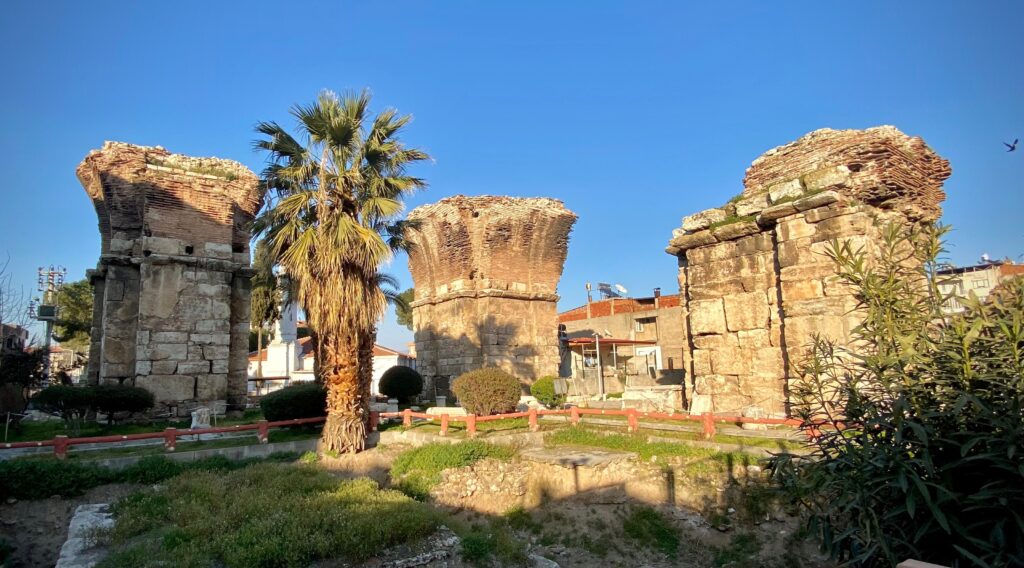
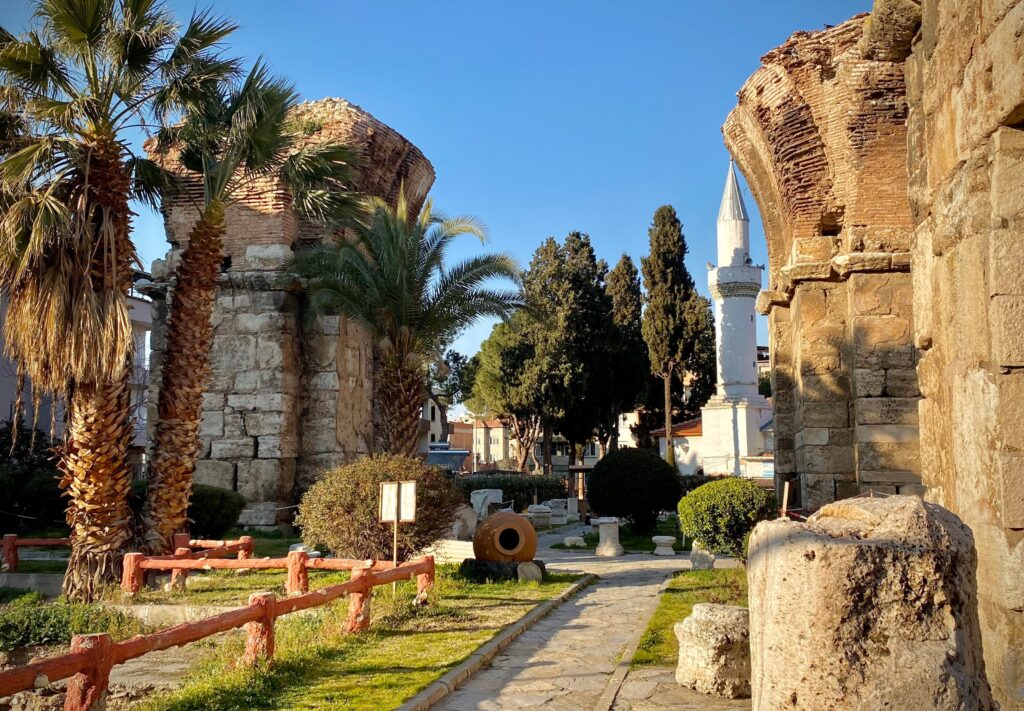
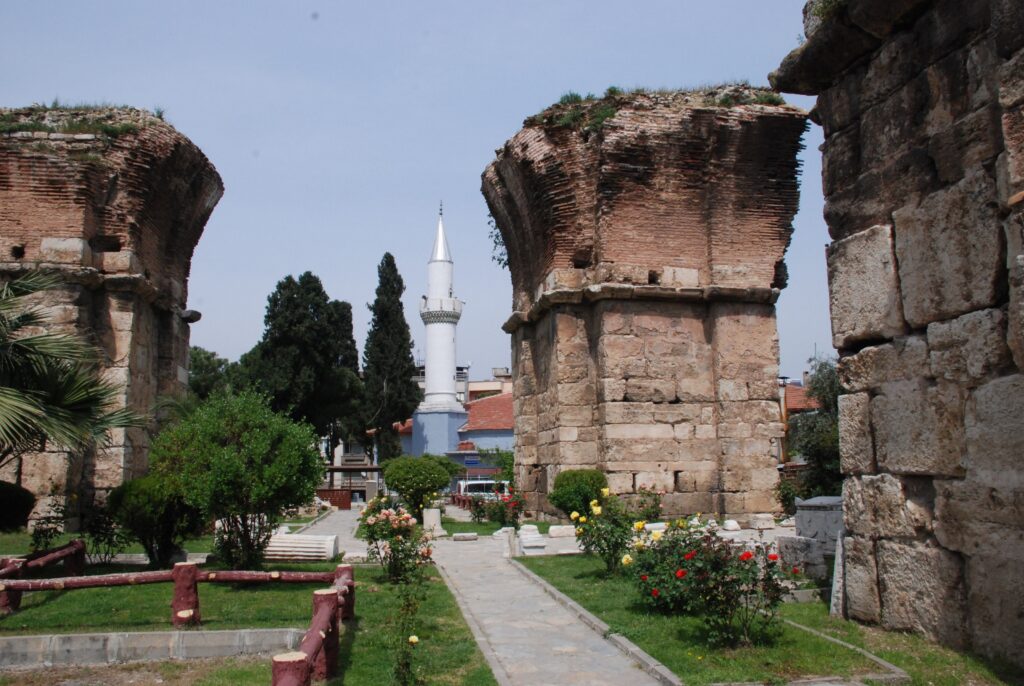
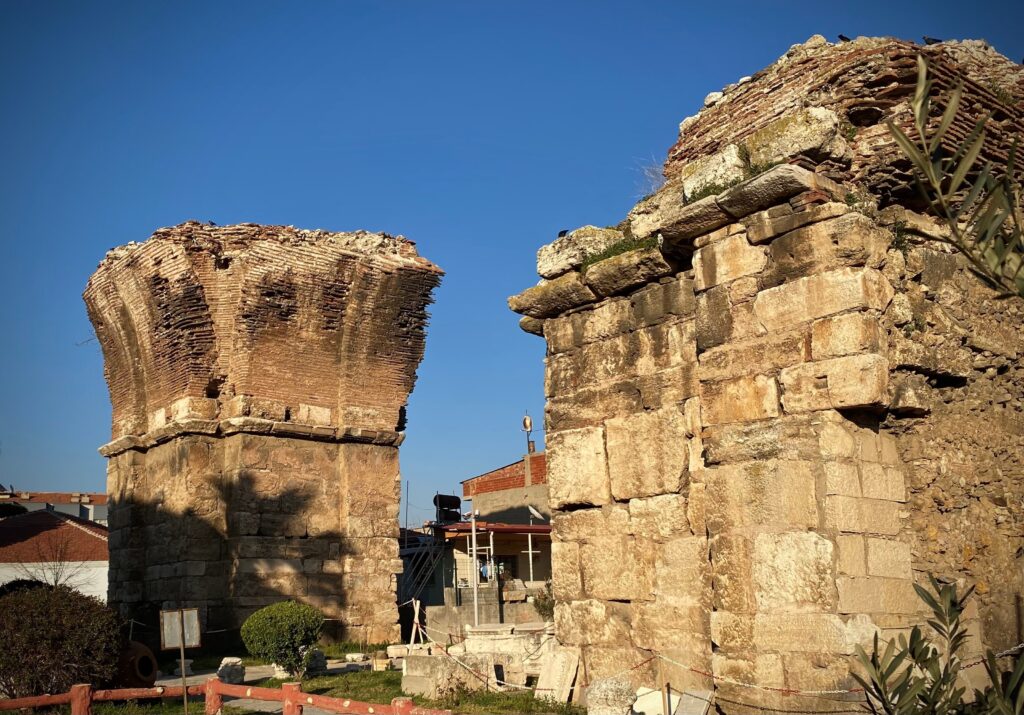
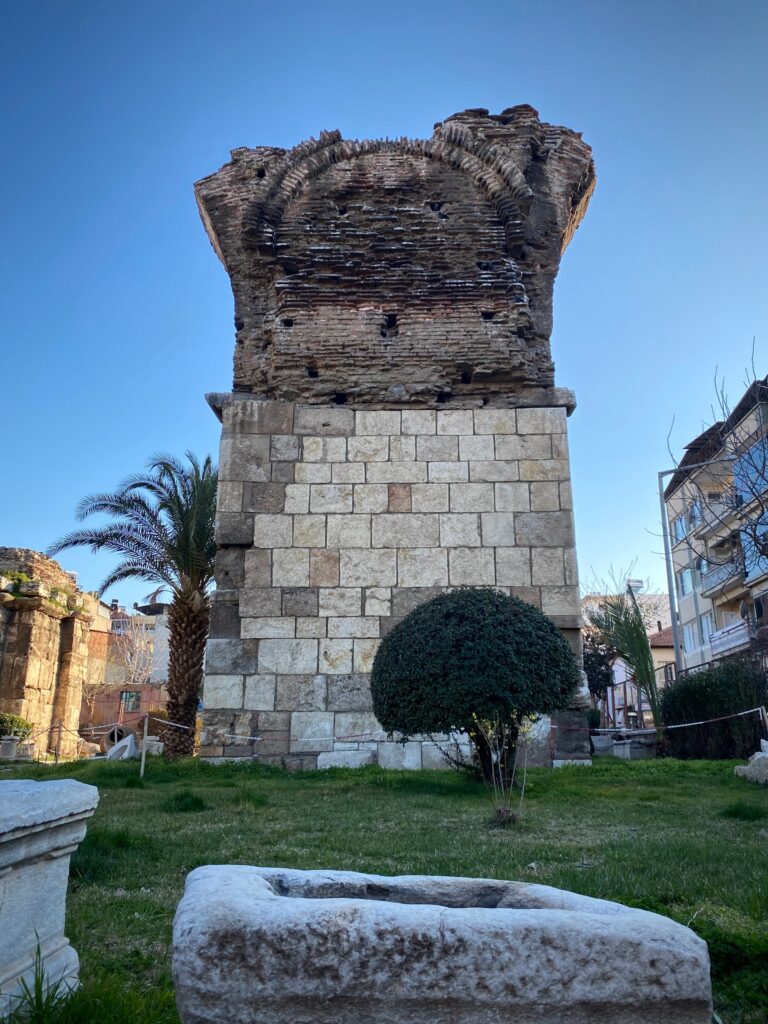
Instead of a summary, I leave you with one picture. The next time you stand in Alaşehir in front of the surviving pillars of the Church of Saint John, the great brick piers that have stayed upright through some fourteen centuries of earthquakes, fires, wars and rebuilding, pause for a moment.
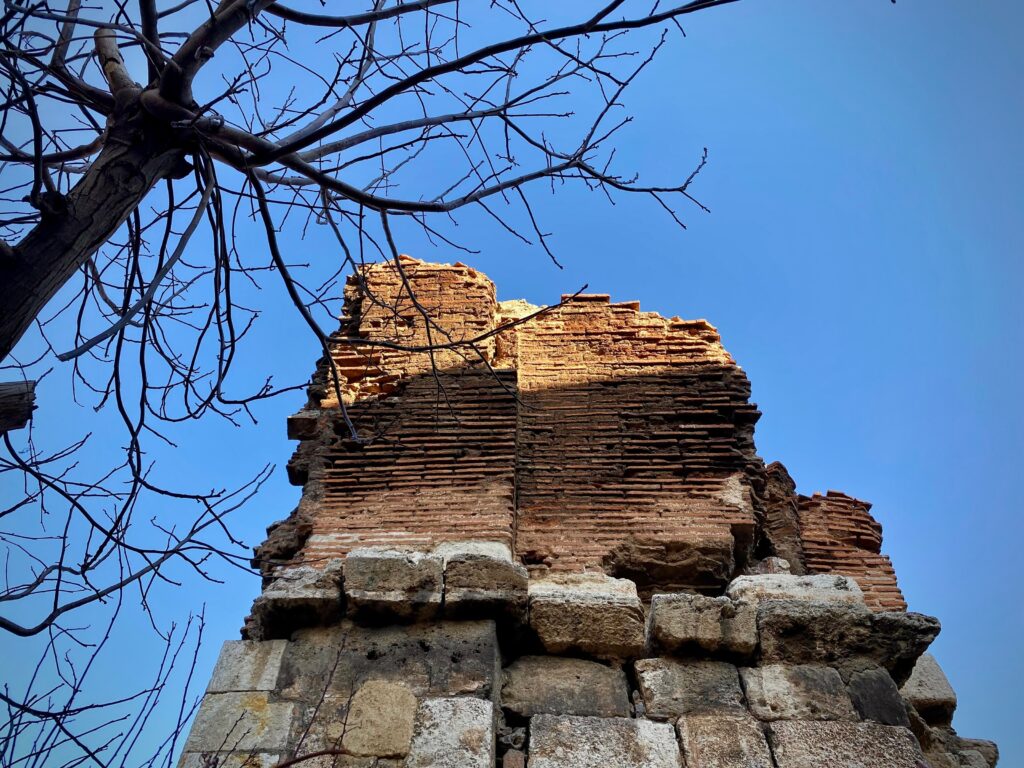
The pillars are broken at the top. The roof they once carried is long gone, and the community that built them has been scattered. But they are still standing. When I bring my guests here, we read this letter aloud nearby them.
The promise of the letter is still standing too. “Him that overcometh will I make a pillar in the temple of my God, and he shall go no more out.” In pieces, with broken tops and missing roofs, it is still there, in the center of a modern Turkish town, visible from the street. That is the letter to Philadelphia.
Frequently Asked Questions
What does the letter to Philadelphia mean?
The letter to Philadelphia (Revelation 3:7–13) encourages a small, weak but faithful church. Christ, who holds the key of David, gives it an open door that no one can shut. The letter contains no rebuke. The faithful are promised protection in the hour of trial, a crown, a place as a pillar in the temple of God and the name of the New Jerusalem.
What is the key of David in Revelation 3:7?
The key of David comes from Isaiah 22:22, where God gives the key of the royal house to the steward Eliakim, so that “he shall open, and none shall shut”. The steward decided who could enter the king’s house. In Revelation 3:7 Christ claims this key: he decides who enters the kingdom of God, and no one can overrule him.
What does “synagogue of Satan” mean in Revelation 3:9?
It refers to a local conflict in Philadelphia around 95 AD between the small church and some members of the town’s Jewish community, at a time when church and synagogue were separating. It is the language of an argument inside one family, and its promise echoes Isaiah 60:14. It is not a statement about the Jewish people as a whole, and it should never be read as one.
What does “I will make him a pillar in the temple of my God” mean?
It is a promise of permanent security. Philadelphia suffered so many earthquakes that many of its people lived outside the town. Christ promises the faithful a place in the temple of God that will never shake or fall, and that they will never have to leave: “he shall go no more out” (Revelation 3:12).
Hire Seven Churches Tour Guide in Turkey
I am a nationally licensed Turkish tour guide based in Kuşadası, nearby Ephesus. My day guiding covers Ephesus, İzmir and Pamukkale. Alaşehir is in Manisa province, so I join my guests there as their personal guide on longer journeys through the Seven Churches of Revelation, where Philadelphia lies on the road between Sardis and Laodicea.
My prices and the areas I work in are listed on my guiding rates and guiding areas page. To ask about my availability for your dates, send me a message through my contact page.
I hope we will read the sixth letter together one day, standing under the old pillars of Philadelphia. You can always contact me with your questions about the Seven Churches and their letters. See you soon, Hasan Gülday.