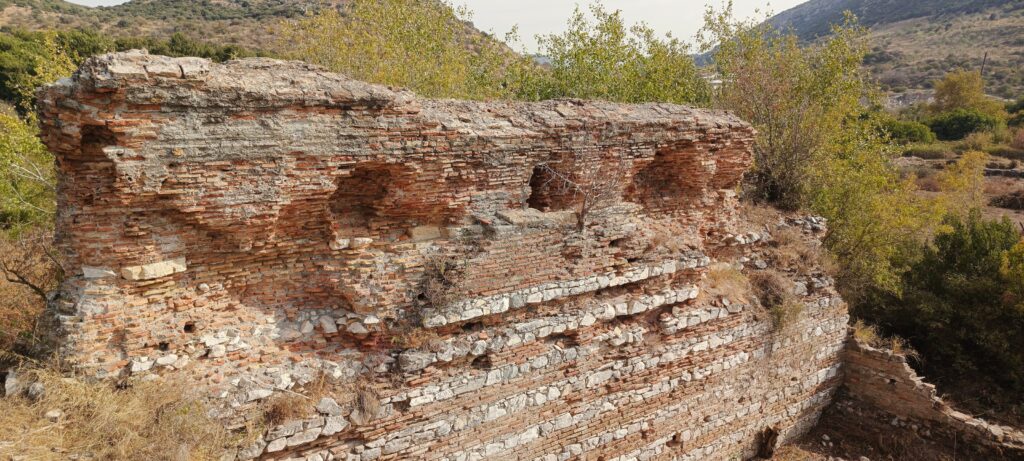
The Harbor Baths of Ephesus are the largest bath complex of the city, and probably the largest Roman bath in all of Anatolia. They were built in the time of Emperor Domitian, between AD 81 and 96, on the north side of Harbor Street, and the bath part was rebuilt in the 4th century under Constantius II. Next to them lie the Halls of Verulanus, a huge exercise yard.
Add Tours Around Turkey as a preferred source on Google
Many guests see the baths only from Harbor Street on their way down to the Lower Gate, and only part of the complex is visible there. Let’s have a look at what it was and why diggers are back at work. If you want to know how people used baths every day, read my article on city life in Ephesus.
Where Are the Harbor Baths in Ephesus?
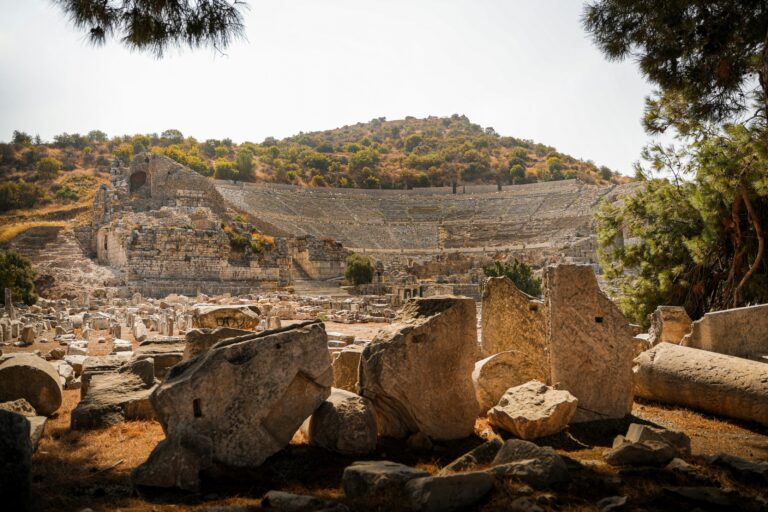
The Harbor Baths stand on the north side of Harbor Street, between the Great Theater and the old harbor. The Theater Gymnasium at the east end of this group already has a section in my article about the Arcadian Road, so here I will speak about the western part.
The Harbor Gymnasium and the Halls of Verulanus
The baths were one part of a bath-gymnasium, the Harbor Gymnasium, and it is the oldest of the four in Ephesus. A bath-gymnasium joined Roman baths with a Greek exercise school. The complex has three parts, from west to east:
- The bath block in the west, with changing rooms and cold, warm and hot rooms
- A square courtyard (palaestra) about 90 meters on each side
- The Halls of Verulanus, an arcaded sports yard about 200 by 240 meters
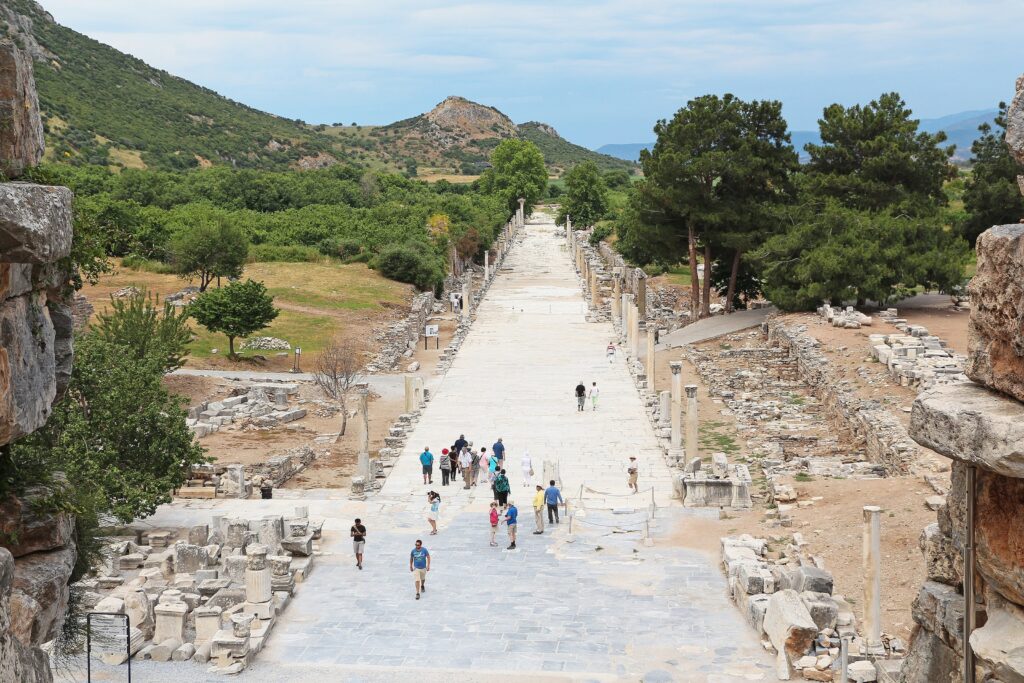
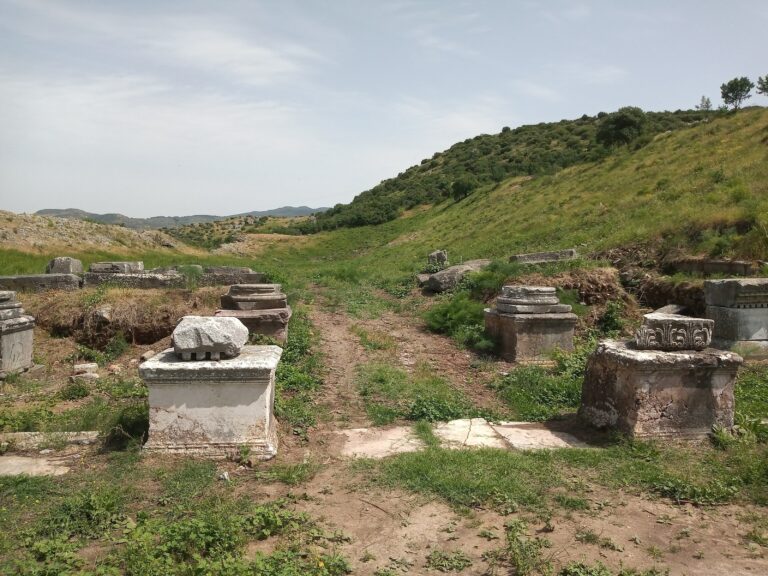
The Halls of Verulanus got their modern name from Claudius Verulanus, the high priest of Asia, who paid for marble wall slabs in AD 131. The slabs are gone, but you can still see the holes for them. The yard had a colonnade with three aisles, and the wide middle aisle was a running track.
In the 260s the big yard was destroyed, by Gothic raiders or by an earthquake, nobody is sure, it was never rebuilt.
The Baths of Constantius
Bath block lived much longer than the exercise yard. In the middle of the 4th century Emperor Constantius II had it rebuilt, and this is why you also hear the name Baths of Constantius. A new entrance was added from Harbor Street.
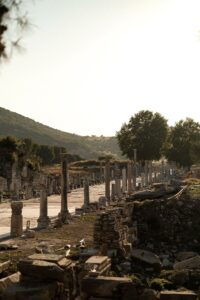
The old yard was left in ruins, and rich houses with mosaic floors were built over it. A small church was built into a corner of the marble hall of the gymnasium, with graves around it. By the way, the name of Domitian was cut out of the building’s inscriptions after his death, when the Senate condemned his memory. You can read more in my article on Emperor Domitian.
Digs at the Harbor Baths Today
Austrian archaeologists first dug on the Harbor Baths in the 1890s, and for a long time only small parts were visible. In 2023 the Ministry of Culture and Tourism started the Endless Ephesus project, and Harbor Street and the baths are part of it.
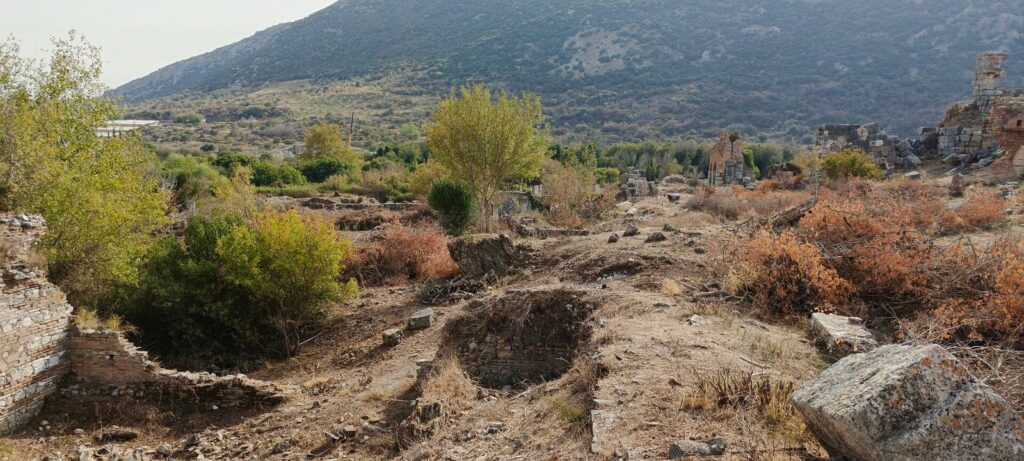
By December 2024 the team had uncovered an oval hall, a courtyard, toilets and pools of the bath complex. I tell more about Roman toilets in my article on the Ephesus latrines. The next step is restoration, and the fallen columns of Harbor Street are laying on the ground now, and I think the team will make a great job to stand them up again.
In December 2025 the team announced a small terracotta incense burner with a relief of Serapis, the Greek-Egyptian god, found in the Harbor Baths. A text on its back links it to a similar burner from the Terrace Houses. Egyptian merchants are thought to have built a temple of Serapis in Ephesus in the 2nd century, and my article on the Isis Temple tells about the Egyptian gods of the city.
Frequently Asked Questions
Can you visit the Harbor Baths in Ephesus?
You can look at them from Harbor Street, but the complex is closed for walking inside while the diggers and restorers work. The new visitor route announced in 2025 passes the baths, so ask me what is open before you come.
Who built the Harbor Baths of Ephesus?
They were built under Emperor Domitian, between AD 81 and 96, as part of the Harbor Gymnasium. Claudius Verulanus added marble in AD 131, and Constantius II had the bath part rebuilt in the middle of the 4th century.
How many Roman baths did Ephesus have?
Ephesus had four big bath-gymnasiums, the Harbor, Theater, East and Vedius gymnasiums, and also smaller baths like the Scholastica Baths on Curetes Street. The Harbor Baths are the largest of them all.
Hire Ephesus Tour Guide
Contact me to learn more about the Harbor Baths and Harbor Street, or to hire a professional licensed guide for your Ephesus day. You can see my guiding rates and guiding areas, or contact me to check my availability. I hope we will see each other in Ephesus. See you soon, Hasan Gülday.