Persecution of Early Christians in Asia Minor By Biblical Turkey Tour Guide Hasan Gülday
The Smell of Smoke in Smyrna


The year is 155, and the stadium in Smyrna is full.
Not for games. Not for athletics. For a killing.
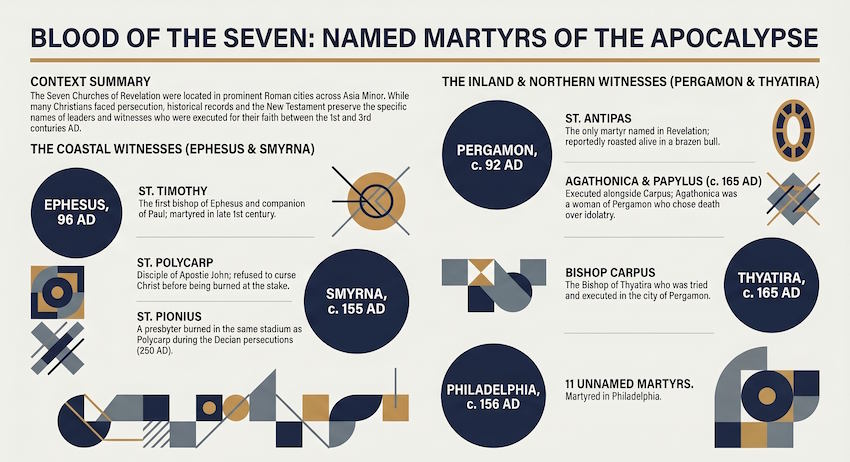
An old man — eighty-six years old, the sources say, though I sometimes wonder whether ancient authors didn’t round up a little for dramatic effect — stands in the centre of the arena and refuses to speak three words. Caesar is Lord. That is all anyone is asking of him. Three words, a pinch of incense over the flame, and Polycarp, bishop of Smyrna, can walk out of here alive.
He will not say them.
What follows is one of the most carefully recorded martyrdom accounts to survive from the ancient world. The crowd roars. The fire is built. According to the Martyrdom of Polycarp — our earliest such document — the flames curl around him but refuse to consume him, taking the shape of a billowing sail, and the executioner must finally step in with a dagger. Even then, according to the text, so much blood flows that the fire is extinguished.
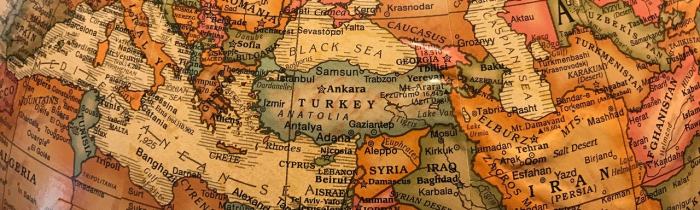
I have stood in what is left of Smyrna — İzmir now, about twelve kilometres north of me on a clear morning — and tried to picture it. The ancient agora is still there, partially excavated, with columns rising in the heat. The stadium where Polycarp died is gone, built over long ago by the expanding city. But the memory is there, buried in the stone of this coastline, and it is more complex and more interesting than most people realise when they come looking for simple stories of heroic faith.
Because persecution in Asia Minor was not one thing. It was not a single wave, not a single enemy, not a single story. It was almost three centuries of legal ambiguity, local hatred, occasional official brutality, and long stretches of surprising quiet. Understanding what actually happened requires us to be a little uncomfortable with the neat narrative — the one where Rome hunts Christians relentlessly, century after century, until Constantine finally rescues them.
That story is too clean. Real history rarely is.
What Rome Actually Thought
Here is something that surprises most visitors when I explain it: for the first century and a half of Christian existence in Asia Minor, there was no law against being a Christian.
None.
The Romans were, by ancient standards, remarkably tolerant of foreign religions. Their empire absorbed dozens of cults, mystery religions, philosophical schools, and local deity traditions. They did not, as a rule, care what you believed or how you worshipped, provided you fulfilled your civic duties — and the central civic duty of the Roman world was participation in the imperial cult.

The imperial cult was not really about theology. The Romans were pragmatic people. It was about loyalty. When you burned incense before the image of the emperor, you were not necessarily declaring him a god in any deep metaphysical sense. You were declaring that you belonged to this world, this order, this empire. It was closer to standing for a national anthem than to receiving communion.
Christians, and before them Jews, found this impossible. Jews had a legal exemption recognised by Rome — a religio licita, a permitted religion with an ancient history and a defined community. Christians, as they separated from Judaism, lost that protection. They were a new thing. Suspicious. Meeting in private. Refusing the sacrifices. Refusing military service in some cases. Speaking about a kingdom that was coming and was not Rome’s kingdom.
This made them, in Roman eyes, not quite criminals but not quite safe either. The word used, sometimes, was superstitio — a superstition, a dangerous foreign irrationality. It was not a term of affection.

Nero and the Shadow That Fell Eastward
The first official persecution came under Nero, in Rome, in 64 AD. A fire destroyed much of the city, and Nero — searching, according to Tacitus, for a scapegoat — found the Christians. What followed in Rome was savage. Crucifixions, burnings, victims sewn into animal skins and thrown to dogs.
Asia Minor felt that shadow but did not directly experience it. Paul was in Rome in this period, eventually executed — tradition says on the Ostian Way. Peter, too, according to tradition, died in Rome around this time. But the communities they had planted in Ephesus, Colossae, Galatia — these continued, quietly, under the surface.
I want to be honest here: we do not know exactly what those communities looked like, or how systematically they were threatened, in the 60s and 70s. Our sources are patchy, partisan, and sometimes written a generation later. What we do know is that the churches of Asia Minor were alive, arguing, growing, and occasionally writing very urgent letters to each other. Paul’s own letters to these communities are full of references to suffering, to hardship, to the pressure of hostile neighbours. But persecution in the official, organised sense — that came later.

Domitian and the Revelation from Patmos
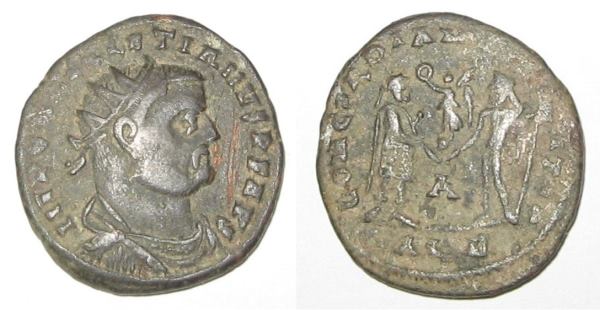
The reign of Domitian, 81 to 96 AD, is the period most directly connected to the Seven Churches and to the Book of Revelation.
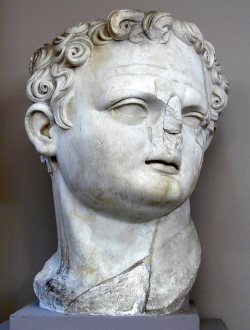
Domitian insisted on being addressed as dominus et deus — lord and god. This was new, aggressive, and deeply uncomfortable for Christians and for many Romans as well. The imperial cult, always present in Asia Minor, intensified. Ephesus had a huge temple to Domitian, fragments of which you can still see in the Ephesus Museum in Selçuk — a colossal head and forearm from his cult statue, recovered from the ruins. I take groups there regularly, and people are always startled by the scale. The forearm alone is taller than a standing person.


It was under Domitian, almost certainly, that John — exiled to Patmos, about sixty kilometres off the Aegean coast — wrote what became the Book of Revelation. You cannot read that document without understanding it as a persecution text. The coded language about Babylon, the beast, the number of the beast — these are not prophecies about some distant future. They are resistance literature, written for communities under real pressure, in a style that would protect its author and readers from the authorities while communicating everything clearly to those who knew how to read it.
How intense was that pressure under Domitian? Historians disagree, and I think honestly they disagree more than popular Christian literature tends to admit. Steven Friesen has written carefully about this, arguing that the persecution was real but localised, concentrated in Asia Minor, and driven partly by local civic and economic pressure rather than empire-wide policy. Others suggest it has been somewhat amplified in later tradition. I personally think something severe was happening. The urgency in Revelation is not literary decoration.
When John writes to the church in Smyrna, his words are not abstract comfort. They are addressed to people who are looking at the real possibility of dying.
Pliny and the Law That Was Never Written
The most remarkable document about Roman policy toward Christians in Asia Minor does not come from a Christian source at all. It comes from Pliny the Younger, governor of Bithynia-Pontus on the Black Sea coast, writing to the Emperor Trajan around 112 AD.
Pliny has been arresting Christians but is not sure what to do with them. He writes to Trajan in what you might call an admirably honest tone of bureaucratic confusion. He describes interrogating them. Those who denied being Christian he released after making them invoke the gods and curse Christ. Those who persisted he executed — not, he writes carefully, because he was certain of the law, but because obstinacy itself seemed to warrant punishment. Now what should he do?


Trajan’s reply is remarkable for what it contains and equally for what it does not. Christians are not to be sought out actively. If they are denounced and proved to be Christian, they are to be punished. But anonymous accusations are not to be accepted. And if they recant — if they worship the gods — they should be pardoned, whatever their past.
They are not to be sought out. If they are denounced and proved guilty, they must be punished. Whoever denies that he is a Christian and demonstrates this by worshipping our gods shall obtain pardon through repentance. — Trajan to Pliny, c. 112 AD
This document is extraordinary. It is not tolerance. It is not cruelty. It is something characteristically Roman — pragmatic management. The empire did not want to create martyrs. It did not want to waste resources hunting an obscure group of people in the mountains of Bithynia. But it could not afford to let open defiance of the civic order stand unanswered.
The Trajan rescript became, in effect, the operating framework for the treatment of Christians for the next century and a half. Persecution was real but local, episodic, triggered by denunciations, driven by neighbourhood resentments as much as imperial policy. A Christian living quietly, causing no public offence, paying taxes, avoiding conspicuous refusal of the civic cults — that person could live an entire life without official trouble. But a bishop. A community leader. A person who refused publicly — that person was at real risk, and the risk depended enormously on who the local governor was and what mood the local population was in.
The Great Martyrdoms of Asia Minor
This is where the stories become individual and therefore become human.
Ignatius of Antioch passed through Asia Minor around 108 AD, on his way to Rome and to a death he seemed, in his own strange way, to be anticipating with something close to eagerness. He wrote letters from Smyrna, from Troas — letters that have survived and give us an intimate, often troubling window into the mind of a man who has decided that martyrdom is not a tragedy but a completion. He writes to the Romans, begging them not to interfere with his execution:
“Let me be fodder for the wild beasts — through them I can attain God.” — Ignatius of Antioch, Letter to the Romans
You can call this courage or you can call it something more complicated. I find myself honestly uncertain what to call it. But his journey through Asia Minor — welcomed by communities, exchanging letters, receiving delegations — shows us how connected these early churches were and how seriously they took the idea of faithful witness, even to death.
Polycarp of Smyrna I have already mentioned, but I want to stay with him a moment. What makes the Martyrdom of Polycarp so remarkable, apart from its age, is its specificity. We are told the name of the police captain who arrested him — Herod, an unfortunate name given the context. We are told he was riding a donkey when they found him at a farm outside the city. We are told he asked for an hour to pray before they took him, and that he prayed for two hours, so absorbed in prayer for all the churches he had served that his captors began to regret having come for him at all.
At the stadium, the proconsul offers him the standard escape route: curse Christ, take the oath, go home. Polycarp’s reply has been quoted ever since.

He was burned. His bones were collected by the community in Smyrna and venerated as relics — the first recorded instance of that practice in Christian history.
He was followed by others. Pionius, a presbyter also of Smyrna, was arrested in 250 AD during the Decian persecution and kept in prison for weeks. He debated publicly with pagans and lapsed Christians in the marketplace, refused all compromise, and was crucified and then burned. The account of his martyrdom is detailed and astonishing — a man calm enough to thread a chain through his own neck to forestall a harsher restraint. The records of his trial preserve the actual names of the magistrates, the actual questions asked. This is history, not legend.
And then there are the thousands whose names we do not know. The unnamed communities in Pergamon, living in the shadow of what John in Revelation calls Satan’s throne — the great altar of Zeus on the acropolis, and the imperial cult temple that dominated the skyline. The people in Sardis and Thyatira and Philadelphia who are never individually recorded but whose existence we know from the letters John wrote to them, with his specific warnings, his specific praise, his specific knowledge of what each community was facing.
I find the unnamed ones move me most. The names we have are the ones who made a particular choice in a visible way. But what about the woman in Thyatira who said nothing in public and prayed in her house and raised her children in the faith and died of old age and left no written record at all? She was there too.
The Decian and Valerian Storms
For most of the second century and into the third, persecution in Asia Minor followed the Trajanic pattern — local, episodic, serious but not systematic. Then, in 249 AD, everything changed.
The Emperor Decius issued an edict requiring all inhabitants of the empire to perform a sacrifice to the traditional gods and obtain a certificate proving they had done so. These certificates — libelli — have actually been found in Egypt on papyrus. We can read them. They are bureaucratic, matter-of-fact documents: so-and-so has sacrificed, has poured a libation, has eaten the sacrificial food, and such-and-such official certifies this. They feel disturbingly modern.

For Christians, this was an impossible demand. Not a matter of local hostility or an individual governor’s mood — this was universal, official, empire-wide. The response of Christian communities across Asia Minor was varied. Some fled. Some apostatised, handed over scriptures — traditores, from which we get the word “traitor” — burned incense, obtained their certificates. Some bribed officials. And some refused, were arrested, and died.
Decius himself died in 251, fighting the Goths at the Battle of Abritus — the first Roman emperor to die in battle against a foreign enemy. The persecution faded with him. Then came Valerian, in 257, with a more targeted approach: clergy specifically. Bishops, presbyters, deacons were to sacrifice or be executed. Properties were to be confiscated.
Valerian, too, died dramatically — captured by the Sassanid king Shapur the First in 260, the only Roman emperor ever taken prisoner by an enemy in battle. His son Gallienus reversed the persecutions and returned church properties. For a generation, something like peace returned to the churches of Asia Minor.
There is a letter from this period, written by Dionysius of Alexandria, that gives us one of the most detailed pictures we have of what Decian persecution looked like on the ground — the arrests, the apostasies, the community tensions afterward about what to do with those who had lapsed and now wanted to return. It is an extraordinarily human document. These are not saints in an icon. They are people trying to figure out what to do in an impossible situation, and not all of them choosing well, and the community trying to hold together afterward anyway.
Diocletian and the Great Persecution

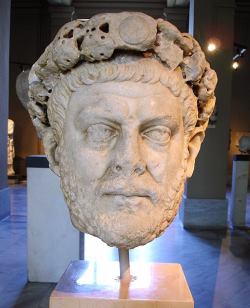
The final and most sustained wave came from an unexpected quarter. Diocletian had, for the first twenty years of his reign, more or less left Christians alone. His own wife Prisca and his daughter Valeria were, by some accounts, sympathetic to Christianity or perhaps even quietly Christian themselves.
Then in 303 AD, partly under pressure from his co-emperor Galerius, Diocletian issued the first of what would become four edicts of persecution. Churches were to be demolished. Scriptures were to be burned. Christians lost legal standing, could not hold public office, could be enslaved if they persisted.
The church at Nicomedia — Diocletian’s eastern capital, in what is now the town of İzmit, not far from Istanbul — was demolished by soldiers the day after the first edict was posted. According to Eusebius of Caesarea, who was alive and writing at the time, a Christian tore the edict from its wall in defiance and was executed for it. Eusebius wrote his Ecclesiastical History partly as a record of this period. He is not an unbiased source, hagiography was already his mode, but he was close enough to events that his testimony matters.
In Asia Minor the persecution was real and intense. Communities in Phrygia faced coordinated attacks. Bishops were arrested across the region. The machinery of Roman administration, which had for two centuries proceeded by denunciation and local pressure, now turned systematically and from the top.
And then, remarkably, it stopped.
Galerius, the architect of much of the persecution, issued an edict of toleration in 311, reportedly from his deathbed, acknowledging that the attempt to eradicate Christianity had failed and asking, with strange pathos, that Christians pray for him and for the state. Constantine, having defeated his rivals and allied himself very closely with the Christian God, issued the Edict of Milan in 313 with his co-emperor Licinius, extending full toleration and ordering the return of confiscated properties.
The age of persecution was over. What came next was a different kind of history entirely — and not always a gentler one.
What You Can Still See
People ask me, when I take them through Ephesus or Smyrna, whether they can see anything connected to the persecutions. The answer is: more than you might expect, and less than you might hope.
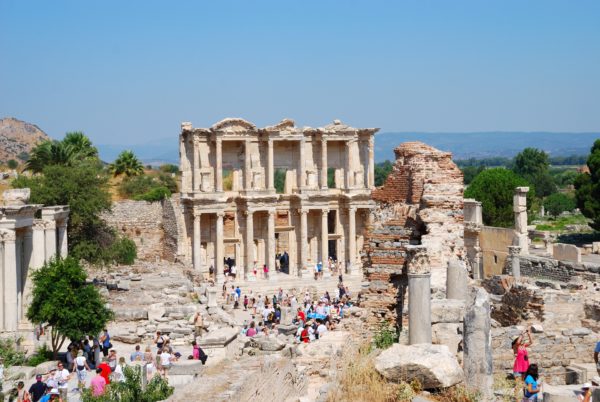
In Ephesus, the fragments of Domitian’s temple are in the museum here in Selçuk — the forearm, the head, remnants of the altar. You can stand in what was the temple precinct and understand viscerally why the imperial cult felt so overwhelming to early Christians in this city. The scale is not metaphorical. It is physical.

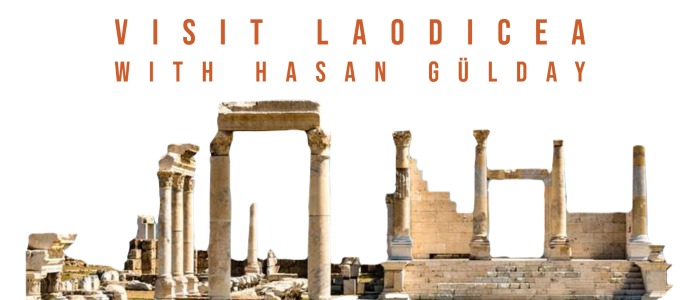
In İzmir — ancient Smyrna — the agora is partially excavated and open to visitors, with its beautiful two-storey colonnade still partly standing. The stadium where Polycarp died is gone, built over long ago by the expanding city. A church was later built on what tradition identified as the site of his martyrdom, and the memory has never entirely left this place.
In Bergama — ancient Pergamon — the acropolis rises above the modern town with ruins of temples still visible. The great Altar of Zeus, which John called Satan’s throne, was excavated in the nineteenth century by German archaeologists and removed to Berlin, where it still sits in its own museum — a matter of ongoing and not unreasonable controversy. When I stand at the remaining foundations in Bergama and try to imagine that altar, I find myself thinking about what it meant to live in its literal shadow and refuse to participate in what it represented.
Patmos, where John wrote Revelation, is a Greek island now — an easy ferry from Kuşadası. The Cave of the Apocalypse is there, and the Monastery of Saint John above it. Pilgrims have been going since the very early Byzantine period. I have taken groups there, and there is something genuinely affecting about standing in that cave, whatever you believe about the text written there. The island itself is small, rocky, and beautiful. It feels like a place the world forgot, which is perhaps exactly why it was chosen.

An Honest Reckoning
I want to say something that I do not always say on tours, because it complicates the clean narrative, but I think it is important.
The early Christians of Asia Minor were not only victims. They were sometimes, in their own way, what you might call deliberate witnesses — people who understood exactly what refusing the imperial cult meant, who chose public testimony over private survival, and who were not always seeking compromise. This is not a criticism. It is actually what makes them interesting. Polycarp could have said three words and walked home. Pionius could have eaten the sacrificial meat and said nothing more about it.


The question of why they did not — what drove them to choose death so deliberately — is the genuinely fascinating question, and I do not think the answer is only about theology. It is about community. About identity. About what it means to be a particular kind of person in a particular kind of world. The Roman Empire offered a version of belonging that required you to surrender certain things. These people decided, in different ways, that those things were not surrenderable. I find that interesting regardless of what I believe about the theology.
And there is one more thing.
The persecutions ended. Christianity survived. And then, with remarkable speed, it became the official religion of the same empire that had tried to kill it — and, in that position of power, it was not always gentle with those who disagreed with it. That is not a reason to diminish what the martyrs of Asia Minor suffered. But it is a reason to hold the whole story with some complexity, some humility. History rarely gives us pure heroes and pure villains. It gives us human beings making choices under pressure, and then living — or dying — with the consequences.
I have been walking these ruins for over twenty years. I still find that complicated truth more moving than any simple version of the story.
If you would like to explore the sites connected to early Christianity in Asia Minor — Ephesus, Smyrna, Pergamon, Patmos, and beyond — I would be glad to take you. Contact me through theephesus.com or toursaroundturkey.com. Every site has layers, and the layers are worth finding.
See you soon.