Rain in Ephesus falls mostly from late autumn to early spring, and a wet day can be a good day to visit. The marble gets slippery, but the Terrace Houses have a roof, the museum in Selçuk has indoor halls, and the ruins are quiet.
Today I had an amazing experience in Ephesus ancient city during my tour. It was not a crowded day indeed me and my guests were the only ones in Ephesus for a while. This emptiness and the slow drops of rain gave me an opportunity to shoot this amazing video. It is nearly impossible to see Ephesus this much empty and I want you to enjoy these moments too. Contact me to learn more about Ephesus in Turkey and the weather in Ephesus during the time of your visit. See you soon, Hasan Gülday.
When Does It Rain in Ephesus?
It rains in Ephesus mostly from November to March, and December and January are the wettest months on this part of the Aegean coast. Summers are hot and almost dry, so a summer shower is rare.
By the way, in Turkey many people call rain rahmet, which means mercy. The weather changes from year to year, so I always look at the forecast the evening before. My post Best Time to Visit Ephesus goes month by month.
Is Ephesus Slippery When It Rains?
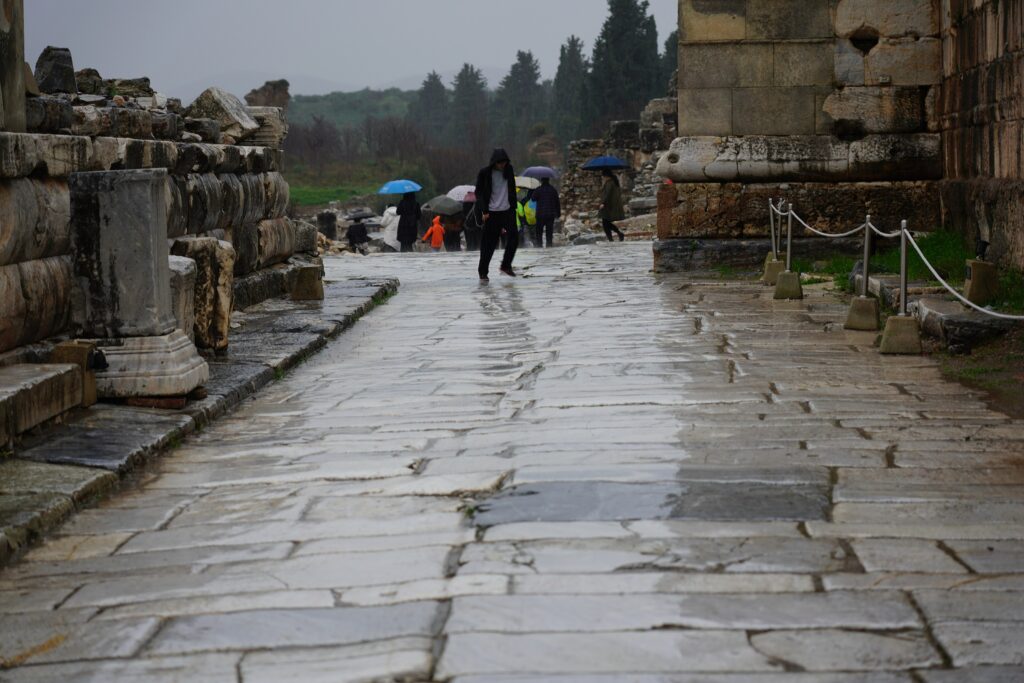
Yes, Ephesus is slippery when it rains. The old marble streets are worn smooth by centuries of feet and carts, and wet marble is very slippery, most of all on the slopes.
Most tours start at the Upper Gate and walk down to the Lower Gate, so you go downhill on marble for whole visit. Wear closed shoes with a rubber sole, walk slowly and step flat. Sandals and smooth leather soles are the worst choice. Please keep it in mind when you pack.
What Is Covered at Ephesus When It Rains?
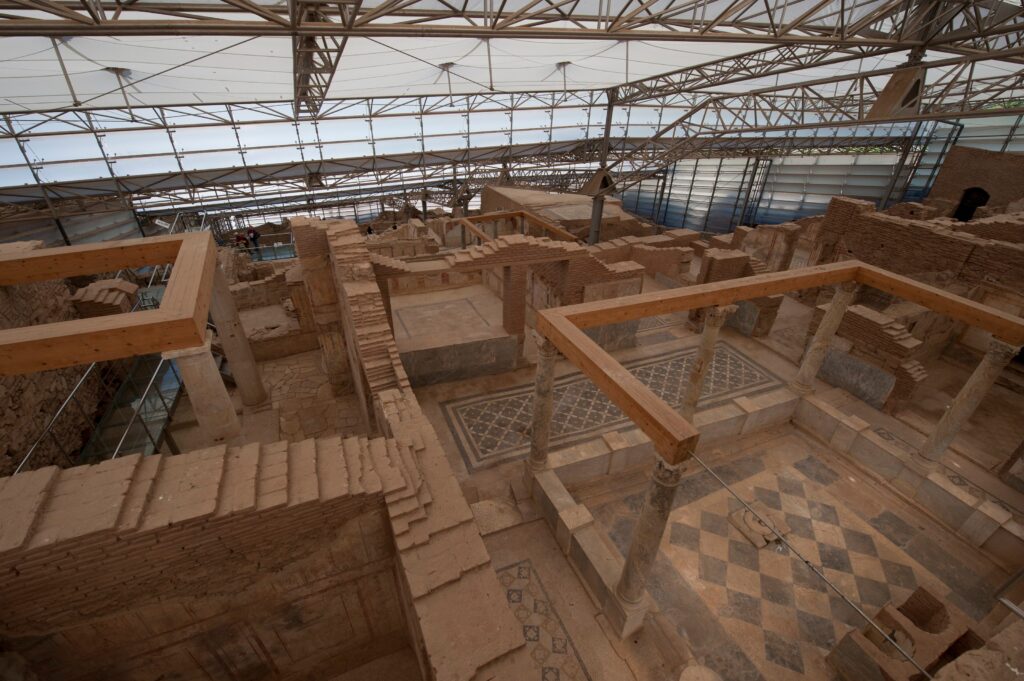
Not much of Ephesus has a roof, but the Terrace Houses do. A big modern roof, finished in the year 2000, covers the main part of these rich homes with their mosaics and wall paintings, so rain in Ephesus does not stop you from seeing them.
The houses have stairs and narrow walkways, and they are not wheelchair accessible. The Library of Celsus, the Great Theater and the streets are open air, so a hood works better than an umbrella in a crowd. I explained the rooms in my post Layout of Ephesus Terrace Houses. Entry rules and times change, so please check my post Ephesus and Nearby Attractions Entry Times Update before you go.
Is the Ephesus Museum in Selçuk Good for a Rainy Day?
Yes, the Ephesus Museum in Selçuk is a good rainy-day stop. It has indoor halls with finds from the ancient city, such as the Terrace Houses, the fountains and the graves, and the famous statues of Artemis.
The museum is nearby the ruins, so the plan is easy. If the rain is heavy in the morning, start with the museum and walk the ruins later. You can read about its halls in my post Ephesus Archeological Museum.
Can You Take Good Photos in the Rain at Ephesus?
Yes, rain in Ephesus brings soft light, and soft light is kind to the ruins. Under gray clouds there are no hard shadows, the white marble shows its details, and wet stone gets deeper colors. Keep your phone in a plastic bag between shots and wipe the lens with a dry cloth.
The best part is the quiet, with fewer people on the street it is easy to take photos of empty Ephesus, just like in the video above.
Frequently Asked Questions
Can you visit Ephesus when it rains?
Yes, you can visit Ephesus in the rain. It is an open-air site, so wear a rain jacket and shoes with good grip. In a very heavy storm, ask your hotel or your guide before you go.
Is Ephesus worth visiting in winter?
Yes. Winter days are cool, the crowds are small and the hills turn green. Bring layers and a rain jacket, and check the entry times first, because they can change with the season.
What should I wear at Ephesus in the rain?
Wear a light waterproof jacket with a hood, closed shoes with a rubber sole and quick-drying layers. Leave the sandals at the hotel, because wet marble is slippery.