I have been serving tourists visiting Ephesus for more than 15 years.
Many of them asked me a question, ”How big\great\advanced\wealthy\important\etc is Ephesus compared to Pompeii?”
Finally, I decided to answer this question and set my path to create this article.
I will use facts and information from the golden times of both Ephesus and Pompeii. I believe this will be a fair comprehension between them.
I also want to add the modern touristic aspects of both Ephesus and Pompeii.
Let’s discover and compare Ephesus and Pompeii together!


The Golden Ages: When Both Cities Ruled Their Worlds
Ephesus at its peak (1st–2nd century CE)
- Role and scale: Capital of the Roman province of Asia Minor and arguably the most important city in the eastern Aegean. Population estimates hover around a quarter million, which was metropolitan by ancient standards.
- Why it mattered: Aegean port + crossroads of Anatolia = a trading powerhouse. Add the Temple of Artemis (one of the Seven Wonders) and a vibrant civic and religious life, and you get a city that drew merchants, pilgrims, philosophers, and, later, Christian figures like St. Paul and St. John.
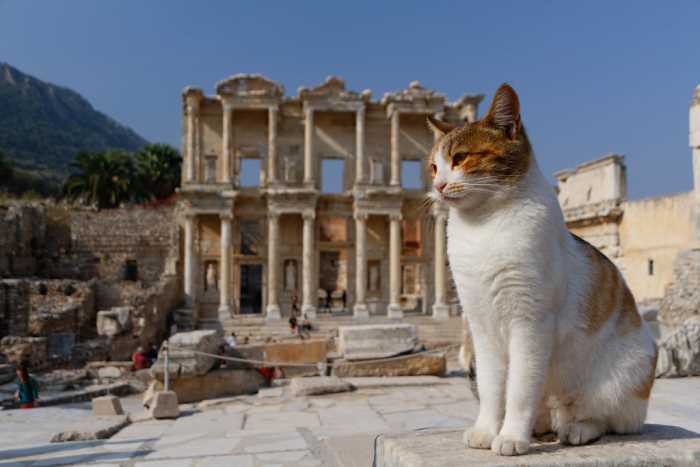
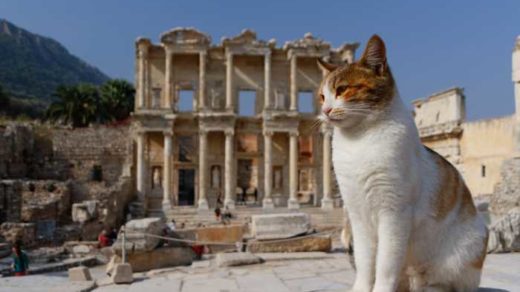
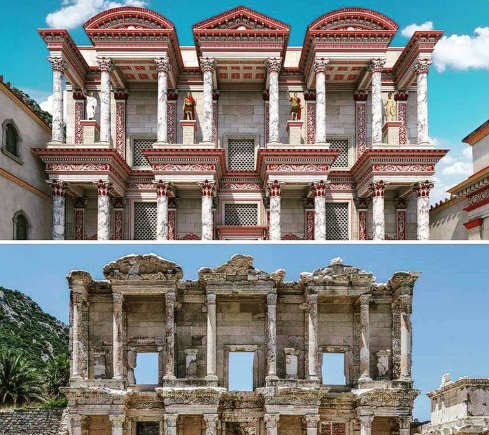
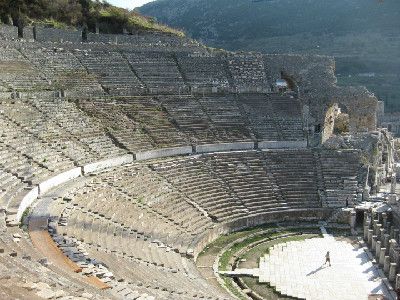
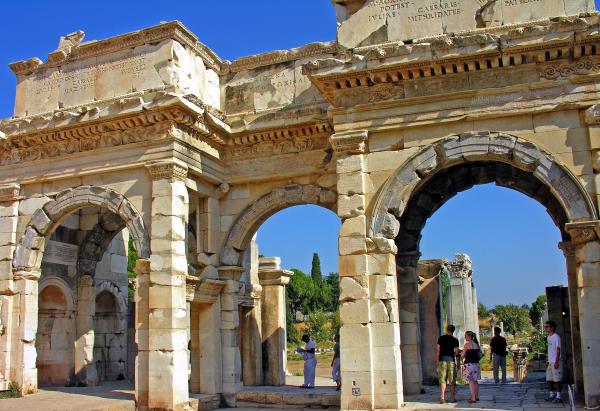
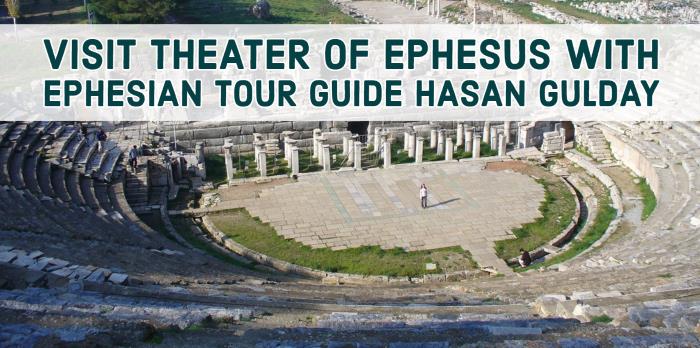
- Signature look: Monumental. Marble-paved avenues with colonnades; the glittering façade of the Library of Celsus; a theatre for roughly 24,000–25,000 people; monumental fountains and bath-gymnasium complexes. Ephesus loved to emphasize its importance in stone.
Pompeii in its prime (1st century CE, before 79)
- Role and scale: A prosperous Roman city near the Bay of Naples—smaller than Ephesus but brilliantly sophisticated. The population is typically estimated between 11,000 and 20,000.
- Why it mattered: The Campanian plain’s volcanic soils fed vineyards and orchards; Pompeii thrived on agriculture, trade, and leisure. After an earthquake in 62 CE, rebuilding actually spurred a wave of fresh architecture and art.
- Signature look: Intimate and vivid. From the Amphitheatre (one of the earliest in stone) and the Forum to the House of the Faun and the Villa of the Mysteries, Pompeii shows not just grandeur but also how Romans lived—kitchens, bedrooms, gardens, shops, graffiti, and all others things one can expect.

Architecture and urban planning
Ephesus
- Grand urbanism: A largely planned layout with processional streets and strong sightlines. Curetes Street climbs past civic monuments and elegant fountains; the Arcadian Way connects the theatre to the old harbor.
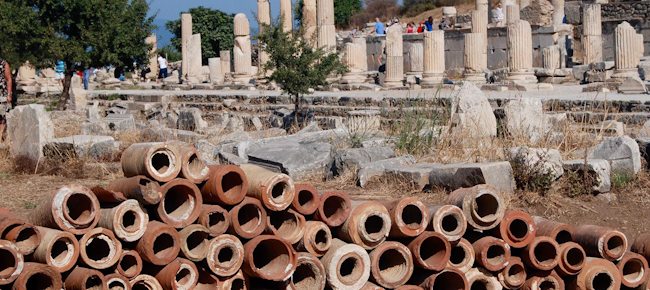
- Engineering: Sophisticated water and drainage systems; bath-gymnasium complexes; monumental nymphaea like the Fountain of Trajan; a large commercial agora; and the Library of Celsus, combining culture and commemoration.
- Greek and Roman blend: Ephesus wears its layered history on its sleeves—Hellenistic roots reimagined under Roman imperial taste.
Pompeii
- Everyday Roman cityscape: Gridded streets edged by high sidewalks and famous stepping stones; ruts carved by carts still stripe the basalt paving.
- Domestic Roman art at its best: Wall-painting styles flourish; mosaic floors sparkle. The House of the Vettii and the House of the Faun display elite life; more modest homes show the middle of society too.
- Infrastructure: Aqueduct-fed fountains, public baths (Stabian, Forum, Suburban), bakeries with mills and ovens, workshops, and thermopolia. It’s urban life in high resolution.
Religion, culture, and society in Ephesus and Pompeii
Ephesus
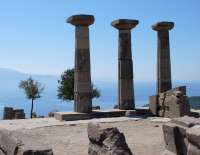
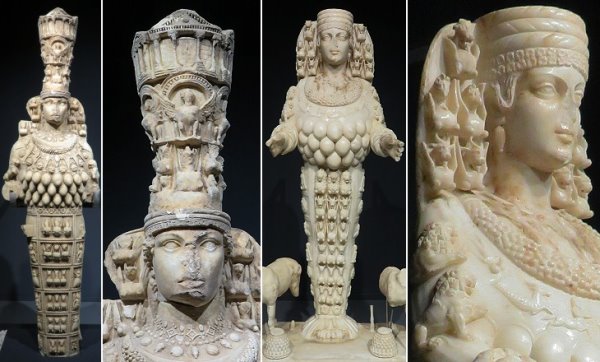
- Sacred prestige: The Temple of Artemis (Artemision) made Ephesus a pan-Mediterranean shrine. Its treasury functioned as a financial center; its artworks made it a museum before museums existed.
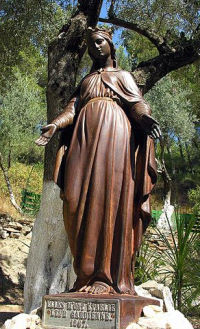
- Christianity’s rise: St. Paul preached here; the Church of Mary later hosted the Council of Ephesus (431 CE). Nearby, the House of the Virgin Mary is revered in later tradition.
- Cultural energy: Schools of rhetoric and philosophy, festivals, theatres—a cosmopolitan city that loved ideas and spectacle.

Pompeii
- Roman religiosity at home: Temples to Jupiter, Apollo, Venus, and the influential eastern cult of Isis; household lararia (shrines) in almost every home.
- The human voice: Political slogans, shop advertisements, jokes, and love notes survive on walls. Pompeii speaks directly across two millennia—funny, tender, sometimes scandalous, always human. Every day Roman people’s life is perfectly preserved in Pompeii thanks to the chatashtrope.
Economy and daily life
Ephesus
- Gateway to the East: Goods from as far as India and beyond moved through its harbor. Crafts, textiles, metalwork, and a vibrant service economy surrounded its sanctuaries and theatres.
- Money and movement: As the provincial capital, Ephesus buzzed with officials, traders, sailors, scholars, and pilgrims.
Pompeii
- Agriculture and craft: Wine, olive oil, garum (fish sauce, which is kinda disgusting for us today :D), bread—from the fields to the ovens to the markets. Textile fulleries processed cloth on an industrial scale.
- Leisure and consumption: Amphitheatre games, theatre, baths, gardens; a well-fed, well-washed, fun-loving Roman town.


Different endings and their legacy today
- Ephesus slowly ebbed as its harbor silted up and geopolitics shifted. The city lived many lives, and you can feel those layers. The end of Ephesus didn’t happen suddenly like Pompeii. Silting took place slowly for several centuries.
- Pompeii’s story stopped in 79 CE. The ash preserved buildings, furnishings, foodstuffs—even people. That sudden stop created the most detailed portrait of Roman urban life we possess.
Ephesus vs Pompeii today: beauty, logistics, and what visitors love
UNESCO status
- Ephesus: UNESCO World Heritage since 2015, recognized for its outstanding testimony to Hellenistic, Roman, and early Christian culture.
- Pompeii: Part of the UNESCO listing “Archaeological Areas of Pompeii, Herculaneum and Torre Annunziata” since 1997. So Pompeii became an UNESCO site earlier than Ephesus.
Scale and feel
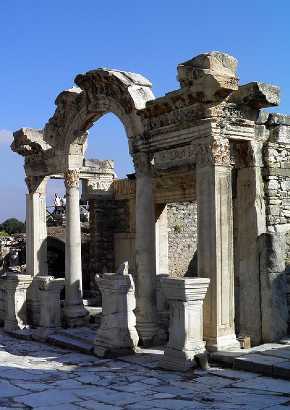
- Ephesus today feels cinematic—sunlit marble, big vistas, signature façades. You come for the showstoppers like the Celsus Library, Grand Theater, and Hadrian Temple, leaving with an appreciation for urban grandeur.
- Pompeii feels intimate and immediate—room after room of frescoes, garden courtyards, counters where hot food once steamed. You come for the details and leave feeling like you met the neighbors. Pompeii is a more down-to-earth experience if you are more interested in the regular Roman Joe’s life.

Key highlights at a glance
- Ephesus: Library of Celsus, Great Theatre, Curetes Street, Terrace Houses (with superb mosaics and frescoes under protective roofs), Temple of Hadrian, Fountain of Trajan, the Commercial and State agoras, Harbor Street, and just beyond—Ephesus Archaeology Museum (Selçuk), Basilica of St. John, the House of the Virgin Mary, and the evocative site of the Artemision.
- Pompeii: Forum and Basilica, Amphitheatre, Large Theatre and Odeon, Stabian Baths, House of the Faun (Alexander Mosaic original in Naples), House of the Vettii, Villa of the Mysteries, bakeries and thermopolia, street graffiti, and the casts of victims. Major finds are displayed at the Naples National Archaeological Museum; onsite, the Antiquarium presents context-rich exhibits.
Visitor numbers and timing
- Ephesus regularly welcomes well over two million visitors a year, often more in peak seasons. Best times: spring and autumn for milder weather and softer light.
- Pompeii typically receives roughly three to four million visitors in recent years. Best times: likewise spring and autumn; in summer, go early or late to dodge the heat and crowds.
Accessibility and infrastructure
- Ephesus: Easy access from İzmir and Kuşadası (cruise ships, airport, train station, bus station), with excellent roads, clear paths, and increasingly good signage. Selçuk and Kuşadası offer hotels, cafes, a wonderful local museum, and easy add-ons like Şirince village.
- Pompeii: Effortless by train from Naples or Sorrento; clear visitor routes help you choose a two-hour highlights loop or a deeper dive. Combine with Herculaneum or a Vesuvius hike for a full themed day.





Conservation and presentation
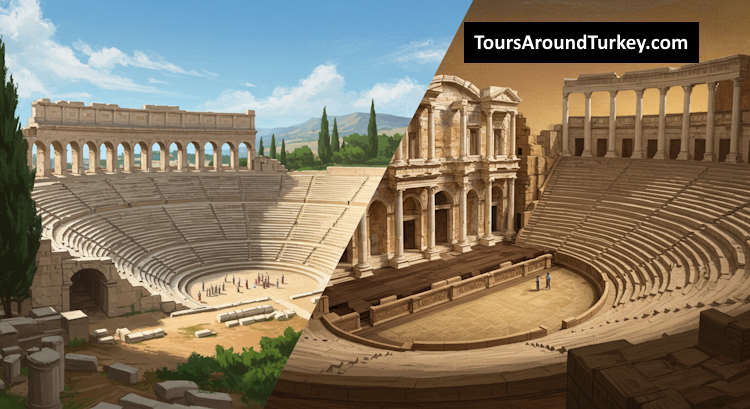
- Ephesus favors a thoughtful archaeological working style named anastylosis (re-erecting original blocks where possible) at signature monuments like the Library of Celsus—helpful for imagination and photography.
- Pompeii invests heavily in stabilizing frescoes and opening new insulae; ongoing excavations keep rewriting the city map. Expect newly opened homes and new finds regularly.
Which city is “better” to visit? – Hasan’s Personal Thoughts
Let me remind you what I think! Beauty is in the eye of the beholder!
So now and then, what you read is my thoughts on Ephesus vs. Pompeii 😀
- If you love grand avenues, colossal theatres, and the layered story of a city that reinvented itself, Ephesus will sweep you off your feet.
- If you’re fascinated by daily life—the shopping, dining, painting, praying, and gossip of a Roman town—Pompeii will move you in a quieter, deeper way.
- Honestly, both belong on a serious traveler’s bucket list. They complement rather than compete.





Ephesus vs Pompeii: side-by-side comprehension
History and status in antiquity
- Ephesus: Provincial capital and trading titan; a cosmopolitan beacon bridging East and West; major pagan sanctuary, then early Christian hub.
- Pompeii: Prosperous Roman city famed for agriculture, craftsmanship, and leisure; a model of Roman urban life in fine grain.
Architecture and urban design
- Ephesus: Monumental public architecture, processional streets, marble glamour.
- Pompeii: Intimate domestic architecture, richly decorated interiors, pavements that tell stories.
Monuments that define them
- Ephesus: Library of Celsus, Great Theatre, Temple of Artemis (foundations and fragments today), Terrace Houses’ luxe interiors.
- Pompeii: Amphitheatre, Forum complex, House of the Faun, House of the Vettii, Villa of the Mysteries, and the haunting casts.
Legacy and research value
- Ephesus: Teaches us about imperial urbanism, religion across eras, and the mechanics of a mega-port that outlived its sea.
- Pompeii: Teaches us how Romans really lived—from recipes to room layouts—and preserves a catalogue of arts and crafts unmatched elsewhere.


A guide’s eye view: how the experiences feel on the ground
What Ephesus gives you
- The “wow” of turning a corner and seeing the Library of Celsus blaze in the sun.
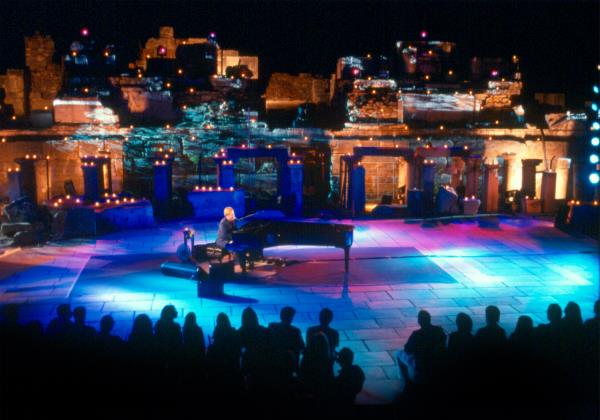
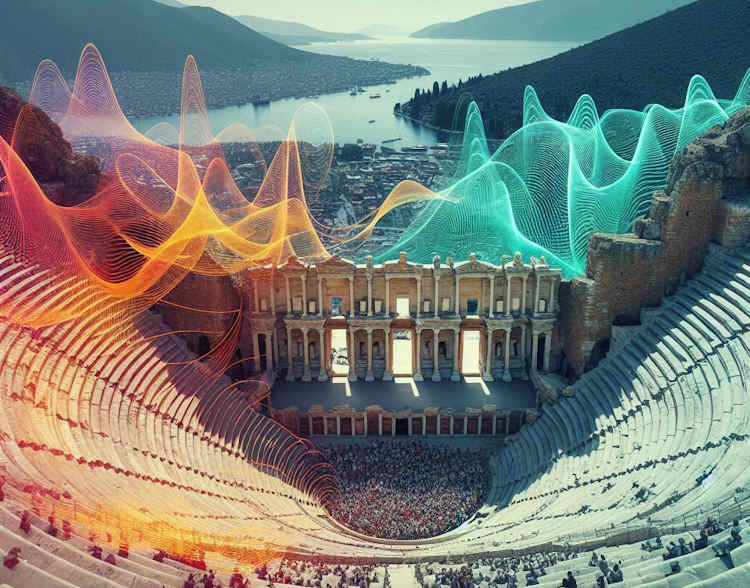
- The theatre echo—stand on the stage and speak, and friends way up high will still hear you.
- The Terrace Houses: floor mosaics like carpets of stone; wall-paintings that look freshly brushed; marble heating systems that whisper Roman comfort.
- A landscape that frames it all—hills, swallows, olive trees. I tell guests the stones here are sun-kissed and story-soaked.
What Pompeii gives you
- The footprints of daily life: counters with dolia (jars) for hot food; carbonized bread from an ancient oven; election posters; doodles.
- The shock of presence: stepping into rooms where color survives in panels of crimson, black, and yellow.
- The steady silhouette of Vesuvius over your shoulder, a reminder of fragility—and of how chance can preserve as much as it destroys.

Practical tips for travelers comparing Ephesus and Pompeii
- Best time to visit
- Ephesus: April–May, late September–November. Go early; the marble reflects heat in summer.
- Pompeii: April–May, October–November. Early entry or late afternoon is your friend.
- How much time do you need
- Ephesus: 2–3 hours for highlights; 4–5 with Terrace Houses and the Selçuk museum.
- Pompeii: 3–4 hours for highlights; a full day if you’re an archaeology lover.
- Shoes and sun
- Both sites: Wear grippy shoes and bring water, a hat, and sunscreen. Shade can be scarce.
- Don’t miss nearby
- Ephesus add-ons: House of the Virgin Mary, Basilica of St. John, Ephesus Museum, Şirince village, and the Artemis Temple’s remains.
- Pompeii add-ons: Naples Archaeological Museum, Herculaneum, Oplontis (Torre Annunziata), Mount Vesuvius.

So, Ephesus or Pompeii—where should your heart go first?
My completely unbiased opinion—kidding, mostly!—is that Ephesus offers the most breathtaking stage in the eastern Mediterranean. If you’re on a journey through Turkey, Ephesus is the crown jewel. You’ll get imperial scale, architectural poetry, and a narrative that sweeps from Artemis to the apostles. Pompeii is incomparable for the intimacy of its evidence, but Ephesus gives you the sense of a living, evolving capital—history that didn’t just stop; it unfolded.
Some Insider Tips And Suggestions For The Visitors
- Ephesus vs Pompeii: Ephesus wins for monumental Roman architecture, grand avenues, and early Christian heritage; Pompeii wins for preserved daily life, frescoed houses, and the time-capsule effect.
- Top Ephesus highlights: Library of Celsus, Great Theatre, Curetes Street, Terrace Houses, Temple of Hadrian, Ephesus Museum, nearby House of the Virgin Mary, and Basilica of St. John.
- Top Pompeii highlights: Forum, Amphitheatre, House of the Faun, House of the Vettii, Villa of the Mysteries, Stabian Baths, Antiquarium, with major artifacts in Naples.
- Best time to visit Ephesus: spring and autumn; best time to visit Pompeii: spring and autumn.
- Ephesus tours: private, small-group, and shore excursions available from Kuşadası and İzmir—ask for a licensed guide who can unlock the stories behind the stones. If you’re in my neighborhood, I’m happy to be that guide. Contact me via my contact page.

My Personal Final Comments
After more than fifteen years guiding in Ephesus, I still get goosebumps when the morning light slides down the Library of Celsus. I’ve watched visitors go silent in the Terrace Houses, and I’ve heard more than one spontaneous “wow” in the theatre. Pompeii will move you, too—no doubt. But if your compass points to Turkey, come walk Ephesus with me. We’ll trace the curve of Curetes Street, puzzle over ancient shop signs, and let history do what it does best: turn stones into stories
If you’re planning a trip and want an expert, friendly, and experienced take on Ephesus, reach out via my WhatsApp, contact form, or contact page. I’ll help you choose the best time, craft the perfect route, and make sure you don’t miss the quiet beauties in between the icons.
May your travels be as rich as the ruins—and your photos half as flattering as the Library at sunset!
See you soon, Hasan Gülday