The Comedy of Errors, Shakespeare’s shortest play, was written around 1594 and takes place in Ephesus over a single day. Shakespeare borrowed the plot from a Roman comedy set in another port, Epidamnus, and moved it here. The three reasons scholars point to are all Ephesian: the city’s old reputation for sorcery in the Book of Acts, St. Paul’s letter to the Ephesians on husbands and wives, and the temple of Diana, where a famous lost wife was found again.
I guide in Ephesus for a living, and every season a guest or two asks me about this play. Usually they read it in school, remember the twins and the beatings, and only later notice the name of the city on the first page. So here is the short version I give them on Curetes Street, with the parts of the real city you can still stand in.
What Happens in The Comedy of Errors
An old merchant from Syracuse, Egeon, is arrested the moment he lands in Ephesus, because the two cities are at war over trade and any Syracusan caught here must pay a thousand marks or die. Solinus, the Duke of Ephesus, gives him until sunset to find the money. Egeon tells his story: years ago a shipwreck split his family in two, and he lost his wife, one of his twin sons, and one of the twin servant boys he had bought for them.
What Egeon does not know is that both sons, each called Antipholus, and both servants, each called Dromio, are in Ephesus that very day. One pair has lived here for years; the other has just stepped off a boat looking for them. For five acts the wrong twin is fed, scolded, locked out of his own house, handed a gold chain, arrested for not paying for it, chased by a courtesan, and finally declared mad and possessed. Everything is untangled in front of a priory, where the Abbess turns out to be Egeon’s lost wife, Emilia. The Duke pardons the old man, and the whole family walks inside to dinner.
Where Shakespeare Found the Story, and the City He Changed
The skeleton of the plot is Menaechmi, a comedy by the Roman playwright Plautus about one pair of separated twins. Plautus set it in Epidamnus, a Greek port on the coast of today’s Albania. Shakespeare doubled the twins, borrowed the locked-out-husband scene from another Plautus play, Amphitruo, and then did something Plautus never did: he picked the city up and carried it across the Aegean to Ephesus. Epidamnus did not vanish, though. As Epidamnum, Shakespeare’s spelling, it is still in the script as the port Egeon’s business took him to and where ships in the harbor are bound. He kept the old town as a port of call when he moved the play.
The play was probably written in the second half of 1594. The first performance we know of was at Gray’s Inn in London on December 28 of that year, during the law students’ Christmas revels, and it was printed for the first time in the First Folio of 1623. Shakespeare, as far as any record shows, never left England. He knew Ephesus the way a grammar-school Elizabethan did: from the Bible, from Plautus in Latin class, and from one very popular medieval romance.
Why Ephesus? Three Ephesian Stories Inside the Play
1. A city with a reputation for sorcery
Antipholus of Syracuse has barely arrived when he explains why he is nervous:
“They say this town is full of cozenage,
As nimble jugglers that deceive the eye,
Dark-working sorcerers that change the mind,
Soul-killing witches that deform the body.”
That is not an invention. Elizabethan churchgoers knew Acts 19, the chapter where St. Paul spends more than two years in Ephesus, the seven sons of Sceva try to cast out a demon in Jesus’s name and get beaten for it, and the newly converted Ephesians burn their books of spells, worth fifty thousand pieces of silver, in public. For a London audience, Ephesus arrived with that reputation already attached. So when the Syracusan twins meet strangers who know their names, they conclude they have been bewitched, and when Antipholus of Ephesus starts shouting about a chain he never received, his wife calls in Doctor Pinch, a schoolmaster who moonlights as an exorcist, to drive the devil out of him. I have written separately about magic in ancient Ephesus; the short answer is that the reputation was earned long before Shakespeare used it.
2. St. Paul’s letter on husbands and wives
The second Ephesian text Shakespeare’s listeners knew was the Epistle to the Ephesians, read aloud in church, with its fifth chapter on wives submitting to husbands and husbands loving their wives as their own bodies. Shakespeare puts that argument on stage. Adriana, the Ephesian wife, is furious that her husband is late and suspects another woman; her unmarried sister Luciana lectures her that a man is master of his liberty and a wife should be patient. Audiences have argued about which sister is right for four hundred years. The debate belongs in Ephesus because the letter did.
3. Diana’s temple and the wife who was not dead
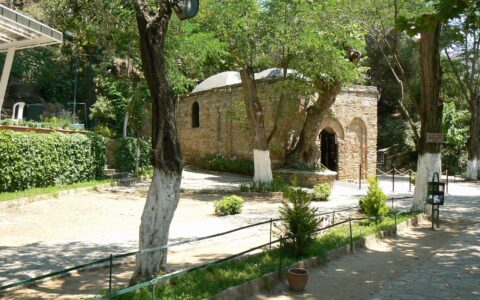
The third source is a story Shakespeare loved enough to use twice: Apollonius of Tyre, which he knew from John Gower’s Confessio Amantis. In it, a prince’s wife seems to die at sea and is put overboard in a chest; she washes up alive, becomes a priestess at the temple of Diana in Ephesus, and years later her husband and daughter find her there. The usual reading is that the temple became the priory and the priestess became the Abbess Emilia. What he certainly kept is the ending: a family split by the sea, reunited at a holy house in Ephesus. He came back to the same story some thirteen years later in Pericles, and that time he left the temple of Diana in the script.
Behind all three sits a plainer fact. Ephesus was a rich trading harbor, the kind of place where a goldsmith, a courtesan, a merchant from Syracuse and a debt collector could plausibly all cross paths in one afternoon, and where a law against foreign traders would make sense. Shakespeare needed a busy port with a famous name. Ephesus had both.
Walking the Play in Ephesus Today
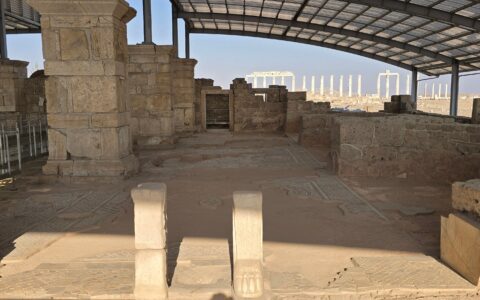
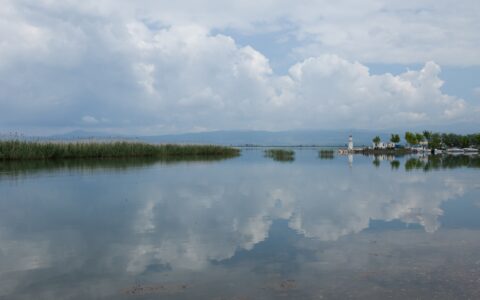
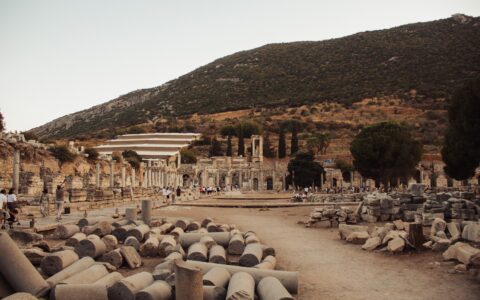
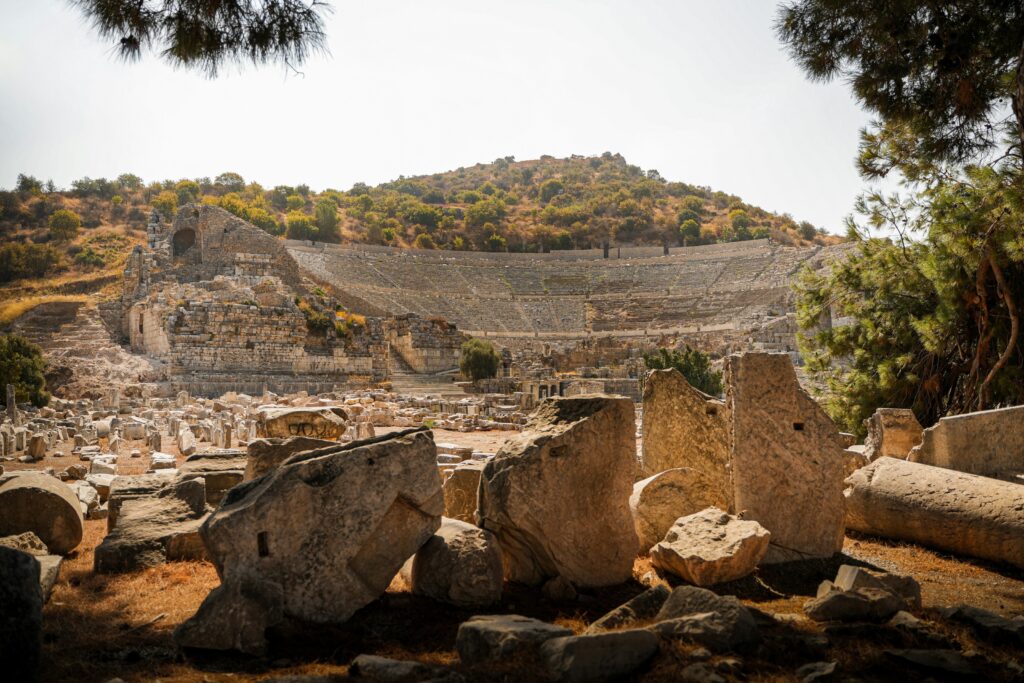
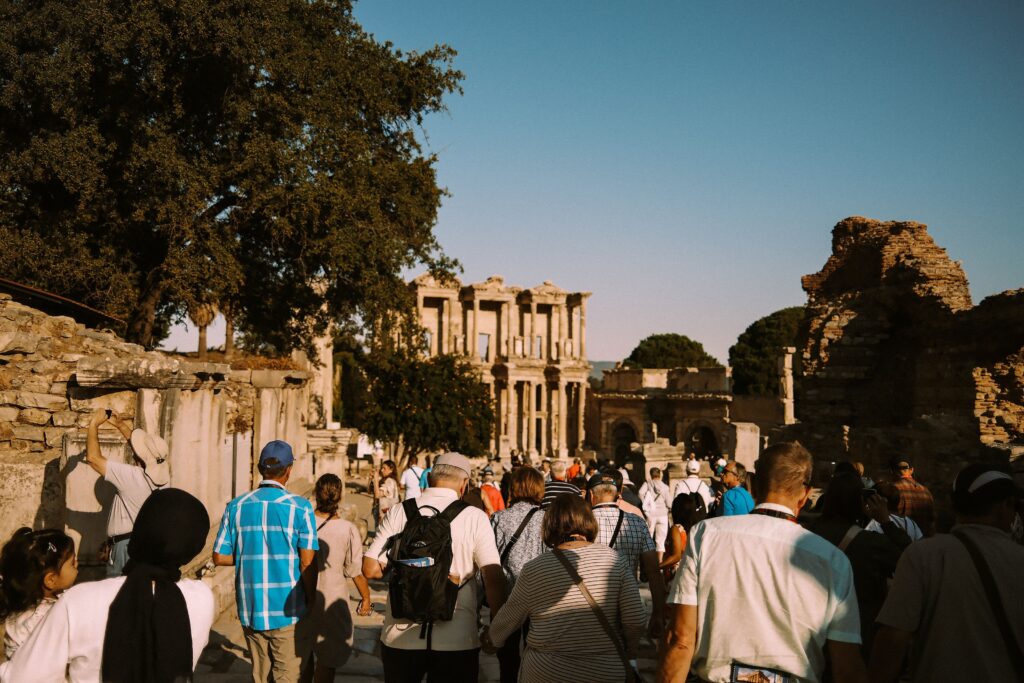
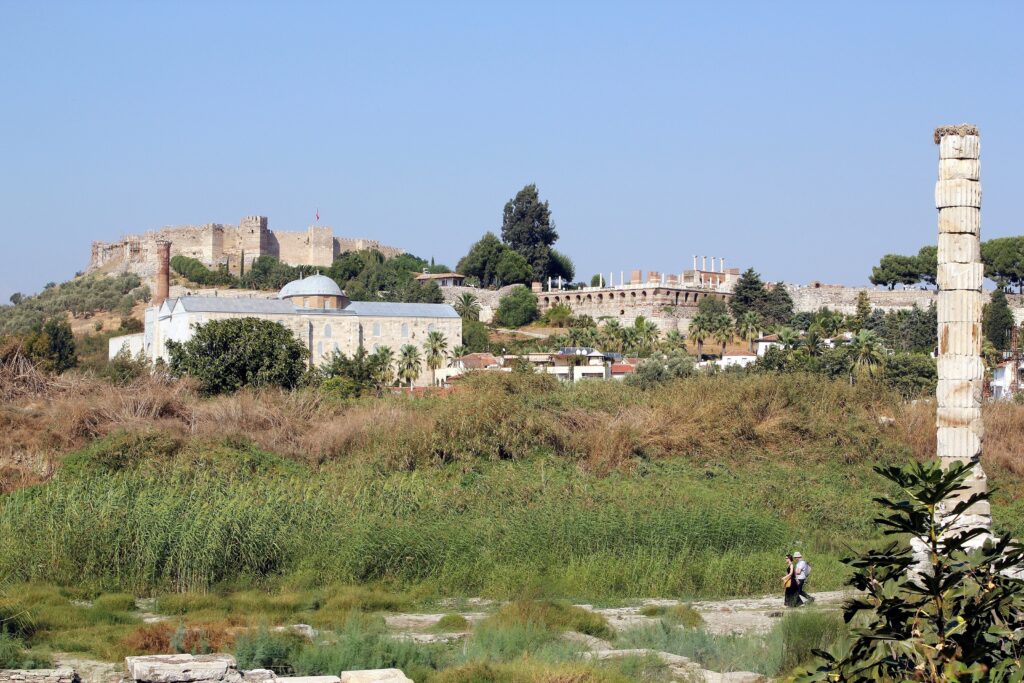
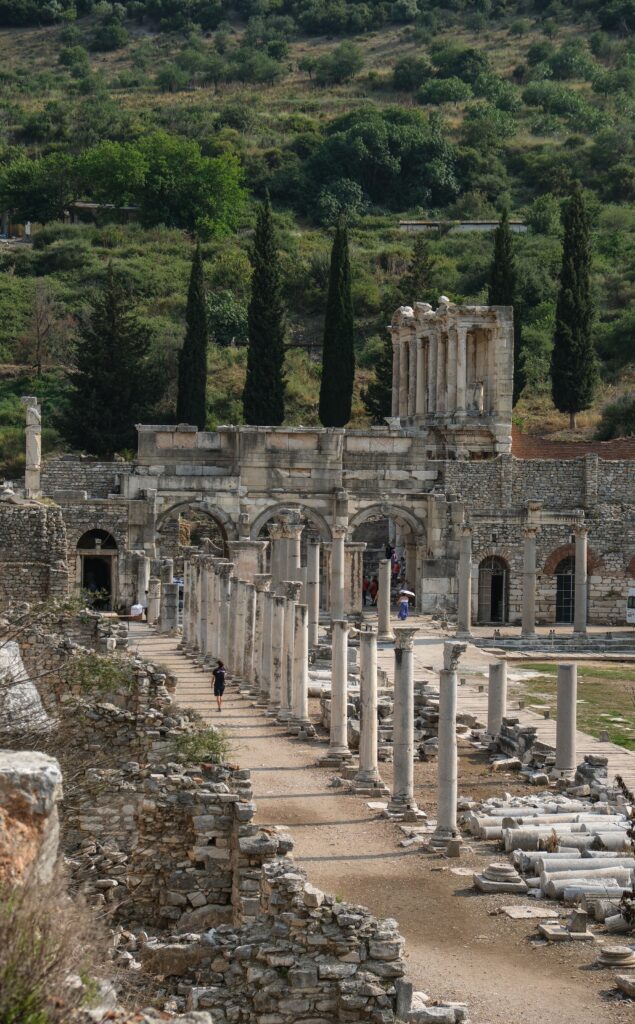
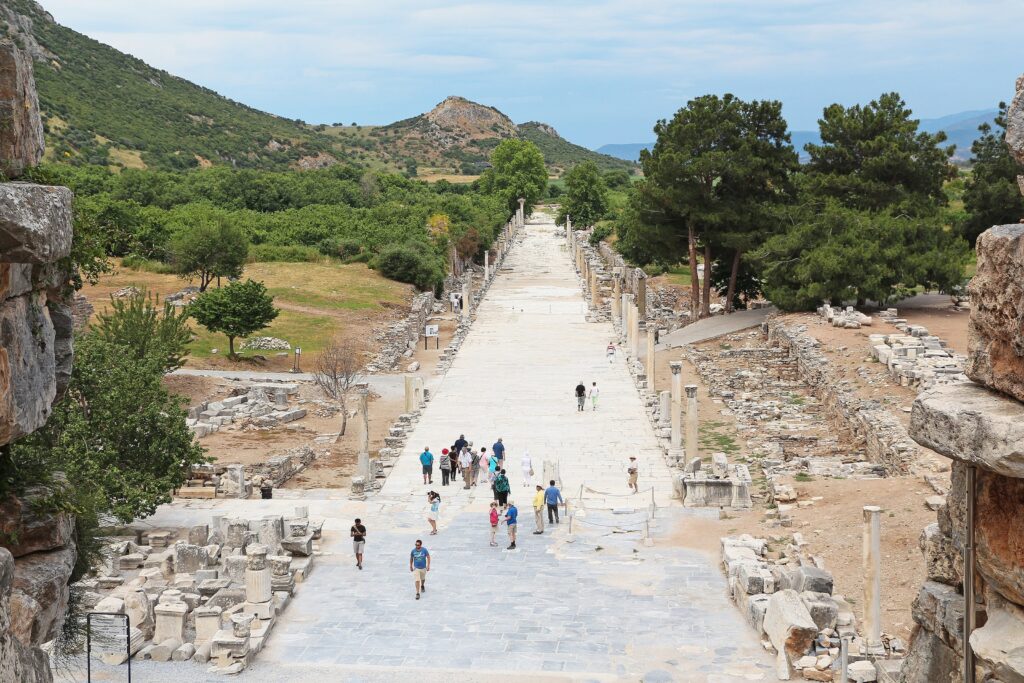
There is no priory to visit, and the characters are fiction, but the city they walk through is not. The closest thing to the play’s “mart”, where the Dromios keep getting lost, is the Commercial Agora, the great square market beside the Library of Celsus. The harbor Egeon lands at lay at the end of Harbor Street, where the sea has since retreated several kilometers. The riot in Acts 19, when the crowd chanted for their goddess for about two hours, happened in the Great Theater, and you can sit in the same rows. The temple of Diana, one of the Seven Wonders, is a single re-erected column in a marshy field between Ephesus and Selçuk, which disappoints people until I tell them the story above. And St. Paul’s years in the city are a whole walk of their own.
If you would like to walk it with the play in hand, I am happy to; my guiding rate and areas are on this site, and you can check my availability here. Bring a paperback. The cats will not mind.
Frequently Asked Questions
Where does The Comedy of Errors take place?
In Ephesus, the ancient Greek and Roman city on the Aegean coast of today’s Turkey, near Selçuk and Kuşadası. The whole play happens in one day, from Egeon’s arrest in the morning to the family reunion at the priory before sunset.
Why did Shakespeare set The Comedy of Errors in Ephesus?
Nobody has his notebook, but the play itself gives three answers: the Bible’s picture of Ephesus as a city of sorcerers in Acts 19, St. Paul’s Epistle to the Ephesians on marriage, which the two sisters argue about, and the Apollonius of Tyre romance, in which a lost wife is found at the temple of Diana in Ephesus. His source, Plautus’s Menaechmi, was set in Epidamnus.
Did Shakespeare ever visit Ephesus?
Almost certainly not. There is no record of Shakespeare leaving England. His Ephesus came from the Bible, from Plautus, and from Gower’s retelling of Apollonius of Tyre.
Can you see places from the play in Ephesus?
The real ones, yes: the Commercial Agora that stands in for the play’s mart, Harbor Street, the Great Theater of the Acts 19 riot, and the site of the temple of Diana. The priory and the houses are stage inventions.
One Last Thing
If you read the play before your visit, read Act 1 first and Act 5 last, and do not skip Act 2 Scene 1, where the sisters argue about marriage. The rest is mostly the beating of servants, which the city cannot be blamed for.
Last reviewed: October 15, 2026.
Görüşmek üzere, see you in Ephesus.
Hasan Gülday