Of all the strange phrases in the seven letters of Revelation, “where Satan’s throne is” is probably the strangest. It was written to the church of Pergamum, the Christian community of Pergamon, today’s Bergama in İzmir province. Around 95 AD this church received the third of the seven letters (Revelation 2:12–17). Christ praises it for holding on to his name in the city where Antipas was killed, and he warns it about the teaching of Balaam and the Nicolaitans.
Pergamon, Pergamum and Pergamos are the same city. Historians usually write Pergamon, most modern Bibles say Pergamum and the King James Version says Pergamos. In my article on Pergamon Ancient City I walk through every monument of acropolis and the Asclepion. Here I want to look at the same stones with a Christian eye: the places of the letter, the martyr Antipas and the Christians who lived here after John.
Royal City of Pergamon
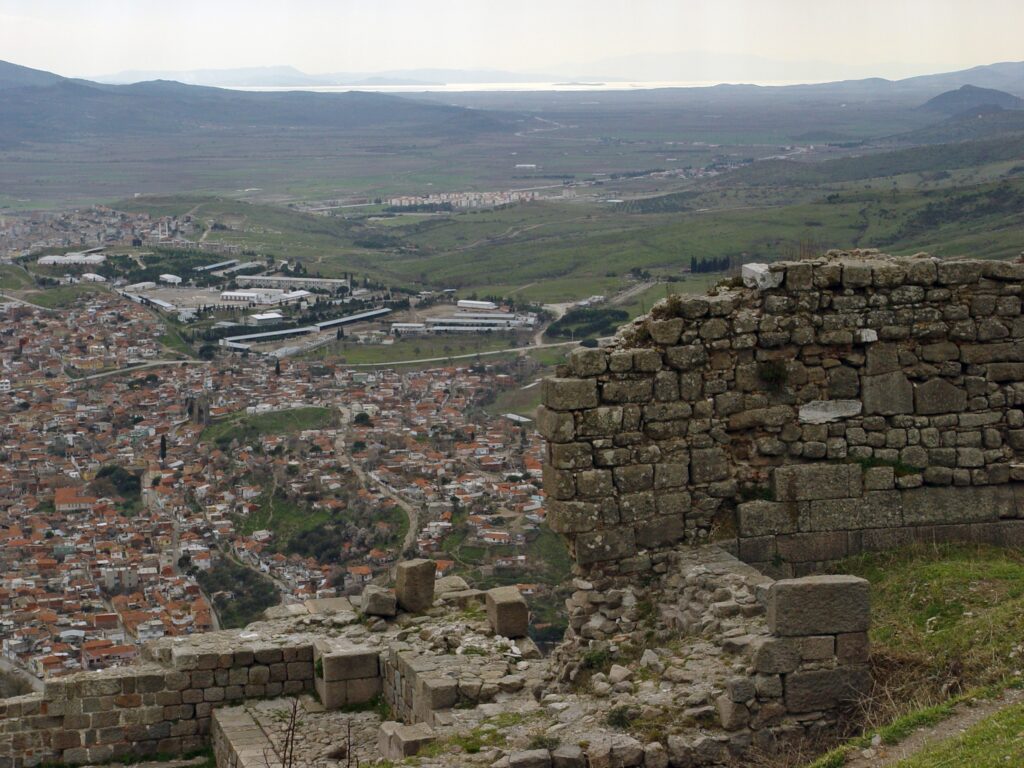
Pergamon was a royal city. From the early 3rd century BC until 133 BC the Attalid dynasty ruled here, and they ruled with a kind of cultured pride that left a permanent mark on the place. They built temples that ordinary cities could not afford, a famous library and one of the most spectacular acropolises of the ancient world, on a hill that rises 335 meters above sea level.
The last king, Attalus III, had no heir. When he died in 133 BC, he left his whole kingdom to Rome, and most of it became the new Roman province of Asia. Pergamon served for a short time as the capital of the province, before this honor passed to Ephesus. However, it remained one of the great cities of Asia and a proud rival of Ephesus and Smyrna.
The library was the pride of the Attalid kings, with about 200,000 volumes according to Plutarch. A famous story says that Egypt stopped to sell papyrus to Pergamon, so the Pergamenes invented parchment. That is a legend, because parchment was older, but the city was a great center of its production, and the word parchment comes from its name.
I find one detail very intresting. The oldest complete New Testament we have, the 4th-century Codex Sinaiticus, is written on parchment. So the letter to Pergamum survives there on the material named after the city.
Letter to the Church of Pergamum
After the church of Smyrna, the messenger carrying the seven letters turned north to Pergamon, as I explain in how the letters traveled between the Seven Churches. Letter he read to the Christians here is short, only six verses (Revelation 2:12–17).
It praises them for holding fast the name of Christ “where Satan’s seat is” and remembers Antipas. It warns about the followers of Balaam and the Nicolaitans, who made peace with the idol feasts of the city, and it ends with the hidden manna and the white stone. I read it verse by verse in my article on the letter to Pergamum.
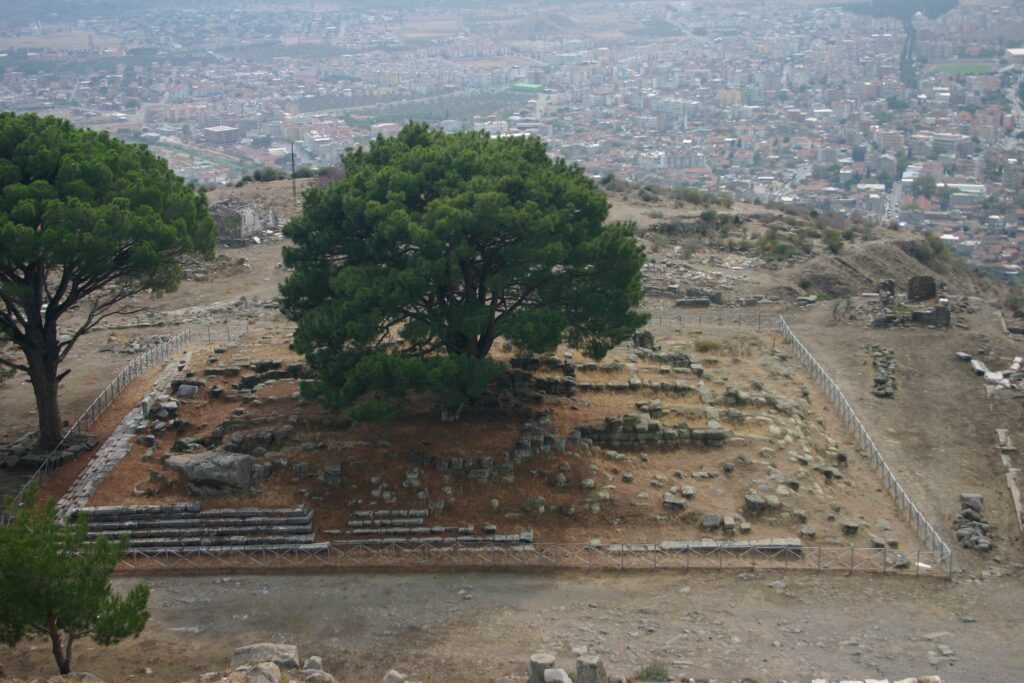
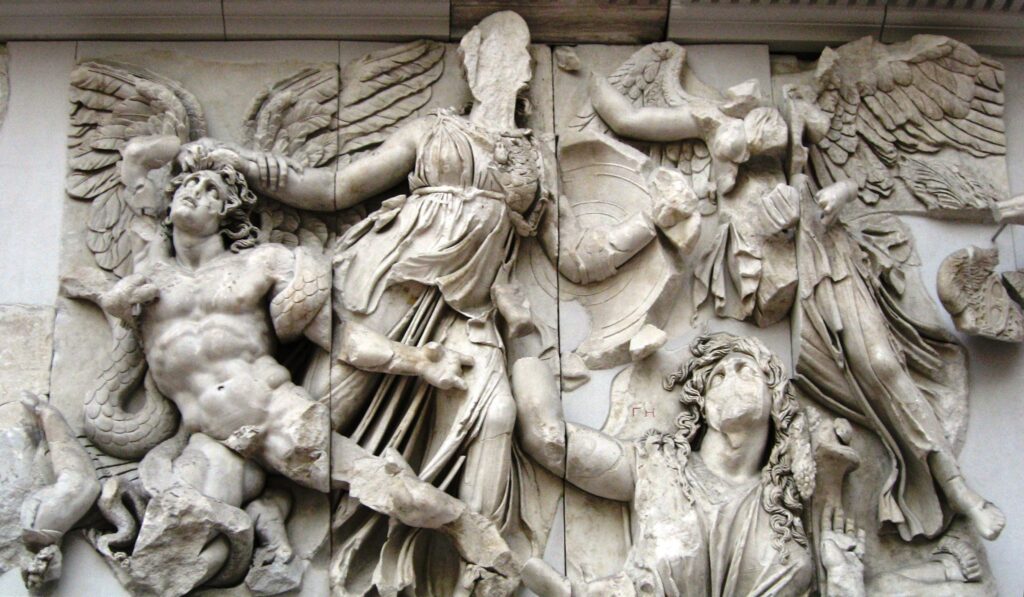
The letter does not say what Satan’s throne was, but the three best-known answers are places you can still visit. The foundation of the great Altar of Zeus is laying on a terrace of the acropolis, below the sanctuary of Athena. Its frieze went to Berlin after Carl Humann’s excavations, begun in 1878, and the Pergamon Museum there has been closed since October 2023.
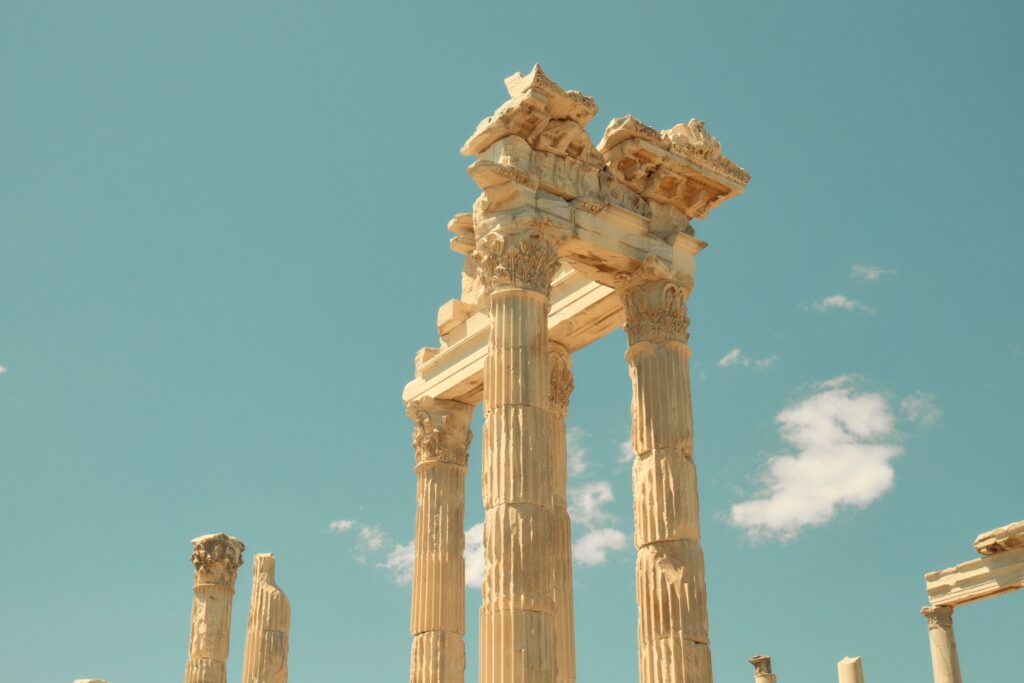
The second answer is the imperial cult. Pergamon received the first temple of emperor worship in the province of Asia in 29 BC, but no ancient writer tells us where on site it stood. The marble temple on the summit, the Trajaneum, came later, in 113 or 114 AD. The third answer is Asclepius, the serpent god of the healing sanctuary I describe below.
Antipas, the Faithful Martyr
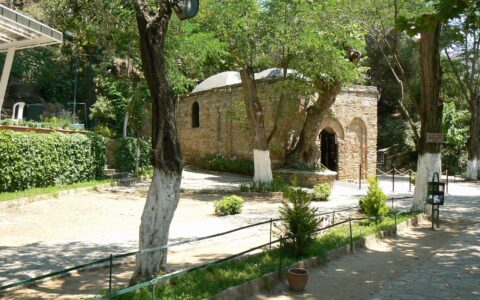
Who founded the church of Pergamum? We do not know exactly. Most likely it grew out of Apostle Paul’s two years in Ephesus, when “all they which dwelt in Asia heard the word of the Lord Jesus” (Acts 19:10). By the time of letter it had its own martyr, Antipas, “slain among you”. He is the only martyr named in the seven letters.
Later tradition makes him a bishop ordained by Saint John and says he was burned alive inside a hollow bronze bull under Nero or Domitian, but these stories come from much later sources. The Apostolic Constitutions, a church book of the late 4th century, name a certain Gaius as bishop instead. More is in my article on the martyrs and important figures of the Seven Churches.
Asclepion and Christ the Healer
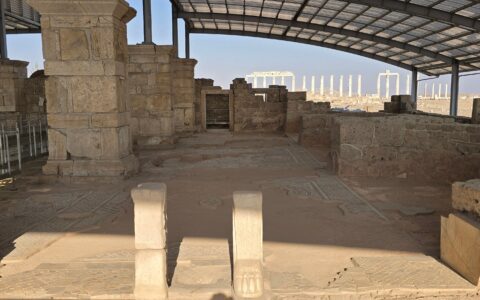
About three kilometers south of the acropolis, down in the valley, is the great healing sanctuary of Asclepius, the Asclepion. It was one of the most famous sanctuaries of its kind, together with those of Epidaurus and Kos. Patients bathed in sacred spring and slept in the sanctuary, hoping that the god would appear in a dream and tell them the cure.
Galen, the most famous physician of the ancient world, was born in Pergamon in 129 AD. At the age of 16 he began to train at the Asclepion, and in 157 he returned home as physician to the gladiators of the High Priest of Asia, the leading priest of the imperial cult. Later he became the doctor of Emperor Marcus Aurelius. You can read more in my article on Galen, the greatest doctor of antiquity.
When I walk my groups through the Asclepion, I always slow down at the entrance. Guides like to quote a line said to have been written there: “In the name of the gods, death is not permitted to enter here.” I could not find this line in any ancient author but the rule behind it is old. Pausanias writes that in the sanctuary of Asclepius at Epidaurus, no death or birth took place inside the sacred enclosure.
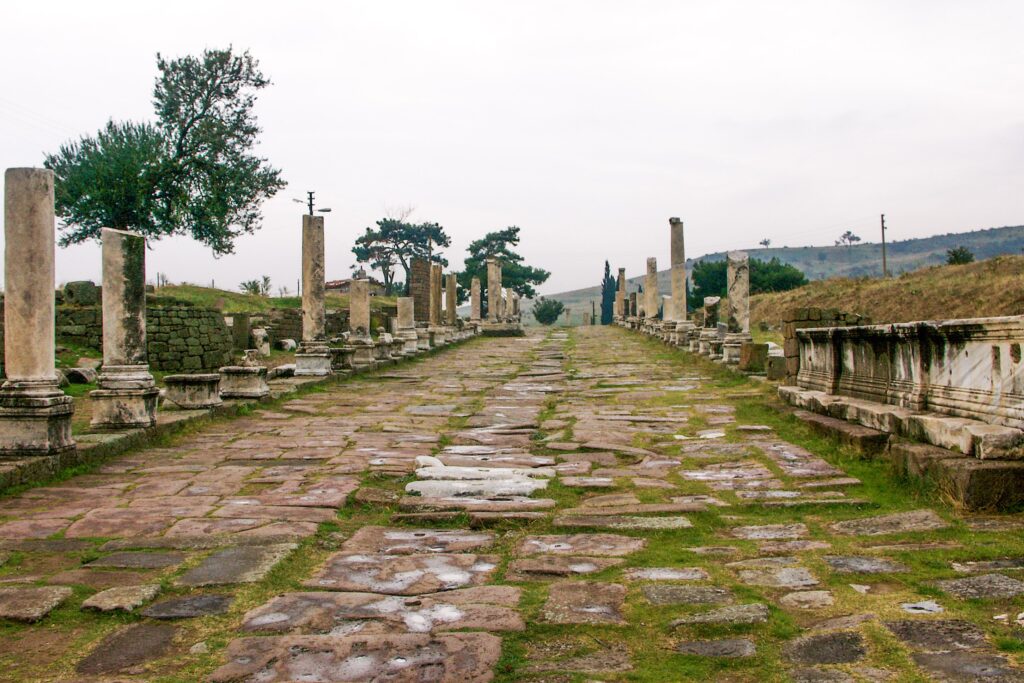
You can imagine, then, how religion and medicine met in Pergamon. The Christians of the city prayed to Christ for healing, while their neighbors walked down the sacred way to Asclepius for the same reason. Justin Martyr, writing in the 2nd century, admitted the comparison openly. When Christians say that Jesus healed the lame and the blind, he wrote, “we seem to say what is very similar to the deeds said to have been done by Æsculapius.”
Christians of Pergamon After the Letter
The church of Pergamum did not end with Antipas. In 177 AD a Christian named Attalus, “a native of Pergamos”, died with the martyrs of Lyon in Gaul, as Eusebius tells us. Eusebius also mentions three martyrs who died in Pergamon itself: Carpus, Papylus and a woman named Agathonice. You can read the passage in his Church History, Book 4, chapter 15.
Their story survives in Greek and Latin versions, and scholars still argue whether they died under Marcus Aurelius in the 2nd century or in the persecution of Decius in 250. Papylus came from Thyatira. They refused to sacrifice to the gods in the name of the emperor, and they were put to death in front of crowd. More stories are in my article on the persecution of early Christians in Asia Minor.
When the persecutions ended in the 4th century, Pergamon became a normal bishopric under the metropolitan of Ephesus. Its bishops joined to the great councils: Philip at the Council of Ephesus in 431, Theodore at the Council of Constantinople in 681 and Basil at the Second Council of Nicaea in 787. In the reign of Emperor Isaac II Angelos (1185–1195), Pergamon became a metropolis of its own.
Hard times came too. Arab armies took Pergamon in 663/4 and sacked it again in 716, and the town shrank back onto the fortified acropolis. In the 14th century Bergama passed to the Turks, and by 1387 the old metropolis was joined to Ephesus. Greek Orthodox Christians still lived in Bergama until the population exchange of 1923, when they moved to Greece and founded new communities there, for example on Lesbos.
Red Basilica of Bergama
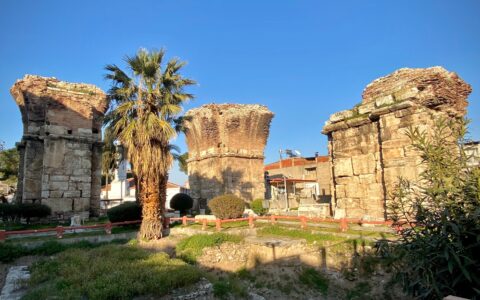
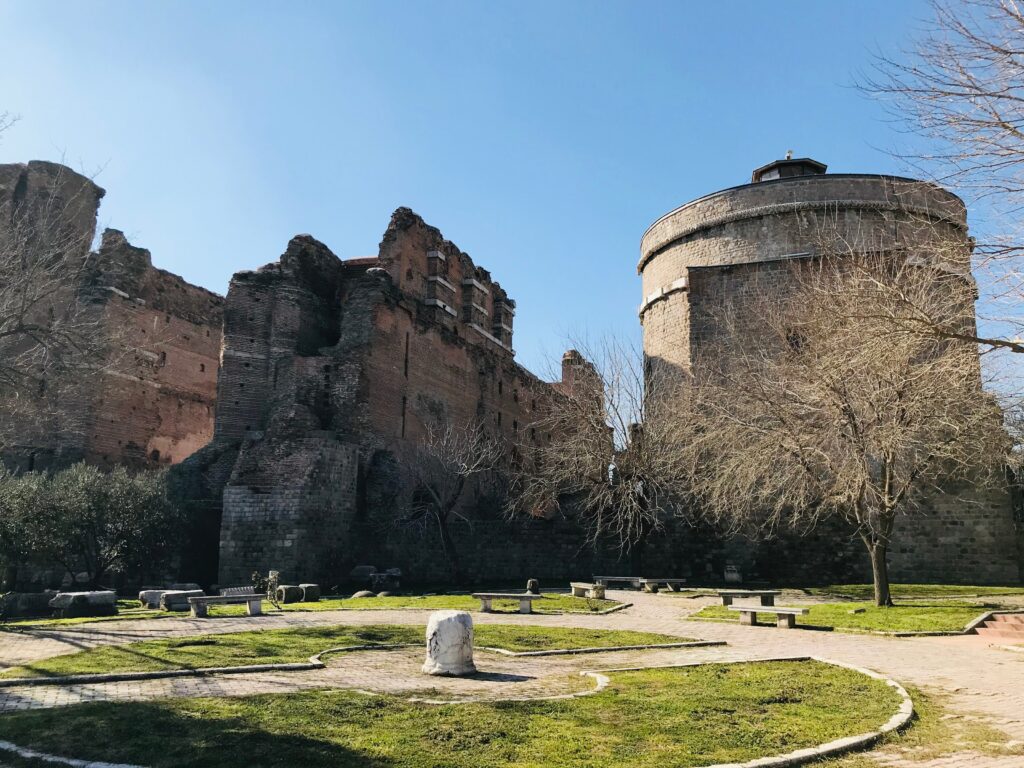
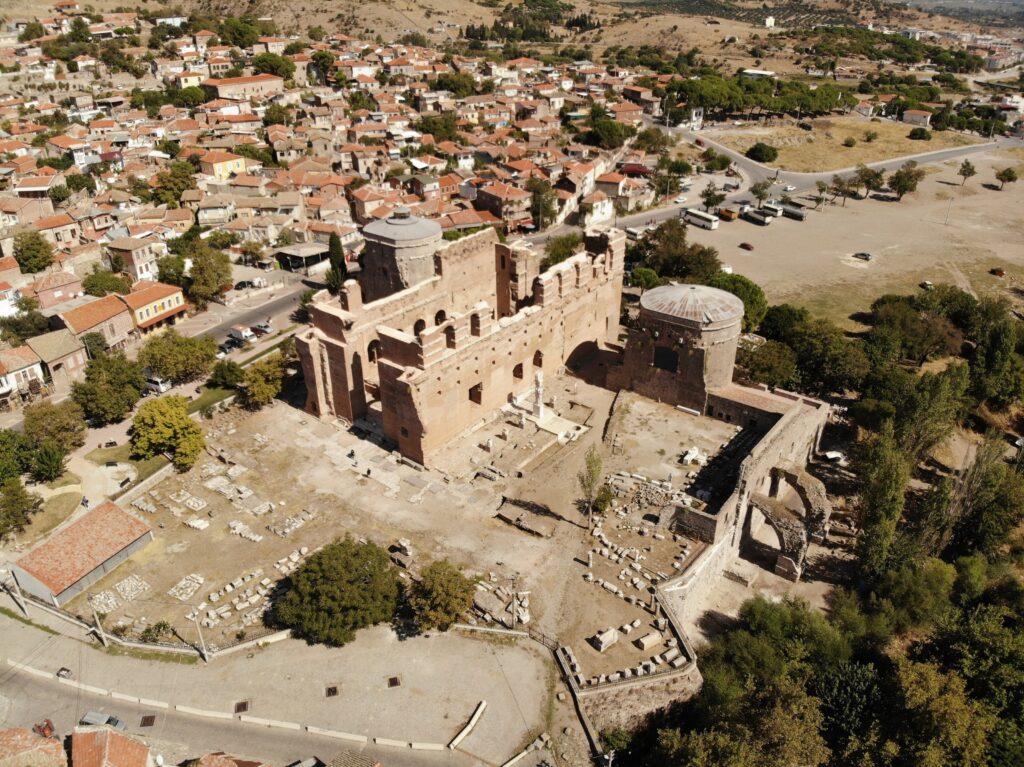
For a Christian visitor, the most moving building of Bergama stands in the middle of the town. The Red Basilica, Kızıl Avlu in Turkish, was built in Roman times, probably under Emperor Hadrian, as a huge temple of the Egyptian gods Isis and Serapis. Its red brick walls still rise up to 19 meters, and the whole complex sits on a Roman bridge that carries the Selinus stream underneath.
After the temple was gutted by fire, a Christian basilica dedicated to Saint John was built inside its walls in the 5th century. It was probably destroyed when Arab forces looted Pergamon in 716–717. Today one of its two round towers is a small Mosque, and the other is part of the archaeological site. Please remember that the church of the letter was much older: the first Christians of Pergamon met in houses.
Visiting the Church of Pergamum Today
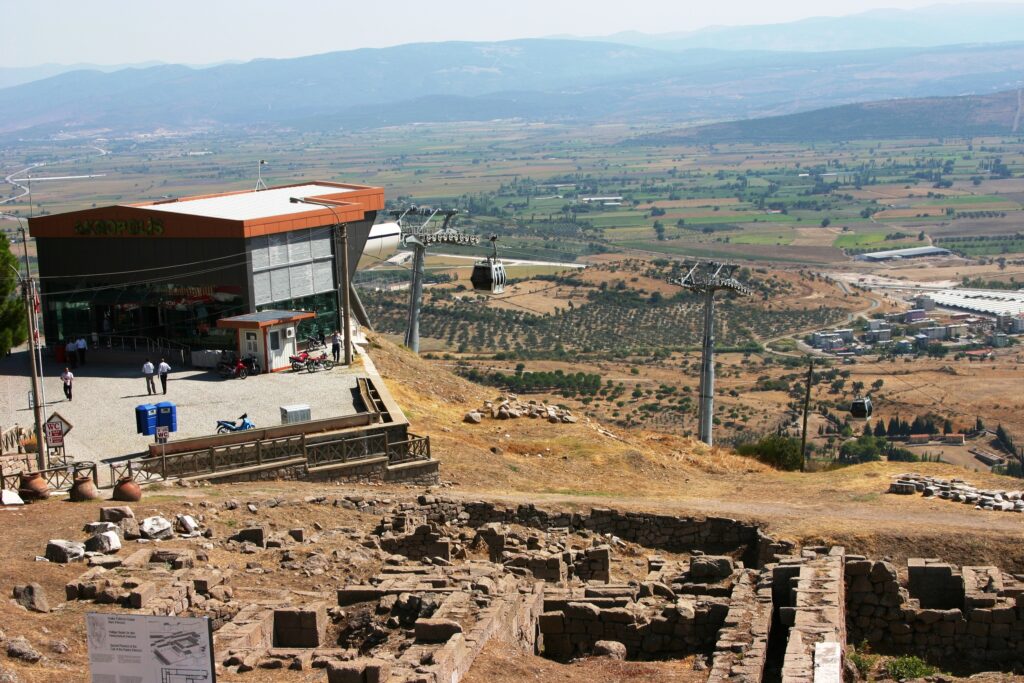
Let’s have a look at the practical things, because not every visit is about history. In Bergama allow at least one full day: the acropolis in the morning, the Red Basilica at noon and the Asclepion in the afternoon. A cable car climbs to the acropolis from its station at the edge of the town. On very windy days I always keep a Plan B, and we drive up the road instead.
For lunch there are several small family restaurants in the center of the modern town. My usual favorite is a small place near the museum, where the lady cooks the zeytinyağlılar, the cold olive oil dishes, herself every morning. Stuffed grape leaves, roasted eggplant, simple beans in olive oil. After a hot morning on the acropolis, this is exactly the right lunch. The Bergama Archaeology Museum is small but worth an hour too.
The best months are April, May, September and October. June and July can be very hot on the acropolis, where there is no shade. I myself like Pergamon in late September, when the grapes are ripe in the surrounding vineyards. For every monument in detail, from the theater to the Trajaneum, read my guide to Pergamon Ancient City.
Before we leave, I will give you a single image. Stand at the foundation of the Altar of Zeus on a windy afternoon. Look down at the modern town and across the valley to the green hills. Read Revelation 2:12–17 aloud, and try to imagine, in this magnificent and culturally heavy place, the small group of Christians who, around 95 AD, refused to bow.
That is Pergamon, the city where Satan’s throne stood, where Antipas died and where the small church of Christ kept his name. The next stop on the road of the Seven Churches is Thyatira, the small trade town with the surprisingly long letter. You can continue with my article on the Church of Thyatira and the longest letter in Revelation.
Frequently Asked Questions
Where is the church of Pergamum today?
The church of Pergamum was in ancient Pergamon, today’s Bergama in İzmir province, western Turkey, about 26 kilometers inland from the Aegean Sea. No building of the first-century church survives, because the first Christians met in houses. Visitors see the acropolis, the Asclepion and the Red Basilica, a Roman temple that held a church in the 5th century.
Where was Satan’s throne in Pergamum?
Revelation 2:13 does not name a building, but the best-known candidates are all in Bergama. The foundation of the Altar of Zeus is on the acropolis, the first temple of emperor worship stood somewhere in the city and the Asclepion of the serpent god lies in the valley below. What the phrase means is explained in my article on the letter to Pergamum.
When was the church in Pergamum established?
No ancient source gives a date. Most likely the church began in the 50s AD, during Apostle Paul’s two years in Ephesus, when the gospel spread through the province of Asia (Acts 19:10). By the time Revelation was written, around 95 AD, the church was old enough to have lost a martyr, Antipas.
What happened to the church of Pergamum?
It continued for many centuries. The martyrs Carpus, Papylus and Agathonice died there in the 2nd or 3rd century, and its bishops attended the councils of 431, 681 and 787. Pergamon became a metropolis in the late 12th century, declined after the Turkish conquest and was joined to Ephesus in 1387. Its last Greek Orthodox Christians left Bergama in 1923.
Hire Biblical Tour Guide in Turkey
I’m a nationally licensed Turkish tour guide from Kuşadası, nearby Ephesus. My day guiding is in Ephesus, İzmir and Pamukkale. My license is valid all over Turkey, so I can also join you as your personal guide on a longer journey through the Seven Churches of Revelation, with a full day in Pergamon to read the letter where it was first heard.
You can see my guiding rates and guiding areas or write to me through my contact page.
I hope we will stand together one day on the altar terrace of Pergamon and read the letter to the church of Pergamum on its own ground. You can always write to me with your questions about Pergamon, Antipas or the Seven Churches of Revelation. See you soon, Hasan Gülday.