When my pilgrim groups arrive in Ephesus for the first time, one of the very first questions they ask is almost always the same. “How many times is Ephesus actually mentioned in the Bible?” The answer surprises most of them. Our city appears, directly or indirectly, in more than twenty places across the New Testament. Acts, several letters of Paul, the letters of John, the Book of Revelation. Ephesus is everywhere.

Apart from Jerusalem itself, very few cities of the ancient world played such a central role in the New Testament story. And the reason is very simple. In the first century AD, Ephesus was the largest city of the Roman province of Asia, with a population of around 200,000 people, an international harbour, the great Temple of Artemis, and a Jewish community which had been living here for centuries already. If you wanted to spread a new message in the eastern Mediterranean, Ephesus was the place where you had to go.
So in this article I want to walk you through, not as a Bible commentary, I am not a theologian, I am a tour guide, but through the main biblical events which happened on the streets I am walking almost every day with my guests.
Paul’s First Visit and the Story of Apollos
The first time Saint Paul came to Ephesus was at the end of his second missionary journey, somewhere around the year 52 AD. Acts tells us this very shortly. He arrived from Corinth together with his friends Aquila and Priscilla, he went into the synagogue, he reasoned with the Jews, and even though they asked him to stay longer he refused, because he wanted to be in Jerusalem in time for the feast.

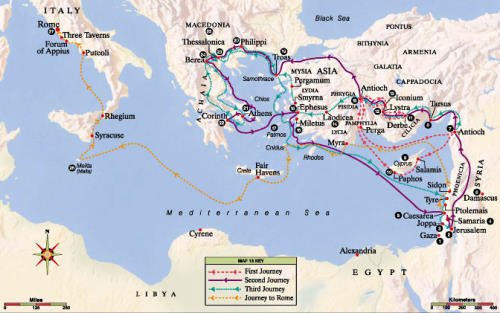
But before he left he made a promise. I will return to you again, if God will, he said. And he kept his promise. Aquila and Priscilla, this husband and wife couple who were tent-makers like Paul himself, stayed behind in Ephesus to prepare the ground. Their house most probably became one of the first house churches of our city.
In the meantime, while Paul was away, a remarkable man arrived in Ephesus. His name was Apollos and he came from Alexandria in Egypt, the second greatest city of the Roman world after Rome itself. Acts describes him as an eloquent man, mighty in the scriptures, who knew about Jesus but only knew the baptism of John the Baptist. So he started preaching in our synagogue. Aquila and Priscilla heard him, recognised his talent, and quietly invited him to their home, where they explained to him the way of God more fully. After this, Apollos became one of the most important preachers of the early church and went later to Corinth.
I always like to point out one detail here. It was Priscilla, named in this passage even before her husband Aquila in some of the manuscripts, who instructed one of the great teachers of early Christianity in her own house in Ephesus. The early church here was not a men-only enterprise from the very first day.
Paul’s Three Years in Ephesus
Then comes the great chapter. On his third missionary journey, somewhere around the years 53 to 56 AD, Paul came back to Ephesus and stayed for almost three full years. These were the longest years he spent in any single city during all his missionary career, and they were also the most productive ones.
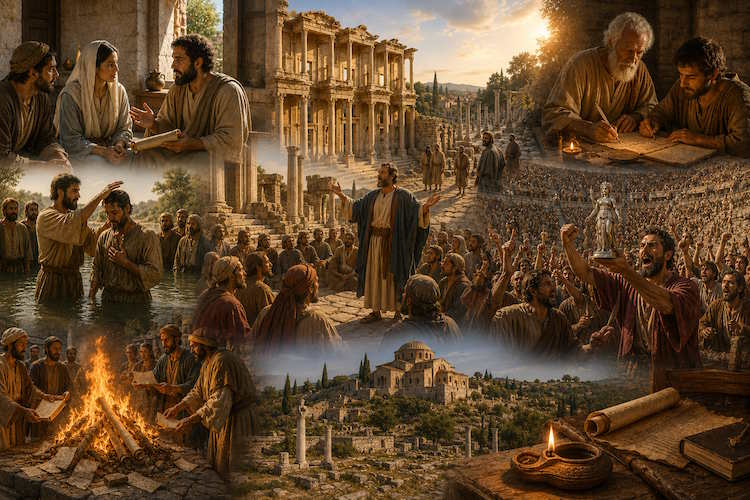
When he arrived, he met about twelve disciples in the city who had only received the baptism of John. He explained to them the baptism of Jesus, baptized them in the name of Christ, and they received the Holy Spirit. After this, Paul started teaching, first in the synagogue for three months, and when some of the people there refused to listen, he moved to a public lecture hall called the Hall of Tyrannus, somewhere in the city, and he was teaching there daily for two years.

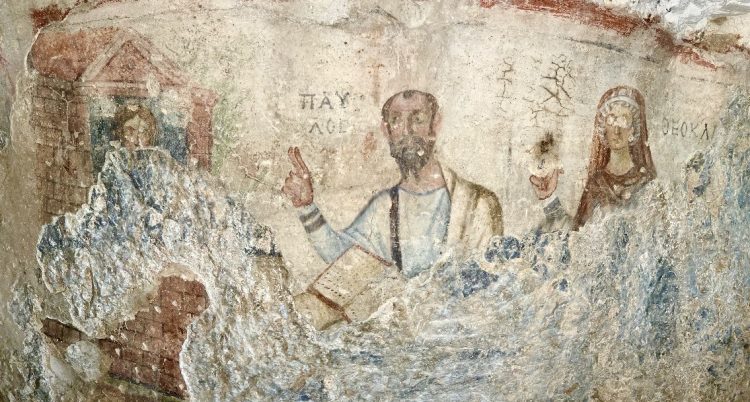
There is one tiny but very interesting detail in some of the older manuscripts. Paul was teaching at this hall from the fifth hour to the tenth hour, which means from 11 in the morning until 4 in the afternoon. These were exactly the hot midday hours, the siesta hours, when Ephesians were resting from their work and the lecture hall was empty. Paul was using the resting time of the city for his teaching. As a tour guide who is also planning his summer day around the heat of an Aegean afternoon, I find this very human and very practical.
The result of these two years was huge. Acts tells us that all who lived in Asia heard the word of the Lord, both Jews and Greeks. The seven churches of Revelation, Ephesus, Smyrna, Pergamon, Thyatira, Sardis, Philadelphia, Laodicea, were almost certainly founded in these years, directly or indirectly, from Paul’s school in Ephesus.
The Sons of Sceva and the Burning of the Magic Books
During the same years, two strange and very vivid stories happened in Ephesus, and Acts records them in detail.
Ephesus in the first century was famous for its magic. The city had a reputation across the entire Roman Empire for magical formulas, amulets and written spells, so famous that people called them simply the Ephesia Grammata, the Ephesian writings. Even the philosopher Plutarch is mentioning them. Magic was a serious industry in our city.


Acts tells us that during Paul’s stay, certain Jewish exorcists, the seven sons of a man called Sceva, tried to copy his methods. They were going around the city saying I exorcise you by the Jesus whom Paul preaches. According to the story, an evil spirit answered them with one of the most ironic lines in the New Testament. Jesus I know, and Paul I know, but who are you? And the possessed man jumped on them, and beat them up so badly that they ran out of the house naked and wounded.
The story spread through Ephesus very quickly. And then something happened which would make any archaeologist today very excited. Many people who had been practicing magic, brought out their books of spells and burned them publicly in the city. Acts even gives us the value of the burned books, fifty thousand pieces of silver. This is a huge amount of money, the equivalent of fifty thousand days’ wages of a working man. Imagine a public bonfire of expensive scrolls in the middle of one of the great cities of the ancient world. This was a turning point.
The Riot in the Grand Theatre
But not everyone in Ephesus was happy about this new movement. The most dramatic biblical event in our city is the famous riot of the silversmiths, in chapter 19 of Acts.


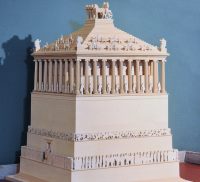
The Temple of Artemis was the centre of religious and economic life of the whole region. Around the temple there was an entire industry of craftsmen who were producing small silver shrines of the goddess for the pilgrims to take back home. One of these silversmiths, a man named Demetrius, was watching the success of Paul’s preaching with growing fear. He understood very well, that if people stop buying silver Artemis statues, his guild will lose its income.
So Demetrius gathered the other silversmiths and gave them a speech which is one of the most honest moments in the Bible. He said, more or less, this Paul is convincing people that gods made by human hands are not really gods, and if this continues, our craft is in danger of being set at nought, and the temple of the great goddess Diana will be despised. In other words, our business is in danger, and also of course our goddess.
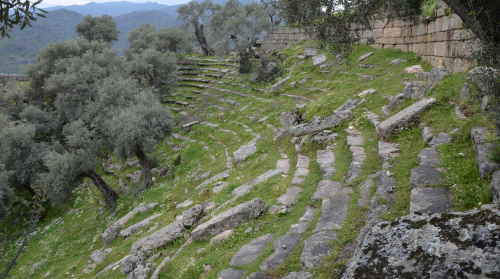
The crowd became furious. They poured into the Grand Theatre of Ephesus, the same theatre which my guests are visiting today, the theatre with twenty-five thousand seats carved into the slope of Mount Pion. They dragged two of Paul’s companions, Gaius and Aristarchus, with them. And for almost two hours the people inside the theatre were shouting one single sentence at the top of their voices.
Great is Artemis of the Ephesians! Great is Artemis of the Ephesians!
I always stop my guests at the centre of this theatre and read this passage out loud. Twenty-five thousand voices, two full hours, the same sentence, again and again. You can almost still hear it in the stones. The riot was finally calmed down by the city clerk, the grammateus, who reminded the crowd that they could be charged by the Romans for an unauthorized assembly. The crowd dispersed, and Paul left Ephesus shortly after.
The Letter to the Ephesians

A few years later, when Paul was a prisoner in Rome, somewhere around the years 60 to 62 AD, he wrote a letter back to the Christian community of our city. We know it today as the Letter to the Ephesians.
It is one of the most beautiful and most theological letters of the New Testament. It is not really written to address a specific problem, like the letters to the Corinthians or to the Galatians where there were always some troubles to fix. It is more a meditation. About the cosmic role of Christ, about the unity of the church, about the relationship between Jews and Gentiles in the new community, and about practical Christian life. The famous line put on the whole armour of God is coming from this letter.
Some scholars are thinking that the Letter to the Ephesians might have been originally written as a circular letter for several churches of Asia, with the name “Ephesus” added later because it was the most important one of these churches. Either way, the letter belongs to our city by tradition, and it is read in churches around the world every year as the Letter to the Ephesians.
John the Apostle and the Letter to the Church of Ephesus
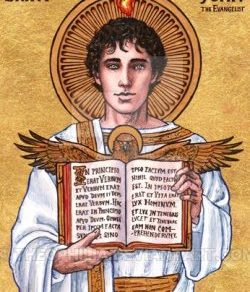
The story of the Bible in Ephesus does not end with Paul. After the great Jewish-Roman war and the destruction of Jerusalem in 70 AD, John the Apostle moved to our city, bringing with him, according to the tradition, Mary the mother of Jesus. John lived in Ephesus until his very old age, dying somewhere around the year 100 AD. The early church writers tell us that here he wrote his Gospel, and most probably also his three letters, the First, Second and Third Letters of John.

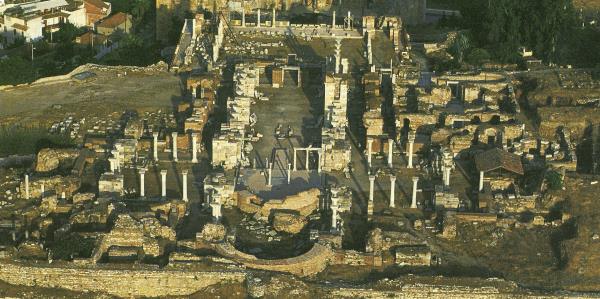
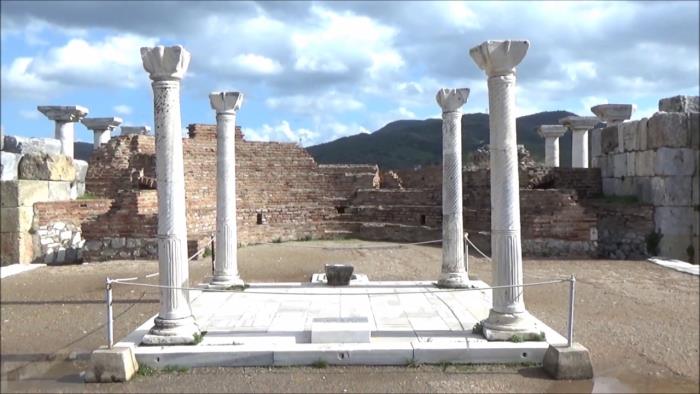
His tomb is on the hill of Ayasuluk in the centre of modern Selçuk, where Emperor Justinian built in the sixth century the magnificent Basilica of Saint John, the ruins of which are still standing today and are one of the most moving stops on any biblical tour of our region.
And finally, our city receives one more biblical message, this time at the very end of the New Testament. The Book of Revelation, which was written by John from the island of Patmos, opens with seven letters to seven churches of Asia. The very first letter, the most prominent one, is addressed to the Church of Ephesus.

It praises the Ephesian Christians for their hard work, their patience, their resistance against false teachers. But then it gives them one very serious warning. I have this against you, that you have left your first love. The community had become organised, disciplined, orthodox, but it had lost the warmth of its early years. The letter calls them to remember from where they have fallen, and to repent.
I find this letter very interesting because it shows us the church of Ephesus only one or two generations after Paul. The first love had cooled down already. Even in the city which heard the great preaching of Paul, the great teaching of John, the witness of so many early martyrs, faith was not automatic. It had to be renewed.
Walk in Their Footsteps


So when my guests ask me what happened in Ephesus in the Bible, I always tell them the same thing. Almost everything. Two of the greatest apostles of the early church lived and taught here for many years. The mother of Jesus most likely spent her last years on the hills above the city. One of the most famous letters of the New Testament was addressed to its Christians. One of the seven churches of Revelation was here. And the great riot in the theatre is one of the most vivid scenes in the entire Book of Acts.
When you walk on the marble streets of Ephesus today, when you stand inside the Grand Theatre, when you climb the hill of Ayasuluk to the Basilica of Saint John, you are not only visiting an ancient city. You are walking on a page of the Bible.
If you would like to discover Ephesus through its biblical stories with a local, professional licensed tour guide who has been doing this for more than fifteen years, you can contact me through theephesus.com or toursaroundturkey.com. Come and unravel the biblical mysteries of Ephesus with me. See you soon, Hasan Gülday.