Most books about early Christianity in Turkey are full of men: apostles, bishops, theologians and emperors. Yet some of the most famous Christian women in history lived, taught or ruled in Asia Minor. In this article I follow seven of them: Mary the mother of Jesus, Lydia of Thyatira, Priscilla, Thecla of Iconium, Macrina the Younger, Empress Helena and Empress Irene. Together they cover seven centuries, from the first to the eighth.
This is not because women were absent from story. The ancient writers recorded men more carefully than women, and many modern histories have inherited that habit. Some of these seven are famous, like Mary and Helena. Some appear in only a few verses of the Bible and grew in later tradition, like Lydia, Priscilla and Thecla. Others, like Macrina and Irene, are known mostly to specialists, although they were among the most important people of their time.
I already wrote a longer article about three of them, Following the Footsteps of Early Christian Women: Mary, Thecla and Lydia in Asia Minor. Here I keep their stories short, with details I did not tell there, and I give more room to Priscilla, Macrina, Helena and Irene. Let’s have a look at them in order of time.
- Mary, mother of Jesus (1st century): tradition places her last years in Ephesus.
- Lydia of Thyatira (about 50 AD): a seller of purple cloth from today’s Akhisar and Paul’s first named convert in Europe.
- Priscilla (1st century): Paul’s co-worker, who taught Apollos and hosted a house church in Ephesus.
- Thecla of Iconium (1st century, in legend): the heroine of the Acts of Paul and Thecla, venerated at Seleucia, today’s Silifke.
- Macrina the Younger (about 327 to 379 or 380): eldest sister of Basil the Great and Gregory of Nyssa, and their teacher.
- Empress Helena (about 248 to 330): mother of Constantine the Great, probably born at Drepanon, today’s Hersek in Yalova.
- Empress Irene (born in the 750s, died 803): the first woman to rule the empire on her own, who called the Second Council of Nicaea in İznik in 787.
1. Mary, Mother of Jesus, in Ephesus
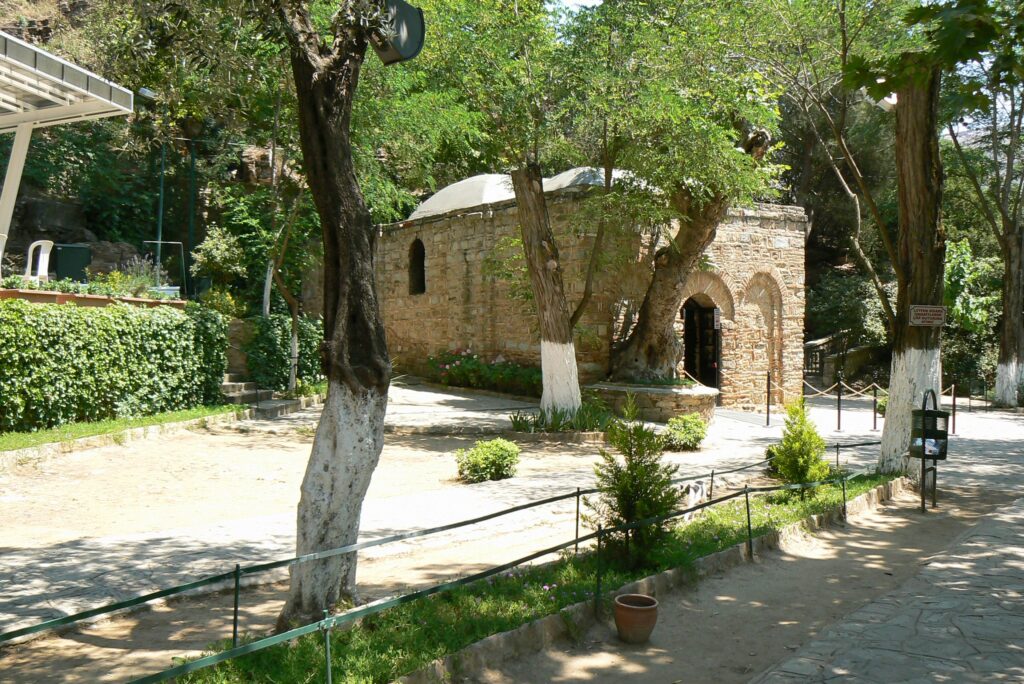
The Gospel of John tells how Jesus, from the cross, gave his mother into the care of the beloved disciple (John 19:26–27). Tradition says that John later settled in Ephesus and that Mary came with him. Her house is a small stone chapel on Bülbüldağı today, the mountain above Ephesus, less than 10 kilometers far from Selçuk.
Here is a detail many visitors do not know. When the Lazarist priests of İzmir searched the mountain in 1891, they learned that the Christian villagers of Şirince, in the hills above Ephesus, had long walked there every year on 15 August. They called the ruin Panaya Kapulu, the “Doorway to the Virgin”.
To be honest, no ancient source tells where Mary died, an older tradition places her tomb in Jerusalem, and the Catholic Church has never officially ruled on the house. The city’s bond with Mary is certain in another way: in 431 the Council of Ephesus called her Theotokos, “God-bearer”. Read more in House of Virgin Mary nearby Ephesus and The Council of Ephesus of 431.
2. Lydia of Thyatira
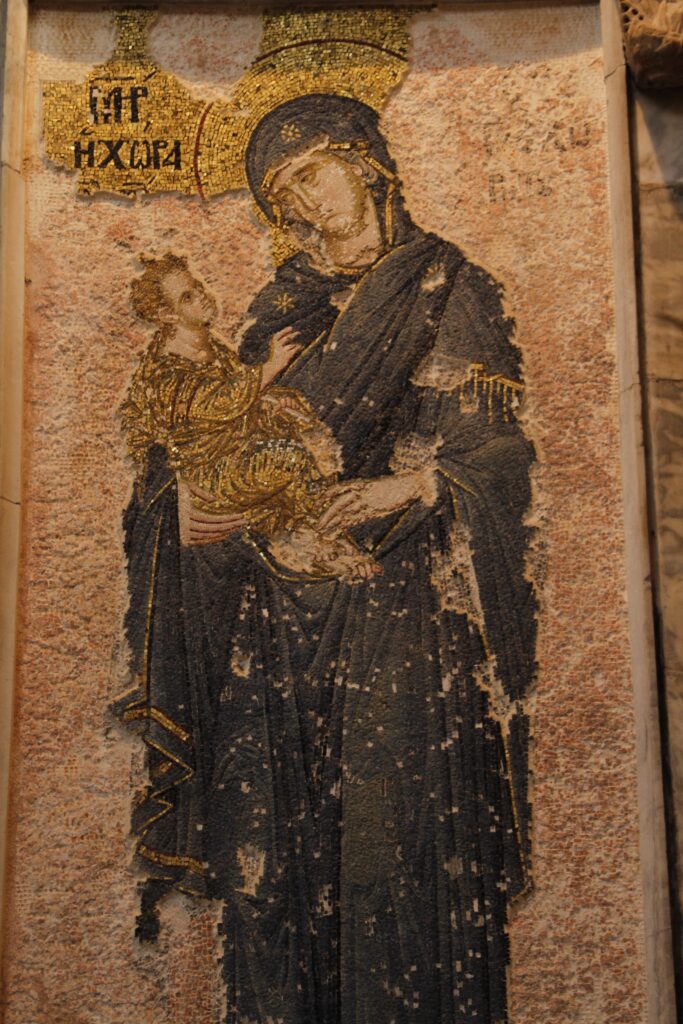
Lydia appears in only a few verses of Acts 16 but they say a lot. She was “a seller of purple, of the city of Thyatira”, a Gentile “which worshipped God”. She met Paul around 50 AD at a riverside place of prayer outside Philippi in Macedonia. She and her household were baptized, and she insisted that Paul and his companions stay in her house.
Two details are easy to miss. Her name may be a nickname, “the Lydian woman”, because Thyatira lay in the old land of Lydia. And no husband is mentioned: household is hers. When Paul and Silas came out of the prison of Philippi, they went straight to Lydia’s house to encourage the believers (Acts 16:40).
Her home town is Akhisar in Manisa province today, and the excavated ruins of Thyatira are laying in the middle of the town. Read more in Church of Thyatira and the Longest Letter in Revelation.

3. Priscilla, Paul’s Co-Worker in Ephesus
Priscilla is the woman Paul trusted most in Asia Minor. She and her husband Aquila appear six times in the New Testament, always together. Aquila was a Jew born in Pontus, on the Black Sea coast of today’s Turkey (Acts 18:2). The couple had lived in Rome until Emperor Claudius expelled the Jews from city, an event usually dated to 49 AD.
The Roman historian Suetonius gives the reason in one famous line: the Jews were making constant disturbances “at the instigation of Chrestus”. Many historians think this is a confused reference to Christ, and to arguments about him in the Jewish community of Rome. If so, Priscilla and Aquila may already have been believers when they left Rome.
They moved to Corinth in Greece. When Paul arrived there on his second journey, he stayed and worked with them, “for by their occupation they were tentmakers” (Acts 18:3). The Greek word may also mean leatherworkers. So the three of them shared not just a faith also a workshop.
Some time later Paul sailed for Syria and took the couple with him as far as Ephesus, where he left them (Acts 18:18–19). For a while, Priscilla and Aquila were the Christian community of Ephesus. Paul came back afterward for his long stay of about three years but the couple had prepared the ground.
Then came the episode that made Priscilla famous. Apollos, a learned Jew from Alexandria, “an eloquent man, and mighty in the scriptures”, began to speak boldly in the synagogue of Ephesus. He knew only the baptism of John. When Priscilla and Aquila heard him, “they took him unto them, and expounded unto him the way of God more perfectly” (Acts 18:26).
A woman explaining the faith to one of the most eloquent preachers of the early church is not a small thing, and churches still discuss about this verse today. Apollos went on to Corinth and became a great teacher there. You can read his story in Apollos in Ephesus.
Paul wrote his first letter to the Corinthians from Ephesus (1 Corinthians 16:8). At the end he sends greetings from Aquila and Priscilla, “with the church that is in their house” (16:19). It is one of the first house churches in Asia Minor that we know by name. Later, in Romans 16:3–4, Paul calls them his helpers, “who have for my life laid down their own necks”. We do not know where or when they risked their lives for him.
Scholars have long noticed one more thing. In the ancient world a husband’s name normally came first. Yet of the six times the couple is named, Priscilla comes first four times in the critical Greek text that most modern Bibles follow, and three times in the King James Version. In the Greek of Paul’s letters she is Prisca, her formal name, while Acts uses the familiar form, Priscilla.
In 1900 the German scholar Adolf von Harnack even suggested that she wrote the Letter to the Hebrews, an idea few scholars accept today. The last greeting comes in 2 Timothy 4:19, “Salute Prisca and Aquila”, in a letter traditionally sent to Timothy in Ephesus. So the couple may have come back to the city where their work in Asia had started. The Catholic Church remembers them on 8 July.
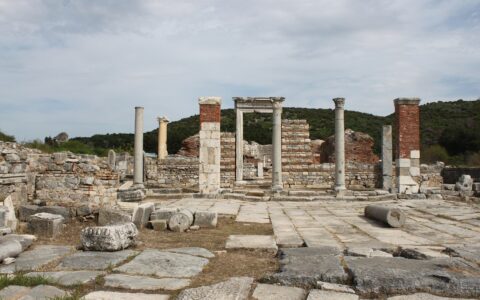
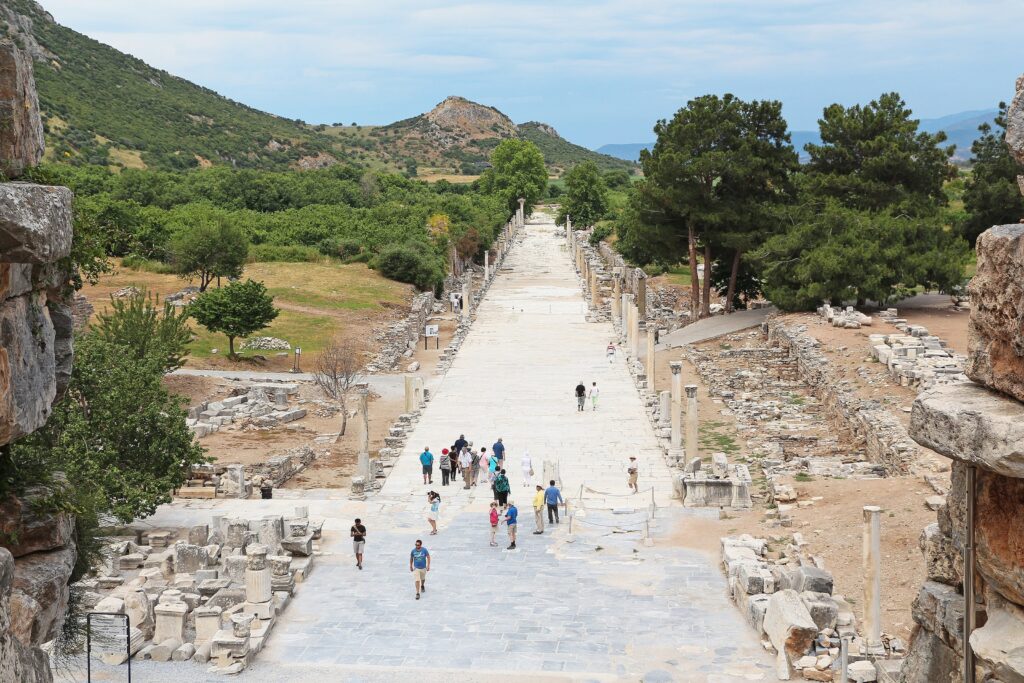
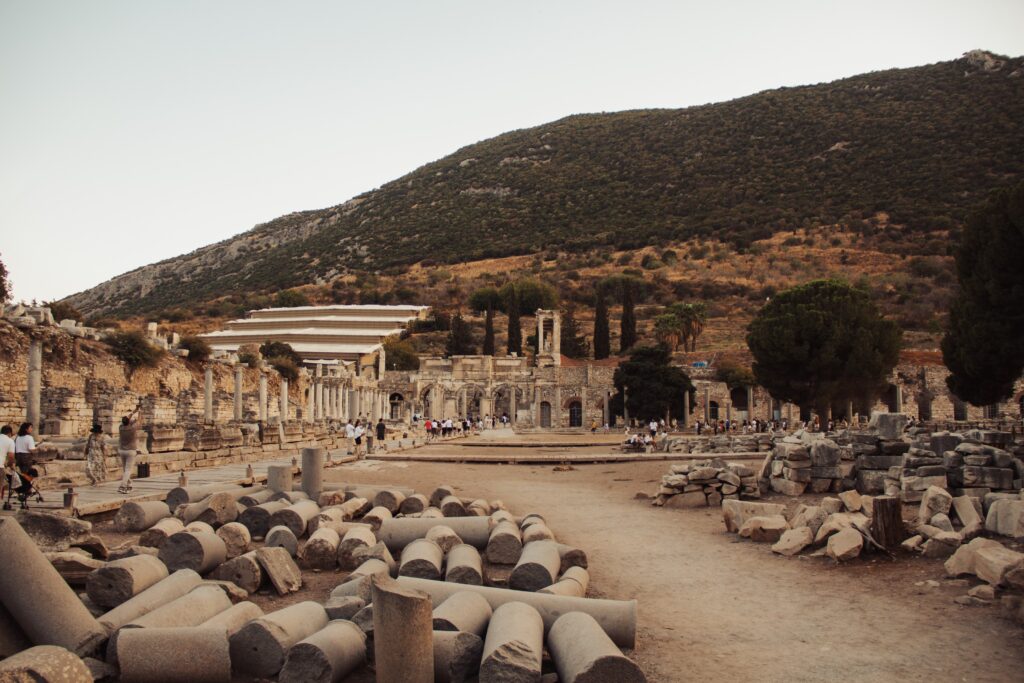
We do not know where their house stood. But the Commercial Agora of Ephesus, the great market square of craftsmen and traders, is exactly the kind of place where a tentmaking couple earned its living. I recommend my guests to stop there for a minute and imagine Priscilla and Aquila at work. More in Aquila and Priscilla in Ephesus.
4. Thecla of Iconium
Thecla’s story comes from the Acts of Paul and Thecla, a 2nd-century text that no church accepts as scripture. A young woman of Iconium, today’s Konya, hears Paul preach, leaves her fiancé, survives fire and wild beasts, and ends her life at Seleucia, today’s Silifke. I told her story in my article on Mary, Thecla and Lydia, so here are three details from her later fame.
Around 200 AD, Tertullian of Carthage complained that some people used Thecla’s example to defend a woman’s right to teach and to baptize. He added that author of the text was a presbyter in Asia, who was removed from his office. So her story was already strong enough to worry a church father.
Around 375, Gregory of Nazianzus, one of the Cappadocian Fathers, withdrew to Seleucia, the town of her shrine, for about three years. And in Cappadocia a mother secretly gave the name Thecla to her first daughter, as we will see. The Orthodox Church remembers Thecla on 24 September.
5. Macrina the Younger
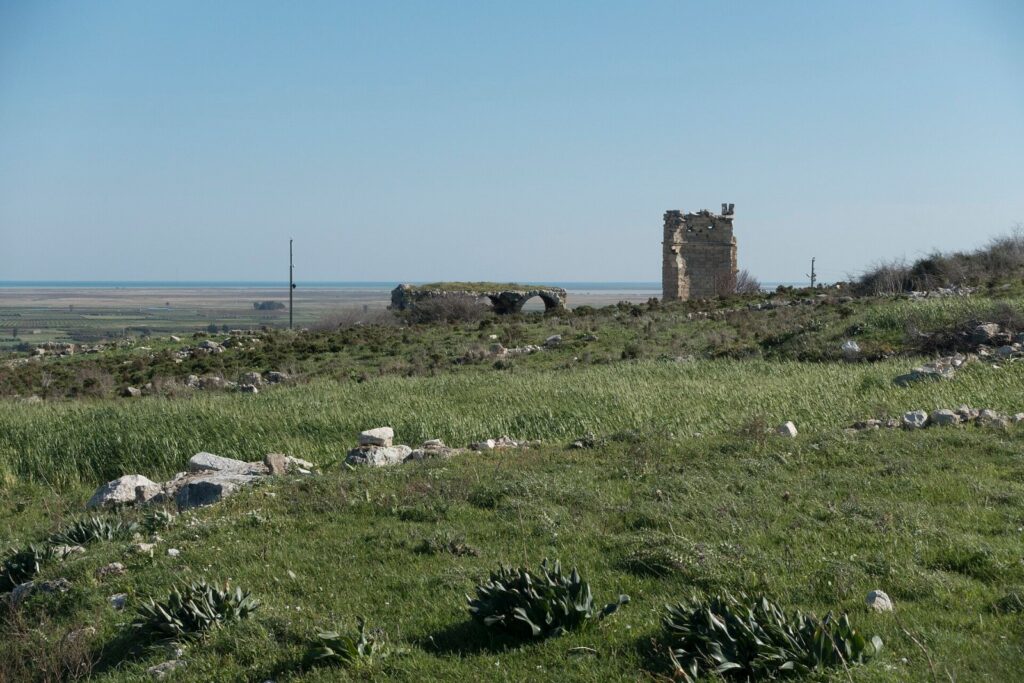
Macrina the Younger is the woman of this list I most wish more people knew. She was born around 327, probably in Caesarea in Cappadocia, today’s Kayseri, the eldest of ten children of Basil the Elder and Emmelia. Two of her brothers became the great theologians Basil the Great and Gregory of Nyssa, and the youngest, Peter, became bishop of Sebaste.
Their grandmother, Macrina the Elder, had learned her faith with the teaching of Gregory the Wonderworker, the bishop of Neocaesarea, today’s Niksar. So this was a family of saints across three generations.
We know Macrina well because Gregory of Nyssa wrote her biography, the Life of Macrina. He tells us that while her mother was giving birth, a figure in a vision called the baby Thecla three times. So Macrina had a secret name, Thecla, after the heroine of the previous section.
When she was about twelve, her father chose a young man of good family as her future husband, but the young man died before the wedding. Macrina refused every other offer. She said her father’s decision was as good as a marriage, her betrothed was not dead but only absent, living in God.
Later she lived with her widowed mother on the family estate at Annisa, in Pontus, by the Iris River, today’s Yeşilırmak. There she turned the household into a religious community. She persuaded her mother to share the life of the maids and to treat the slave girls and servants “as if they were sisters”. In the 4th Century, an aristocratic house where mistresses and servants lived as equals was a radical idea.
Her influence on her brothers is clear in Gregory’s text. When Basil came home from his long studies, Gregory writes, he was “puffed up beyond measure with the pride of oratory”. Macrina drew him to the ascetic life, and he also left worldly fame behind too. She also raised her youngest brother Peter from his birth, almost as a mother.
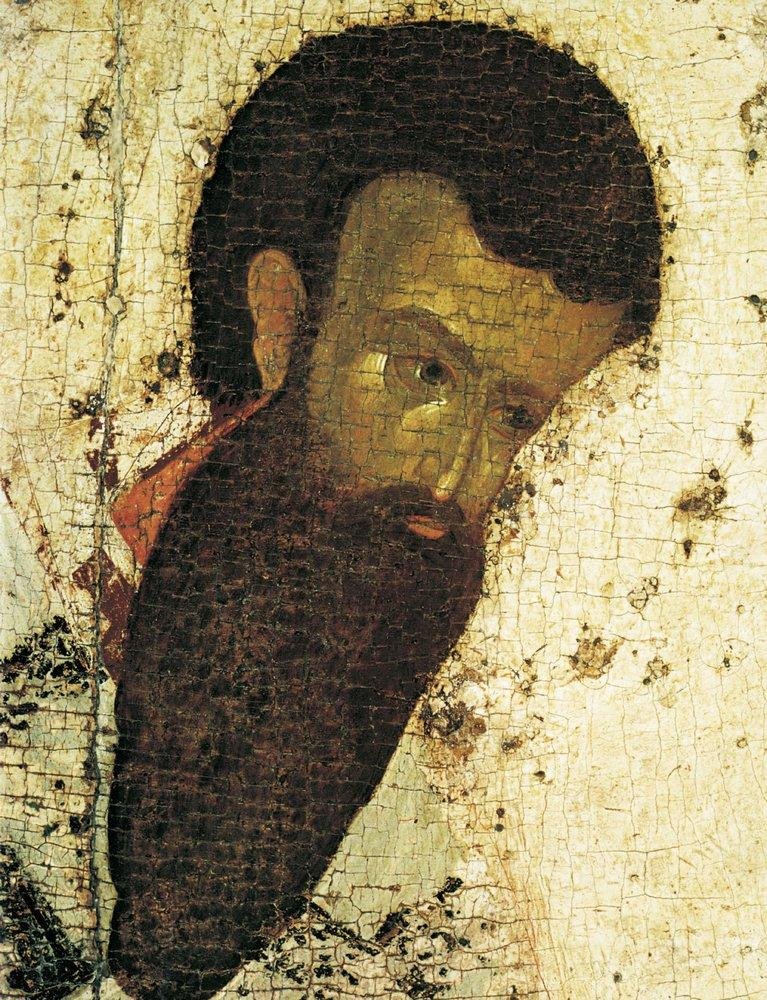
In 379 or 380 Gregory visited her as she was dying. Their conversation became the dialogue On the Soul and the Resurrection, one of his most important works. In it Macrina does most of the teaching, and Gregory simply calls her “the Teacher”. She died on 19 July, which is still her feast day.
When her body was prepared for burial, Gregory found that she wore an iron cross and an iron ring on a thread over her heart. The ring was hollow, and inside it was a tiny piece of the True Cross. That relic leads us to next woman on our list. You can read Gregory’s Life of Macrina online.
Nobody knows for sure where Annisa was. Many scholars place it at Uluköy, between Amasya and Niksar. Kayseri, her probable birthplace, and the wider region of Cappadocia, her family’s homeland, are the best places to feel the world she lived in.
6. Empress Helena
Flavia Julia Helena, the mother of Constantine the Great, was born around 246 to 248, probably at Drepanon in Bithynia. This is the village of Hersek in Yalova province today, on the southern shore of the Gulf of İzmit. Her family was humble. Saint Ambrose calls her a stabularia, a stable maid or innkeeper.
She became the companion of a Roman officer, Constantius Chlorus, and around 272 she gave birth to Constantine. Whether they were legally married is still debated. When Constantius rose in imperial hierarchy, he left Helena, some time before 289, to marry Theodora, the daughter of Emperor Maximian. Helena lived far from power for many years.
Constantine became emperor in 306, and his mother returned to the imperial court. In 324, after he became sole ruler, he gave her the title Augusta. According to Eusebius, it was Constantine who brought her to the Christian faith. Her birthplace was renamed Helenopolis in her honor.
Around 326 to 328, when she was nearly eighty, Helena traveled to the Holy Land. Eusebius, who knew the family, says she dedicated two churches there: one at the cave of Christ’s birth in Bethlehem and one on the Mount of Olives, the mount of his ascension. He also tells how generous was she to the poor and to soldiers along the way.
The famous story that Helena found the True Cross in Jerusalem is not in Eusebius. The full story appears only at the end of the 4th century, in a sermon of Ambrose in 395 and in the church history of Rufinus. So it is better to call it a beloved tradition than a proven fact.
She was not the first Christian pilgrim either. In the 2nd century, Bishop Melito of Sardis traveled to the East to learn the books of the Old Testament. But Helena’s journey made pilgrimage to the Holy Land popular across the whole empire.
Helena died around 330 with Constantine at her side, and she was buried in a mausoleum on the Via Labicana outside Rome. Her huge porphyry sarcophagus is in the Vatican Museums today. Orthodox Christians honor her together with her son on 21 May, and Catholics on 18 August.

Her birthplace kept a special place in her son’s life. In 337, feeling ill, Constantine went to the hot baths of his city and then to the town named after his mother, where he prayed in the church of the martyrs. He died soon after near Nicomedia, today’s İzmit.
Hersek is a quiet village by a lagoon today. Since 2021 archaeologists have been searching for Helenopolis there, on land and under the water. You can read a short note about Helena in Important Christian People of Anatolia.
7. Empress Irene
Irene is the most powerful woman of this list and the most controversial one. She was born in Athens in the 750s, into the noble Sarantapechos family. In 769 she married Leo IV, the son of Emperor Constantine V. When Leo died in 780, she became regent for their nine-year-old son, Constantine VI.
The empire was then deep in Iconoclasm. For about half a century the emperors had treated the veneration of icons as idolatry. Irene was a firm supporter for icons. In 786 she called a council in the Church of the Holy Apostles in Constantinople, but iconoclast soldiers broke it up. So in 787 she moved it to Nicaea, today’s İznik.
The Second Council of Nicaea opened on 24 September 787 in the Hagia Sophia of Nicaea. Please note that the first council of 325 did not meet in this church; it gathered in the imperial palace, and nothing of that palace survives. The bishops restored the veneration of icons with a careful distinction: worship, latreia, belongs to God alone, while icons receive honor and veneration.
The rest of her story is darker. When Constantine VI grew up, mother and son fought over power for years. In 797 Irene’s supporters seized him and blinded him in the Porphyra, purple chamber of the palace where he had been born. He may have died of his wounds; the sources do not agree. Irene then ruled alone.
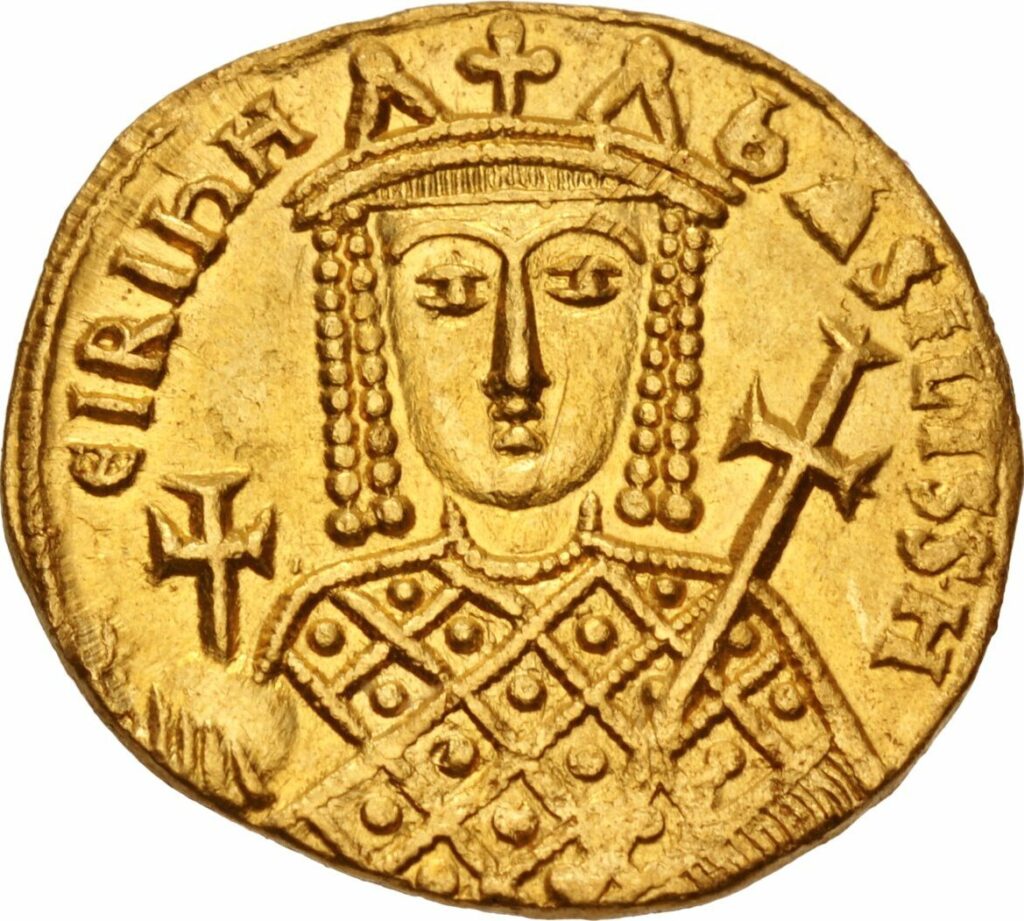
She was the first woman to rule the empire in her own name. Her gold coins show her face on both sides, with the words “Irene basilissa”, and in two legal documents she even appears as basileus, the masculine word for emperor. In Rome, Pope Leo III crowned Charlemagne emperor on Christmas Day 800, and some argued that the imperial throne was empty because a woman sat on it.
In 802 her finance minister Nikephoros overthrew her. She was exiled first to Prinkipo, today’s Büyükada near Istanbul, and then to the island of Lesbos, where she died in 803.
Her council did not end the struggle. Iconoclasm returned in 815, and the icons came back for good only in 843, under another empress, Theodora. The Orthodox Church still celebrates that day as the Sunday of Orthodoxy. Yet the theology of every icon in an Orthodox church today rests on the definition of 787.
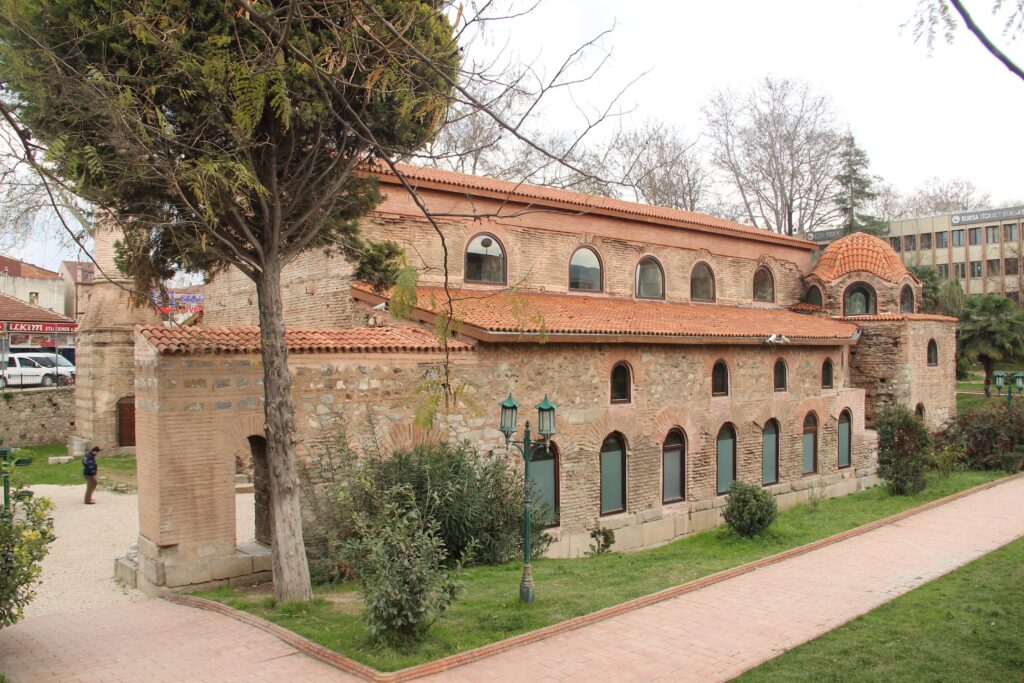
The Hagia Sophia of İznik still stands in the center of the town. The building you see was largely rebuilt after an earthquake in the 11th century, on the same spot. It became a mosque in 1331, a museum in 1935 and a mosque again in 2011, and visitors are welcome outside prayer times.
Seven Famous Christian Women in History
Mary, whom a council in Ephesus called the God-bearer. Lydia, the merchant from Thyatira who opened her house in Philippi. Priscilla, the tentmaker who taught Apollos. Thecla, the legendary virgin who became a model for independent Christian women. Macrina, the forgotten teacher of the Cappadocian Fathers. Helena, the mother of Christian pilgrimage. Irene, the empress who brought back the icons.
Their stories are not always easy to recover, because the ancient writers wrote less about women than about men. But women were doing the work through all seven centuries of Christian Asia Minor, and what we can recover of their story is more than enough to fill an article like this one.
Frequently Asked Questions
Who was Priscilla in the Bible?
Priscilla, also called Prisca, was a Jewish Christian woman who worked with Apostle Paul together with her husband Aquila. Expelled from Rome under Emperor Claudius, the couple made tents with Paul in Corinth, hosted a house church in Ephesus and taught the preacher Apollos (Acts 18:26). Paul calls them his helpers in Christ Jesus in Romans 16:3.
How did Macrina the Younger influence Christianity?
Macrina turned her family estate at Annisa in Pontus into one of the early religious communities for women, where mistresses and servants lived as equals. She guided her brothers Basil the Great and Gregory of Nyssa toward the ascetic life, and in Gregory’s dialogue On the Soul and the Resurrection she is “the Teacher”.
What is Saint Helena known for?
Helena was the mother of Constantine the Great, the first Christian emperor. Around 326 to 328 she traveled to the Holy Land and dedicated churches in Bethlehem and on the Mount of Olives. A later tradition says she found the True Cross in Jerusalem. She was probably born at Drepanon, today’s Hersek in Yalova.
Did Empress Irene kill her son?
In 797 Irene’s supporters blinded her son, Emperor Constantine VI, in the palace in Constantinople so that he could not rule. Some sources say he died of the wounds, while others suggest he lived on for some years, so historians are not sure. Irene then ruled alone until she was overthrown in 802.
Hire Biblical Tour Guide in Turkey
I’m a nationally licensed Turkish tour guide based in Kuşadası, nearby Ephesus. My day guiding is in Ephesus, İzmir and Pamukkale, so the House of the Virgin Mary and the streets where Priscilla and Aquila lived are part of my everyday work. My license is valid all over Turkey, so on a longer journey I can also join you as your personal guide in Akhisar, Konya, Silifke, Cappadocia or İznik, the places of the other women in this article.
You can see my guiding rates and guiding areas or write to me through my contact page.
I hope we will walk together one day on the marble streets of Ephesus and up to the House of the Virgin Mary. You can always write to me with your questions about the famous Christian women in history from Asia Minor or about the Seven Churches of Revelation. See you soon, Hasan Gülday.