Long before Apostle Paul arrived, Asia Minor was a land of great sanctuaries. Of all the ancient temples in Turkey, seven pagan sites pressed hardest on the first Christians: the Temple of Artemis at Ephesus, the Altar of Zeus and the Asclepion at Pergamon, the Oracle of Apollo at Didyma, the Sebasteion at Aphrodisias, the sanctuary of Cybele at Pessinus and the Temple of Augustus and Rome in Ankara.
Add Tours Around Turkey as a preferred source on Google
For each one I explain what it was, why it mattered to the Christians who lived beside it, and what you see there today. How the whole land slowly turned from the old gods to Christ is a different story, and I tell it in my article Pagan to Christian Asia Minor. This one is a list of places.
Pagan Neighbors of the First Christians
Most of my articles are about churches, apostles and martyrs. This time I want to cross the street and look at the other side. The early Christians of Asia Minor did not live in a quiet countryside. They lived in cities where temples stood on the main squares, priests were leading citizens and the year moved from one festival of the gods to the next.
Becoming a Christian here meant to say no to a lot of ordinary life. Meat from the sacrifices was eaten at feasts in the temples, and Apostle Paul had to answer questions about sitting “at meat in the idol’s temple” (1 Corinthians 8:10, KJV). He praised the Thessalonians because they “turned to God from idols to serve the living and true God” (1 Thessalonians 1:9, KJV). In a city full of temples, that turn was visible to everyone.
I want to be fair to the pagan world too. For the people of Ephesus or Pergamon, these gods were not a fairy tale. They protected their families, their health and their city. When you walk through these sites, try to see them with the eyes of the people who prayed there. Then the courage of the small Christian groups becomes easier to understand.
1. Temple of Artemis at Ephesus
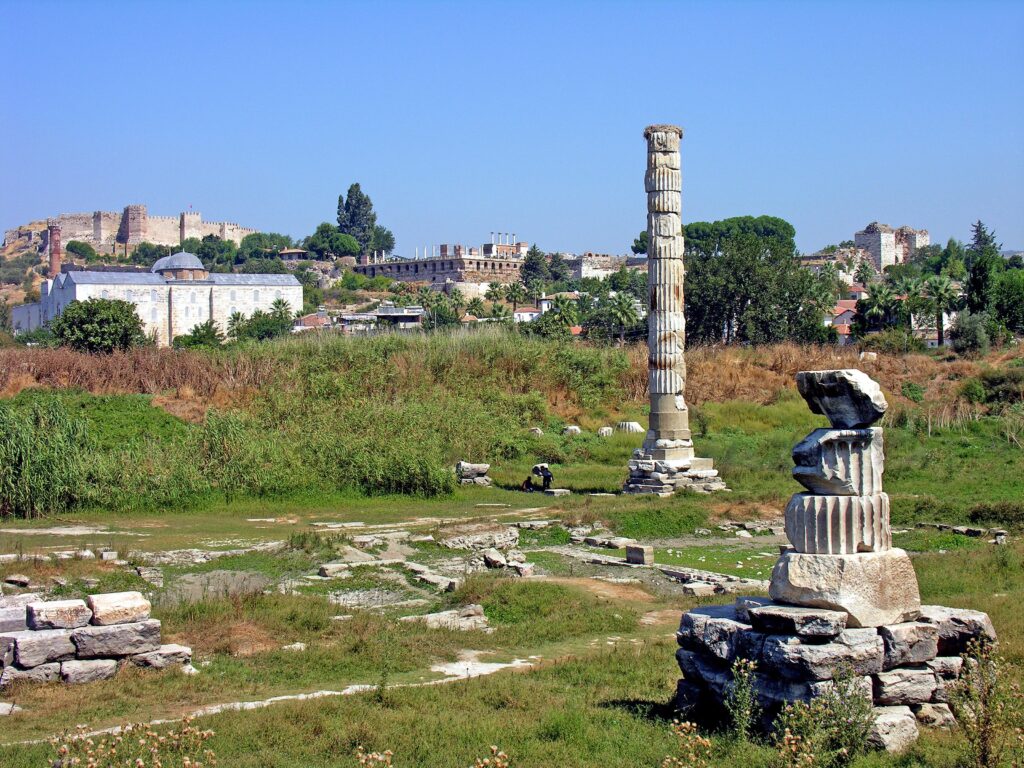
The Temple of Artemis was counted among the Seven Wonders of the ancient world. The temple that Apostle Paul knew was the last of several temples on the site, rebuilt after a man named Herostratus set fire to the older one in 356 BC. It was about 137 meters long and 69 meters wide, and Pliny the Elder counted 127 columns, each 60 feet high.
By the way, Alexander the Great offered to pay all the costs of the rebuilding, if his name could go on the inscription. The Ephesians said no. According to the geographer Strabo, they answered that it was not fitting for a god to dedicate offerings to gods. They paid for the work themselves, partly with the jewelry of their women. That is how proud was Ephesus of its goddess.
Artemis of Ephesus was not the slim huntress of Greek myths. Cult statue shows a mother goddess whose chest is covered with rows of egg-shaped objects, and scholars still discuss what they mean. She protected the city, women and childbirth. The Ephesians believed she was born nearby their city, as I tell in Happy Birthday Our Pretty Artemis.
For the Christians of Ephesus, Artemis was the goddess of their own neighbors and employers. When Paul’s preaching hurt the trade in little silver shrines, the silversmith Demetrius gathered his fellow craftsmen (Acts 19:24–27). The crowd filled the theater and shouted “Great is Diana of the Ephesians” for about two hours (Acts 19:34, KJV). I tell that day in my article on the Great Theater of Ephesus.
What you see today is a single column, pieced together from fragments, standing in a marshy field on the edge of Selçuk. From the same spot you see Ayasuluk Hill with the Basilica of Saint John and Isa Bey Mosque. Three ages of faith fit in one view. The site is a few minutes from Ephesus Ancient City, so it fits easily into an Ephesus day.
2. Altar of Zeus at Pergamon
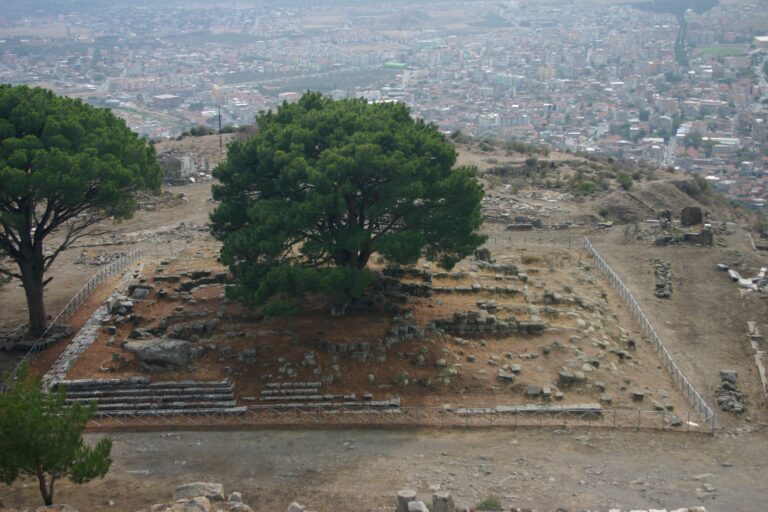
The Great Altar of Pergamon was built under King Eumenes II in the first half of the 2nd century BC, on a terrace of the royal acropolis. It was not a temple but a huge altar for sacrifices, raised on a high base with a broad staircase. Around the base ran the famous Gigantomachy frieze, the battle of the Olympian gods against the giants. It is 113 meters long, the longest surviving Greek frieze after the Parthenon frieze.
The kings of Pergamon had fought the Galatians for decades, and many people read the gods crushing the wild giants as a picture of order defeating chaos. Scholars think, however, that the altar was not built for one particular victory. In 133 BC the last king, Attalus III, left his kingdom to Rome, and the altar stayed on its terrace above the city.
For a Christian of Pergamon, this altar was part of the skyline. Smoke of sacrifices rose from it above the houses. Many readers connect it with the “seat” of Satan in the letter to Pergamon (Revelation 2:13), although the verse names no building. Whatever John meant, refusing the gods of the acropolis was a public matter in royal city like this.
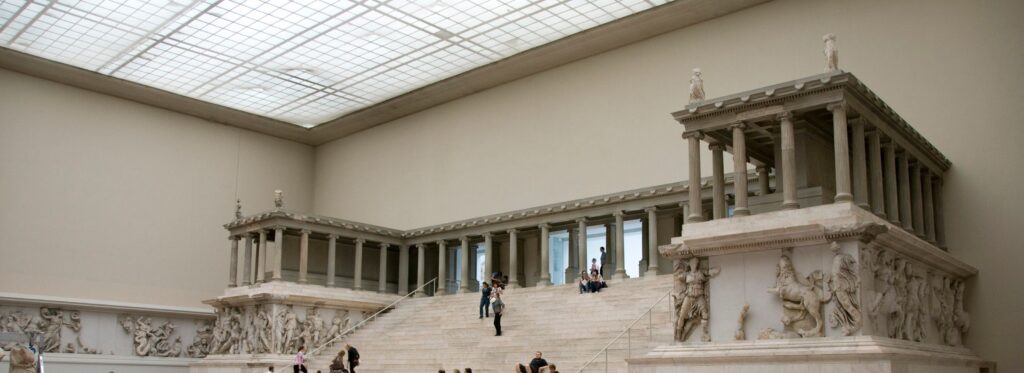
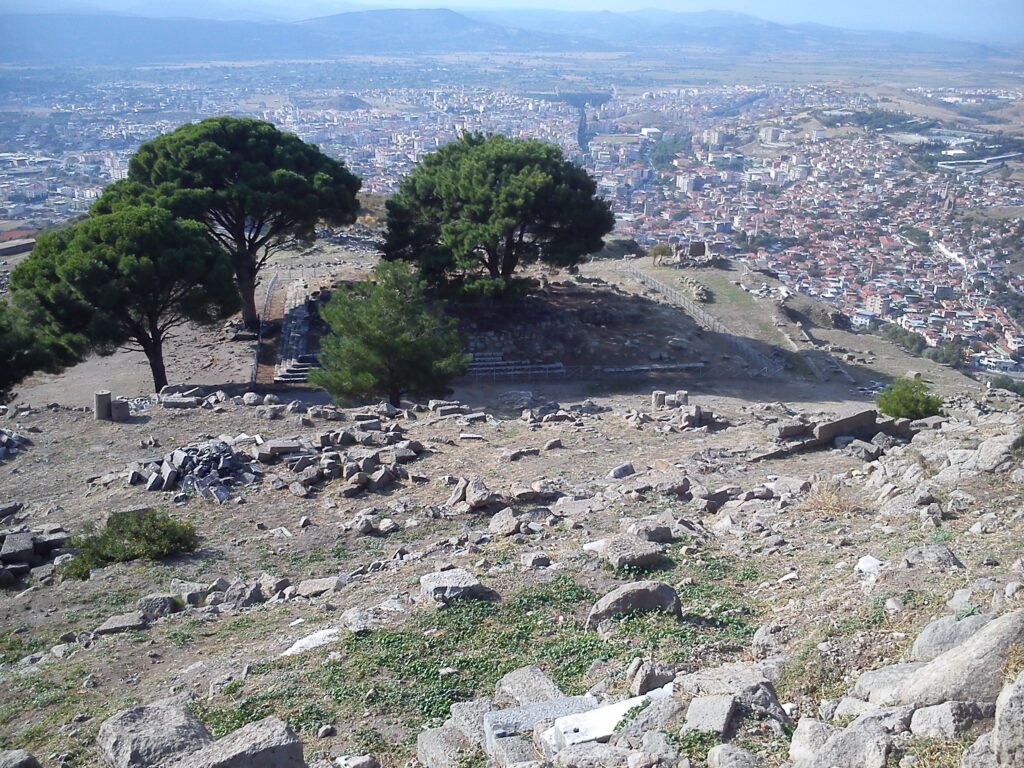
Today you can stand on the altar’s foundation on the acropolis, under a few pine trees, with modern Bergama below. The sculptures are not there. After the German engineer Carl Humann began excavating in 1878, the frieze went to Berlin, where the altar was rebuilt inside the Pergamon Museum. That is more than 1,800 kilometers away in a straight line.
Please keep it in mind that the Pergamon Museum has been closed since October 2023 for a long renovation. According to the Berlin State Museums, the altar hall reopens on June 4, 2027. Until then, the nearby “Pergamonmuseum. Das Panorama” shows a 360-degree panorama of the ancient city with about 80 original pieces. For the monuments on the hill, read my guide to Pergamon Ancient City.
3. Asclepion of Pergamon
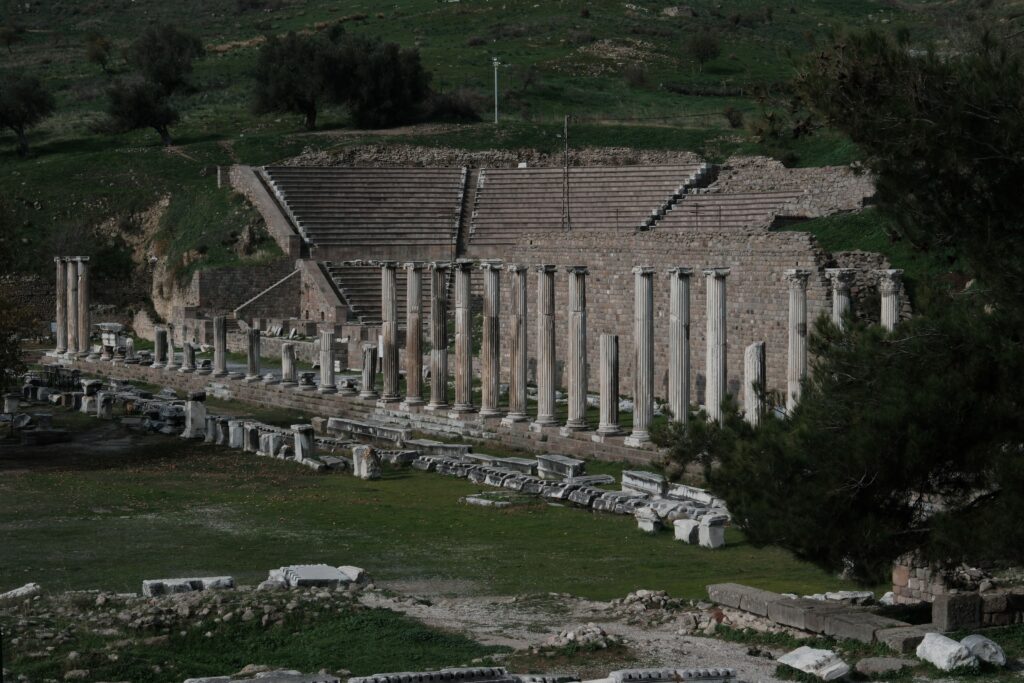
Down in the valley below the acropolis lies the Asclepion, the sanctuary of Asclepius, the Greek god of healing. Its cult was founded in the 4th century BC, and it became one of the most famous healing sanctuaries of the ancient world, together with Epidaurus in Greece and the island of Kos. Sick people came here from all over of the Roman Empire.
Healing here was religion and medicine at the same time. Patients drank and washed in the water of the sacred spring. At night they lay down inside the sanctuary and waited for Asclepius to visit them in their sleep with advice for their cure. It also had a theater of about 3,500 seats for them too, and a long sacred way led to the sanctuary from the city. The snake of Asclepius is still the symbol of medicine, as I explain in Ephesus and Snake Symbol.
In the 140s AD the orator Aelius Aristides came here as a patient, and later he wrote down the god’s dreams and orders in his Sacred Tales. Galen, the most famous doctor of antiquity, was a son of this city, born in 129 AD, and he received his early training at the Asclepion. I wrote about him in Galen the Greatest Doctor of Antiquity.
Why did this matter to Christians? The great round temple of the Asclepion was dedicated to Zeus Asclepius Soter, and Soter means savior, the same title the Christians gave to Christ. Christians fell sick like everyone else, the most famous hospital of the region was the house of another god. The letter of James gave them a different way: “Is any sick among you? let him call for the elders of the church; and let them pray over him” (James 5:14, KJV).
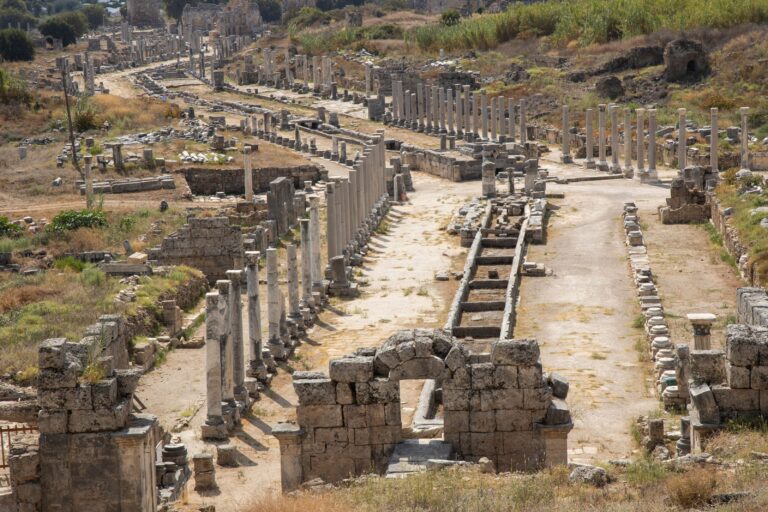
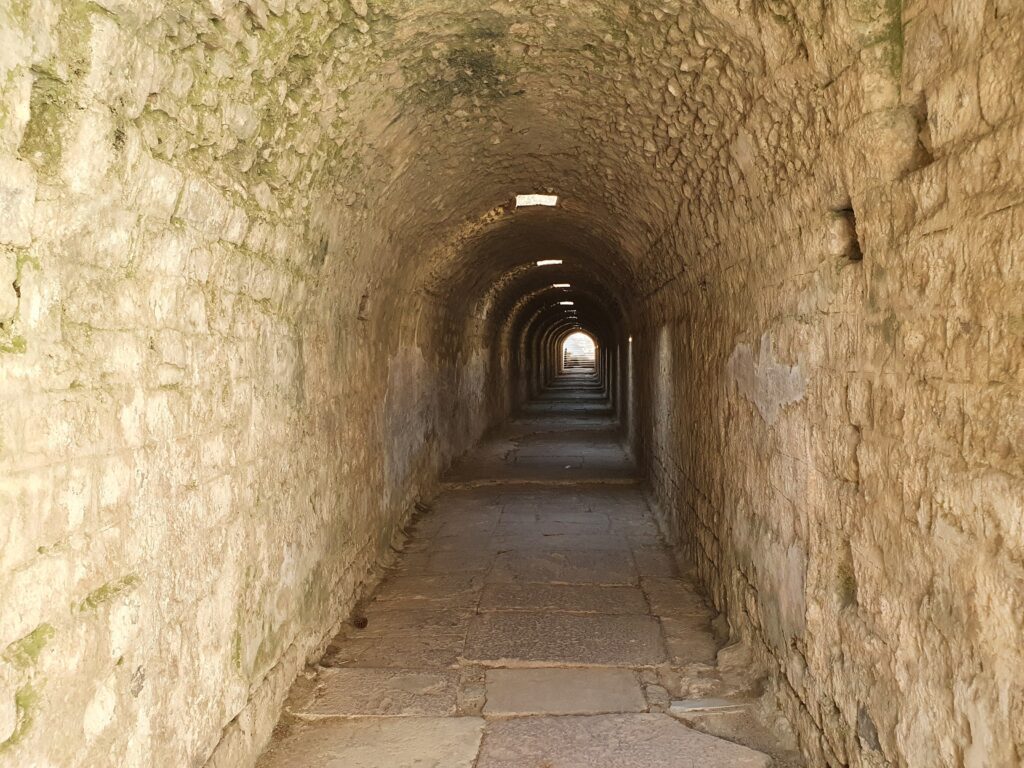
Today you walk along the sacred way, pass the courtyard with its columns, sit in the restored theater and enter into the long vaulted passage under the ground, which led to the spring. The sanctuary is at the edge of modern Bergama, so it combines well with the acropolis in one long day.
4. Oracle of Apollo at Didyma
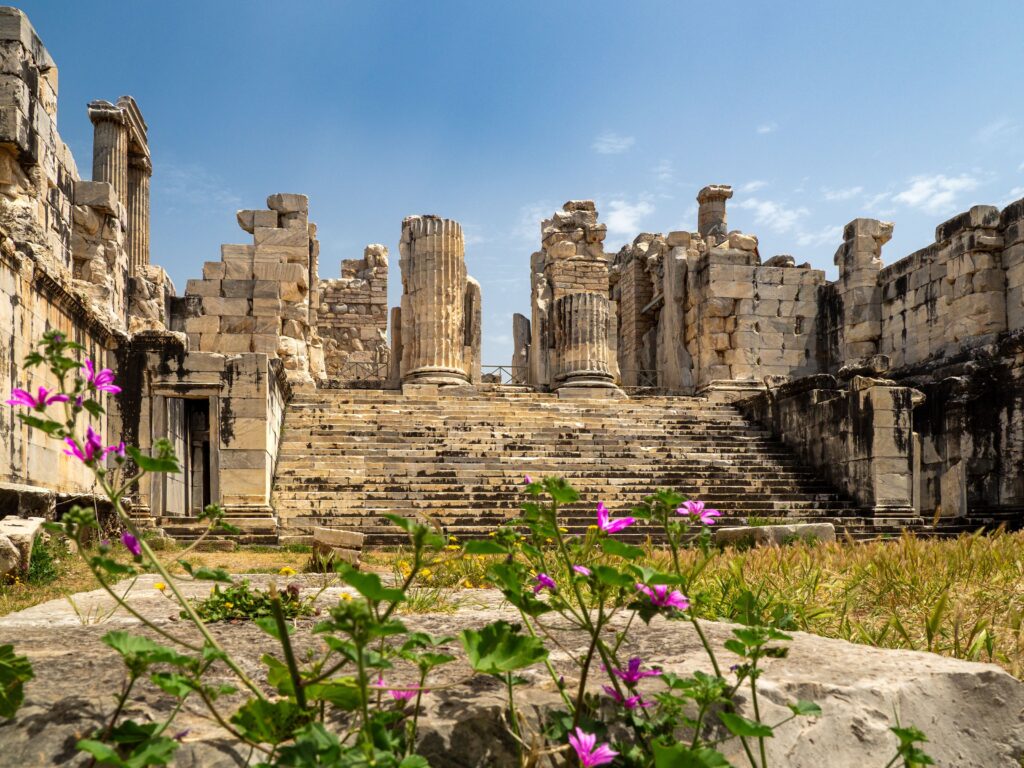
About 16 kilometers south of Miletus, at today’s Didim in Aydın province, stood the oracle of Apollo at Didyma. A sacred way of about 20 kilometers connected it with Miletus. The great Hellenistic temple was begun after Alexander the Great freed Miletus in 334 BC. It was planned with about 120 columns, nearly 20 meters high, and the Roman architect Vitruvius names Paeonius of Ephesus among its architects.
Builders worked on it for more than 600 years, and it was never completed. Unfinished columns and blocks still show you how the work was done. The heart of the temple was not a closed room but an open inner courtyard, called the adyton, with the sacred spring and a small shrine for the god.
Didyma was an oracle. People asked Apollo about wars, marriages, harvests and health. In early times a priestess sat above the sacred spring and spoke the god’s words, and the Branchidae family interpreted them. Later a prophet, an official chosen every year, announced the answers. Even Emperor Hadrian held this office in 129 AD.
The oracle of Didyma has a dark place in Christian history. According to the Christian writer Lactantius, Emperor Diocletian sent a messenger to ask Apollo at Miletus, and the answer was hostile to the Christians. The Great Persecution began in February 303. Constantine later remembered that Apollo had complained that “the righteous men on earth” stopped his oracles. You can read about those years in my article on Emperor Diocletian.
Around 500 AD a church was built inside the temple, and the earthquake of 1493 brought most of the building down. Today three columns still stand to their full height, the great staircase still leads into the inner courtyard and a famous Medusa head from the frieze is laying by the temple. You can find Didyma in my list of places of interest in Aydın.
5. Sebasteion at Aphrodisias
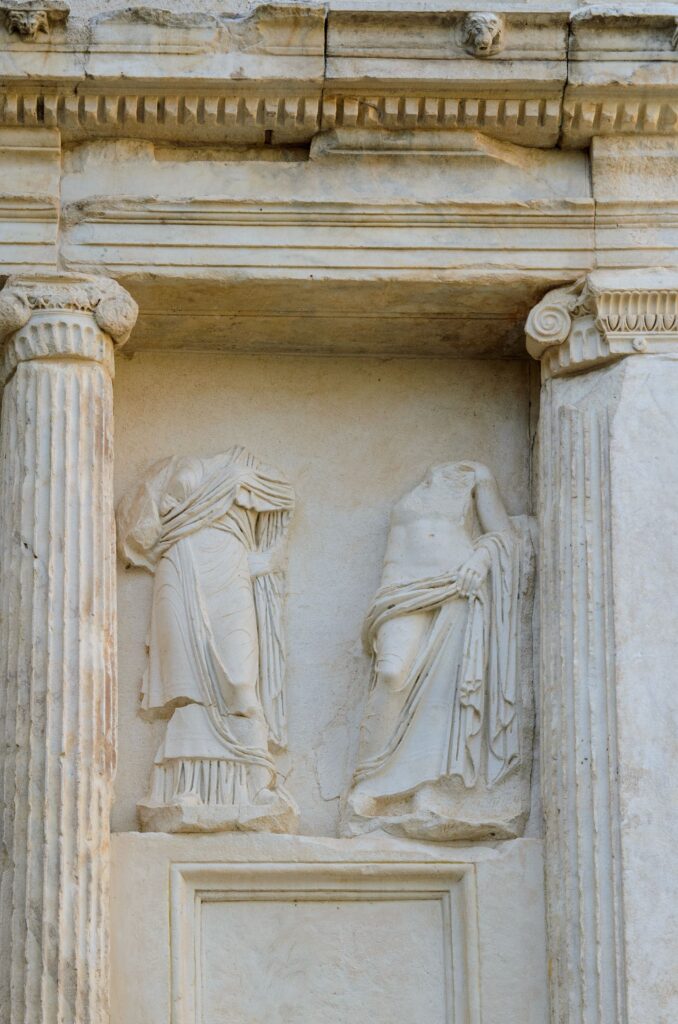
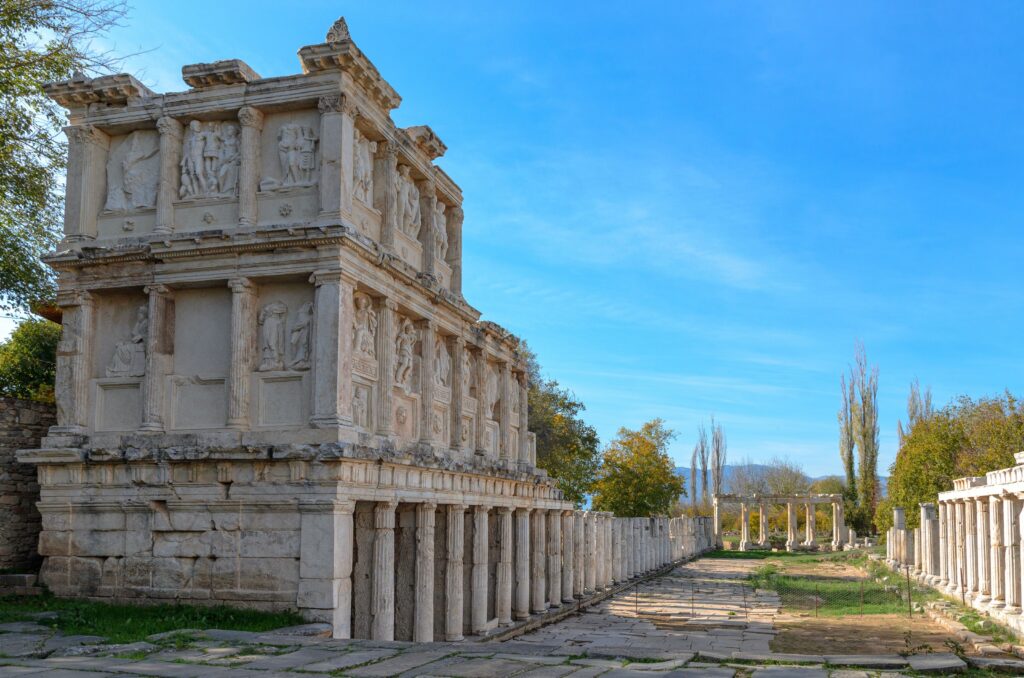
The emperor cult put the strongest pressure on the early Christians, because worship of the emperor was also a test of loyalty. At Aphrodisias, the city of Aphrodite in ancient Caria, two leading local families paid for the Sebasteion between about 20 and 60 AD. Its inscription dedicates it “to Aphrodite, the Divine Augusti and the People”. Ephesus had its own imperial temple too, as you can read in Temple of Domitian in Ephesus.
The Sebasteion is a processional avenue 90 meters long and 14 meters wide, between two portico buildings of three stories, 12 meters high, with a temple at the end. Some 200 marble reliefs decorated the upper floors, and archaeologists have found more than 80 of them. Emperors appear beside gods and heroes: Claudius conquers Britannia, Nero conquers Armenia. In marble language the message was clear. Rome’s rulers belonged among the gods.
That was exactly the point where Christians had to say no. Around 112 AD, Pliny the Younger tested accused Christians in Bithynia by asking them to pray to the emperor’s image with incense and wine. In Smyrna, the old bishop Polycarp was ordered to swear by Caesar’s fortune, and he refused. His story is in my article on Saint Polycarp of Smyrna.
Aphrodisias later became Christian too. Around 500 AD the Temple of Aphrodite was turned into a cathedral, and before 640 the city was renamed Stauropolis, the City of the Cross. Today the Sebasteion reliefs have their own hall in the site Museum, opened in 2008, and part of the porticoes stands again. Aphrodisias has been a UNESCO World Heritage Site since 2017. It lies inland, near the village of Geyre in the Karacasu district of Aydın province.
6. Cult of Cybele at Pessinus
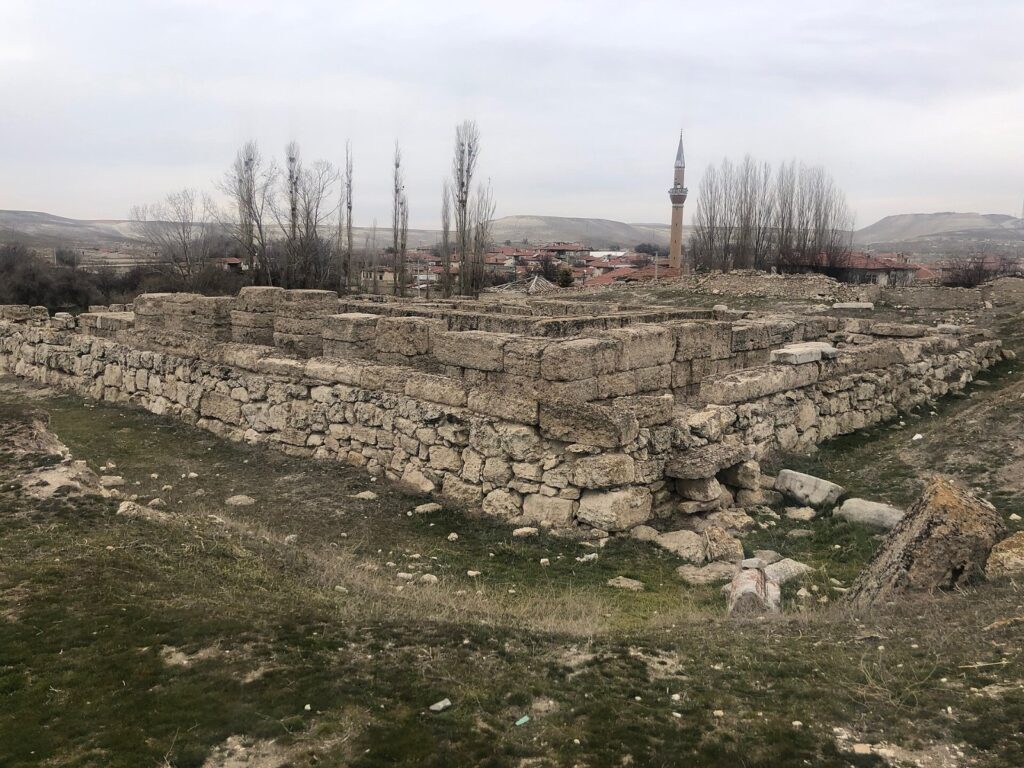
Cybele, the Mother of the Gods, was worshipped in Anatolia long before the Romans came. Her most famous sanctuary was at Pessinus in Phrygia, today the village of Ballıhisar, 13 kilometers from Sivrihisar in Eskişehir province. In Roman times the city belonged to the province of Galatia.
Her priests were called galli, and they castrated themselves when they entered her service. Her festivals had loud music, wild dancing and mourning for her young companion Attis. In 204 BC, during the war with Hannibal, the Romans followed the advice of their Sibylline Books and brought the sacred stone of the goddess from Pessinus to Rome, as the historian Livy tells. The Great Mother became a goddess of Rome too.
Paul wrote his Letter to the Galatians to churches somewhere in the borders of this province. He reminds them that before they knew God, “ye did service unto them which by nature are no gods” (Galatians 4:8, KJV). Some scholars even hear the galli of Cybele behind his sharp words in Galatians 5:12, though others read them differently.
The old goddess did not give up quickly. In 362 AD Emperor Julian, who wanted to bring back the old religion, visited Pessinus, and in the same year he wrote a hymn to the Mother of the Gods. A letter under his name even told the pagan priests of Galatia to copy the charity of the Christians. Still, around 398 Pessinus became the seat of a Christian metropolitan bishop.
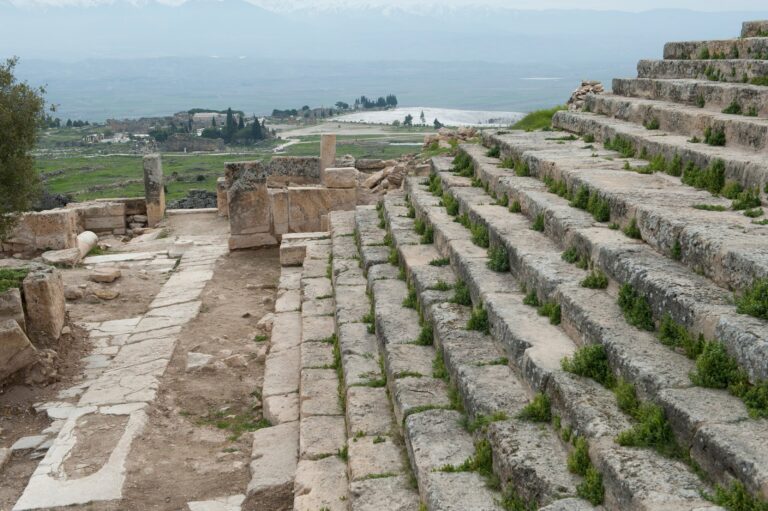
Today Pessinus is a quiet site beside the village. Belgian archaeologists of Ghent University excavated here for many years from 1967. Interestingly, the big temple they studied was not Cybele’s. It was a temple of the emperor cult from about 25 to 35 AD, with a theater-like stairway in front of it. Even in the Mother’s own city, the emperors had moved in.
You see the temple foundations, the stone steps and an open-air display of finds in the village. Two citizens of Pessinus even served as chief priests of the emperor cult in Ancyra, the next stop on this list. Pessinus is a place for travelers who love the deep background of Anatolia, and it fits a longer journey through central Turkey.
7. Temple of Augustus and Rome in Ankara
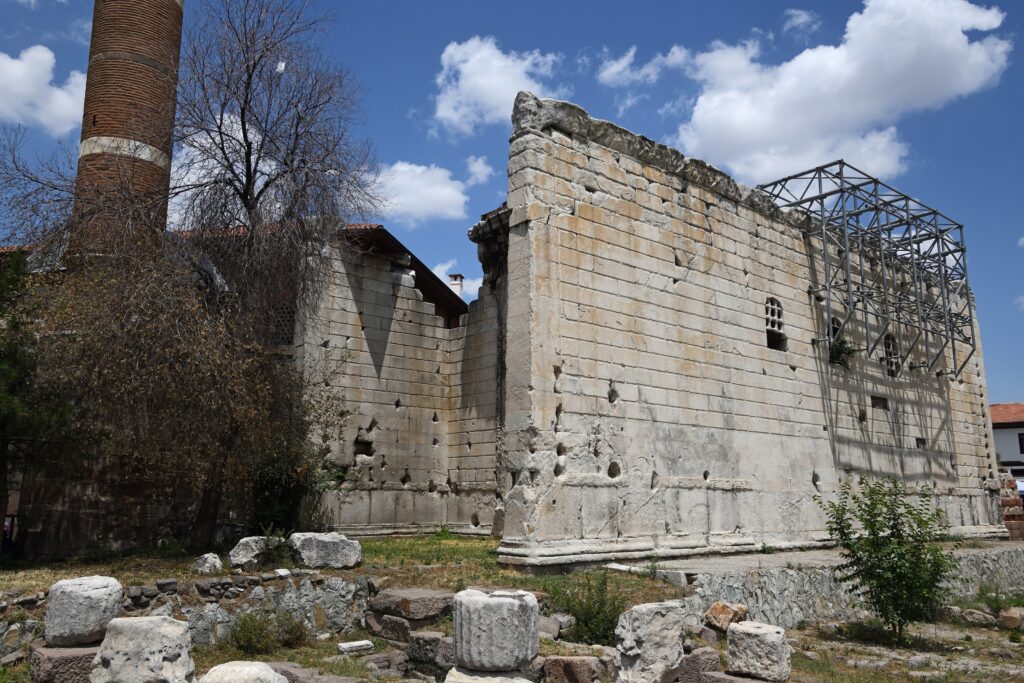
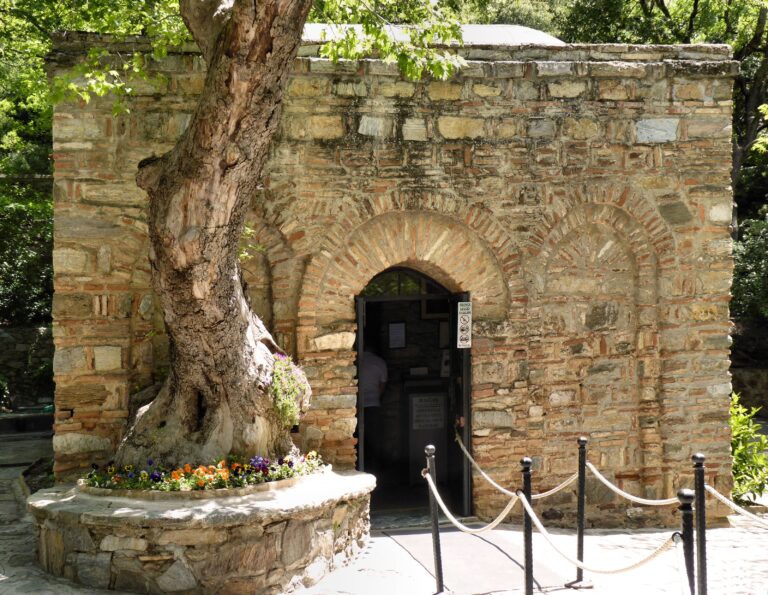
Ancient Ancyra, today’s Ankara, was the administrative center of Roman Galatia. Its Temple of Augustus and Rome dates from about 25–20 BC, and it honored the first emperor together with the goddess Roma, the spirit of the city of Rome. The marble walls of its cella still stand in the Ulus district, right beside the Hacı Bayram Mosque.
Temple is famous for one inscription. After Augustus died in 14 AD, his Res Gestae, his own record of what he achieved, was carved on its walls: in Latin inside the porch and in Greek on an outer wall. The original bronze tablets in Rome are lost, so the Ankara copy is the most complete one we have.
For the Christians of Galatia, this temple stood for the whole imperial order. Augustus called himself divi filius, son of the deified Caesar. Paul wrote to the Galatians about another Son: “the Son of God, who loved me, and gave himself for me” (Galatians 2:20, KJV). Acts says only that Paul went through “the region of Galatia” (Acts 16:6), so we don’t know if he saw Ancyra. Scholars still argue whether his letter went to north or south Galatia.
At the beginning of the 6th century the temple became a church, and in 1427–28 the Hacı Bayram Mosque was built next to it. Please keep it in mind that the Ministry of Culture lists the temple as closed at the moment, so check before you go. Even from beside the mosque you see the high marble walls.
Visiting the Ancient Temples in Turkey Today
Seven places: the great goddess of Ephesus, the altar of Zeus, the healing god, the oracle, the divine emperors and the Mother of the Gods. Each of them asked for a loyalty that the Christians kept for one God. The ruins are beatiful today. However, the pressure they once meant is harder to feel among the broken columns.
That pressure was real. Antipas died in Pergamon (Revelation 2:13), and Polycarp and later Pionius died in Smyrna. Many ordinary believers simply stayed away from the feasts and paid for it with their good name.
The Temple of Artemis fits into an Ephesus day with me. Didyma and Aphrodisias are in Aydın province, and Pessinus and Ankara are in the heart of Anatolia, so they belong to longer journeys. I always tell to my guests that Christian Turkey makes more sense when you also see the pagan sites, and the pagan sites make more sense when you know the Christian story.
Frequently Asked Questions
Where is the Pergamon Altar today?
The frieze and the rebuilt altar are in the Pergamon Museum in Berlin, after excavations that began in 1878. The museum has been closed for renovation since October 2023, and the altar hall reopens on June 4, 2027. The altar’s foundation is still on the acropolis of Pergamon in Bergama.
Is the Temple of Artemis at Ephesus still standing?
Only barely. One column, pieced together from fragments, stands in a marshy field on the edge of Selçuk, with the foundations around it. Some sculpted pieces of the temple are in the British Museum in London.
What was the Temple of Apollo at Didyma used for?
It was the home of a famous oracle. People came to ask Apollo questions, and the answers were given in the temple’s open inner courtyard, by the sacred spring. Before the Great Persecution of 303 AD, Emperor Diocletian also asked this oracle about the Christians.
Did early Christians destroy pagan temples?
Some temples were destroyed, many were closed and left to decay, and others were turned into churches, like the Temple of Aphrodite at Aphrodisias and the Temple of Augustus in Ankara. Most of it happened after the laws of Theodosius I in the 390s. I tell the whole story in my article Pagan to Christian Asia Minor.
Hire Biblical Tour Guide in Turkey
I’m a nationally licensed tour guide living in Kuşadası, nearby Ephesus, and I have been guiding since 2008. My day guiding is in Ephesus, İzmir and Pamukkale, so the Temple of Artemis and the Great Theater of Ephesus fit easily into a day with me.
My national license covers all of Turkey. For Didyma, Aphrodisias, Pessinus or Ankara, I can come with you as your personal guide on a longer journey, while you arrange your transport and hotels yourself or through a licensed travel agency. See my guiding rates and guiding areas or write to me through my contact page.
I hope we will meet one day beside the last column of Artemis and talk about the gods and the saints of this land. Write to me if you need to learn more about the pagan and Christian sites of Turkey. See you soon, Hasan Gülday.