Christian travelers often ask me about Turkey vs Israel: which one should they visit first? The short answer is that the two countries tell two halves of one story. Israel holds the places of the Gospels, where Jesus was born, taught, died and rose again. Turkey holds what came next: the journeys of Apostle Paul, the last years of Apostle John, the Seven Churches of Revelation and the seven ecumenical councils.
Add Tours Around Turkey as a preferred source on Google
My name is Hasan Gülday. I’m a nationally licensed Turkish tour guide based in Kuşadası, nearby Ephesus, and I have been guiding since 2008. I cannot describe Israel the way a licensed Israeli guide can. However, I have visited Israel for biblical study, and “which one first?” is a question my guests ask me regularly.
So this article is a friendly side-by-side comparison, not a contest. Both lands are holy to Christians, and both deserve a visit. Let’s have a look at what each country offers, and how they differ in travel, cost, official advisories and atmosphere.
Christian Sites in Israel
Holy Land is the landscape of the Gospels. Jerusalem, Bethlehem, Nazareth and the Sea of Galilee are the real places behind the Bible text, and they lie close together. Israel is a small country, and Turkey is many times larger. That is why the distances between the holy places of Israel are short and one week there can cover a lot.
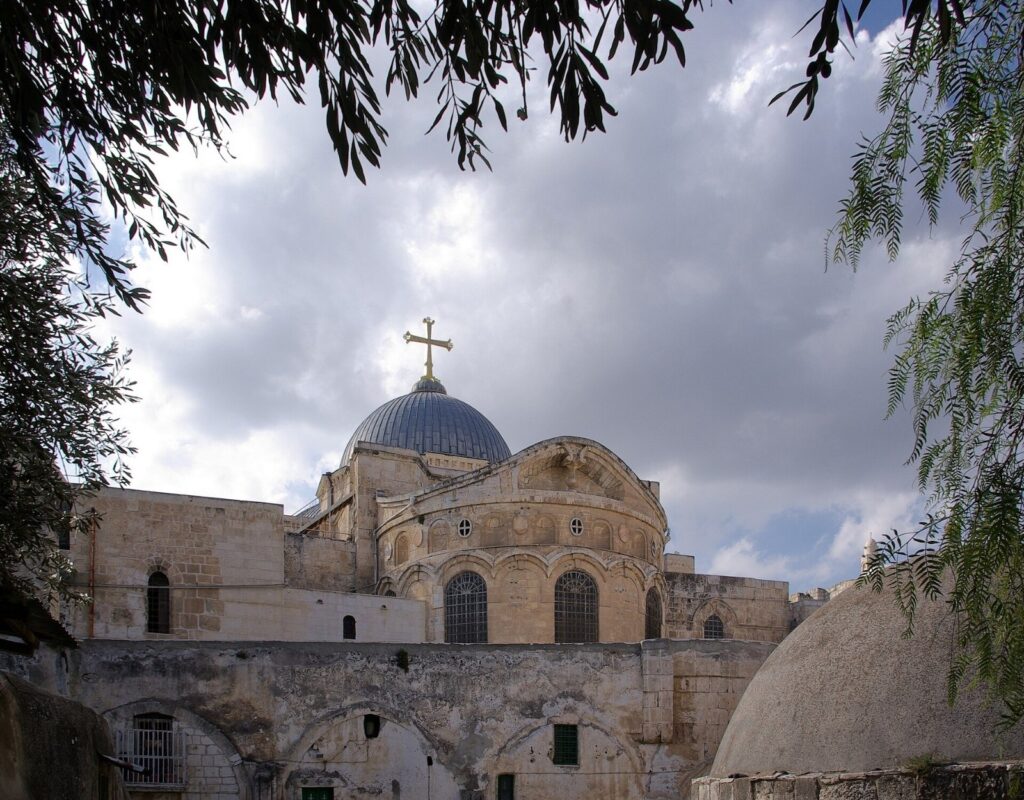
In Jerusalem, the Church of the Holy Sepulchre holds both the traditional place of the Crucifixion, called Golgotha or Calvary, and the tomb of Jesus. Several churches share the building under an old arrangement known as the Status Quo, among them the Greek Orthodox, the Roman Catholic and the Armenian Apostolic churches. The Via Dolorosa, the Way of the Cross, ends inside it.
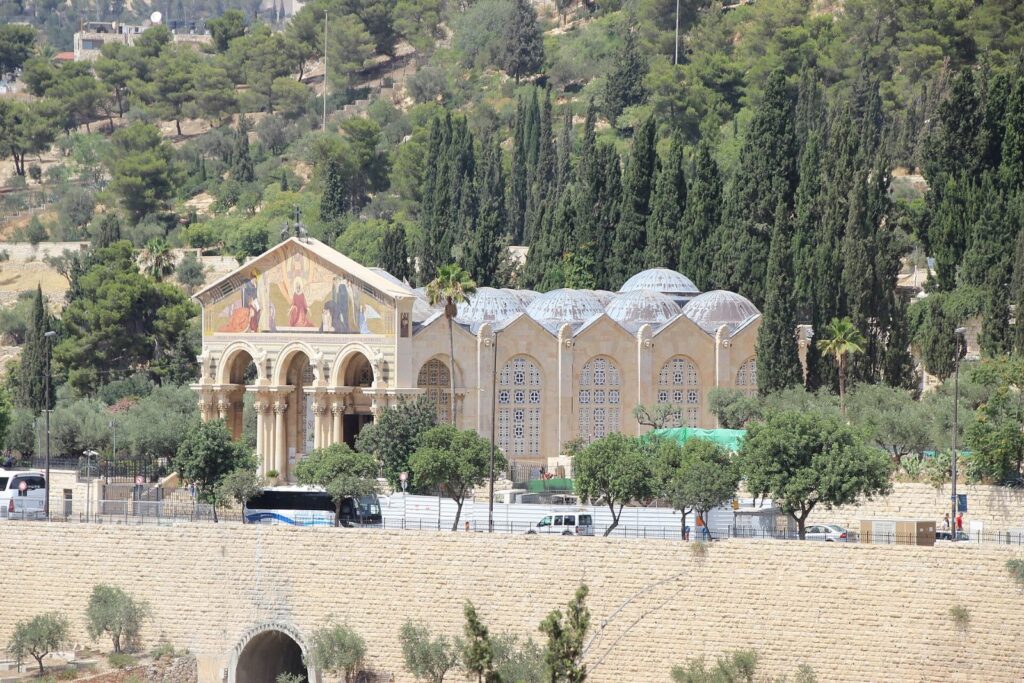
East of the Old City, at the foot of the Mount of Olives, lies the Garden of Gethsemane, where Jesus prayed on the night of his arrest. Beside its old olive trees stands the Church of All Nations, completed in 1924 and designed by the Italian architect Antonio Barluzzi.
Bethlehem lies in the West Bank, about 10 kilometers south of Jerusalem. Its Church of the Nativity stands over the grotto that tradition holds as birthplace of Jesus. The first church here was built under Constantine in the 4th century, and the present building goes back to Emperor Justinian in the 6th century. UNESCO listed it as a World Heritage Site in 2012.
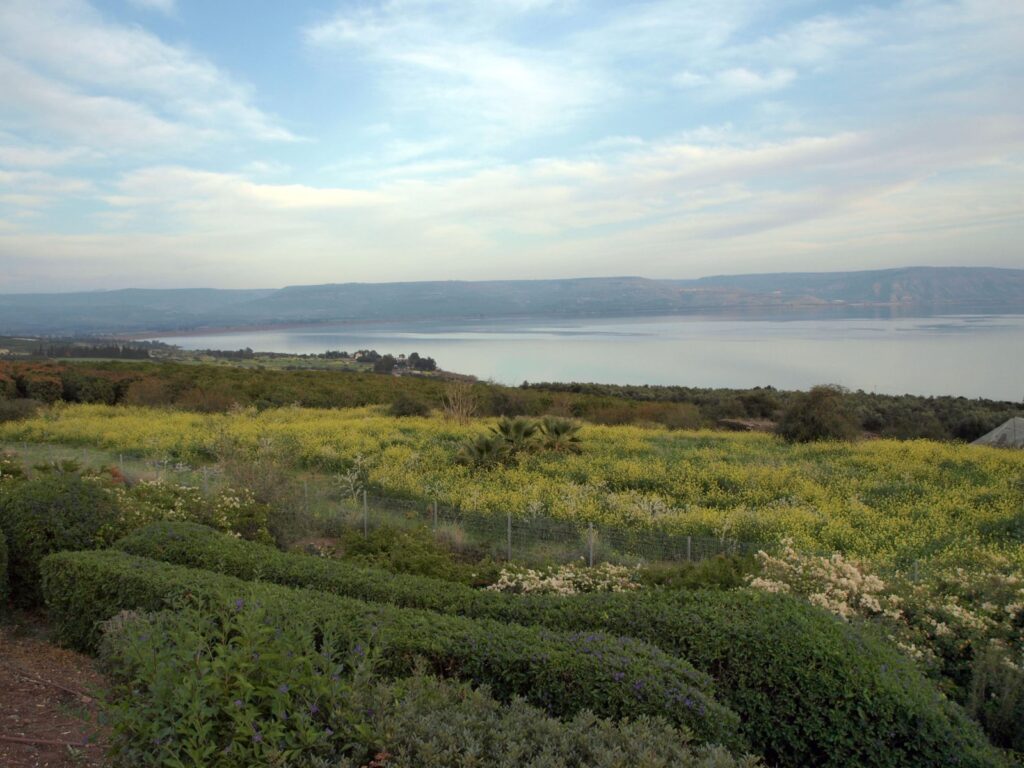
In Nazareth, the Basilica of the Annunciation, consecrated in 1969, stands over the traditional place where the angel Gabriel came to Mary (Luke 1:26–38). Around the Sea of Galilee, Gospel story feels very close. On the Mount of Beatitudes, tradition places the Sermon on the Mount, and its church was built in 1938, also by Barluzzi.
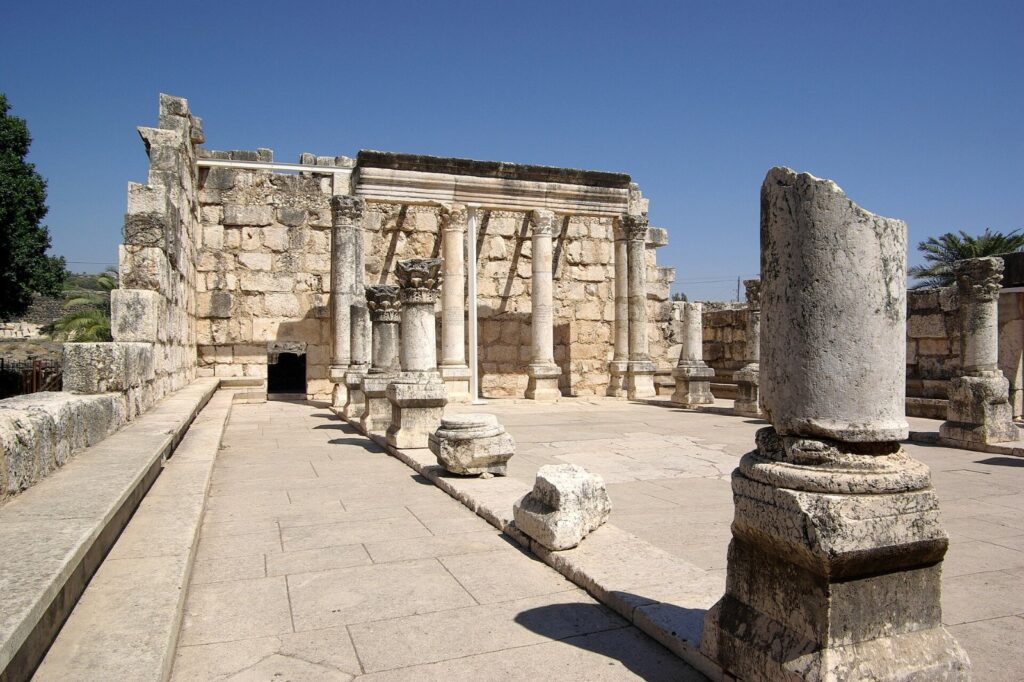
Capernaum was the town Jesus made his home during his ministry in Galilee (Matthew 4:13). Today you see the white limestone synagogue from the 4th or 5th century, and a modern church raised above an octagonal 5th-century church, built over the house that tradition calls the House of Peter.
Many biblical sites in Israel belong to the Old Testament too. Jerusalem was the city of King David and of the Temple. Megiddo, Hazor and Beersheba, the place of Abraham’s well (Genesis 21:31), are on the UNESCO list as the Biblical Tels. Masada, Herod’s fortress above the Dead Sea, belongs to later Jewish history: it was the last stand of the Jewish rebels against Rome in 73 or 74 AD.
Christian Sites in Turkey
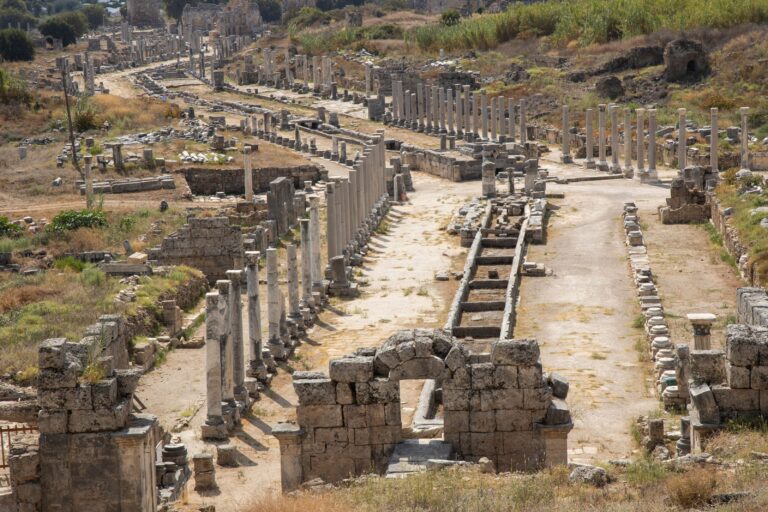
Turkey keeps the chapters that come after the Gospels. A large part of the Acts of the Apostles, after the first chapters in Jerusalem, takes place in Asia Minor, today’s Turkey, before the story moves on to Greece and Rome. Apostle Paul was born in Tarsus (Acts 22:3). In Antioch, today’s Antakya, the disciples were first called Christians (Acts 11:26). Read more in my article on Apostle Paul in Turkey.
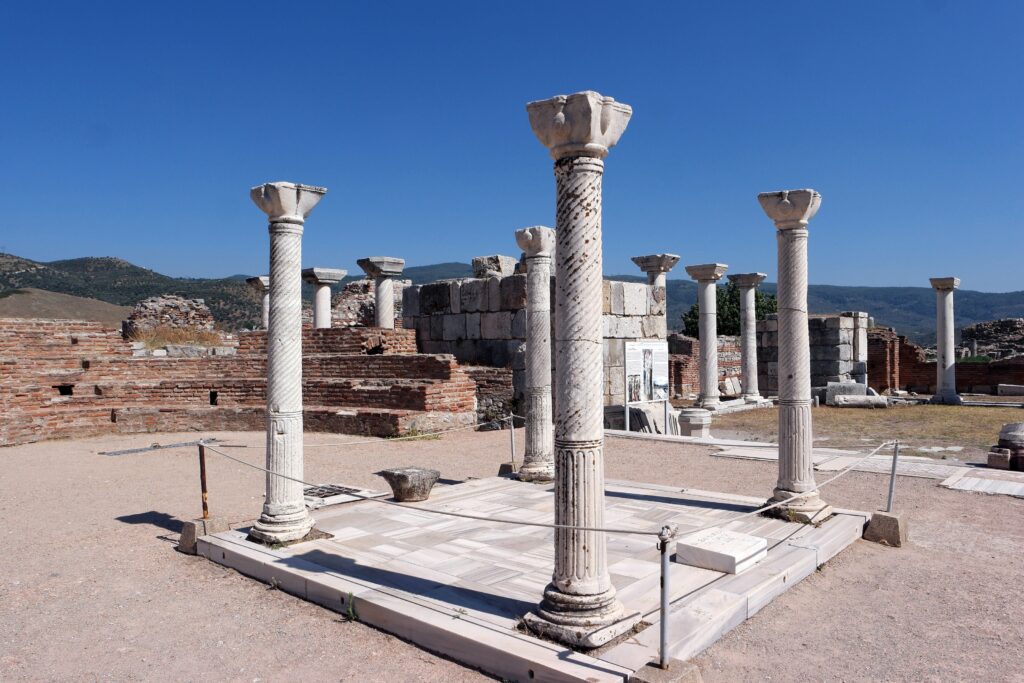
Paul preached in Pisidian Antioch near Yalvaç, in Iconium, Lystra and Derbe, and he spent about three years in Ephesus (Acts 20:31). Tradition says Apostle John spent his last years in Ephesus and was buried there. Emperor Justinian built the great Basilica of Saint John over his tomb in the 6th century, and the Ayasuluk Fortress on the hill above it is also open to visitors too.
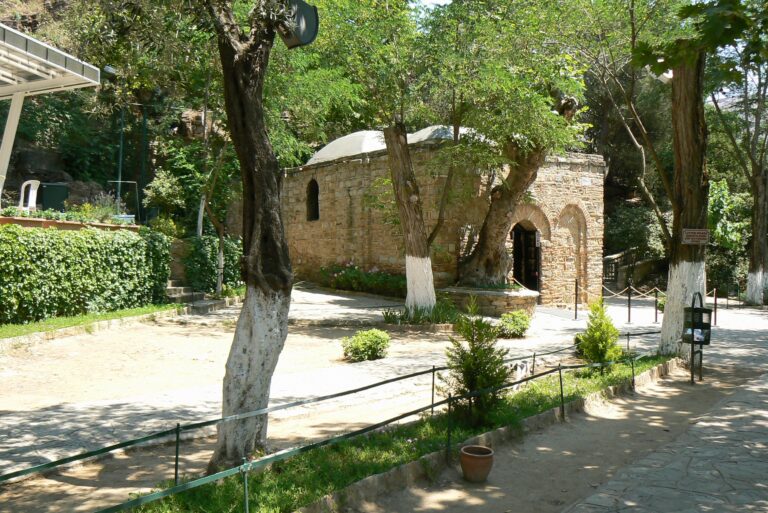
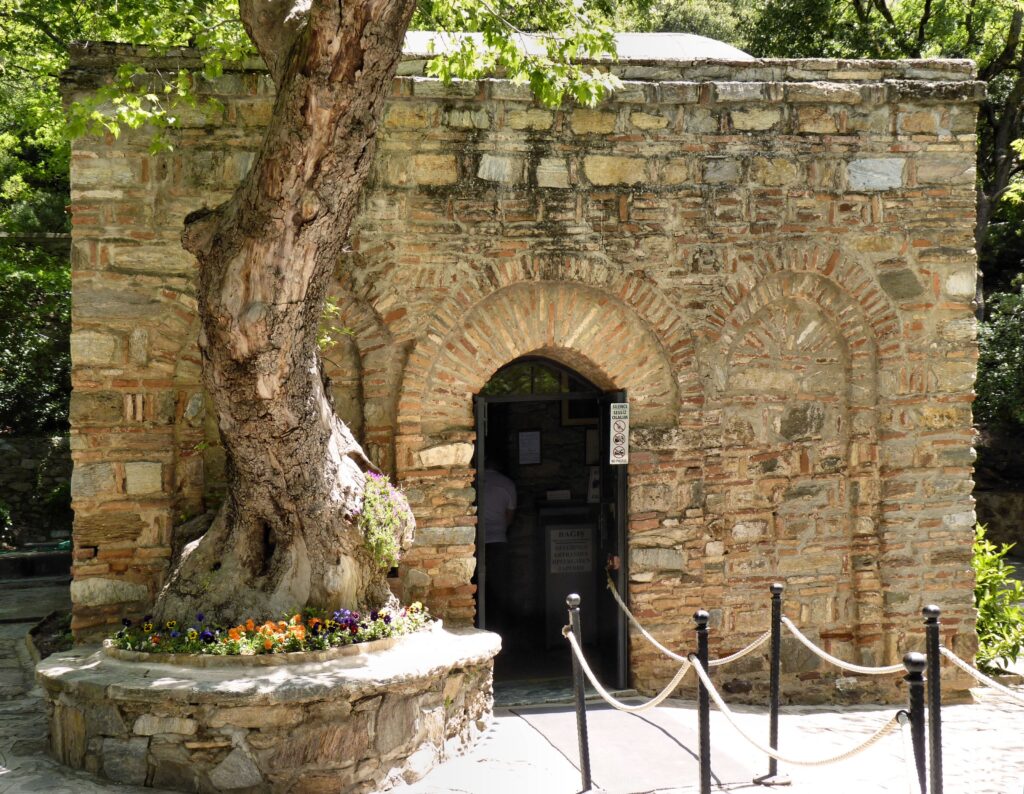
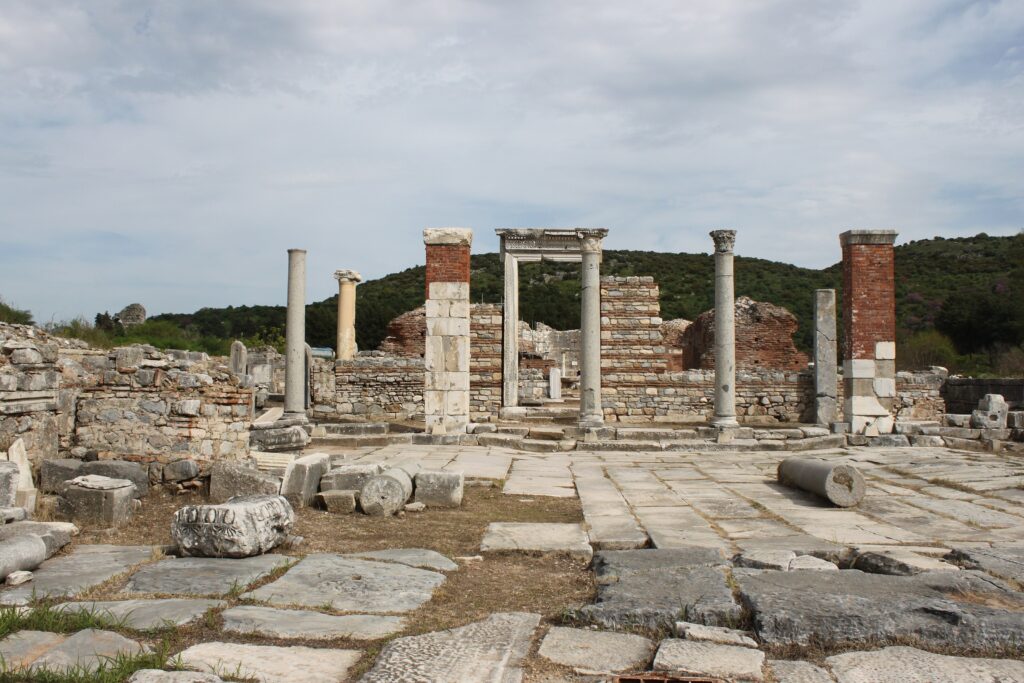
Nearby Ephesus, the House of the Virgin Mary on Mount Koressos is the traditional place where Mary spent her last years in John’s care. Three popes have visited it: Paul VI, John Paul II and Benedict XVI. In Ephesus Ancient City, the Church of Mary is where the Council of Ephesus of 431 met and called Mary Theotokos, the Mother of God.
All Seven Churches of Revelation are in western Turkey: Ephesus, Smyrna, Pergamon, Thyatira, Sardis, Philadelphia and Laodicea. The Greek island of Patmos, where John received his visions, lies infront of the Turkish coast. My introduction to the Seven Churches of Revelation and my article on how John wrote Revelation on Patmos tell this story.
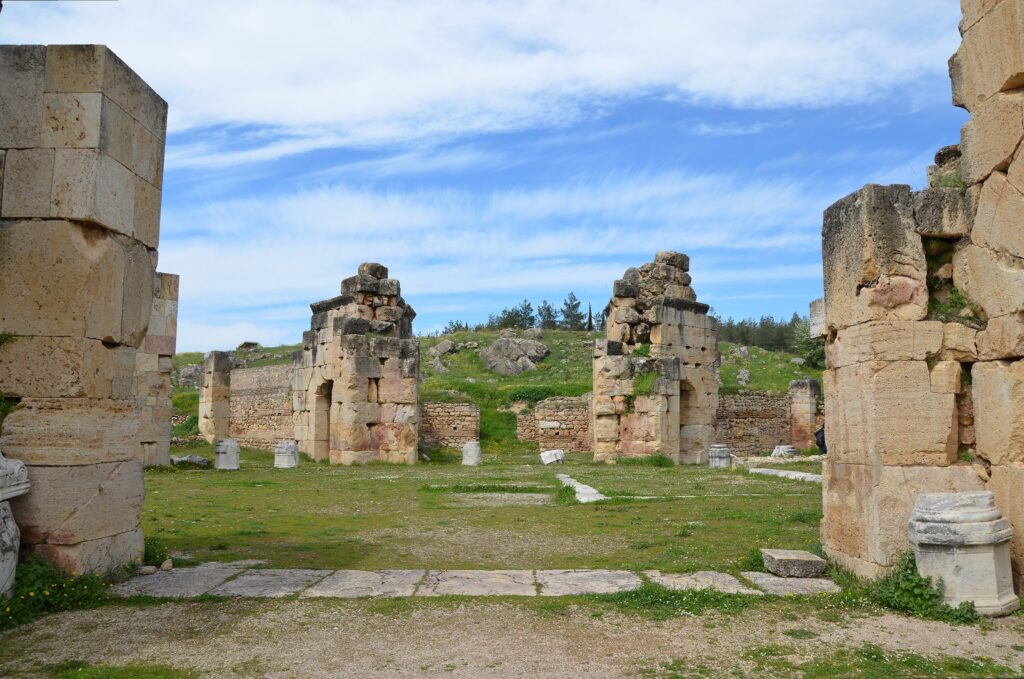
At Hierapolis, above the white terraces of Pamukkale, an Italian team led by Professor Francesco D’Andria announced in 2011 what they believe is the tomb of Apostle Philip, in a church about 40 meters from his octagonal Martyrium. You can read his story in my article on the Martyrium of Saint Philip.
On the south coast, in Demre, ancient Myra, the Church of Saint Nicholas keeps the place where he was first buried, although his relics were taken to Bari in Italy in 1087. Apostle Paul also changed ships at Myra on his voyage to Rome (Acts 27:5–6).
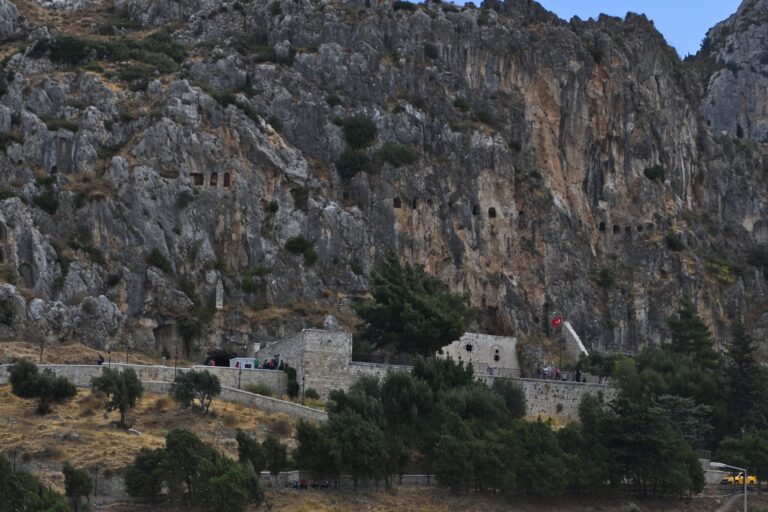
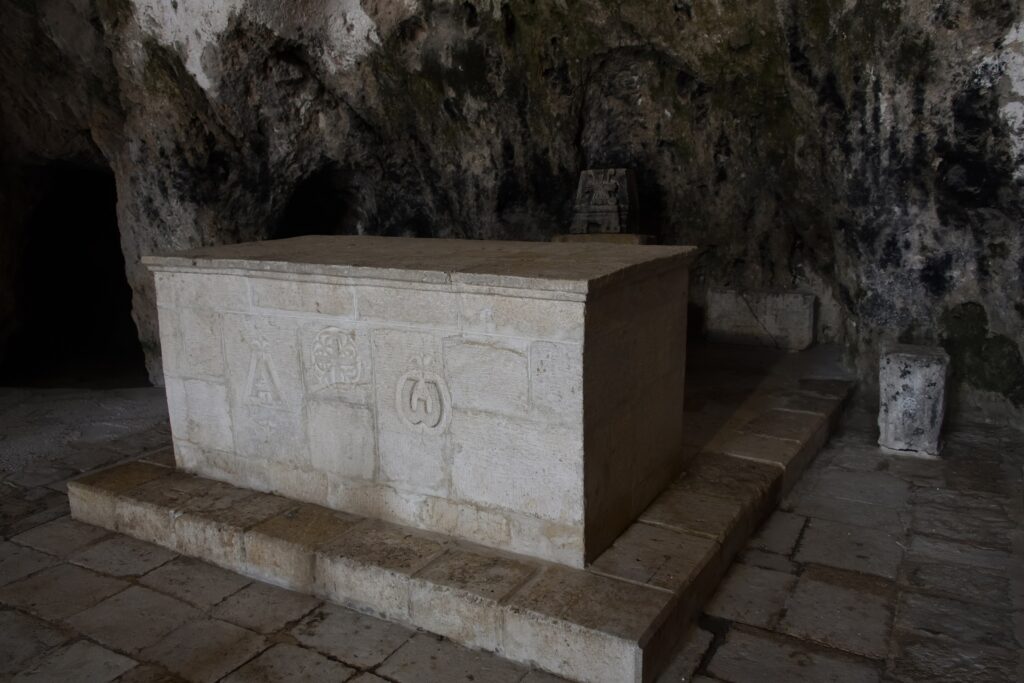
In Antakya, the cave Church of Saint Peter is linked by tradition with the first Christian community of Antioch, and it is often called one of the oldest rock churches in the world. The 2023 earthquakes did it only minor damage, and local Christians gathered there for Christmas Eve in 2025.
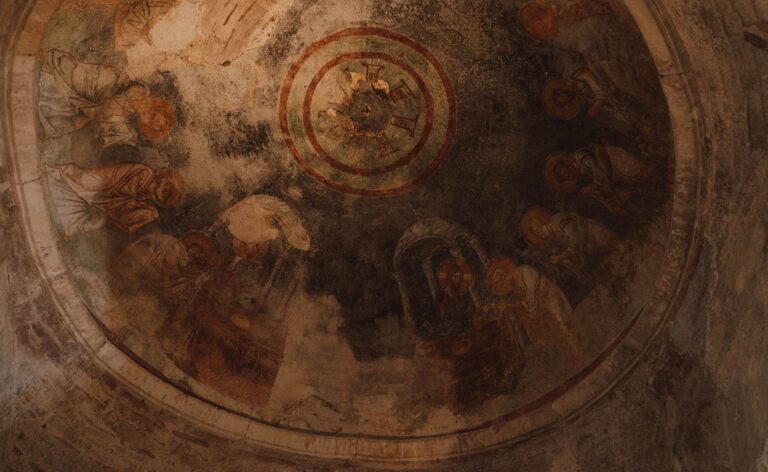
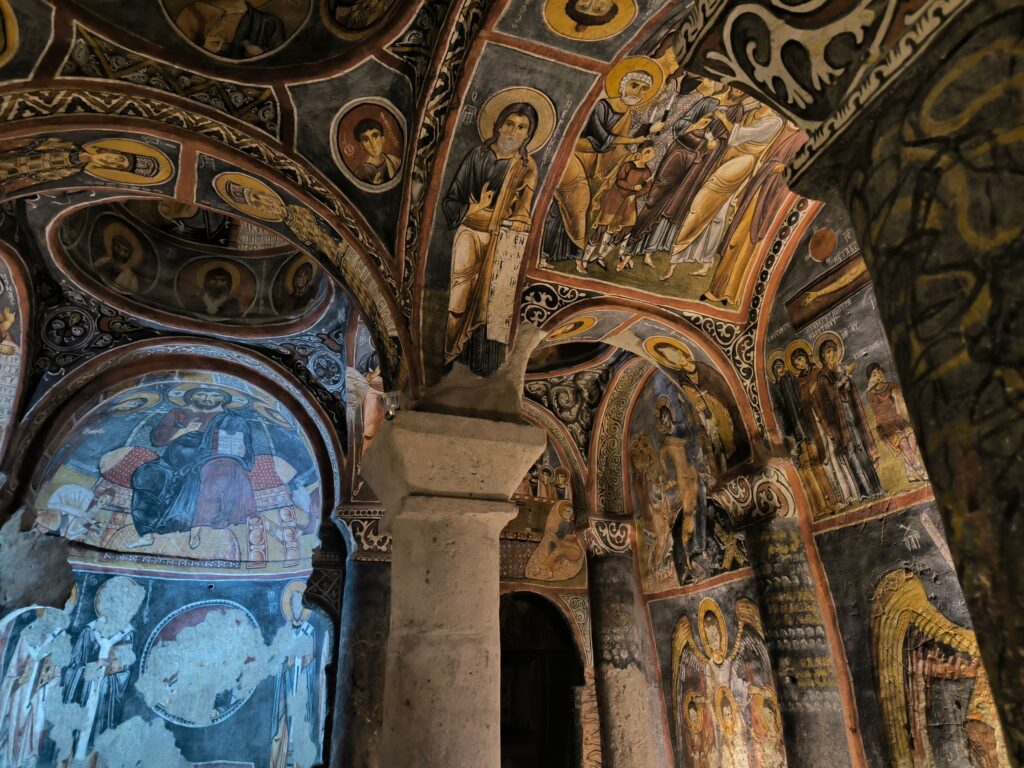
In Cappadocia, many rock-cut churches keep their Byzantine frescoes, and Göreme has been a UNESCO World Heritage Site since 1985. Cappadocia was also home to the Cappadocian Fathers: Basil the Great, Gregory of Nazianzus and Gregory of Nyssa.
All seven ecumenical councils met in today’s Turkey: Nicaea (İznik) in 325 and 787, Constantinople (Istanbul) in 381, 553 and 680–681, Ephesus in 431 and Chalcedon (Kadıköy) in 451. The Nicene Creed and the teaching on the Trinity and on the two natures of Christ were defined here. The Ecumenical Patriarchate still has its seat in Fener district of Istanbul.
Turkey has Old Testament places as well. Abraham lived in Harran before he went to Canaan (Genesis 11:31–12:4), and later Jacob went there to find his wife (Genesis 29). Local tradition in Şanlıurfa honors Abraham’s birthplace. The ark rested “upon the mountains of Ararat” (Genesis 8:4), and the Tigris and Euphrates, two rivers of Eden in Genesis 2:14, both rise in eastern Turkey.
By the way, Ephesus has a Jewish heritage too. Menorahs are carved on its stones, and I talked about them in my article in the Jerusalem Post. For a longer list of places, see my top 18 sacred attractions and routes in Turkey.
Getting Around Turkey and Israel
Both countries have big international airports: Istanbul Airport for Turkey, and Ben Gurion Airport near Tel Aviv for Israel. For Turkey or Israel, the entry rules depend on your passport. Since January 1, 2025, visitors who do not need a visa for Israel must get an Electronic Travel Authorization (ETA-IL) online before they travel. For Turkey, some nationalities need no visa for a short stay and others apply for an e-Visa on the official site.
Inside Israel the distances are short. Tel Aviv to Jerusalem is about 60 kilometers, and Jerusalem to Nazareth about 145. Some travelers stay in Jerusalem and see the main sites on day trips, then move to north for Galilee. Turkey is a big country. Istanbul, Cappadocia and Ephesus are hundreds of kilometers apart, so most travelers use domestic flights in between the regions.
Practical lesson is simple. With only one week, Israel lets you see the main Gospel sites without long drives. In Turkey, one week is enough for one or two regions, for example Istanbul and the Aegean coast with Ephesus. With two or three weeks Turkey opens up, and with a month you can see both countries well. My guide to Christian Turkey for first-time visitors helps with planning.
Costs in Turkey and Israel
I will not give you hotel, meal or flight prices here. They change quickly in both countries and depend to the season, so please compare current prices for your own dates. What I can give you are official entrance fees, because the governments publish them.
In Turkey, the Ministry of Culture and Tourism sets the tickets for state museums and archaeological sites, and foreign visitors pay in euros. On October 17, 2026, the list of the İzmir culture directorate showed 40 euros for Ephesus Ancient City (with its digital experience museum), 15 euros extra for the Terrace Houses, and 6 euros for the Basilica of Saint John on Ayasuluk Hill.
In Israel, many sites such as Masada and Caesarea are national parks run by the Israel Nature and Parks Authority, which publishes its current fees on its official site. The great churches are active places of worship. In both countries a licensed private guide is a separate cost, and you can see my own rates on my guiding rates page.
Safety and Travel Advisories
I’m a tour guide, not a security expert, so here I only report what the official government advisories say, with the date I checked them. Advisories can change from one day to the next. Please read the current versions before you plan or pay for anything, and check them again before you travel.
The US State Department, checked on October 17, 2026: its advisory for Israel is Level 3, “Reconsider Travel” (reissued August 25, 2026). It marks some areas Level 4, “Do Not Travel”: near the Gaza Strip, near the Egyptian border and in parts of the north, defined by road numbers. The West Bank, where Bethlehem is, has its own advisory, also at Level 3.
Its advisory for Türkiye is Level 2, “Exercise Increased Caution” (June 8, 2026), and it says not to travel to the border region with Syria and Iraq.
The UK Foreign Office (FCDO), checked the same day: its Israel page (updated July 22, 2026) advises against all travel or all but essential travel to some areas, among them Gaza, the area next to the Gaza border, parts of the West Bank and some northern border areas.
Its Turkey page (updated October 15, 2026) advises against all travel within 10 kilometers of the Syrian border. Both pages note regional tensions and tell travelers to be prepared for flight cancellations and airspace closures.
For Christian travelers, two details matter. In Israel, read the West Bank sections if you plan Bethlehem, and the northern areas if you plan Galilee. In Turkey, read the border sections if you plan Antakya, Şanlıurfa or Harran, because their provinces border Syria. The FCDO also warns that your travel insurance can become invalid if you travel against its advice.
Atmosphere at the Holy Places
The feeling of a visit is different in two countries. The main holy places of Israel are living churches. Services, processions and prayers go on through the day, and you share these places with pilgrims from all over the world. Every Friday the Franciscans lead a procession along the Via Dolorosa. It is an intense and moving experience.
In Turkey, most Christian sites are archaeological sites and museums. You walk among the ruins of Ephesus, Laodicea or Sardis, read the letters written to these churches, and imagine the first believers in their streets. It feels more quiet and contemplative. Mass is still celebrated at the House of the Virgin Mary, and churches in Istanbul and İzmir hold regular services.
Ephesus gets busy in Summertime, but many other sites are calm, and in the east you meet far fewer visitors. I recommend my guests to bring a Bible to Ephesus, because Acts 19 reads differently in the Great Theater where the silversmiths’ riot took place. Both atmospheres have their gifts, and different people respond to them in different ways.
Which Country Fits Which Traveler
- The Gospels: Israel first. Bethlehem, Nazareth, Galilee and Jerusalem are where the Gospel story happened.
- Apostle Paul: Turkey. Tarsus, Antioch, Pisidian Antioch, Iconium, Lystra, Derbe and Ephesus are here, from Acts 13 to Acts 20.
- Apostle John and Revelation: Turkey, with the Seven Churches, John’s tomb in Selçuk and a day on Patmos.
- The Virgin Mary: both. Nazareth and Bethlehem in the Holy Land, the House of the Virgin Mary and the Council of 431 in Ephesus.
- Church history and the councils: Turkey, where all seven ecumenical councils met. The Holy Land has the Council of Jerusalem of Acts 15.
- The Old Testament: both, with different stories. Jerusalem, Megiddo, Hazor and Beersheba in Israel; Harran, Ararat and the sources of the Tigris and Euphrates in Turkey.
- Orthodox Christians: both. The Ecumenical Patriarchate is in Istanbul and the Cappadocian Fathers served in Cappadocia, while the Greek Orthodox Patriarchate of Jerusalem shares the Church of the Holy Sepulchre.
Combining Both Countries
Some biblical travelers combine the two countries in one journey. Please check the flights first. Direct flights between Turkey and Israel were canceled in October 2023, and in April 2025 Turkish Airlines and Pegasus gave up their slots at Ben Gurion Airport. On October 17, 2026, I could not find a scheduled direct flight between the two countries, so plan to connect through a third country, and check with the airlines, because routes change.
Combined journey needs time. As a rough guide, plan around ten days for the Holy Land and ten to fourteen days for Turkey, so about three weeks in total. You arrange your own flights and hotels, or a licensed travel agency does it for you. On the Turkey side, I can join you as your guide.
In my opinion the order works best with Israel first and Turkey second. The story is chronological: first the Gospels, then the spread of the Church through Asia Minor. The geography follows too, it goes from east to west, the same way the Gospel traveled toward Rome.
Turkey vs Israel for a First Trip
When it comes to Turkey vs Israel for a first biblical journey, my honest opinion, even as a Turkish guide, is to visit Israel first. The Gospels are the foundation. When you have stood in Bethlehem, Nazareth and Jerusalem, you understand better what Paul and John carried to Asia Minor. Then come to Turkey and follow the story onward.
If your heart is with Apostle Paul, the Book of Revelation or the early Church, Turkey can come first. Either way, the choice is not really either-or. I believe every Christian traveler who sees one of these lands will want to see the other one day.
Frequently Asked Questions
What Christian sites are in Israel?
The best known Christian sites in Israel are the Church of the Holy Sepulchre, the Via Dolorosa and the Garden of Gethsemane in Jerusalem, the Basilica of the Annunciation in Nazareth, and the Mount of Beatitudes and Capernaum by the Sea of Galilee. The Church of the Nativity in Bethlehem is in the West Bank, about 10 kilometers south of Jerusalem.
Is Turkey part of the Holy Land?
No. The Holy Land usually means the Bible lands around the Jordan River, from the Mediterranean coast to the eastern bank of the Jordan. However, many books of the New Testament were written to or from places in today’s Turkey, among them Galatians, Ephesians, Colossians, 1 Corinthians (written from Ephesus) and the letters to the Seven Churches in Revelation.
Are there direct flights between Turkey and Israel?
Not at the time of writing. Direct flights stopped in October 2023, and Turkish Airlines and Pegasus gave up their Tel Aviv slots in April 2025. On October 17, 2026, I found no scheduled direct flight, so travelers connect through a third country. Check with the airlines when you plan, because this can change.
How far is Turkey from Israel?
Istanbul and Tel Aviv are a little over 1,100 kilometers apart in a straight line, and Antalya on the Turkish Mediterranean coast is about 650 kilometers from Tel Aviv. The two countries do not share a border. On land, Syria and Lebanon lie between them, and across the sea, Cyprus.
Hire Biblical Tour Guide in Turkey
I’m a nationally licensed Turkish tour guide, and I work as a guide only. I don’t sell tours, packages or travel, in Turkey or in Israel. You arrange your flights, transport and hotels yourself or through a licensed travel agency, and you hire me as your guide for the Turkey part of your journey.
My day guiding is in Ephesus, İzmir and Pamukkale. My license is valid all over Turkey, so elsewhere I can join you as your personal guide on a longer journey. You can see my guiding rates and guiding areas or write to me through my contact page with your dates and questions.
Israel and Turkey are both blessed lands for a Christian traveler, and I hope you will see both of them one day. When you come to Turkey, I hope we will walk the marble streets of Ephesus together. You can always write to me with your questions about Christian Turkey. See you soon, Hasan Gülday.