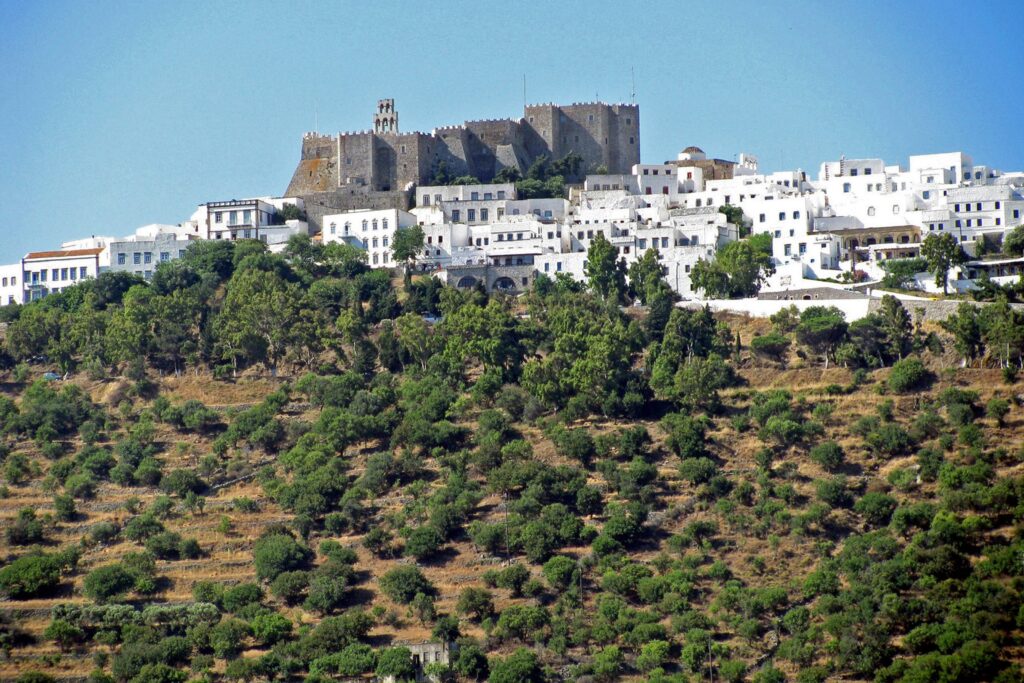
Christians have read the seven letters of Revelation for almost two thousand years, and the letters still shape how the church sees itself. The legacy of the seven churches has three parts: a text that survived, cities and communities that are still there in some form, and lessons from the seven churches that every generation finds again. Let’s have a look at them one by one.
This is the last article in my Seven Churches series, which started on Patmos and ended in the lukewarm city of Laodicea. I will not explain each letter again, you can find them in my introduction to the seven churches, in the story of how John wrote Revelation on Patmos, and in the posts on each church that are linked in the sections below.
Why are short messages written by John on a small Aegean island around 95 AD still read in churches today? I believe the answer is larger and more current than most of us realize. Briefly, but seriously, here it is.
The Survival of the Text
The first legacy is simple. The text survived, and that was never guaranteed. Many early Christian writings are lost. Paul speaks of “the epistle from Laodicea” (Colossians 4:16) and of an earlier letter to Corinth (1 Corinthians 5:9). Scholars generally count both as lost, although some think the Laodicean letter is one we already have. In 3 John 9 the Elder also mentions a letter to a church that nobody has seen.
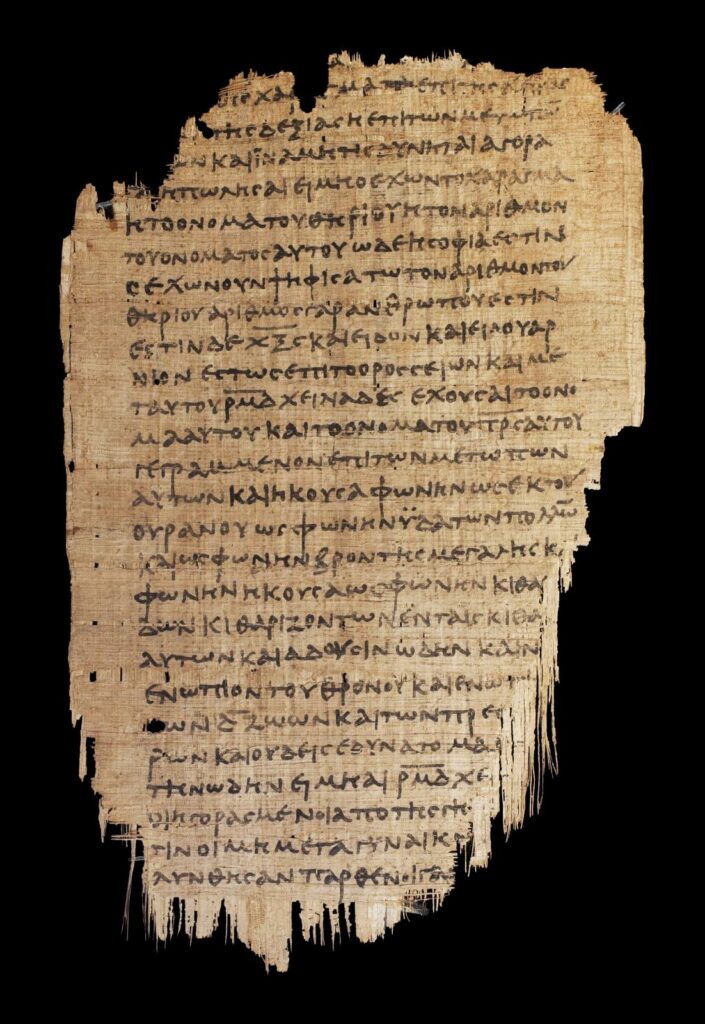
Revelation survived, but in fewer copies than any other New Testament text: 310 manuscripts in total as of 2020. One of the oldest is Papyrus 47 from the early 3rd century, now in the Chester Beatty Library in Dublin, which holds Revelation 9 to 17. Two great Greek Bibles, the 4th-century Codex Sinaiticus and the 5th-century Codex Alexandrinus, both contain Revelation.
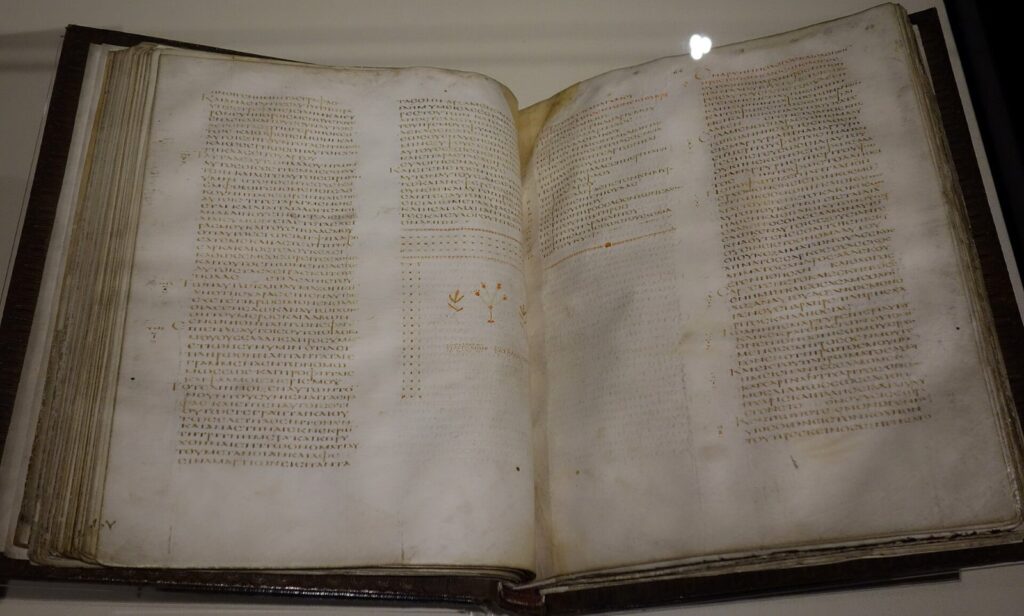
Codex Alexandrinus even has a chapter in Turkish history. In the 17th century Patriarch Cyril Lucaris brought it from Alexandria to Constantinople, today’s Istanbul, and it was then given to King Charles I of England. Today Alexandrinus and Sinaiticus are both on display in the British Library in London.
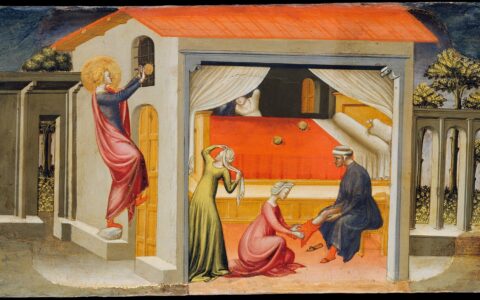
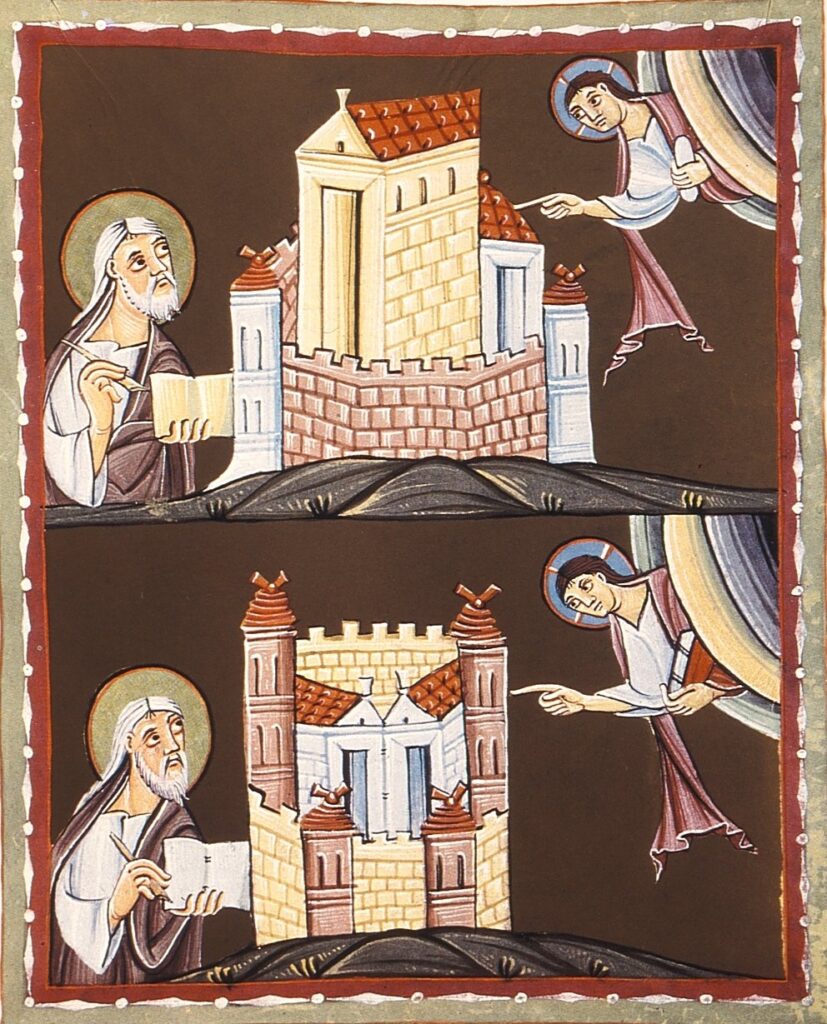
In Middle Ages monks copied and illustrated the book again and again. One example is the Bamberg Apocalypse, made at the monastery of Reichenau between the years 1000 and 1020. Our picture shows John writing to Sardis and Philadelphia, each city drawn as walled town.
The Canon Debate About Revelation
However, the book almost did not make it into the Bible. Revelation was among the last books accepted into Christian canon. Around 330 Eusebius of Caesarea listed it among the accepted books and also among the rejected ones, “if it seem proper”, because some Christians accepted it and others did not. The Council of Laodicea in the 360s left it out of its list. By the way, that council met in one of the seven cities itself.
In the West the debate closed first. Athanasius of Alexandria listed Revelation in 367, and the synods of Hippo in 393 and Carthage in 397 counted it as canonical. In the East the doubts lasted for many centuries. The old Syriac Peshitta Bible left Revelation out, and it was added only in the Harklean version of 616.
Even today Revelation is the only New Testament book that is not read on the Divine Liturgy of the Eastern Orthodox Church, although Roman Catholic and Protestant services include it. Martin Luther wrote in 1522 that it was “neither apostolic nor prophetic”, and he spoke much more kindly of it in 1530. So the survival of the text was a long road.
The Geographic Legacy
The second legacy is the places. This is something I always tell my guests: we are walking in the same cities. The seven cities are real, and you can visit them. However, I want to be careful with the phrase “the same stones”, because much of what you see today is younger than the letters, which were written around 95 AD.
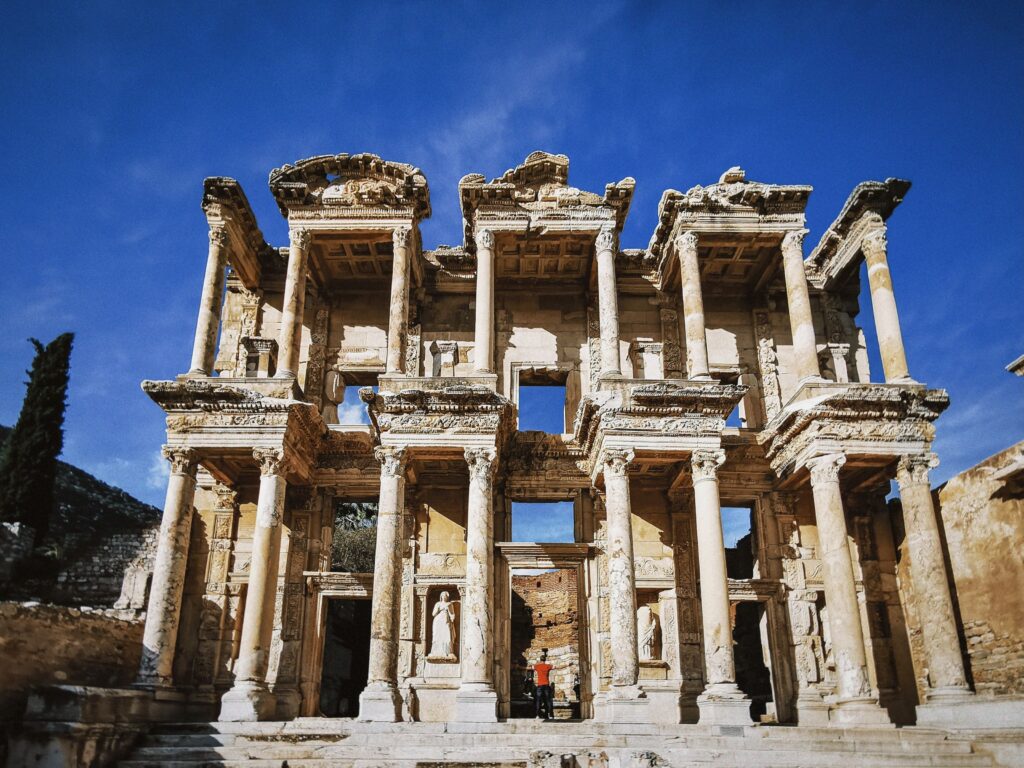
Look at some examples. The Library of Celsus in Ephesus was commissioned in the 110s and finished under Emperor Hadrian, and archaeologists re-erected its facade between 1970 and 1978. I wrote about the excavations and restorations of the Celsus Library in another article. Some famous pieces are not even in Turkey: the relief panels of the Pergamon Altar, which stood on the acropolis of Pergamon in John’s time, are today in Berlin.
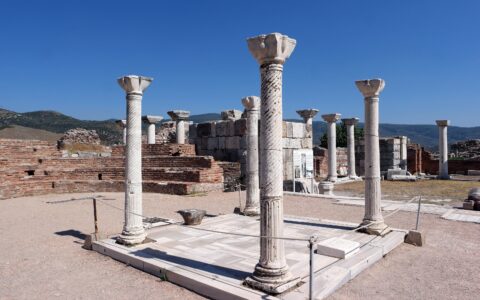
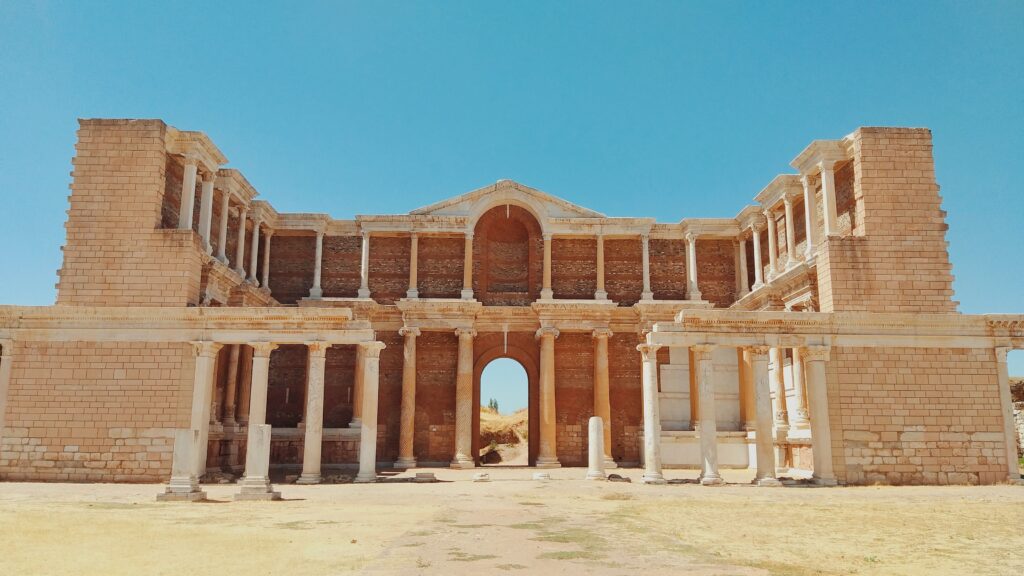
In Smyrna the Roman agora was ruined by an earthquake in 178 AD, and Emperor Marcus Aurelius ordered its reconstruction. In Sardis, a Harvard and Cornell expedition began digging in 1958 and restored the Roman bath and gymnasium complex with its Marble Court. You can read more in my posts on the Smyrna agora excavations and on Sardis.
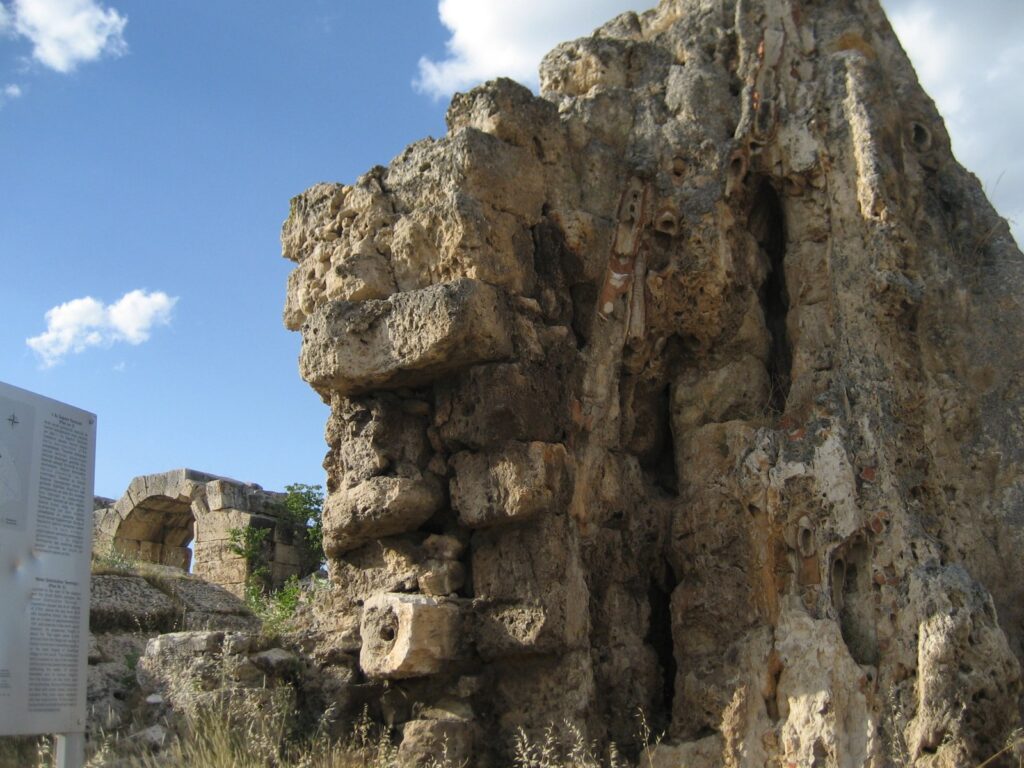
At Laodicea water came by pipeline from springs about eight kilometers south of the city, through pipes of travertine and clay and an inverted siphon that the UNESCO tentative list calls unique in Anatolia. The water was rich in lime, and the old water tower still shows thick lime deposits. Read more in my article on Laodicea and the lukewarm church.
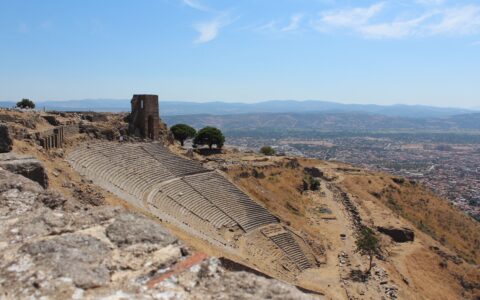
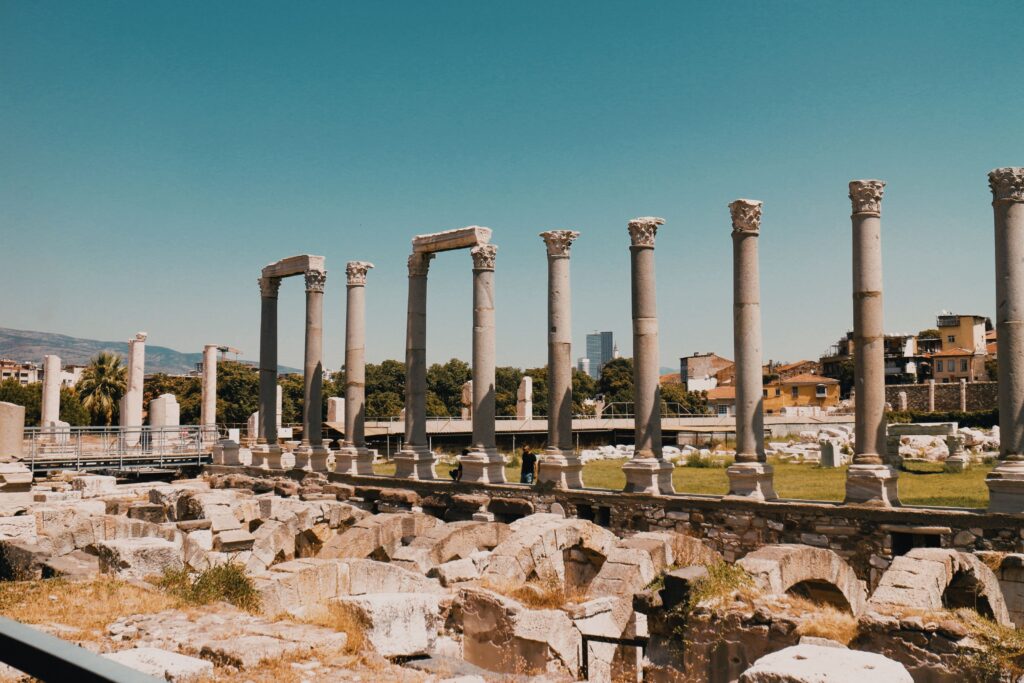
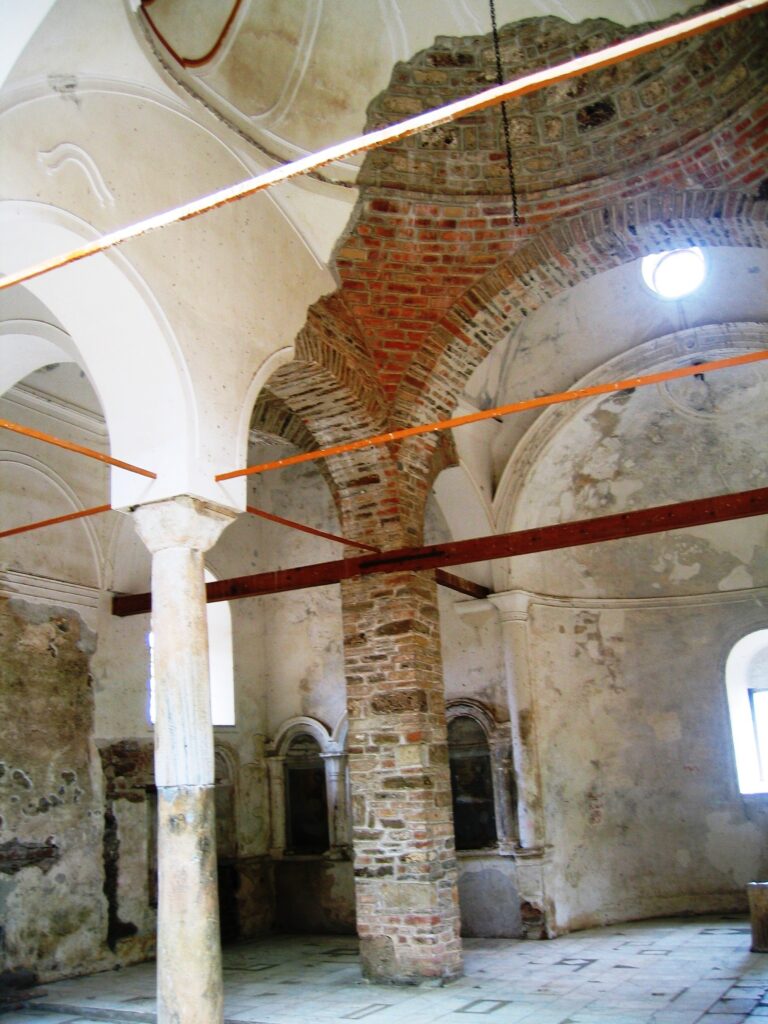
Three of the seven cities are different. Smyrna, Thyatira and Philadelphia are laying under living towns: İzmir, Akhisar and Alaşehir. In İzmir the agora sits in the middle of a modern city, and in Alaşehir the great piers of a Byzantine church stand between houses. Ephesus, Sardis and Laodicea are large excavated sites, and the acropolis of Pergamon rises above modern Bergama.
Still, the hills, the springs, the roads and the climate are the same. The acropolis of Smyrna stood on Mount Pagos, so the view from Kadifekale in İzmir is a view that Polycarp could have known. For a modern reader I find this a strong connection. It is not just an idea also a physical place.
The Theological Legacy
The third legacy is theological. The letters shaped Christian thought in four clear ways. First, the church is plural. The text has seven churches in different cities, with different problems and different messages. Yet every letter repeats the same line: “He that hath an ear, let him hear what the Spirit saith unto the churches” (Revelation 2:7). Plural again. A message to one city is meant for all.
Second, inspection. Christ is the one who “walketh in the midst of the seven golden candlesticks” (Revelation 2:1). In the King James text the phrase “I know thy works” appears in every one of the seven letters. A community is never alone and never unseen. Its Lord knows what it does.
Third, self-criticism. Only Smyrna and Philadelphia receive no rebuke. The other five are criticized for problems inside the church: lost love, compromise, a false prophetess, a name without life and comfortable lukewarmness. A church that reads these letters learns to look at itself before it looks to the world.
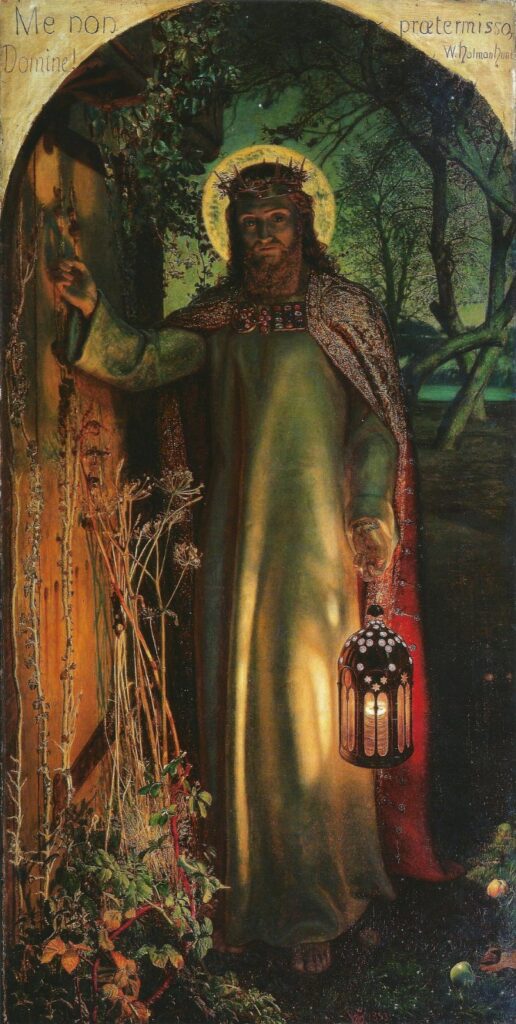
Fourth, the door. “Behold, I stand at the door, and knock” (Revelation 3:20) is the best known line of the letter to Laodicea. The English painter William Holman Hunt turned it into the painting The Light of the World, which he completed in 1854. In the picture the door has no handle on the outside, so it can only be opened from within. Notice where the door is. The comfortable church says it needs nothing, and Christ is standing outside.
The Pastoral Legacy
The fourth legacy is pastoral. The letters give the church a list of spiritual conditions. A pastor can ask about his own community: Has it lost its first love, like Ephesus (2:4)? Does it face pressure that may cost everything, like Smyrna (2:10)? Does it tolerate compromise with the culture around it, like Pergamon (2:14) and Thyatira (2:20)?
Is it alive only by name, like Sardis (3:1)? Is it small but faithful, like Philadelphia (3:8)? Is it rich and comfortable, like Laodicea (3:17)? I think these seven pictures cover most of what community can go through. That is why preachers and bishops of every century return to the letters and find new applications.
The Church Ages Reading
Some Christians read the letters in one more way, and as a guide I should mention it fairly. In the church ages view, the seven messages describe seven periods of church history, from John’s time to the end. One widely read form of it is in the Scofield Reference Bible, first published in 1909 and revised in 1917, and the view is linked with dispensationalism.
In the Scofield notes of 1917, Ephesus is the church at the time of writing and Smyrna is the age of the great persecutions. Pergamos is the church after Constantine, Thyatira is, in his word, the Papacy, and Sardis is the Reformation. Laodicea is a time of self-satisfied profession, and Philadelphia is whoever gives faithful witness in that time. Clarence Larkin and Merrill Unger also read the churches as a preview of church history.
I do not argue for or against this reading. It is one interpretation among several. An Orthodox priest, Dimitri Cozby, has pointed out that its church history is strictly Western. Other Christians read the letters first as messages to the seven real congregations of John’s time, and that is the reading I follow when I guide. On my days with guests, my job is to show the cities where those congregations lived.
The Missional Legacy
The fifth legacy is missional. A famous mission image in the letters is the open door of Philadelphia: “I have set before thee an open door, and no man can shut it” (Revelation 3:8). Many Christians read it as an opportunity to share the Gospel. Paul used the same picture, writing from Ephesus: “a great door and effectual is opened unto me, and there are many adversaries” (1 Corinthians 16:9).
Other readers hear the door differently. The letter opens with Christ as the one who has “the key of David”, words from Isaiah 22:22, so the door may also mean access to the kingdom of God. Both readings are possible, and I do not need to choose one. You can read about the city in my article on the church of Philadelphia and its open door.
What strikes me is the size of the promise. Philadelphia had only “a little strength” (Revelation 3:8). A small community received the sentence that Christians still use when they speak about open doors for mission. The text has done much more than its first readers could have expected.
Today the Catholic archbishop of İzmir, Martin Kmetec, describes his mission as a Church with open doors, which means that his churches are open for visitors at set times. The old picture is still alive in the same region.
The Continuity of the Anatolian Christians
There is one more legacy that I want to mention, because it is part of daily life in my own region. The Christians of Asia Minor did not all disappear. Some communities continued, in an unbroken or partly broken line, into the modern period. In Philadelphia, today’s Alaşehir, Orthodox Christianity stayed strong until the early 20th century, and the city fell to the Ottomans only in 1390.
Smyrna, the city of Polycarp (see the church of Smyrna), had a large Greek Orthodox community. In September 1922, at the end of the Greco-Turkish War, a great fire destroyed a large part of the city. It is a painful memory, and I write about it with respect.
A few months later came the exchange. The Convention signed at Lausanne on 30 January 1923 ordered a compulsory exchange of the Orthodox Christians of Turkey and the Muslims of Greece. About 1.2 million Greek Orthodox Christians left Asia Minor and nearby regions, and roughly 355,000 to 400,000 Muslims left Greece. The Convention counted people by religion, not by language.
That is why even Turkish-speaking Orthodox Christians had to go. A yearbook of 1908 to 1909 describes Şirince, the village in the hills east of Selçuk, as more than a thousand houses of Greek Orthodox Christians whose mother tongue was Turkish. After the exchange, families from villages near Kavala in Greece were settled in its empty houses.
Not every Orthodox Christian left. The Greeks of Istanbul and of the islands of Imbros (Gökçeada) and Tenedos (Bozcaada) were exempted, and the Ecumenical Patriarchate still has its seat in Istanbul today. Families on both sides lost their homes. The Muslim families from Greece also became refugees, and they settled the places that the Orthodox families had left.
The Seven Names Around the World
The names of the seven cities traveled with the people. After 1922 refugees from Smyrna settled in Nea Smyrni, “New Smyrna”, a town in Athens. Nea Filadelfeia, another suburb of Athens settled by refugees from Asia Minor, is named after Philadelphia, today’s Alaşehir. Families from the Ephesus area, many of them from Şirince, named a village in Pieria Nea Efesos, “New Ephesus”, where the first group arrived in 1924.
Church titles carry the names too. The Ecumenical Patriarchate still names a metropolitan of Philadelphia, and the theologian John Zizioulas was its metropolitan of Pergamon from 1986 until 2023. The Catholic Church also lists Philadelphia as a titular see. In addition, congregations with these names also exist in many countries too. One example is the Filadelfia congregation in Stockholm, the largest in the Swedish Pentecostal movement.
Christians in the Seven Cities Today
The Christian presence in the seven cities is small but it is not a museum. The Catholic Archdiocese of İzmir has Saint John’s Cathedral as its seat. In 2022 Archbishop Kmetec told the charity Aid to the Church in Need that about 5,000 Catholics live in the whole archdiocese, which covers about 100,000 square kilometers. The same interview quotes an estimate of about 0.2 percent for Christians in Turkey’s population.
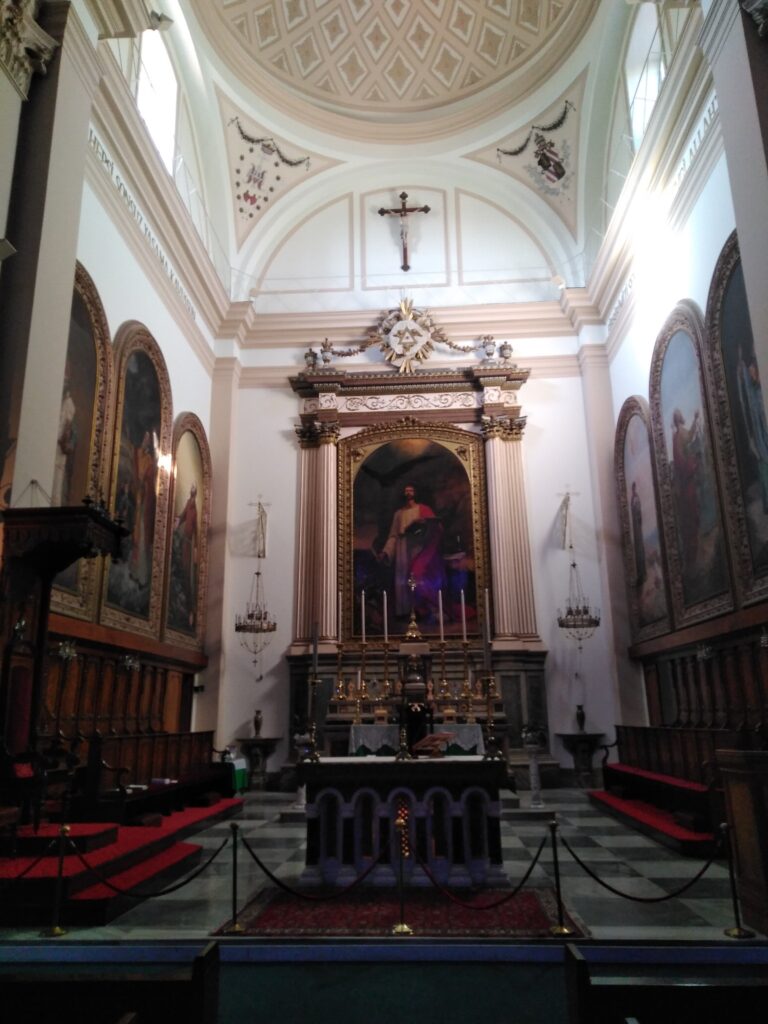
In İzmir, the Catholic Church of Saint Polycarp was first built in 1625 and has been repaired several times since. You can read about the bishop in my article on Saint Polycarp of Smyrna.
The Orthodox Church of Saint Voukolos in İzmir was built in 1886 and 1887, and its community left after the exchange. The building served as a museum and then as a warehouse, and a fire damaged it in 1990. After restoration finished in 2010 it hosts cultural events. On 17 August 2014 a ritual for the Assumption of Mary was held there for the first time since 1922.
Nearby Ephesus, the House of the Virgin Mary has been visited by Pope Paul VI, Pope John Paul II and Pope Benedict XVI. The Catholic Church has never ruled for or against the tradition, but pilgrims keep coming. I explain it in my article on the House of the Virgin Mary in Ephesus. My post Being Christian in Turkey adds more about daily life.
Lessons from the Seven Churches for Modern Believers
If I had to say in one paragraph what the seven letters offer to believers today, I would say this. The church has always been imperfect, always examined, always under pressure from the culture around it, and always called to choose between compromise and faithfulness. Our conditions are not new. The letters give no escape from them. They give a vocabulary to understand them and promises to face them.
The vocabulary is harsh and tender by turns: “I know thy works”, “Be thou faithful unto death”, “Thou hast left thy first love”, “where Satan’s seat is”, “Be watchful”, “I have set before thee an open door”, “Behold, I stand at the door, and knock”. These phrases are part of Christian language now. People quote, sing and pray them in every century.
The promises are concrete: the tree of life, the crown of life, the hidden manna with the white stone and the new name, the morning star, the white raiment, the pillar in the temple, supper with Christ and a seat on his throne. Each promise answers a particular spiritual condition. I believe by heart that each is still on offer to the Christian who reads the letters seriously, and you can read them all in the King James text of Revelation.
In my own reading, four lessons from the seven churches come back again and again.
- Look at yourself before you look at the world (the five criticized churches).
- A good reputation is not life (Sardis, 3:1).
- A little strength is enough for an open door (Philadelphia, 3:8).
- Comfort is a danger, not a proof of blessing (Laodicea, 3:17).
One Final Reflection
I have been writing this series for many weeks, with many late nights in my desk at home, the cool air coming in through the window, the sound of the small mosque in the distance and the cat asleep on the floor. What stayed with me most is how human the seven letters are. They are not abstract doctrine. They are letters to specific people.
Each letter was written for a particualr small group of believers, and each has tears in it, and warnings, and tender words, and threats, and gifts. They come from someone who loves the readers: “As many as I love, I rebuke and chasten” (Revelation 3:19).
When I and my guests walk through the seven cities, I want them to feel one thing. The letters were addressed to people very much like us: people in working towns with daily jobs, children to feed, neighbors to deal with, rents to pay, small comforts and small struggles. The faith asked of them is the faith asked of us, and their choices are our choices.
The seven cities were real places, and the seven communities were real people. The book that carried the letters was sent to real addresses (Revelation 1:11). And I believe that the same Lord who spoke in the local language of Asia Minor in 95 AD still speaks, in other languages, to other cities in other centuries.
That is, in the end, the legacy of the seven churches. They opened a conversation between Christ and the working communities of the world, in a particular voice and with particular promises, and the conversation has not closed. “Behold, I stand at the door, and knock.” The door can still be opened. The supper is still possible.
With that, this long series ends: seven cities, seven letters, seven promises, one old apostle in a cave on a windy island as tradition tells it, and one tour guide, two thousand years later, walking the same hills, reading the same words and trying, in his own small voice, to pass them on. Thank you for reading.
Frequently Asked Questions
What can we learn from the seven churches in Revelation?
The letters teach that every church is imperfect and always seen by Christ. They ask a community to look at itself first: lost love, compromise, a good name without life, comfort. They also promise something to each church that stays faithful. The lessons from the seven churches are practical because the seven cities were ordinary working places, like ours.
What are the seven church ages?
The seven church ages are one way of reading the letters. It treats the seven churches as seven periods of church history, from the apostles to the end of time. A widely read form of it is in the Scofield Reference Bible of 1909 and 1917, and it is linked with dispensationalism. Other Christians read the letters first as messages to the real churches of John’s day.
Do the seven churches in Revelation still exist?
Not as they did in 95 AD. The ancient congregations ended or changed over many centuries, and most Orthodox Christians of western Anatolia left in the exchange of 1923. But Christians still live and worship in İzmir and Istanbul, and the names of the cities live on as church titles and in places such as Nea Smyrni near Athens.
Why are there only seven churches in Revelation?
Seven was a number of completeness in ancient numerology, and Revelation uses it often. The seven cities are named in an order that follows a circle along the Roman road from Ephesus, as I explain in my post on how the letters traveled between the seven churches. Christians lived in other places too, for example in Colossae and Hierapolis. So the seven stand for the whole church.
Hire Biblical Tour Guide in Turkey
I’m a nationally licensed Turkish tour guide based in Kuşadası, nearby Ephesus. My day guiding covers Ephesus, İzmir and Pamukkale. That brings you to Ephesus and to Smyrna from the seven cities, and Pamukkale lies close to ancient Laodicea.
My license is valid all over Turkey. For Pergamon, Thyatira, Sardis, Philadelphia and Laodicea I can join you as your personal guide on a longer journey, while you arrange your transport and hotels yourself or through a licensed travel agency. See my guiding rates and guiding areas or write to me through my contact page.
I hope we will stand together in front of the Library of Celsus or on a hill above Smyrna and read one of the letters. You can always write to me with your questions about the seven churches. For a wider plan, read my guide to Christian Turkey for first-time visitors. See you soon, Hasan Gülday.