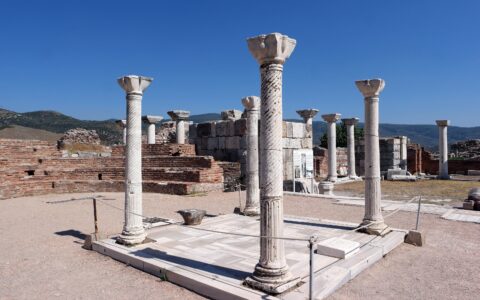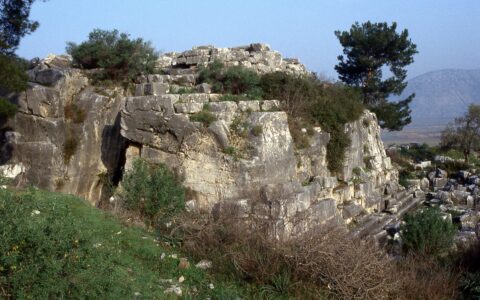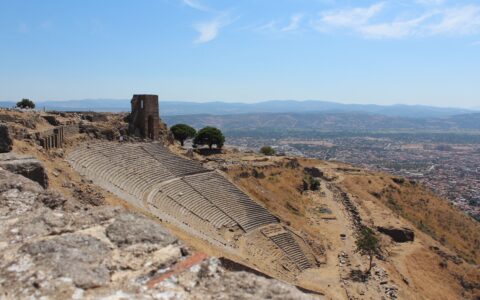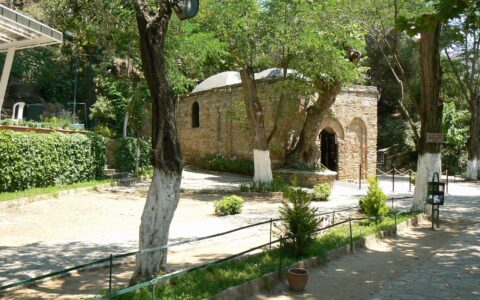
Şirince has two old churches, the Church of Saint John the Baptist and the Church of Saint Demetrius. Orthodox villagers built them in the 19th century, and the Saint John church has a Greek inscription dated September 1805. The village lies about 8 kilometers east of Selçuk, a short drive from Ephesus, and the Saint John church is the one most visitors can enter.
Şirince is famous not just for its fruit wines also for its old churches, and many of my guests never hear about them. Let’s have a look at both buildings, when they were built and what you see there today.
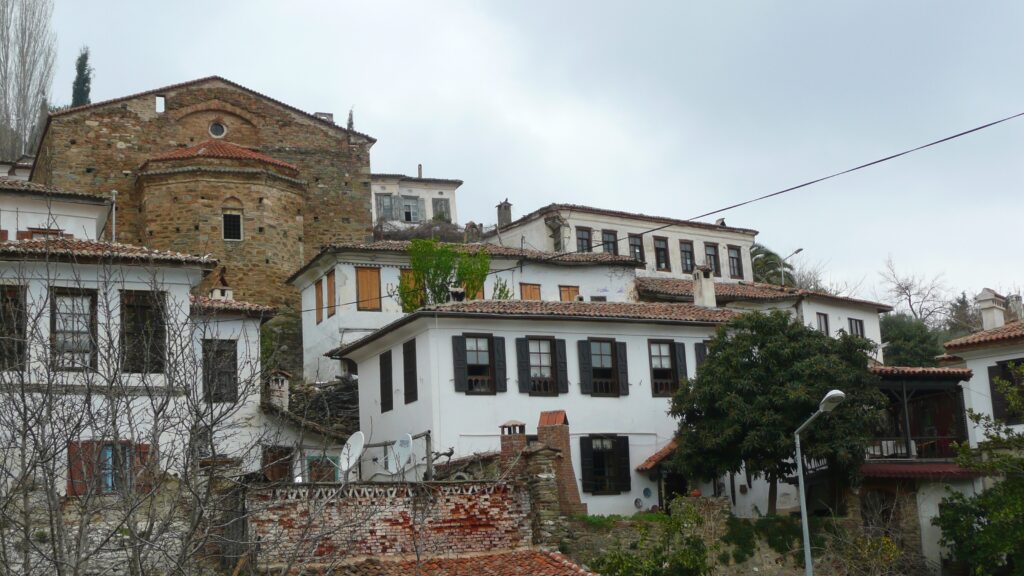
Where Is Şirince?
Şirince is a hill village in the district of Selçuk, about 8 kilometers east of the town and roughly 300 meters above sea level. From the ruins of Ephesus the drive takes around 20 minutes. The valley above the village is the Şirince Gorge, where the aqueducts of Ephesus started, as I explain in my article on the Aqueducts of Ephesus.
Selçuk has more to see before or after the village: the Ayasuluk Fortress, which is open to visitors, the Isa Bey Mosque and the Basilica of Saint John. Please do not mix that basilica with the village church. The basilica belongs to Saint John the Evangelist, while the church in Şirince is named after John the Baptist.
History of the Church of Saint John the Baptist
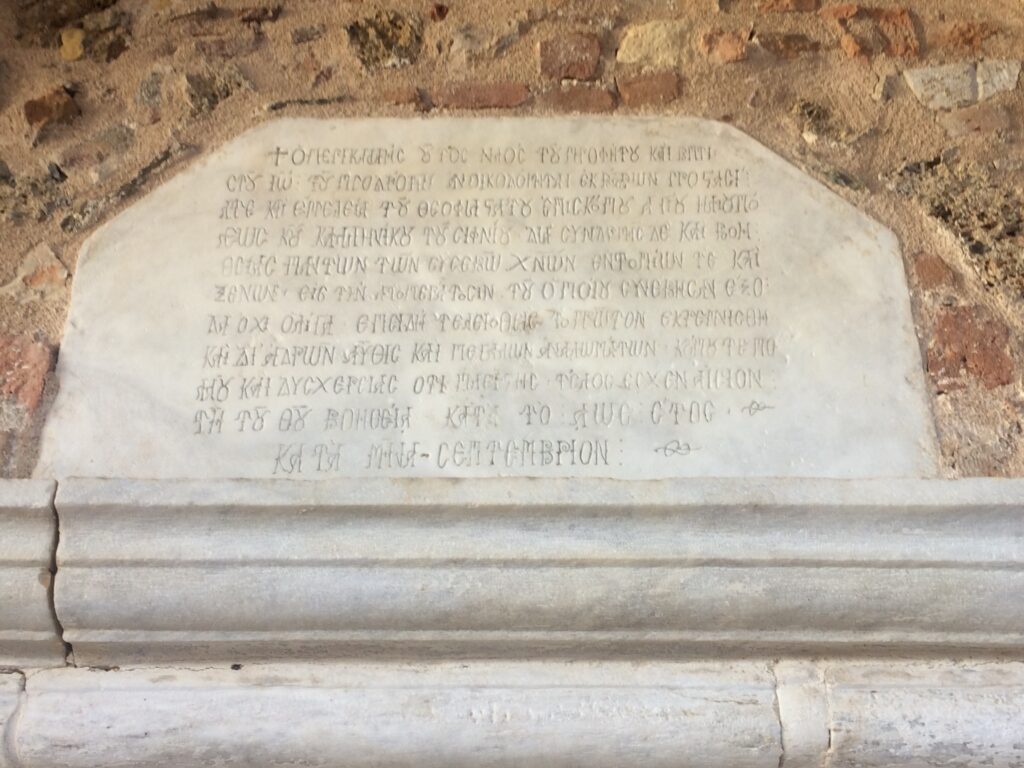
The church was built in 1805 and a marble plaque above the north door tells the story in Greek. It says that an earlier building fell down and that the local Christians raised the church again, with great effort, in September 1805. The arch of the door carries the date 1832, which probably marks a repair. A bell tower beside the church is dated 1 September 1876.
Inside Saint John the Baptist Church Today
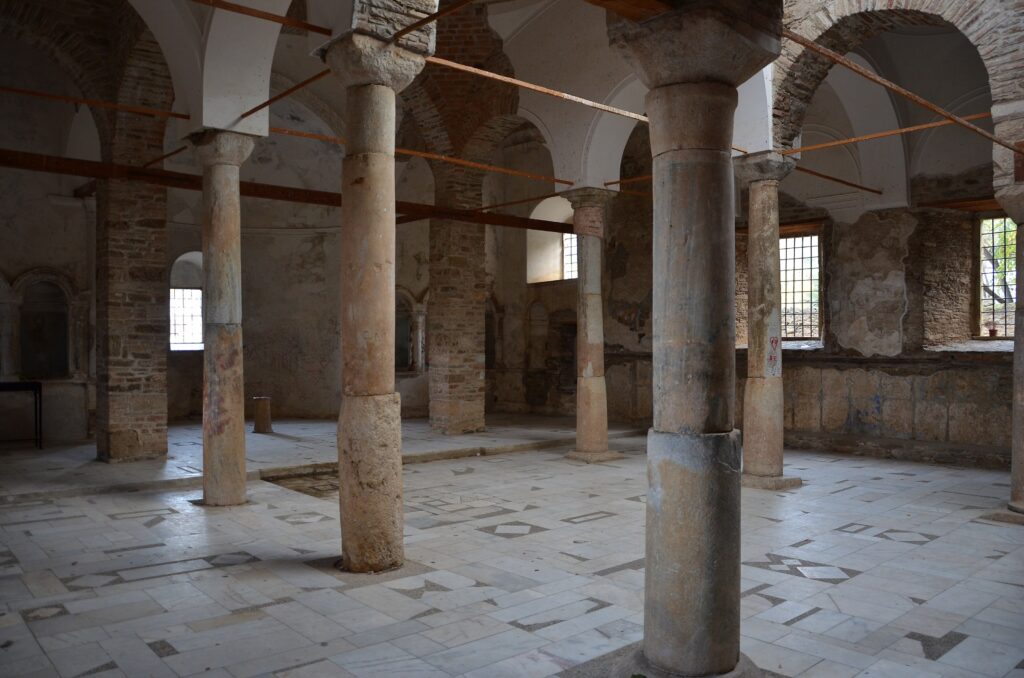
The church is a three-aisle basilica built of rough stone and brick, and its nave is wider and higher than the side aisles. Marble columns and brick piers carry arches and a mix of cross vaults, barrel vaults and domes. A wooden gallery for women stands at west end, and the builders reused some old stone from Ephesus.
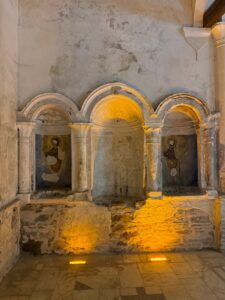
Faded paintings of Christ fill the niches near the altar. He rises from a golden cup, the chalice, with rays of light around him, and the faces are damaged. The marble floor has simple geometric patterns, and much of the old stone and brick is left visible.
In the 1990s the Ephesus Museum restored the columns, the vaults and the domes, which needed urgent work by then, and more work on the dome and the wall paintings followed in 2015. Today the church is used for exhibitions and events, and it stands in a stone-paved courtyard with a fountain.
The Church of Saint Demetrius
The Church of Saint Demetrius is smaller, a single hall with a wooden barrel vault made of timber and mud brick. No inscription gives its date, it is only placed in the middle of the 19th century. Its best feature is the painted wooden iconostasis, the screen in front of the altar, with carved openwork and a round picture of Christ’s face in the middle.
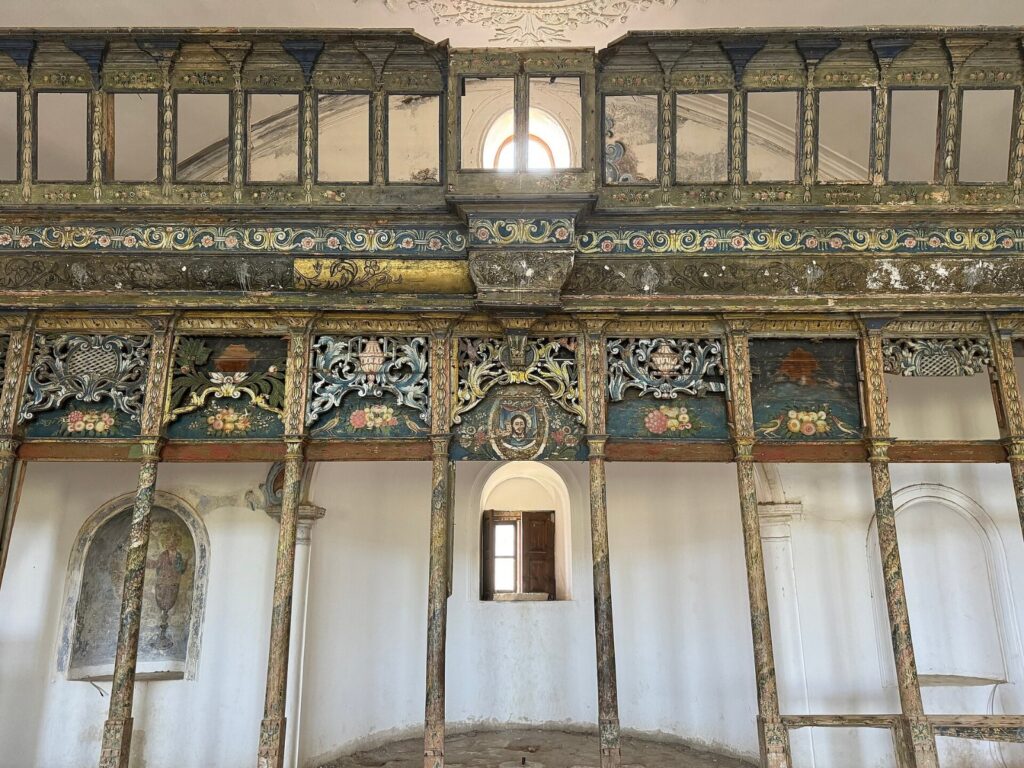
The church stands lower in the village, beside a big pine tree and old olive trees. By the way, the old cellar next to it is still called the priest’s cellar. The doors are not always open, so ask in the village if you want to enter into it.
Houses and Wine in Şirince
The village around the churches is old too. Most of its houses date from the 19th century, and many have been restored as small hotels, guesthouses and shops. The streets are narrow and steep, so I recommend my guests to wear comfortable shoes.
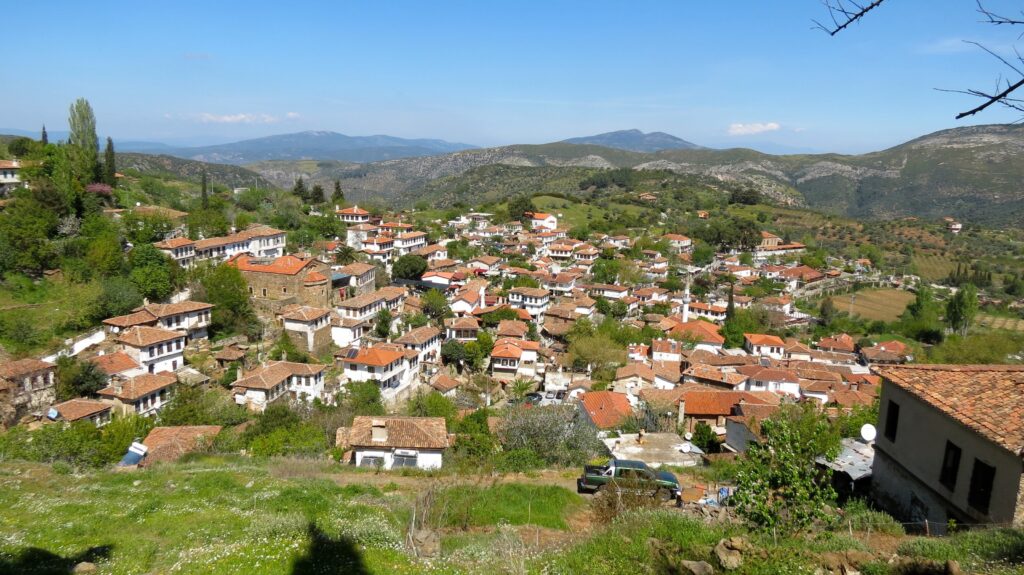
Şirince is famous in Turkey for its fruit wines, made from blackberry, mulberry, peach, pomegranate and other fruit from the village gardens. Shop owners pour small tasting glasses, and the wine is kept in cellars under the shops. I describe the tasting in my article on Aegean dishes after Ephesus. The village also sells olive oil, herbs and spices too.
Frequently Asked Questions
Is Şirince worth visiting?
Yes, if you like a quiet hill village with old houses, two 19th-century churches and shops where you can taste fruit wine. I see it as a relaxed stop after Ephesus, not as a full day on its own.
How far is Şirince from Ephesus?
Şirince is about 8 kilometers east of Selçuk, and the drive from the ruins of Ephesus takes around 20 minutes. Selçuk is the closest town, so most visitors combine the two.
Can you visit the churches in Şirince?
The Church of Saint John the Baptist can usually be visited in the daytime, but the hours change with the season. The Church of Saint Demetrius is not always open, so ask in the village if you want to see inside.
Hire Ephesus Tour Guide
I’m a nationally licensed Turkish tour guide based in Kuşadası, nearby Ephesus. My day guiding is in Ephesus, İzmir and Pamukkale, and on a full Ephesus day I can add a stop in Şirince for lunch and a look at the Church of Saint John the Baptist.
You can see my guiding rates and guiding areas, or write to me through my contact page to ask about my availability.
I hope we will meet in Selçuk and drive up to Şirince together. You can always write to me with your questions about the churches of Şirince and the villages nearby Ephesus. See you soon, Hasan Gülday.