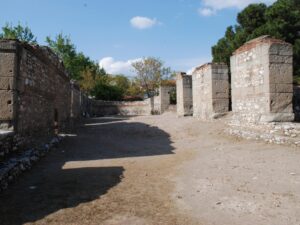
Thyatira the Misled Church
Thyatira was an ancient city where the town of Akhisar stands today. It is the fourth of the Seven Churches of Revelation, and the home of Lydia and of the woman Jezebel.
Thyatira was an ancient city where the town of Akhisar stands today. It is the fourth of the Seven Churches of Revelation, and the home of Lydia and of the woman Jezebel.
Manisa is the ‘City of Princes’, where the sultans, who were the sons of the Ottoman emperor, spent their princely period. Manisa is an important historical…
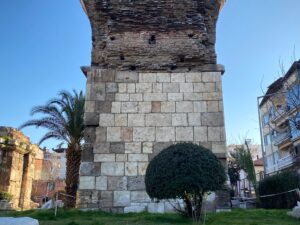
The Philadelphia church of Revelation 3:7-13 stood in today's Alaşehir: what its letter says and the Byzantine piers you can still see there.
Cassius Claudii Galenos or more commonly known as Galen was born in the year 130 in the City of Pergamon (Modern Bergama of today’s Turkey). His…
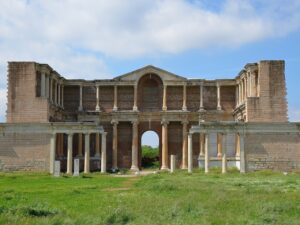
Sardis was the capital of ancient Lydia, near Salihli in western Turkey. It is the home of the first coins, a very large synagogue and the Temple of Artemis, and it joined the UNESCO World Heritage List in 2025.
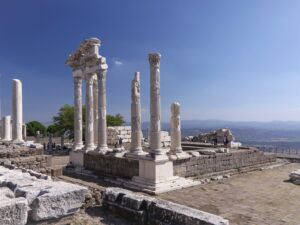
Pergamon was the capital of the Pergamon kingdom and stands above the town of Bergama near Izmir. UNESCO listed Pergamon in 2014.
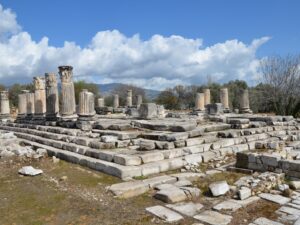
Lagina is a Carian sanctuary of the goddess Hecate near Yatağan in Muğla, once the religious center of the ancient city of Stratonikeia.
Hecate was an ancient goddess of crossroads, torches and the moon, probably Carian in origin, and later linked with the dead and witchcraft.
Who went to school in ancient times, what children learned, and how books, papyrus and libraries worked in Greek and Roman cities, with examples from Anatolia.
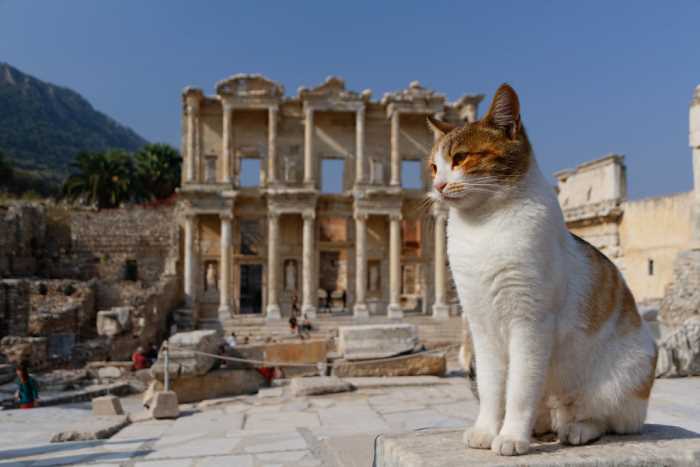
Cats have been beloved companions of humans for thousands of years, and the ancient city of Ephesus in modern-day Turkey was no exception. The cats of…
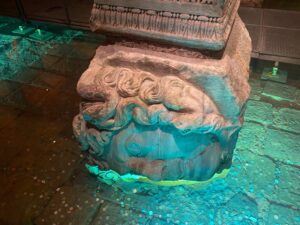
The Basilica Cistern is a 6th-century underground water reservoir in Istanbul, near Hagia Sophia, with 336 marble columns and two Medusa head column bases.
Sultanahmet Square, which is among the most important squares of Istanbul, sheds light on how deep and rich the history of Istanbul is. Having hosted many…
Spice Bazaar, one of the oldest covered bazaars in Istanbul, attracts the attention of many local and foreign tourists with its orientalist atmosphere. So much so…
Sultanahmet Square remains to be one of the most visited spots in Turkey. Sultanahmet Square is situated in the center of the Historic Peninsula of Istanbul…
Tourism was one of the sectors that suffered the most in 2020 due to the global pandemic. With the measures taken and the acceleration of the…
The ancient philosophers of Anatolia in this post are Thales, Anaximander, Anaxagoras, Xenophanes, Heraclitus, Aristotle, Diogenes, Strabo, Galen and Epictetus. They lived from about 600 BC…
In the 5th and 4th centuries B.C., the Anatolian economy was in very good condition and was experiencing its golden age in almost every field. With…
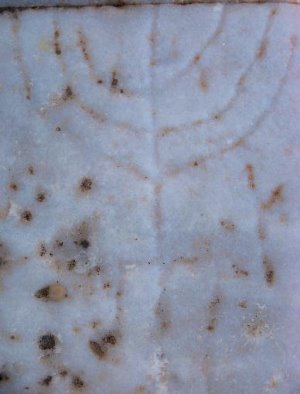
Menorah has many symbolic meanings. Its first meaning is to symbolize the “Perpetual Light”. After God created heaven and earth, he first said “Yehi ‘Or —…
Simple habits for a relaxed trip in Turkey: use the taxi meter, watch your bag in crowds, use ATMs inside banks and check your restaurant bill.
Zerzevan Castle, which was built by the Eastern Roman Empire (Byzantine Empire) as a military base on the ancient trade route between Diyarbakır and Mardin, and…
2021 was the year of easing restrictions of the Covid outbreak and archeological teams all around Turkey started to make it back to the excavations in…
Greek vs Roman theater: Greek seats lean on a hillside, Roman seats stand on vaults. See how to tell them apart at Priene, Miletus, Ephesus and Aspendos.
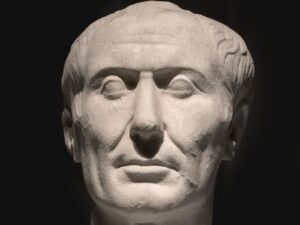
Julius Caesar was a Roman general, writer and dictator. Read about his reforms, his death on March 15, 44 BC and his victory at Zela in Turkey, where he is said to have written Veni, vidi, vici.
Afro-Turks are usually the children and grandchildren of those who settled in Anatolia from Africa mostly came through the slave trade or other means during various…
Et tu, Brute? (You too, Brutus?) Roman Emperor Caesar Founded in the 1st century B.C. under the leadership of Augustus, the Roman Empire ruled in the…
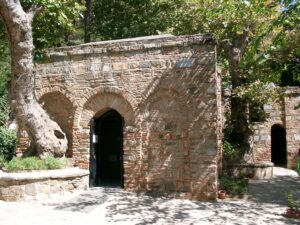
Nightingale Mountain, the ancient Mount Koressos, is the high ridge south of Ephesus, with the House of the Virgin Mary on top and the Terrace Houses on its slope.
Panayır Mountain, the ancient Mount Pion, is the hill behind the Great Theater of Ephesus, with a palace and a rock sanctuary of Cybele on its slopes.
Cittaslow cities of Turkey list has been constantly updated in recent years and cities where calmness, slowness, and peace prevail are becoming a trend. The number…
UPDATE October 14, 2021 Today Viking Cruise made its 3rd visit to Kusadasi Cruise Port. News sources confirmed that several other cruise liners such as Norwegian,…
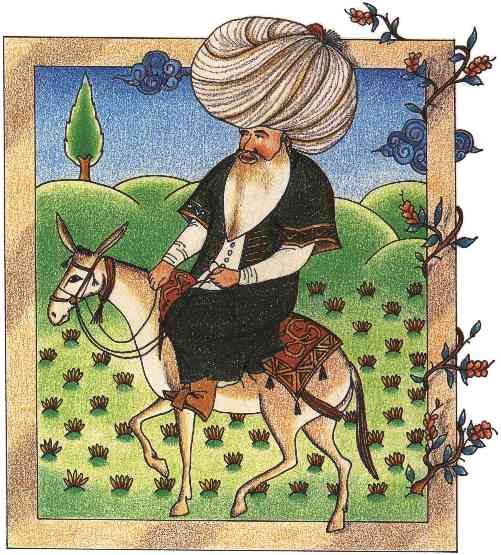
A brief look at the life of Nasreddin Hodja, who was a Turkish satirist and he is thought to have lived in the 13th century, during…
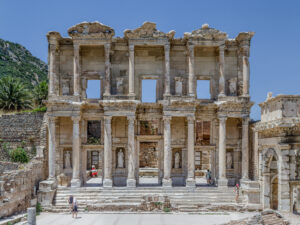
Ten reasons to visit Ephesus, from its UNESCO World Heritage status and Aegean food to easy travel, Sirince wine and a swim in the sea.
Turkey is a destination which can be visited all year round but it might be more popular especially during summertime. Ice cream is a very popular…
While I was researching for this article, I realized that what people believed and did for staying healthy thousands of years ago was not that different…
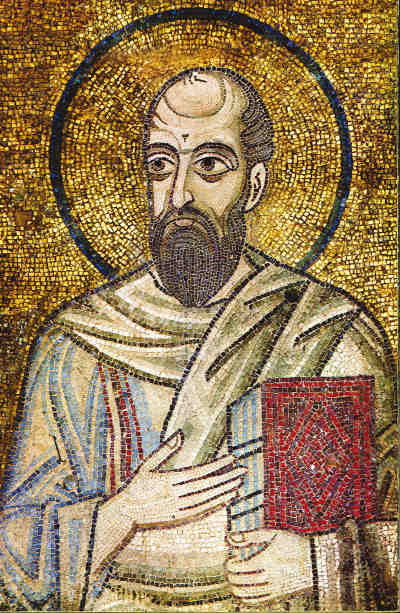
The Grotto of Saint Paul in Ephesus, also called the Cave of Saint Paul, is a small cave chapel above Ephesus Ancient City with a late 5th-century fresco of Apostle Paul, Thecla and her mother Theoclia. A licensed local guide tells its story, the life of Thecla and why the grotto is closed to visitors today.
I read a nice quote about cheese in a book that said, “When milk goes to sleep, it becomes cheese.” As a Turkish cheese lover, I…
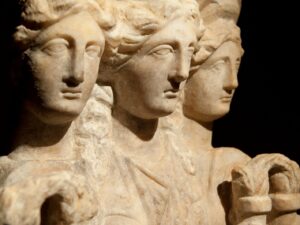
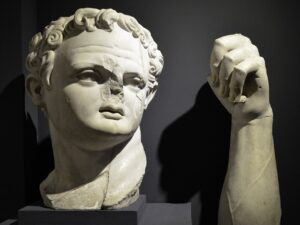
Most ancient sculptures lost their noses by accident, because the nose sticks out and breaks first, but a few were damaged on purpose, as statues in the Ephesus Archeological Museum show.
Thanks for all the emails and comments you have sent me about the list of 8 unmissable archeological structures from Turkey. I decided to create another…
The wide geography of the Byzantine Empire (Today’s Anatolia and Asia Minor) which included different cultures and its cultural structure shaped by the acceptance of Christianity…
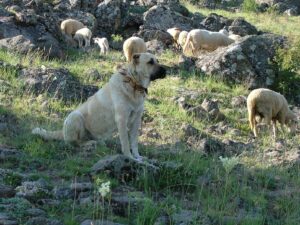
Anatolian dogs are the native dog breeds of Turkey: the Sivas Kangal, Akbaş, Aksaray Malaklı, the Turkish Greyhound, the Turkish Pointer and the Trabzon Zerdavası.
The Battle of Sardis was in between revolting Ionians and Persians who stationed their forces in the city of Sardis (Sardes). An Athenian force of twenty…
The Phocaea ancient city lies under and around today’s Foça, a small seaside town about 70 kilometers northwest of İzmir. It was the northernmost city of…
Carians are among the Western Anatolia’s indigenous people, whom Sumerian once called ”Carians: People living in the garden of the Sun”. Carieans lived in an area…
Rufus the doctor was an Ephesian Greek who was born during the era of Emperor Trajan. Rufus was a follower of the famous physician Hippocrates and…
Emperor Hadrian, full name ”Caesar Traianus Hadrianus”, was born in 76 AD. He came from a Roman family who moved to Spain. His parents were from…
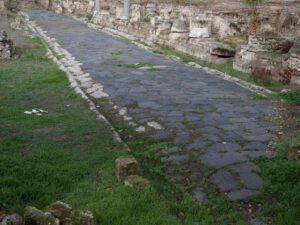
The Roman road in Tarsus is a paved Roman street found in 1993 in the old part of the city, about 150 meters from St. Paul's Well.
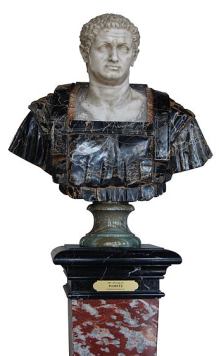
Pompey the Great was one of the most acclaimed generals and statesman of the Roman Empire. One can even claim that Pompey is the one who…
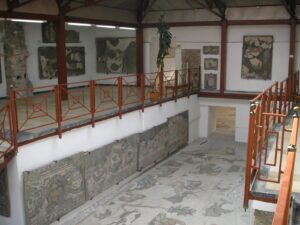
A Roman mosaic found under the old Zeytinburnu municipality building in Istanbul is now shown under glass in the Zeytinburnu Mosaic Museum.
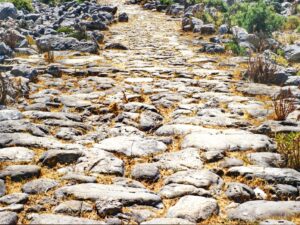
The Via Sebaste was a Roman road from Antioch in Pisidia over the Taurus Mountains to Perge, finished around 6 BC in the time of Augustus.
The Roman road in Cilicia is located in Mersin city of modern Turkey. We believe Roman Province of Cappadocia was connected to the Roman Province of…
First Roman roads started to be built with the beginning of the Roman Republic. Roads were built and maintained during the Roman Empire era too. 372…