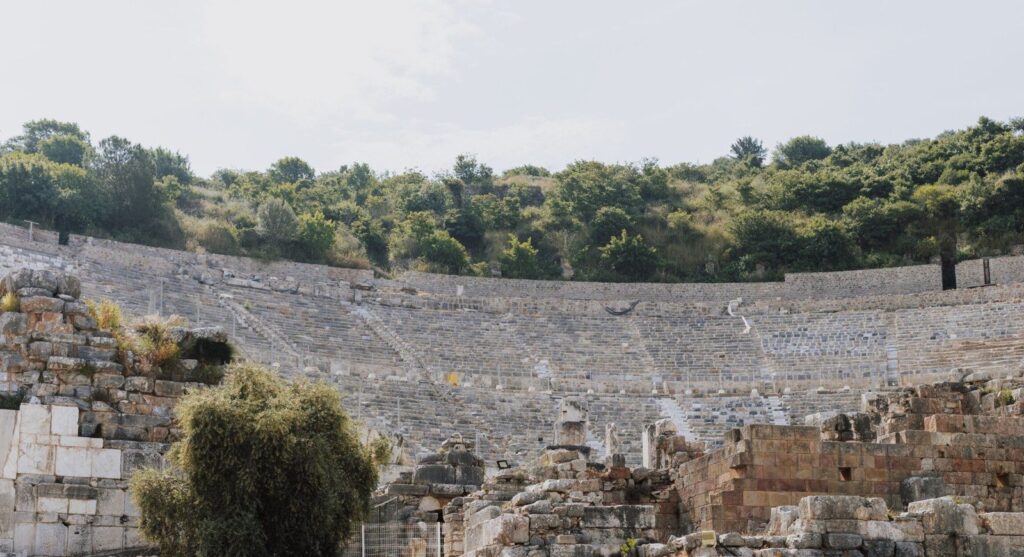
The ten cornerstones in Ephesus history run from the Ionian Greek founding around 1000 BC to the visitors of today. The big turning points are the Temple of Artemis, Alexander the Great, Roman rule, and the years of Paul and Saint John.
Ephesus Ancient City was not just a big city, and actually once it was the second-biggest city in the Roman Empire. Ephesus served as a nexus between Asia and Europe. Being on the most western point of Asia Minor made Ephesus an extremely well located city. Ephesus faced many eras and changes throughout time. I tried to count 10 Most Important Cornerstones in Ephesus History for you. I hope you will find it interesting, and I hope this article will be greatly helpful before your Ephesus trip.
- Founding by Ionian Greeks (10th century BC): The city was founded by Ionian Greeks from Athens, establishing it as a Greek city-state. Androclos the Greek hero is noted as the founder and the first king of Ephesus.
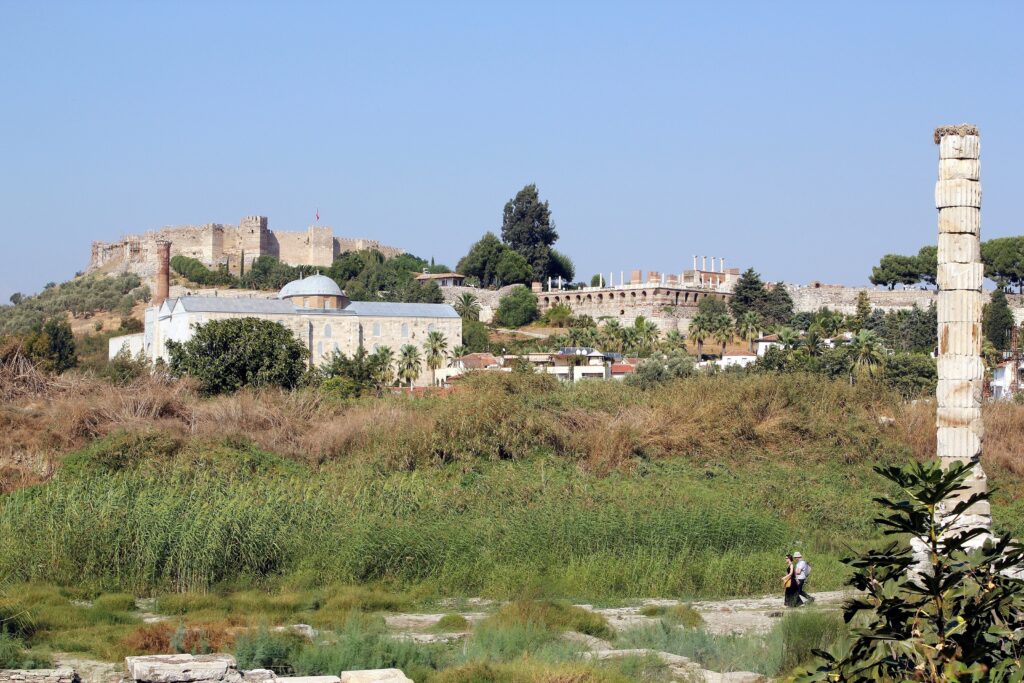
- Temple of Artemis: Construction of the first Temple of Artemis, one of the Seven Wonders of the Ancient World, began in the 6th century BC. This temple turned Ephesus into a major pilgrimage point in the ancient Greek and Roman world.
- Persian Rule (6th century BC): Ephesus came under Persian rule after the Persian Wars. Occupation of Ephesus by Persians was triggered by Ionian Revolt in 499 BC. Ephesus and its allies played an important role in this revolt against the Persian Empire.
- Alexander the Great’s Conquest (4th century BC): Alexander the Great conquered Ephesus, marking the beginning of the Hellenistic period. It would not be a long shot to say that Ephesus as we know as an influential and rich city began after the Hellenistic conversion of Ephesus.
- Roman Rule (1st century BC): Ephesus became a significant city under Roman rule, experiencing a period of great prosperity and growth. Maybe the most important event happening was Ephesus becoming the capital city of Asia Minor State of the Roman Empire.
- Construction of the Library of Celsus (2nd century AD): This impressive library, dedicated to Celsus Polemaeanus, became a symbol of Ephesus’s cultural and intellectual significance. This library became a significant meeting point for intellectuals and leaders of Ephesus.
- Christian Era (1st-4th centuries AD): Ephesus became a significant center of early Christianity, with the Apostle Paul and Saint John the Evangelist spending significant time in Ephesus. Their disciples like Timothy slowly converted Ephesus into a Christian city following their departures.
- Decline and Abandonment (5th-15th centuries AD): Due to silting of the harbor and various other factors such as malaria, Ephesus gradually declined and was eventually abandoned. Time took over, and the city got slowly covered with sand.
- Archaeological Discoveries and Restoration (19th-20th centuries AD): Extensive archaeological excavations and restoration efforts have brought the ancient city back to life. The first excavations started by British and later taken over by Germans and eventually Austrians.
- Modern-Day Tourism: Ephesus is now a major tourist destination, attracting more than two million visitors each year who come to marvel at its ancient ruins and rich history. Now it is your turn to join these people and have your personal Ephesus experience!
Greek and Persian Ephesus (Cornerstones 1 to 4)
Alexander the Great came to Ephesus in 334 BC. It is told that he offered to pay for the new Temple of Artemis if his name was written on it. The Ephesians said no, politely, they said one god should not build a temple for another.
Roman and Christian Ephesus (Cornerstones 5 to 7)
Paul came to this Roman city and taught in lecture hall of Tyrannus for two years, until everyone in the province of Asia had heard the word (Acts 19:9-10). Later the first of the seven letters of Revelation went to the church of Ephesus (Revelation 2:1-7). You can follow his steps in my post Apostle Paul in Ephesus.
Decline, Digs and Visitors (Cornerstones 8 to 10)
Austrian archaeologists have dug at Ephesus since 1895, and they still work there. Many of the best finds, like the statue of Artemis, are in the Ephesus Museum in Selçuk. My post On Ephesus History lists the periods one by one.
Frequently Asked Questions
Which period was the golden age of Ephesus?
The Roman Imperial age, in the 1st and 2nd centuries AD. Ephesus was then the capital of the province of Asia and a rich port, and much of what you walk through today dates from those years.
How much of Ephesus has been excavated?
Only a small part. Estimates are mostly between 10 and 20 percent, so most of the ancient city still lies under the fields and hills around the ruins.
Which cornerstones of Ephesus history are visible today?
Mostly the Roman ones, like the Library of Celsus and the Temple of Hadrian. The Temple of Artemis is down to one column in Selçuk, and the Greek and Persian years left very little above ground.

1 comment