Most Christians in the seven cities of Revelation were working people: craftsmen, traders, freed slaves, slaves and women, with a few wealthy hosts among them. Around 95 AD they met in private houses, usually on a fixed day before dawn or in the evening, to share a meal, pray, sing and hear letters read aloud. Their hardest questions were practical: what to eat, which dinners to attend and what to do when a neighbor denounced them.
We usually talk about the seven cities, the seven letters and the power of Rome. But behind all this there were real people, living in the same streets where I walk with my guests. What was it like to be a Christian in Ephesus, Smyrna or Thyatira? How did they spend their day, what did they eat and where did they meet?
These are the questions of this article. We have no diary of an Ephesian Christian, so some parts are careful reconstruction, and I will tell you each time. The evidence comes from the New Testament, from the letter of Pliny the Younger to Emperor Trajan, from early church writings like the Didache and from the archaeology of the cities. For the cities themselves, read my introduction to the Seven Churches of Revelation.
Who Were the Christians
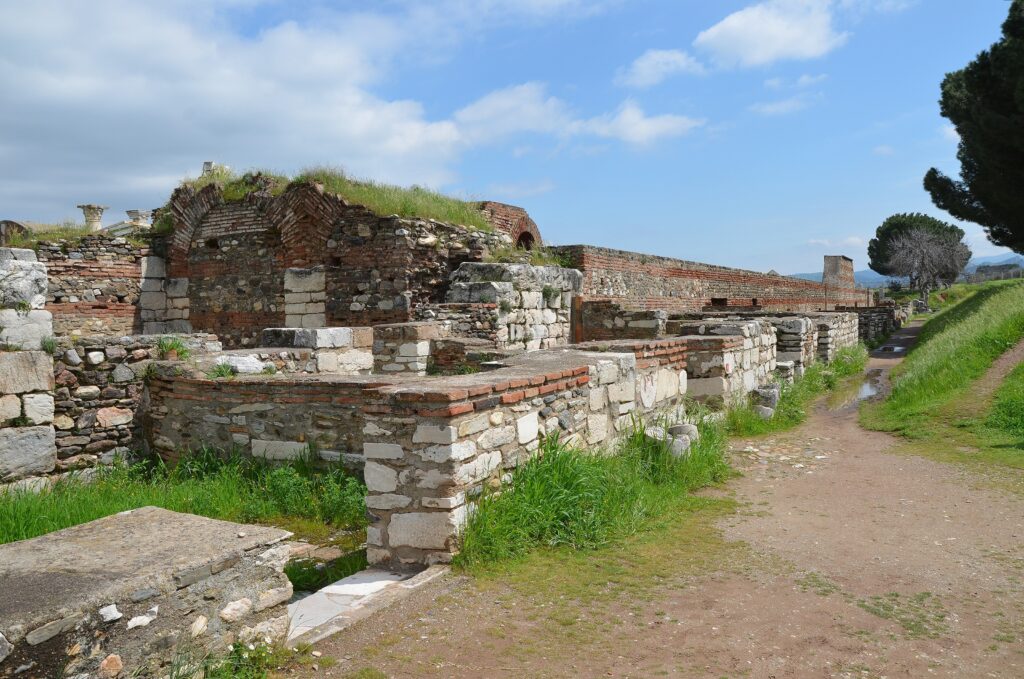
First of all, the social profile. Many historians describe the early Christian groups as socially mixed, following the study of Wayne Meeks, The First Urban Christians. Paul says something similar to the Corinthians: “not many wise men after the flesh, not many mighty, not many noble, are called” (1 Corinthians 1:26, KJV). Asia was probably same, a movement of ordinary people with a few better-off members.
Some members had money. Lydia, whom Paul met in Philippi, was a dealer in purple cloth from the city of Thyatira (Acts 16:14), so she was a businesswoman. Her story is in my article on Mary, Thecla and Lydia in Asia Minor.
In addition, Paul had friends among the Asiarchs of Ephesus, the leading men of the province. During the riot of Acts 19 they sent him a warning not to enter into the theater (Acts 19:31). We do not know that these men were Christians, but they show that Paul’s circle reached the top of local society.
Women were also active too. Around 112 AD the governor Pliny wrote from Bithynia and Pontus, the province just north of Asia, that he had questioned two enslaved women called deaconesses. He also reported that the believers came from every age, every rank and both sexes, in cities, villages and farms, and that some had left the church years before, a few even two decades before. You can read the letter in English at Fordham University.
Where They Met
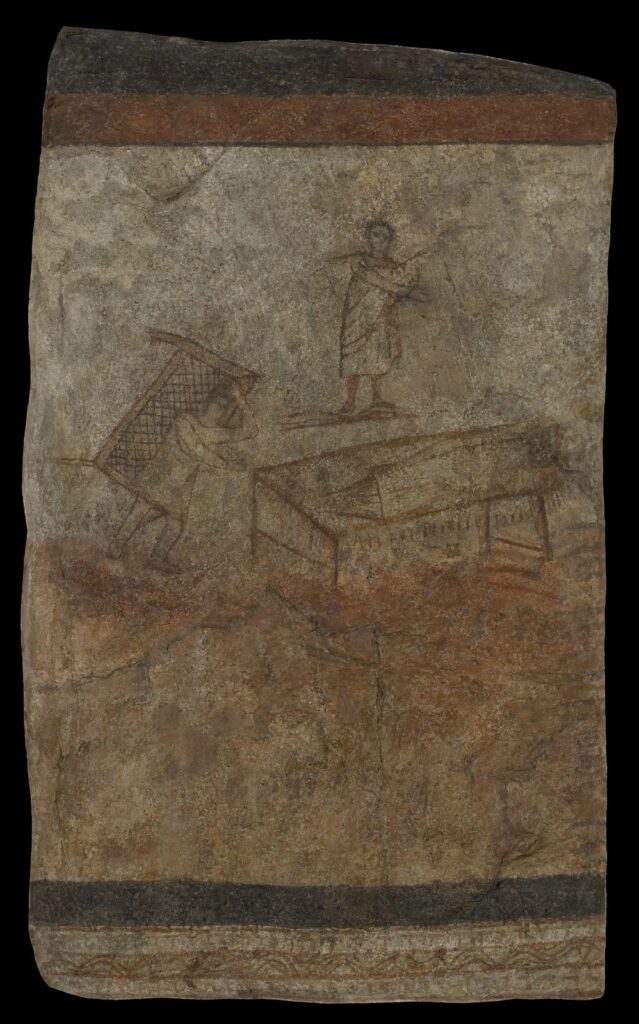
There were no church buildings in 95 AD. Until the third century the church mostly met in private houses. The oldest Christian house church that archaeologists have identified is at Dura-Europos in Syria, rebuilt as a church in the 230s, with paintings on the walls of its baptistery. That is more than a century after the seven letters. For the long road from the old temples to the later churches, read my article on Pagan to Christian Asia Minor.
The New Testament names a few of these houses. Paul wrote his first letter to the Corinthians from Ephesus, and he sent greetings from “the churches of Asia”, especially from Aquila and Priscilla, “with the church that is in their house” (1 Corinthians 16:19). I tell their story in Aquila and Priscilla in Ephesus.
At Laodicea, one of the seven cities, Paul greets Nympha, or Nymphas, because the manuscripts differ, and the church that met in the house (Colossians 4:15). How big was such a group? Nobody counted. Scholars estimate from the size of Roman houses, and they usually think of a few dozen people at most. Host owned the house, and the host could be a couple or a woman.
What happened inside? Acts 20:7 says that on the first day of the week the disciples “came together to break bread”. Around 112 AD former Christians in Bithynia told Pliny what the group used to do: they met on a fixed day before dawn, sang a hymn to Christ as if to a god and promised not to steal, cheat or commit adultery. Then they went home, and later they came back to share ordinary, harmless food.
The Didache is a short church manual that most scholars date to the first century, possibly written in Syria. It tells believers to gather every Lord’s day, to break bread and to confess their wrongs first, so that nobody comes to the meal with a quarrel (Didache 14). And Revelation itself expects to be read aloud: “Blessed is he that readeth, and they that hear” (Revelation 1:3).
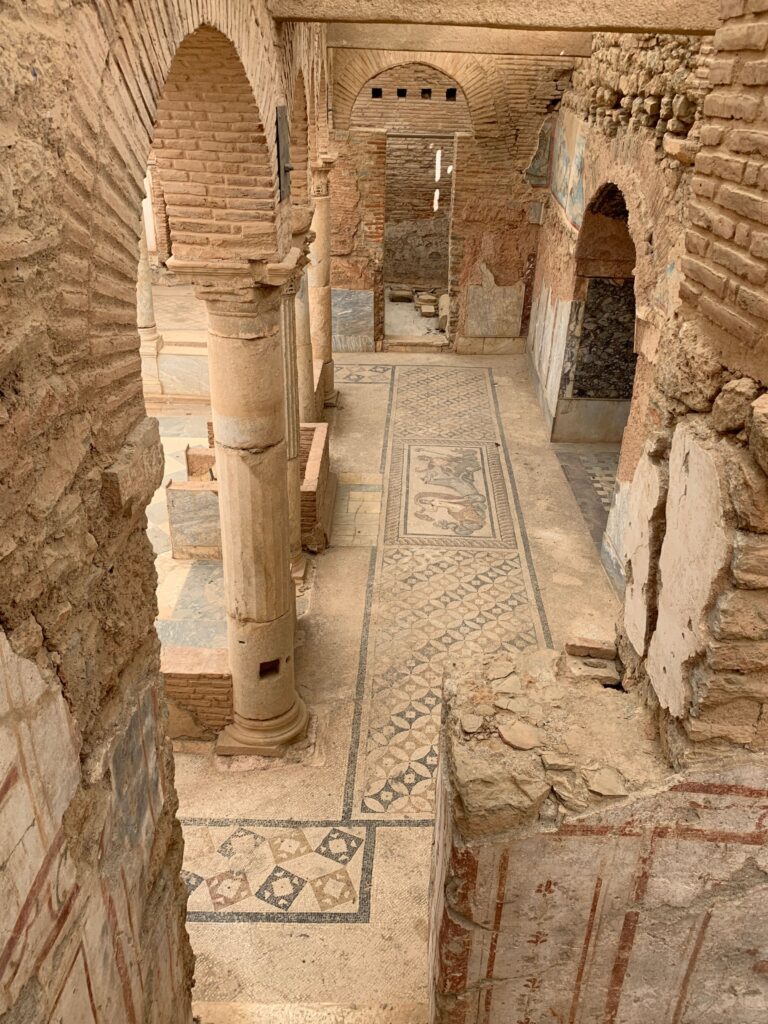
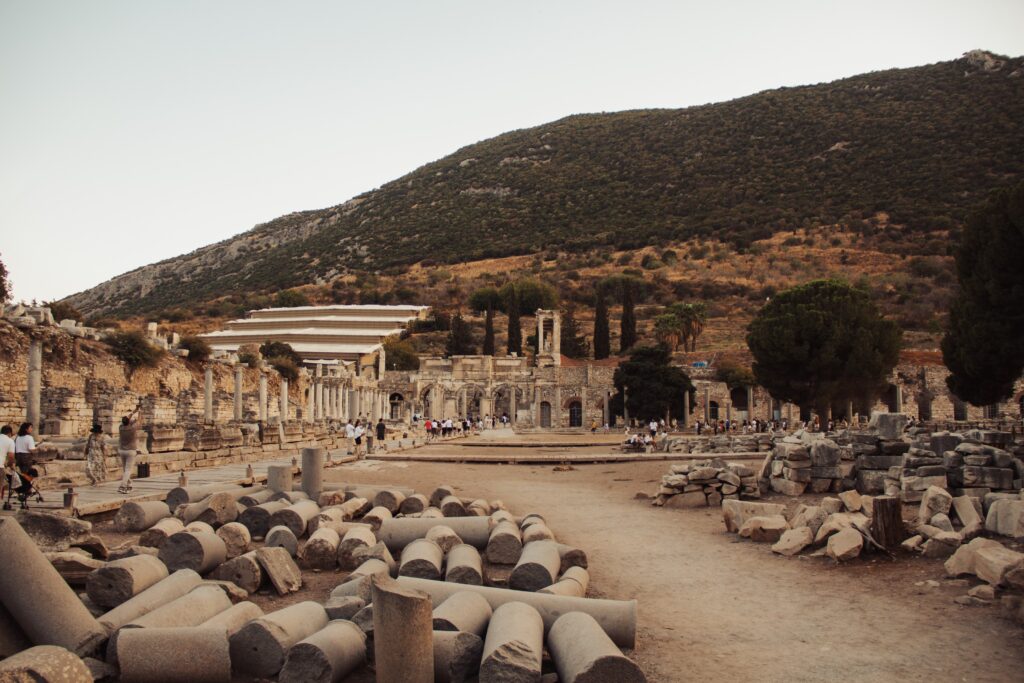
For most of my groups, when we arrive at the Terrace Houses of Ephesus, this is the moment I always pause. Let me be honest first. Nobody has found a first-century house church in Ephesus, and James Walters of Boston University thinks it very unlikely that early Christians lived in houses as rich as these. The oldest structure on the slope of Bülbül Mountain goes back to the first century BC.
But a Roman house had the same basic plan at any size: a courtyard, a dining room and rooms laying around them. So I stand with my guests in the courtyard and say that in a simpler house of this kind, the Christians of Ephesus may have heard the seven letters read aloud for the first time. It changes the way you look at the rooms. For the ordinary homes of the city, read my article on City Life in Ephesus.
What Their Day Was Like
Let me try to walk through a typical day, and please keep it in mind that this is a reconstruction. No Christian of the seven cities left a diary of an ordinary Tuesday. I build the day from how people lived in the Roman world and from small details in Acts and in Pliny. The craftsman is imagined.
Take a leatherworker in Smyrna. He wakes with the dawn. The Romans divided the daylight into twelve hours, so an hour was about 45 minutes in winter and about 75 minutes in summer. Sundials and water clocks existed but most people simply read the sun. A short prayer at home is likely, since the Didache tells believers to say the Lord’s Prayer for three times a day.
Breakfast, the Roman ientaculum, was light: bread with olives or cheese, and perhaps a little wine mixed with water. Then he walks to his workshop in the same neighborhood, opens the shutters and begins the work. During the day he deals with customers, suppliers and neighbors, and most of them are pagan. I think many of these contacts were friendly, because Pliny says believers lived in cities, villages and farms. They were not living in a separate quarter.
At midday the work slows down. People eat a light meal, the prandium, and in Summertime they rest in the heat. By the way, in Turkish we say öğle sıcağı, the heat of noon, and in many small towns of western Turkey people still close the shutters for a couple of hours.
In the late afternoon the work resumes, and toward evening the shop closes. On the day of the meeting he does not go straight home for supper, he walks to the house of the community. Sunday was an ordinary working day, because the first Roman law making it a day of rest came from Constantine on 7 March 321. So the meeting had to fit around work, before dawn or after dark.
The evening meeting was the center of the community’s life. Acts 20 describes one in Troas, in the 50s AD. Paul talked until midnight, there were “many lights in the upper chamber”, and a young man named Eutychus fell asleep in a window, fell from the third floor and was taken up dead. Paul went down, embraced him and said that his life was in him (Acts 20:7–12).
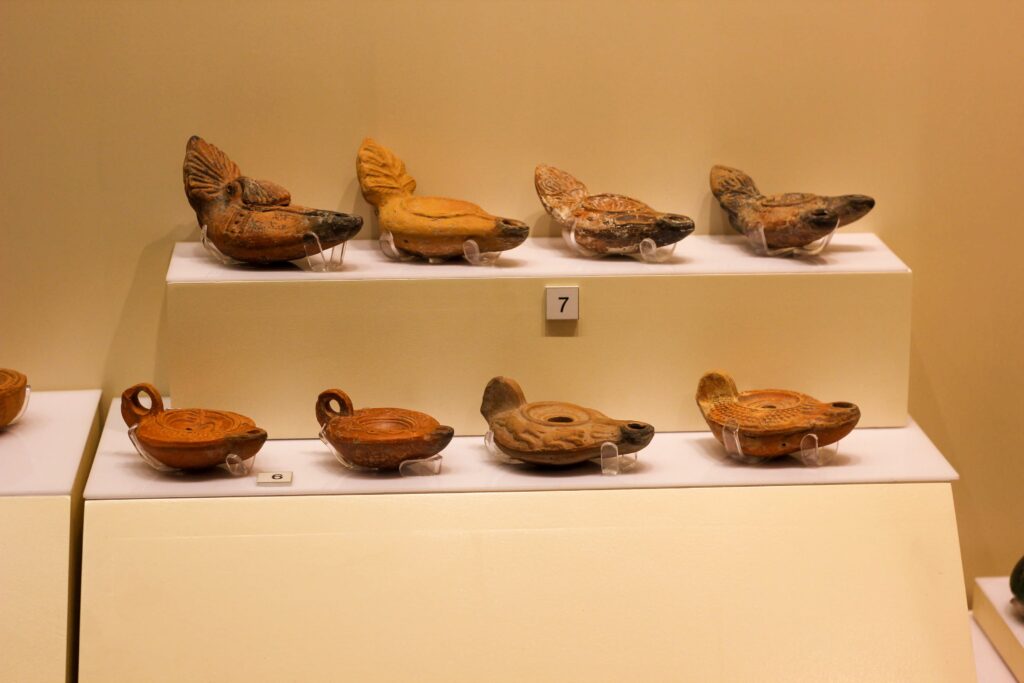
The details are small, but they show a typical Christian evening. They met, they ate, the teacher spoke for hours, the lamps burned and people stayed until late. A quick service of thirty minutes is not what Acts describes. And the next morning the craftsman still had to open his shop at dawn.
The Food Question
What did they eat? The question matters because it was not just a question of hunger also a religious question. Let’s have a look at the daily table first. An ordinary family ate bread, barley bread for the poor and wheat bread for those who could pay, with olives, vegetables, lentils and beans, cheese, fish when possible, fruit in season and wine mixed with water.

Walk through a weekly market in a small town of western Turkey today and you will still see much of this on the tables: bread, olives, cheese, vegetables and lentils. I will not say that nothing has changed but the basics are familiar. I wrote more about the Ephesian kitchen in Food in Ancient Ephesus.
Meat was different. Butcher’s meat was uncommon luxury in the Roman world, and the historian John Stambaugh wrote that it was scarce except at sacrifices and the dinner parties of the rich. So for ordinary people a good part of the meat they ate probably came from the altar. A temple sacrificed an animal, the gods and priests took their parts and the rest was shared at a feast, and some of it could reach the market.
That was the practical problem, the meat called eidolothyton in Greek, “offered to idols”. Scholars still discuss how much market meat really came from the temples. Paul answers to this question in 1 Corinthians 8 to 10. He says that meat sold in the market can be eaten without asking questions, for conscience’ sake (10:25). But if someone says that it was offered in sacrifice, it must not be eaten, for the sake of the one who told you (10:28).
The Didache sounds stricter: about food sacrificed to idols, be exceedingly careful (Didache 6). Pliny noticed the effect of this in Bithynia. He wrote that temples that had been almost empty were visited again, and that sellers could find buyers for sacrificial animals after a time when hardly anyone bought them. So a Christian’s shopping could be noticed by a whole town.
Many believers also fasted. The Didache names Wednesday and Friday as fast days, but it may come from Syria, so we cannot say that the seven churches kept the same days in 95 AD. The daily food was easy, bread and olives. The difficult part was the meat, and the dinners where it was served.
The Banquet Question
What about the great social dinners? In Roman city a dinner invitation was part of social life. There were family dinners, civic feasts, club dinners of a trade association and feasts in honor of a patron god or the emperor. To be invited meant that you belonged. I describe the city feasts in my article on Feasts in the Ancient City of Ephesus.
For a Christian, the food was usually not the problem. However, the ritual around it was. One or more libations began most meals where wine was drunk in the Greek and Roman world, so even a cup of wine could start with a prayer to a god.
The main meal, the cena, was often followed by a drinking party, and some dinners were held in a temple dining room. Paul speaks of a believer who sits at a meal “in the idol’s temple” (1 Corinthians 8:10).
This is the world behind two of the seven letters. The letter to Pergamon speaks of the teaching of Balaam (Revelation 2:14), and the letter to Thyatira of a woman called Jezebel (Revelation 2:20). In both cases the charge includes eating food sacrificed to idols. Ephesus earns credit because it hates what the Nicolaitans do (Revelation 2:6), and I discuss them in Nicolaitans and Nicolaitanism.
The pressure was real. If you refused the dinners you could lose your social network, and if you accepted them you could compromise your faith. Most Christians probably worked it out case by case, and Paul’s advice shows how. For a private invitation from an unbeliever he says: if you wish to go, go, and eat what is set before you without asking questions (1 Corinthians 10:27).
A formal civic or temple banquet was another matter. So it is likely, though I cannot prove it, that some families accepted the private dinners and refused the formal feasts, and some went and quietly skipped the toasts. Each household had to find its own line.
The State Question
What did they do when the soldier of the emperor knocked on the door? In 95 AD this was rare. As far as we can tell there was no empire-wide hunt for Christians in those years. Most believers never met the imperial state because of their faith.
Trouble began locally, with a denunciation. Pliny’s letter shows how: an anonymous paper with many names on it went around his province. A neighbor with a grudge, a business rival or an angry relative could do the same, I think. Trajan answered that Christians were not to be sought out, but if they were denounced and proved guilty they were punished, and that anonymous accusations should have no place in any trial.
In his court Pliny asked the accused three times whether they were Christians, and he ordered the stubborn ones executed, or sent to Rome if they were Roman citizens. Those who said no had to prove it by honoring the gods and the emperor’s image and by cursing Christ. This is Bithynia around 112 AD, not Asia in 95 AD, so I use it as a clue and not as a copy of the earlier years.
For Asia in the time of the letters, the best evidence is Revelation itself. John writes from Patmos “for the word of God” (Revelation 1:9). Antipas of Pergamon is “my faithful martyr” (Revelation 2:13). Smyrna is told that the devil will cast some of them into prison (Revelation 2:10). So the danger was real, but as far as we know it came in single cases, here and there.
The advice was simple: do not deny. “Be thou faithful unto death” (Revelation 2:10). Pliny called this stubbornness. Later, when the Proconsul asked old Polycarp of Smyrna to curse Christ, Polycarp answered that he had served him for eighty-six years (Martyrdom of Polycarp 9). You can read his story in Saint Polycarp of Smyrna and the wider story in Persecution of Early Christians in Asia Minor.
The Local Bishop
Who led these groups? At the end of the first century the structure was still settling. In the New Testament “elders” and “overseers” seem to be the same people. Paul called the elders of Ephesus to Miletus (Acts 20:17) and told them that the Holy Spirit had made them “overseers” (Acts 20:28). The Greek word is episkopos, which we translate as bishop.
The Didache tells a community to appoint bishops and deacons worthy of the Lord (Didache 15). The first letter to Timothy lists what a bishop must be: blameless, hospitable, able to teach, not a drunkard, not greedy and respected by outsiders too (1 Timothy 3:2–7). Deacons helped with the practical work. Justin Martyr says that around 155 AD in Rome the deacons carried the bread and wine to members who could not come.
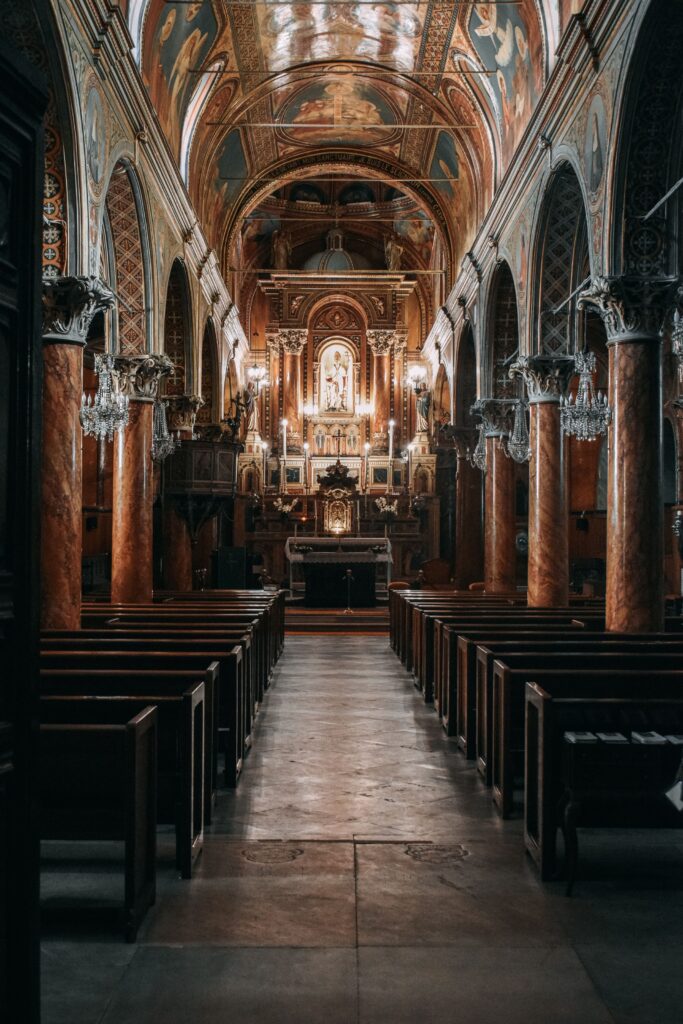
The clearest picture of one bishop leading each city comes a little later. Around 108 AD, or somewhat later according to some scholars, Ignatius of Antioch wrote to the churches of Asia as a prisoner on his way to Rome. He calls Onesimus the bishop of Ephesus. To the Smyrnaeans he writes that nothing connected with the church should be done without the bishop. I tell his story in Ignatius of Antioch.
The names before that time are less certain. Eusebius, in the 4th century, writes that Timothy was recorded as the first bishop of Ephesus. Irenaeus says that apostles in Asia appointed Polycarp as bishop of Smyrna, but we do not know when. Each of the seven letters is addressed to “the angel of the church” (Revelation 1:20). Some early readers understood guardian angels, and others, like Epiphanius, understood the bishops. Honestly, we cannot be sure.
The Final Image
I want to leave you with one image of early Christian life that I always come back to. Let me say first that it is imagined. I built it from the sources above, and no ancient writer describes this evening.
Picture a small upper room in a house in Smyrna, around 95 AD. Perhaps thirty people sit on benches and cushions. The shutters are closed and a few oil lamps burn. Host has put out a simple supper of bread, olives and fish. A young man stands infront of them with a papyrus copy of a new book, brought up from Ephesus by a messenger. The author is John, the old apostle of Christian tradition, writing from Patmos.
The young man reads slowly. Greek was written without spaces between the words, so he has to stop and think how to divide the phrases. The room is quiet. He reaches the part addressed to Smyrna, which I cover in The Letter to Smyrna: “I know thy works, and tribulation, and poverty, (but thou art rich)” (Revelation 2:9, KJV). The faces in the room change.
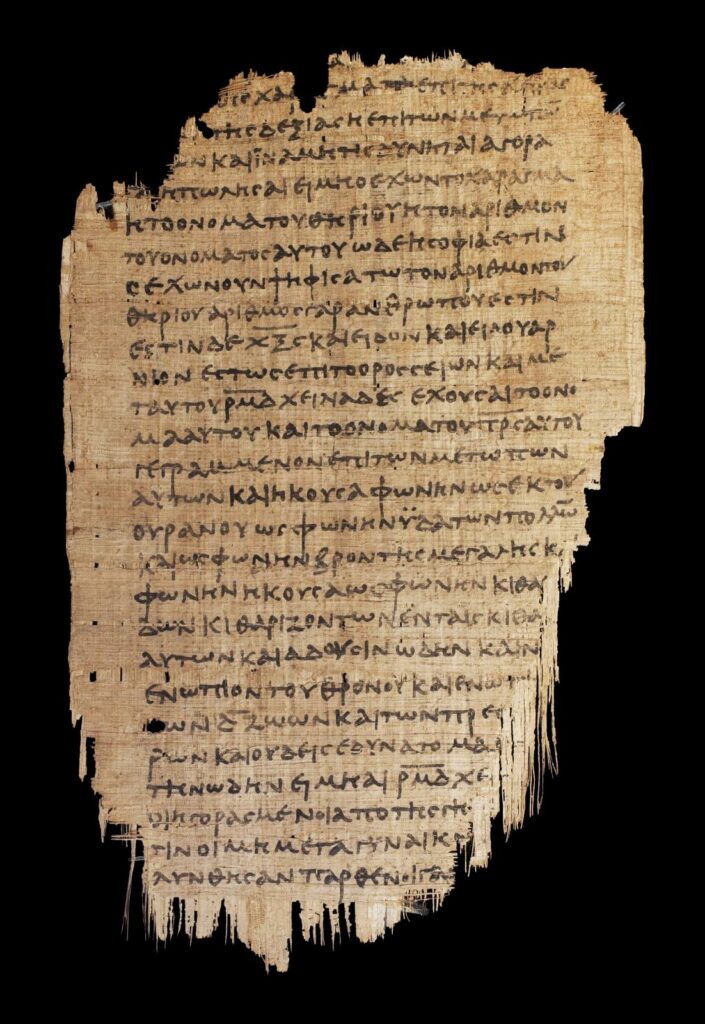
Then he reads: “be thou faithful unto death, and I will give thee a crown of life” (Revelation 2:10). Some people cry quietly. They know what these words may mean for them, in the next year or in the next decade. The reading ends and the community sits in silence. Then they begin to discuss what they have heard.
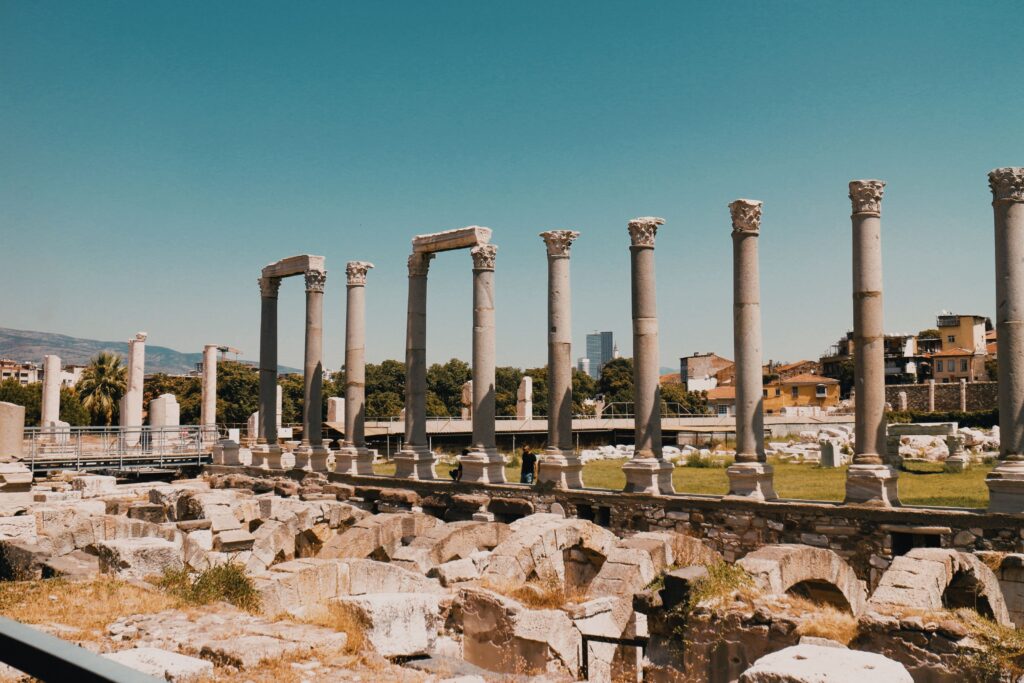
This is the daily life of a Christian in the era of the seven letters. It was not spectacular and not always heroic. It was small, careful and faithful, with neighbors on every side, ordinary work and the noise of a Roman provincial city. Inside that small life the great choices of faith were made, and in Turkish we would say aynı seçimler hâlâ yapılıyor: the same choices are still being made today, in other cities, by other people.
Sometimes I look at my own ordinary day, my coffee in the morning, my walk till the office, my work with my groups, my small evening prayers, and I think that the Christians of Smyrna lived a day not so different from this. The big moments were rare. The small moments were everything.
Frequently Asked Questions
What was life like for early Christians?
Most early Christians in Asia Minor were ordinary working people who lived among pagan neighbors and kept their jobs. They met in private houses on a fixed day, before dawn or in the evening, to eat together, pray and hear letters read. Their hardest choices were about meat from sacrifices, dinners with pagan hosts and what to do when denounced.
Where did early Christians meet before there were churches?
They met in private houses. The New Testament names the house of Aquila and Priscilla, mentioned in a letter written from Ephesus, and the house of Nympha at Laodicea. Estimates run to few dozen people at most. The oldest identified Christian building is a converted house at Dura-Europos in Syria, from the 230s.
What did early Christians eat?
They ate what their neighbors ate: bread, olives, vegetables, lentils, cheese, fish and wine mixed with water. Meat was rare, and much of it came from pagan sacrifices, so it raised a religious question. Paul told the Corinthians to eat market meat without asking, but not to eat it once someone said it was offered to idols.
Why did early Christians worship on Sunday?
They met on the first day of the week, which they called the Lord’s day, the day of the resurrection (Acts 20:7, 1 Corinthians 16:2, Revelation 1:10). Sunday was not a day off until Constantine made it one in 321, so they gathered before dawn or in the evening.
Hire Biblical Tour Guide in Turkey
I am a Turkish tour guide with a national license, living in Kuşadası, nearby Ephesus. I guide day visits in Ephesus, İzmir and Pamukkale, so the Terrace Houses of Ephesus and the agora of ancient Smyrna are part of my work. On longer journeys through the Seven Churches of Revelation I can travel with you as your personal guide.
For prices and the places I cover, have a look at my guiding rates and guiding areas. To ask about your dates, send me a message from my contact page.
I hope we will walk together through Ephesus one day and imagine the first listeners of the seven letters. Write to me if you need to learn more about the early Christians of Asia Minor. See you soon, Hasan Gülday.